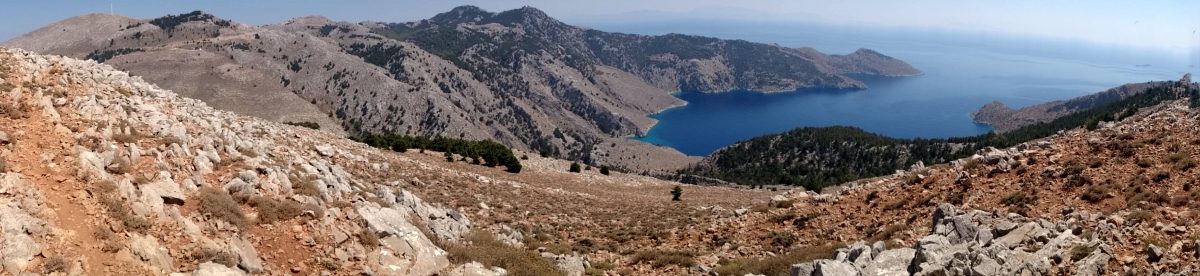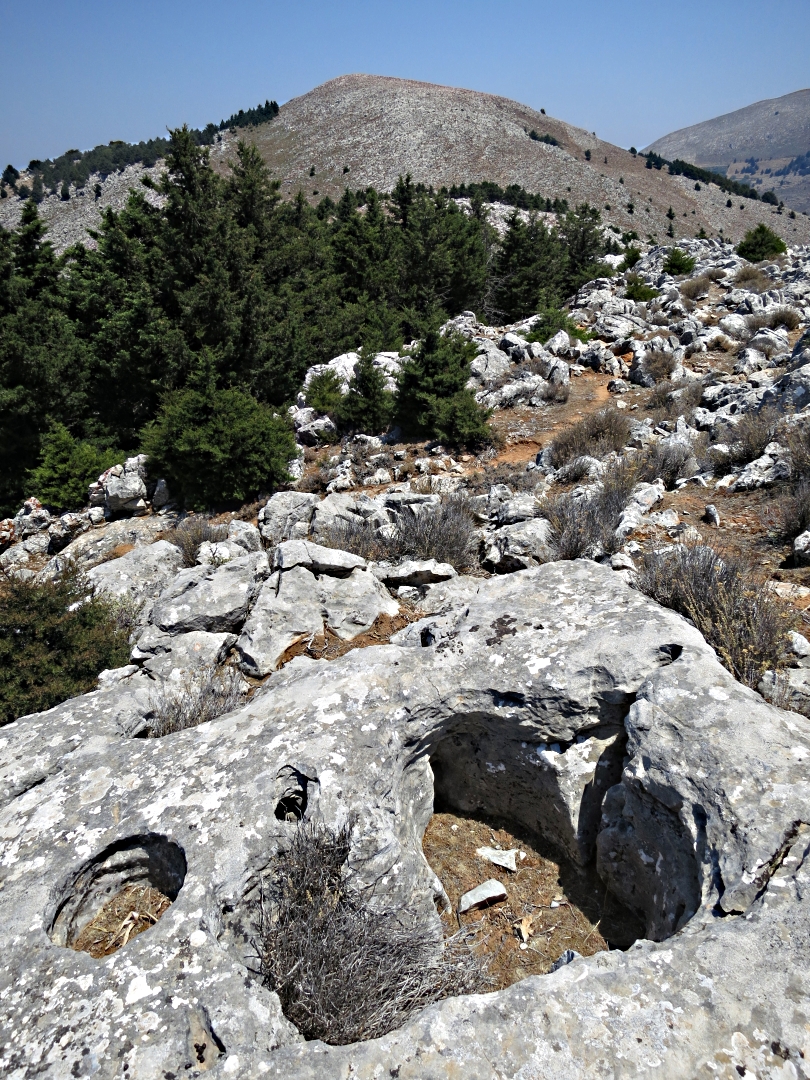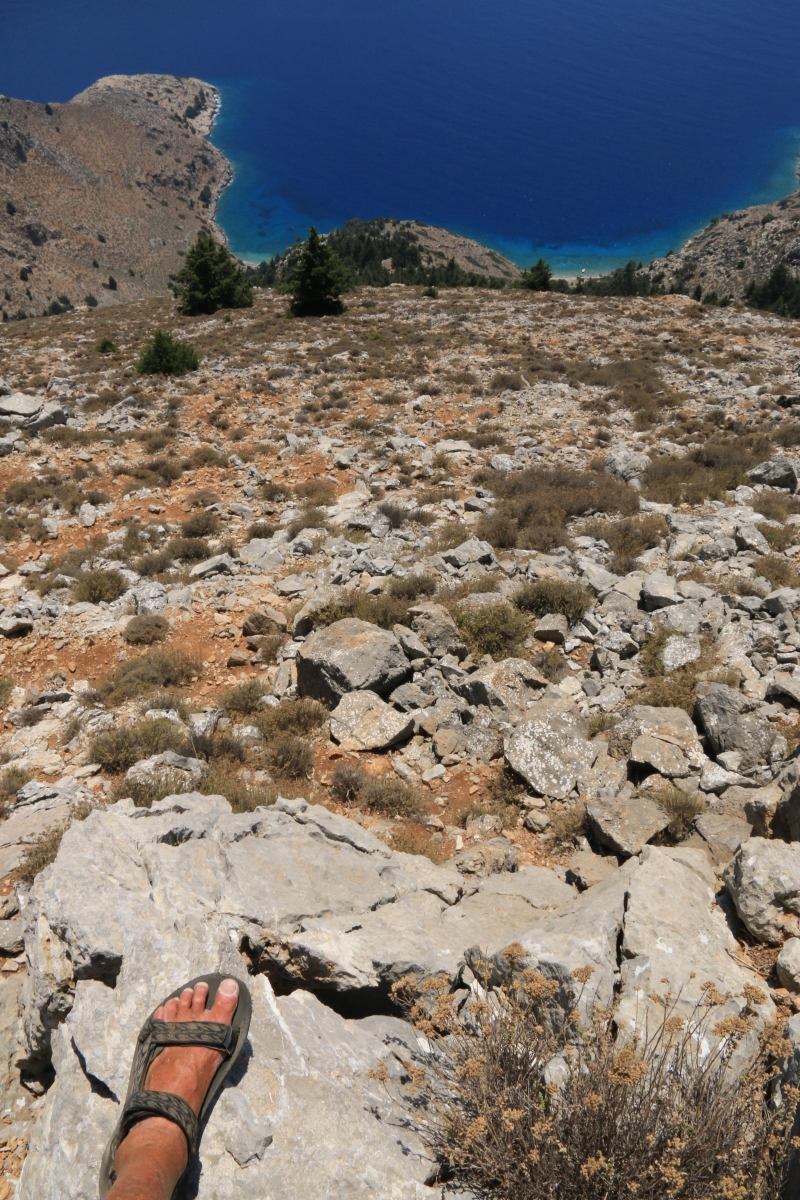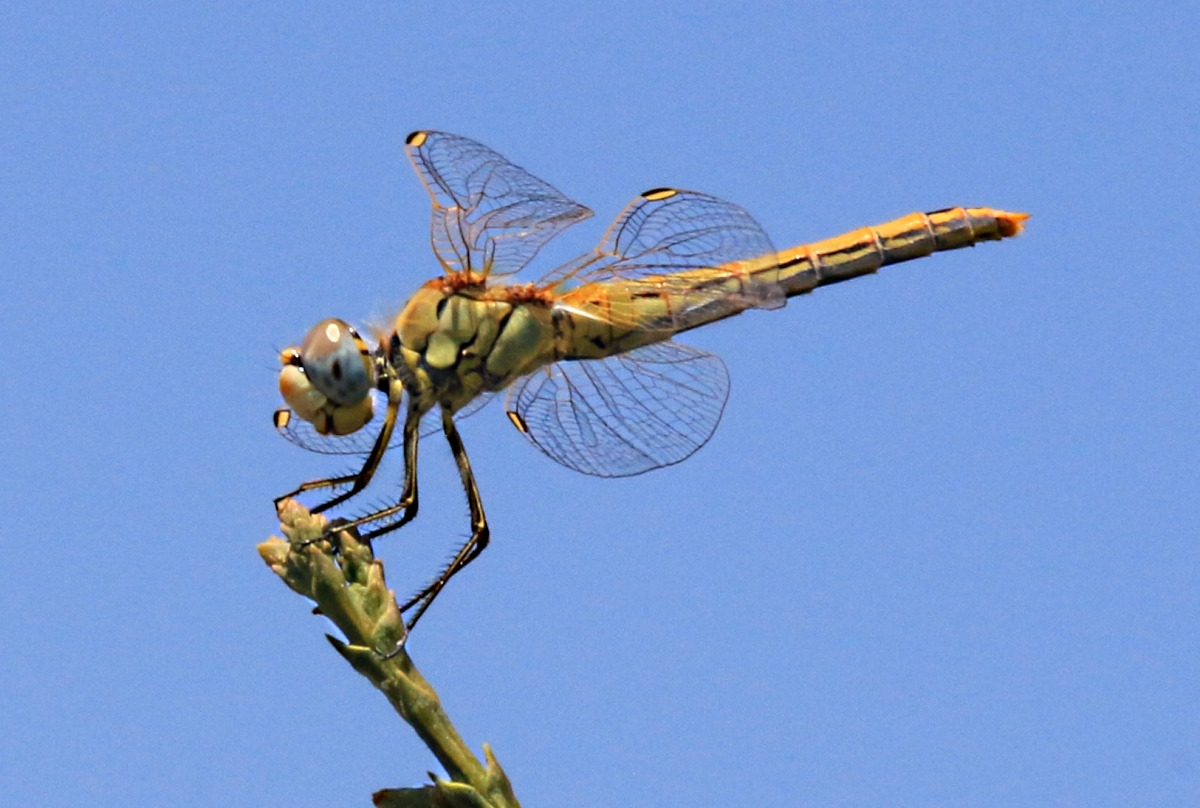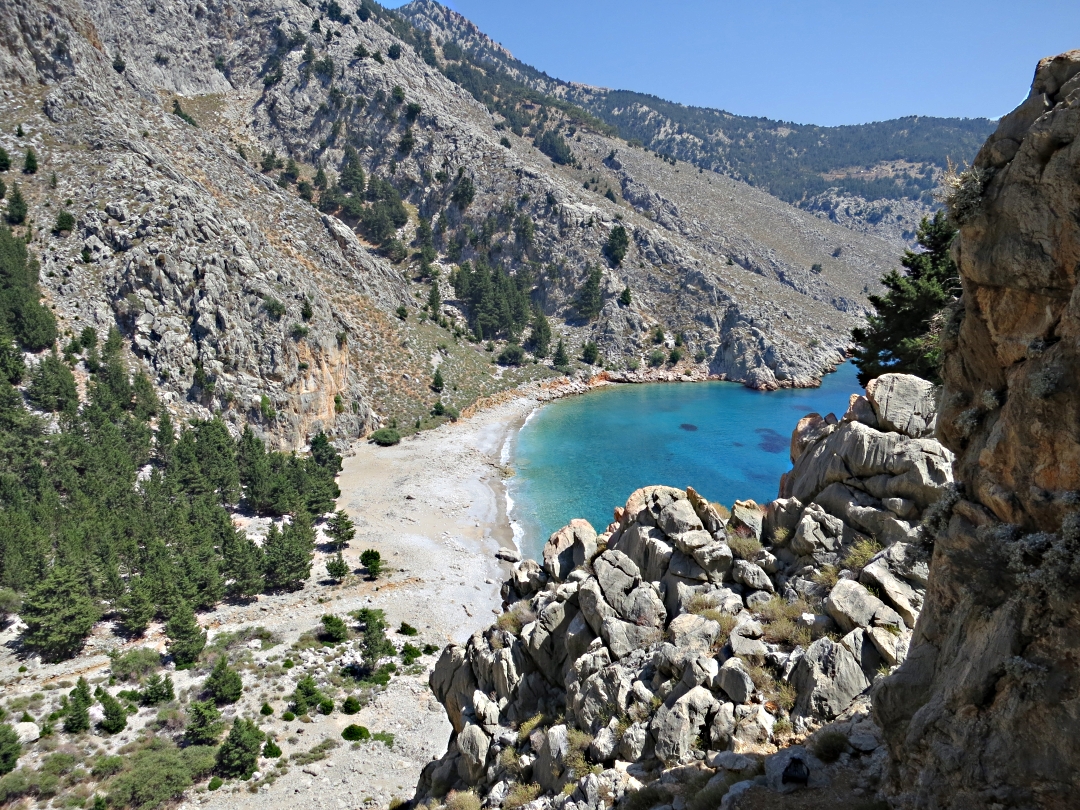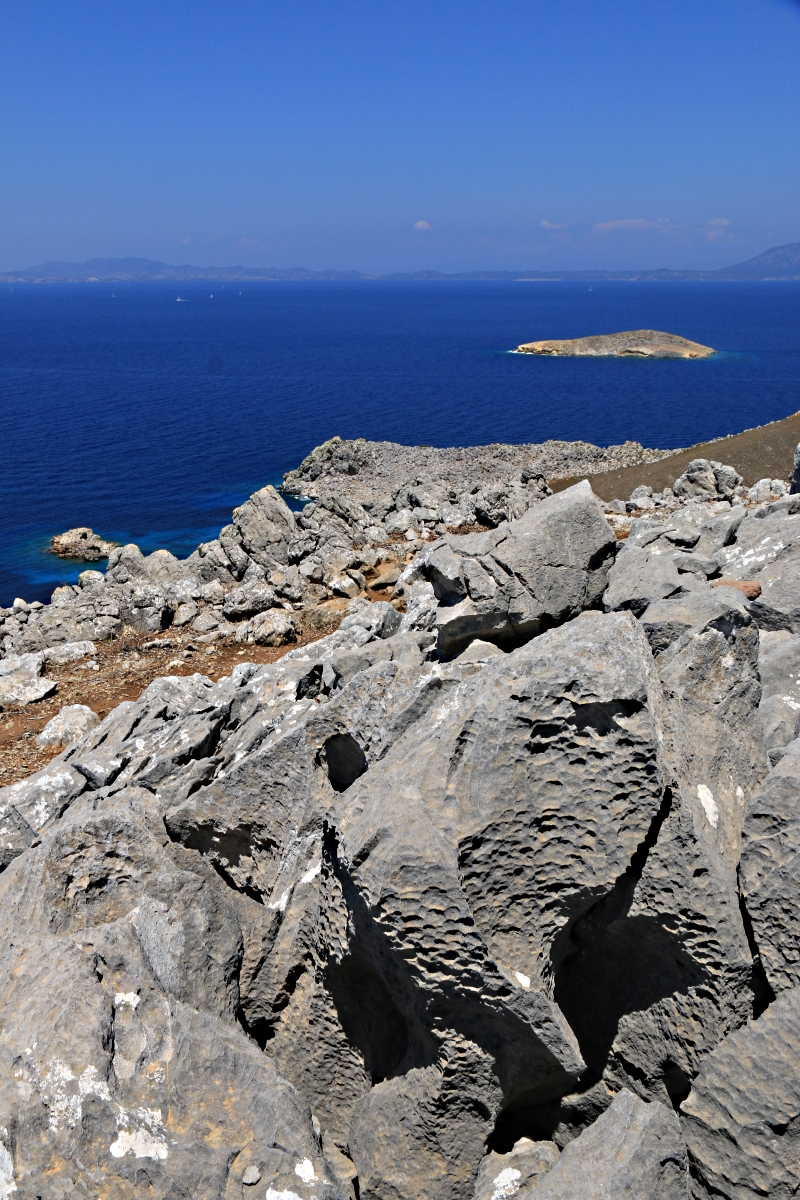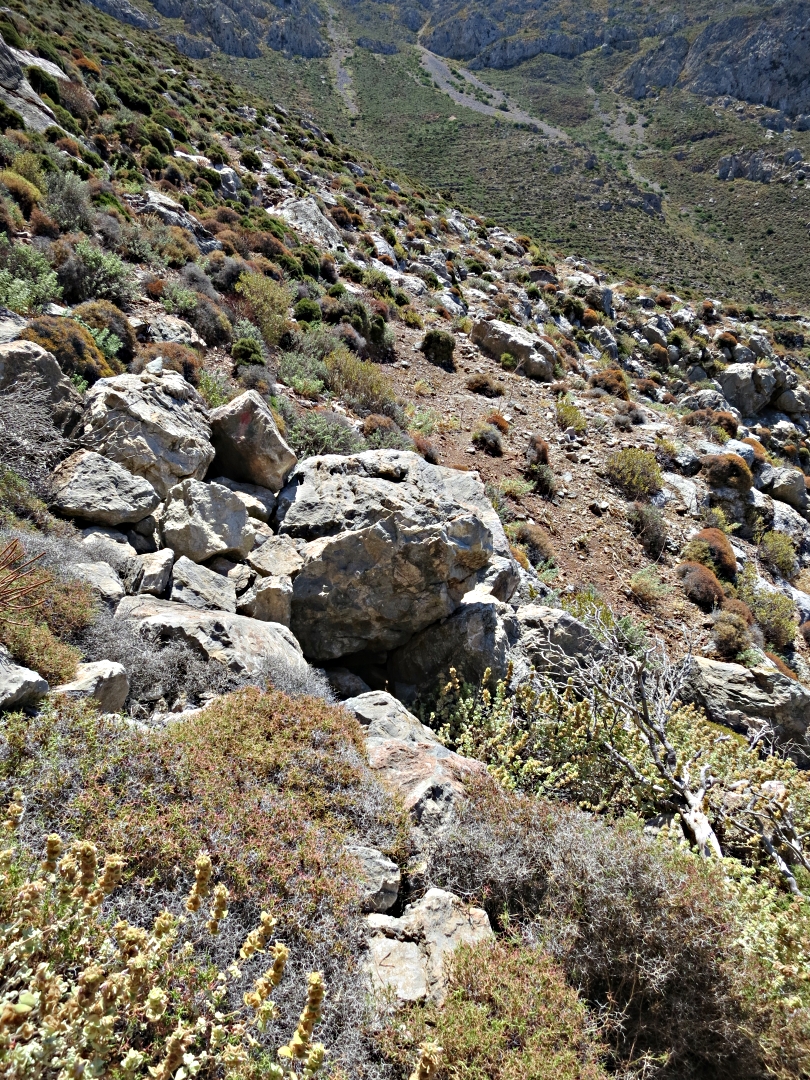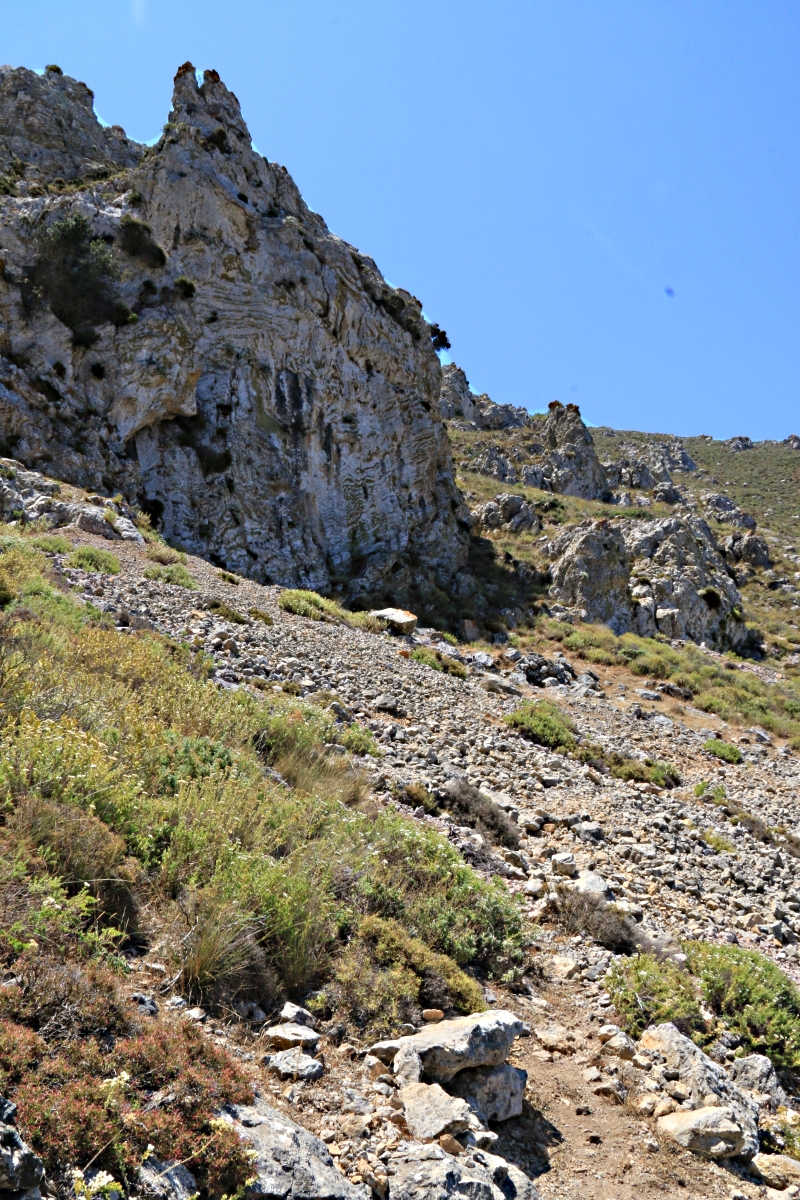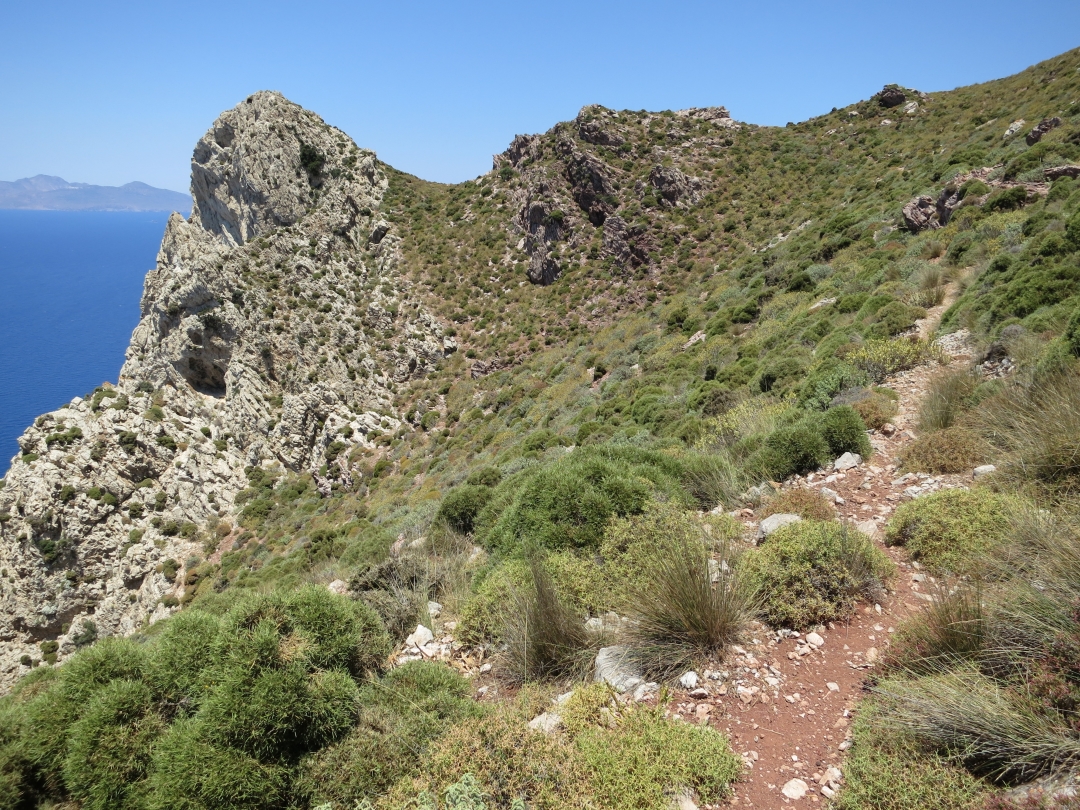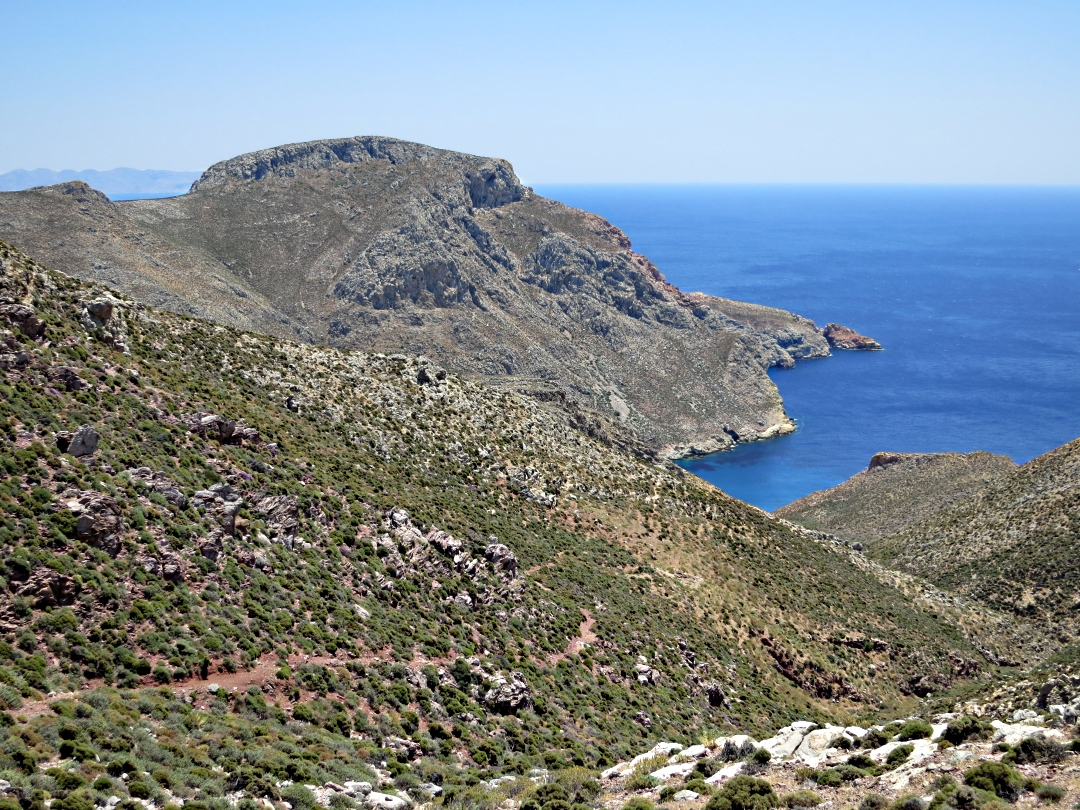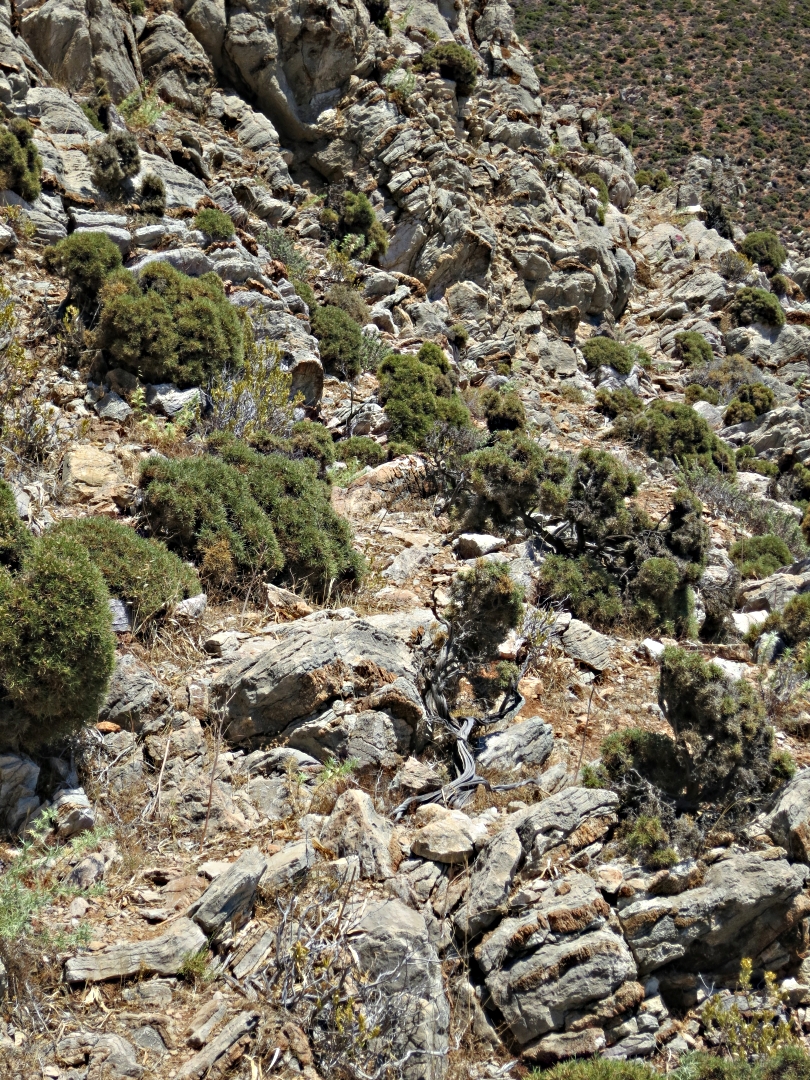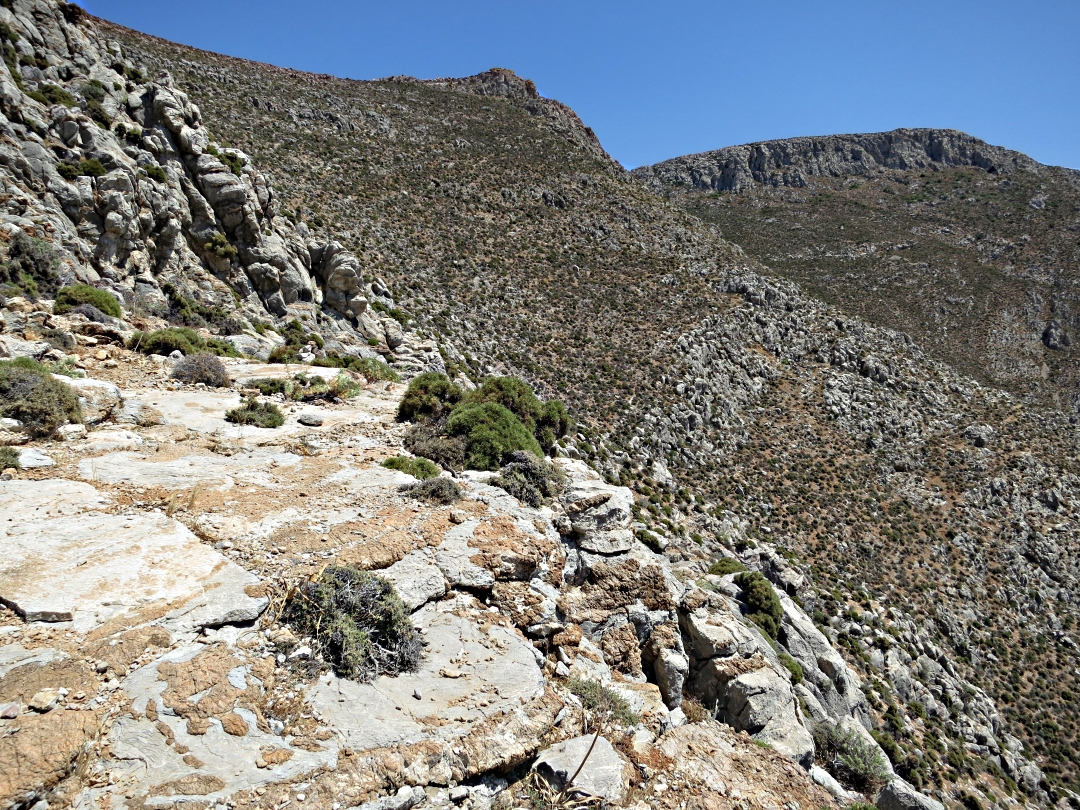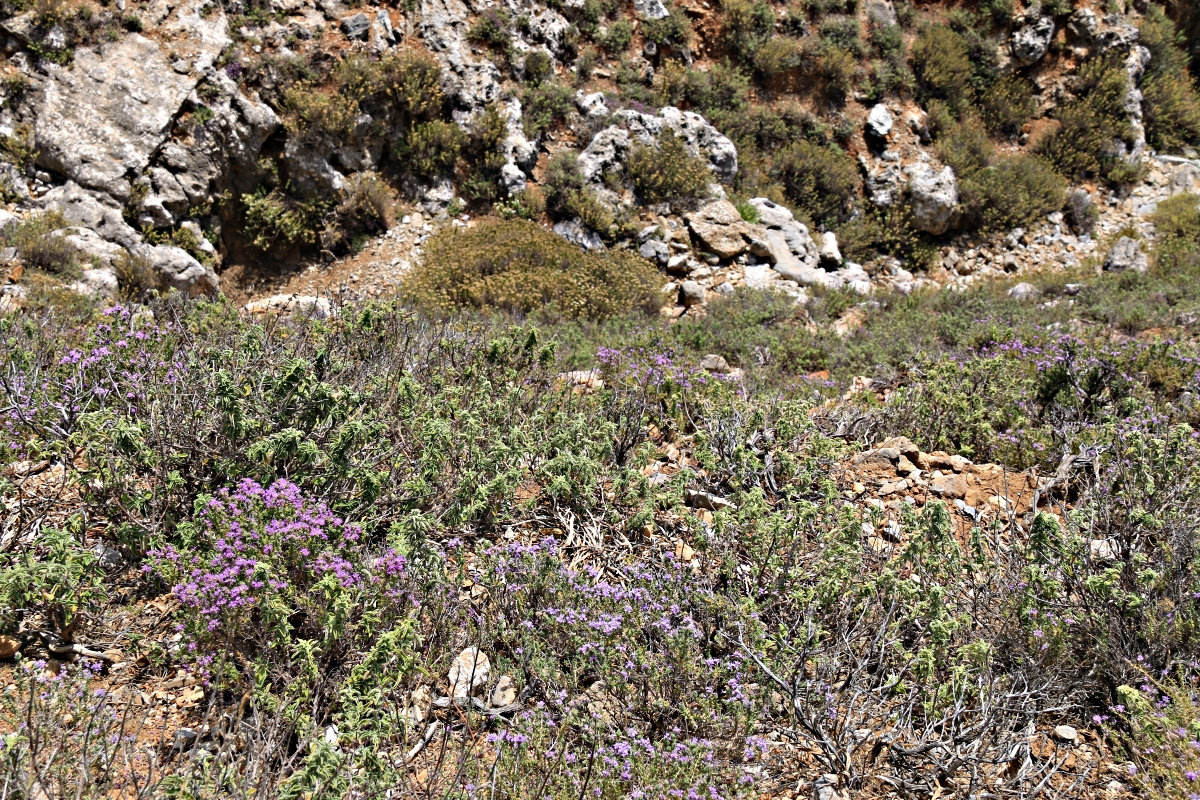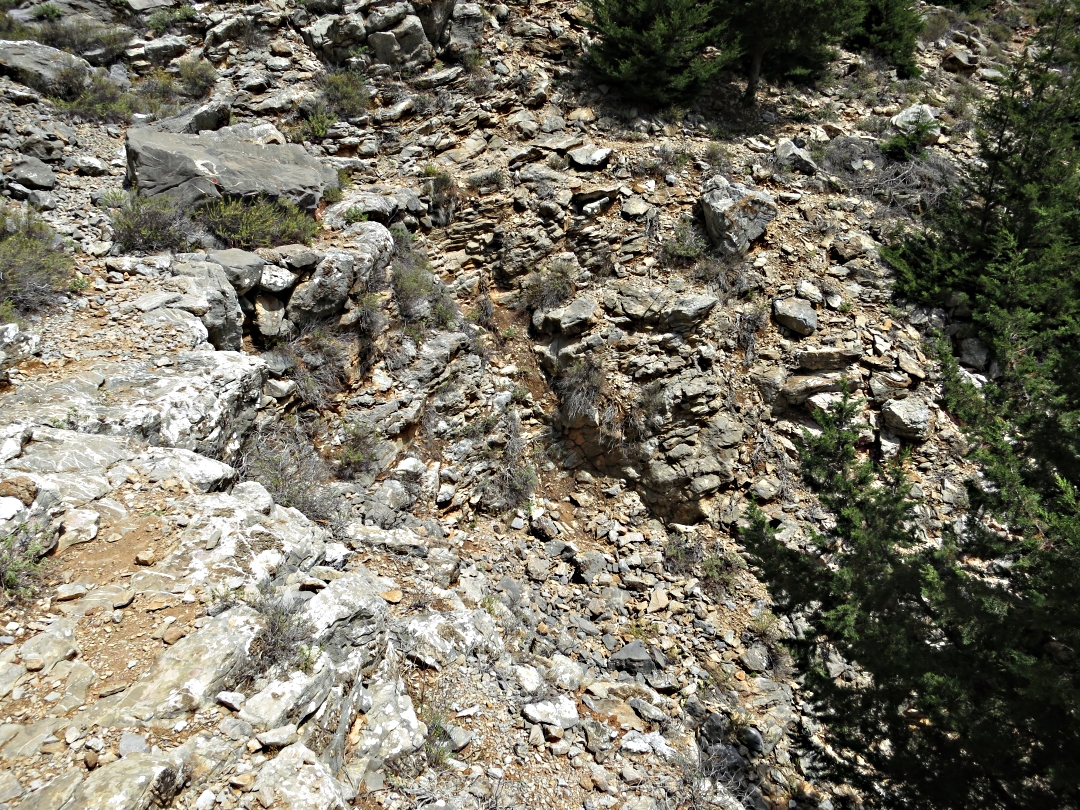
Symi: a trek into the past

I’m fascinated by deserted settlements.  They show the stark effects of seismic economic shifts, technological development, and climate change.  They can also show how people lived decades ago.  Whenever I am on Tilos I visit and write about the deserted village of Micro Horio, each time see something ‘new’, and every time I pass the smaller of settlement of Ghera en route  to climb Oros Koutsoubas (which freely translated means ‘destroyer of sandals’ I take a brief look and promise myself a longer visit.

On Symi I regularly wander up to the deserted settlement of Gria in the crags above Pedi with its large permanent pond and try to look at it a different perspective each time.  Not many people seem to know it’s there even though it can be seen from the footpath down the Pedi Valley.  Of those that do know of it only a few seem to know how to get there and there seems uncertainty over what it’s called.

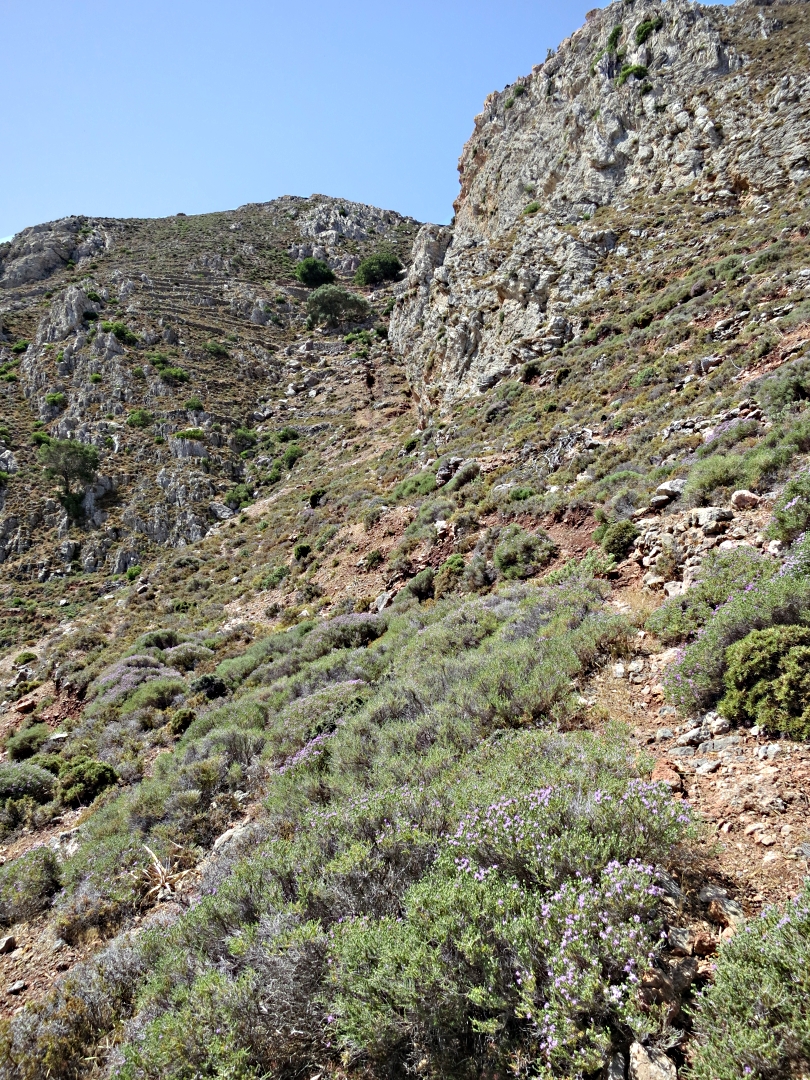
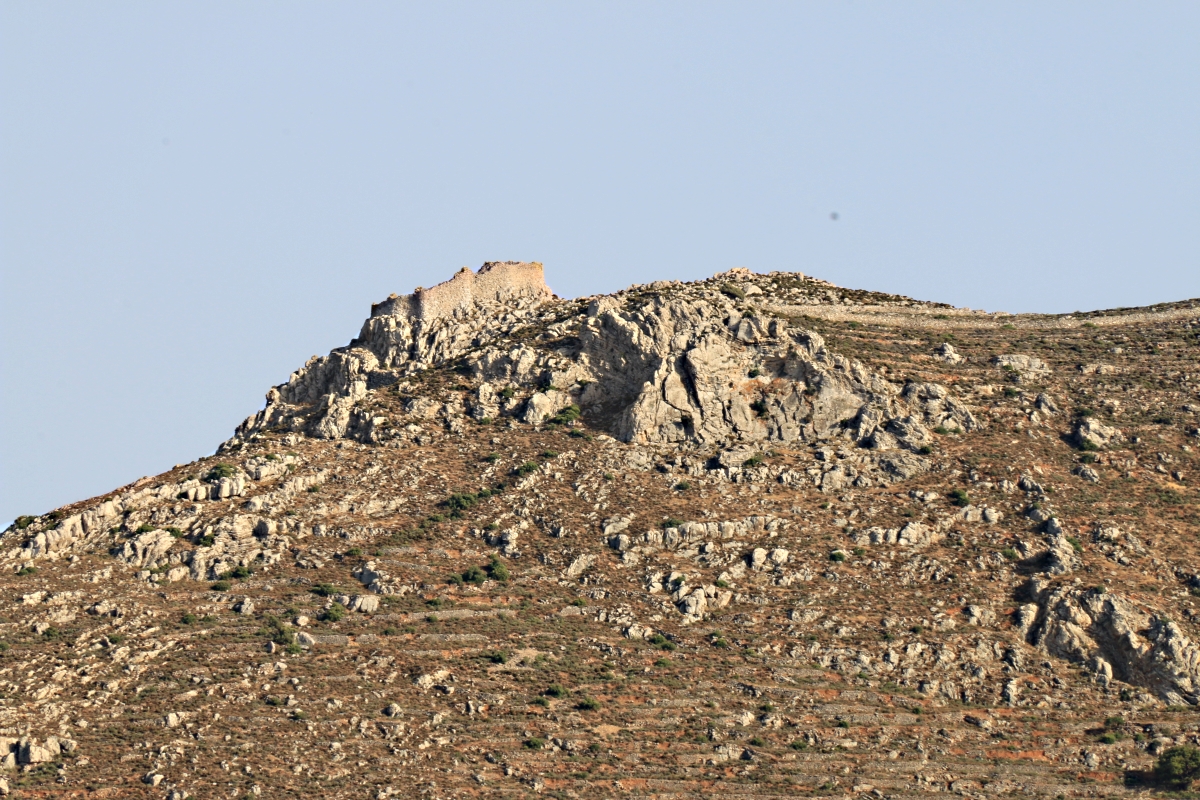
Just visible at the top of the crags above the Pedi Valley path, Gria

Just visible at the top of the crags above the Pedi Valley path, Gria

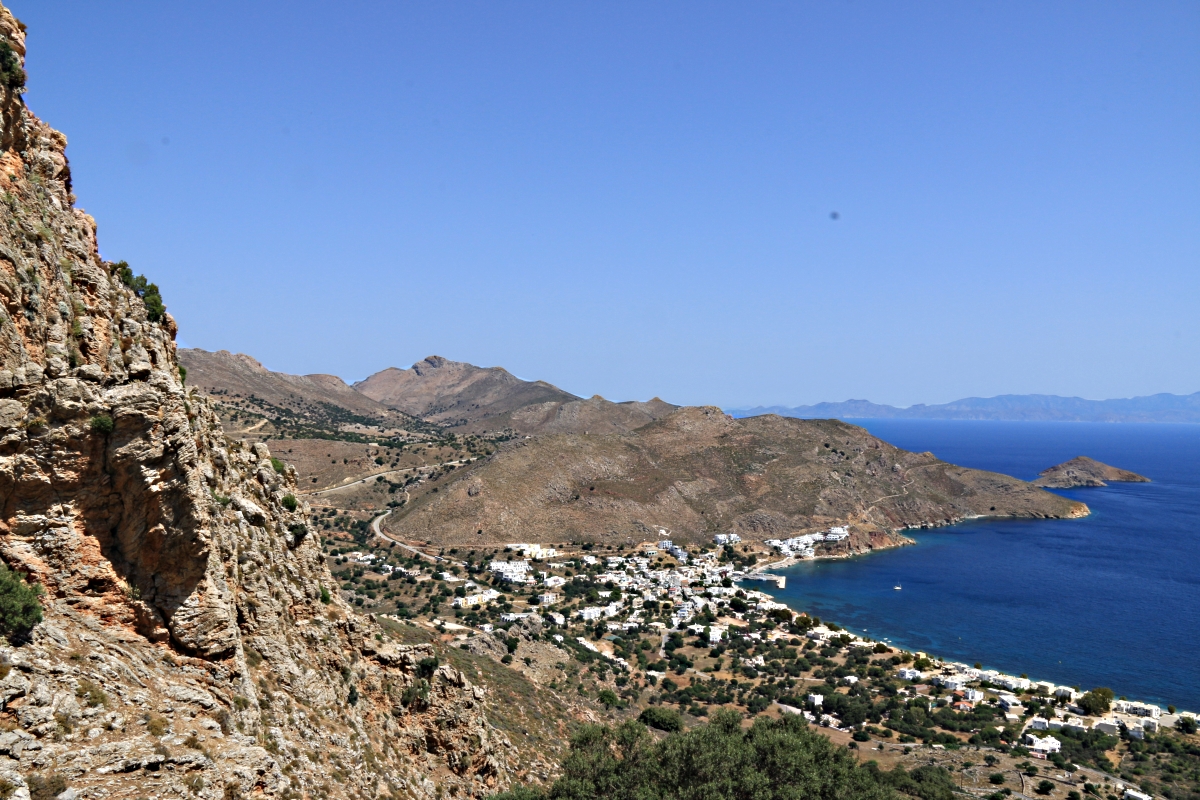
.... zooming in

…. zooming in

I wrote about it on the blog in May under the title ‘A trek to a waterhole in the desert’.   I will try not to repeat that but develop a couple of themes and focus the images more on the settlement than on the wildlife, which in May was eye-catching.

The first part of the route is very straightforward, on a newly concreted track up to the monastery of Zoodohou, tucked in a gulley high on the flank of the mountain at a spring, now piped as part of the island’s attempt to become independent of water tankered in from Rhodes. Two 6-inch diameter black polypropylene pipes are draped alongside the road the couple of kilometres to the village, ensuring that the water when it comes out of the tap in summer is hot.  I don’t need to boil water for washing in the house, the water from the ‘cold‘ tap is at times almost too hot to put my hands in.

Black polypropylene pipes draped across the landscape, heating the water as it goes

Black polypropylene pipes draped across the landscape, heating the water as it goes

On my latest visit at the end of July I stopped at the monastery to refill my water bottle from the tap in the courtyard  …. and thought better of it.  For the first time since I have known it the water was not sweet but smelled and tasted unpleasant.  That set me thinking more about the theme I have mentioned on previous visits, that water abstraction is lowering the watertable with direct consequences for plant life.  It may be that the aquifer has been lowered to the point where the water may not be potable.  I have never drunk it from the tap in the house because of its trip through the pipe but I’m not prepared to drink it now even straight from the mountain.

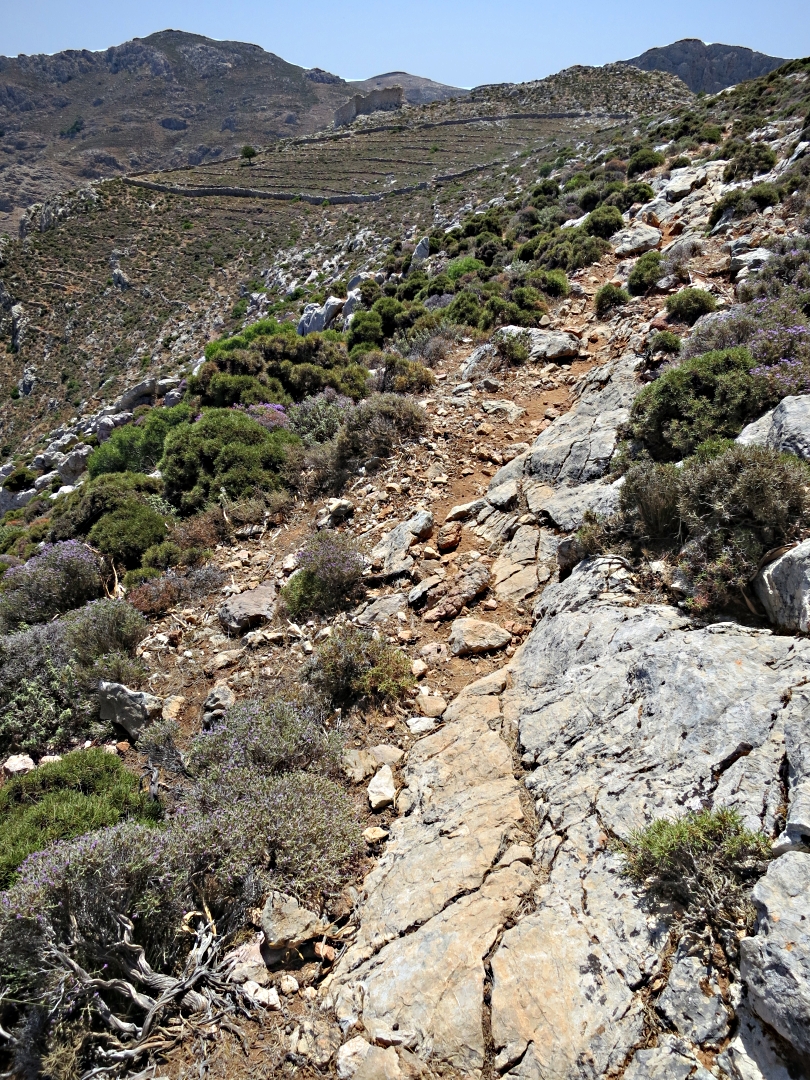
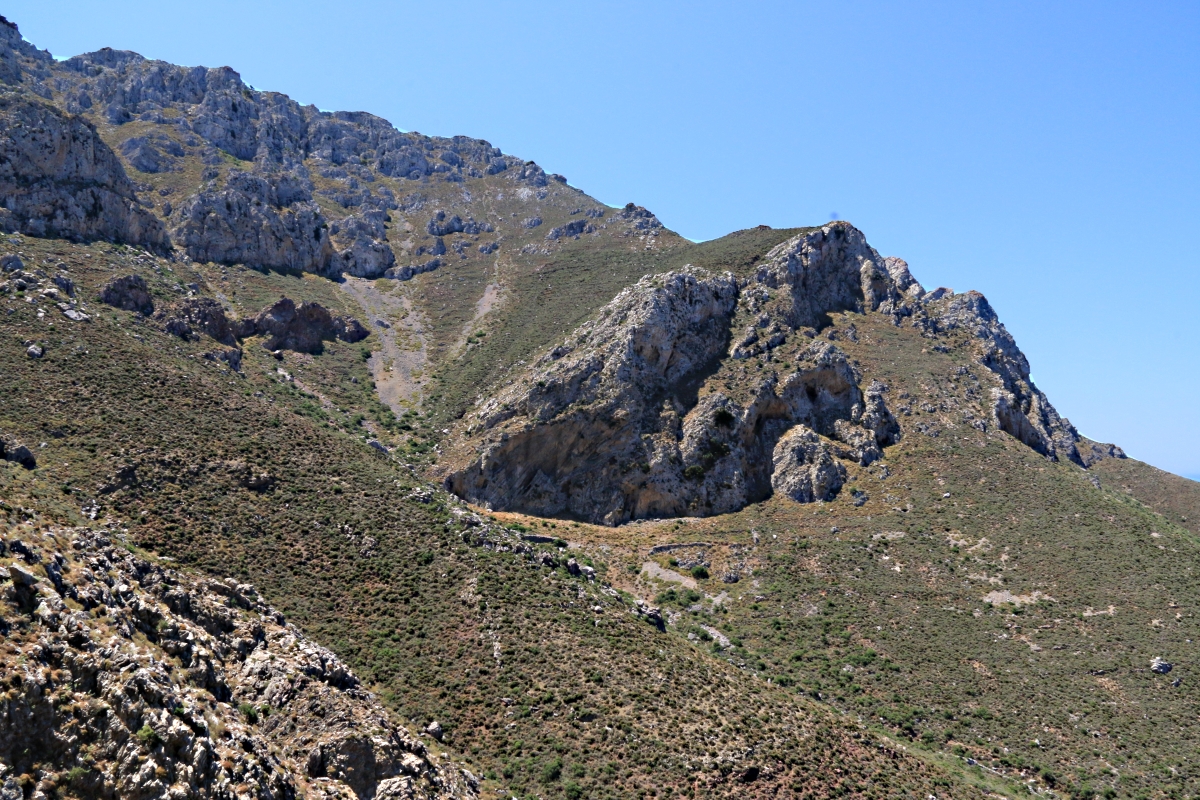
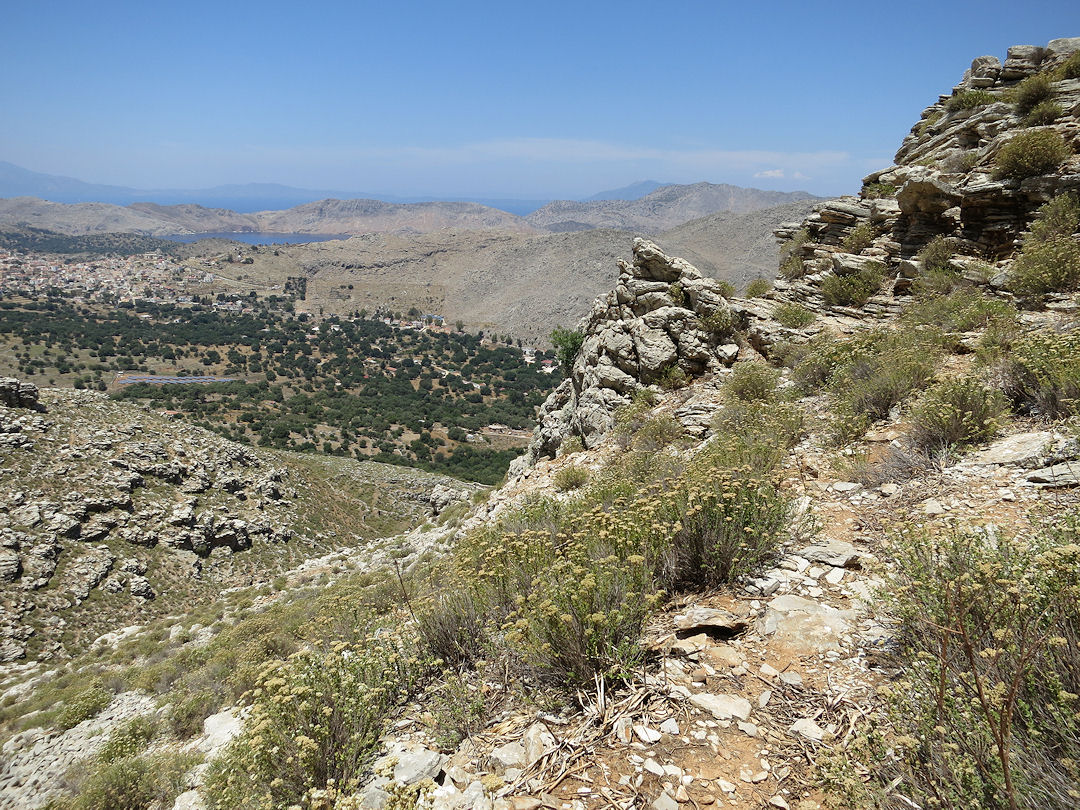
From the monastery the onward route is a narrow path, at times difficult to follow.  A few stone cairns have been placed to supplement the faint red dots painted years ago but some of them are wrongly placed and don’t take the best line.  It’s a thoroughly enjoyable path, pretty wild, winding through craggy mountainside, but care is needed.  There is no great danger of failing to find the settlement, it can be seen in a small col on the shoulder of the mountain, but go off-line and the walk could be rough, with a couple of step gulleys to be crossed.  The path takes the most amenable line across them.
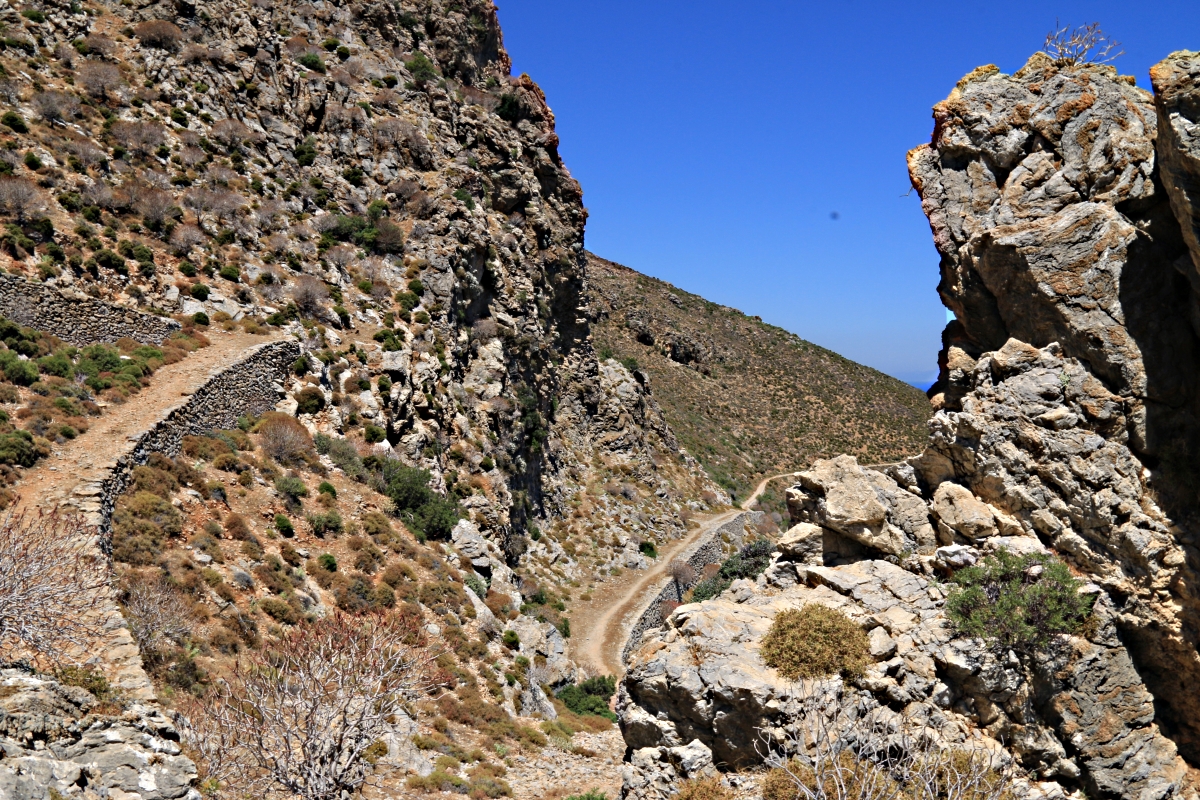
From the monastery the path is fairly obvious

From the monastery the path is fairly obvious

Crossing one of the gulleys which drops away steeply to the left

Crossing one of the gulleys which drops away steeply to the left

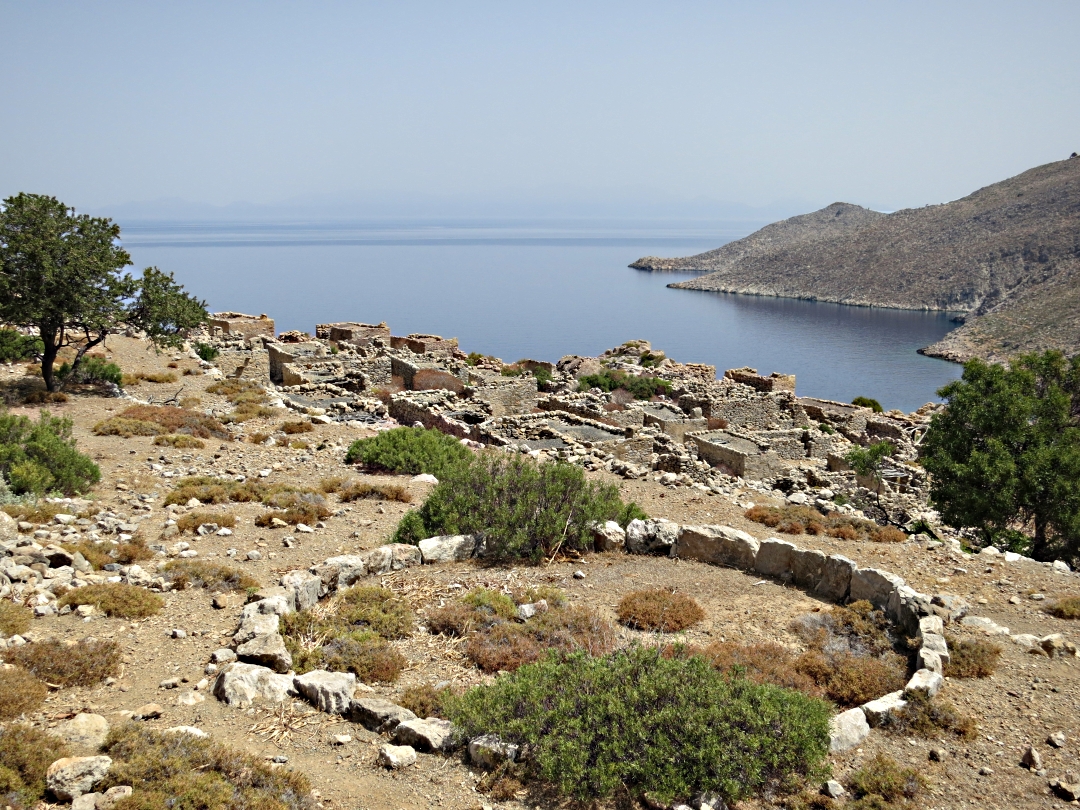
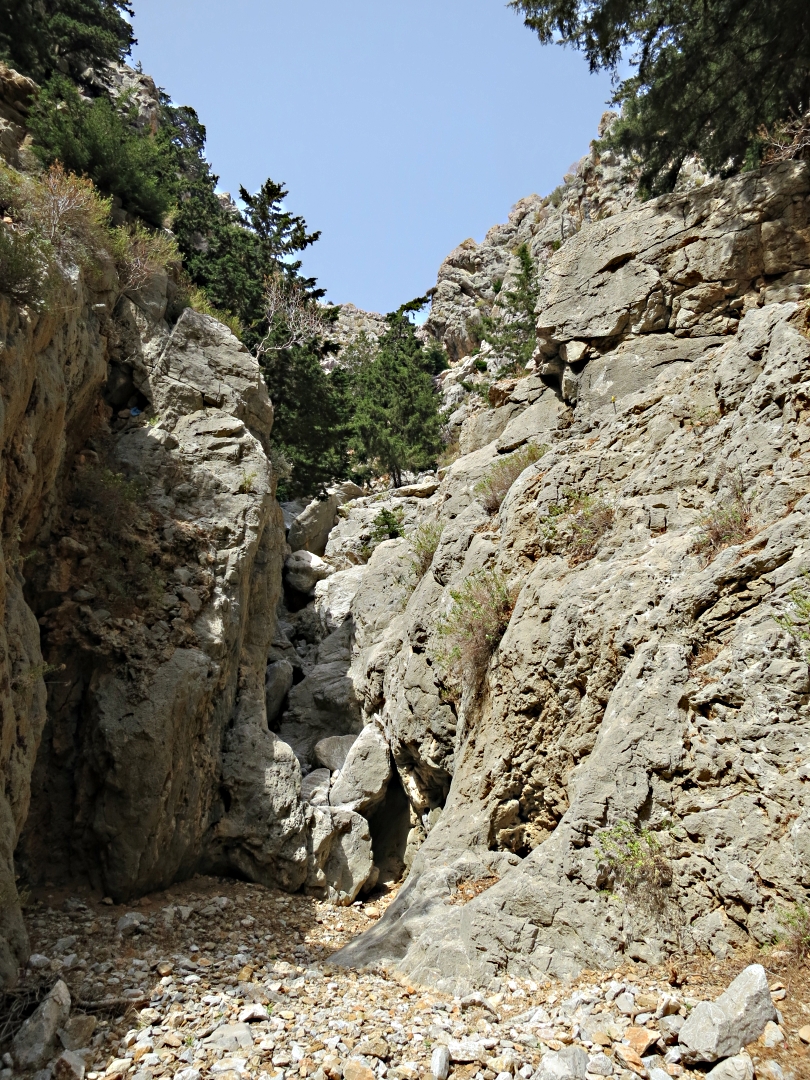
Forget wardrobes and white rabbits, arrival at the settlement is a gateway into another world, a much simpler but harsher world of the past.

The gateway into the settlement

The gateway into the settlement …. or a time portal?

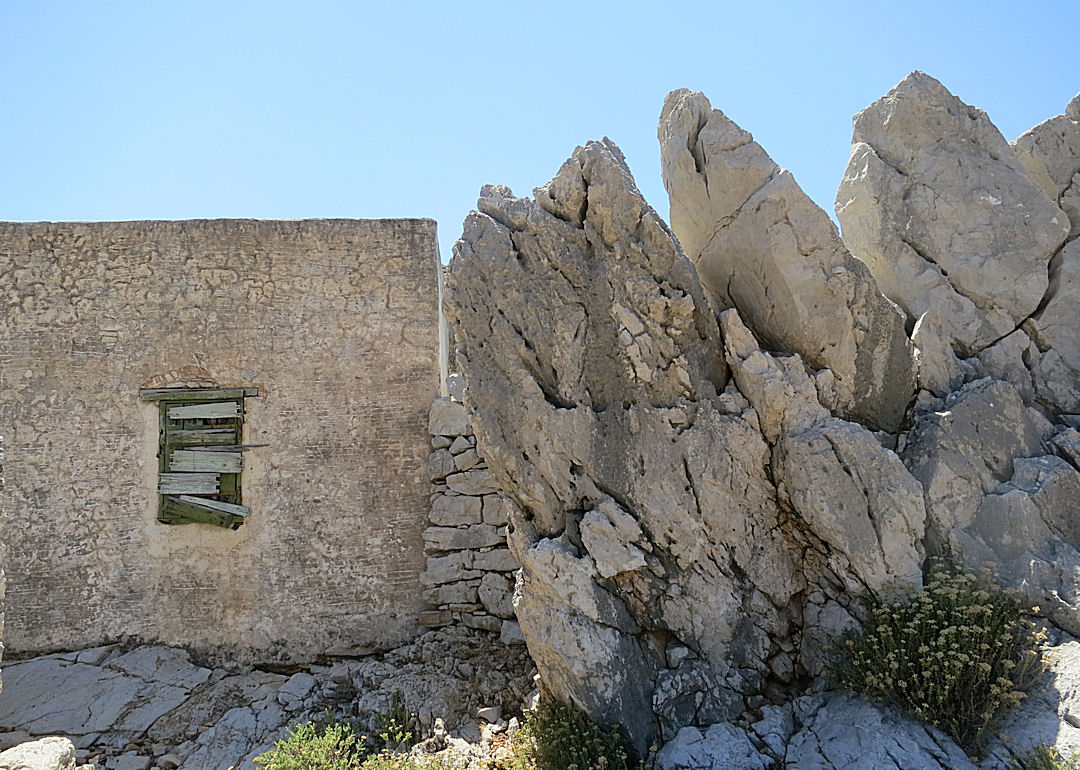
None of the half a dozen or so houses are now lived in but one is clearly still used as a temporary base.  The roof appears to be sound and it is equipped for cooking and eating.  No photos, that would be an invasion of privacy, but it was a very clear glimpse of the past.  Another house has a badly damaged tiled roof and is used for agricultural paraphernalia including sections of beehives.  These are one-room dwellings, about 6 metres by 3, with wooden sleeping platforms still intact.  A whole family would have lived in them, not a problem in summer when most living would have been outdoors but both had fireplaces implying that winters were less clement.

The sleeping platform, usually for the whole family, now with bits of beehive chucked on it.

The sleeping platform, usually for the whole family, now with bits of beehive chucked on it.

Behind yet another house was a bread oven, probably used communally by the village as was the practice at the time.  Indeed we saw this in Karpathos a few years ago in the mountain village of Olymbos where one of the line of old windmills on the extremely windy ridge was still used.  Once a week the huge creaking sails turned to grind corn and the adjacent oven was fired up by the women of the village to bake bread …. and delicious cakes given away in the restaurant attached to the mill.

Community bread oven

Community bread oven

This all speaks of a lifestyle which would have been gruelling by modern standards of convenience, a harshness which on-one would want to go back to.  Yet it is part of the island’s heritage, still only just over the horizon.  There are many extant remains apart from the buildings themselves including agricultural and domestic artefacts: shelves, cupboards, utensils, implements, even bed-coverings.  This is part of the history of the people of Symi, the ‘ordinary’ people of Greece.

In Wales the very different, very simple, very poor lifestyle of the ‘common’ people of the past, the ‘folk’, is preserved for future generations in what is now called the ‘St Fagans National History Museum’, though I prefer the original name it was given when it opened in 1948, and still the name in the Welsh language,  ‘The Welsh Folk Museum’  as that ties the concept more to the history of the people rather than the history of the country.  The only problem I see with it is that the buildings have been removed stone by stone from their original location and rebuilt in a ‘parkland’ setting not that which gave rise to them.

I can’t help but wish something could be done to restore and preserve the lifestyle of places like Gria to help future generations, and foreign visitors, see how things were in the past.  But enough of that for now, a theme I may return to in a broader context.

The stone-walled enclosures around the houses must have been used for penning animals. Many of them were so rocky that they couldn’t have been used for crops even in times of heavier, more reliable rainfall.

Hardly a 'kitchen garden'

Hardly a ‘kitchen garden’

.... but there are many  larger rocks between which the houses are built

Many large rocks between which the houses are built

An enclosure with nothing but flat slabs of rock
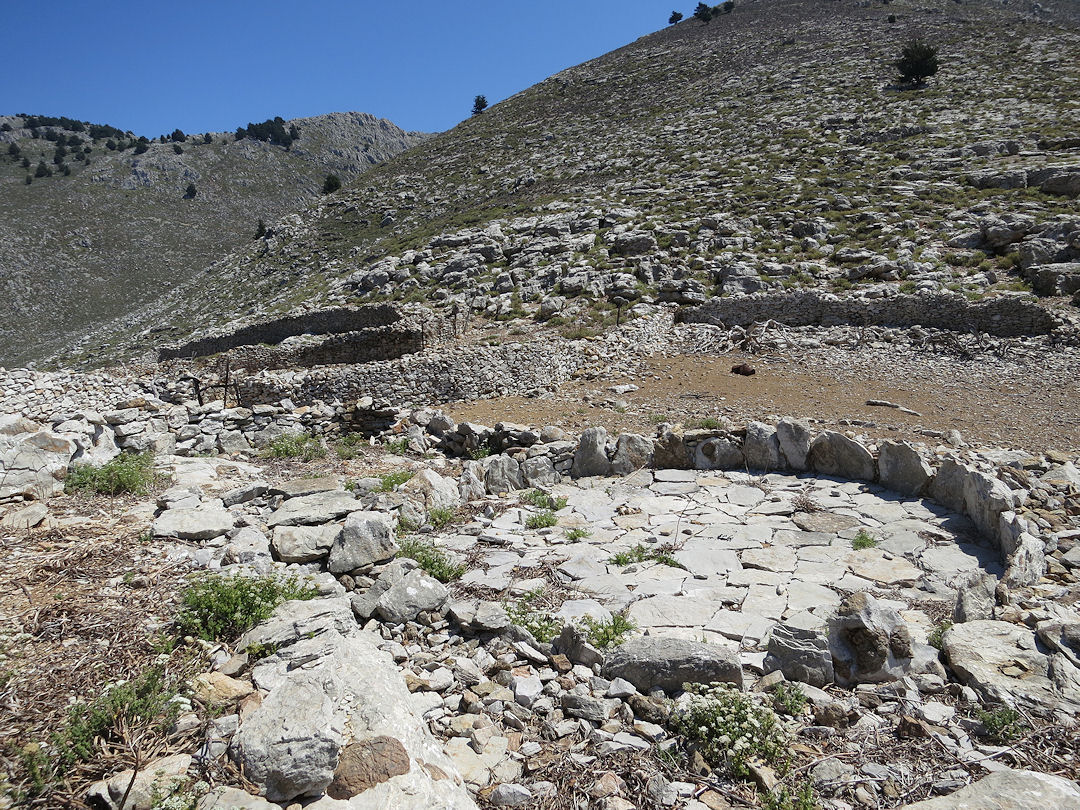
An enclosure with nothing but flat slabs of rock

One of the threshing circles

One of the threshing circles

The highest part of the settlement

The highest part of the settlement

This is the high point of the settlement, built into crags of sharp limestone, hidden from view from the beach at Pedi but one house just visible from the valley footpath far below. Drop down on a well trodden path from there through great lumps of rock towards small fields and yet another house at the lowest level of the settlement against a backdrop of even more crags.  The field is walled and fenced and obviously still used, though not often judging by the amount of wire keeping the gate closed against incursion by goats and nosy wanderers, a few beehives dotted about.

More fertile fields at the lowest level in the settlement.

More fertile fields at the lowest level in the settlement.

The house within the enclosure is larger with remains of internal lathe and plaster walls, not just a single room

The house within the enclosure is larger with remains of internal lathe and plaster walls, not just a single room

The onward path through the settlement towards the pond

The onward path through the settlement towards the pond

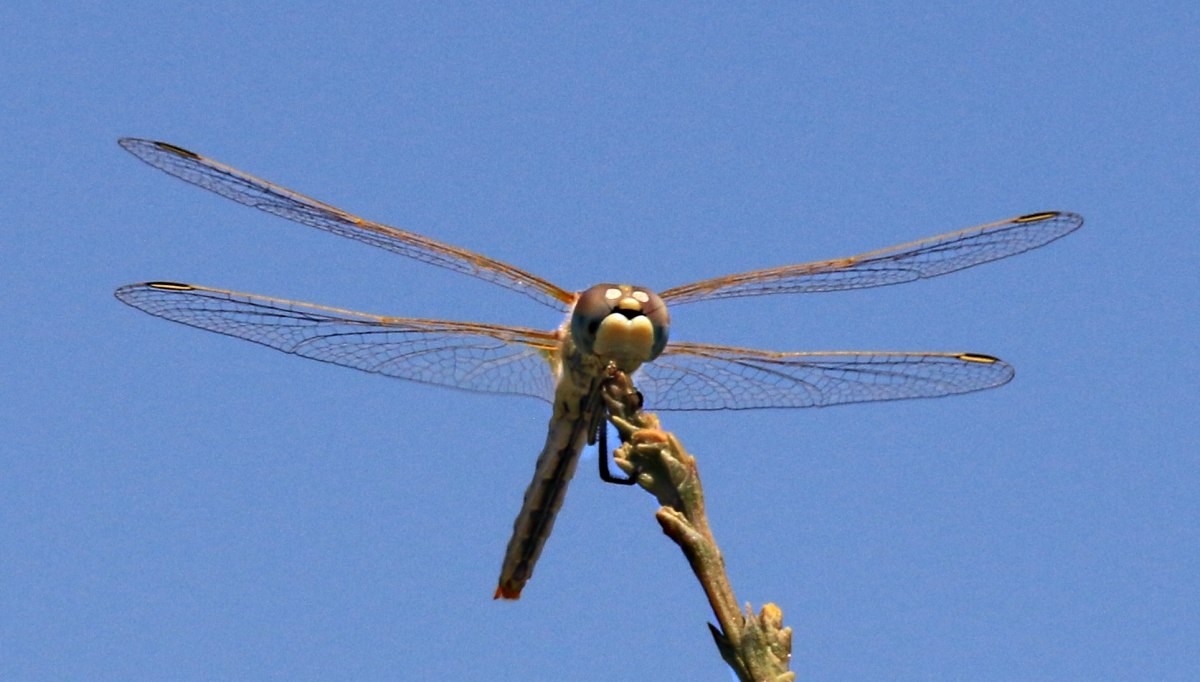
A little further on and beyond all the houses is the pond, bright red dragonflies skittering across it, alpine swifts and swallows zooming at high speed across the surface slowing for a nano-second to dip an insect out of the water, defying all my attempts to photograph them.
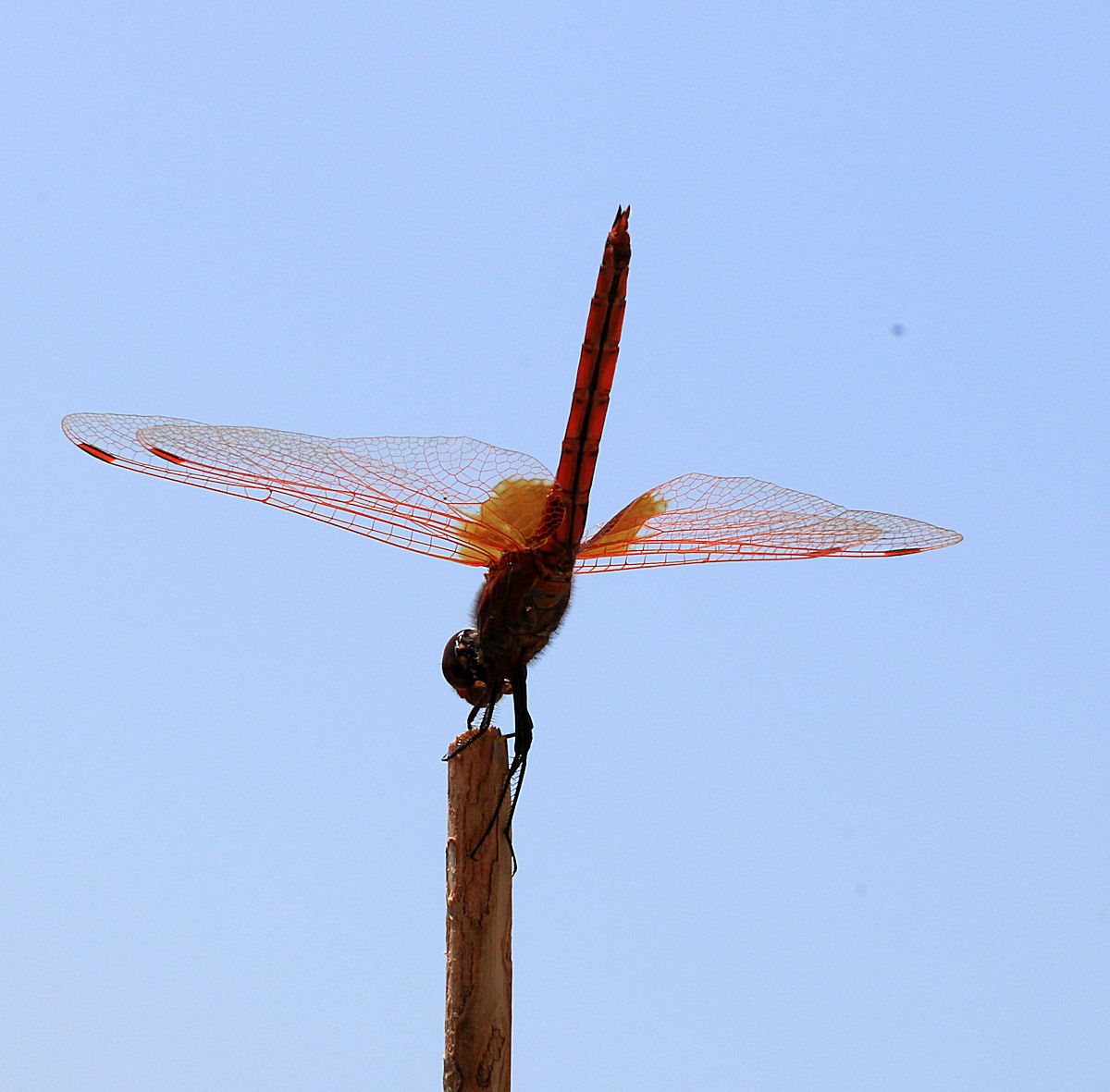
Red dragonfly balancing on stick

Red dragonfly balancing on stick

......... sunlight glinting on its wings

……… sunlight glinting on its wings

I climbed the limestone crag behind the pond for a birds-eye view of the settlement.  Though only a few houses there are two threshing circles and extensive enclosures, now all totally barren except the ones at the lowest level with the beehives.

Looking across the pond to the crag behind

Looking across the pond to the crag behind

.... and looking down from the top of the crag

…. and looking down from the top of the crag, the pond straight in front at the top of the photo

The extent of the enclosures

The extent of the enclosures

From this side of the pond it was clear how much the water level had dropped in the past 13 years since we first came here.  I estimate it has dropped by between 2 and 3 metres, that’s about 15 cms (6 inches) a year.  All the trees except one above the level of the pond are now dead, only a few remaining around the lowest level of the settlement and a few scattered, stunted cypress trees on the mountain above.

The red line shows the water level in 200, about 8 feet below present day

The red line shows the water level in 2001, about 8 feet below present day.  Note the dead tree in the foreground.  The only vegetation is oregano.

How much longer can the pond survive? What are the implications for plants and animals?  What are the implications for water abstraction?

Posted in Greece, Hiking, History, Landscape, Mountains, Nature, Reflections, Wales, Wildlife | Tagged , , , , , , , , , , , , , , , , , , , , | 1 Comment

Symi:  to the castle … with a lot of distractions

When we first came to Symi 15 years ago the castle didn’t exist.  At least it wasn’t shown on the only available, very diagrammatic, walking map of the island nor mentioned in the imaginatively titled accompanying booklet ‘Walks in Symi’.  So to all intents and purposes it wasn’t there.

But now it has been discovered and Lappatoniou Castle is not only marked on the SKAï map of the island, which I have previously disparaged, but so is a footpath to it.  Recently, for the first time, I had a yen to visit, check it out for myself.

But there were many distractions on the way.

The first part of the route is up the narrow alleys of Horio and onto the very good, very dramatic kalderimi past Agia Paraskevi to ‘The Tarmac’, diagonally across that onto the concrete road towards the large monastery complex of Panagia Myrtiotisa (The Virgin of the Myrtles) and then left on the dirt track towards Agios Emilianos.  With the monastery up to the right, rather than continuing straight ahead onto the initially challenging footpath to Agios Ioannis Theologos and thence Emilianos, the track turns sharp left uphill.

That’s when it starts to become interesting and I was repeatedly distracted.

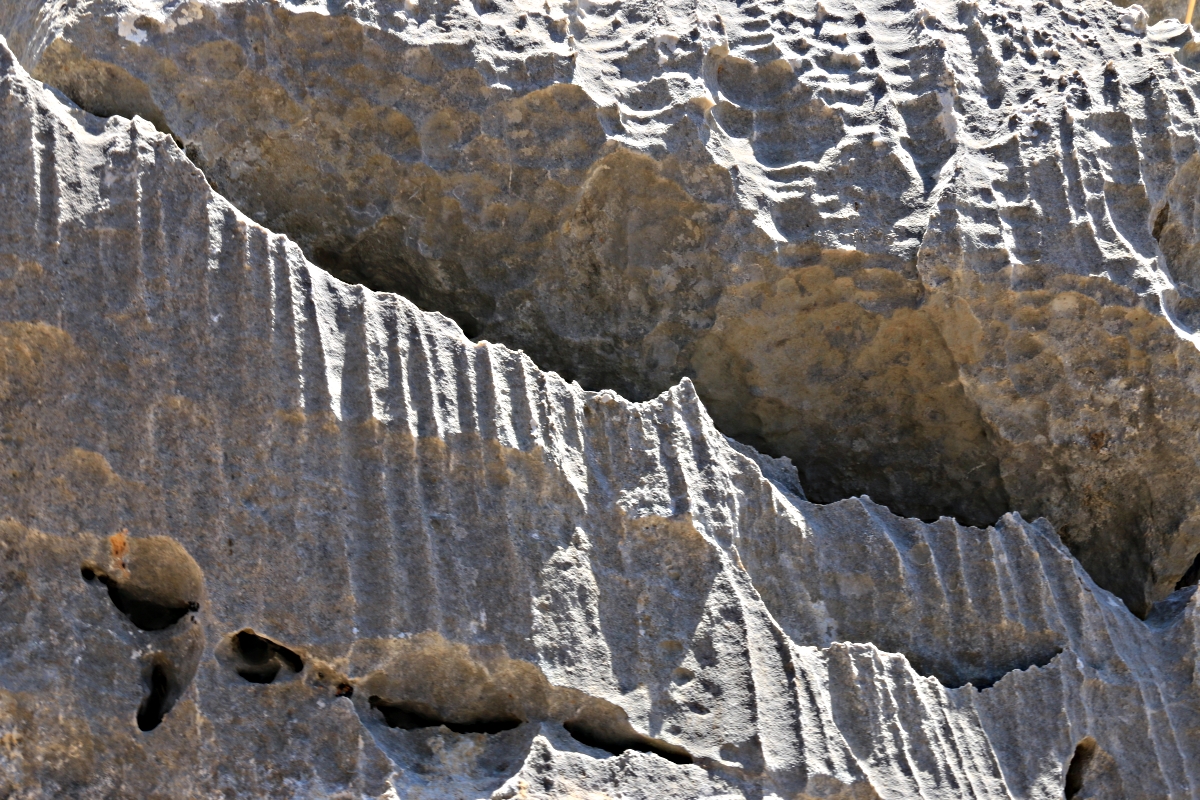
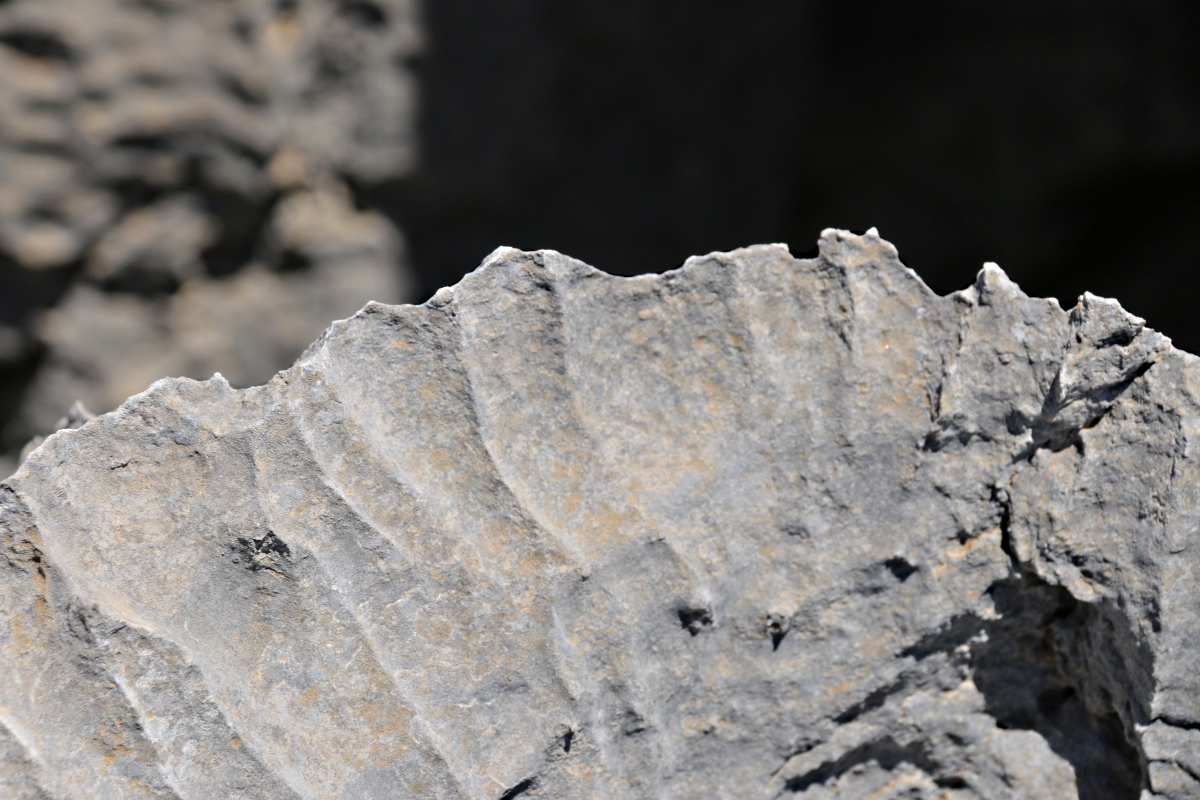
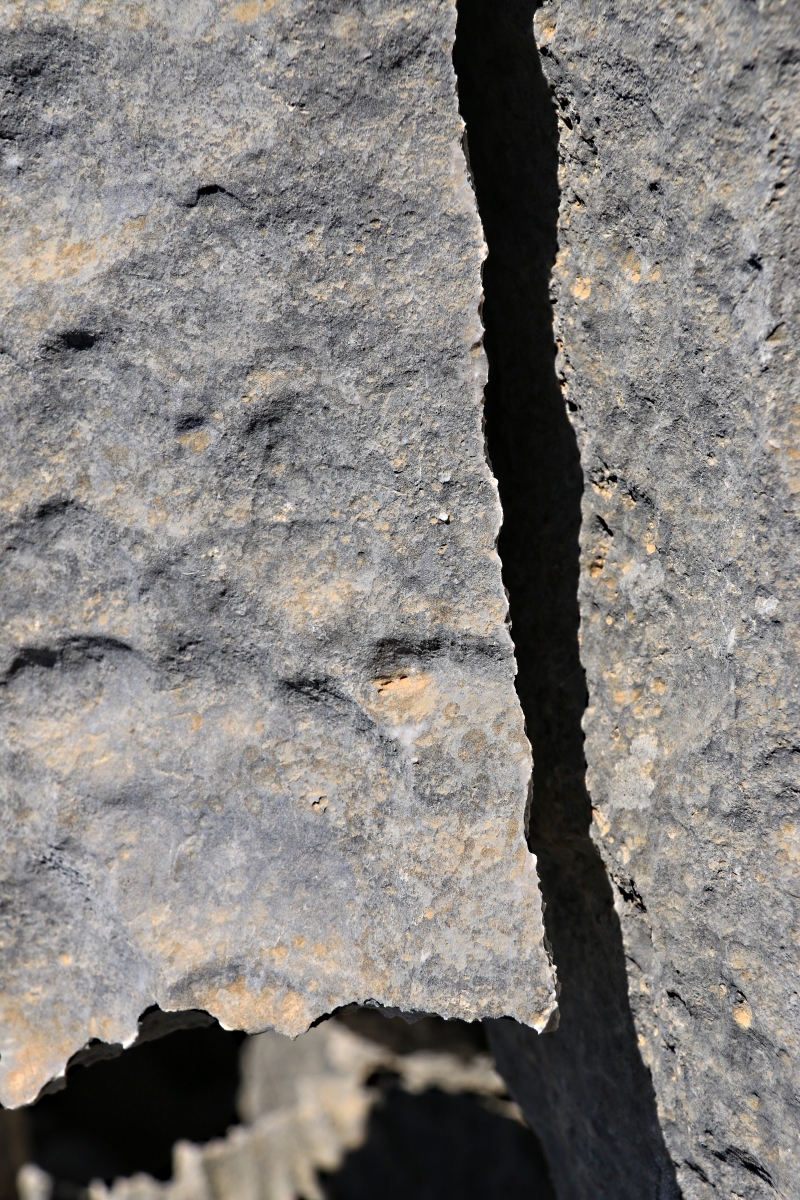
Following the post on the blog about sharp rock I e-mailed a guy in the USA who contacted me some while ago about using photos from the blog in a book he was writing on geomorphology.  I wanted to check out my dim recollection that it was caused by acid in rainwater.  He confirmed that it is indeed ‘solution weathering’ and said similar rock in southern Arizona is known as ‘tear pants limestone’.

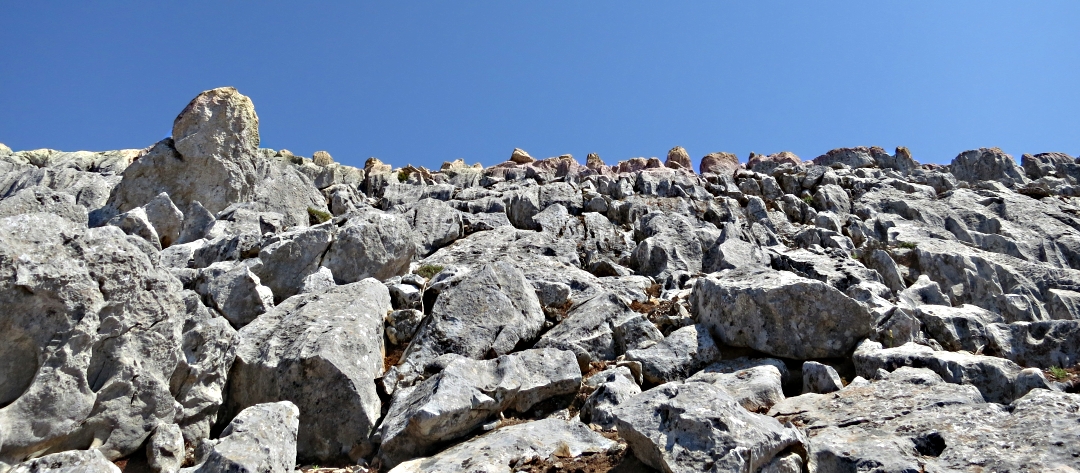
The track I had turned onto had been bulldozed through the rocks with craggy, sculpted, very sharp limestone rising steeply to a ridge on the left.  I don’t tire of this stuff so ditched my rucksack by the side of the track and went clambering up into it like an excited  schoolboy, compact camera looped over my wrist, only to clamber back down again to retrieve the SLR which was safely tucked away in the bag.  There were the same sort of sharp-edged flakes but also whole faces of rock which you daren’t touch.  These could easily tear your pants as you brushed past.

'Tear pants limestone' with a view

‘Tear pants limestone’ with a view

detail

detail

Sculpted rock

Sculpted rock

After half an hour or so I set off again, following the track to its end at the monastery of Agios Georgios Ftochos with a very shady courtyard for cool banana-eating and a fine black-and-white pebbled mosaic ‘hochlakos’ floor inside the church.

Hochlakos floor

Hochlakos floor

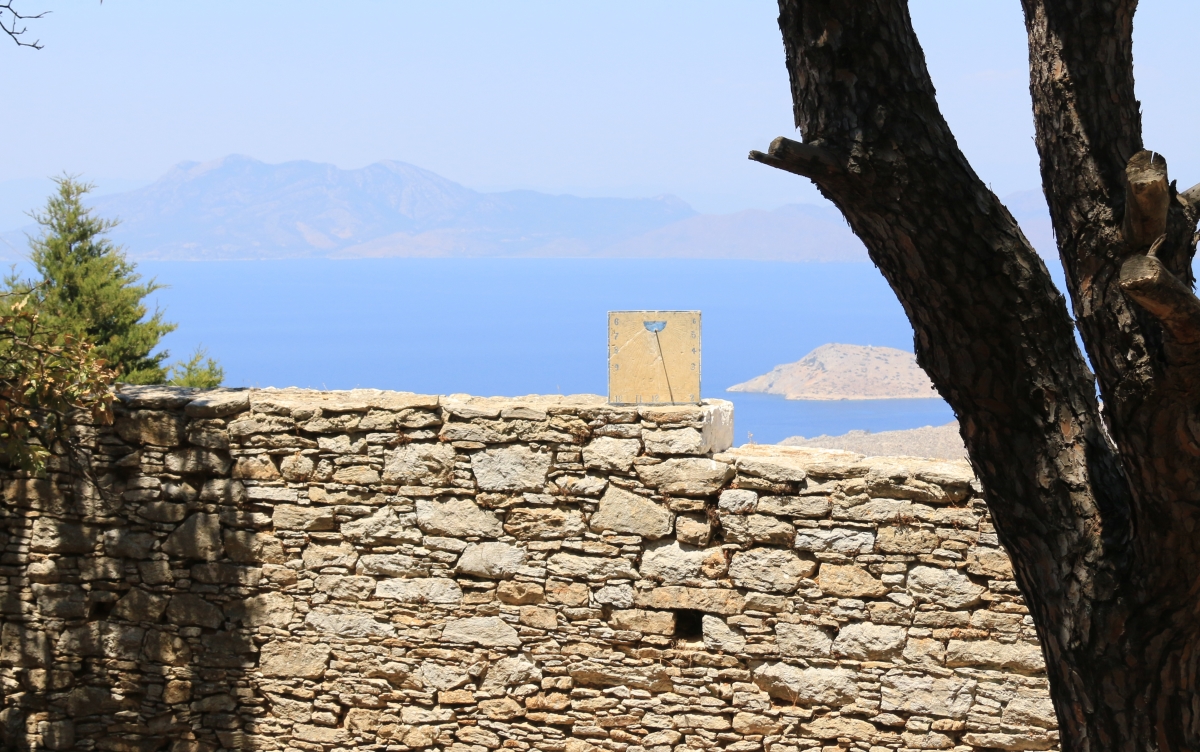
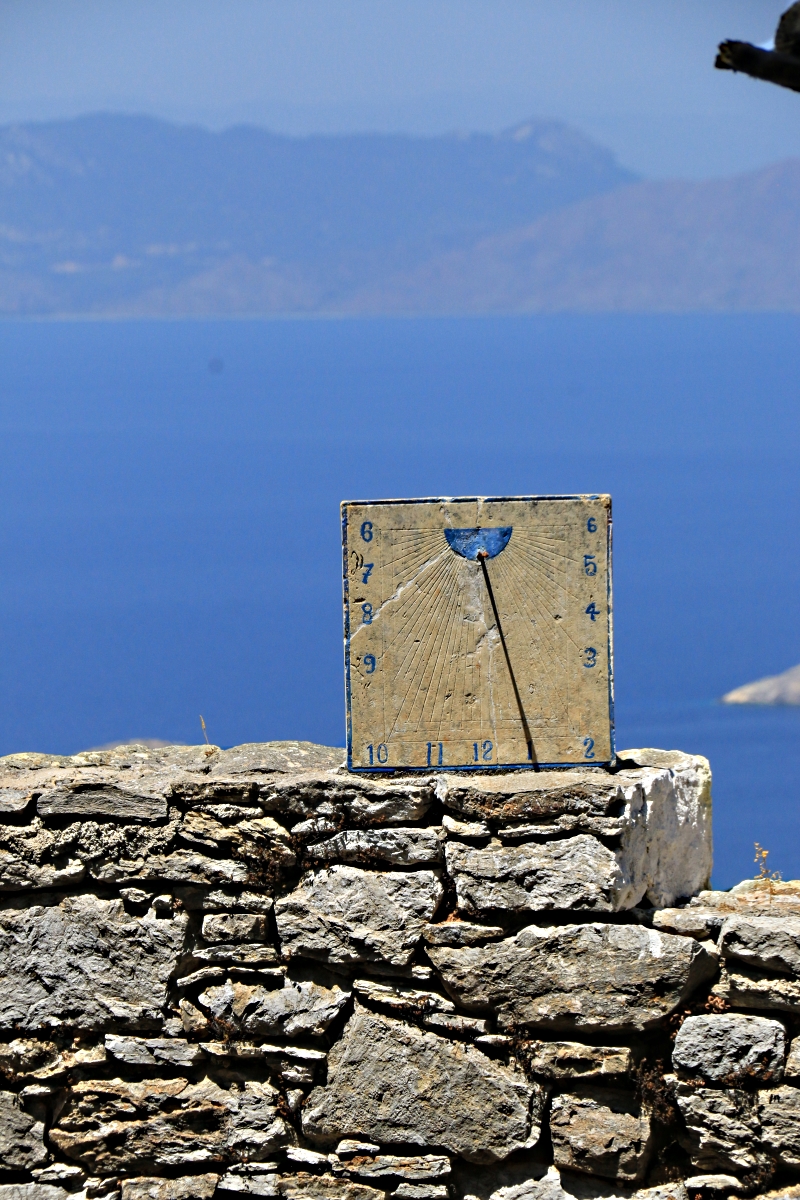
From there a narrow, now little-used, path climbs up through cypress trees to the large, walled compound of the monastery of Agios Nikitas Kotika, only a few hundred yards away but out of sight.  A new track has been bulldozed to it which is why the footpath is nolonger used.  It has an equally shady courtyard but much larger with sweeping views across the channel between Symi and Turkey, Europe and Asia, and a marble faced sundial aesthetically positioned.

Looking from the monastery courtyard across the channel

Looking from the monastery courtyard across the channel

Marble sundial

Marble sundial

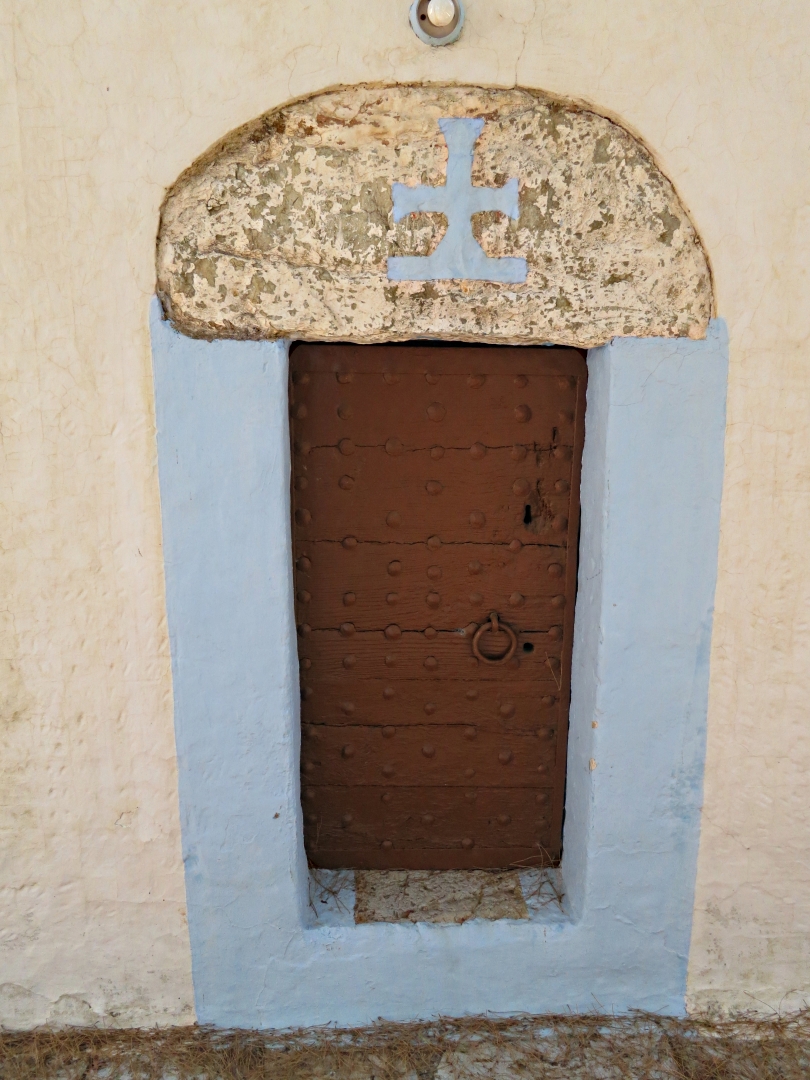
Great doorway

Great doorway

On the photographer's knee

On the photographer’s knee

I was distracted again by the simple, pleasing, composure of the place but after 15 minutes started off along the narrow, in places very indistinct, path leading from the monastery along the length of the ridge towards the castle.

The map showed that the castle wasn’t set on top of the highest part of the ridge but further along closer to its end.  I’ve got a very simple mind which expects to find a castle on top of the highest ground around so I was intrigued as to why the top of the mountain was deemed unsuitable.  As if driven by irresistible force, I left the path and went straight up the steep rocky slope, topped by crags, to find out.

It became obvious.  The top was gently convex, offering nothing by way of natural defences.  The views were impressive but the shape of the mountain didn’t make it a natural lookout position either.

Trig point on the gentle convex curve of the top of the ridge

Trig point on the gentle convex curve of the top of the ridge

14Symi262wDSC0169

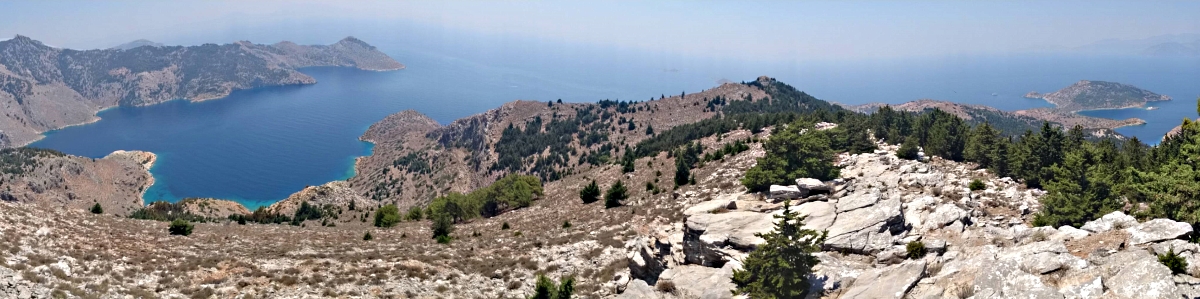
Panorama looking south

Looking north

…. and looking north

Nevertheless, there is something about being on the top of a mountain which is special.  It may not be the highest point around but all the other peaks are seemingly a stone’s throw away, some lower, a few higher.  There is a sense of shared distinctiveness, an affinity with all the other summits and anyone who may be on them.  You can’t help thinking: “I’ve got to the top of this, I could get to the top of all those others.  It’s no big deal.”  I sometimes sit on the top of a mountain, as I did now, and just look.  It’s a club with limited membership.

This trek was a little different.  I had not only been distracted from my ultimate goal by going off-piste to climb to the highest point, then failing miserably to capture the stunning view in a photograph, sat contemplating life, the universe and … just how great it was to be on top of a Greek mountain, but was then distracted from the distractions by the alpine swifts zooming overhead picking-off insects on the wing at incredibly high-speed, changing direction with an imperceptible change of angle of the tail or minute retraction of a wing.   I managed a couple of distant shots but most were blurred, a combination of sheer speed and small size making focusing nigh-on impossible.

Fly-past

Fly-past

Turning away

Turning away

But eventually I had to shift myself, move on, and dropped down to follow the path as it continued along the ridge, now lower, towards the castle which came into view above the  trees.

As I picked my way through the rocks and thinking about the choosing of defensive locations for castles generally, in a moment of distracted madness I decided to keep to  the south side of the ridge rather than follow the footpath on the north to see what the crags were like on top of which the castle stood.  They were steep and very sharp as I found when I decided to climb them, emulating a would-be attack from that side.  Centuries ago someone would have dropped a rock on my head as I tried to avoid severing the ends of my fingers or tearing my pants.

I can't believe I chose to climb this!

I can’t believe I chose to climb this!

handhold!!!

handhold!!!

I was glad to reach the narrow plateau on top of the crags and look down to the sea about 1500 feet almost vertically straight down.  This was certainly a much more defensible location.

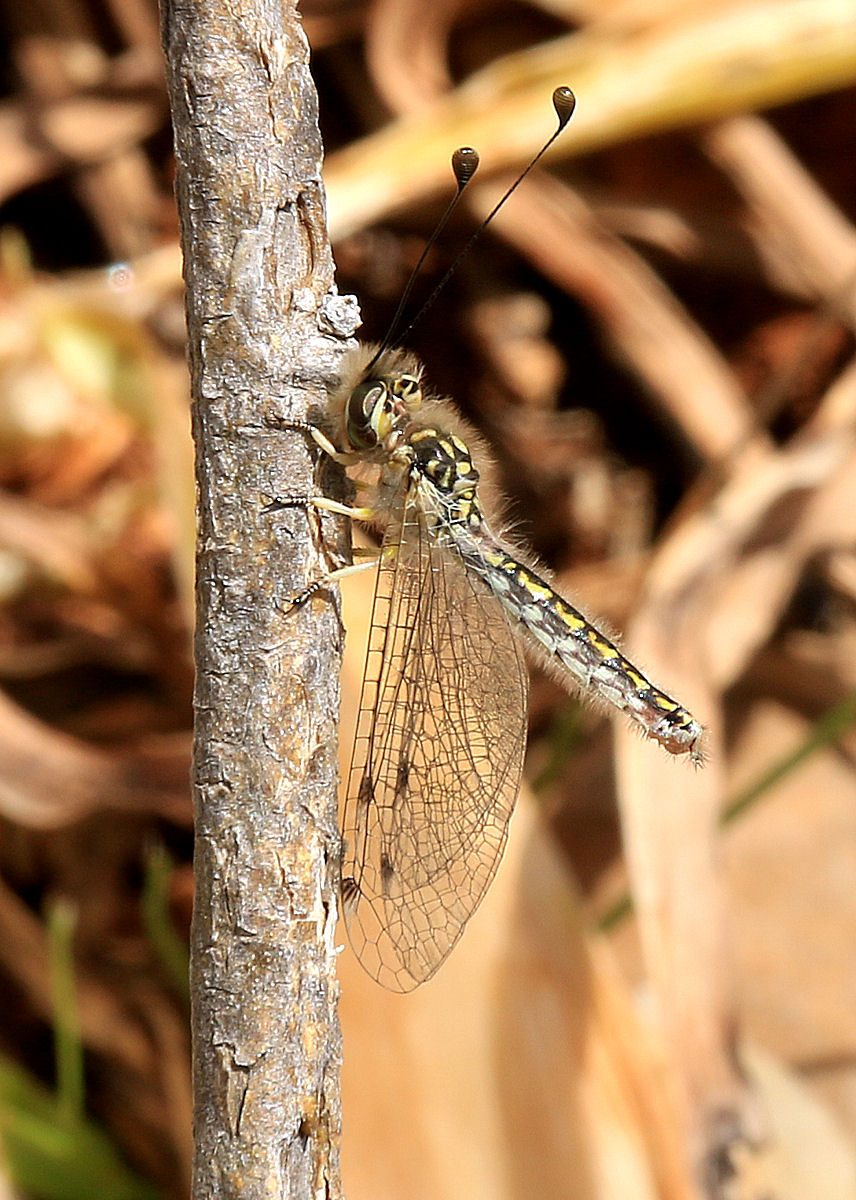
Then yet another distraction.  Dragonflies were flitting around on the narrow platform leading to the castle, now in clear view.  It always amazes me why they go up to the tops of mountains and why they perch on the top of twigs.  I was grovelling on knees and elbows to get a shot with the sky as background when probably the weirdest thing I have ever seen ambled past.  It, or rather they, though it did seem to be a single entity, walked at a deliberate but fairly rapid pace in front of me, I lowered the lens of the camera and took a couple of quick shots intending to follow up when I had finished with the dragonfly but it disappeared in a few seconds. The photos look like the sort of blurry images fabricated to prove to the gullible public that there are alien invaders.  This certainly looked alien but then our mental images of aliens are from the minds of people who I suspect feed their imagination with creatures from the natural world.

Looking back from the castle plateau to the high point of the ridge

Looking back from the castle plateau to the high point of the ridge

Looking across the boulderfield to the castle

Looking across the boulderfield to the castle

1,500 feet straight down

1,500 feet straight down

doing a handstand on a stick

doing a handstand on a stick

 contemplating what to do

contemplating what to do

this is the biplane look

this is the biplane look

Alien species

Alien species

.... stariahgt from science fiction

…. straight from science fiction

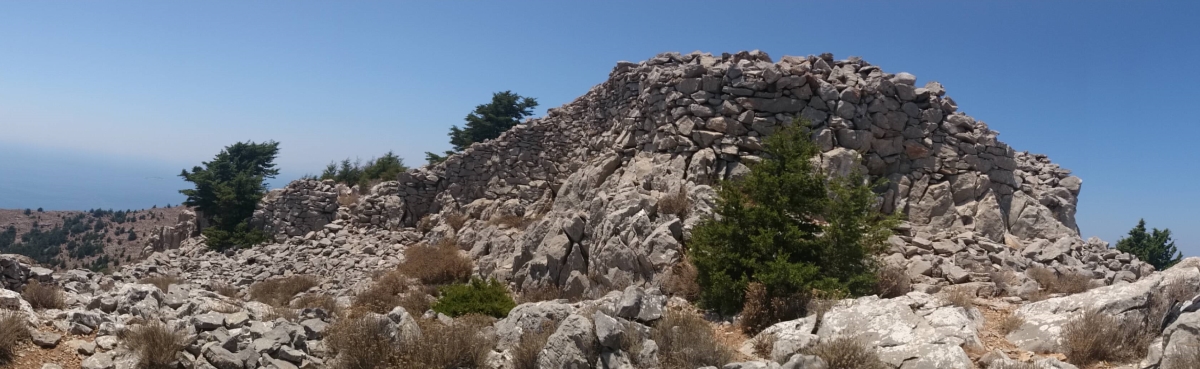
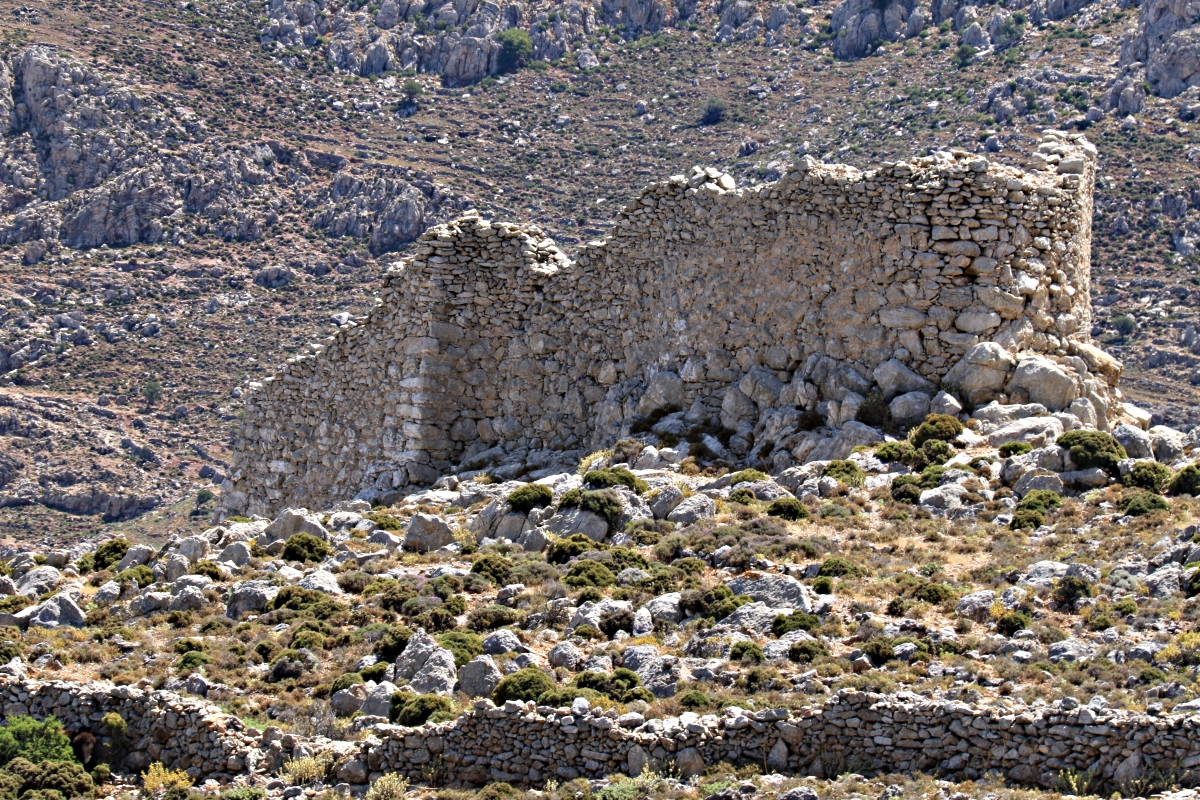
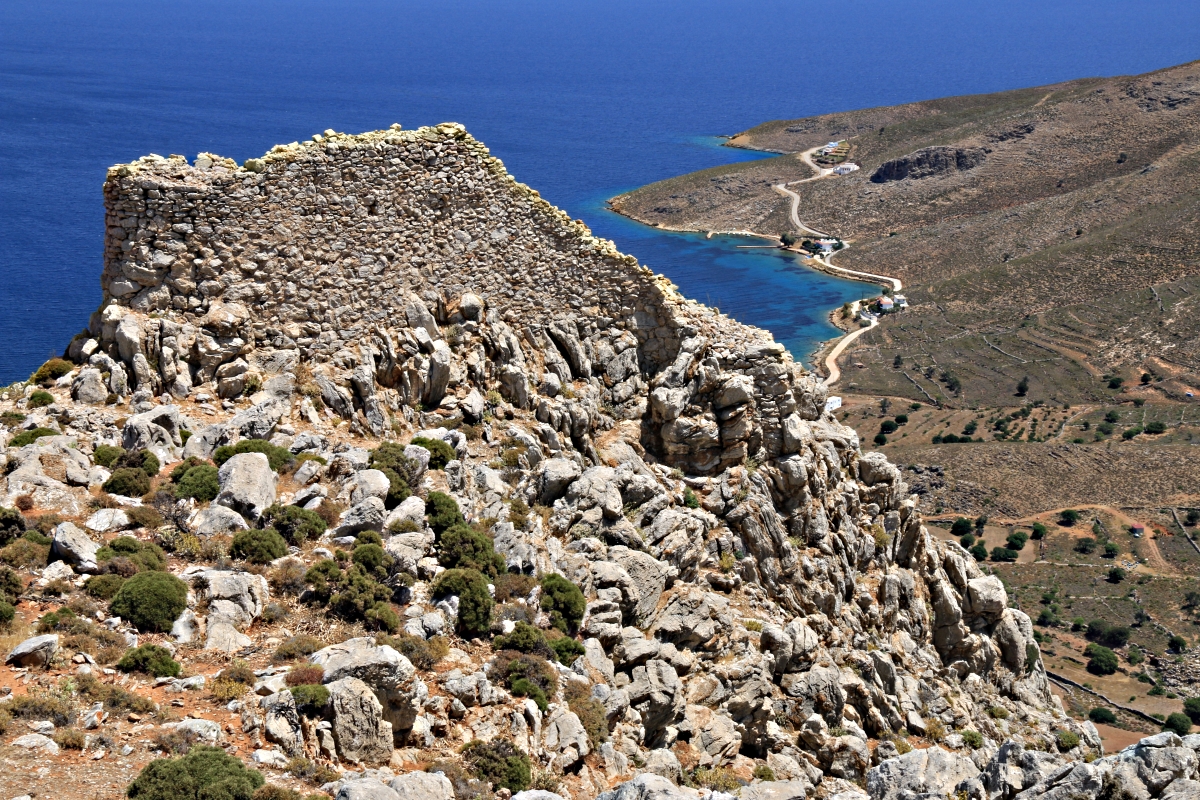
Finally, the castle.  Lappatoniou is slightly larger than some of the minor castles on the islands but still not a very impressive structure to those of us familiar with the huge castles in Wales built to keep the invaders safe from the marauding locals.  It amounted to the remains of  stone walls on top of vertical crags to create a small defensive enclosure.  Much more impressive were the views.  Even though 50 metres or so lower, towards the end of the ridge the panorama was wider, less interrupted, than from the highest point and would have given plenty of warning of approach from the sea whence piratical danger lay.

The castle

The castle

Castle walls on top of the crag, Agios Emilianos island monastery in the distance

Castle walls on top of the crag, Agios Emilianos island monastery in the distance

From the far edge of the castle, a great lookout point

From the far edge of the castle, a great lookout point

I walked back along the north side of the ridge on the footpath.  The crags were not as steep, nor as high nor as sharp but still interesting if you like rock.  Back on the bulldozed track, looking again at the sculpted limestone boulders on the ridge rising above,  much easier walking,  mind relaxing and wandering.  Why do dragonflies perch on top of sticks on mountain tops?  What on earth was that weird insect combo?  Why is soil from white/grey limestone always red?  Why can’t I ever go straight from ‘A’ to ‘B’ without getting distracted?  Answer to the last is simple.  It’s more fun!

One day this will fall off

One day this will fall off

Looking up to the ridge

Looking up to the ridge

Wavy rock, red soil

Wavy rock, red soil

x

Posted in Greece, Hiking, Landscape, Mountains, Nature, Wildlife | Tagged , , , , , , , , , , , , , , , , | Leave a comment

Symi, Tilos, The Mani:  rock with an edge!

I was introduced to rock climbing more years ago than I’m prepared to admit, though I will own up to being 13 at the time.  I remember it vividly, not because it was exhilarating but because it was traumatic.

It was on Seathwaite Slabs in the Lake District.  That’s THE Lake District in the North of England, UK.  Centuries ago it used to be the north of Wales (Cymru), but then the Welsh kings of England, the Tudors, got things in a muddle and it became Cumbria and part of the North of England.  ‘Lake Districts’ in other parts of the world are just plagiarised.  Britain is not only very good at inventing new sports which are then copied by others who are better at them (soccer; rugby; cricket; tennis (though at least we still play it on lawns!); darts; you name it!) BUT we are also very good at making up place names which then get pinched.  A quick Google search shows at least 3 Manchester copies in the USA: New Hampshire, Connecticut and Tennessee.  Almost certainly many more.

Back to Seathwaite Slabs.  We were up in the Lake District for a week as a break from the ‘dib dibs’.  It was my first climb, albeit on sloping slabs, something I would now probably not regard as a ‘climb’ but a footpath.  I made the final lunge to finish, heart pounding, disco-leg, and the youth leader, a bully of  a man, wrested my fingers off the rock and wouldn’t let me top-out because I had a knee on the rock giving extra friction and comfort.  The message was that it was bad form to use your knees or indeed any other part of your body except hands and feet  to make contact with the rock.

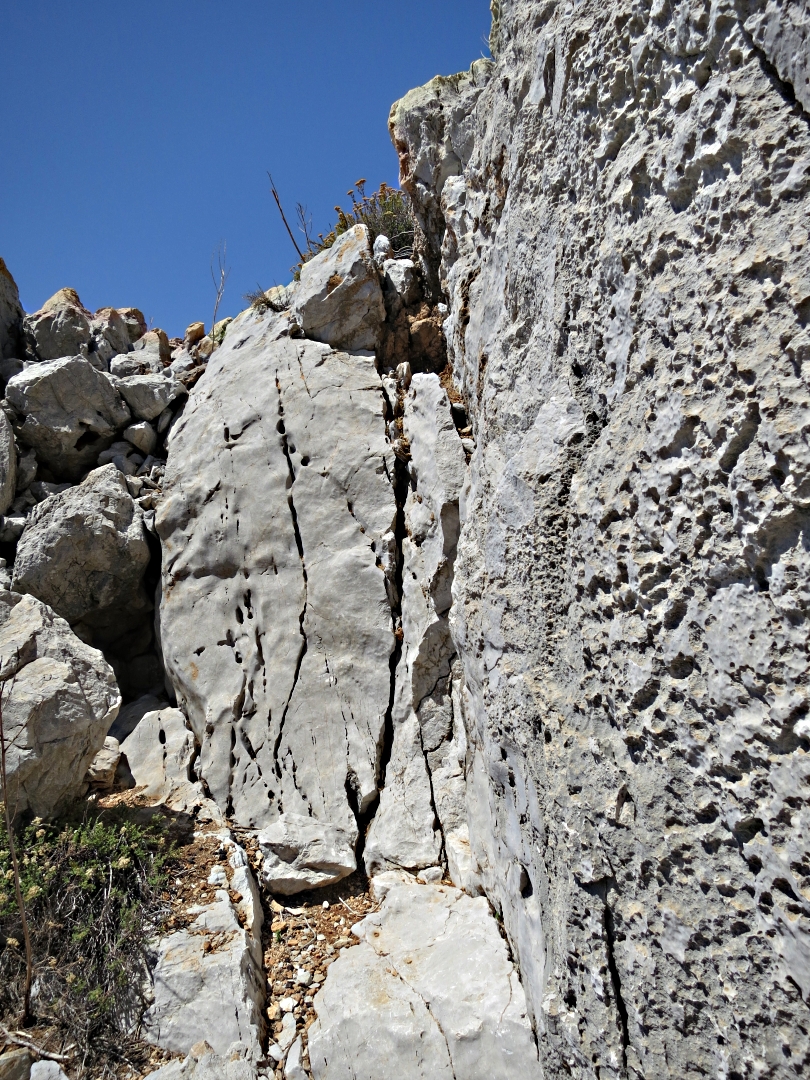
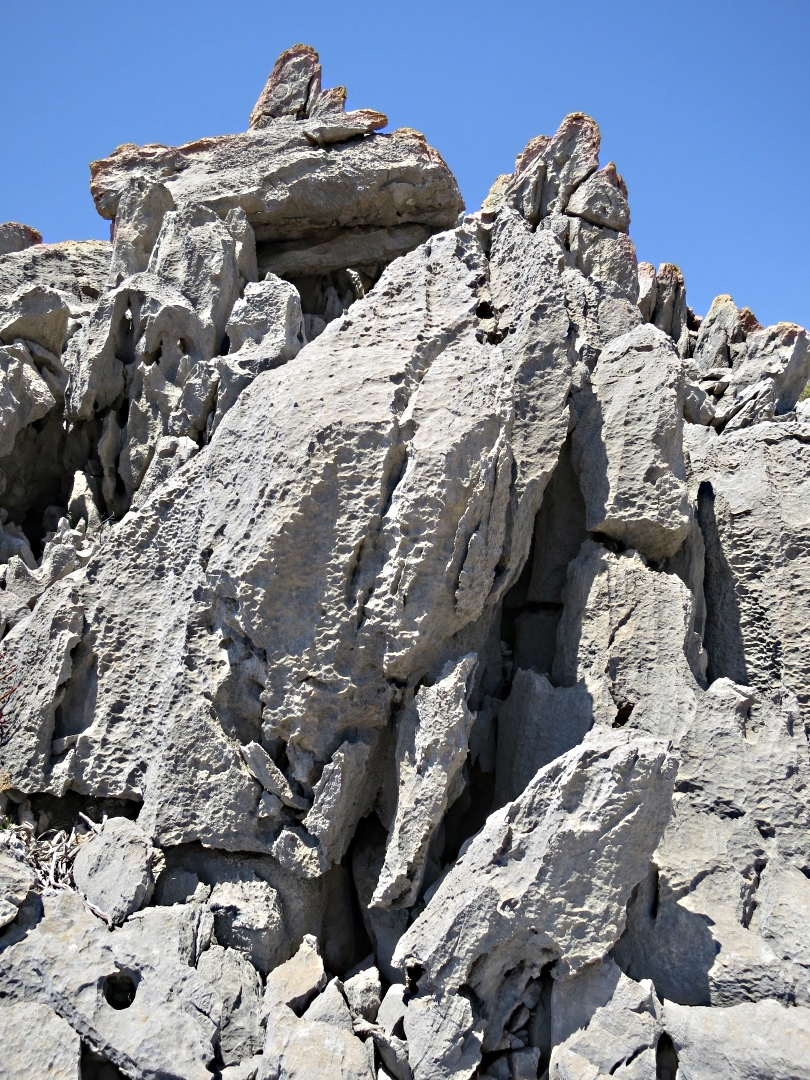
Bizarrely this incident flooded into my mind as I climbed a crag on Symi recently.  I had trekked up to the deserted village of Gria and decided to climb the limestone crag towering above it.    The rock was very aggressive, edges sharpened, scalloped for extra ‘bite’, surfaces rivuleted and pointy-toothed.   Good grip for shod feet, painful on hands and fingers.

Normal practice rock-climbing is to keep your body as close to the rock as you can.  Here it was the opposite.  Essential to make sure there was no part of you came into contact.  No knee on the rock now!  Even a short impact meant blood would flow.

This kind of rock is usually only encountered when you go off-piste.  If you stick to the trails in places the rock is very sharp and irregular but it’s all underfoot.  Only when you start clambering up crags to get a better perspective or just because you like clambering up crags does it become an issue.  Much of it is in spectacular locations.

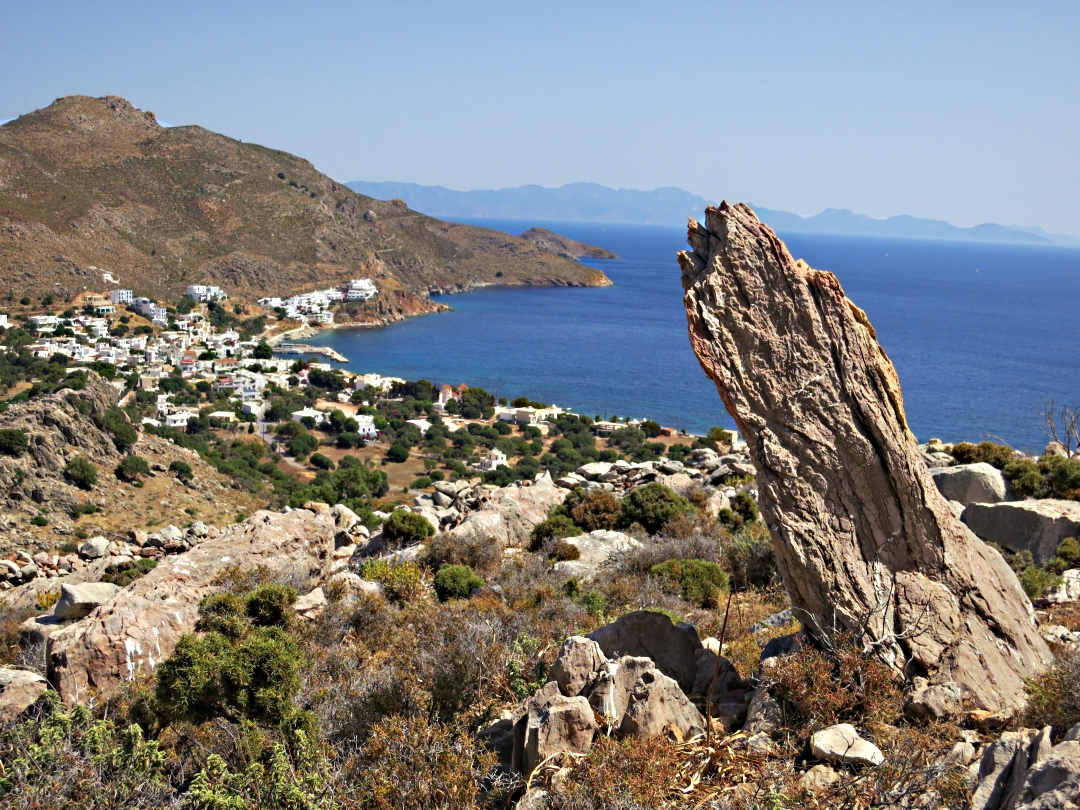
Sharp crag at Gria overlooking Pedi

Sharp crag at Gria overlooking Pedi

Looking down the crag to Lapathos Beach near Agios Vasilios

Looking down the crag to Lapathos Beach near Agios Vasilios

14Symi253w1112

Looking towards Turkey

Note the hole drilled through the rock about 9 inches in diameter

Note the hole drilled through the rock about 9 inches in diameter

Though not found everywhere on the island, there is similar limestone in other parts of Symi as well as on the crags above Pedi Bay, including the long ridge to the east of Nimborio Bay and cliff edges such as near Agios Vasilios.

It’s not confined to Symi.  There is exactly the same kind of rock on Tilos especially on Oros Koutsoubas.  If you lose the path and resort to going vertically up or down to relocate it, or go off-piste to try to get a better angle for photos, you will be come across it.  It was the rock on Koutsoubas which destroyed my sandals.

And it’s not only in the Dodecanese islands.  Determined to get the first draft of the book about my travels around Greece by bus finished before I head back to the UK for a few weeks, I’m spending the mornings writing and the afternoons walking.  I’m now writing about The Mani, the middle of the three peninsulas of the Peloponnese, where I spent a month in June 2012.  Revisiting the trekking I did there in the Viros Gorge  the similarity of the rock struck me.  I diverted off a path which would take me down to the floor of the gorge to climb a rock pinnacle with a tiny chapel on top and a drop of nearly 1000 feet vertically on 3 sides and stood on the same sort of sharp edge.

I find this sharpened limestone fascinating.  Intricately detailed, potentially lethal, natural sculptures.  I sometimes go off-piste to climb a crag with the pretext of getting a better photo but really to explore the rock and photograph that.  There’s also the fact that I like to get on top of things, especially crags.

Delving in the dim recesses of memories of Geomorphology in University, more years ago than I’m prepared to admit, though I will own up to being 18 at the time, I recall that, unlike other rocks, limestone is dissolved chemically by acid in rainwater as well as by physical forces of erosion.  This may be the cause of the extreme sharpness of the rock.

Great care is needed as I have found on a couple of occasions.  Sometimes the footholds are like the edge of a serrated knife blade and an ankle wobble can produce claret in copious amounts.   I once gingerly lowered myself off a slab and as my calf muscle tensed to take the weight the scalloped edge of rock like a bread knife cut a line down the centre of it.

Not that these crags offer traditional rock-climbing routes but ‘Extreme Bouldering’, a proposed new classification based not on the conventional considerations of technical difficulty and degree of exposure but on the risk of flesh being cut to the bone or loss of finger tips.

I don’t know, nor have ever seen, anyone climbing in gloves.  With the exception of the Italian Stallion who for some reason in films in which he shows off his climbing skills always seems to wear gloves.  And what about all the grunting he does?  Does he do that himself or does he have a grunt double?  And the lunges?  A lunge exposes lack of technique …. or lack of height.  Enough said.  But to return to the point, gloves would be a good idea for climbing this rock, preferably laminated with Kevlar.

One of the problems with climbing on limestone crags is that because the stone has a low PSV (Polished Stone Value, a highway engineering term) some of the key holds on popular routes have become very polished and therefore slippery.  Climbers on the easier routes in South East Wales and the Wye Valley know this only too well.  However I doubt that the Extreme Bouldering on Symi will attract that much traffic, the skid marks are not likely to be rubber.

1000 feet to the bed of the gorge below

1000 feet to the bed of the gorge below

..... and a very sharp edge

….. and a very sharp edge

There is a house built onto this crag at Gria

There is a house built onto this crag at Gria

Above Nimborio

Above Nimborio

..... decidedly pointy and sharp

….. decidedly pointy and sharp

Alongside the path down to Lapthos Breach

Alongside the path down to Lapthos Breach

 .... the path is eroded rock but not so sharp

…. the path is eroded rock but not so sharp

Scaloped edges can seriously damage your fingers

Scaloped edges can seriously damage your fingers

.... some more serrated than others

…. some more serrated than others

detail.  This is about 6 inches across

detail. This is about 6 inches across

A large flake off a larger rock gives a particularly sharp edge

A large flake off a larger rock gives a particularly sharp edge

Very fearsome

Very fearsome

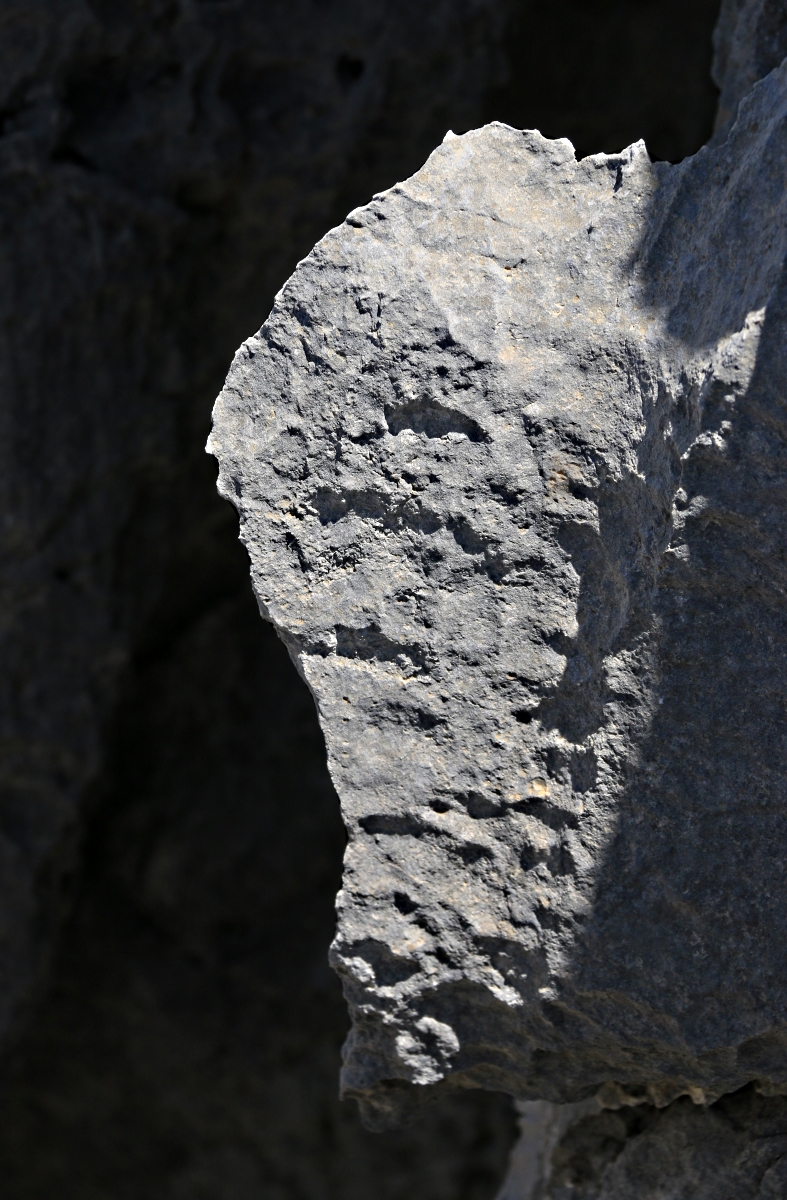
Mind blowing.  This may appear to be looking out from a cave but is in fact a very sharp-edged large flake against deep shadow

Mind blowing. This may appear to be looking out from a cave but is in fact a very sharp-edged large flake against deep shadow

Ouch!

Ouch!

Like a stone alien offering to shake hands

Like a stone alien offering to shake hands

A large serrated-edged hole in the rock

A large serrated-edged hole in the rock

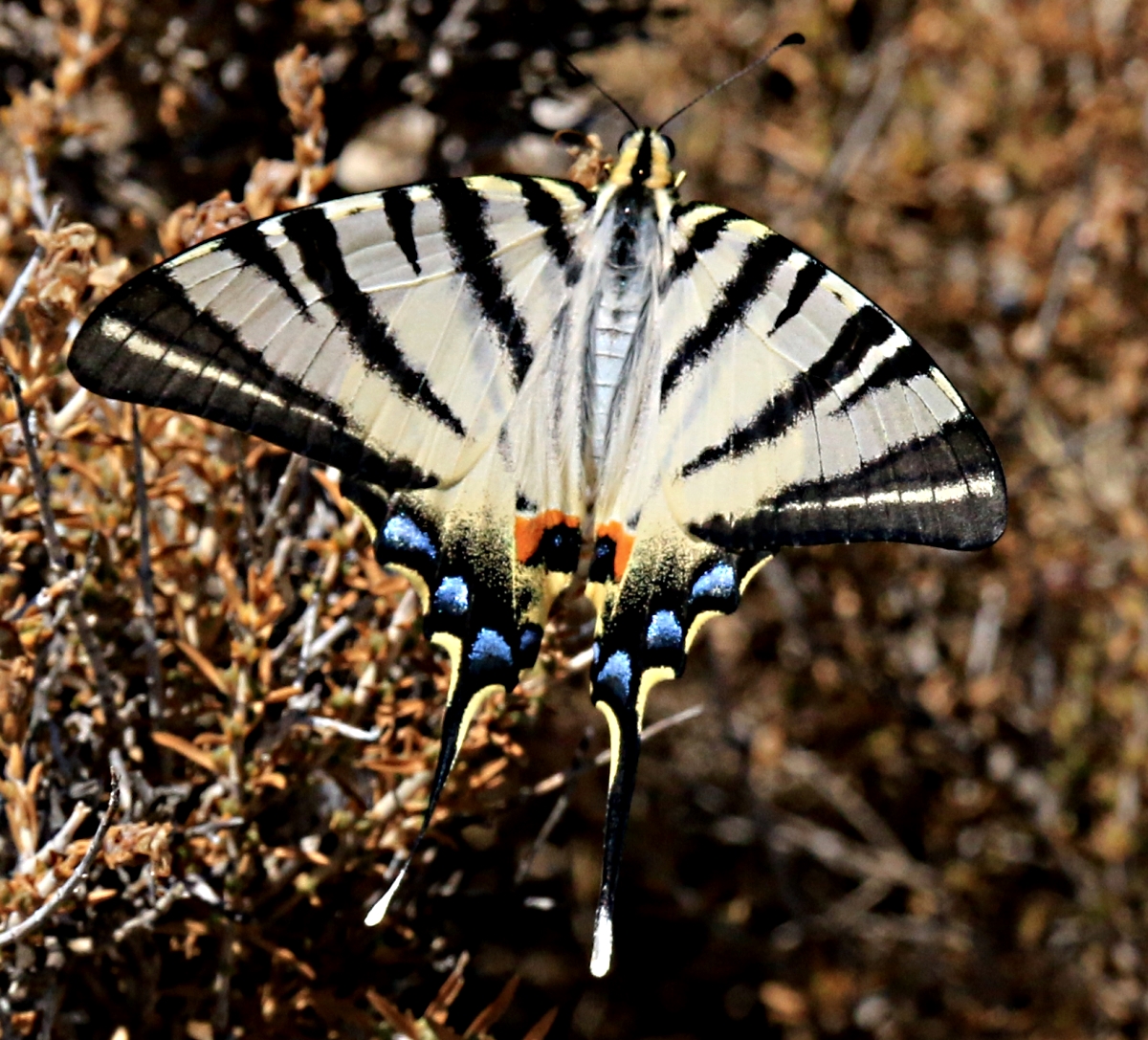
..... and now for something completely different

….. and now for something completely different:  a Scarce Swallowtail

x

Posted in Greece, Hiking, Landscape, Mountains, Wildlife | Tagged , , , , , , , , , , , , , , , , , , , , , | Leave a comment

Tilos: a walk to the beach the day after the mountain destroyed my sandals

Though I set out with that specific intention, I didn’t get to have a swim on the day that The Mountain Destroyed My Sandals.  I passed the top of the path down to Depsoti To Nero on my way back but reasoned that a 120 metre descent to the beach would be inevitably, as sure as shit follows fart (the speed at which it does so is directly proportional to age,…. or so I’m told), followed by a 120 metre climb back up .  True, I could have replenished my water supply from the spring but my feet hurt because my sandals had died and I had by then been walking for 6 hours under cloudless sky with very little shade and the attraction of a cold beer under the bougainvillea at Agios Stephanos outweighed the urge to get wet.

But the next day I wanted a swim!!

OK, it’s time to ‘fess up. (this is a long and very meandering ramble so leave now if your eyes are glazing over and you feel the overpowering sense that ‘there’s more to life than this’.  Believe me, there is …. don’t read about it go and do it!  But back to ‘fessin up…. doesn’t it make you feel younger when you adopt the terminology of ‘The Youf’, as they are known in Old South Wales’, even if it was ‘The Youf’ of 20 years ago.  But who can keep up with changes in the language of Youf Culture, especially if you are approaching a birthday ending in a ‘9’ and know that decade-nce looms ….. Persevere and you may find something of interest.  Or not.)   But again, back to the ‘fessin up.

I don’t do beaches.  Great, indeed fabulous, to get there after a long, hot walk and have a swim.  Extraordinarily refreshing and invigorating in the early summer before the water warms up to bath temperature.  But you dry off in the near–solstice sun within 10 minutes and then what?  Another swim to cool off and sluice the sweat?  Three iterations is normally all I can cope with and then I start climbing the walls.  Or the cliffs as there are generally no walls around.

Soooo, I decided that the best approach was to  head for a beach via a route which would be more of a challenge.  The primary contenders were Tholos and Stavros, both on the other side of the island.  Unfortunately the construction of a tarmac road up to and along the ridge to access the island’s waste disposal facility has provide access to the top of the paths down to both beaches and nerds who hire scooters and drive up there think that the motorway-style signs to Tholos point to a vehicular route.  Wrong!!!  I haven’t seen this myself but was told in the taverna the evening before that a group of  eight people, four male and four female, were seen walking topless along the top section of the Tholos path before it drops steeply and things get very rocky.  Very Rocky.  My interlocutors had gravel-grazed eyeballs so I know that the topless bit was true.

I decided to head for Tholos in the expectation that the word would have got around the British, or more probably Scandinavian, holiday communities that Tholos was a no-go and they would instead be being rotisseried on Town Beach sunbeds or slumped propped up on a beer in front of repeats of the World Cup (FIFA for those who don’t keep up!).

There is a very good, easy path climbing up to the ridge from part-way along the seafront road in Livadia, crossing over the ridge-line tarmac to a brilliant path down to the beach.  A very good and enjoyable walk.   I decided instead to walk up to Agia Anna, a small whitewashed chapel on a shoulder half way up the mountain and then take a narrow path up to Agriosikia Castle on a strategic prominence overlooking the whole bay.

The route starts out along roads constructed to facilitate residential development, at whose expense I don’t know but there is only one house on the new road.  The house is close to the end before it reverts to bulldozed track and the owners must have come out of the deal very well.  Neither the road nor the footpath from it up to Agia Anna are shown on the SKAï map, reinforcing the need for caution using their maps.

Soon after the end of the surfaced road the path strikes off meandering up to Agia Anna through rugged rocks (round which, no doubt, the ragged rascal once ran) requiring some, though minimal, ability to read the ground.

The path to Agia Anna leaves the dirt track

The path to Agia Anna leaves the dirt track

... and winds up through rugged rocks

… and winds up through rugged rocks

watched by the wildlife

watched by the wildlife

Though there is no shade tree at Agia Anna there is shade from the building and after a slurp of iced water it’s onto  a narrow path winding gradually up towards a gully and then more steeply up at the foot of high crags to a fenced enclosure at a spring at the head of a gully .

The onward path climbs up the rocks behind the chapel

The onward path climbs up the rocks behind the chapel

..... winds up towards the foot of towering crags

….. winds up towards the foot of towering crags

Looking down the side of the crag from the enclosure

Looking down the side of the crag from the enclosure

.... before picking a way along the narrow top of a wall

…. before picking a way along the narrow top of a wall

Zooming in on the harbour

Zooming in on the harbour

There are large rocks behind the enclosure providing shade for what seems like half the sheep and goats on the island judging by the depth of droppings, pellets like dried peas over a bed of rich black compost.  At the end of the 19th Century Chile, Bolivia and Peru fought a war over rights to guano, (bird shit), then much valued as a natural fertiliser.  I’m not saying that these deposits are as extensive but they are there for the excavation, all it would need is a shovel, some bags and a string of donkeys.

The path continues upwards behind the enclosure and then leisurely towards Agriosikia Castle which is more impressive from the outside than the inside though recent modest archaeological excavation might change that.  Sometime.

From the back of the enclosure the path climbs up to the ridge

From the back of the enclosure the path climbs up to the ridge

... leveling out as Agriosikia Castle comes into view (centre top)

… leveling out as Agriosikia Castle comes into view (centre top)

closer view of the castle

closer view of the castle

Panorama from the crag behind the castle

Panorama from the crag behind the castle

Behind the castle and way below is the tiny harbour of Agios Stephanos

Behind the castle and way below is the tiny harbour of Agios Stephanos

From the castle the bulldozed track is to be ignored as there is an alternative, a good path leading down to the point in the col where the path from Livadia and that to Tholos intersect the tarmac road.  There were no scooters parked there so the prospect of having to share the beach was diminished.

Looking down to where the paths from Livadia and to Tholos intersect the tarmac in the col

Looking down to where the paths from Livadia and to Tholos intersect the tarmac in the col

Neither the path to the castle nor that down to the col from it are shown on the SKAï map but both very definitely exist and are enjoyable.   By contrast, had I chosen to go the Stavros beach and visit the Stavros Lambros Castle overlooking it, the short footpath to it from the col, clearly marked on the map ………. doesn’t exist.

The descent to Tholos beach is 200 metres, first gradually on a well-trodden path and then a drop down a dry stream bed with wildly contorted folds of rock which must have been created by random but immense pressure, like crushing an empty 1½ litre water bottle with your hands from both ends and then screwing on the cap.  A new section of path has been forged to by-pass a small, dry waterfall which I followed on the way down but chose the old path on the way back and climb the fall.

The path to Tholos from the col passes through a threshing circle

The path to Tholos from the col passes through a threshing circle

Impressively very gnarly crag as the path drops into the stream bed

Impressively very gnarly crag above the path as it drops into the stream bed

Gnarly rock of the small waterfall

Gnarly rock of the small waterfall

The great thing about Tholos beach is that it’s really two beaches, the second reached by climbing through a fissure in the cliff on the right (but don’t tell anyone!).  I usually go straight to ‘Green Tholos’ because even if those who make it down to ‘Red Tholos’ are ‘textiles’ there is no embarrassment.  Except for the time when I returned to the beach after a swim and found a French guy who, with no sense of beach etiquette, had parked himself next to my gear and was being followed by his swarm of young kids from who he was obviously trying to escape in order to read his book..  No doubt it was a satirical treatise on why the French have no word for ‘etiquette’.

Looking through the fissure in the cliff to 'Green Tholos'

Looking through the fissure in the cliff to ‘Green Tholos’

.... and looking back along the beach of 'Green Tholos' to the cliff and its fissure

…. and looking back along the beach of ‘Green Tholos’ to the cliff and its fissure

Later I sat on my balcony and looked back up at the castle in the evening light.

Agriosikia Castle seen from my balcony

Agriosikia Castle seen from my balcony

x

Posted in Greece, Hiking, History, Landscape, Mountains, Nature, Reflections, Wildlife | Tagged , , , , , , , , , , , , , , , , | Leave a comment

Tilos: the mountain that destroyed my sandals

A few more walks after the Kamikaze Trail and I decided to have an easy day and head to a beach for a laze and swim.  Apart from the pebbled town beach, over  a mile long and just a quick stagger across the pedestrianised seafront road from hotels, apartments and tavernas, there are a number of very good options on Tilos requiring only a relatively short walk from Livadia:

Red Beach, small but a favourite with many because it’s a short distance along a good cliff path and has a name familiar to English tongues;

Lethra further along the same cliff path with a couple of options for shade;

Thollos on the other sided of the island with a dramatic drop down a small gorge to affine-shingle bay;

Stavros also on the other side of the island with an even more dramatic gorge-path through fiercely folded red rock.

The treks to these beaches, short as they are, thankfully deter the majority people so there is no affront to quietness or modesty.

This time I opted instead for the beach at Despoti To Nero, nothing to do with autocratic Roman emperors, in Greek it means something like ‘Lord of the Water’, an indication of the quality of the freshwater spring which emerges into a trough behind the beach.

The first 1½ miles is a saunter around the coast road to the tiny harbour of Agios Stephanos on the opposite side of the wide bay from the main harbour.  In keeping with my intention to be lazy I called in the taverna there and sat with a frappé under the bougainvillea canopy watching life drift slowly by.  Or not.

Looking across the bay on the way to Agios Staphanos harbour

Looking across the bay on the way to Agios Staphanos harbour

Looking across the Agios Stephanos harbour with its complement of small fishing boats

Looking across the Agios Stephanos harbour with its complement of small fishing boats

Then I girded my loins (or the equivalent when you’re wearing shorts) and climbed up the rough track to the tiny chapel of Agios Ioannis and sat under the shade tree swigging cold water from a ½ litre bottle.  It was very hot with temperatures forecast to push up towards 400C by the afternoon and no breeze so as well  as the ‘neraki’ I had a 1½ litre bottle of iced water in an insulated sleeve and, knowing there was sweet water at the spring, I was not stinting myself.   Some years ago I had a urinary infection on Tilos from becoming dehydrated and didn’t want the same to happen again.

After the chapel the route is on a very good, easy cliff path with views 150 metres down to the sea shading from turquoise to dark blue as it deepens and a rocky shoreline interspersed with small shingle beaches.  Turning left at a fork in the path and I’m looking straight ahead to 500 metre high Oros (Mount) Koutsoubas on the opposite side of the bay.   It’s still not yet the end of the morning, I’m feeling refreshed from a couple of stops, caffeine intake and plenty of water, I’m walking strongly ….. and I can’t face killing time on a beach for an afternoon, only another half an hour away at most.

The cliff-path zigzags when it meets rock crags

The cliff-path zigzags when it meets rock crags

The path forks at the centre of the shot, the cliff path goes left, the alternative continues up the valley to the crag at the top

The path forks at the centre of the shot, the cliff path goes left, the alternative continues up the valley to the crag at the top

Looking back down the path after forking left

Looking back down the path after forking left

On a whim I change my plan.  I’m going to climb Koutsoubas.  I’ve done it a few times before  so I know I’m letting myself in for something a lot more taxing than originally intended but I’m feeling strong and have more than usual water.

I pass the fork down to the beach at Despoti To Nero, vainly look for ripe figs on a couple of path-side trees, and come to the deserted village of Ghera where the good path ends.

Looking across the deserted village of Ghera, the end of the good path

Looking across the deserted village of Ghera, the end of the good path

From here it is a difficult to find the mountain path, first tracing across thorn-covered abandoned agricultural terraces, through a clump of pink oleander in a dry stream bed and then down into a gulley before crossing onto the flank of the mountain.  The path was created many years ago when donkeys would have carried all the building materials and supplies up to the telecom station on the top but now, like the telecom station, the path is abandoned and falling into disrepair, helped on its way by goats excavating for roots and by marauding plants.

However, while the telecom station remains highly visible for miles around the path has all but disappeared.  Not shown at all on the dubiously accurate SKAï map it zigzags  up the mountain, marked in places by small cairns of the ‘stone on a rock’ variety.  Part of the reason for the frequent changes of direction is to maintain an easier gradient for loaded donkeys but it is also to avoid what the Cornish call a ‘zawn’, a steep sided gulley running down to the sea.  On previous occasions I have failed to spot a change in direction and once lost it is very difficult to find.  The best option when that happens is to go straight up (or down on the descent) until the path is intersected again.  Or not.  It can mean navigating up very large, very sharp limestone boulders. Great fun but energy-sapping.

The mountain path crosses the top of the zawn

The mountain path crosses the top of the zawn

This time I was determined to find and follow the path properly all the way up and down.  It had once been a well trodden donkey path so when the way ahead didn’t look right and I found myself trying to read the ground I knew that I had missed something.  On several occasions I stopped to look around and there was another line going up at an angle behind me.

I didn’t hurry, partly to make sure I was on the path, partly to reinforce a few of the ‘stone–on-a-rock’ markers for coming back down and for others going up, partly to make sure I perspired as little as possible and so conserve water.

Perspire I certainly did.  Any hope that there would be more breeze higher up was ill-founded.  It was flat calm so nothing to dry the perspiration which sat on my arms, rivuletted own my front and back.  In places the route is across sharp-edged rocks and I was finding it increasingly uncomfortable underfoot but that was just another distraction so I ignored it.

A snake used the rough edges of the rock in the path to help slough its skin

A snake used the rough edges of the rock in the path to help slough its skin

First sight of he deserted telecom station

First glimpse of the deserted telecom station

.... getting closer

…. getting closer

I was glad to reach the top and find a patch of shade behind the old accommodation block, bed frames piled up inside, now used only by goats and sheep.  The smell was so bad in the heat that I would have passed out had I gone inside.  The goats and sheep, getting out of the sun, panicked when they saw or heard me and ran out kicking up clouds of dried, powdered droppings which clogged the throat.

I found a bit of shade to eat a banana and nut bar and for a short siesta,.  By now I knew it was important to conserve water and resisted the urge to swig it back, however refreshing it would have been.  Temperatures measured and forecast are those in the shade over an open area of grass.  By mid afternoon I had no doubt that in my patch of shade it was over 400C, the limestone rock and concrete slabs radiating stored heat.  There was no breeze, only the occasional slightest of zephyrs.  Once out in the sun again the it seemed like being hit by a hammer but the body quickly readjusts.

After a few photos to prove that I had been on top I headed back down.

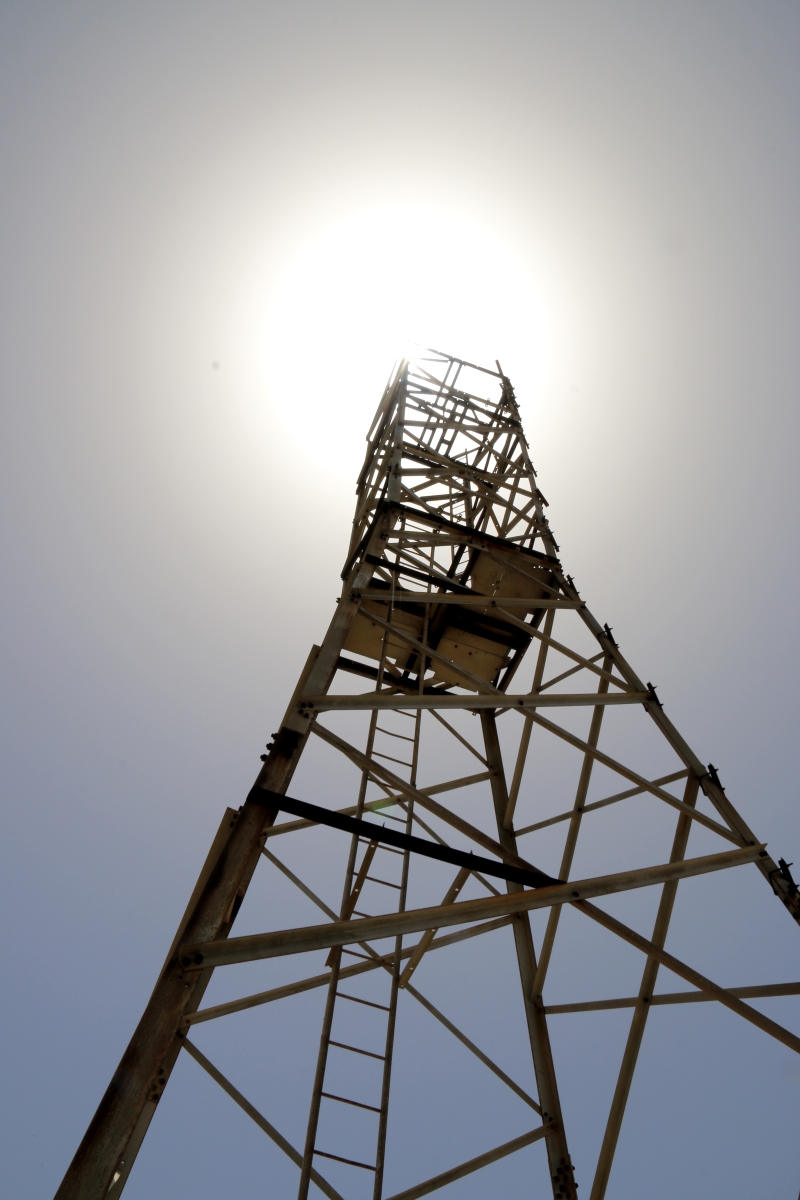
The telecom mast is still in place

The telecom mast is still in place

Zooming in on the beach at Despoti To Nero, my original destination and now a very tempting prospect

Zooming in on the beach at Despoti To Nero, my original destination and now a very tempting prospect

Photographer on the edge:  500 metres straight down to cool blue sea

Photographer on the edge: 500 metres straight down to cool blue sea

Going downhill with the pressure moving onto the front of the foot, I was more aware of discomfort especially on stony sections of path.  Normally I prefer walking on rock because it is more certain underfoot than soil, sharp-edged rock giving good grip especially when going downhill.   But it became more uncomfortable and the descent seemed to take longer than I expected.

I was glad to reach the shade of trees back at Ghera with the prospect of a good path the rest of the way.    The ice in the water had all now melted but it had done its job and what was left was still refreshingly cold. Then I took off my sandals to empty out bits of grit and found the reason for the discomfort.  Though there was still plenty of tread, the  footbeds had collapsed and one had a 3cm split across the ball of the foot.  No wonder it felt like walking in the moccasins I wear in the house in winter.

The sandals were new when I came out in April and have done less than 10 weeks of trekking in the mountain.  As with car tyres there is a trade-off between good grip and hard-wearing qualities and I have always chosen good grip because of what I do, sandals soled with ‘spider rubber’, the same rubber as used on rock boots.   However, I do expect more than 10 weeks’ wear from them.  An issue to take up with the manufacturer.  I may need to change my brand.  And my avatar!!!!!

They are not completely dead but I can’t trust them now on extreme terrain and they would damage my feet on a long walk.  It wasn’t this one trek which killed them.  I’ve been walking sharp limestone trails since April and it must have been a gradual process But it was this inconsequential looking mountain which finally did for them.

Looking back across from the cliff path to Koutsoubas

Looking back across from the cliff path to Koutsoubas

The walk back from Ghera was uncomfortable but no problem, a relief to get back to shade at Agios Ioannis and drain the last drops of water before the final drop down to a cold beer in the taverna at Agios Stephanos.

A relief to be approaching shade at Agios Ioannis

A relief to be approaching shade at Agios Ioannis

x

Posted in Greece, Hiking, Landscape, Mountains, Nature | Tagged , , , , , , , , , , , , , , , , , , , | 2 Comments

Tilos: the kamikaze trail

Hopping between Greek islands has become more difficult over recent years as older, less efficient boats were deemed financially unviable or failed to meet rising safety standards and have gone out of service.  Operating companies are fewer in number and struggle to continue even with Government subsidy.

This means that in some cases islands may be relatively close together and yet have no direct ferry link.  This is the case with Tilos and Nisyros two of the islands I hope to visit from Symi during the summer months.  There is a regular Big Boat ferry from Symi late on a Friday evening but no direct service back, requiring a long and expensive return via Rhodes or Kos.

There may be fewer inter-island links but in many cases those which remain are significantly faster and more punctual, particularly so Dodecanese Seaways which runs up and down the Dodecanese islands close to Turkey.  So when I heard from friends on Tilos that the island’s ‘Sea Star’, was in Piraeus having her bottom scraped,  and that until the end of June, Dodecanese Seaways , or the ‘Spanos’ as it is known now it has been taken over by the supermarket chain of that name, was running  to Tilos on Saturday evening, overnighting, and returning early on Sunday morning, it was too good an opportunity to miss.  I went for a week’s walking.  And the odd bit of swimming

I often decide what I’m going to do as I go out of the door in the morning, even change my mind part way and go by a different route or to a different destination.  Not so my first day on Tilos.  My decision was determined by practicality.  A very enjoyable but taxing path begins at Agios Panteleimon, the large Byzantine monastery at the north end of the island, which can only be reached by bus once a week, on Sunday morning.  It is not even possible to take a taxi as the island nolonger has one.  No point in hiring a car – no way to retrieve it afterwards.  I had just one shot at this, my first day on the island.

The bus leaves the harbour at 11.15, arriving at the monastery about 12.00.  It was packed, all seats occupied and at least 20 people standing all the way as the tin box on wheels became an oven under the near-solstice sun.

After leaving the monastery there is no shade on the route, 8 miles through the midday heat.  I hoped that my acclimatisation programme on Symi, setting out for short walks around noon, would pay dividends.  My arrival on Tilos seemed to coincide not only with completely clear skies but rapidly rising temperatures. Fortunately on Sunday the edge was taken off the heat by a stiff breeze which made for very good walking conditions.

The route is long and committing in the heat of summer with no opt-out alternative: you finish or you turn back.  Route-finding is difficult in places and people have been known to wander around trying to re-find the path for a couple of  hours.  That’s maybe why friends who also happened to be on the bus chose to walk the shorter and in some ways more spectacular path to Agios Andonis, dubbing my route the ‘kamikaze trail’.  It is difficult.  It can be dangerous.  But it’s not that bad!

The beginning of the route is very helpfully signed by a green-painted finger-post at the side of the monastery entrance and a short flight of wooden steps to a path following the high stone wall around the top of the compound.   The point where the path leaves the monastery is not clear, stepping over large rocks to find a trail which from then on is fairly obvious for a while as it climbs up to 400 metres at the foot of high crags and crossing a scree below the peak of Profitis Ilias, Tilos’ highest mountain, before reaching a col where all sight of civilisation is left behind.

The Byzantine chapel at  Panteleimon monastery

The Byzantine chapel at Panteleimon monastery

The first internal courtyard

The first internal courtyard

Looking from the roof terrace towards the crags to which the path leads

Looking from the roof terrace towards the crags to which the path leads

The path first follows the high wall at the top of the monastery compound

The path first follows the high wall at the top of the monastery compound

.... and then strikes out across large rocks

…. and then strikes out across large rocks

Looking back as the path climbs above the monastery

Looking back as the path climbs above the monastery

The path leads towards the high crags

The path leads towards the high crags

.... and leads across a scree below cliffs

…. and leads across a scree below cliffs

Looking back from the foot of the crags

Looking back from the foot of the crags

Narrow but easy to find and follow

Narrow but easy to find and follow

Squeezed between rocks

Squeezed between rocks

A short distance to another col and large flat slabs of rock, great for a banana-break while looking north to volcanic Nisyros, Nikia on the rim of the caldera white against the dark mass of Oros Diavatis, that island’s highest point behind it.  Resisting the temptation to sit and look, or even doze in the sun, I was mindful that I was aiming to pick up a bus from Eristos, the beach at the end of the trail, at 16.45 as I didn’t want to wait for the next one at 19.15 …. and  I had scarcely begun.

Wide panoramic view from the slabs in the col. Nisyros in the background

Wide panoramic view from the slabs in the col. Nisyros in the background

Zooming in on Nisyros, the caldera-rim village of Nikia clearly visible

Zooming in on Nisyros, the caldera-rim village of Nikia clearly visible

From the slabs the nature of the path changes, to loose red shaley rock, easy to find but needing care to avoid sliding.  Despite a firm intention to make progress and to concentrate on broad views rather than detail there are still distractions which cannot be ignored, such as chasing a dragon fly through the vegetation, its large eyes seeing me coming and moving off before I can get the camera in range and focused.  The long descent on the red shale comes to a small spring, clean, sweet water dropping from a carved marble spout into a muddy puddle.

Looking back up the red shale path to the slabs in the col

Looking back up the red shale path to the slabs in the col

..... and looking down on the long descent to the spring

….. and looking down on the long descent to the spring

permanent spring from a carved marble spout

permanent spring from a carved marble spout

Lurking under  a plant, spotted when it furled its wings

Lurking under a plant, spotted when it furled its wings

The eye-catching body

The eye-catching body

Understandably a number of animal tracks lead to the spring, some clearer than others, all of them seeming to be potential routes onwards.  Goats and sheep, especially the latter which follow each other nose to the ground line astern, have been treading these trails for decades if not centuries and now they are well worn with no indication which is the footpath to Eristos.  The mountain rises up steeply on the left and must be crossed at some point but the way ahead from the spring is to keep to the same level and after  a short distance fading red paint marks and the occasional small cairn confirm the decision.

Then the climb begins, picking a way over rocks, looking for cairns in the middle-distance to get the right direction and picking a line by reading subtle differences in colour showing centuries of wear.  Surprisingly, one short section is built up with stone terracing around the edge of a crag like a kalderimi.

Rough path leads towards a short section on top of stone terracing below crags

Rough path leads towards a short section on top of stone terracing below crags

Over the shoulder of the mountain and down to an old abandoned chapel dedicated to the Panagia (the Madonna), then a drop into a gulley again with myriad optional ways ahead. From this point very careful attention to fading red paint splodges and small cairns is essential as the route emerges from the gulley and meanders vertically and horizontally but inexorably upwards over very rocky ground towards the final col before Eristos comes into view.  A great pleasure is to pause for a slurp of remaining bottled water at ‘The Terrace’, flat rock slabs among very broken and sharp limestone crags, gazing longingly down to the enticing cool of the sea far below.

The long-abandoned chapel of 'Panagia' in the middle of nowhere

The long-abandoned chapel of ‘Panagia’ in the middle of nowhere

Need to look out for small cairns ot judge the direction of travel

Need to look out for small cairns ot judge the direction of travel

.... sometimes leading straight up rock crags:  note the cairn on top

…. sometimes leading straight up rock crags: note the cairn on top

Reaching the flat slabs of The Terrace

Reaching the flat slabs of The Terrace

When the col is finally reached at just shy of 300 metres between the main ridge of Profitis Ilias and Patella (the medical term for ‘kneecap’) it is still a long drop  over more than 2 miles down to Eristos and the bus back to Livadia.

Reaching the final col and the long descent to Eristos Beach in the distance

Reaching the final col and the long descent to Eristos Beach in the distance

I arrive with 20 minutes to spare before the bus.  Water bottle drained.  Great walk!

Posted in Greece, Hiking, Landscape, Mountains, Wildlife | Tagged , , , , , , , , , , , , , , , , , | 2 Comments

Symi: a gorge walk

Since I arrived back on Symi nearly two weeks ago I have been setting out for walks at midday in order to get myself acclimatised to walking in the heat ready for longer treks when noon temperatures would be difficult to avoid.  On Wednesday, only 3 days before the summer solstice when the sun would be at its highest, I set out an hour earlier than usual to walk to the cliff-top chapel of Agios Vasilios and the descent to Lapathos Beach, a classic and long-time favourite.  I felt stronger walking than I had for a while, so much so that before I reached the ridge I had already decided to tackle a challenge I have been shirking for a few years:  to return from the beach up the bed of the Vasilios Gorge.

I get easily bored with beaches and frequently amble off and climb something.  A number of years ago I had walked a short distance from Lapathos beach up the gorge  and then climbed a waterfall into a side-gulley to regain the path and return to my kit under a tree on the beach.  This time the intention was to get to the hamlet of Ksissos at the top of the gorge.

I didn’t know if it would be possible, I remembered following the bed of a gorge at Olymbos on Karpathos and coming across a waterfall which I would have struggled to climb even with rock boots, a rope and a climbing partner.

Having learned a long time ago to assess risk, I reckoned that the worst that would happen would be that I would have to accept defeat, retrace my steps to the beach, and return via the path.

The outward trek was enjoyable as always, first on a good kalderimi to the burgeoning hamlet of  Ksissos on the ridge and then on a great path high above the floor of the gorge with occasional glimpses of the dry riverbed which I would soon be following far below.  Closer to the coast the cliffs dropping into the gorge become more and more dramatic with natural ‘bonzai’ cypress trees clinging to fissures in the rock.  The moment when the beach first comes into view still causes an intake of breath.  The final steep descent on near vertical rock is usually the most interesting part of the walk but this time it was just a warm-up.

Looking down from the path to the dry riverbed far below

Looking down from the path to the dry riverbed far below

Narrow, clear path

Narrow, clear path

The first glimpse of Lapathos Beach below towering crags

The first glimpse of Lapathos Beach below towering crags

The path crosses a gulley dropping down steeply into the gorge

The path crosses a gulley dropping down steeply into the gorge

The path drops down the rock to the beach

The path drops down the rock to the beach

I had the beach to myself so no need for modesty.  I lazed around for a while enjoying the swimming, drying off in the sun,  and the frisson of excitement knowing this time I was going really off-piste.  Then, what I had been looking forward to, with full rucksack of kit I set out up the gorge.

Lapathos Beach

Lapathos Beach

The gorge is dramatic right from the outset, reaching the beach in towering cliffs which close-in rapidly.  The cypress trees in the dry riverbed look like pot plants from the top of the cliff but many are 15 metres or more high.  The riverbed itself is made up of angular rather than rounded pebbles, showing that while the gorge was cut by river action in the past now most of the material which reaches the bottom has fallen from the cliffs.

As I get deeper into the gorge, goats panic and rush upwards sending a shower of rocks crashing down, a reminder to stay away from the sides where possible.  Much of the gorge walls are solid limestone but in places are sections of loose, unconsolidated conglomerate with much evidence of recent substantial rock falls.

The trek was stunning.  There was no evidence that anyone had been up the gorge in  recent times (decades ????).  The bed varied in width, in places barely a metre wide between vertical rock walls.

Avoiding the possibility of further rock falls took second place by a large margin to the satisfaction, the fun, of climbing the now-dry waterfalls.  Much of the climbing would be classed as Grades 1-3 rock scrambling but now and again rock climbing skills were helpful: under-clings, hand–jambs, pinch-grips, chimneying ……  .  As elsewhere on Symi some of the limestone was razor sharp, giving very good friction for sandaled feet but sometimes painful handholds.

One side of the gorge was in deep shade, the other in midsummer sun.  The stark contrast made photography very difficult, the processor on the SLR coping with it much better than the compact.  As always I carried the compact in a hard case with the wrist strip looped over my hand so that when I needed both hands for climbing I could let it slide up my arm.  Occasionally I put that in the rucksack too.  Now and again the rucksack was a problem and I regretted not having a cord to pull it up behind me so had to wear it all the time.

The beginning of the gorge

The beginning of the gorge

Rock pinnacles and unconsolidated conglomerate, a strange mix

Rock pinnacles and unconsolidated conglomerate, a strange mix

The gorge walls rise sheer for hundreds of feet

The gorge walls rise sheer for hundreds of feet

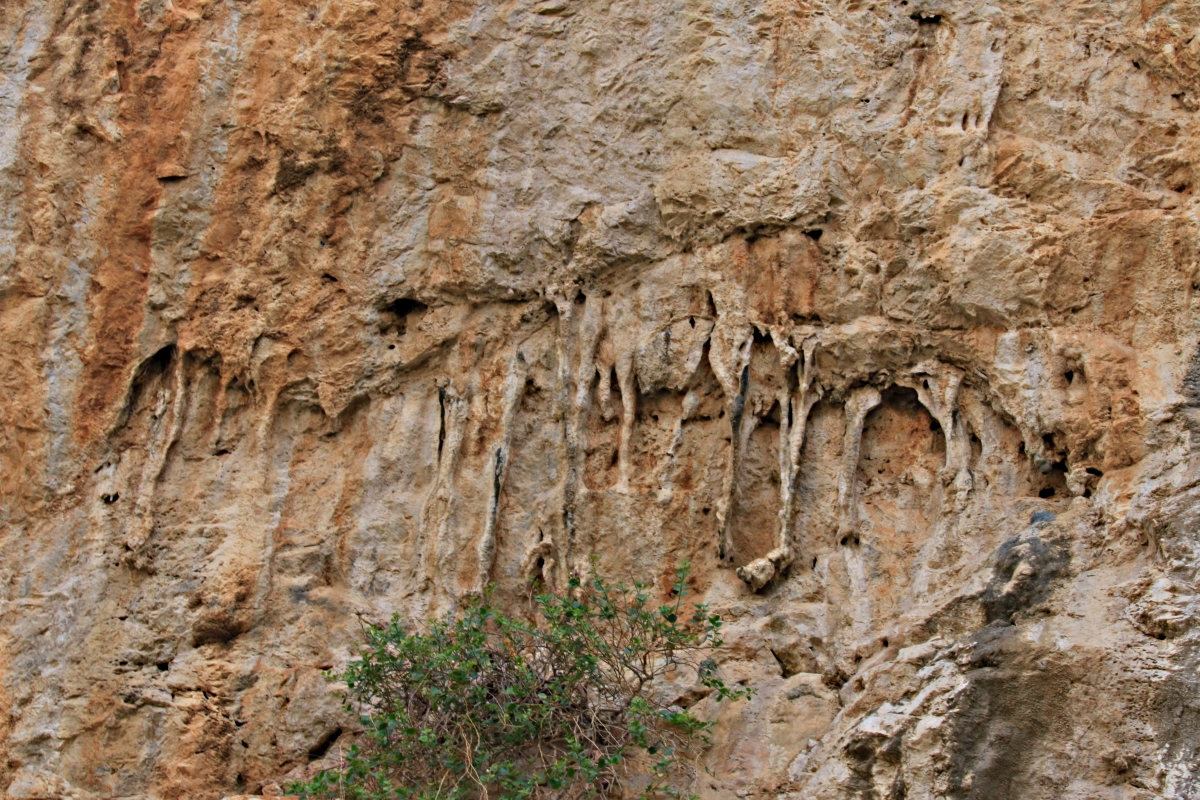
stalactites part way up the wall

stalactites part way up the wall

Looking down from the top of one of the drywaterfalls

Looking down from the top of one of the drywaterfalls

... and almost immediately straight onto another

… and almost immediately straight onto another

Bonzai cypress trees survive in tiniest of fissures

Bonzai cypress trees survive in tiniest of fissures

There was plenty of friction chimneying up against this wall

There was plenty of friction chimneying up against this wall

In places the riverbed is like a broad path

In places the riverbed is like a broad path

.... then it gets pinched by rock walls barely shoulder-width apart

…. then it gets pinched by rock walls barely shoulder-width apart

Looking down the same fall

Looking down the same fall

Getting towards the top the sides open out for a while and oregano takes over

Getting towards the top the sides open out for a while and oregano takes over

But then the bed narrows again and more falls to climb

But then the bed narrows again and more falls to climb

I was tired when I reached the ridge, the 1½ litre bottle of water drained, but from there it was downhill on a good path all the way back to Horio. Would I do it again?  Very definitely!

Posted in Greece, Hiking, Landscape, Mountains, Nature | Tagged , , , , , , , , , , , , | 6 Comments

Symi: the month of the thyme

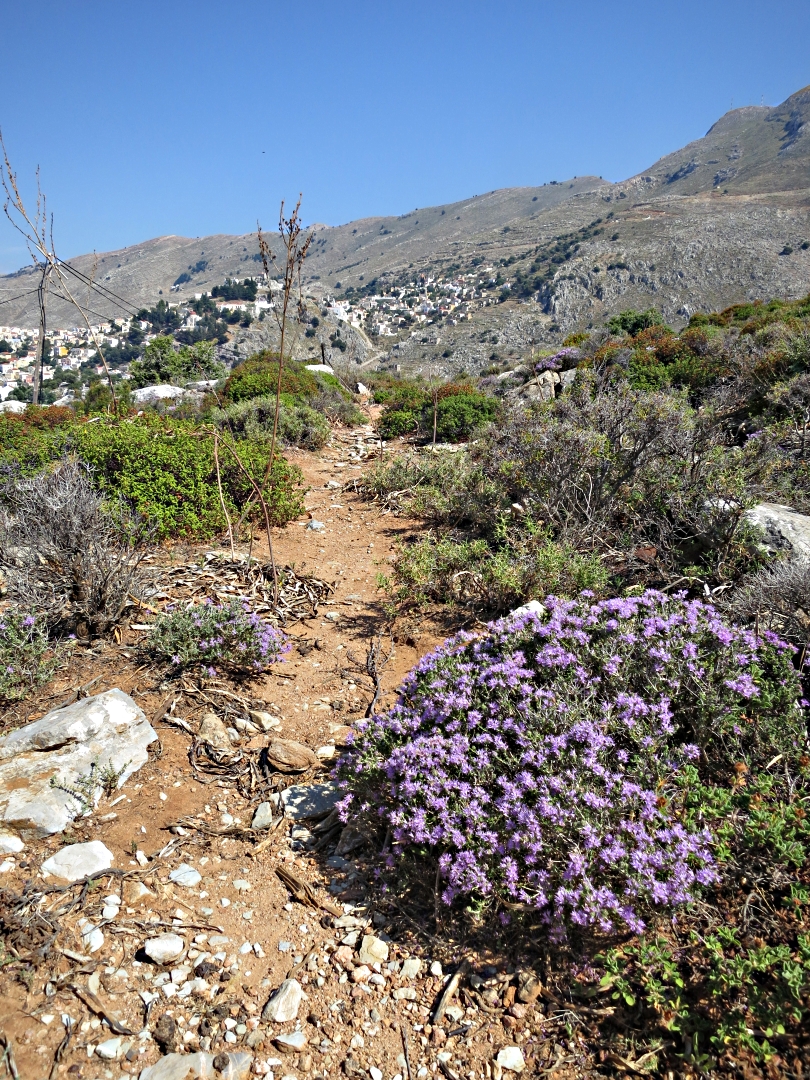
One of the things we have always loved about trekking around the mountains on Symi, is the smell of herbs.  Whole mountainsides are swathed in sage, oregano or thyme.  Rarely all three together except in small patches, usually one is dominant.

Starting my visit at the beginning of April this year, I have been more aware of the difference in timing of flowering.  Though somewhat oversimplified and generalised there has seemed to be a broad pattern, varied by aspect and to a lesser extent by altitude.  In shade and on north-facing slopes flowering is later than in full sun facing south.

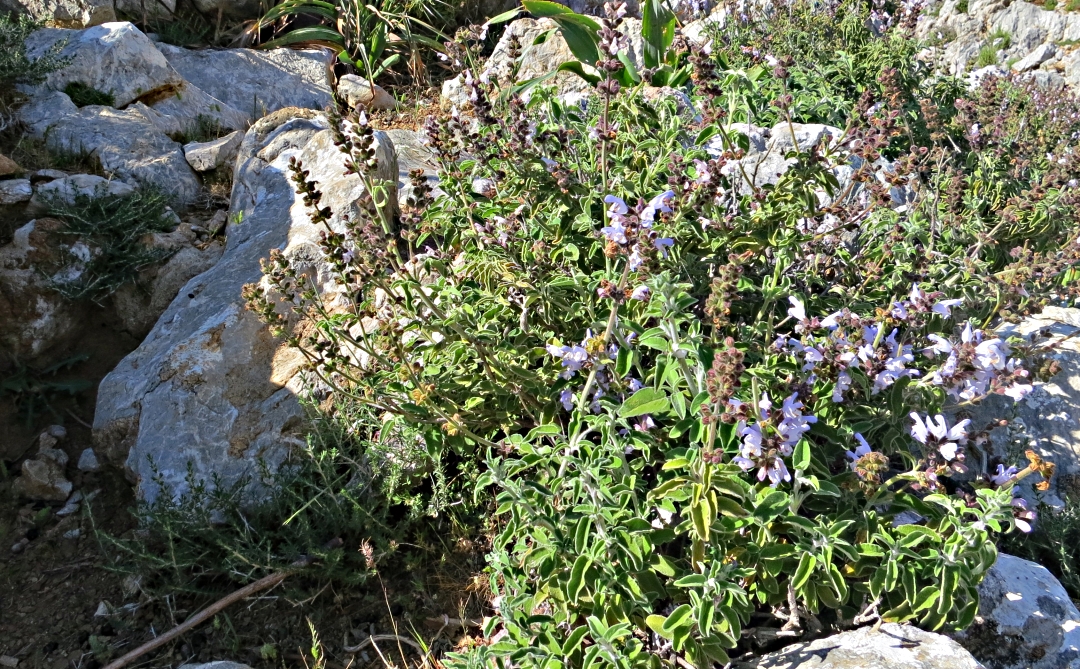
In April I was aware for the first time of the understated pale blue flowers of sage.  Individually the flowers are larger than the other herbs but somehow are easily overlooked, perhaps because the prolific and statuesque Dragon Arums command attention. Normally sage is more noticeable by its smell, the pale leaves curling up in response to the intense heat seeming to intensify the aroma as legs brush past.

Sage in flower at the side of a path is easily overlooked

Sage in flower at the side of a path is easily overlooked

...closer inspection

…closer inspection

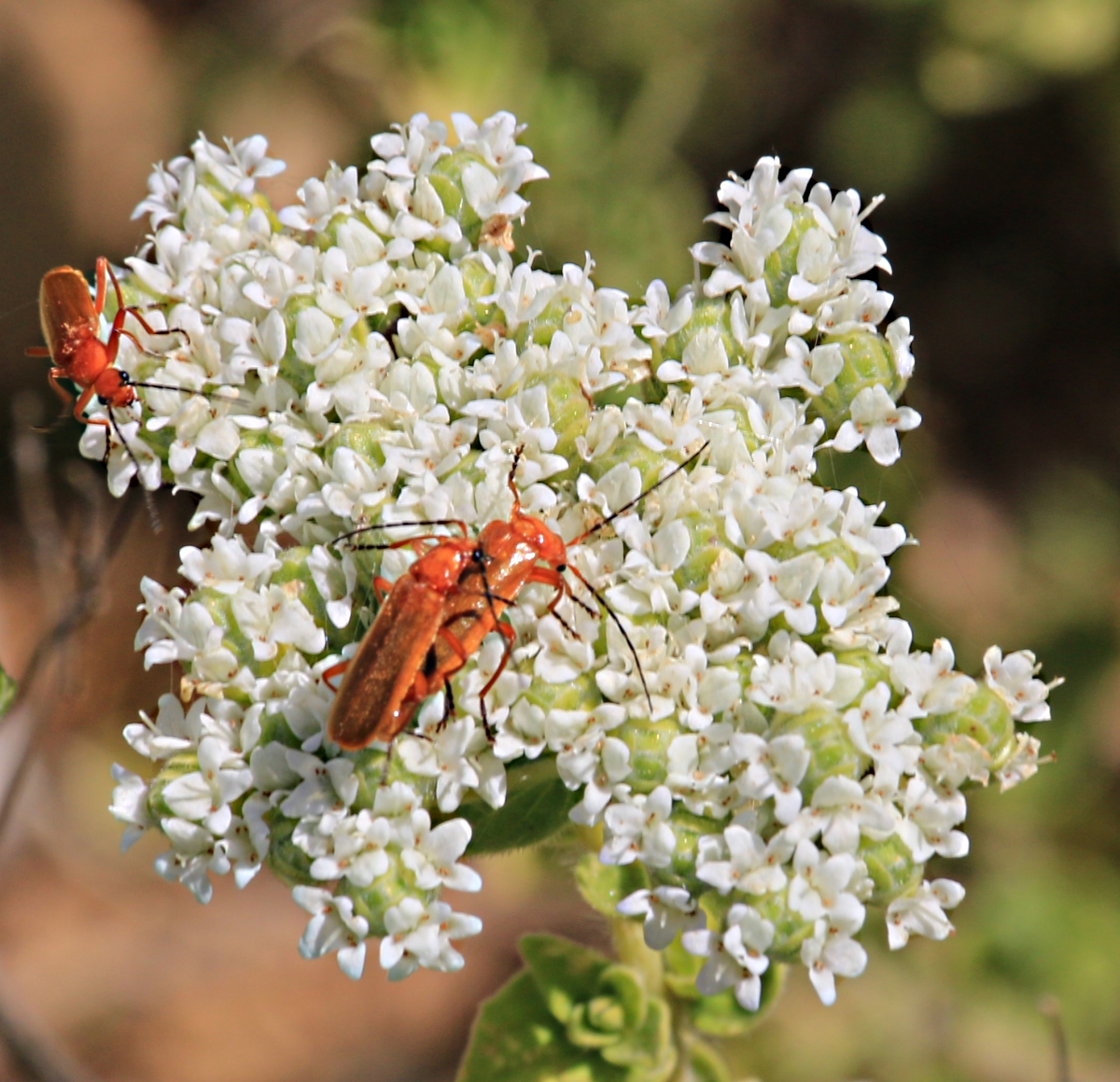
I usually don’t arrive over here until early May when the sage has finished flowering and the white of oregano is dominant across expanses of mountainside with butterflies and other beasties using the flat-topped crowns for their own purposes and pollinating the tiny individual flower heads in the process.  The tender foliage is ideal for drying and sprinkling in small amounts on Greek salad or adding to fasolakia but the strong, somewhat bitter flavour doesn’t seem to be to the taste of goats or to the ‘hopper’ stage of locusts which flourish at the same time.

Reproduction of species .... and coincidentally pollination of plants

Reproduction of species …. and coincidentally pollination of plants

Butterflies can carry large amounts of pollen between oregano plants on the underside of wings and bodies

Butterflies can carry large amounts of pollen between oregano plants on the underside of wings and bodies

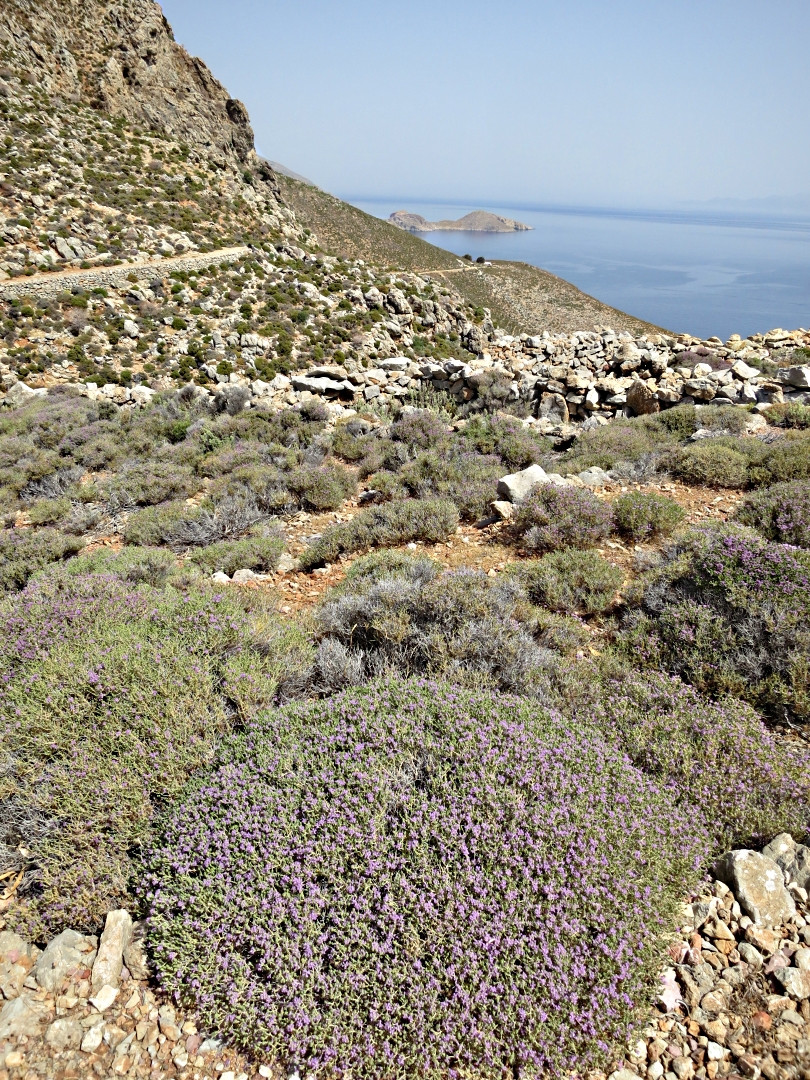
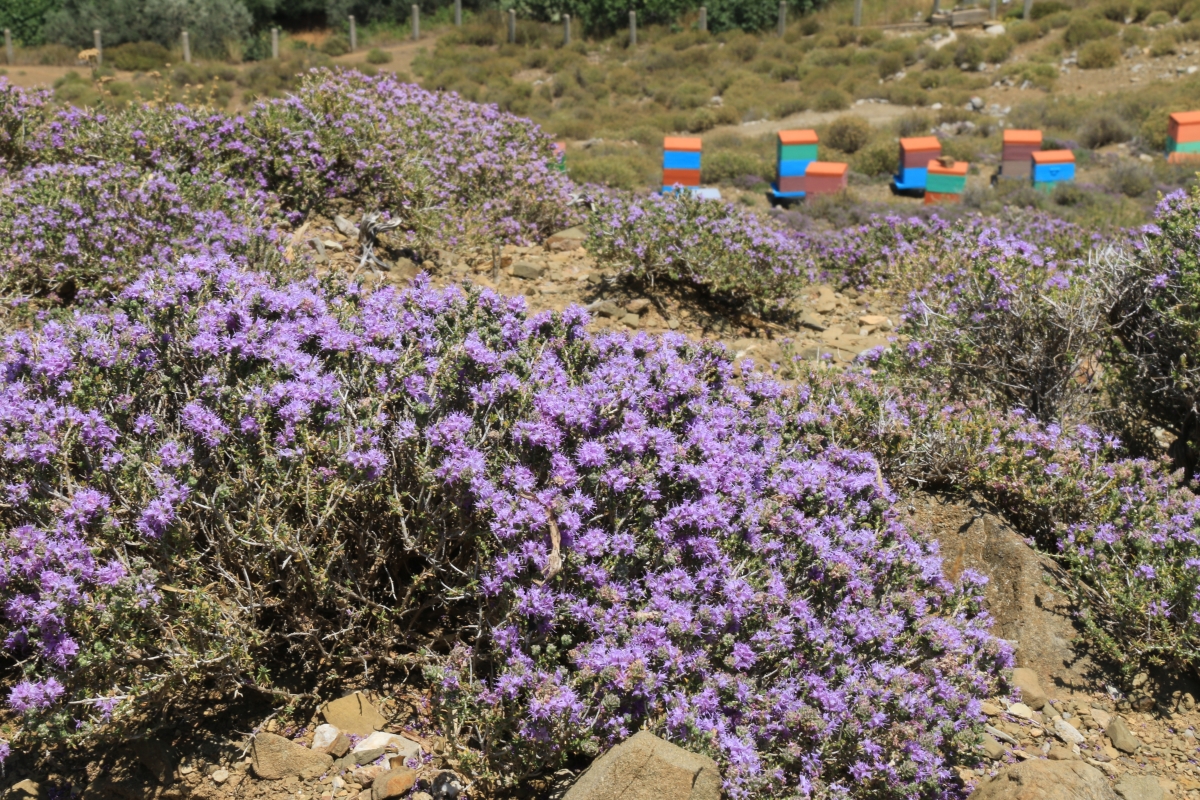
When I arrived back at the beginning of June from a brief stay in Grey Britain, the oregano had mostly turned dull brown as seed has set.  Now the vivid blue of thyme is dominant.  This isn’t the soft-stemmed  thyme I grow in the herb garden at home but a tough prickly variety which deters the voracious appetite of the goats and seems to have no other predators.

On the other hand, much more so than either the sage or the oregano, it is very attractive to bees.  The only occasion I have been seriously concerned for my safety in the mountains was walking between the Llanover Road and the Fox Hunter car park in the Brecon Beacons before the path was marked.  Wading through dense knee-high heather in full flower I was white with pollen up to my waist and surrounded by untold thousands of bees and a loud high-pitched buzzing for nearly an hour. I suspect that they meant me no harm as it was hopefully clear that I was no threat to their activity but the incessant noise and its pitch and frequency were unnerving.

To a lesser extent so it is with the thyme covered mountainsides on Symi.  Thyme honey is much valued and commands a premium and this is the time of year when most of the pollen-collection is going on.  On one walk along a ridge-top above Nimborio Bay the path was very ’thin’, non-existent in places, and so I was again pushing through the gathering ground of thousands of bees with their dusty white coating of pollen, the air filled with the unintentionally menacing buzz.  I tried explaining to them that I meant them no harm and apologised if I accidentally trod on any of them.  I don’t think they listened to a word I was saying but they continued with their industry and didn’t bother me.

When I reached an area of huge limestone rocks the seed-headed oregano took over from the thyme and the noise just stopped.  The silence seemed intense.  I relaxed.

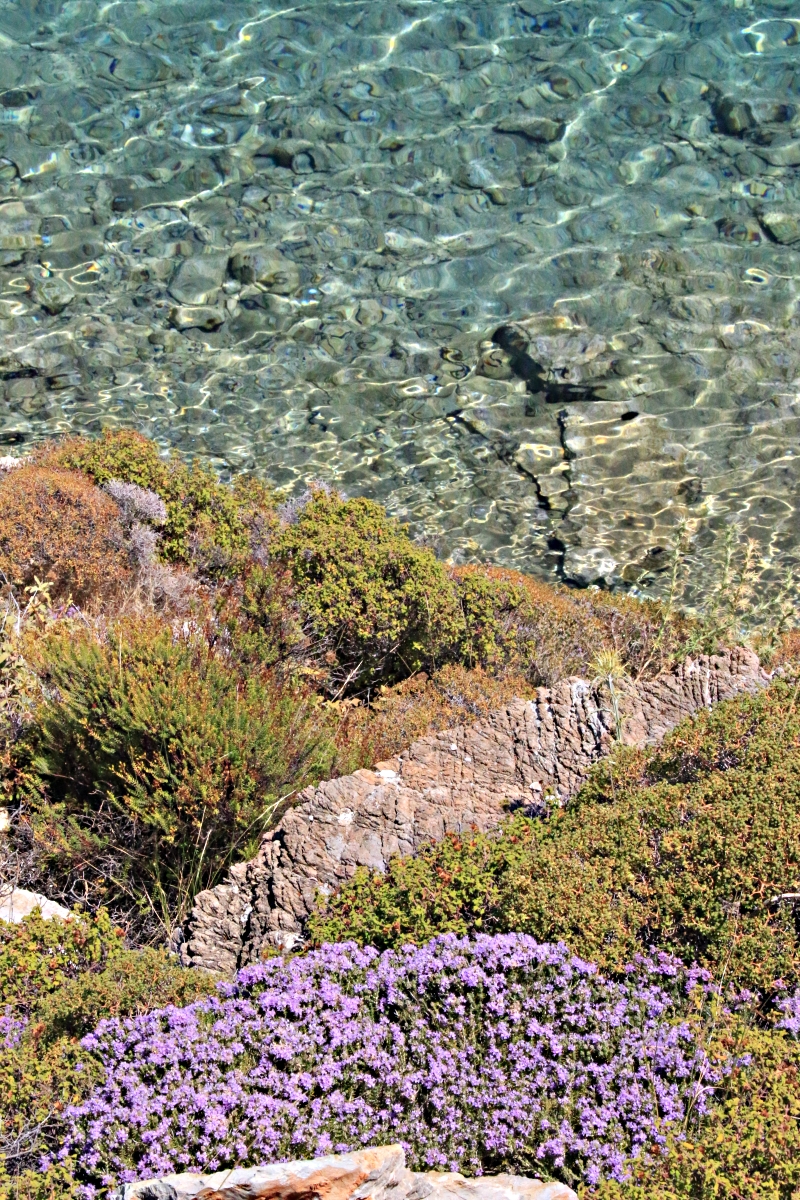
Single cushions of thyme  on the slope down to the sea

Single cushions of thyme on the slope down to the sea

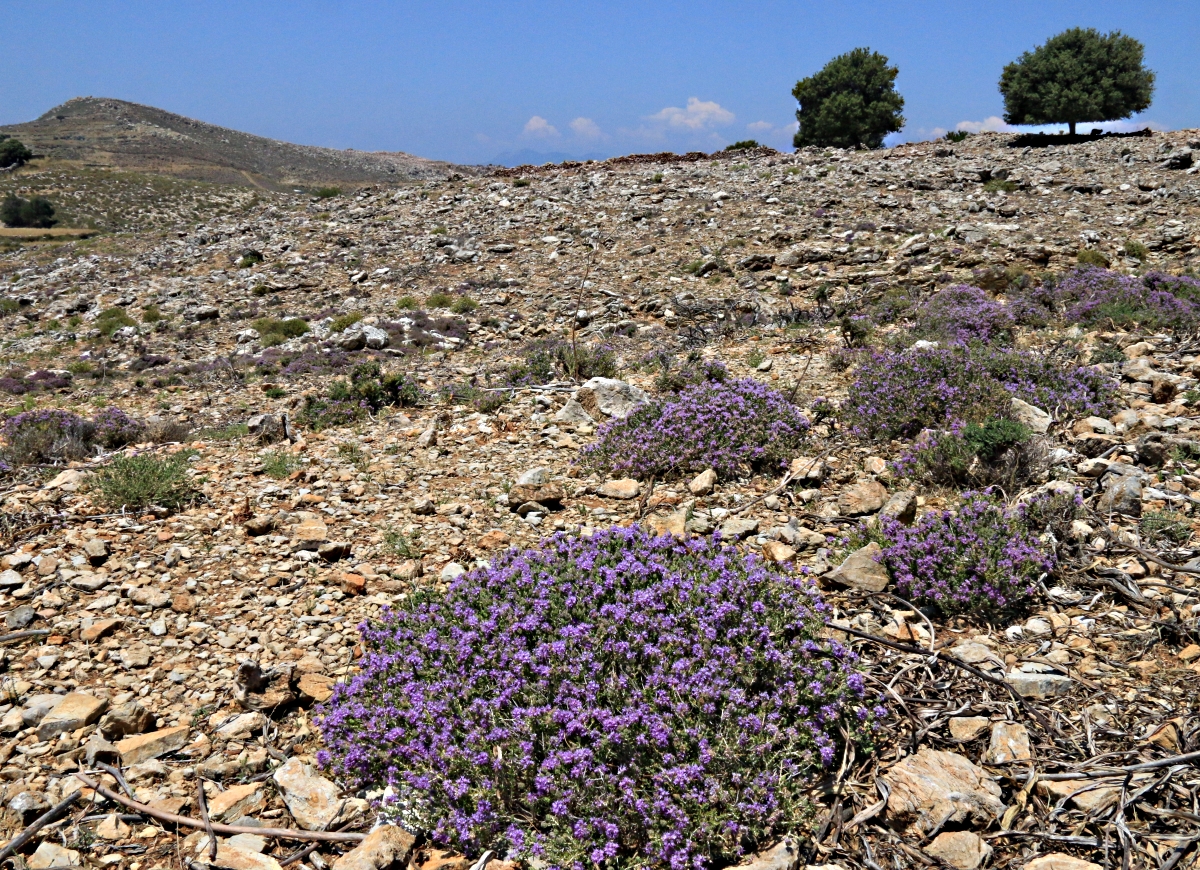
A few more clumps in a barren landscape

A few more clumps in a barren landscape

... and in places the thyme is more widespread

… and in places the thyme is more widespread

A pleasure to walk along some sections of path

A pleasure to walk along some sections of path

... but in places the 'path' has to be picked through densely growing clumps

… but in places the ‘path’ has to be picked through densely growing clumps

In places there is no discernible way through the thyme

In places there is no discernible way through the thyme

Increasingly farmers are turning to honey production in the vicinity of areas of thyme

Increasingly farmers are turning to honey production in the vicinity of areas of thyme

Multicoloured hives in the middle of thyme going all the way down to the sea

Multicoloured hives in the middle of thyme going all the way down to the sea

.... a closer look

…. a closer look

x

Posted in Greece, Mountains, Nature, Wildlife | Tagged , , , , , , , , , | Leave a comment

Symi: change of season, change of focus

I’m back on the Hot Rock now.  Straight from Cool Britannia to temperatures in the high 20s.  Locals say that the weather is bizarre for June.  Before I arrived there was a thunderstorm with very heavy rain overnight and strong winds.  Now it seems to have settled into stable cloudless skies and  mid-July Hot Rock heat, increasing by the day as buildings, stone paved alleys and bare limestone absorb more between dawn and dusk than they radiate overnight.

So, I need to acclimatise to the heat pretty rapidly. The afternoon that friends left I set out for a walk at midday and quickly realised how much things had changed.  It was significantly hotter and the landscape more arid.

Again the trek began with a walk up through and out of the village to The Viewpoint.  This time I focused more on the spectacular panorama rather than wildlife detail.

The panorama from the viewpoint

The panorama from the viewpoint

zooming in on the view down to the main harbour

zooming in on the view down to the main harbour

zooming in on the view down Pedi Bay

zooming in on the view down Pedi Bay

From there the old kalderimi, stone paved in places, over bare rock outcrops in others, continues up past the small chapel of Paraskevi with its deliciously shady courtyard affording welcome brief respite from the baking sun.

Through the gate onto the open mountain and the kalderimi splits

Through the gate onto the open mountain and the kalderimi splits

....partly stone paved

….partly stone paved

....approaching Paraskevi

….approaching Paraskevi

... with its shady courtyard

… with its shady courtyard

Soon after the path diverts off to the right and climbs up to slabby rock outcrops with views straight down the valley to the harbour far below.  Now, among the bare rocks nearly all vegetation has crisped up, blowing away in the breeze as it snaps.  Dried flower stalks thick as a finger and strong as wood puncture skin if you’re not careful.

Looking from the rock slabs down to the harbour

Looking from the rock slabs down to the harbour

the landscape rocky and arid

the landscape rocky and arid

old terraced fields now barren

old terraced fields now barren

Reaching the ridge and the military ‘No Photogrpahy’ zone there is a newly built tiny chapel in a newly fenced compound, with a last look down to the harbour even further below, before the drop down on the road to the Rakouniotis monastery.  Having visited that only recently I instead went up to the right to the remains of a stone-built tower sitting on the ridge-top with views in all directions.

F Looking over the tiny basilica-like church to the harbour far below

Looking over the tiny basilica-like church to the harbour far below

The stone tower on the ridge

The stone tower on the ridge

... and on the inside

… and on the inside

Continuing down the road for while the aridity of the rocky landscape becomes even more apparent, dominated by weather- and water-sharpened limestone.

Sharp, eroded rock and gnarled tree struggling for life in a cleft

Sharp, eroded rock and gnarled tree struggling for life in a cleft

Soon the route turns off onto a rough track and then onto a narrow path winding its way up to the flank of the mountain overlooking Nimborio Bay and beyond that the mountains of Turkey topped by towering thunderclouds.

The panorama along the Pedi Bay with thunder clouds over Turkey beyond

The panorama along the Pedi Bay with thunder clouds over Turkey beyond

This thoroughly enjoyable and satisfying path winds its way at a fairly consistent height above the Bay before gradually dropping down to the track to the church of Agios Giorgos Drakouniotis and the way back to Yialos, the prospect of a frappé on the harbourside before the climb back up the Kali Strata to Horio.

The thin path through contorted and folded limestone

The thin path through contorted and folded limestone

Old olive press indicative of the agricultural past

Old olive press indicative of the agricultural past

Final drop down off the ridge to the col

Final drop down off the ridge to the col

view down to Nimborio

view down to Nimborio

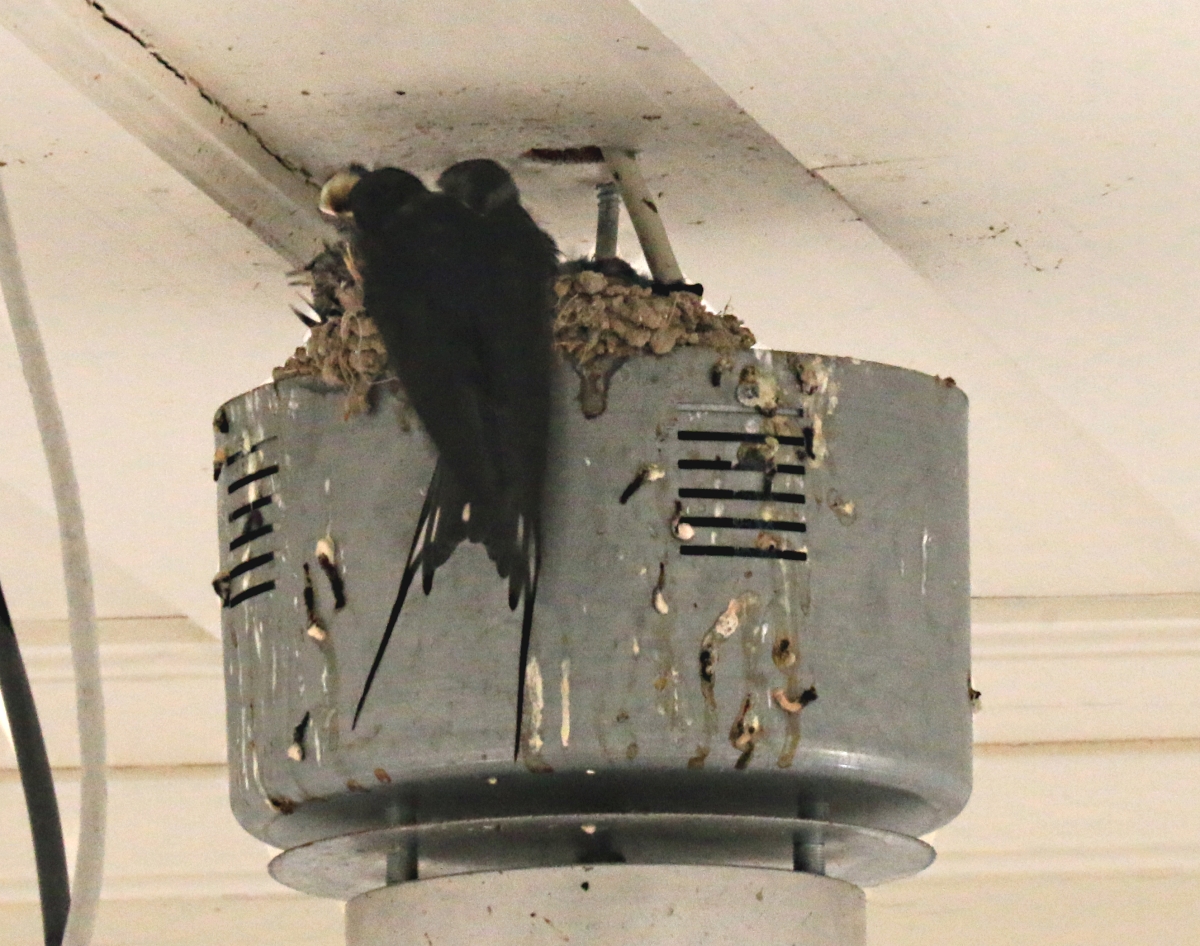
Attempts to photograph a Little Owl and a kestrel on this walk all failed.  I didn’t even try to photograph the swallows, their speed and erratic flight in pursuit of insects on the wing making it impossible to focus the camera.  Swallows have been zooming in and out of the open windows of the derelict house behind where I’m staying and I have also been vainly trying to photograph them feeding their young in the nests but access has proved too difficult and dangerous. Paradoxically, I called in a supermarket on the way back from this trek and was surprised by swallows zooming in and out of there too.  It soon became apparent why.  They have nested on top of the light fittings and were perching on the wrought-iron lamp-holders.  Not brilliant photographic conditions but not to be missed, much to the surprise and consternation of the proprietor.

Young swallows in nest on top of light fitting

Young swallows in nest on top of light fitting

.... being fed by parfent

…. being fed by parfent

... while another looks on

… while another looks on

x

Posted in Greece, Hiking, Landscape, Mountains, Nature, Spring, Wildlife | Tagged , , , , , , , , , , , , , , , , | Leave a comment

Symi: a last look back to Spring

Time to confess.  Though I have continued to write the blog posts about walks on Symi, for the last couple of weeks I have been back in Grey Britain. I returned for grandchildren’s birthdays, have been catching up with family and friends and vainly trying to get the garden under control.

Now on the point of flying back to Greece I’m hoping to find that the final flurry of unsettled weather in the Dodecanese will have passed and the heat and drought of summer will increasingly take control.

One final glance back before moving on.  The pleasure of Spring is at the micro scale.  The following photos are from a trek from Horio through jagged limestone to the tiny bay of Agia Marina and round to Pedi Bay, some of the most arid landscape on Symi during the summer, and then up the flank of the relatively fertile Pedi Valley back to Horio.  During Spring there is colour and life everywhere.

Flowering plants become fewer in number as it gets hotter but are still in evidence throughout May.

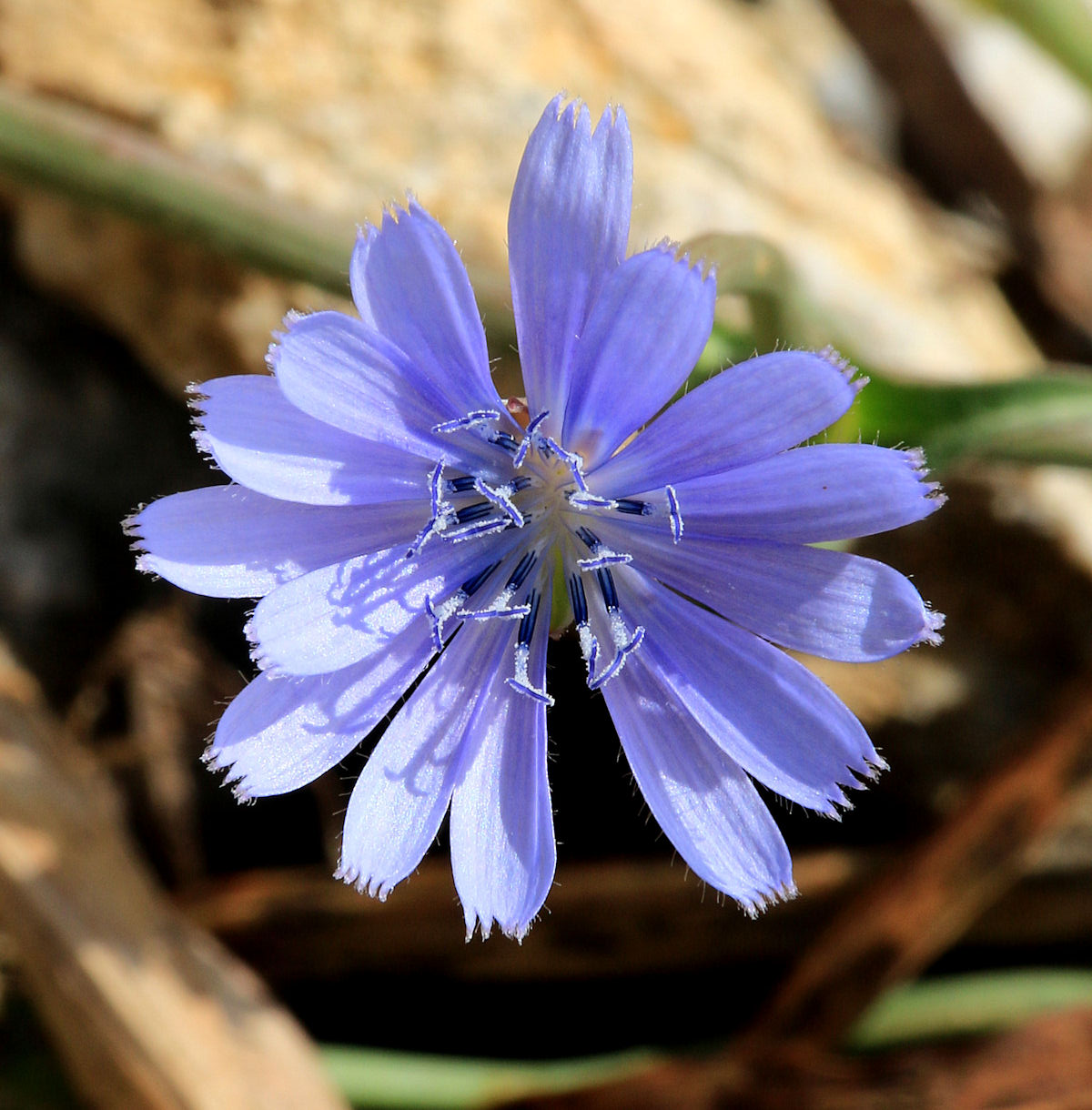
low growing and found in small crevices and in the middle of the path

low growing and found in small crevices and in the middle of the path

convolvulus seems able to grow anywhere

convolvulus seems able to grow anywhere

mallow similarly

mallow similarly

most thistles have white,  blue or purple flowers this one is vivid yellow

most thistles have white, blue or purple flowers this one is vivid yellow

A type of wild dianthus I think

A type of wild dianthus I think

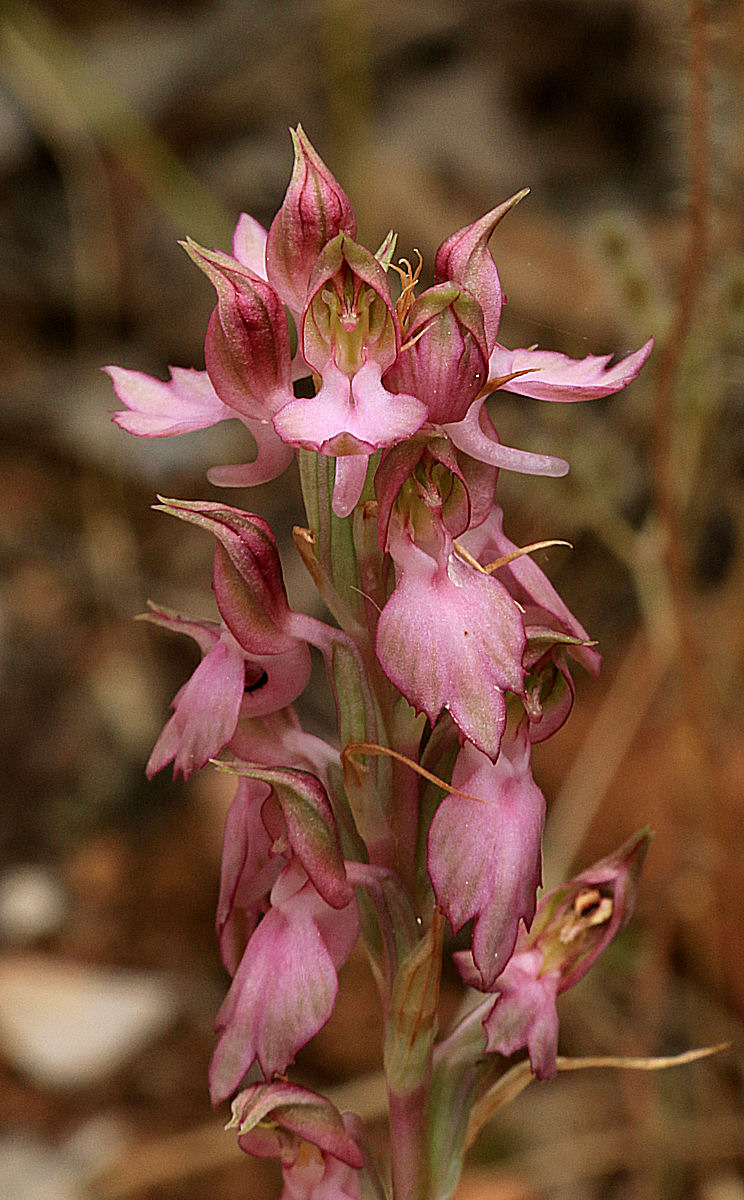
... and I can't let orchids not take a final bow

… and I can’t let orchids not take a final bow

The insects which congregate on flower heads, reproducing, feeding, pollinating, have a final flurry of activity before their base of operations shrivels up and the heat gets too much for them.

small dragonfly with a body about 2cms long

small dragonfly with a body about 2cms long

The markings on its tiny head are from a SciFi imagination

The markings on its tiny head are from a SciFi imagination

looked at from the side

looked at from the side

A small moth on a cornflower

A small moth on a cornflower

Oregano attracts many butterflies late into May

Oregano attracts many butterflies late into May

Some with delicate and intricate markings

Some with delicate and intricate markings ….. and its tongue out

Some butterflies are significantly larger with very different eyes

Looking aristocratic, some butterflies are significantly larger with very different eyes

Black and yellow warning markings with a body length the diameter of the wild hollyhock flowers it pollinates

Black and yellow warning markings with a body length the diameter of the wild hollyhock flowers it pollinates

.... and a head which seems to emulate a large ladybird

…. and a head which seems to emulate a large ladybird

Most certainly the inspiration for another SciFi alien

The inspiration for another SciFi alien ?

When I get back it will be time to take a different focus, to look at the wider landscape rather than the fine detail.  Once acclimatised to the intensifying heat after Cool Britannia, over the next couple of months I plan to revisit favourite walks and to look for new paths and routes with the benefit of being able to plan a day’s activity not having to wonder what to do if it rains!  And there will be brief forays to neighbouring islands Nisyros, Tilos and Kalymnos.

Posted in Greece, Hiking, Mountains, Nature, Spring, Wildlife | Tagged , , , , , , , , , , | Leave a comment