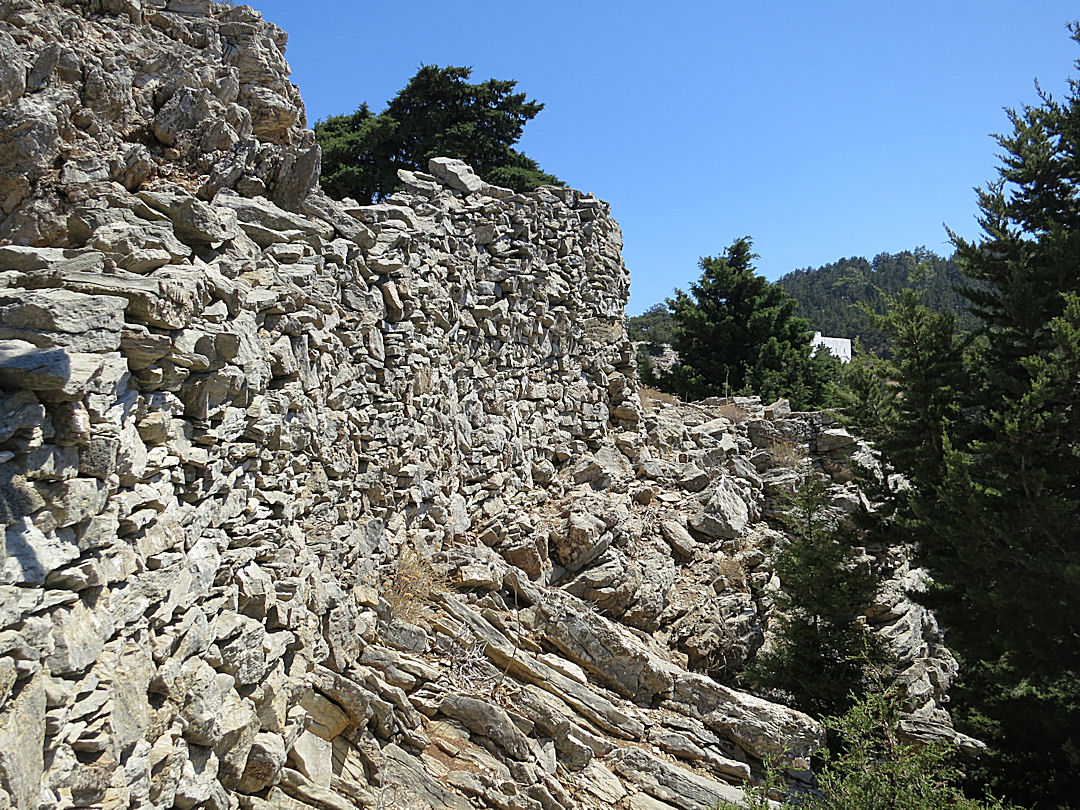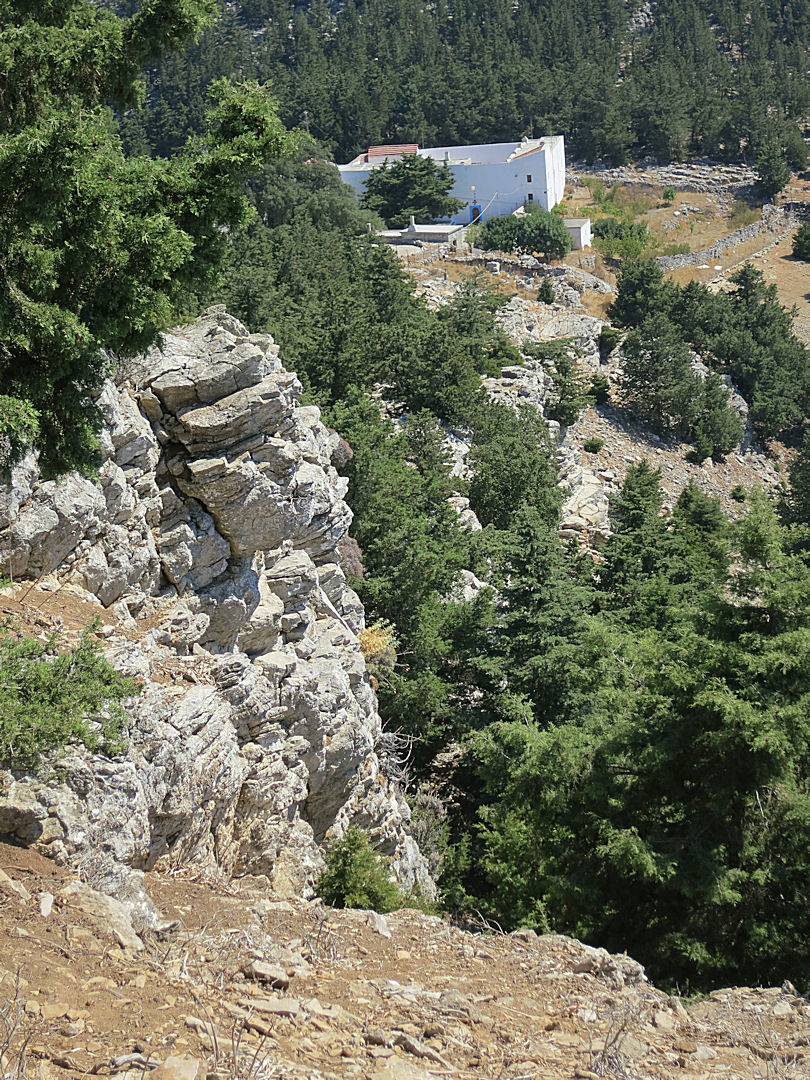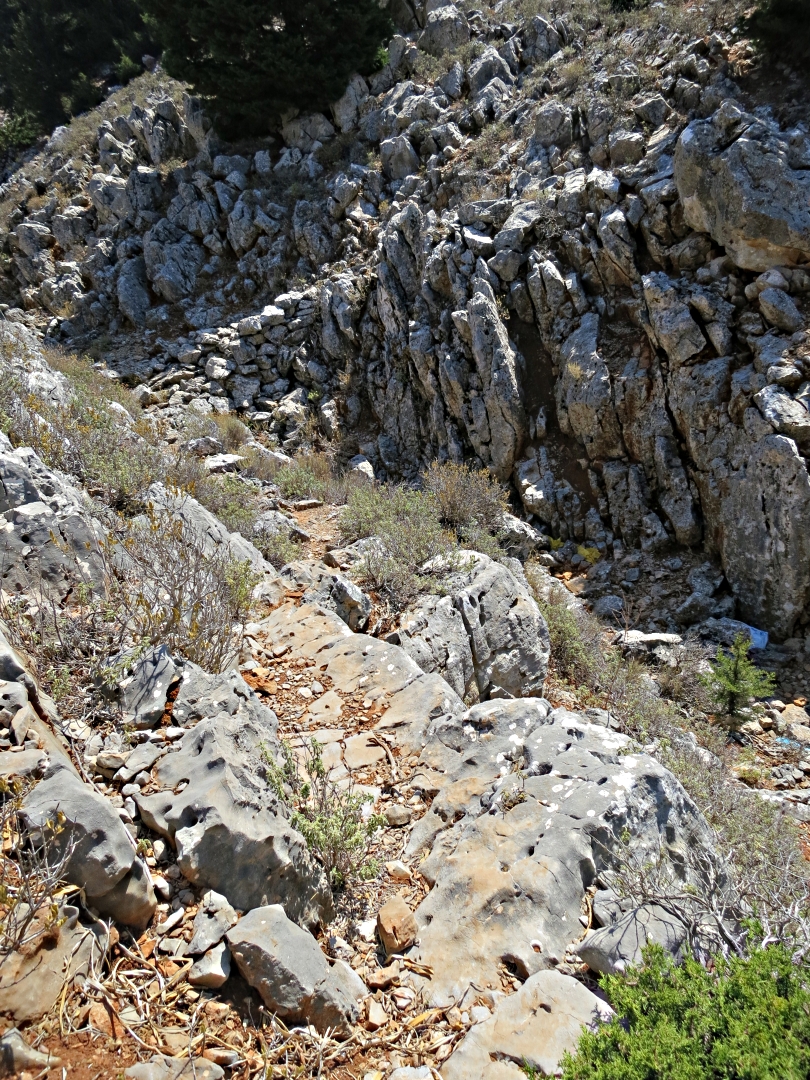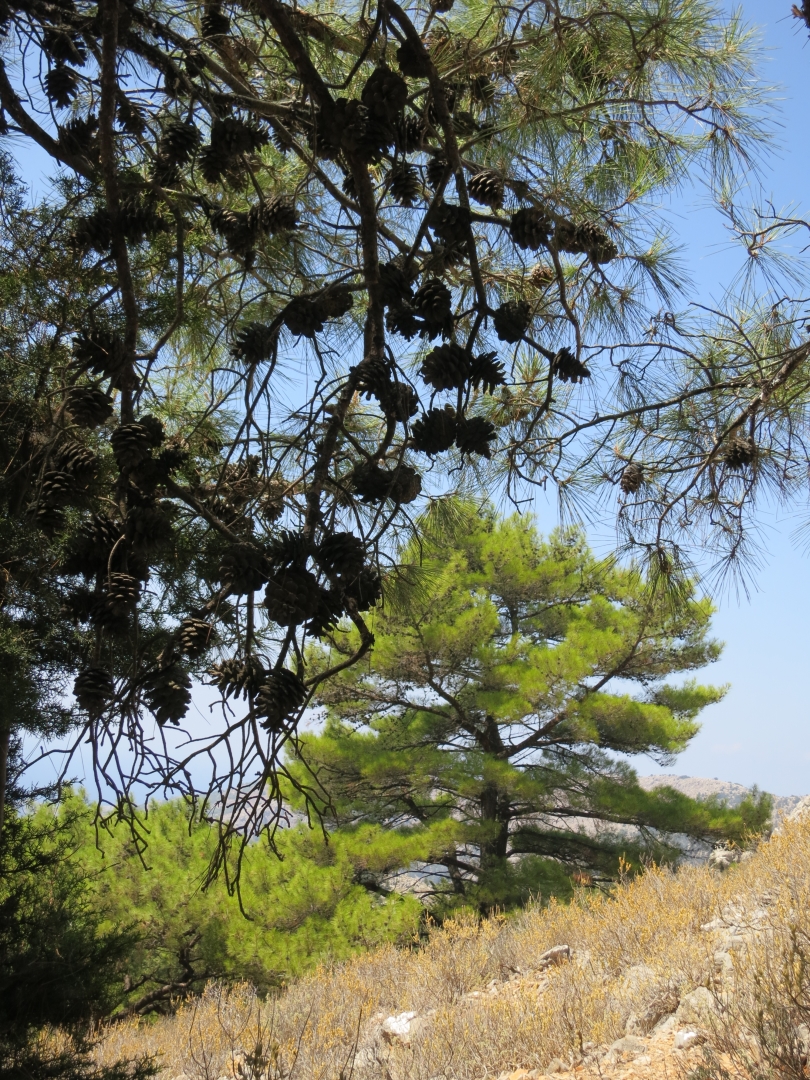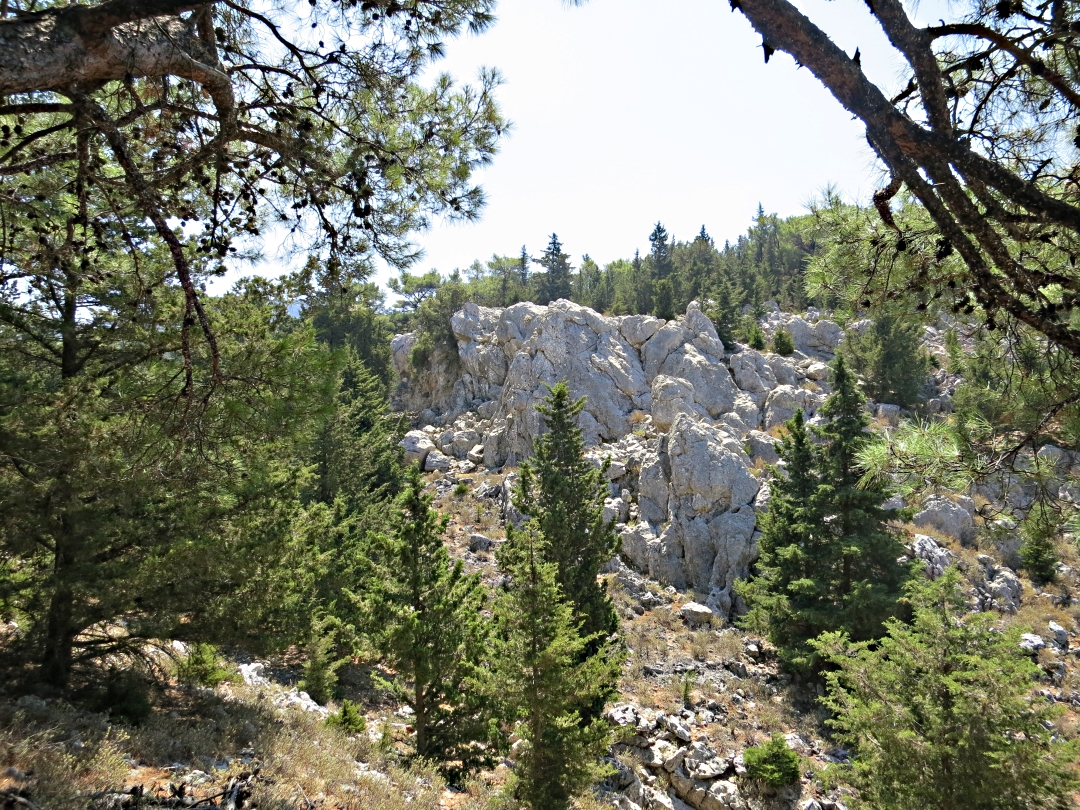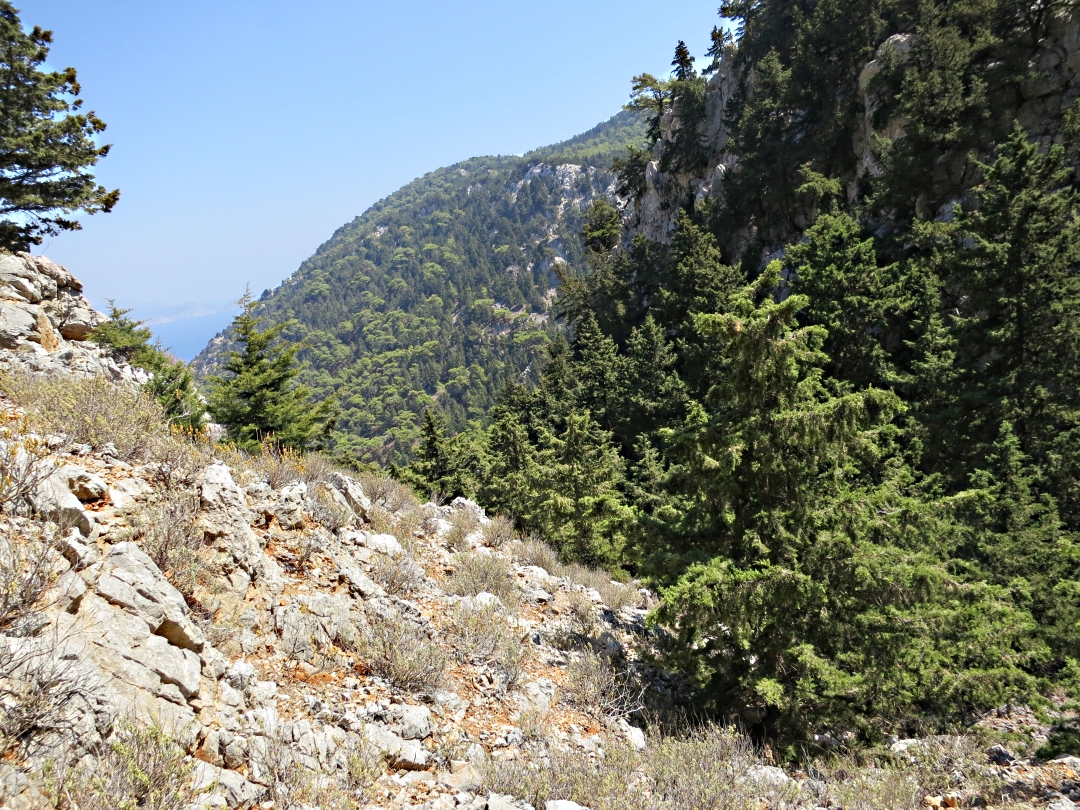
Symi: back to a waterhole in the desert

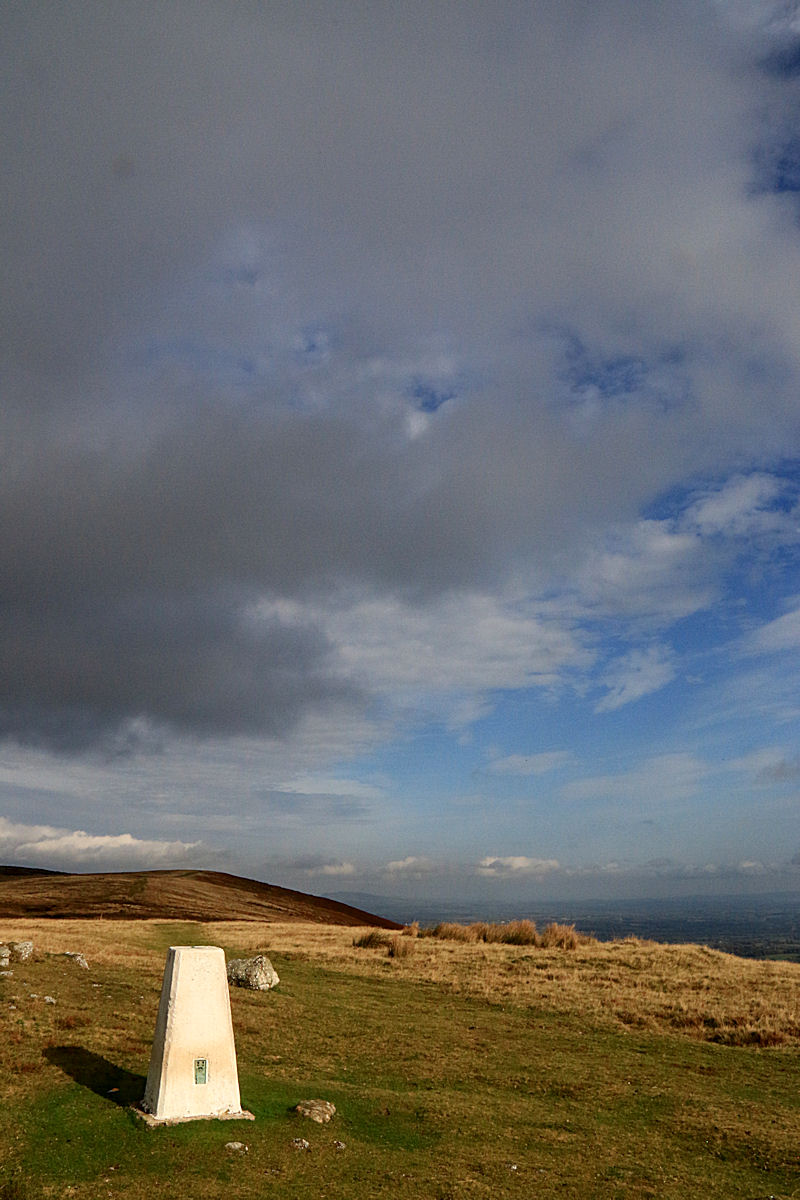
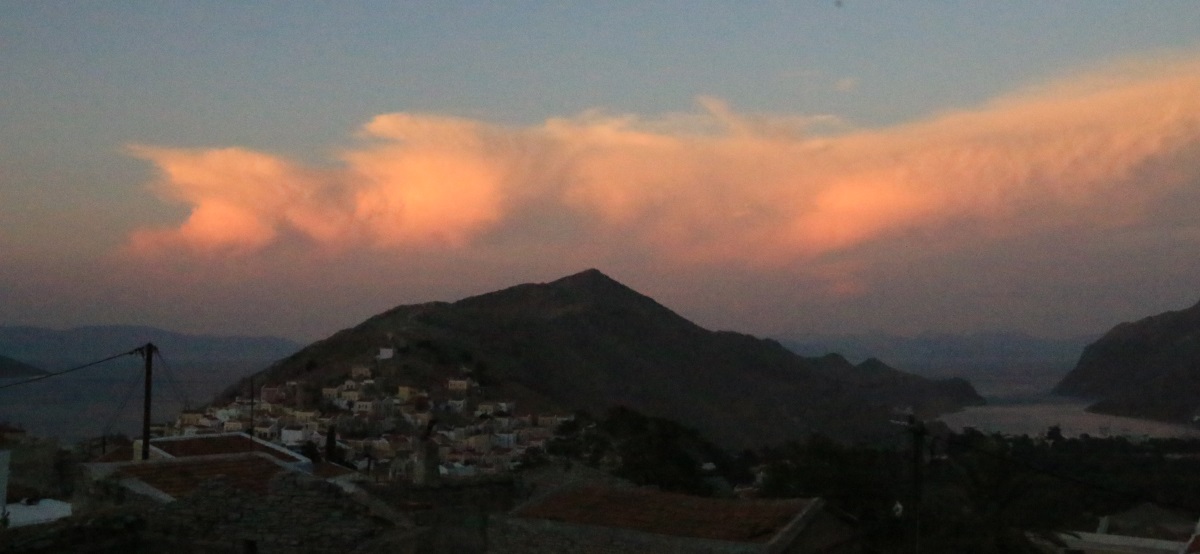
During the summer on Symi and the other islands I visited, I went walking in the mountains every day.  Since I have been home I have been out very little even though I live at the edge of the Brecon Beacons National Park with the ridge-top half an hour from the house.  The weather simply hasn’t been clement and the incentive has been lacking.  On Sunday, frustrated by inactivity and persistent greyness, I walked up to the ridge when I caught a glimpse of the sun.  It didn’t last long.  I stood with my back to the Folly Tower and took a panoramic shot of the sky to the south and west, seconds before it started to rain again.  I turned my back on the folly and squelched home to write about Symi, reliving the clear sky and warm sunshine.

Looking West from the ridge-top Folly Tower

Looking West from the ridge-top Folly Tower above Pontypool

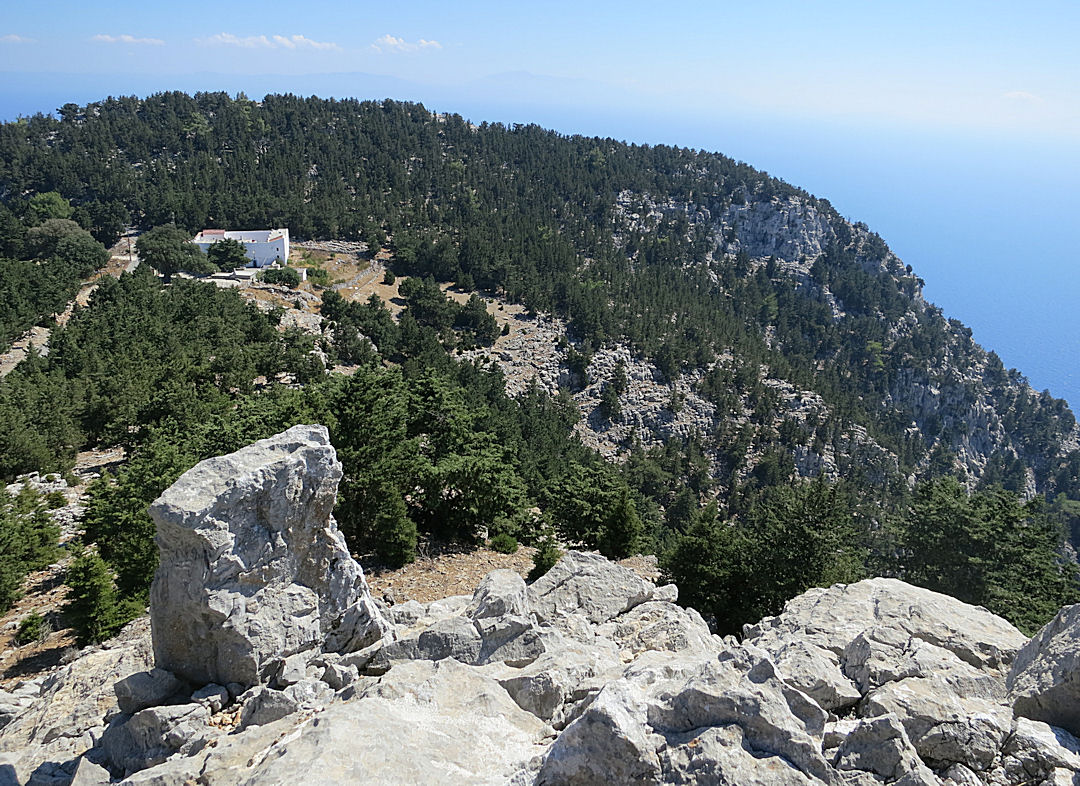
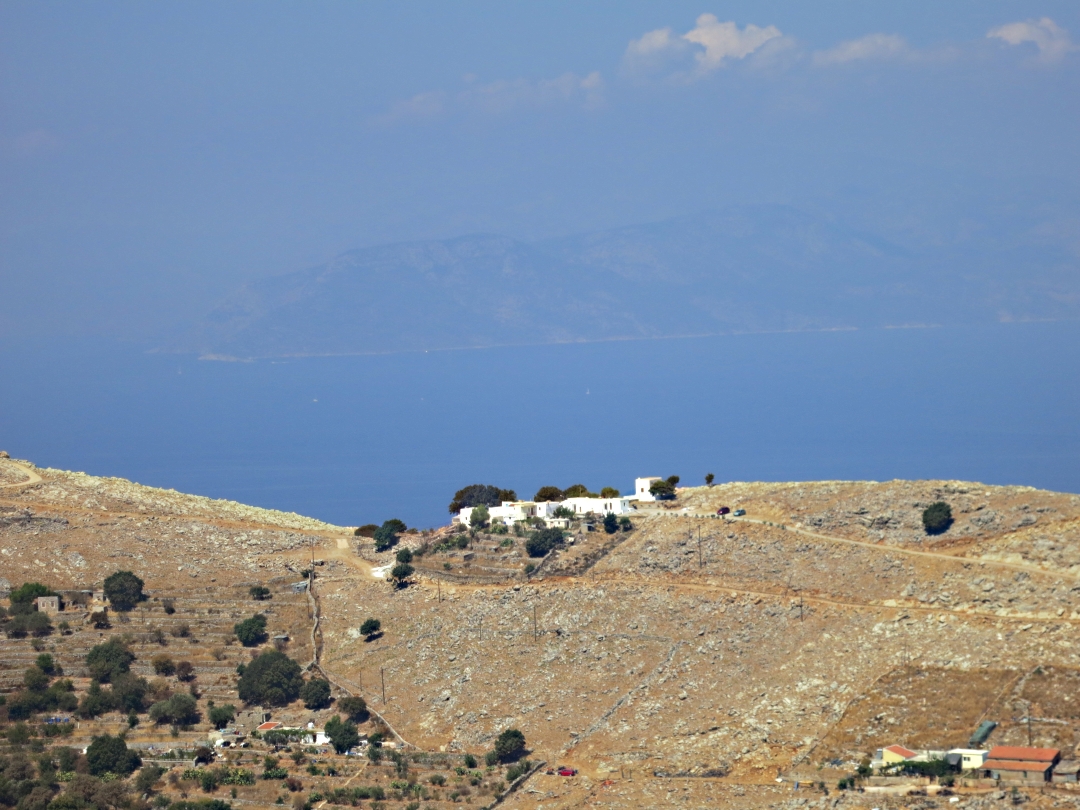
Towards the end of my stay on Symi I trekked back to the pond at Gria, the deserted settlement in the crags above Pedi, a couple of times.  The tedium of trudging along the access track to the Zoodohou monastery is always relieved by the views across the Pedi Valley and back to Horio and the line of ridge-top windmills.

14Symi485w0085

Old windmills on the ridge-top on the opposite side of the Pedi Valley
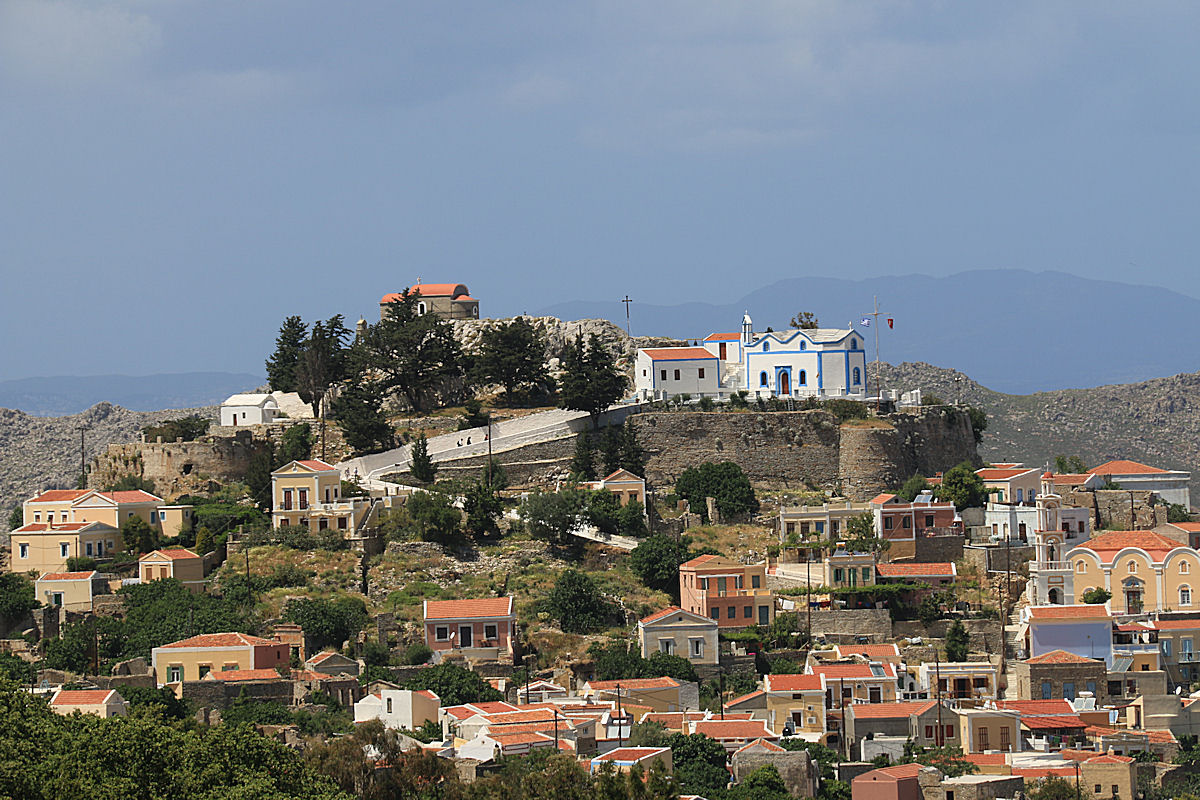
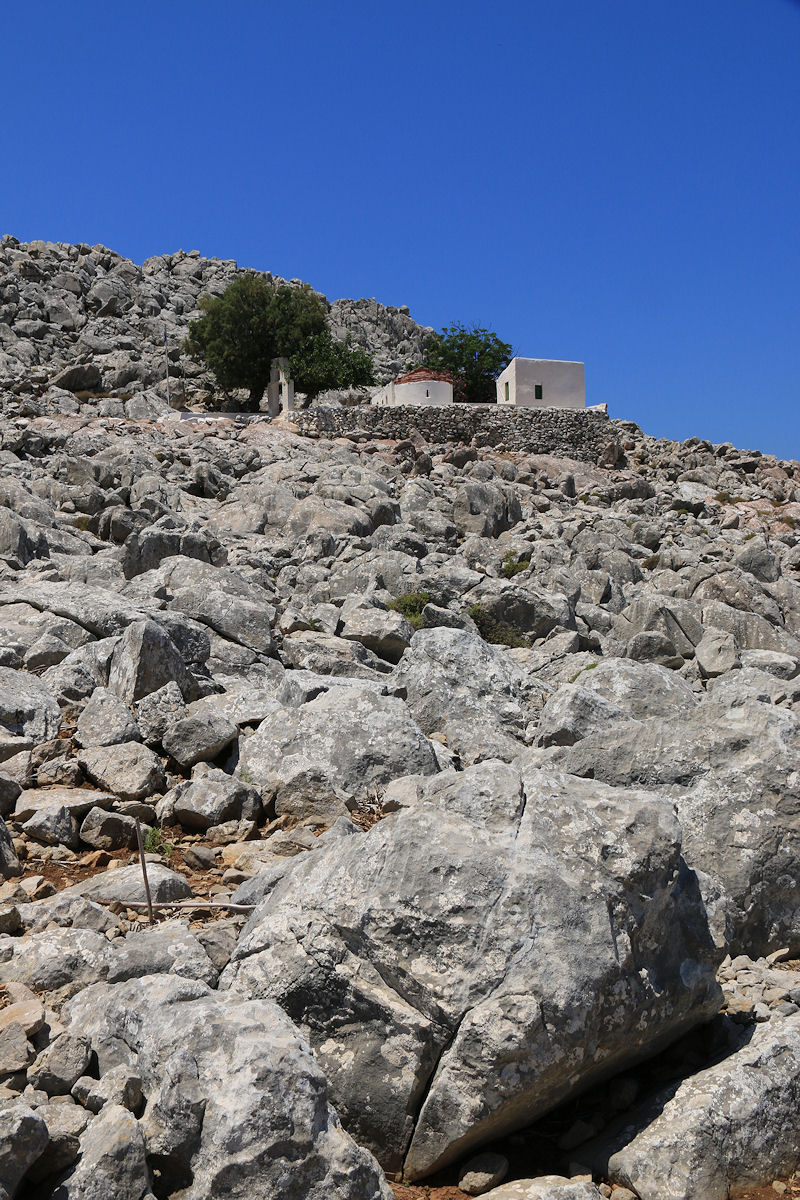
Small churches on the crag which tops Horio

Small churches on the crag which tops Horio

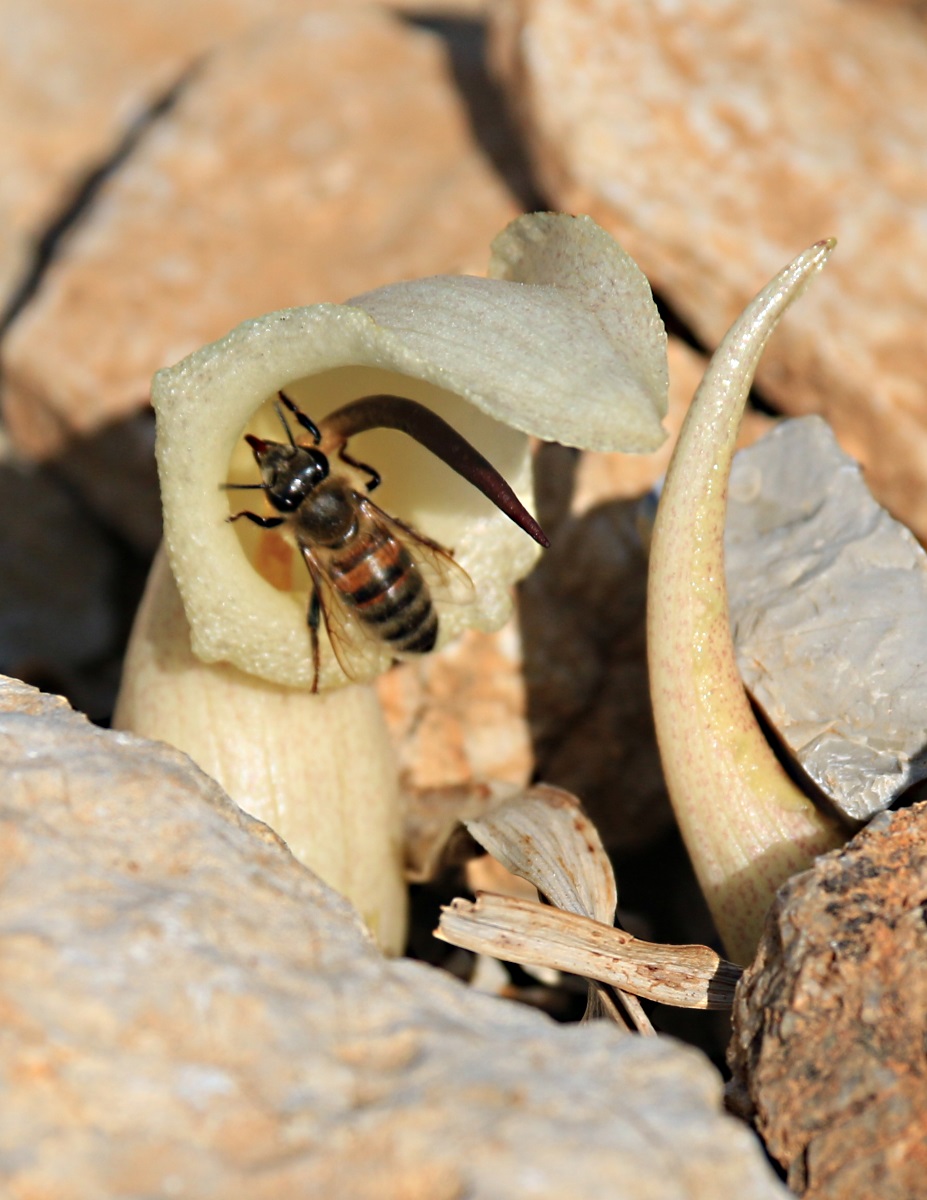
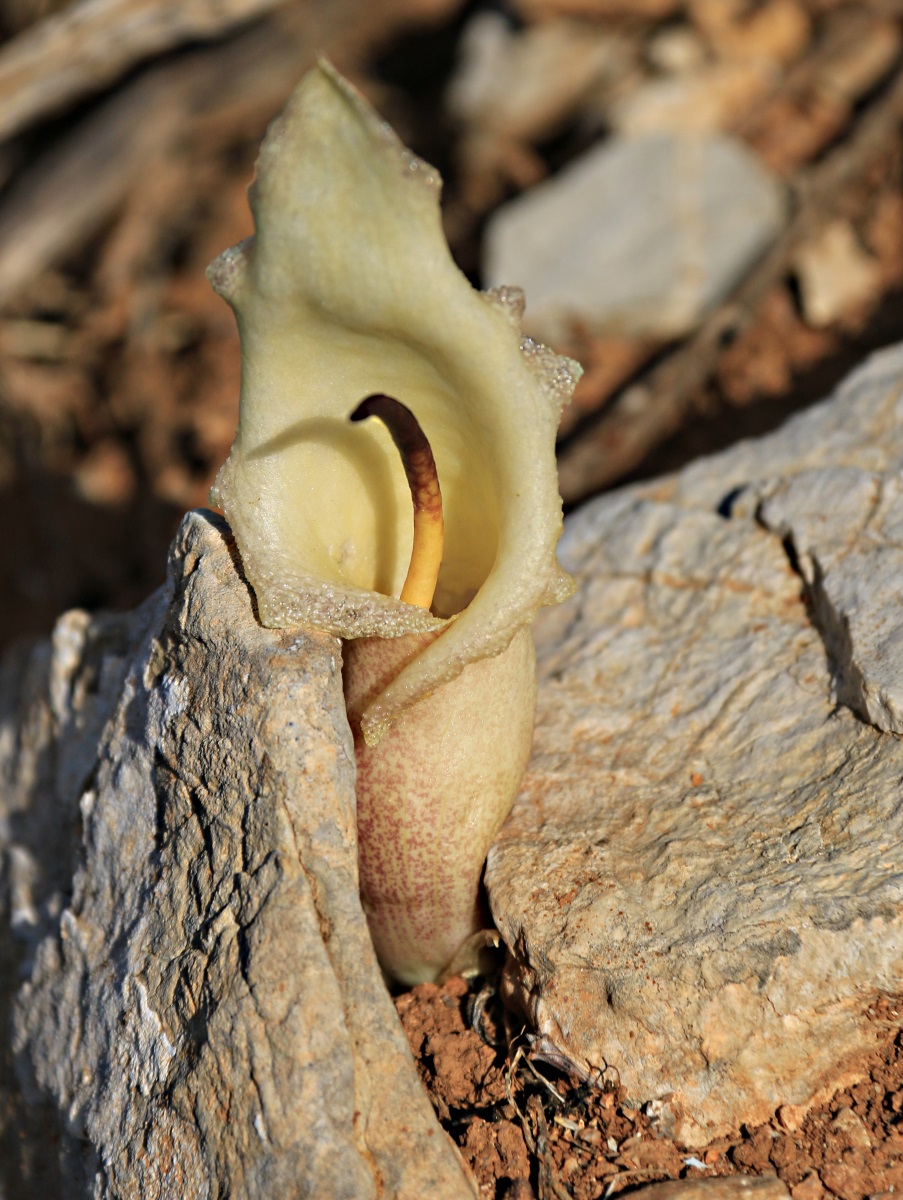
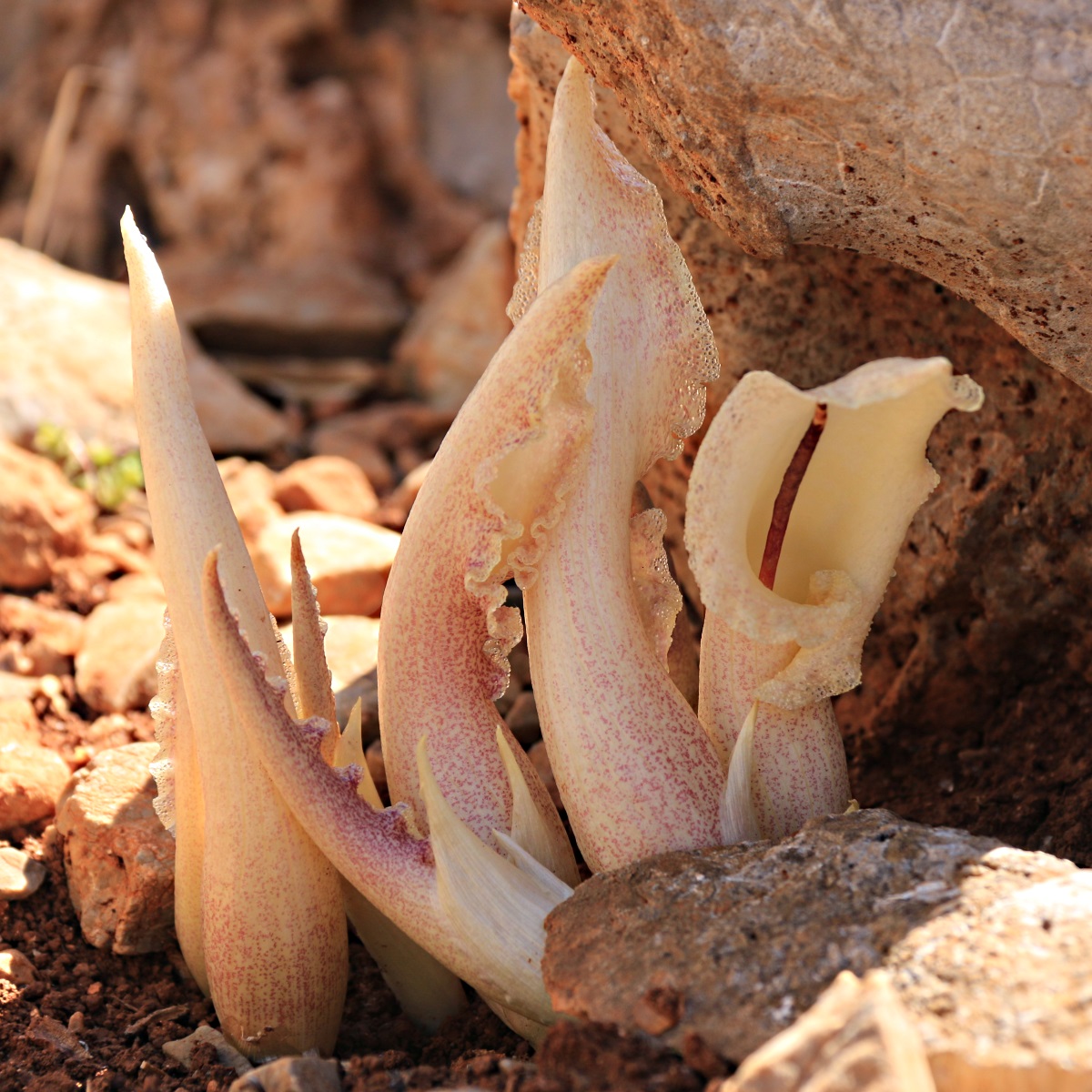
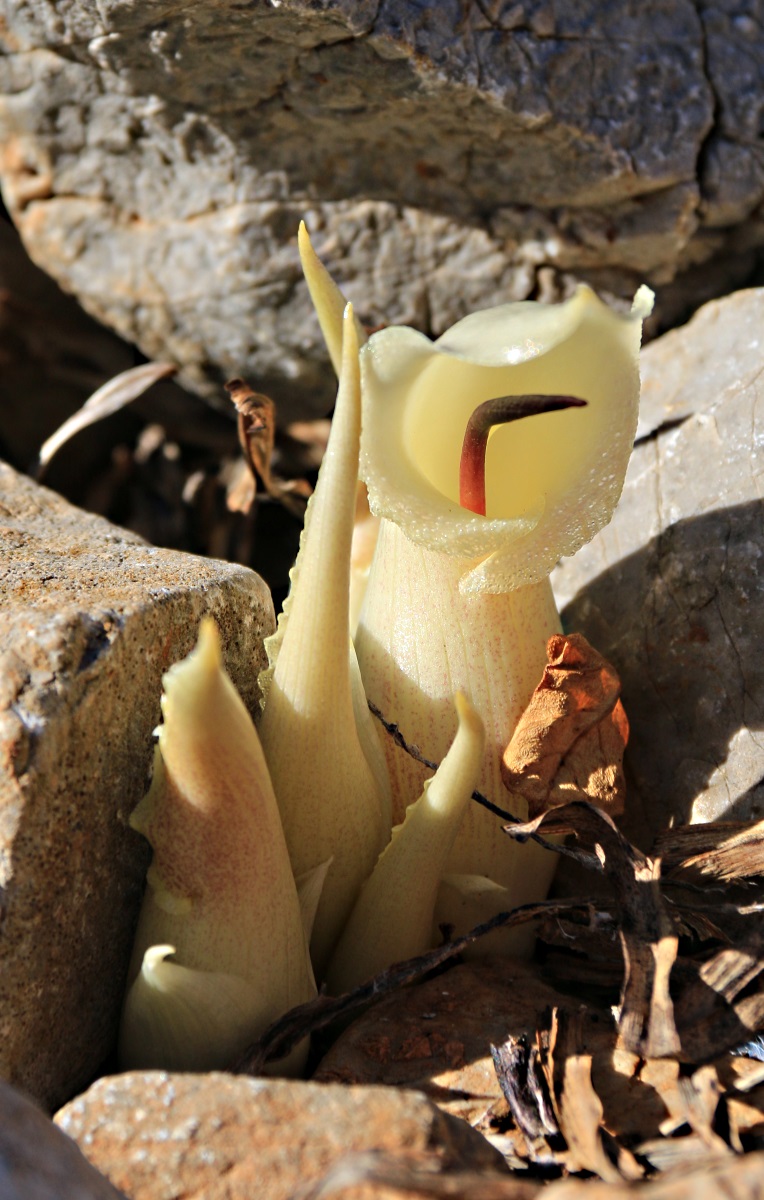
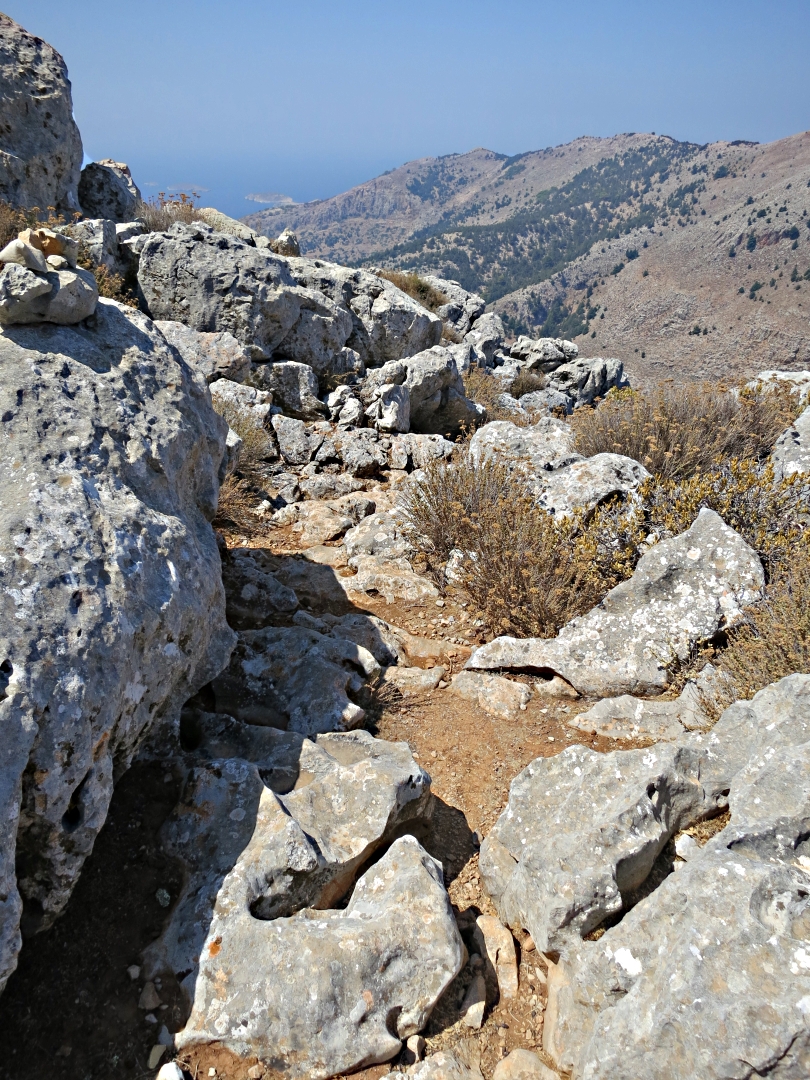
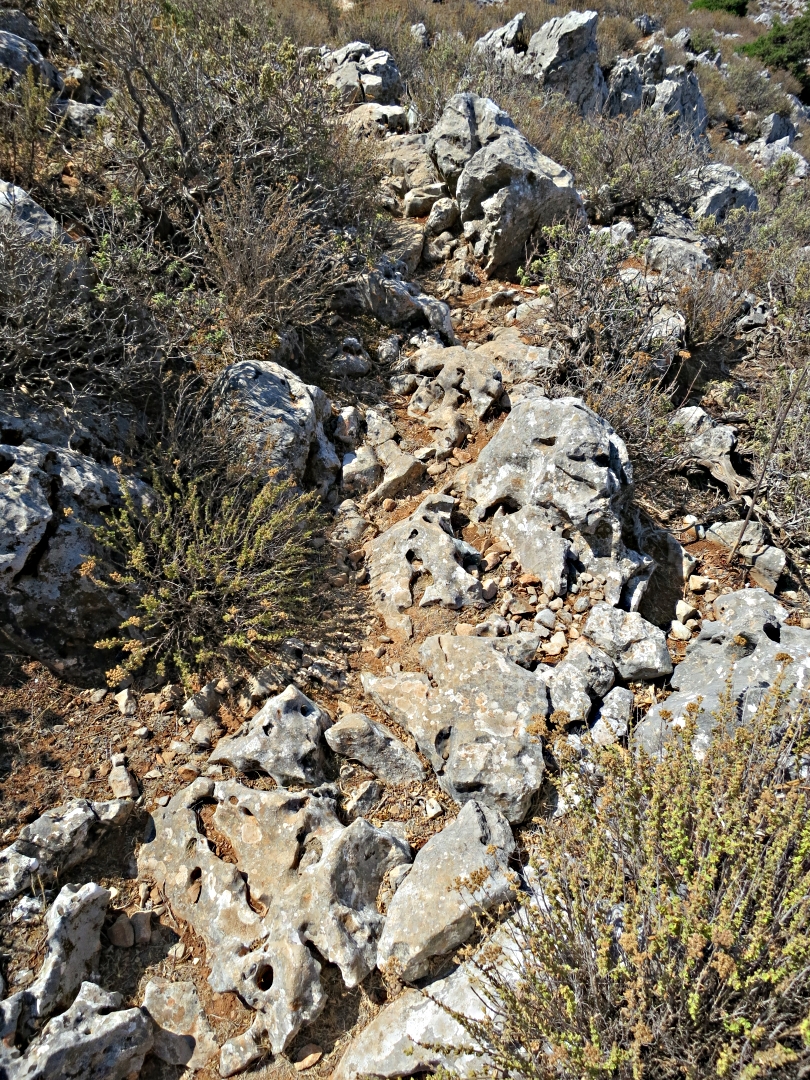
From the monastery the narrow path picking its way along the rocky mountainside is never devoid of interest, particularly at the beginning of October with the exquisite, shy heads of Biarum marmarensis poking up between the rocks.  Towards the end of September there seemed to have been a mass migration of goats as a suddenly well-trodden trail comes down from the ridge onto the path just beyond the monastery and follows it for a while.  Two effects of this were that a section of the path to Gria became easier to identify, and quite a few of the Biarums were munched.

Biarum marmarisense
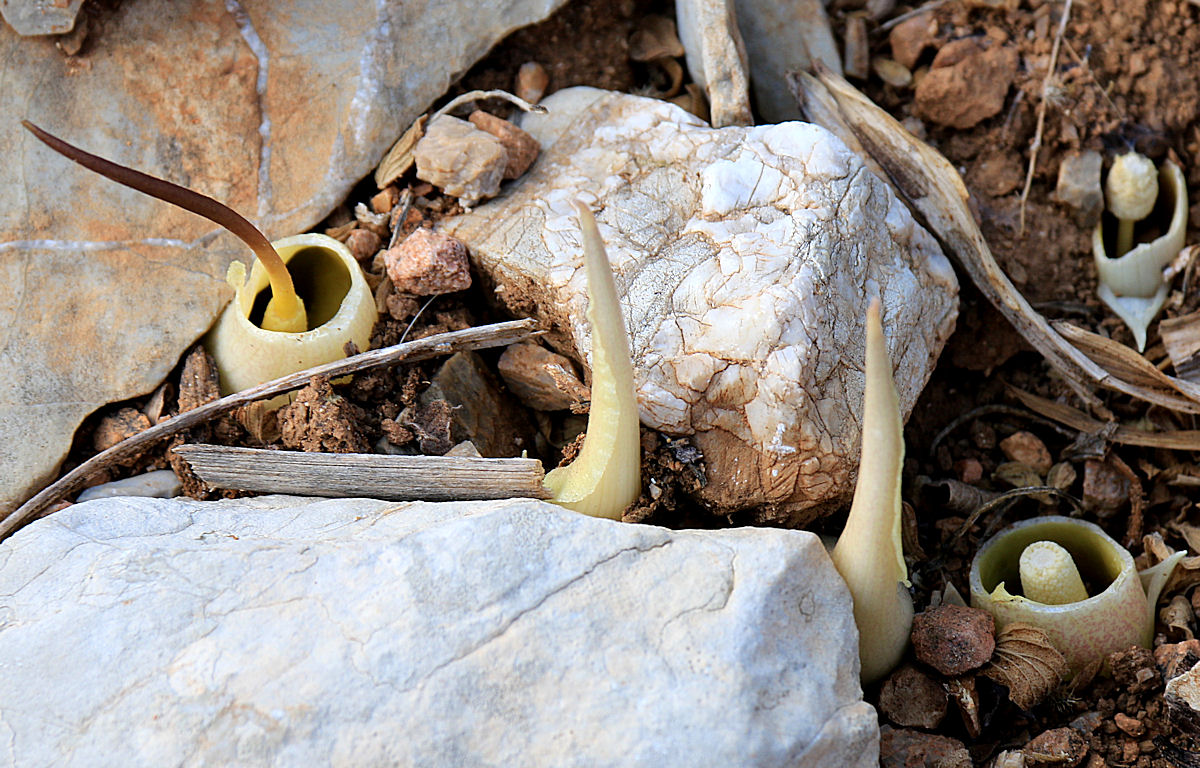
Biarum marmarisense

............ munched by goats along a migration route

………… munched by goats along a migration route

One of the reasons for going back to Gria was simply that it is a very enjoyable short trek in the mountains and the setting is spectacular.

Spectacular view of Pedi from the crags into which the deserted village is set

Spectacular view of Pedi from the crags into which the deserted village is set

Another reason was growing concern about the rate at which the level of the pond has dropped.  Apologies if the succession of photos below is tedious but I think it shows the scale of the problem

When I went up to the pond early in April I was struck by how low the water was, certainly compared with when I first went with my wife in 2001.  Further visits in May and June showed the level dropping further.
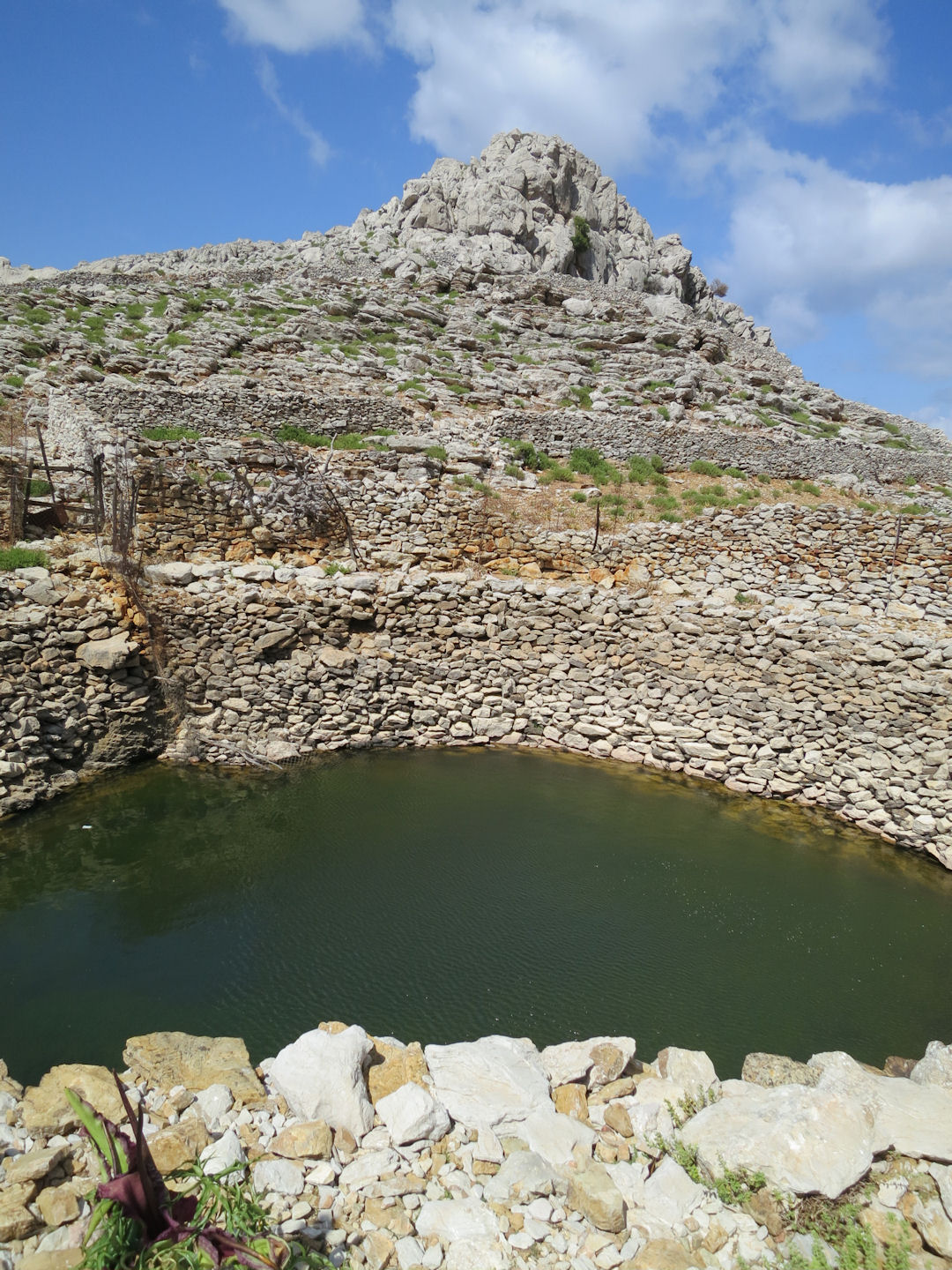
Looking across the pond towards the crag on the far side, April 2014

Looking across the pond towards the crag on the far side, April 2014

Looking across the pond, June 2014, water level dropped slightly
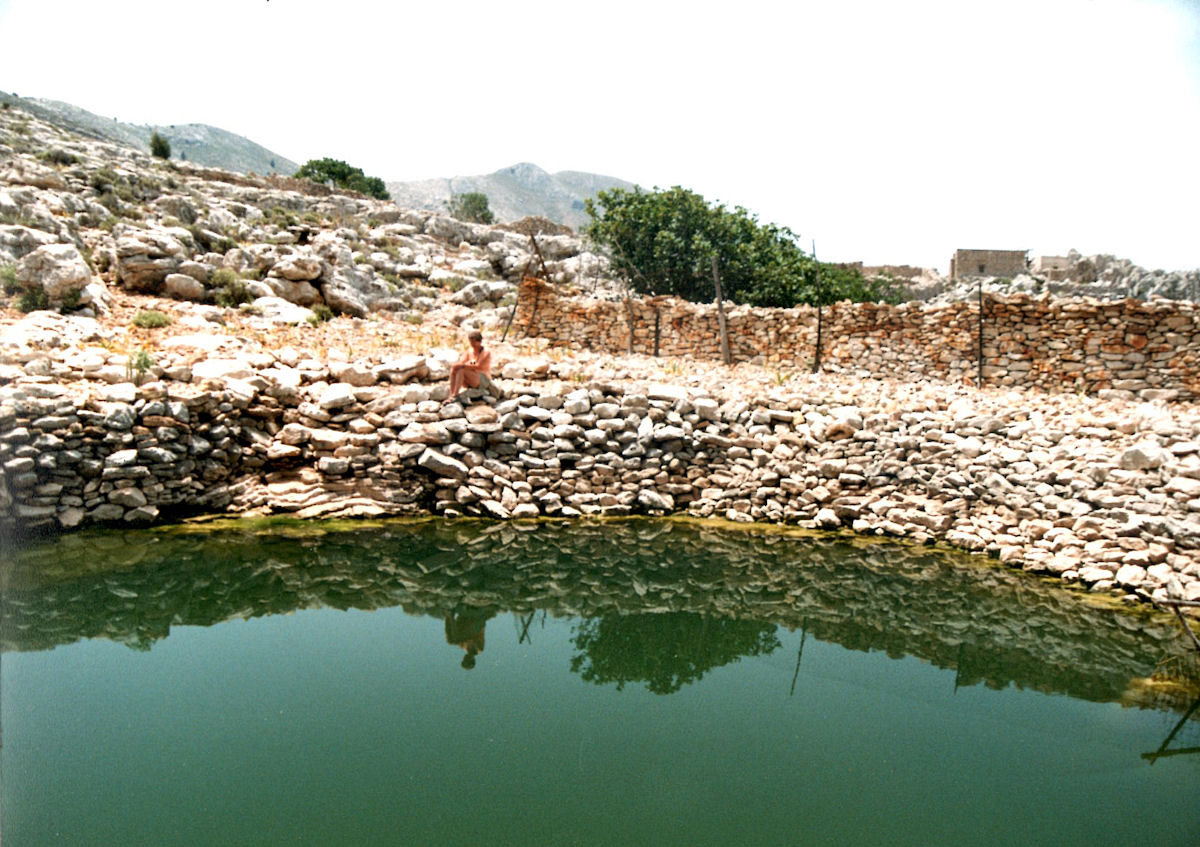
Looking across the pond, June 2014, water level dropped slightly

The pond as it was in 2001

The pond as it was in 2001

The pond viewed from the top of the crag in June 2014, the 2001 level marked with a red line

The pond viewed from the top of the crag in June 2014, the 2001 level marked with a red line

By September the drop in levels was worrying and by the middle of October verging on alarming.  It was far lower than towards the end of September last year which was itself significantly lower than previous years.

September 2013

September 2013

September 2014

September 2014

October 2014

October 2014

Down at water level September 2014

Down at water level September 2014

The assumption that this is simply caused by the level dropping during the summer due to evaporation to be replenished by winter rains doesn’t stand up to scrutiny. The pond cannot be fed by surface run-off, there simply isn’t enough rainfall, the catchment area is small, and the geology is in any case limestone through which water would soak.  If the pond was due only to run-off it would be dry most of the year.

That water penetrates through the rock is clear from caves on the island which have calcite deposits but there is little rainfall, probably less than 24 inches a year (data varies widely and seems unreliable). The three summer months have virtually no rain at all.

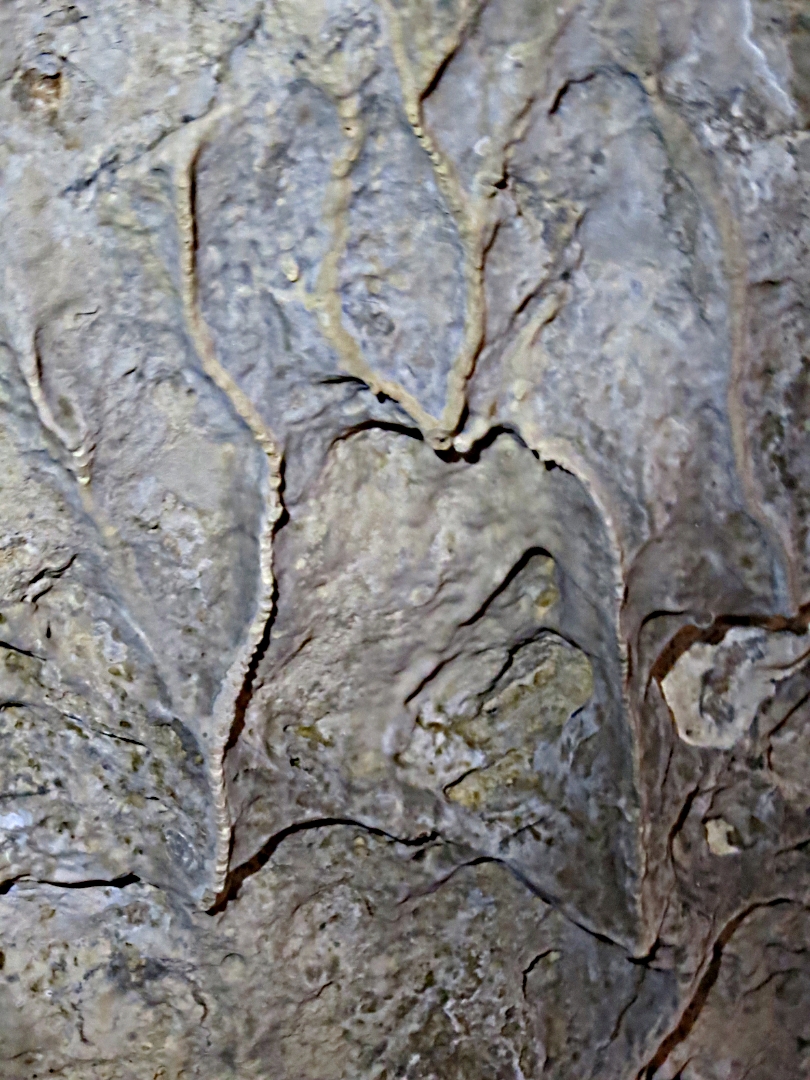
Inside Skordalos cave, water drips very slowly from a calcite straw

Inside Skordalos cave, water drips very slowly from a calcite straw

It is most probable that the pond is maintained by spring water but whether that is from what falls on the island is debateable.  It may be that it is driven by hydraulic pressure from the higher and more extensive mountains on the other side of the narrow channel which separates the island from Turkey. Whichever is the case it is clear that the aquifer is drying up, in all probability in response to a combination of reducing rainfall and water abstraction lowering the water table.

The level by mid October had dropped to the point where the rocks beneath the surface are just about visible, looking very much like the entrance to a cave system.  If my plans to return to the island next year work out I shall be going back to see how things pan out.

Like all ponds, that at Gria forms a unique habitat, all the more valuable on Symi because it is a waterhole in the middle of desert.  In summer it is surrounded by arid soil and bare rock, only ultra drought resistant plants such as oregano, thyme and sage managing to survive, with bulbs such as squill and biarum putting in brief but spectacular seasonal appearance. The pond is essential for local fauna.  Amphibians such as the Green Toad lay spawn, dragonflies lay their eggs and hornets congregate.  Lizards, snakes and the rats they feed on put in an occasional appearance.

Female dragonflies lay their eggs from a rusty fence, well above water-level by September

Female dragonflies lay their eggs from a rusty fence, well above water-level by September

..... and so was the rock slab

….. and so was the rock slab

Showing then red-veins in the wings which give the dragonfly its name
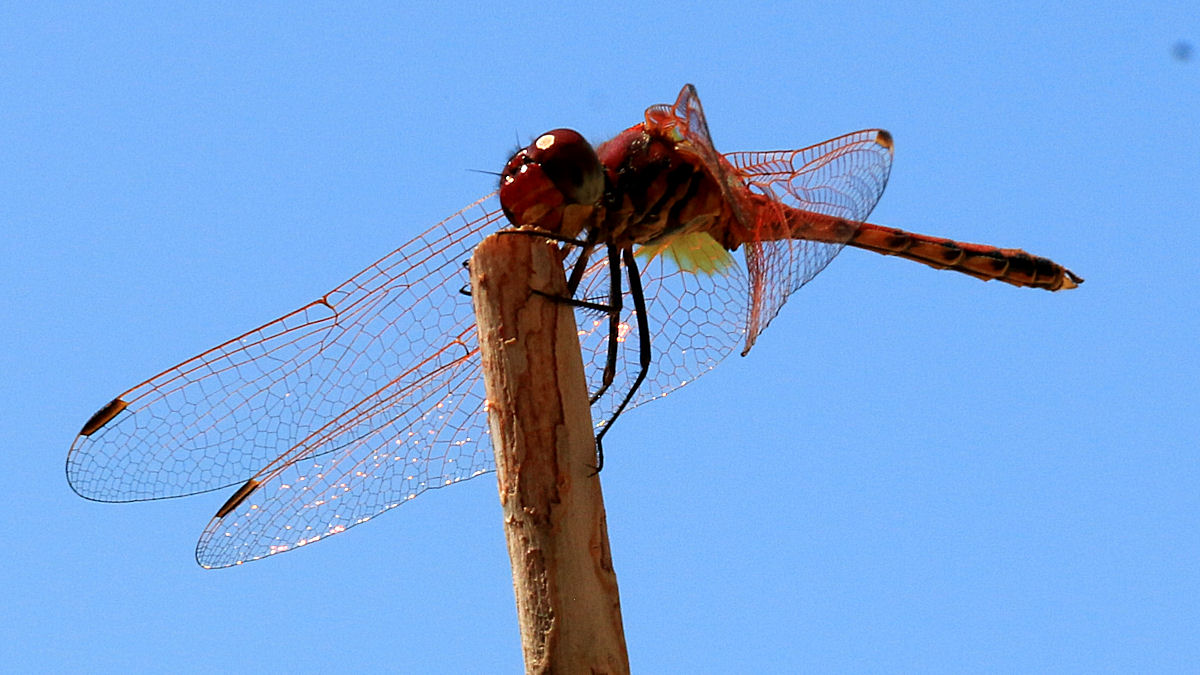
Showing then red-veins in the wings which give the dragonfly its name

Disporting himself on a stick, a male showing the yellow at the base of the wings which helps distinguish it from other red dragonflies
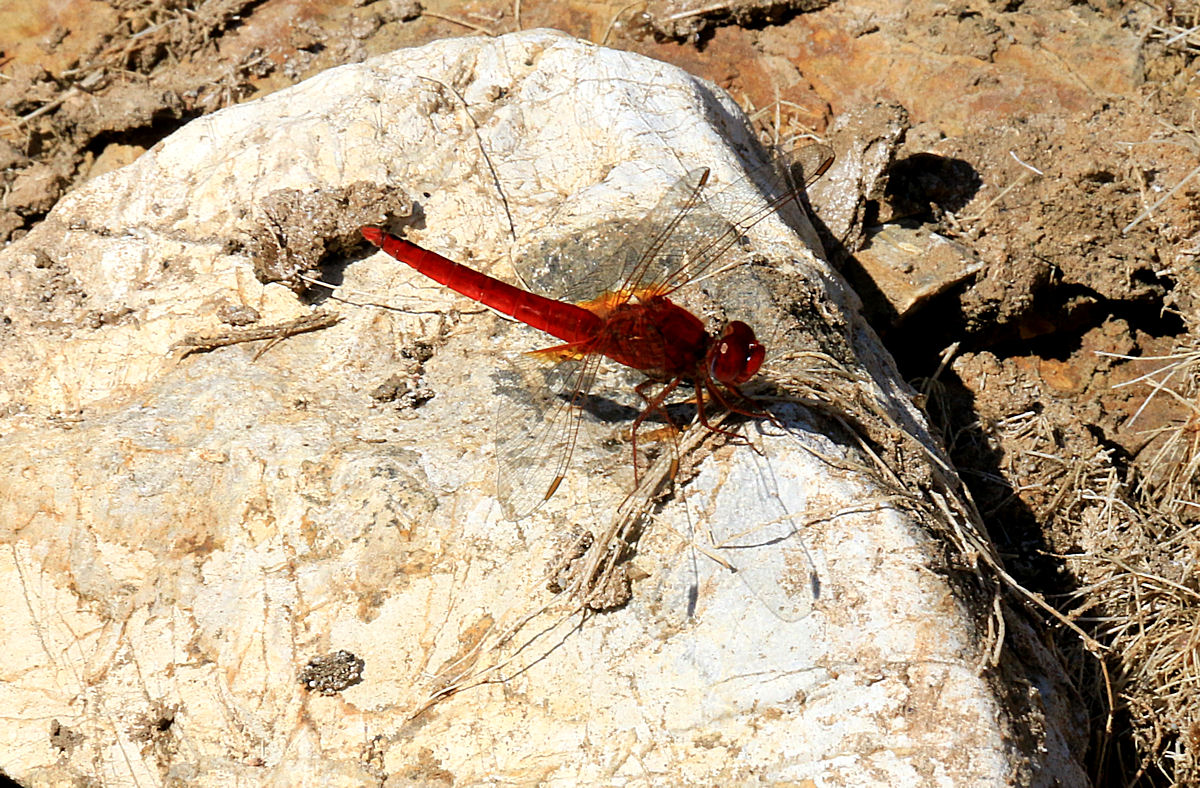
Disporting himself on a stick, a male showing the yellow at the base of the wings which helps distinguish it from other red dragonflies

Red-veined Darter on a rock now away from the water

Red-veined Darter on a rock now away from the water

Male and female Red-veined Darters fly in tandem to allow the female to lay eggs in the water.  The haphazard movement means I failed to focus properly,the result is an impressionistic scene

Male and female Red-veined Darters fly in tandem to allow the female to lay eggs in the water. The haphazard movement means I failed to focus properly, the result being an impressionistic scene

Green toads  doing what comes naturally on a rock in May 2014,  high above water level in October

Green toads doing what comes naturally on a rock in May 2014, high above water level in October

When I landed here I was right at the waters' edge.  Someone has pulled the plug out!

When I landed here I was right at the waters’ edge. Someone has pulled the plug out!

x
Posted in Greece, Grey Britain, Hiking, Landscape, Mountains, Nature, Pontypool, Reflections, Spring, Wildlife | Tagged , , , , , , , , , , , , , , , , , , , , , | 2 Comments

Symi: to the past and on the edge

I’m back home now, trying to stop the cold seeping into my bones and prevent the grey seeping into my brain.  But there are many bright, warm memories of Symi to look back on, more Symi-based blogs to post.

One day I trekked up to the main ridge to visit the Byzantine stone wine presses in the Kourkouniotis area of the island.  With close to 2000 feet of height gain much of the route is difficult walking over very rough, rocky ground but the landscape is dramatic and the whole route very satisfying.  Eventually it reaches The Tarmac, the ridge-top road and, though sections of it can be by-passed, there is necessarily a short walk along it to the fortress-like Megalos Sotiris monastery and the start of the very good, easy-gradient path to the wine-presses.

It is estimated that there are about 130 stone wine-presses on Symi, some 47 of which are in this area.  Eleven have been restored by the efforts of one man, local enthusiast Sarantis Kritikos, in a six month period between October 1994 and April 1995.  These give a clear insight into how the wine was produced.  Geology is the key, flat slabs of rock have vertical slabs cemented in a circle around them supported by dry-stone walls up to 60 centimetres thick with an internal diameter of about 2 metres, sloping to allow the ‘must’ to drain into a channel called a ‘linos’.

Symi earned its reputation for production and export of fine-quality white wines in earlier centuries.  The first reference to Symi wine is made in 1420 and it is likely that wine was produced here long before that, archaeological finds having been dated back to as early as the 11th century.  Other historical references show that production continued for some centuries afterwards.  However, pirate activity harassing trade in the Aegean put a stop to exports and so production declined sharply, becoming limited by the mid 19th Century to domestic consumption only.

In his short book ‘The stone wine presses of Symi’ Kritikos estimates that with 130 wine presses and 2 or 3 people treading each there were probably 2-300 involved in production.  He also estimates that each produced 100-150 kilos of wine a year (in Greek restaurants and tavernas wine is ordered by weight, 1 kilo equals 1 litre) with a total output of maybe up to 15,000 litres a year.

The restored structures can be seen along the path from Megalo Sotiros to the much smaller monastery of Mihail Kourkouniotis.  A couple are alongside the path but most are up to the right.  It was interesting to sit on the slabs, munch a banana and speculate how widespread must have been the cultivation of sufficient vines to feed these presses.  Now the Kourkouniotis area is mostly covered in cypress woodland but in earlier centuries much of it would have been cultivated.  Too comfortable on my perch soaking up the Autumn sun to go off foraging through the trees for remains, I resolved that next year I’ll go back and wander around to investigate.

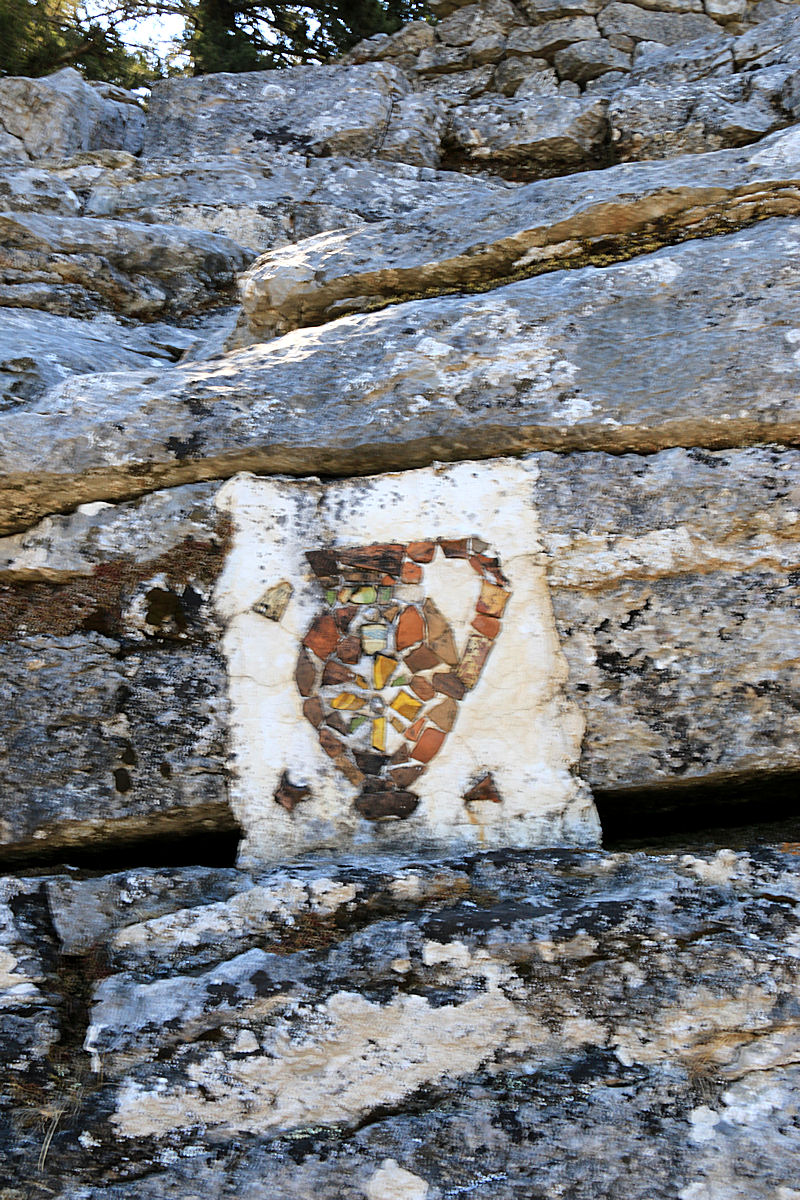
A modern mosaic indicating the nature of activity in the Kourkouniotis area

A modern mosaic indicating the nature of activity in the Kourkouniotis area

Restored wine presses high on the ridge

Restored wine presses high on the ridge

Detail of one of the restored presses showing the flat slab floor, the slab-and-drystone walls and the outlet for the must

Detail of one of the restored presses showing the flat slab floor, the slab-and-drystone walls and the outlet for the must

What I did this time was to wander higher up behind the restored wine-presses beyond the flat slabs of rock to more broken limestone to the reach the top of the ridge looking down to the coast and the Panormitis monastery.

From the edge of the ridge above the wine presses looking down to the coast

From the edge of the ridge above the wine presses looking down to the coast

Zooming in on the Panormitis monasterey

Zooming in on the Panormitis monasterey

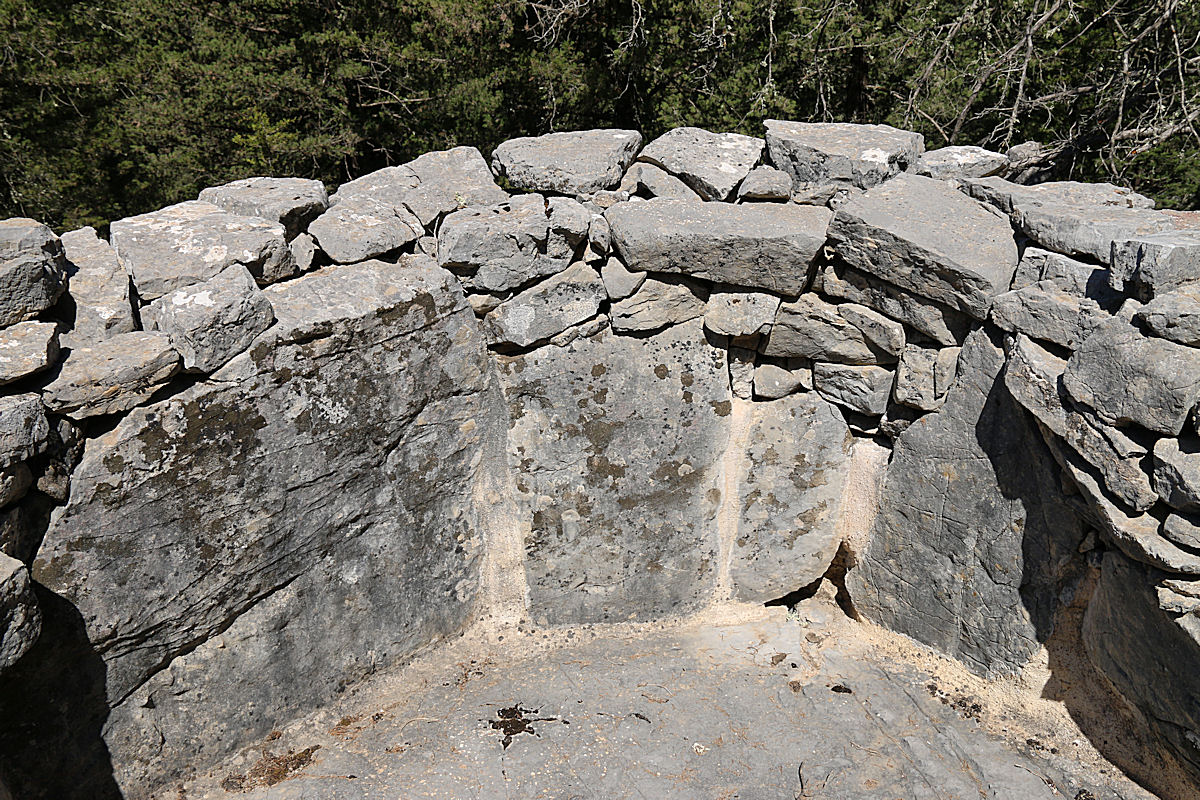
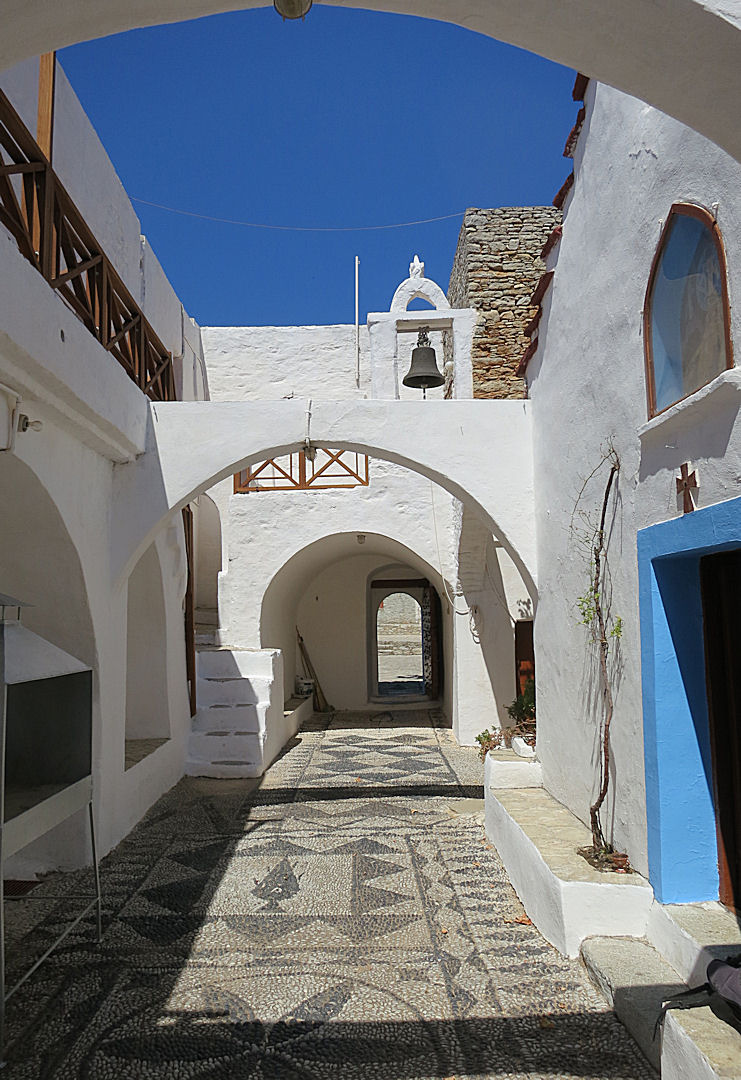
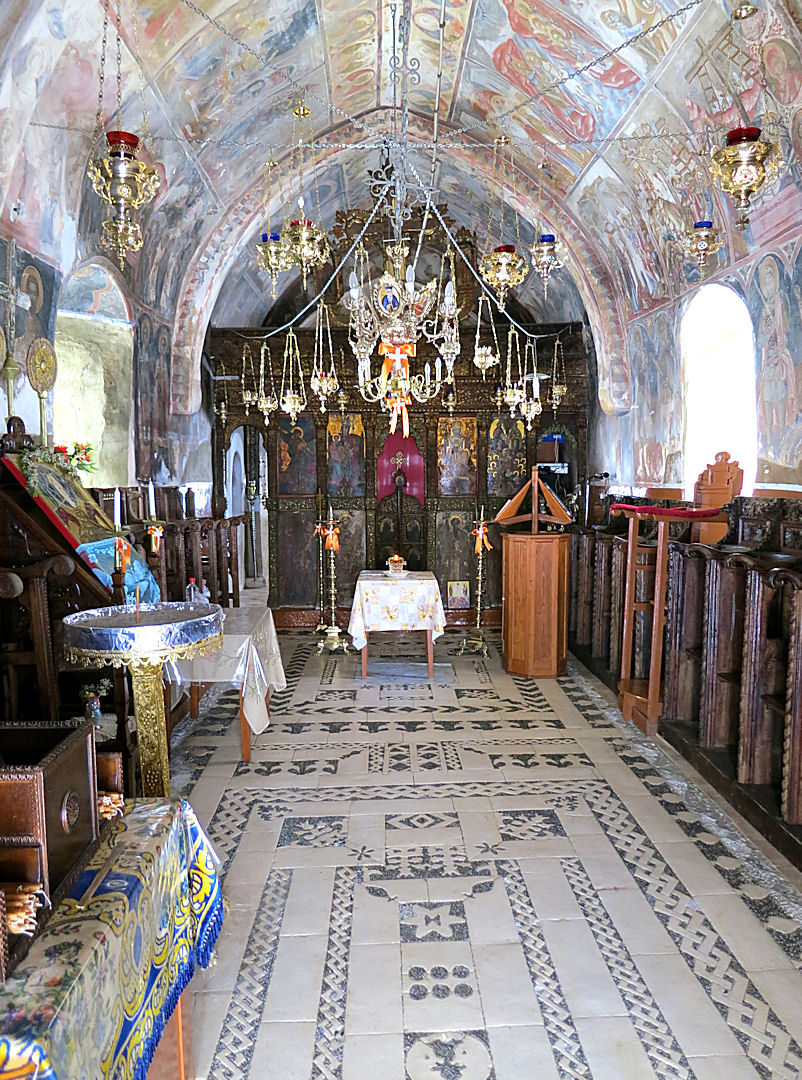
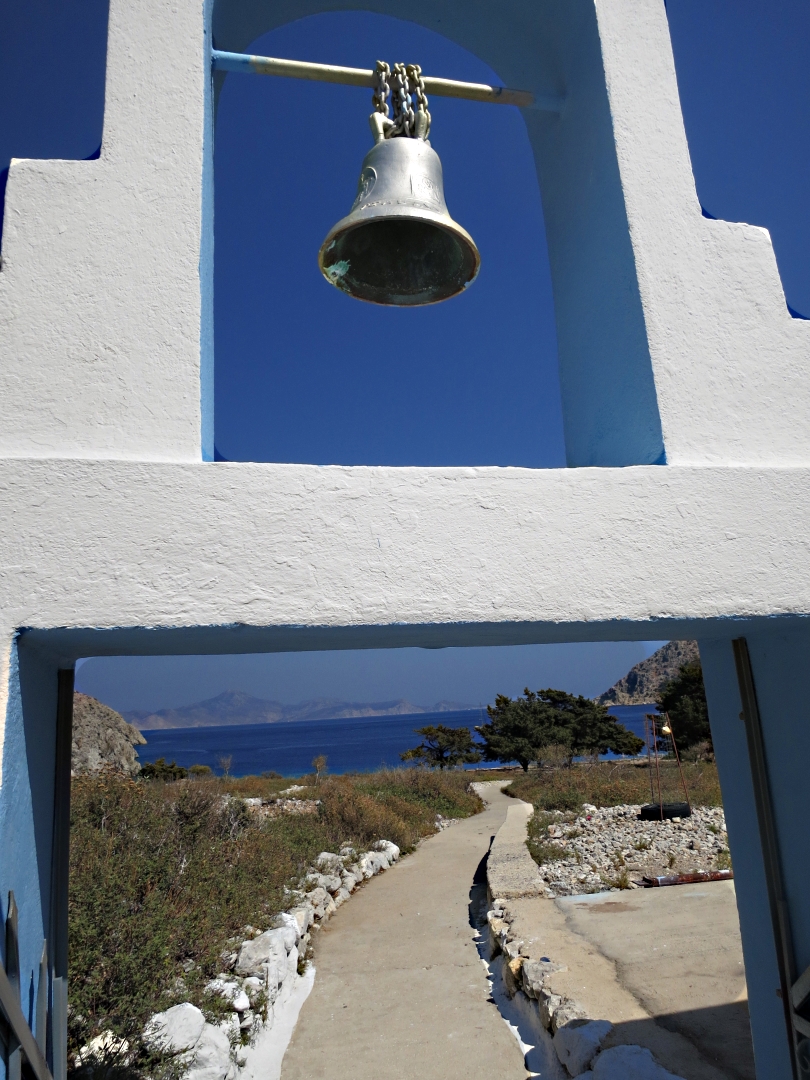
From the ridge-top I dropped down to the path and back to Megalo Sotiros monastery.  Usually the enclosure is locked.  On one occasion earlier this year it was open as was the entrance to the courtyard but a priest was making his tea and expelled us very grumpily. On this occasion it was open and the guy who was doing the maintenance/cleaning not only welcomed me in but unlocked the door to the church with its impressive Hochlakos-mosaic floor and well preserved frescos said to date back to 1727.  The fine craftsmanship of the wood carving of the iconastis includes repeated detail of vine leaves and bunches of grapes decorated with (what I think is) gold-leaf, an indication of the wealth once derived from wine production in the area.

Entrance to the fortified enclosure

Entrance to the fortified enclosure

Looking back towards the entrance with the hochlakos courtyard and the church on the right

Looking back towards the entrance with the hochlakos courtyard and the church on the right

Large bunches of grapes hang down from vines shading another section of courtyard

Large bunches of grapes hang down from vines shading another section of courtyard

The magnificent inside of the church with hochlakos floor and walls and ceiling covered in frescos

The magnificent inside of the church with hochlakos floor and walls and ceiling covered in frescos

One of the many frescos, nearly 300 years old

One of the many frescos, nearly 300 years old

One of the panels in the iconastis, this one depicting the Archangel Michael, edged by fine wood carving

One of the panels in the iconastis, this one depicting the Archangel Michael, edged by fine wood carving

Detail showing the vine-leaves and grapes

Detail showing the vine-leaves and grapes

When I left the monastery I walked the short distance behind it to the edge of the breathtakingly steep drop down to the coast. There then followed an interesting bit of off-piste.

First, I carried on up the edge of the drop to the top of the crag, capped with razor-sharp limestone with dramatic views in all directions.

Photographer on the edge, with a new pair of sandals

Photographer on the edge, with a new pair of sandals

At the top of the razor limestone crag

At the top of the razor limestone crag

Looking towards the mountain-top monastery of Agios Stavros Polemou

Looking towards the mountain-top monastery of Agios Stavros Polemou

Looking back towards Megalos Sotiros

Looking back towards Megalos Sotiros

On the way up I had noticed stone-walls on narrow terraces lower down the cliff so I then climbed down to investigate.  A small single-room house was built into the rockface with stone-walled enclosures partly as retaining walls to create terraces, partly to pen in animals.   Not a place to go sleep-walking.  Once upon a time, in the distant past, I lived in Mid Wales with friends who kept goats which were forever jumping over the fence and escaping up the mountain: we had to go chasing after them, I was quite fit in those days.  If they jumped out of these enclosures they would meet a sudden a very sticky end.  I certainly wouldn’t go chasing after them if they survived.

Single-room house built into the cliff

Single-room house built into the cliff

Cupboards built into the cliff-wall:  these don't come in flat packs with an allan-key

Cupboards built into the cliff-wall: these don’t come in flat packs with an allan-key

Combined retaining wall and enclosure on near-vertical slope

Combined retaining wall and enclosure on near-vertical slope

The narrow path on the way back to the monastery

The narrow path on the way back to the monastery

.... which soon comes into sight

…. which soon comes into sight

The more I trek around the mountains on the tiny island of Symi, only some 67 square kilometres, the more I realise how much more there is to explore, how much more evidence of the past there is to find.

Posted in Greece, Hiking, History, Landscape, Mountains | Tagged , , , , , , , , , | Leave a comment

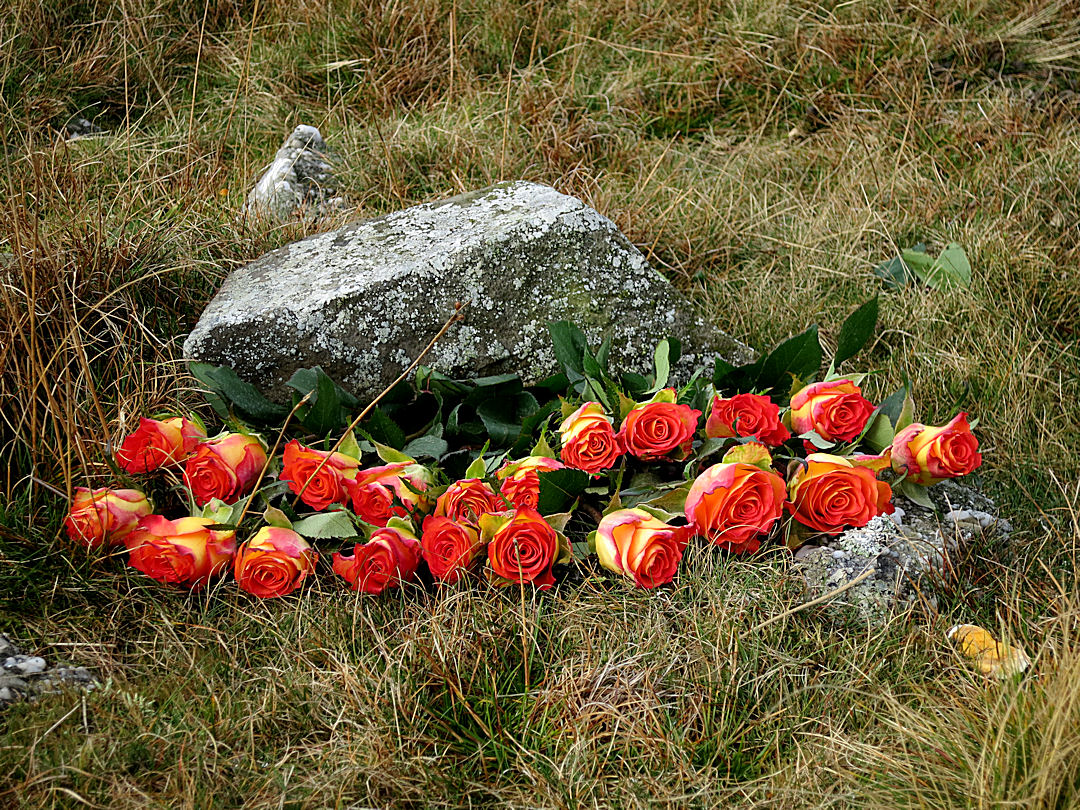
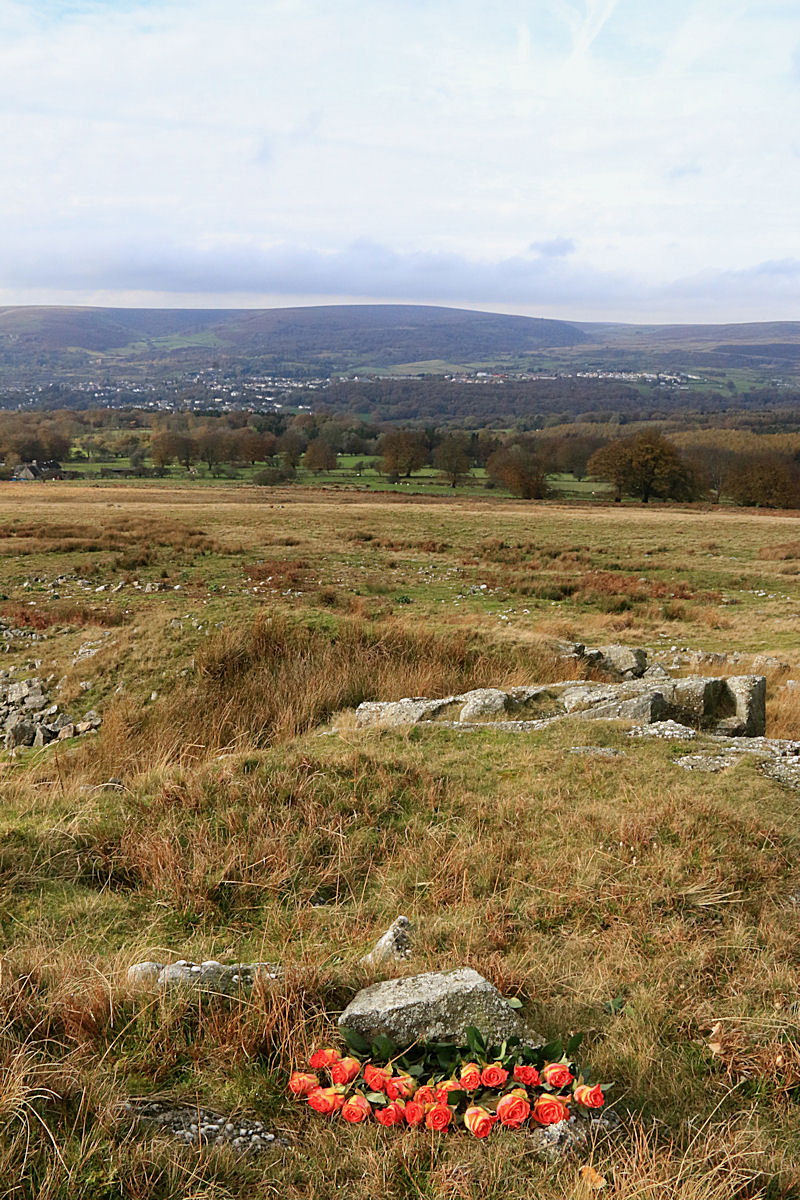
Remembering

Five years.  Constantly remembered.  Constantly missed

14Pontypool21w635514Pontypool20w1835 14Pontypool22w1838x

Posted in Reflections | Tagged | 4 Comments

Symi:  Wildlife safari.

The searing heat of summer on The Hot Rock has passed.  Life is beginning to emerge again from the crisp remains of the scorched landscape.  Trekking in the mountains reveals more every day as plants and animals emerge from the dust-dry soil to do what is hard-wired into them, ensuring the survival of the species.  It starts to happen rapidly as temperatures follow the sun downwards before both start to climb again after only a few months and everything again shrivels and hides.

Trekking up into the mountains there is something new every day.  Here are just a few images of how the desert begins to be transformed.

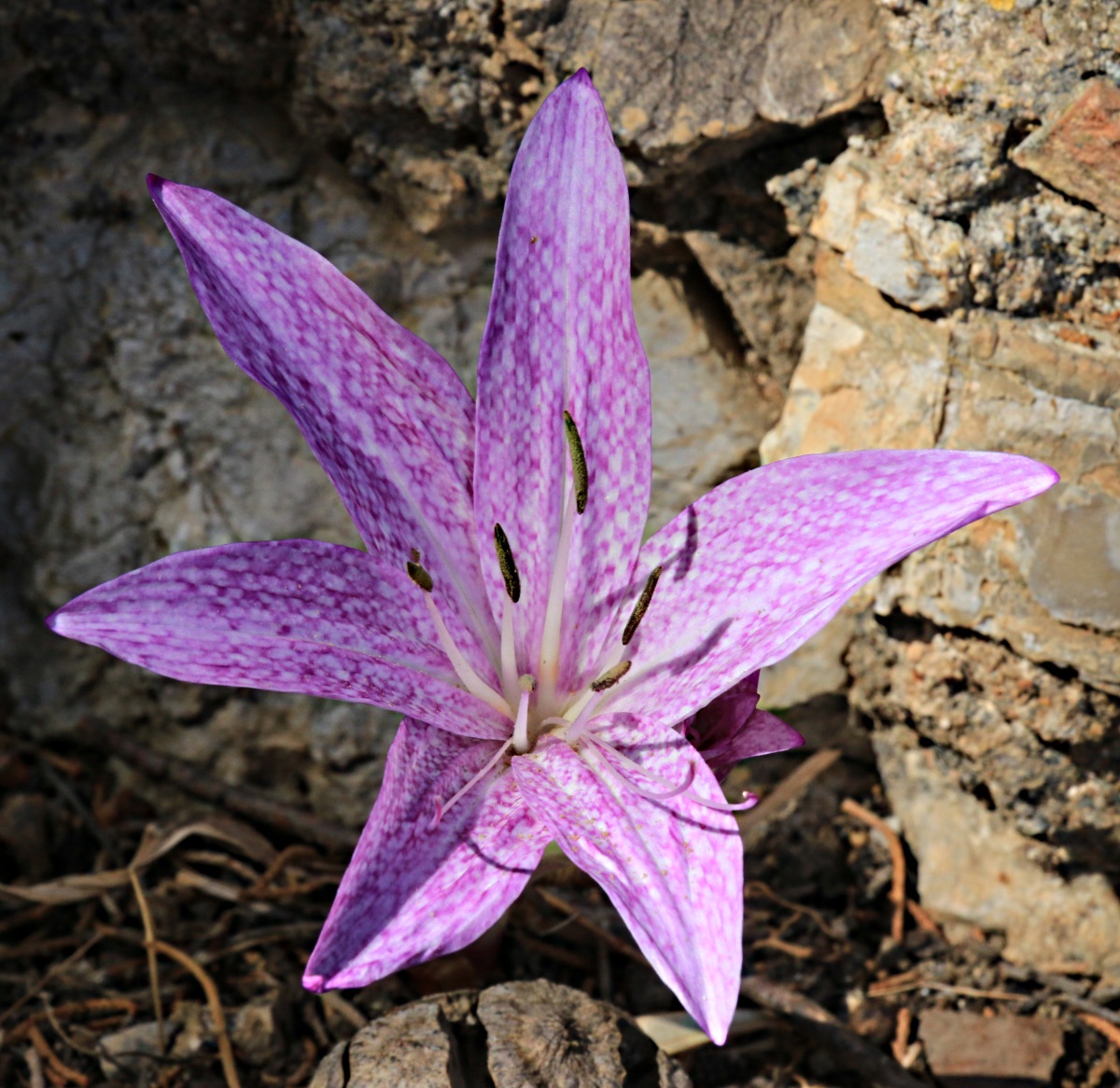
The Autumn crocus emerges naked from the ground late September onwards.  Individually ...

The Autumn crocus emerges naked from the ground late September onwards. Individually …

..... in clumps in the shade ....

….. in clumps in the shade ….

.... in clumps in the sun ....

…. in clumps in the sun ….

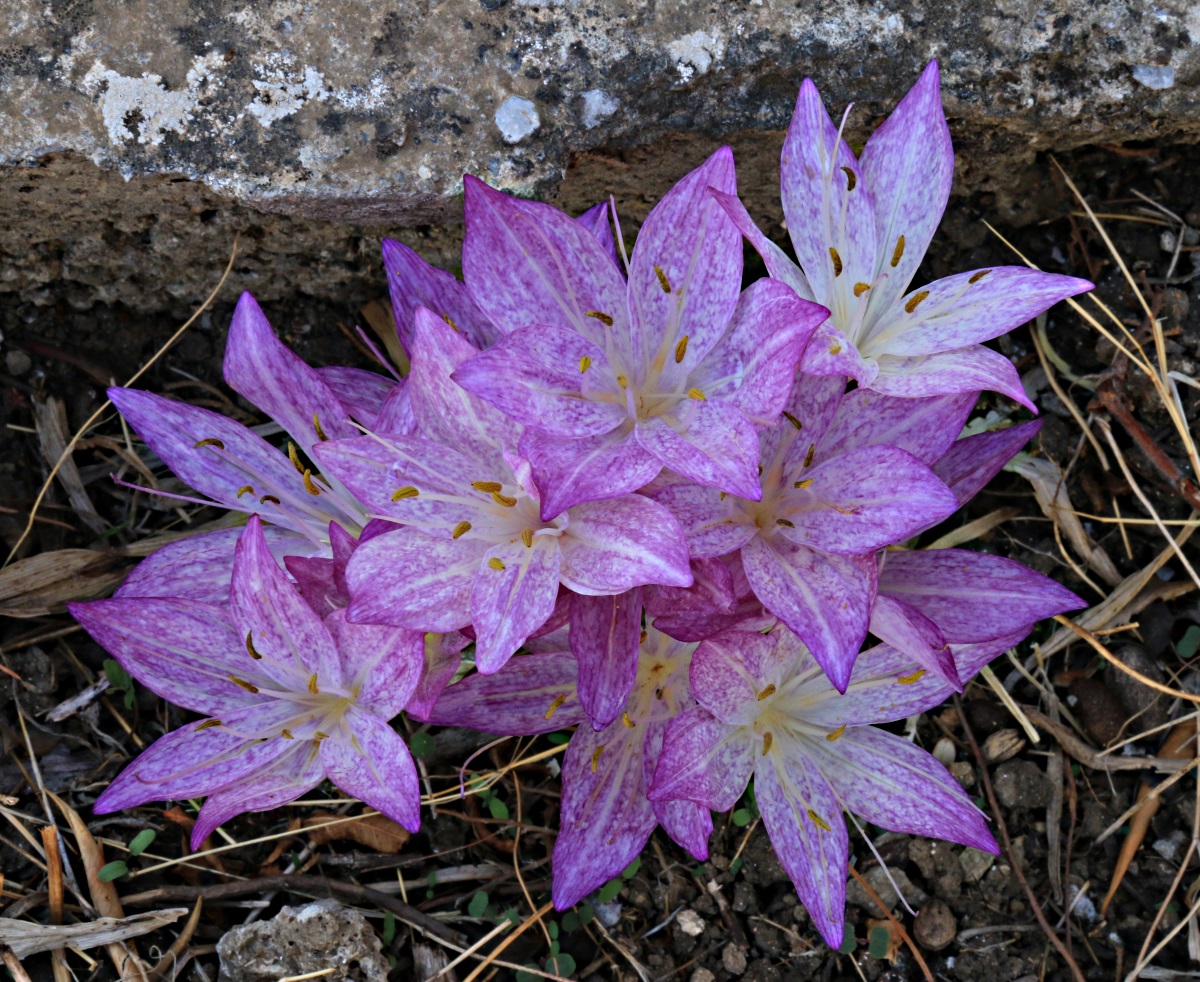
...... massed  together ....

…… massed together ….

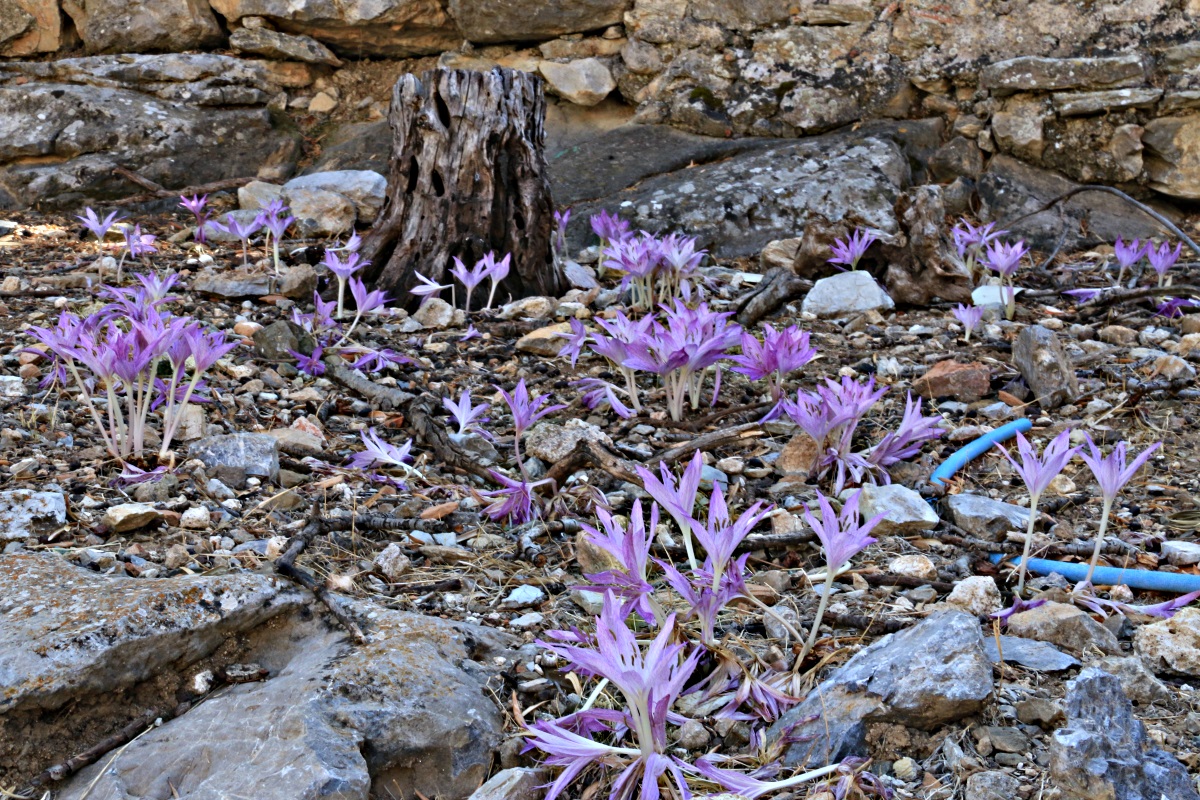
covering whole terraces under the trees

covering whole terraces under the trees

Bees show the scale before they disappear inside the trumpet

Bees show the scale before they disappear inside the trumpet

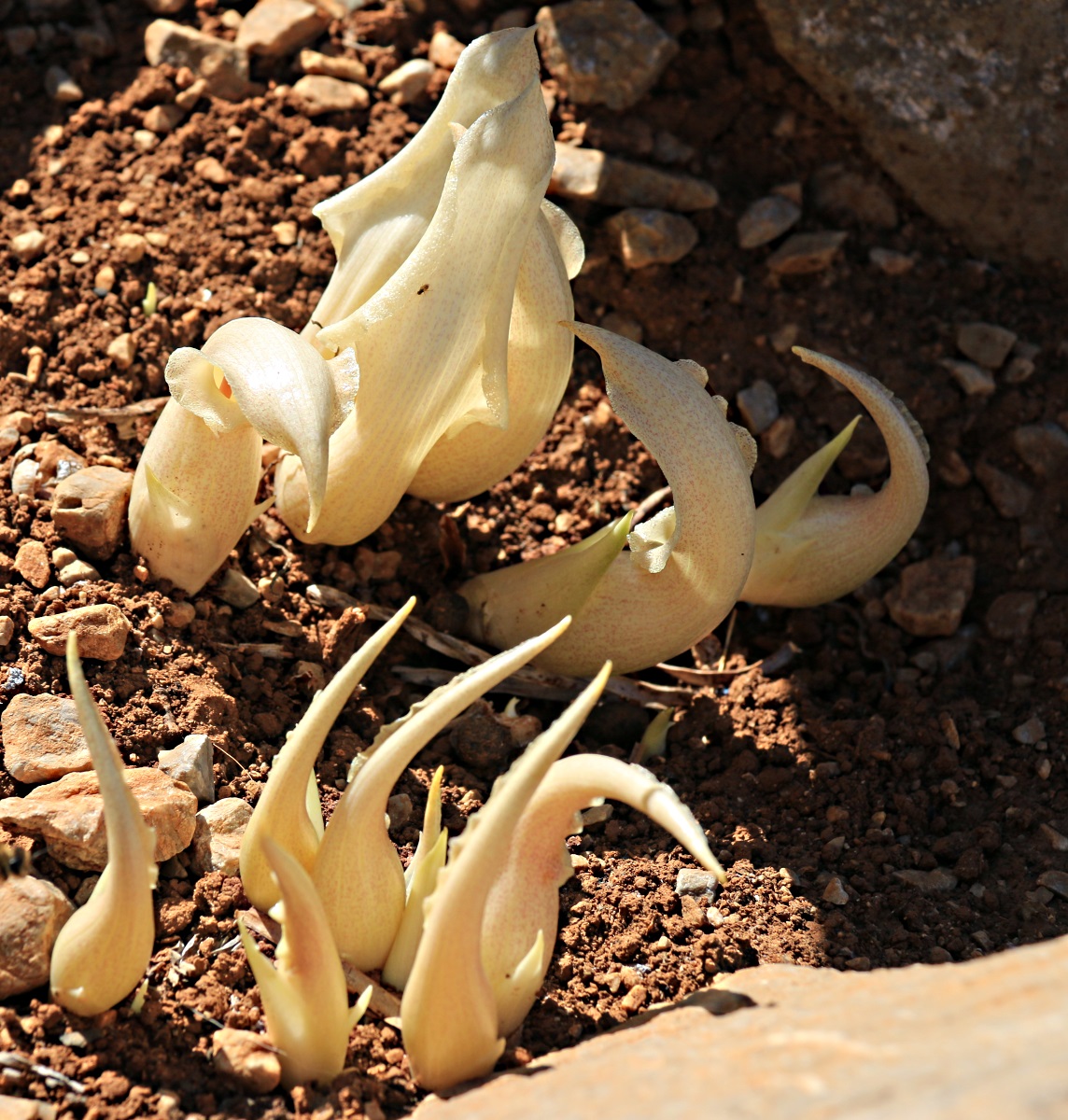
I found the exquisite Biarum marmarisense on a couple of other mountainsides

I found the exquisite Biarum marmarisense on a couple of other mountainsides

Squeezing out between rocks

Squeezing out between rocks

Caressing each other

Caressing each other

Difficult to see the mantis   looks like a stick unless it moves

Difficult to see the mantis looks like a stick unless it moves

... but I found this one when dismantling the hessian shade cover on the roof terrace

… but I found this one when dismantling the hessian shade cover on the roof terrace

.   alittle easier to see against the dark wood of the railing

. alittle easier to see against the dark wood of the railing

Rearing up on 4 of its 6 legs

Rearing up on 4 of its 6 legs

... and then landing next to my pliers

… and then landing next to my pliers

I nearly trod on this big fella, over a foot long, almost black, covered in dust and wandering along the mountainside

I nearly trod on this big fella, over a foot long, almost black, covered in dust and wandering along the mountainside

When you get old the wrinkles in your neck give you away

When you get old the wrinkles in your neck give you away

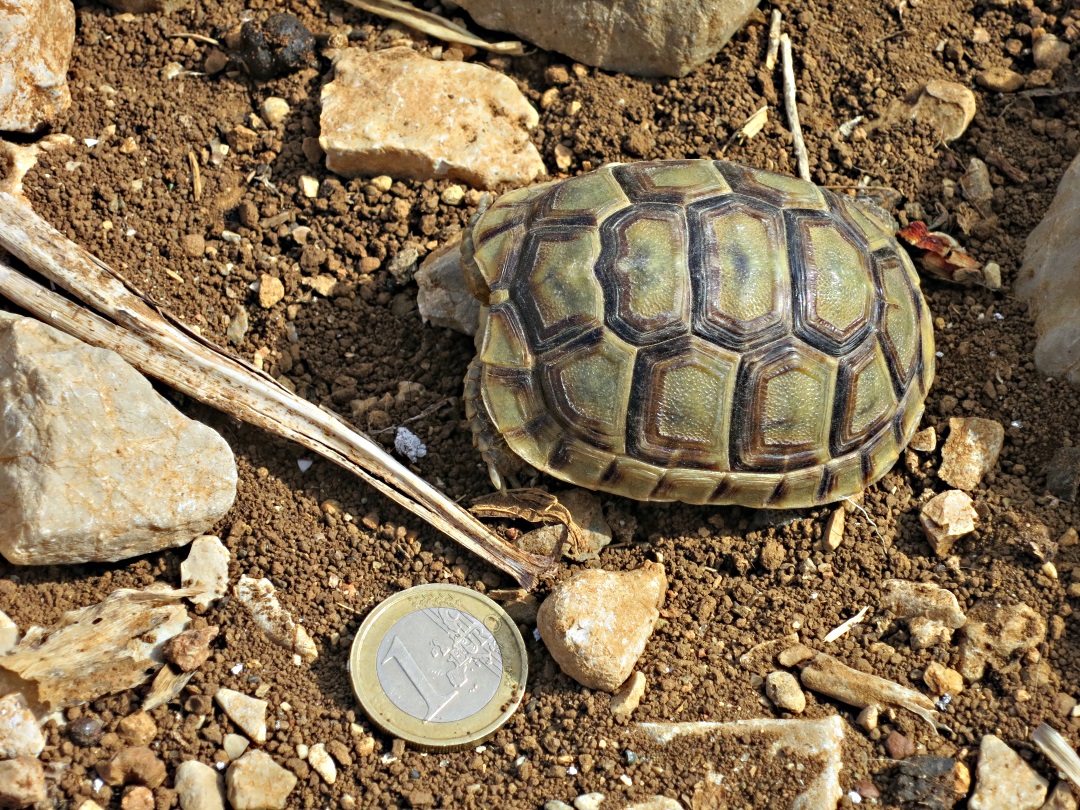
This little guy was unwilling to come out of his shell once he spotted me

This little guy was unwilling to come out of his shell once he spotted me

Not everything survives.  I don't know how this bird of prey met its end but it was spread out like a feather cloak not savaged by a predator

Not everything survives. I don’t know how this bird of prey met its end but it was spread out like a feather cloak not savaged by a predator

I thought this was an Ottoman Viper but checked and it was identified as a Coin-marked snake.

I thought this was an Ottoman Viper but checked and it was identified as a Coin-marked snake.

looking for a bolt-hole as I followed it with the camera

looking for a bolt-hole as I followed it with the camera

The snake was identified by Matt Wilson who has a very good  European Amphibian and Reptile Blog.  Check it out:
http://mwilsonherps.wordpress.com/trip-reports/symi/

x

Posted in Greece, Hiking, Landscape, Mountains, Nature, Wildlife | Tagged , , , , , , , | 3 Comments

Symi:  A Taste of Honey and Dalliance with A Painted Lady

I stopped to chat with  friends in Lefteris’s kafenion at the top of the Kali Strata on the way back to the house from the restaurant close to midnight.  After a short while the owner started  hurriedly carrying the wooden chairs and tables inside.  We helped. Task complete I stepped out from under the canopy to resume the 10 minute walk just as the first large, heavy drops of rain started to fall, leaving dark spots an inch across on the ground.  Within seconds they coalesced until the stone-paved surface, dry for months, was shining wet.

By the time I reached the shoe shop barely 100 metres further up the Kali Strata I was wet to the skin.  As I turned right up the couple of steps through the arch at the top the whole width of the rough-paved alley was flowing with water.  The next right turn, more steeply and narrowly uphill, and the water was cascading ankle-deep.  I could have just about come down it in my kayak if it hadn’t been hanging in the garage at home in Wales, though I doubt I could have taken the tight bend at the bottom.  Back at the house  the avli (inner courtyard) was ponded at the lower edge, the drainage outlet unable to cope with the volume of water so it flowed out under the door to join the stream in the alley.

For 24 hours after that it was cloudy with thunder showers and longer periods of heavy rain.   That was nearly a week ago. Then the sky cleared and has been cloudless ever since.

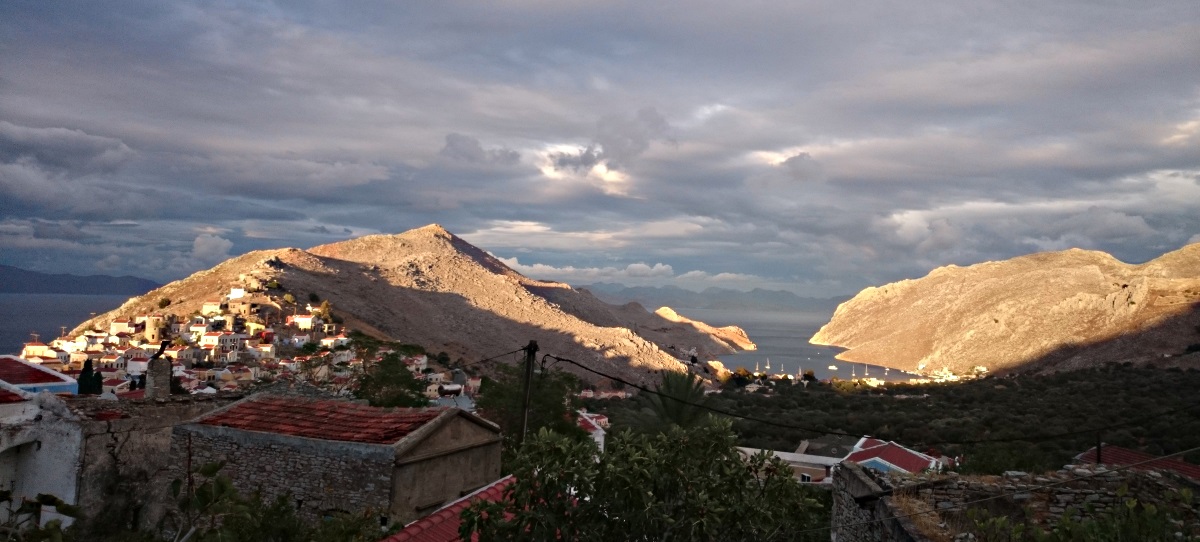
Looking towards Turkey from the roof terrace of the house

Looking towards Turkey from the roof terrace of the house

Dramatic view the following evening

Dramatic view the following evening

Symbolically it marked the change from Summer to Autumn, from temperatures pushing 40 to a mere 28-30 in the day, plummeting to 20 overnight.  It also marked the beginning of growth in a landscape parched, crisped, straw-brown for nearly 4 months.  Hence the change of focus in the blog from pre-history to natural history.

Hillsides covered in oregano or sage are showing the start of fresh growth on dried-up twigs, the scents stirred up once again as you pass.  The prickly thyme is showing a second flush of flowers, albeit on a very small scale compared with the major flowering this year (honey should be good!).

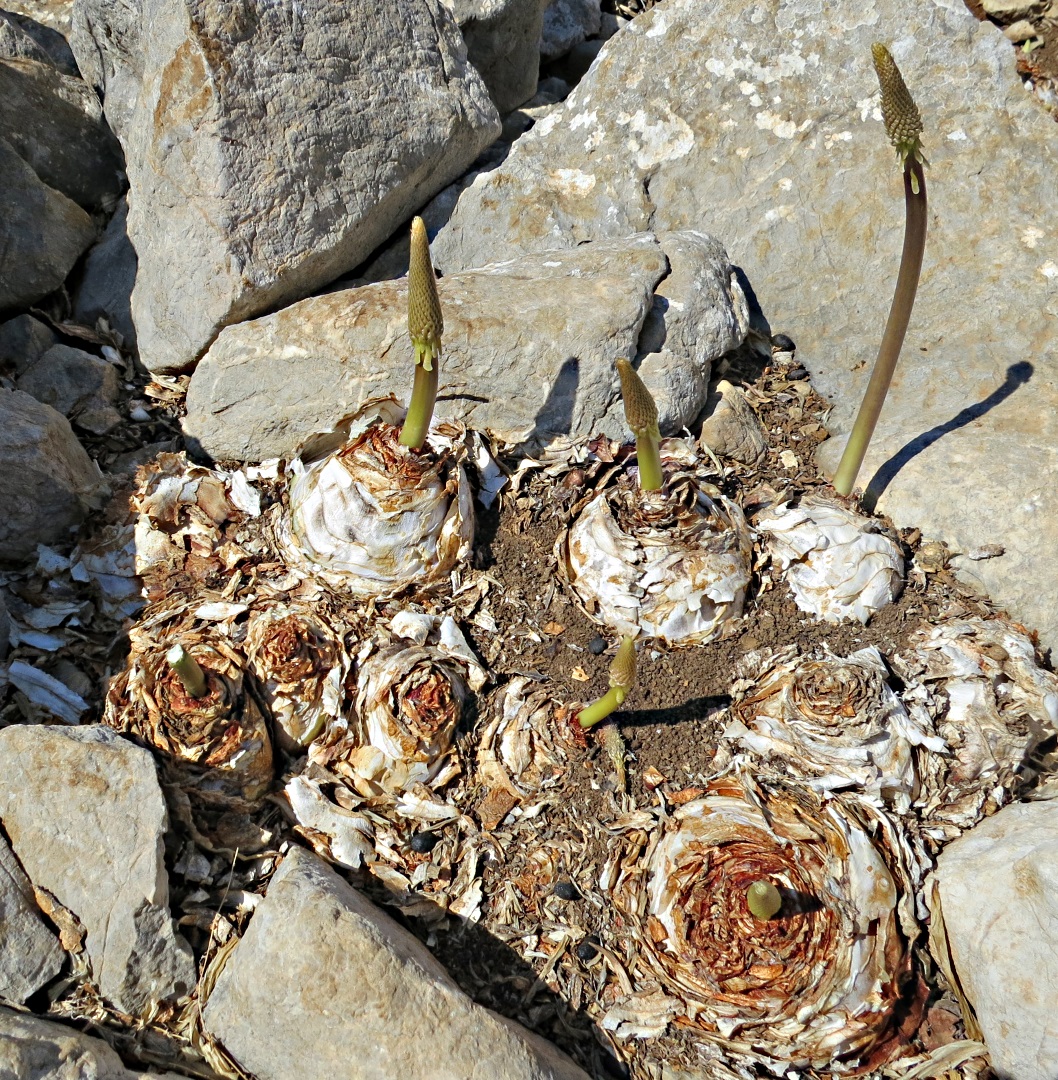
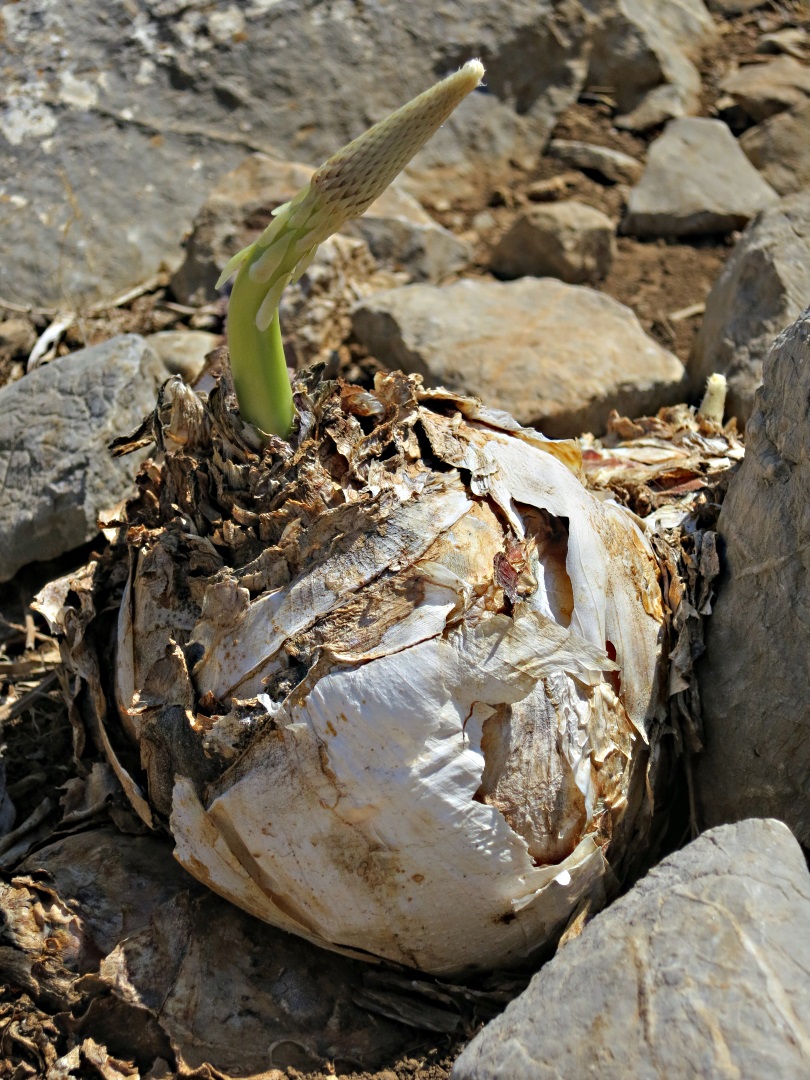
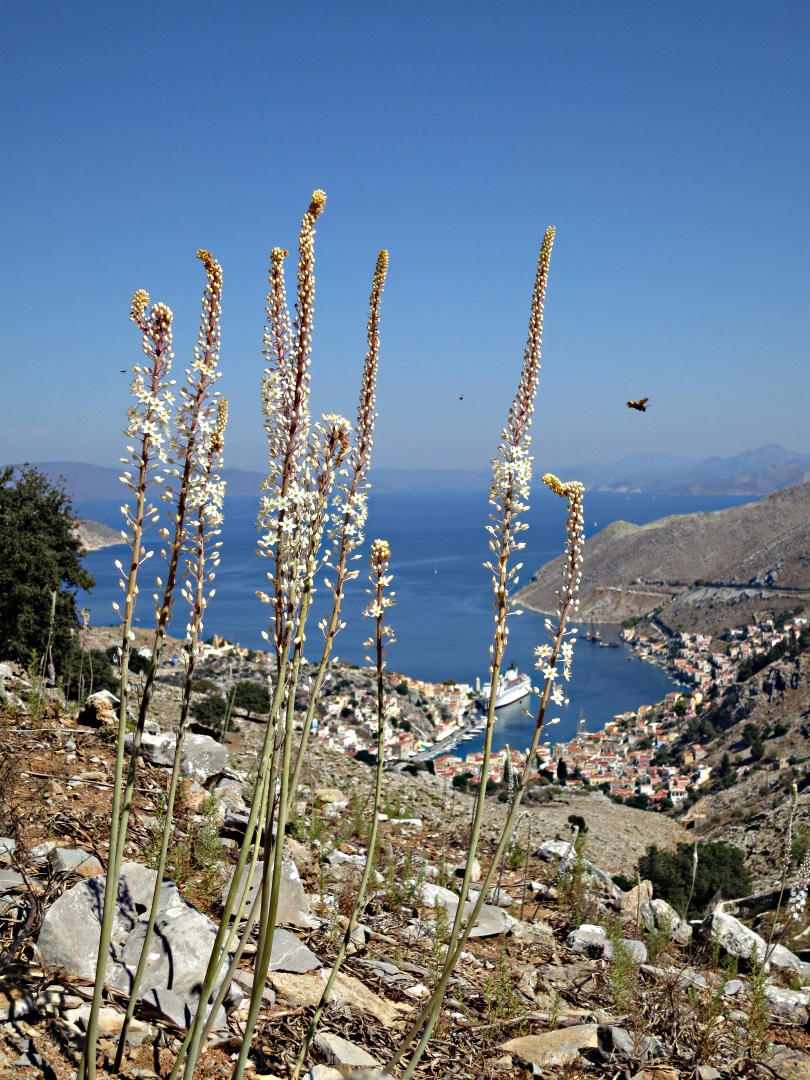
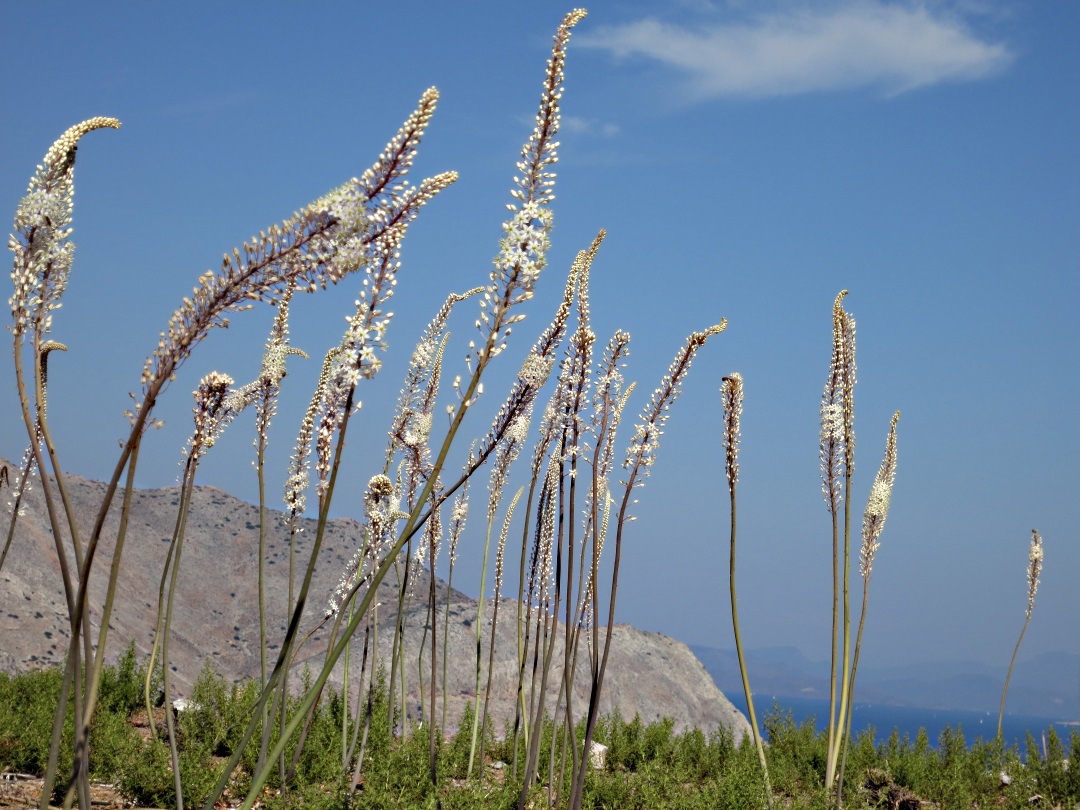
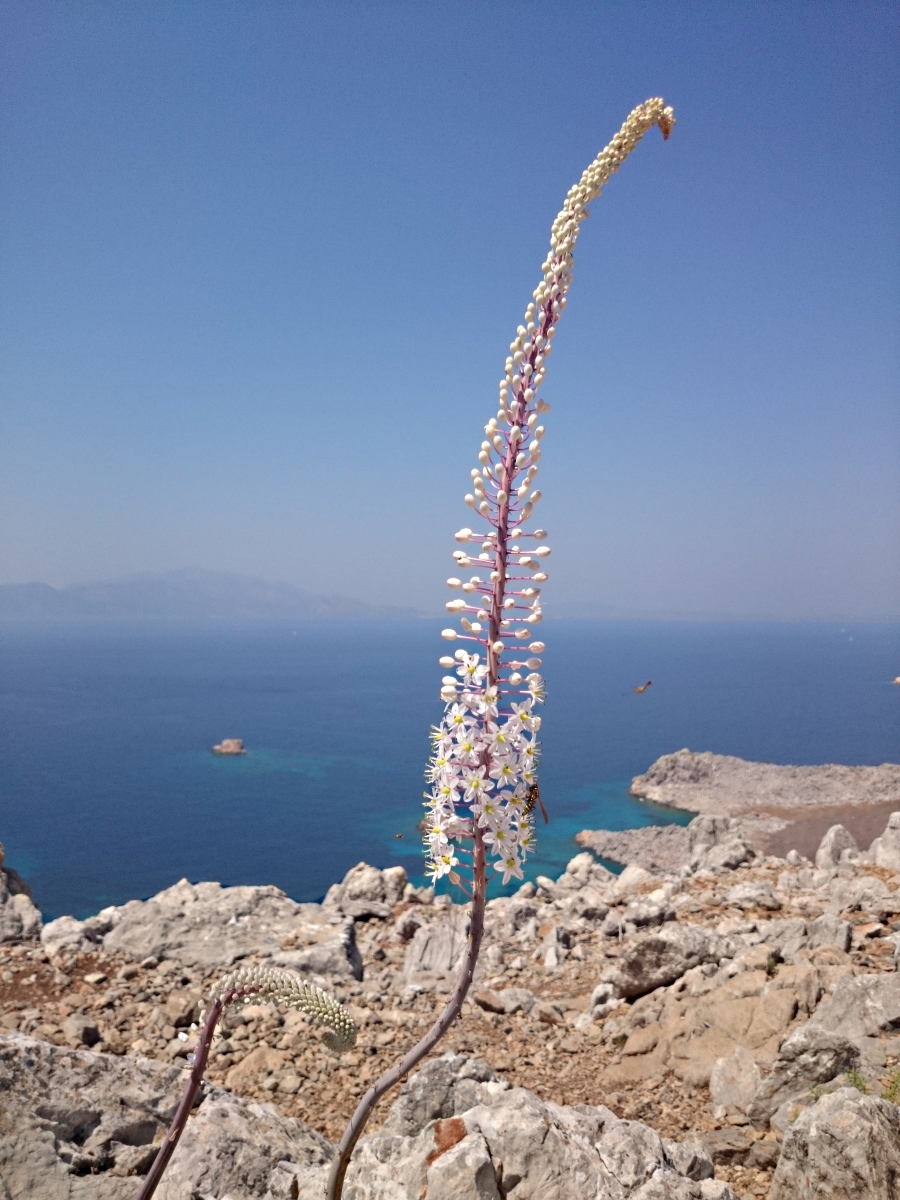
But by far the most dramatic change is that sea squill is now in full flower.  It had started to push its alien-like flower heads through rock-hard bare soil, from fissures in the limestone, from shrivelled looking bulbs.

A mass of bulbs

A mass of bulbs

.... crammed in clefts in the limestone

…. crammed in clefts in the limestone

...and sometimes just a single bulb

…and sometimes just a single bulb

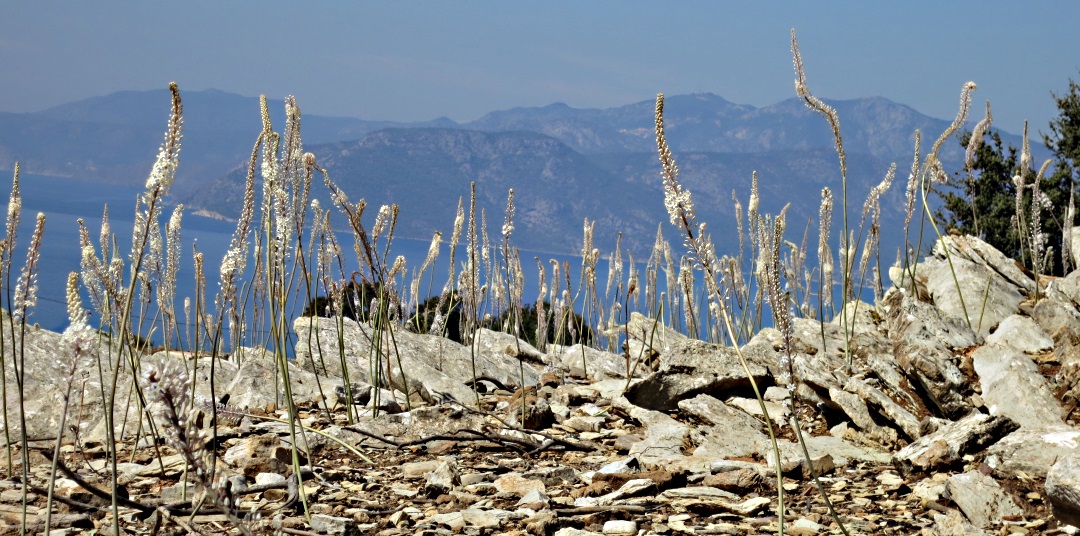
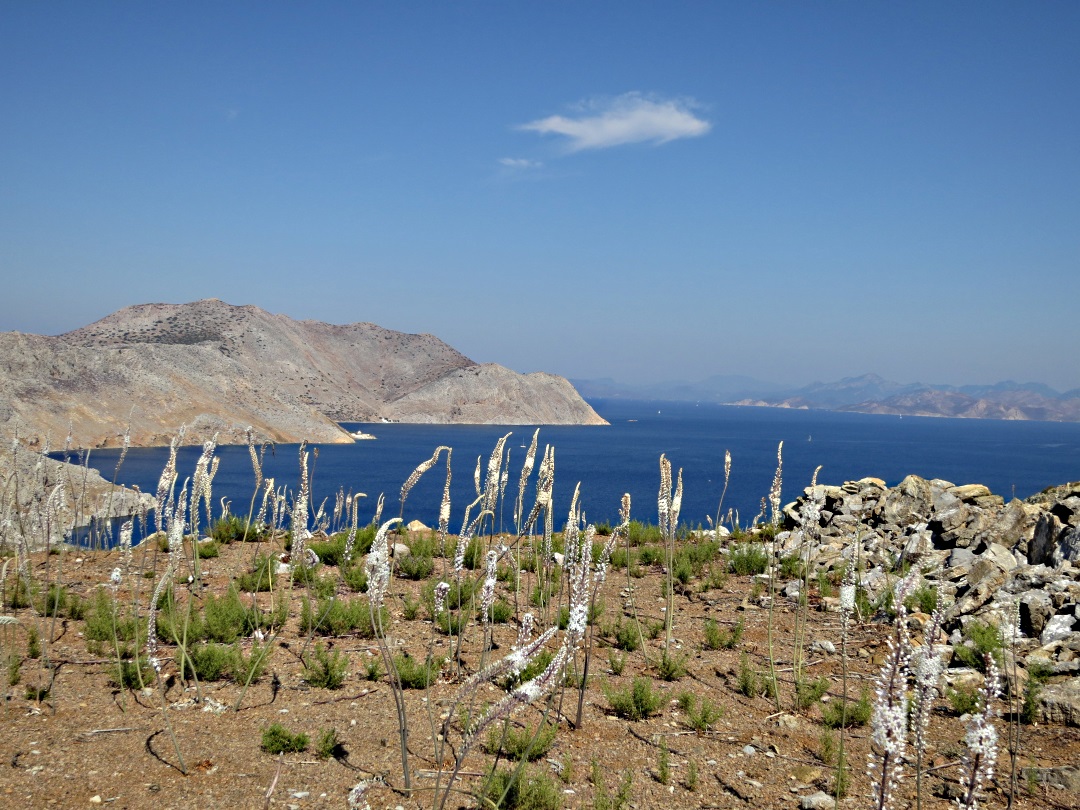
Now it has suddenly shot up to full height, mostly about a metre, some closer to 2 metres.  It dominates the landscape, million upon million of gleaming white spears, tall and erect, bent and contorted, tight white buds opening gradually in turn from the bottom to the tip of the flowerhead on finger-thick stems.  They stand like avenues along compacted, trodden paths and in swathes across hillsides.

On the rocky knoll with Turkey in the background

On the rocky knoll with Turkey in the background

Looking down from high-level kalderimi to the main harbour

Looking down from high-level kalderimi to the main harbour

On top of a limestone outcrop

On top of a limestone outcrop

waving gently above fresh green

waving gently above fresh green

... but standing up shows the extent of the dry soil

… but standing up shows the extent of the dry soil

Compacted path through an avenue of squill

Compacted path through an avenue of squill

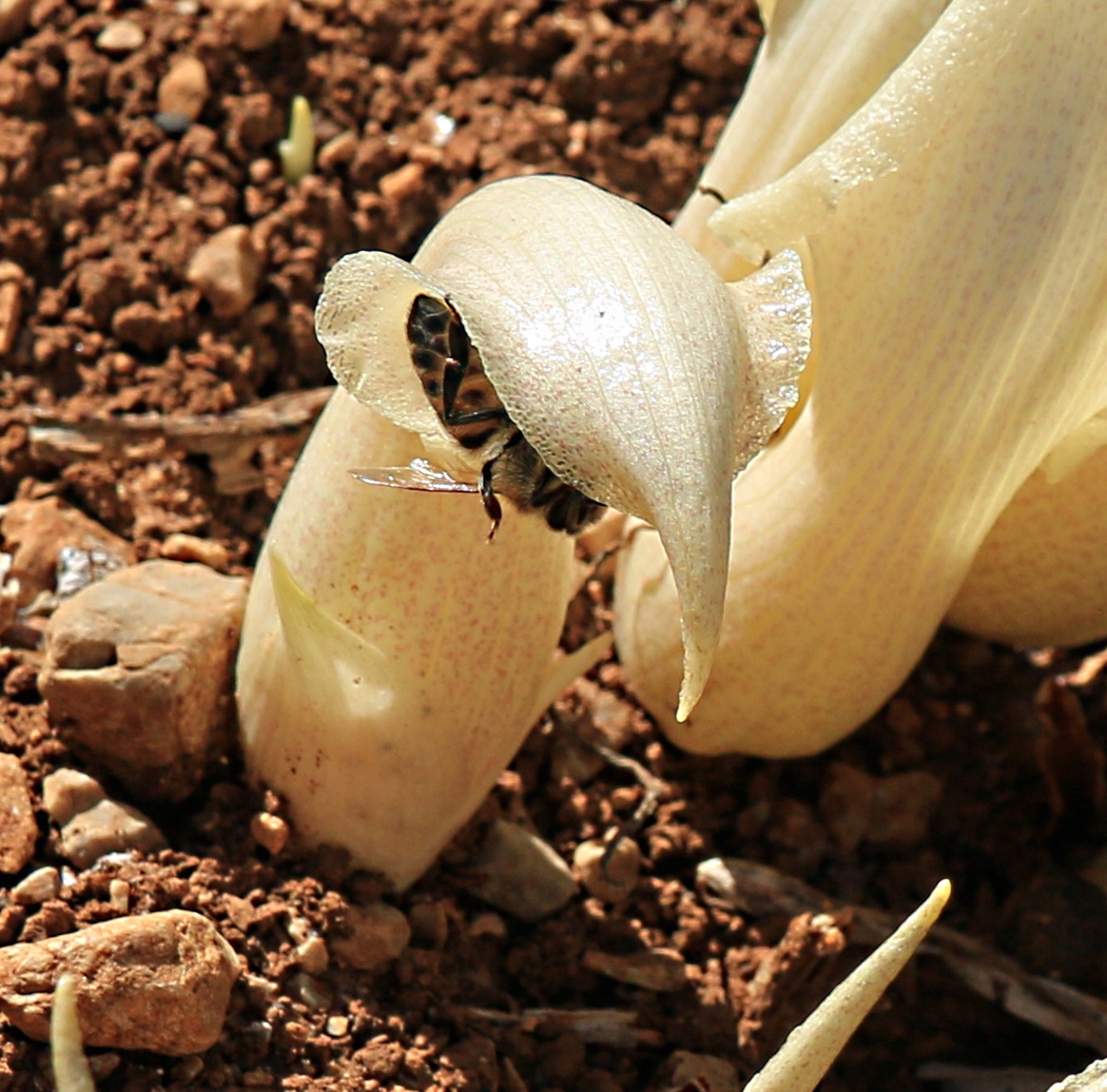
Squill is by far the most prolific and dramatic but not the only flower to push naked out of the soil.  One small area of craggy limestone mountainside has tiny clusters of ‘Biarum marmarisense’ starting to show their shy heads, bowing down like tiny white-cowelled monks.  It doesn’t seem to have a common name in English but its Latin name  ‘Biarum’ because it’s related to Arum lilies, which indeed it looks like, and ‘marmarisense’ because it’s native to South West Turkey where lies the town of Marmaris.

Hardly surprising then that it’s found on Symi which is about the width of the Bristol Channel from Turkey and shares the same arid limestone mountainous landscape.  My guess is that it will become more prolific and larger over the coming week.  As far as I know it is only found in a very limited area on Symi but, very difficult to spot, it may be more widespread.

Some are suffused with delicate pink

Some are suffused with delicate pink

Some are pure creamy white

Some are pure creamy white

Two clumps close together

Two clumps close together

A bee shows the size of the diminutive cup-shaped flowers

A bee shows the size of the diminutive cup-shaped flowers

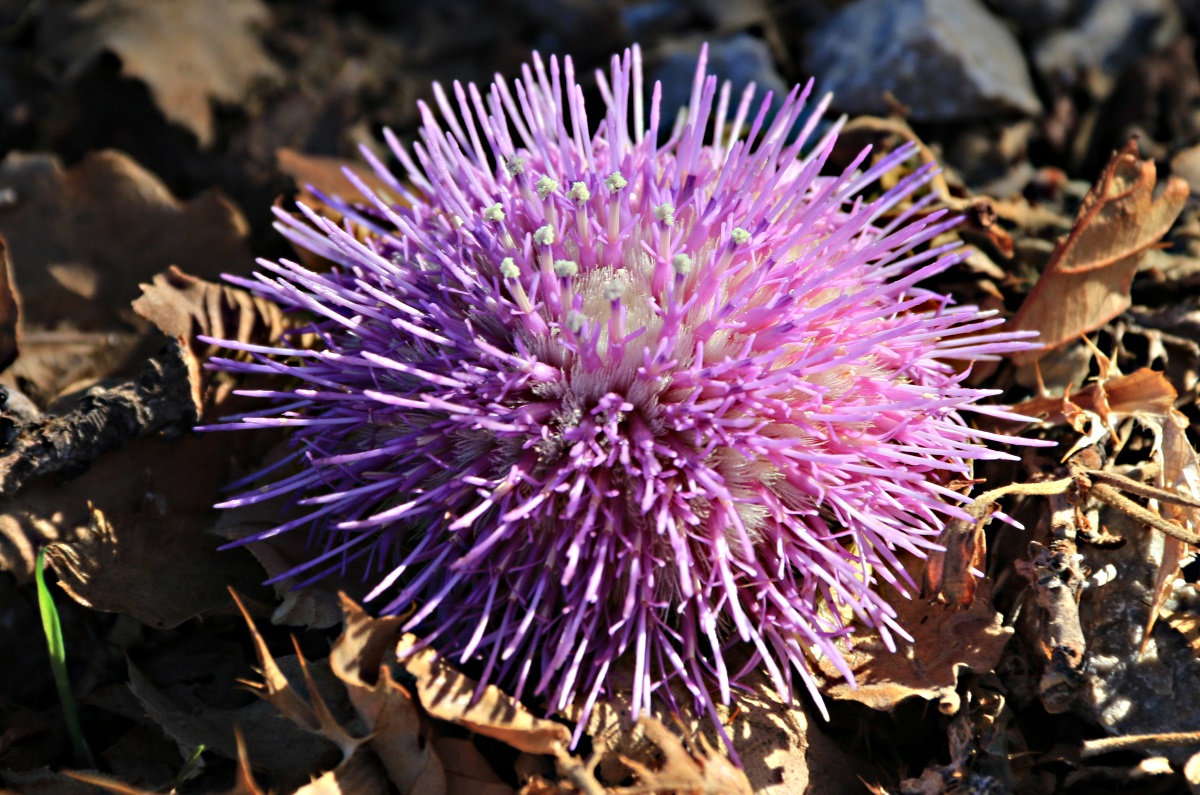
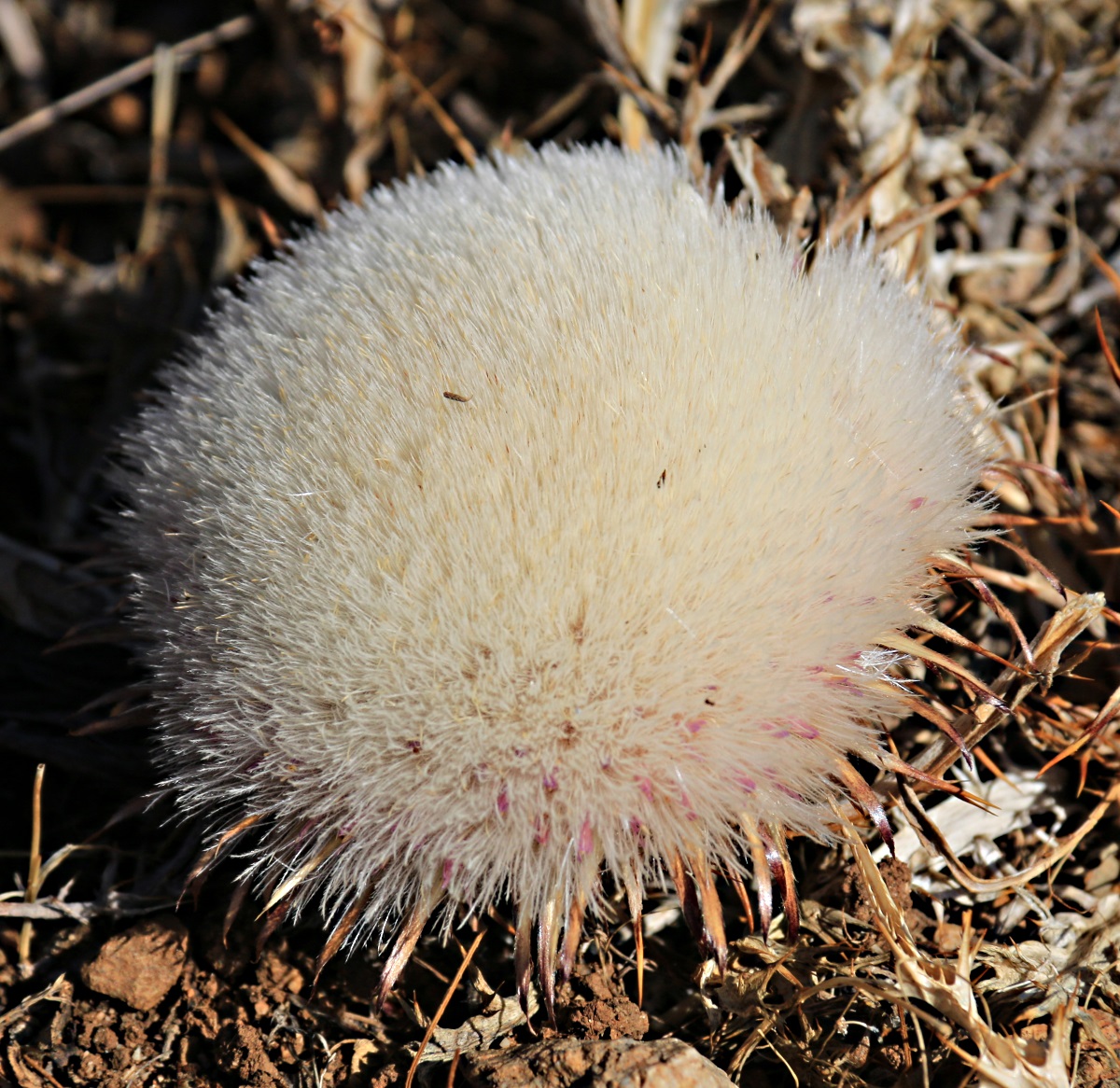
Seen for the first time (by me anyway) is the flower of what I think is a low growing thistle.  Flat to the ground in the middle of dead, crisped-up leaves the vivid purple eventually gives way to a fluffy-white cushioned seed-head, thistledown soft to the touch.

Vivid purple among the dead leaves

Vivid purple among the dead leaves

Thistledown soft seed head

Thistledown soft seed head

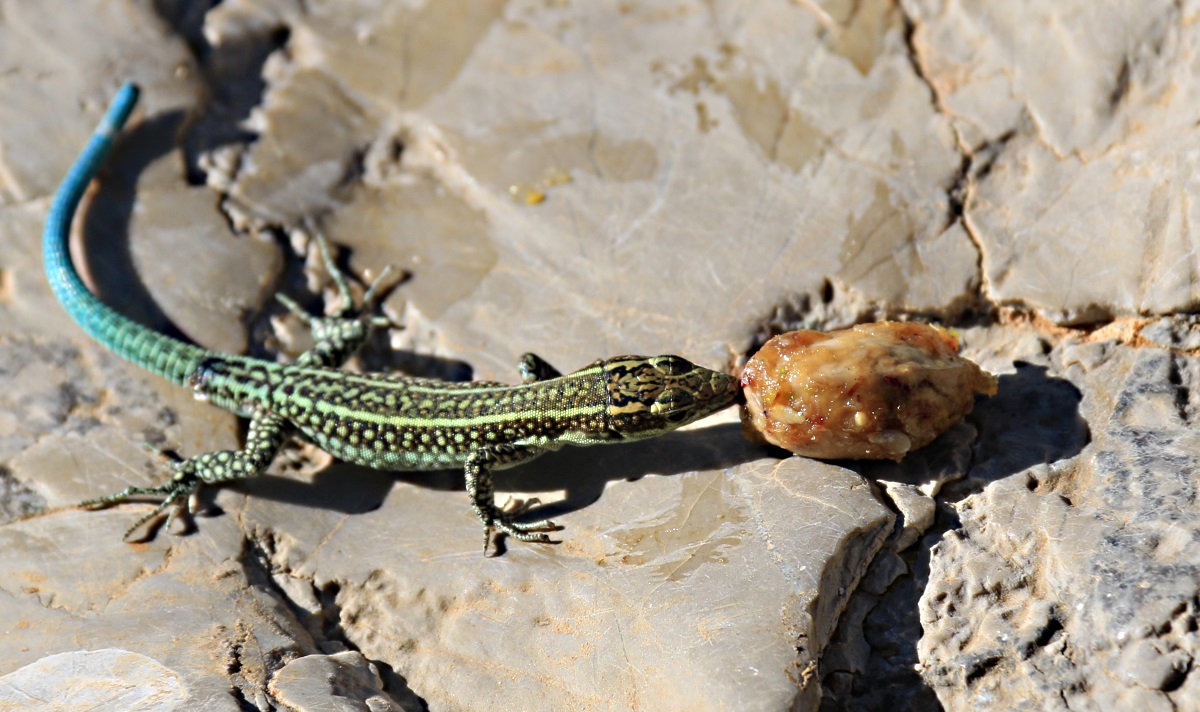
With an end to the blistering mid-day heat lizards are now to be seen everywhere, absorbing energy from the sun without overheating, rushing around almost manically.  I stopped for a bite of nutbar and found a pistachio embedded in it still in its shell so, not wanting to break a tooth, I put it on a rock alongside me.  Soon an Oertzeni lizard came and started to lick the honey of the shell.  Then ants homed in on the honey and chased off the lizard.  Answers one question anyway, lizards obviously don’t eat ants.  Perhaps formic acid isn’t to their taste.  I know honey is to the taste of ants, I found my jar of honey in a high wall-cupboard, lid screwed on tight, crusted in them.

Oertzeni lizard gets a taste of honey

Oertzeni lizard gets a taste of honey

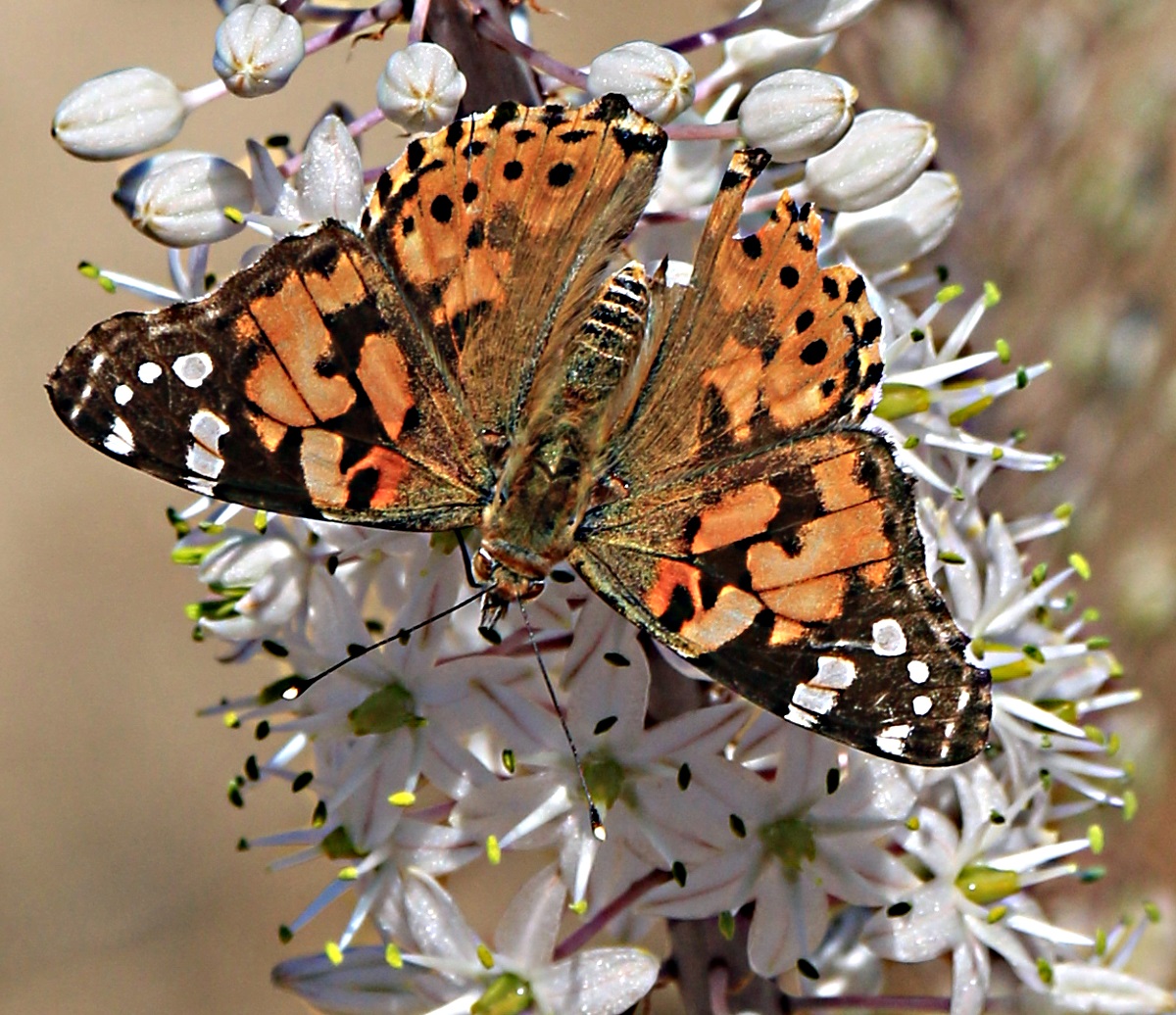
Butterflies are back in profusion.  Mostly what I’m told are Meadow Browns but on a climb up the knoll on the ridge, now one of my regular tarmac-bypasses, a Painted Lady with which I had a dalliance as I followed it from squill to squill until it overcame its camera-shyness.  Like painted ladies everywhere it was flawed.  This one had a damaged wing.  But still looked good.

Painted lady settles on squill

Painted lady settles on squill

Painted lady opens her wings

…. and opens her wings

x

Posted in Greece, Hiking, Landscape, Mountains, Nature, Wildlife | Tagged , , , , , , , , , , , , , , , | 5 Comments

Symi:  another trek in the mountains in search of the past.

It started out as a simple amble across the island to check out the site of more ruins shown on the SKAÏ map but turned into a really good-value-for–money trek.

Finding the Pelasgian Platform (‘Trekking to a time before Greece’) may have fired my enthusiasm but neither that nor the abortive trip along the Kokkinochoma peninsula to look for the ‘Hellenistic Period Ruins’ increased my faith in the accuracy of the map.  Nor did finding ruins which were not marked on the map (‘Wandering the mountains in a search for the past’).

Maybe the ruins marked on headlands overlooking Toli Bay further to south along the island’s west coast would prove to be more than fictional.

The first part of the walk is to the ridge-top road, once again on an old kalderimi not shown on the map.  Climbing at a good donkey-friendly gradient to 240 metres it has the advantage for me that I start in the alleyways of Horio at just over 100 metres ASL so don’t have to lose and then regain height.

Trudging along the road for the next part of the route means I can pick up speed but is boring so I decided to go off-piste and try to by-pass the road section.  A major problem with doing this is that increasingly landowners are fencing off tracts of mountain with 2 metre high chain link fence supported on steel rods driven into the ground.  I had already started to cut off bends in the road by crossing rough ground and was looking to do more.

At the point where the kalderimi meets the tarmac there is a small rise which looked promising in that it isn’t fenced off.  It also held out the prospect of being a good viewpoint looking over much of the northern part of the island.  Unfortunately, as I broached the top I stopped watching my foot placement so carefully, trod on the edge of  flat stone which flipped up and took a layer of skin off my shin.   Again.  Only superficial but the claret flowed freely and needed staunching and dressing.

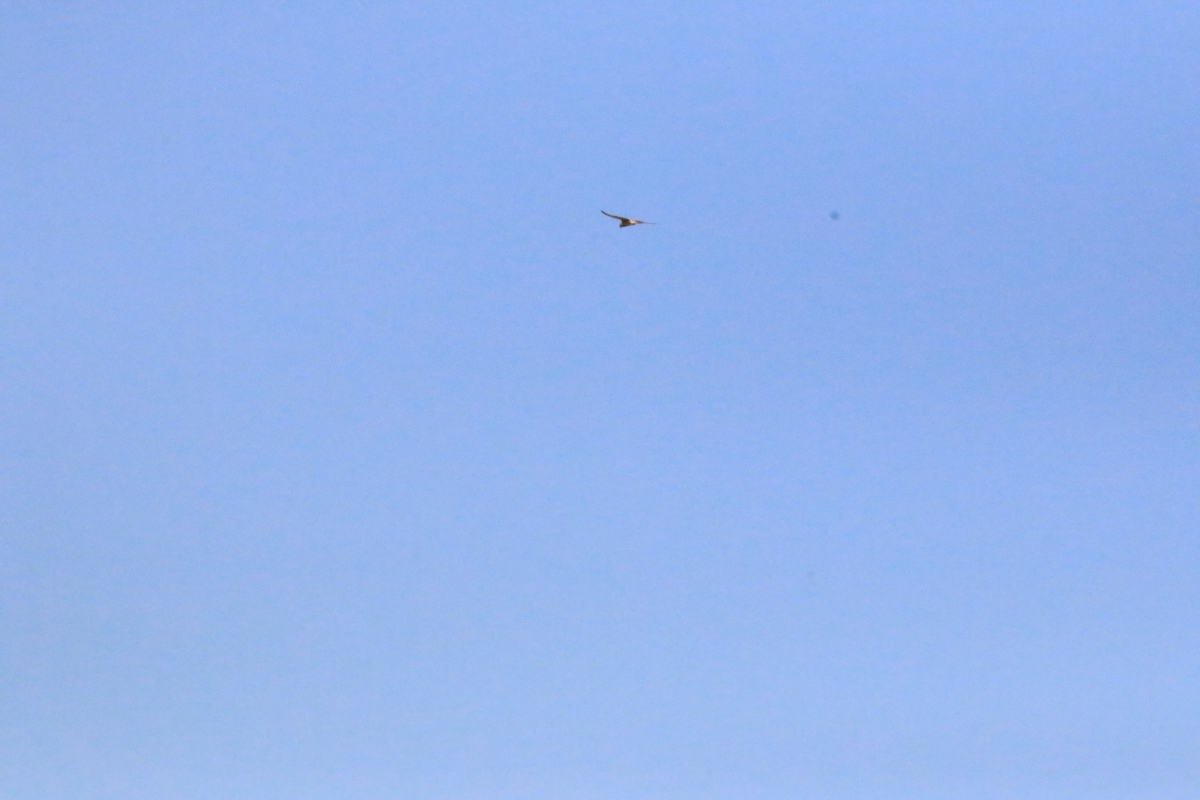
It was a great place to sit on a rock, deploy the relevant part of my emergency kit … and eat a banana.  As I tilted back my head to take a swig from my water bottle my eye was caught by a flicker of movement high in the sky.  I’m no ornithologist but I do know a kestrel when I see it, partly because of its unique ability to hover in one position by rapid adjustment of the angle of attack of aerodynamic wings.  One of the smaller birds of prey, I have watched them many times at home, even flown with them on my paraglider, but have found them difficult to photograph.  However, as I watched, this one drew closer, obviously with its eyes fixed on potential prey, paying no heed to me. I managed a couple of shots with maximum zoom (x200) on the rapidly deployed SLR before it folded its wings and dived very rapidly to ground, hopefully having caught its dinner.

Kestrel high in the sky,it's the one against the blue background

Kestrel high in the sky,it’s the one against the blue background

.... soaring a little closer

…. soaring a little closer

.... just before it folded its wings and dived on its prey

…. just before it folded its wings and dived on its prey

I managed to reduce the amount of tarmac I had to walk by a good amount and then came to the top of the remnant of path overlooking my objectives, ‘Classical Period Ruins’ on a small spur of a headland and non-specific ‘Ruins’ on a limestone headland beyond and high above Toli Bay.  For once the map showed their location accurately.

Looking down the rocky outcrop to cut off a bend in the road

Looking down the rocky outcrop to cut off a bend in the road

Ribs of rock, great fun to walk along

Ribs of rock, great fun to walk along

Looking from the col across the area to be exploredd

Looking from the col across the area to be exploredd

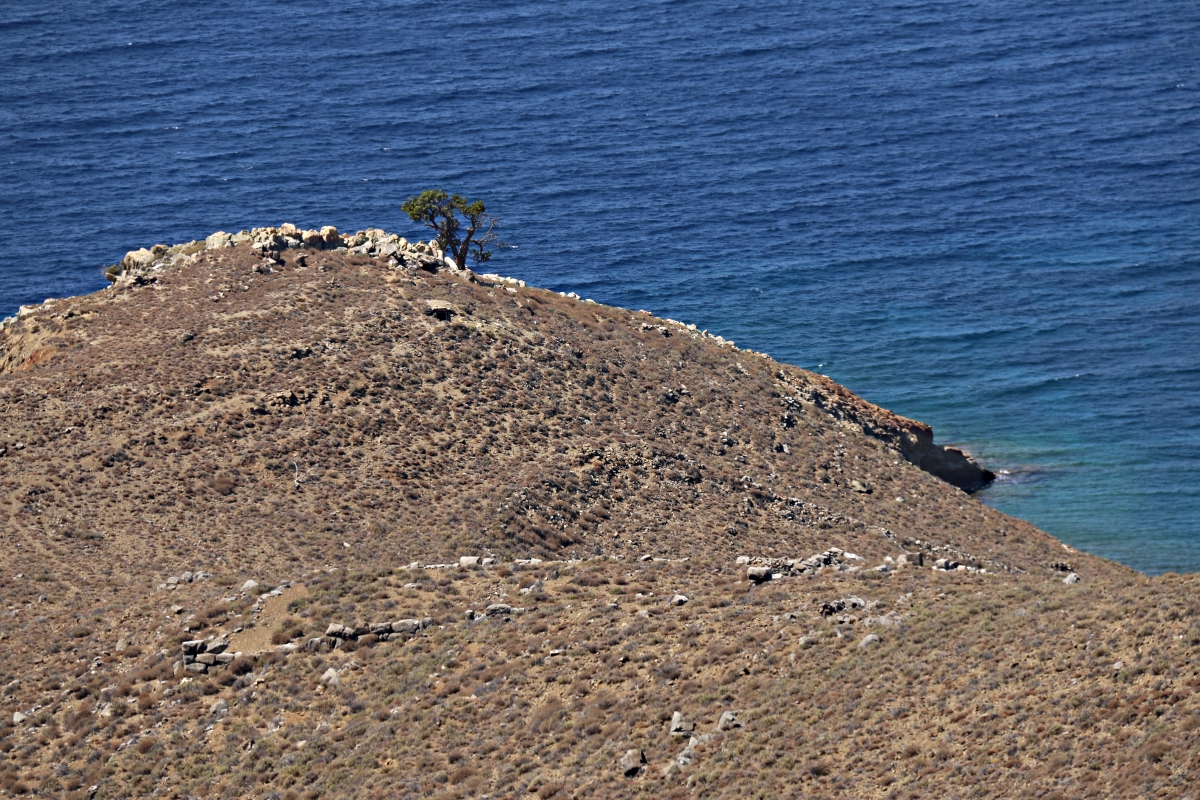
Zooming in on the Classical Period Ruins on the small spur of headland

Zooming in on the Classical Period Ruins on the small spur of headland

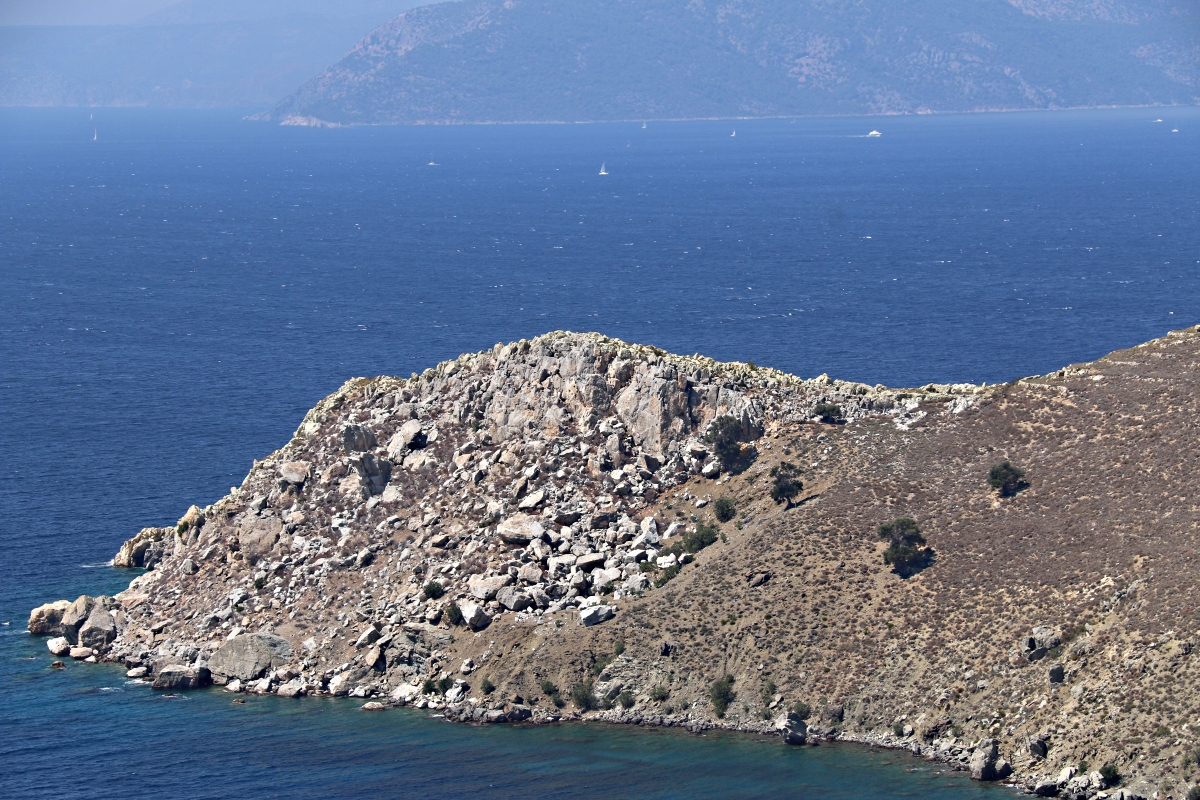
Zooming in on the further headland with ruins at the junction of two geologies

Zooming in on the further headland with ruins at the junction of two geologies

First to the far side of the bay.  Disrupted by the bulldozed track to the new taverna at Toli Beach, none of the paths in this area are shown on the map but casting around can still be located.  Once found the path I needed was clear and well trodden with a couple of distinctive landmarks, maintaining a steady height around to the col at the junction of two distinctive geologies.

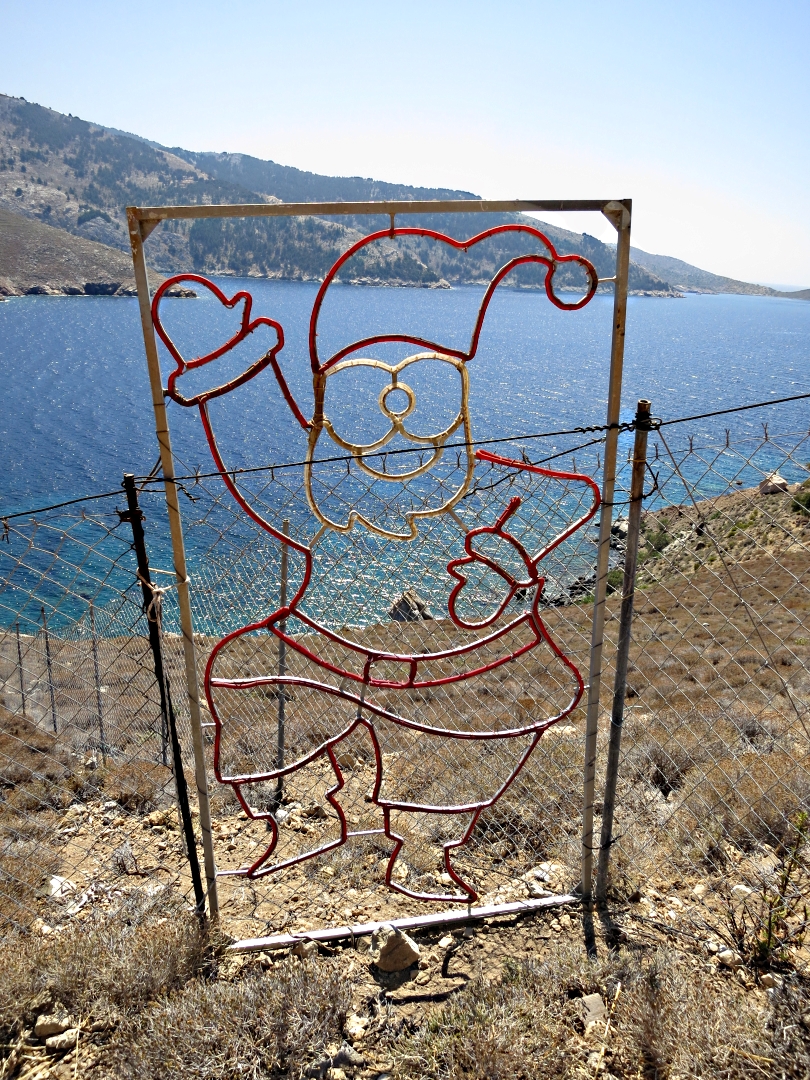
If you don't stop moaning I'll turn you onto a tree!  Distinctive landmark along the unmarked path

If you don’t stop moaning I’ll turn you onto a tree! Distinctive landmark along the unmarked path

Even more distinctive landmark.  Ho ho ho!

Even more distinctive landmark. Ho ho ho!

The ruins are in plain sight, a house, a threshing circle and various agricultural terraces but I have no idea how old they might be.  By contrast to the remains I found further north east along the coast, the walls are all of grey–white limestone rather than a myriad of rock types but none of the stones are dressed, simply rough-built walls of ‘found’ rocks.  Presumably the site is noted on the map as ’ruins’ because the advisors to the cartographers had no idea of age either.  Another example of evening research in a taverna perhaps?  Wish I could get signed up to that little number.

14Symi398w1545jpg

Threshing circle with well preserved terrace wall behind

Threshing circle with well preserved terrace wall behind

Ruins of house with ornamental oil drums

Ruins of house with ornamental oil drums

Photographer on the edge at the ruins

Photographer on the edge at the ruins

Old agricultural terraces marching up the mountianside

Old agricultural terraces marching up the mountainside

Back along the footpath, now following it to the point of its interruption by the bulldozer, and soon  a scramble down the unconsolidated rubble bank towards the ‘Classic Period Ruins’.  No sign of a path this time, just picking a way carefully through the prickly-thyme.  I would not like to be here when bees are harvesting the pollen!!

The walls of large, dressed stone visible from the col are now only 3 or 4 blocks high but extensive.  The blocks are nowhere near as massive as those in the Paleocastro on Nisyros nor are they ‘nibbed and grooved’, or whatever the technical term is, but are nonetheless impressive.   A few are significantly larger, at roughly 1½ metres, about 2 courses, high, one particularly large one marking what was probably the main entrance to the site.

I walked around the whole site, the corners and 95% of the base of the wall intact and at a rough estimate about 100 metres by 75.  It seems to have been a well defended community with agricultural terraces marching up the mountainside, now long collapsed and colonised by arid vegetation.  The short ‘Classical Period’, a mere two centuries until the death of Alexander the Great in 323 BC is famous for a flowering of Greek culture, art and philosophy and remembered  for the wars with Persia and between coalitions led by Athens and Sparta.  What the role of a lonely outpost on Symi was I don’t know.  Nor do I know how the ruins of the fortified area on Symi are linked to that period in Greek history, nor how the style of construction fits in with more famous buildings from that period.  But the ruins are still there after nearly two and a half millennia or, for those preferring numbers, 2,500 years.  That’s impressive.

I recognised no evidence of either a link to a more ancient past nor sign of more ‘modern’ occupation, unlike the palimpsest of ruins on the flank of the Kokkinochoma peninsula to the north.  It seemed that this people were there and then gone, no adaptation to changing environmental conditions or econo-political circumstances.

Wide entrance through the walls on landward side

Wide entrance through the walls on landward side

Large dressed-stone block marking an entrance to the site

Large dressed-stone block marking an entrance to the site

Long wall along seaward edge

Long wall along seaward edge

One of the internal walls

One of the internal walls

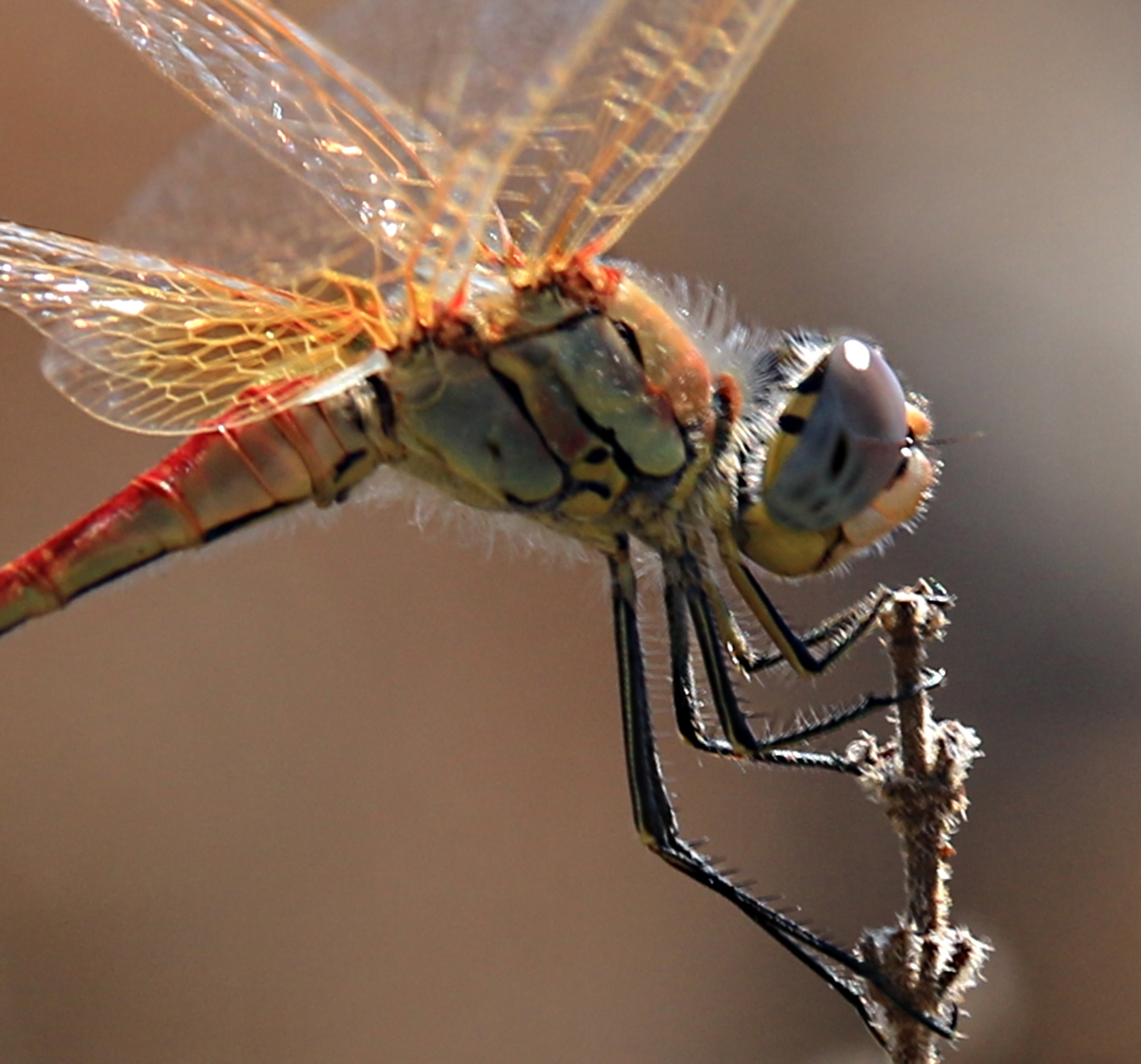
Towards the end of beating the bounds I sat down on one of the inner walls for another swig of water and spotted yet another dragonfly on a stick. Different to any I have seen previously (the dragonfly, not the stick).  Fascinating to try to photograph as it didn’t seem to be spooked by me just sitting there..

Familiar top-of-stick poistion, unfamiliar colouring

Familiar top-of-stick poistion, unfamiliar colouring

Getting a little closer

Getting a little closer

more detail

more detail

A last look around and then the climb up through the densely thyme-covered hillside, to the col and a steady drop down a thin path to the beach at Nimborio and a swim.  Great day!

Dropping down towards Nimborio

Dropping down towards Nimborio

x

Posted in Greece, Hiking, History, Landscape | Tagged , , , , , , , , , , | 3 Comments

Symi:  wandering the mountains in a search for the past

My jaunt along the Kokkinochoma peninsula ‘Trekking to a time before Greece’ and finding the fortified platform and other stuff, which I think are Pelasgian remains (though with no corroborating expert evidence this is conjecture), set in the top of the crags fired my enthusiasm.  So for the past week I have been trying to locate other ‘ruins’ shown on the SKAÏ map.  The problem is that as part of the Murdoch Empire its representation of reality is inevitably somewhat approximate and I have had mixed success.

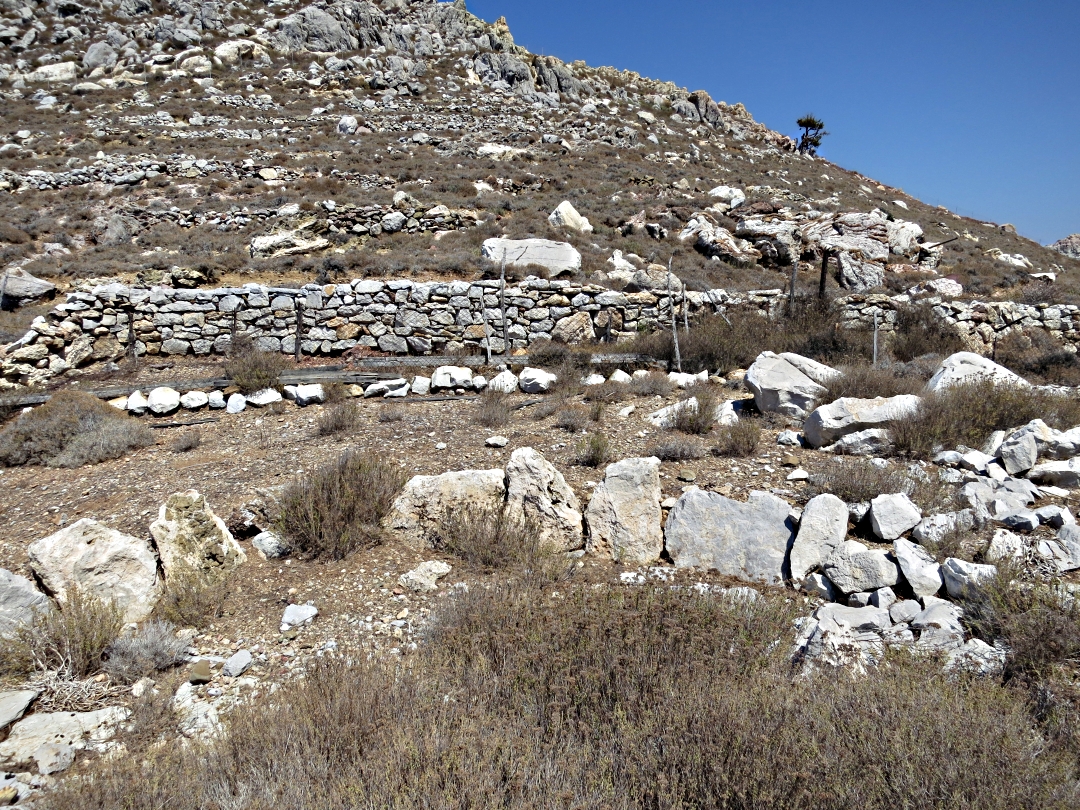
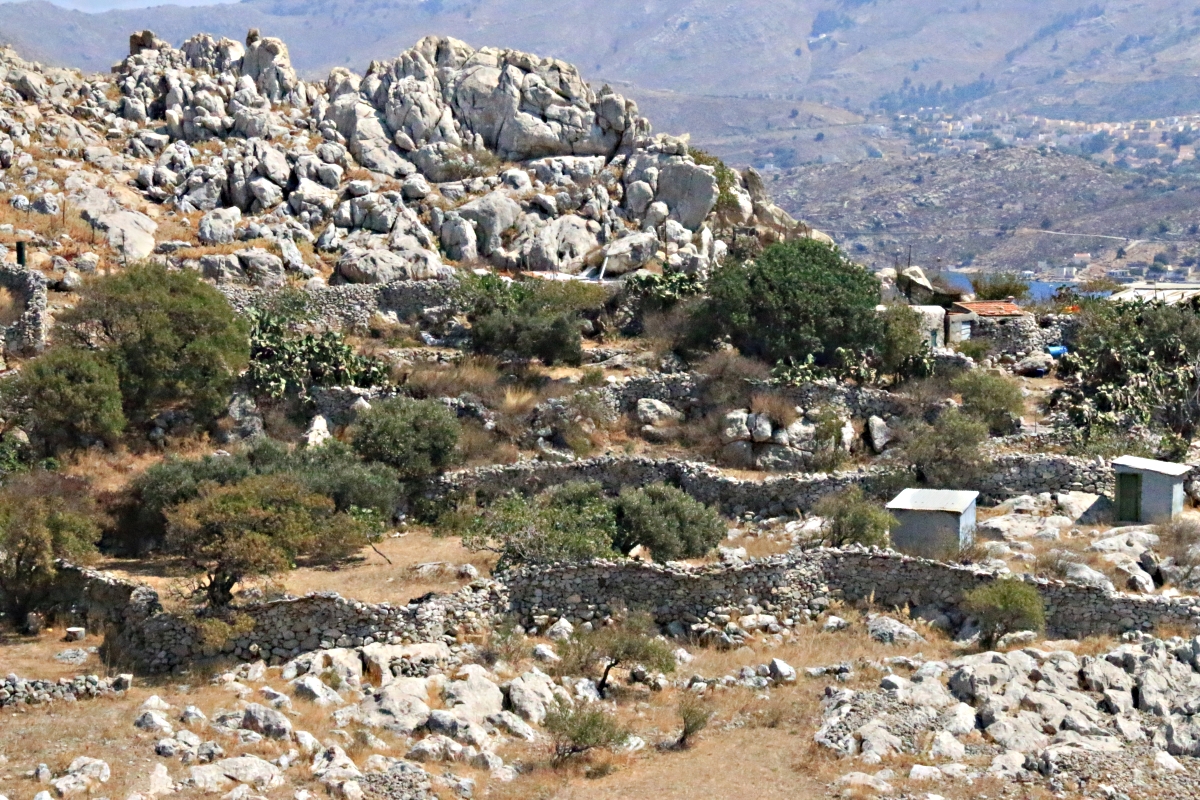
I went first to the col below the fortified platform where ‘Hellenistic Period Ruins’ are shown.  And found nothing.  The tightly encircling stone walls of the extensive agricultural enclosure below the crags may incorporate earlier structures but I couldn’t go wandering around inside to look as, amazingly, it is still occupied and farmed and there was no-one around.

I climbed up the surrounding razor-limestone crags to get a bird’s eye view, which was fun, but though I saw a Painted Dragon lizard torn between curiosity and caution,  spotted nothing which I could identify as a significant hint at anything archaeological.  It may be that despite the claim to first-hand research in drafting the map that someone in a taverna one evening after several beers waved a finger generally over the area and said “There may be Hellenistic ruins in there somewhere.  Unfortunately the guy you should ask died last year.  But he really knew his stuff.”

Looking down on the old enclosure from a crag above

Looking down on the old enclosure from a crag above

Flesh-ripping limestone

Flesh-ripping limestone

14Symi382w1339

Torn between curiosity and caution

On the way to the col I had spotted far below on a small spur of a headland what looked like stone-walled enclosures and buildings.  Nothing was marked on the take-it-with-a-good-pinch-of-salt SKAÏ map.

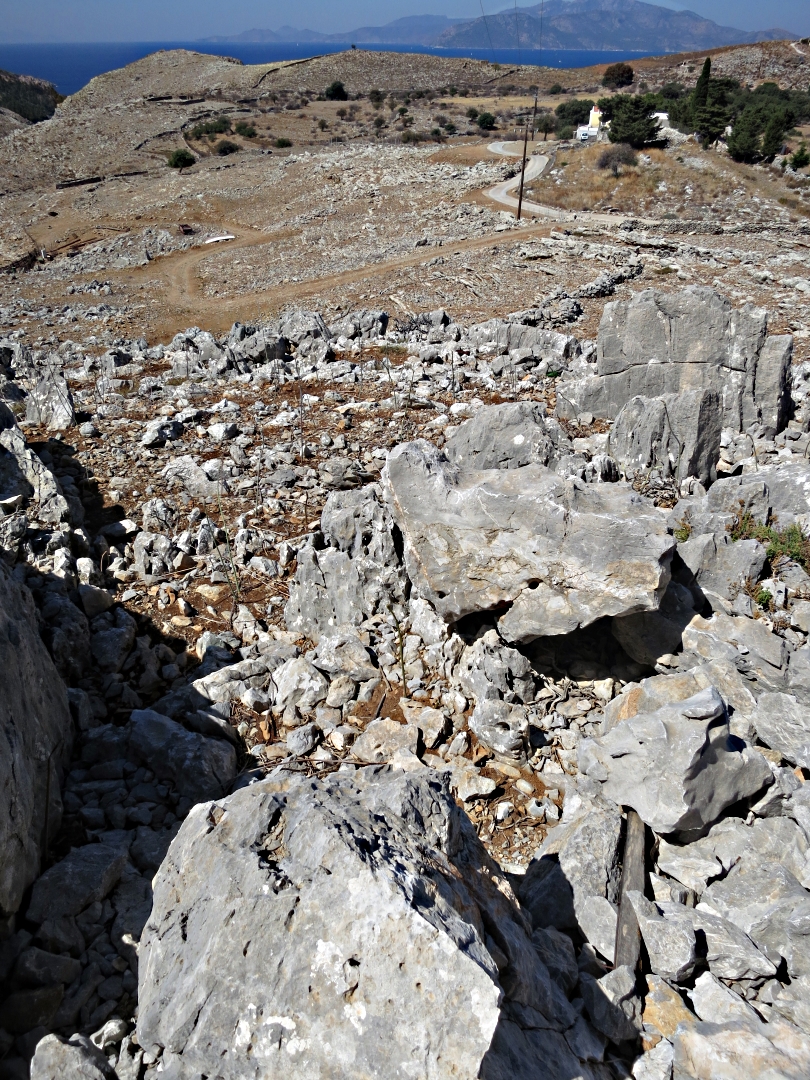
Looking down across the boulder-field to the short spur of a peninsula far below, Turkey across the water

Looking down across the boulder-field to the short spur of a peninsula far below, Turkey across the water

Zooming in on the stone construction

Zooming in on the stone construction

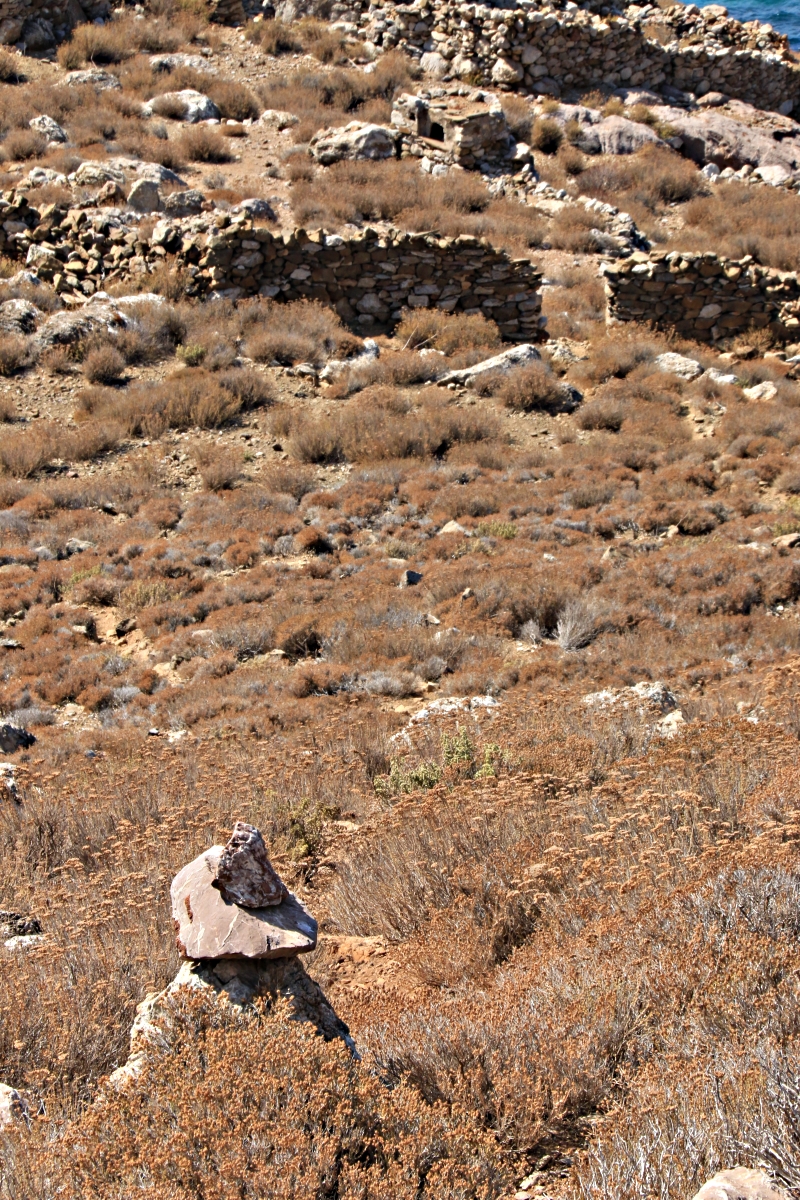
So I set off down through the boulder-field towards it.  I love walking that stuff.  Get it wrong and it will skin your shin or slice flesh.   It keeps you focused.  After a while I noticed a few ‘stone-on-a-rock’ markers used by local farmers leading towards a faint path through the dense prickly-thyme on the lower slope.  It turned into a well trodden if very narrow path though the only prints in the fine-powder dry surface were those of goat hooves.  No-one had walked this way for a while but passage of feet, maybe for generations, had obviously compacted the soil.

Stone-on-a-rock marker on the thin path down to the entrance to the site

Stone-on-a-rock marker on the thin path down to the entrance to the site

It led meanderingly but inexorably down to a gateway in the outer stone wall of the  enclosure.

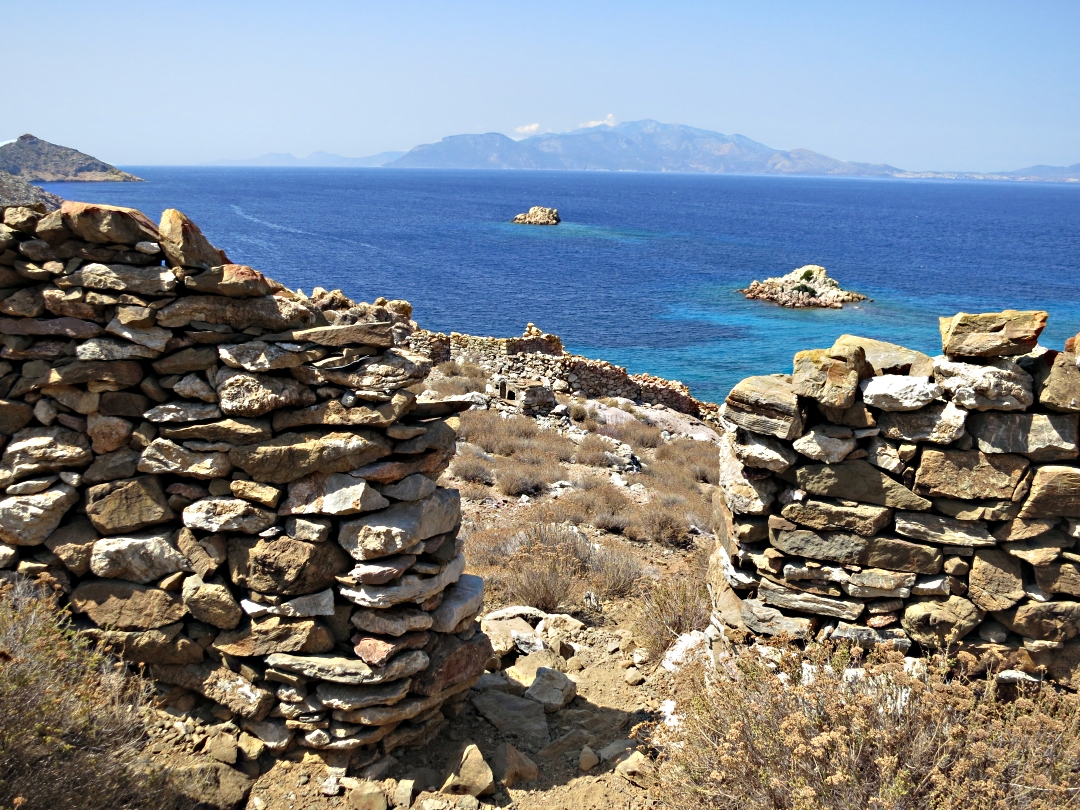
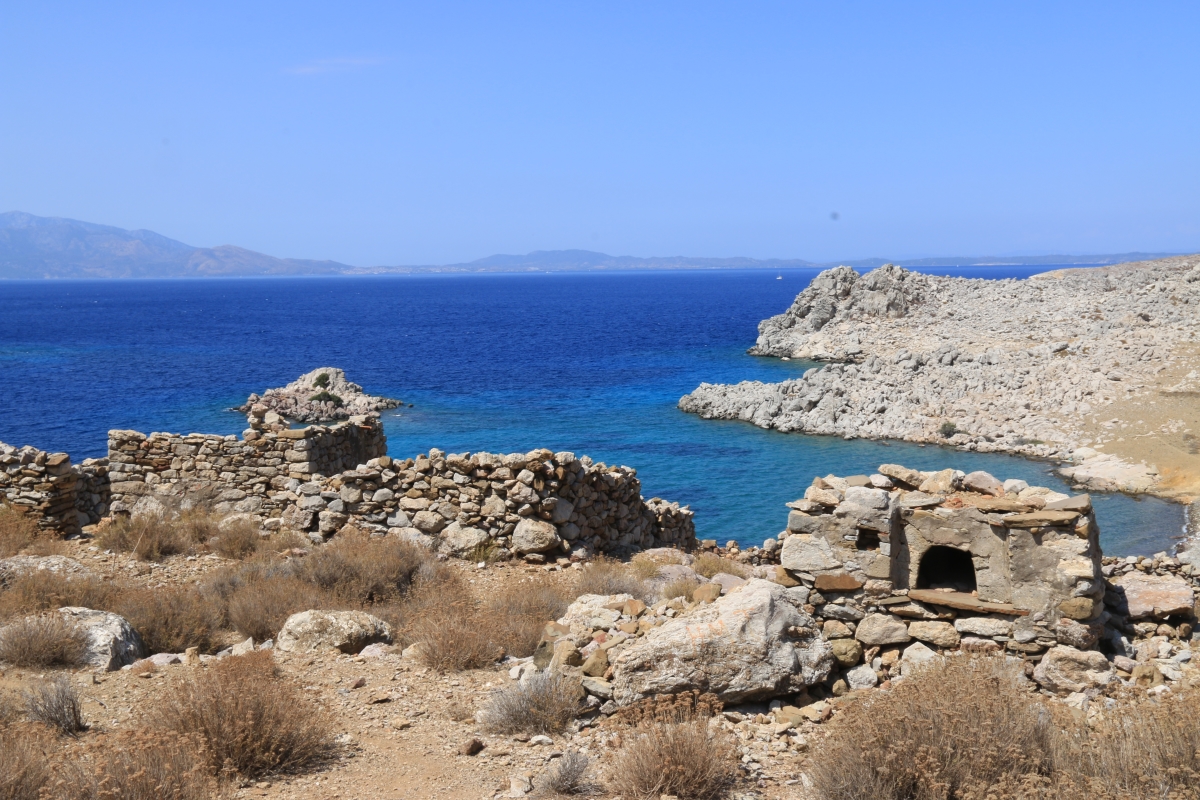
By now it was clear that there were extensive remains of stone construction but that most of it was walled enclosures rather than buildings.  In the centre of the large main enclosure was a bread-oven on a plinth, still largely intact including a  floor made of what I think were blocks of refractory clay.  It stood apart from the only building on the site, a house.

Reaching the gateway

Reaching the gateway

Looking across the main enclosure, bread-oven on the right, house on the left

Looking across the main enclosure, bread-oven on the right, house on the left

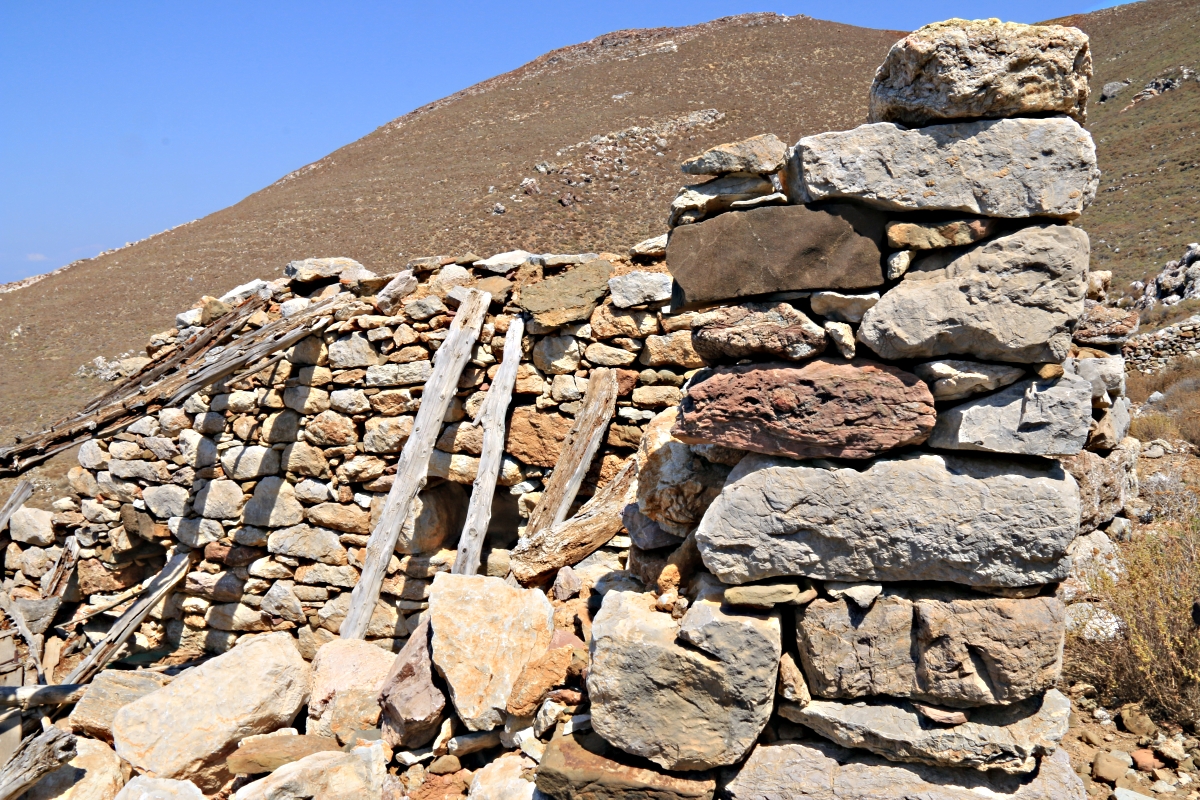
The construction of the house was very rough, random stonework, pieces picked up and used with no dressing or shaping, a multiplicity of colours and types of rock.  With only the one house within the enclosure it implied that one family, albeit probably an extended family had lived here.

Random stone in the corner wall

Random stone in the corner wall

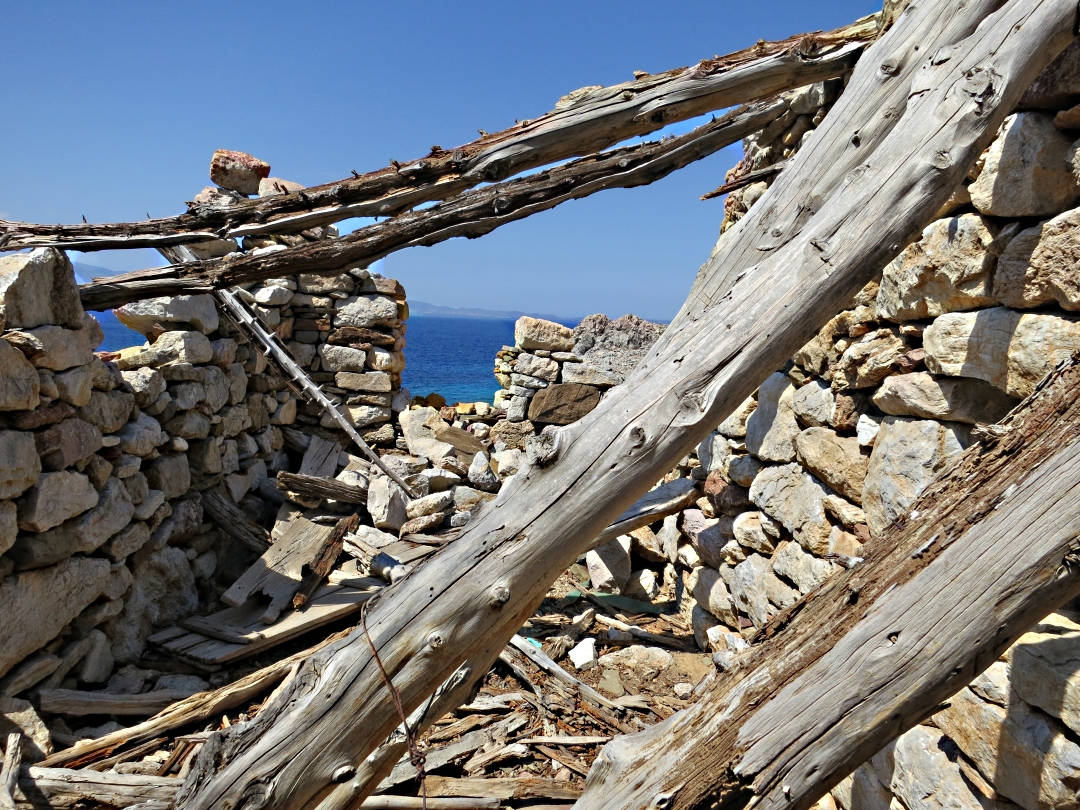
The pine roof timbers had rotted and collapsed, leaning against one wall or the other. Two of the walls were intact, the end wall with a built-in wooden cupboard with shelves. The other end wall with a window facing the sea had largely collapsed, shutters lying on the ground outside.  A door with a simple latch lay on the ground inside.

Looking towards the window and collapsed wall

Looking towards the window and collapsed wall

I have no idea how old the building was but to me, no expert, it seemed  that it may have been built a long time ago but lived in, altered, added to until fairly modern times. The ironwork on door and shutters, the wooden cupboard would all have been fairly recent.  More obvious tell-tales of recent occupation were patchy use of cement rendering, a piece of plywood amongst the collapsed timbers on the floor, and a white Pyrex coffee cup.
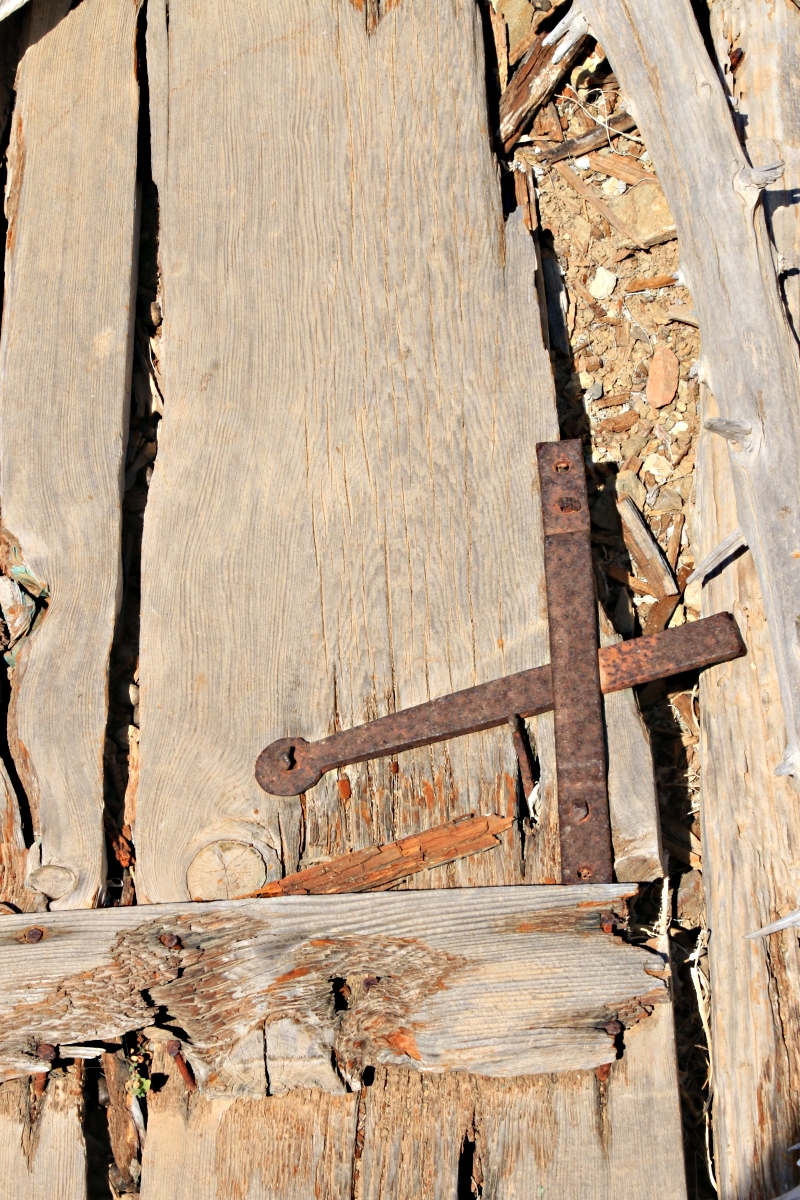
The built-in cupboard

The built-in cupboard

Simple iron latch

Simple iron latch

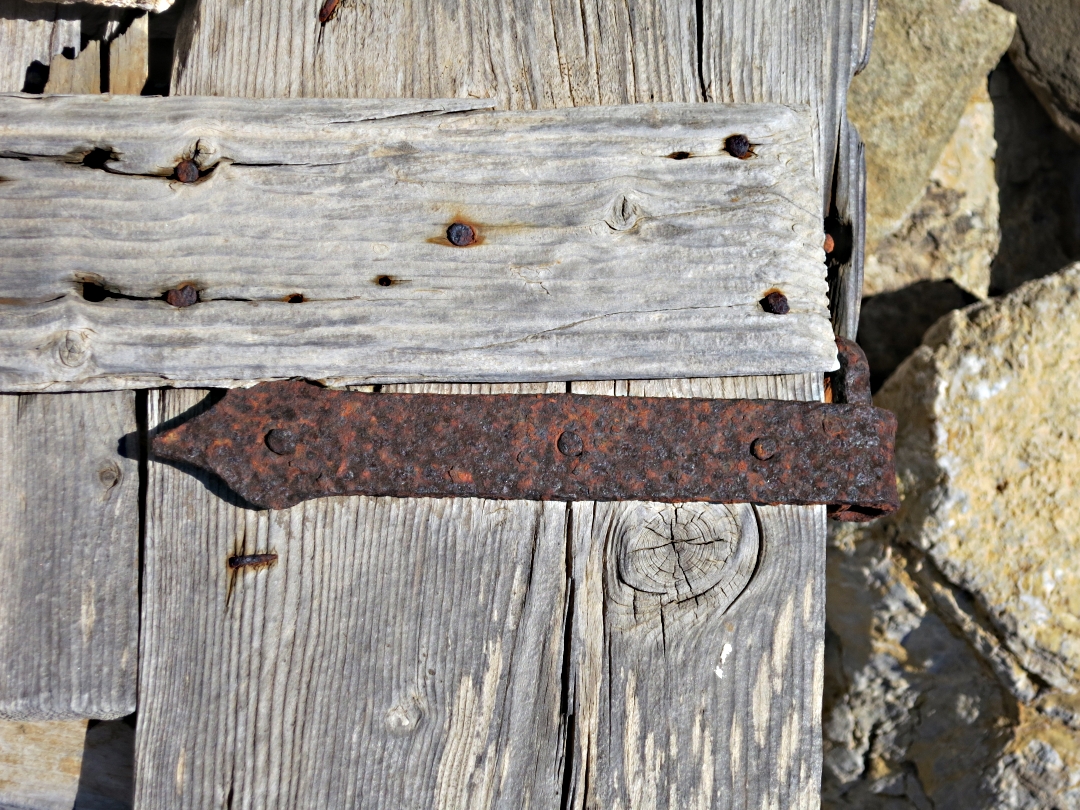
Surprisingly ornate hinge on shutter

Surprisingly ornate hinge on shutter

Finely cut timber jointing

Finely cut timber jointing

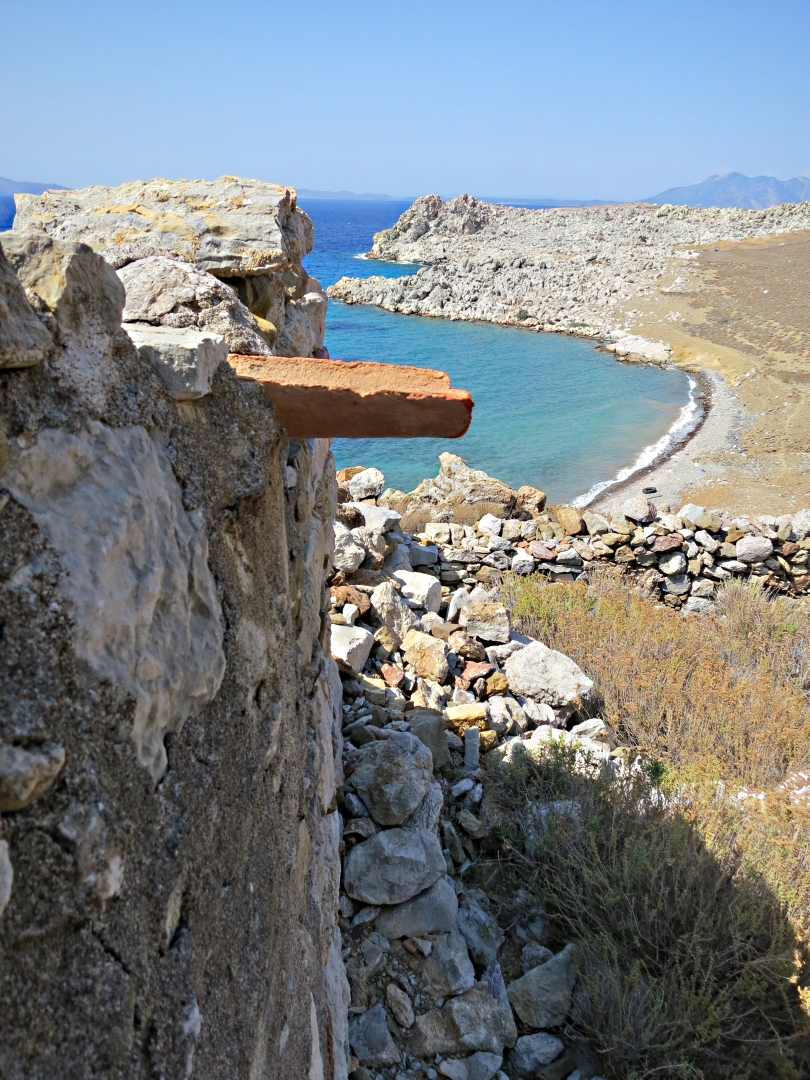
Tile to drain the roof cemented in place

Tile to drain the roof cemented in place

A little disappointing that there was no evidence of antiquity here but exploring the extensive enclosures outside was more productive.

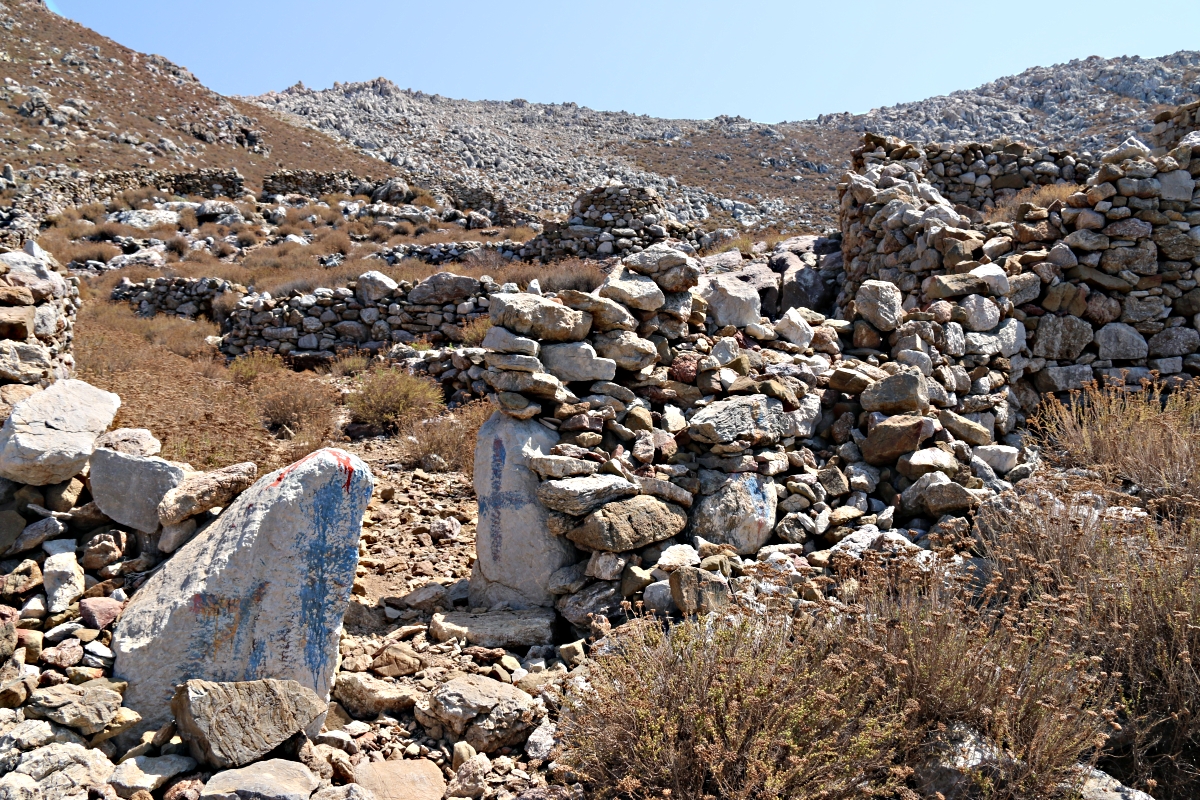
At the lowest point of the large enclosure, at the top of a path down to the water’s edge, was another gateway but this one had cornerstones of dressed white marble indicating that it was The Main Entrance to the site.  Clearly at the time it was built access by sea would have been more important than overland.

Dressed marble blocks at the seaward entrance to the enclosure

Dressed marble blocks at the seaward entrance to the enclosure

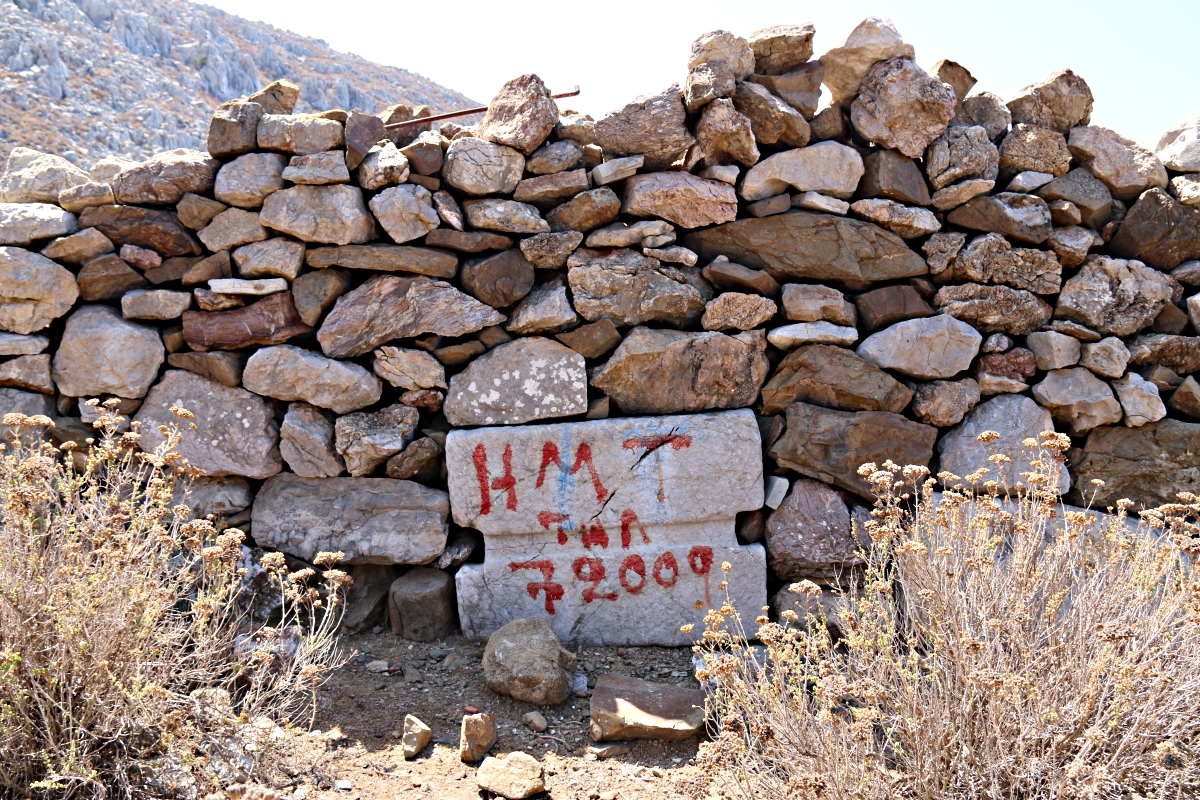
Looking around the other smaller enclosures to the side of the central area and I came on the strongest link to considerably older development, a piece of dressed, finely shaped marble which was obviously part of something larger.  It had been used as one of the many random stones in the rough construction but was such a fine piece it stood out like a sore thumb.  Maybe the painted letters and numbers on it indicate that it has previously been located, identified and catalogued by someone who knows what they are doing rather than a rank amateur like me.

Rather more refined than the average random stone block

Rather more refined than the average random stone block

The trek back up to the ridge was hot work in the afternoon sun but the glow was satisfaction at having found another old pathway and trekked down to an old settlement with possible evidence of antiquity.  None of it shown on the map.

Squill bursting from the ground

Squill bursting from the ground

x

Posted in Greece, Hiking, History, Landscape, Mountains, Nature, Wildlife | Tagged , , , , , , , , | 1 Comment

Symi:  a walk to the beach via the underworld and pre-history

I had walked to Nanou Beach a few times, a long trek up to ‘The Tarmac’, the road along the top of the ridge which is the main spine of the island, and then a 2½  kilometre drop down a steep path to the beach.  I never enjoyed the latter and so hadn’t visited it for a number of years but one day recently I had arranged to meet friends there who travelled by taxi boat from the main harbour.

The trek starts in the narrow alleys of Horio and then out of the village up an old kalderimi to ‘The Viewpoint’ with its spectacular panorama of the main harbour, over the intervening ridge to Nimborio Bay with the coast of Turkey beyond that, and down the valley to Pedi Bay.  

The kalderimi, rough-stone paved and at an easy gradient for laden donkeys, is broken up but still easy walking.  Through the gate, which in theory keeps the goats out of the village though heads peering from the houses above shows that it fails to do so, and onto the open mountain.  Not shown on the dubiously accurate SKAÏ map, the kalderimi here splits and, new in the last couple of weeks, a hand-painted sign on a wooden plank points to Agios Vasilios to the right, the path I take frequently, and left to Panormitis, the large monastery at the far end of the island. I go left, the kalderimi on its zigzagging stone supporting walls climbing up to The Tarmac at 300 metres.  It’s a long pull up in the heat but most of the height-gain for the walk is made on this one stretch.

Close to the top the kalderimi, a masterpiece of engineering in its day and deserving of but not receiving protection as part of Greek folk heritage, is interrupted by a bulldozed track going nowhere and serving no purpose.  However, also in the last couple of weeks waymarking paint splodges on the opposite side of the track guide onward progress on the kalderimi, overgrown and strewn with construction rubble from The Tarmac just above.  Unfortunately there is no alternative but to finally give up on the now destroyed kalderimi and slither and scramble up the loose rock and soil to the road.

A short walk on the road to a hairpin bend and the kalderimi resumes, The Tarmac forgotten for a good while.  Climbing at a more gentle gradient, the always-locked enclosure to the Agia Ekaterina monastery is soon reached with views across the upper reaches of the Vasilios Gorge and the settlement of Ksissos to the extensive ridge-top monastery of Panagia Mirtiottisa (the Virgin of the Myrtles).   A short step on a concrete road to the much humbler monastery of Panagia Stylou (the Virgin of Support or Guidance ???)and the real fun trail across the mountain begins.

Looking across the the ridge-top monastery of Panagia Mirtiotissa far below

Looking across the the ridge-top monastery of Panagia Mirtiotissa far below

In places the trail is obvious on trodden ground, in others it picks a way through rocks.  One section is squeezed between cypress trees and I was pleased to see that the way I cleared by judicious pruning with secateurs last year, though narrowing again, is still open.  Onward over more angular rock, easier to hop on the top of than pick a way between, and then crossing the top of a small gorge draining, on the odd occasion it has water, into Lapathos Bay.

Walking over a path of angular rock, easier in good quality walking sandals than boots because multi-directional ankle joints take less of a beating than predominantly two-directional knees and hips, eventually gives way to cypress and pine forest carpeted in needles.

Clear, well trodden path

Clear, well trodden path

.... squeezes between large roaks

…. squeezes between large roaks

Best way is to hop from rock to rock

Best way is to hop from rock to rock

Pick a way through that lot!

Pick a way through that lot!

Dropping down sloping slab into the top of the gorge to cross to the other side

Dropping down sloping slab into the top of the gorge to cross to the other side

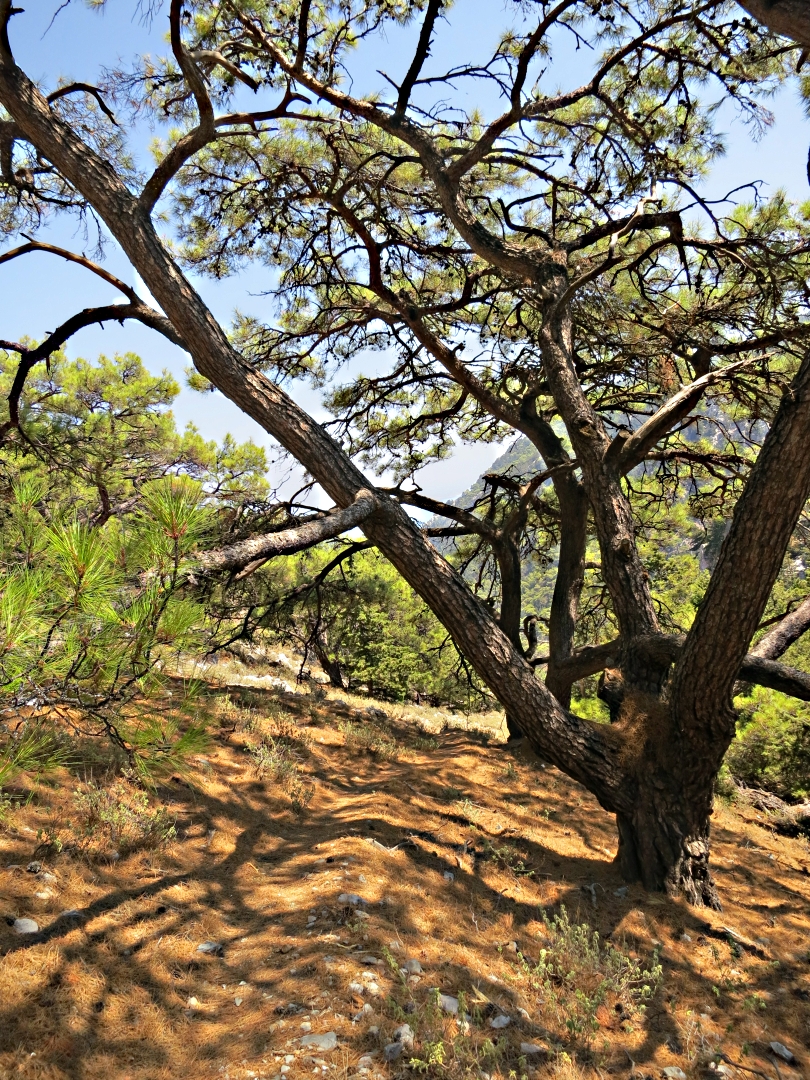
With no shade for an hour or more the trail through the woodland is refreshingly cool, with, counter-intuitively to north European eyes, fresh, cool green foliage on Scots Pine (or a close relative).

Fresh green of new growth on Scots Pine

Fresh green of new growth on Scots Pine

Looking across to a crag on the other side of the gorge

Looking across to a crag on the other side of the gorge

Reaching the small monastery of Agios Prokopios the opportunity for a pause under a shade tree is again thwarted by a locked gate and high fence.  But at least the trail is now back on the map, a dirt track leading back up to The Tarmac.  Thankfully it’s only a nodding acquaintance with the road as a parallel path leads through the trees to the roadside monastery of Panagia Strateri.

From here it’s straight across the road to the top of yet more road construction rubble which obliterates the start of the path.  With minimum effort and negligible cost continued access to ancient pathways could be provided during road construction.  Other municipal councils in Greece do it, why not on Symi?  Indeed because these roads are invariably built with EU funding why doesn’t’ that gargantuan bureaucratic machine require protection of such pathways, part of the national heritage, as a condition of the grant?   

Last year people asked me where the path to Nanou began but failed to find it.  Now I can understand why.  Slithering and sliding down loose bulldozed rubble, even though I knew roughly the line it took, I had to look very carefully until I found the small but well placed cairns marking the tight zigzags into the top of the gorge. 

Firts slither down the road rubble at the start of the path

Firts slither down the road rubble at the start of the path

..... then try and locate the path

….. then try and locate the path

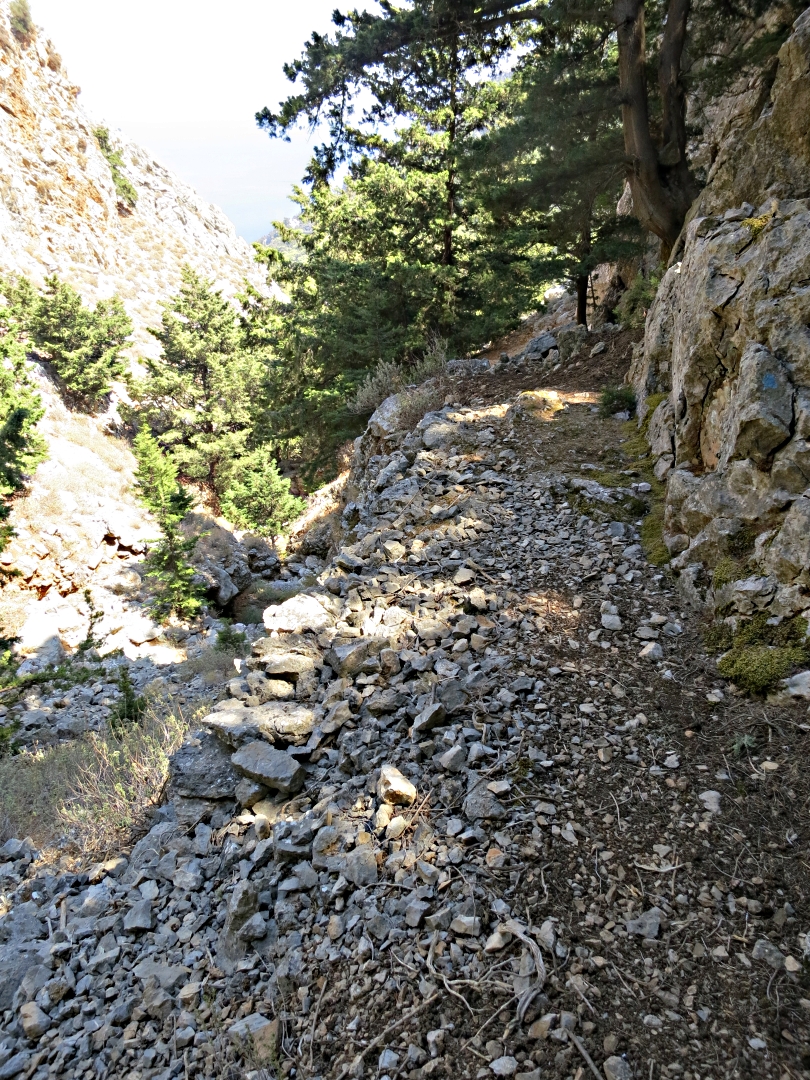
The trail negotiates dry waterfalls and then keeps well above the river bed, a loose, stony path dropping steeply under pine and cypress trees with a carpet of smooth needles reinforcing the need to take short steps to maintain balance and avoid landing uncomfortably on one’s dignity.

The path bypasses a 20 foot waterfall

The path bypasses a 20 foot waterfall

A broad, easy section

A broad, easy section

Pine-needle carpet through the trees

Pine-needle carpet through the trees

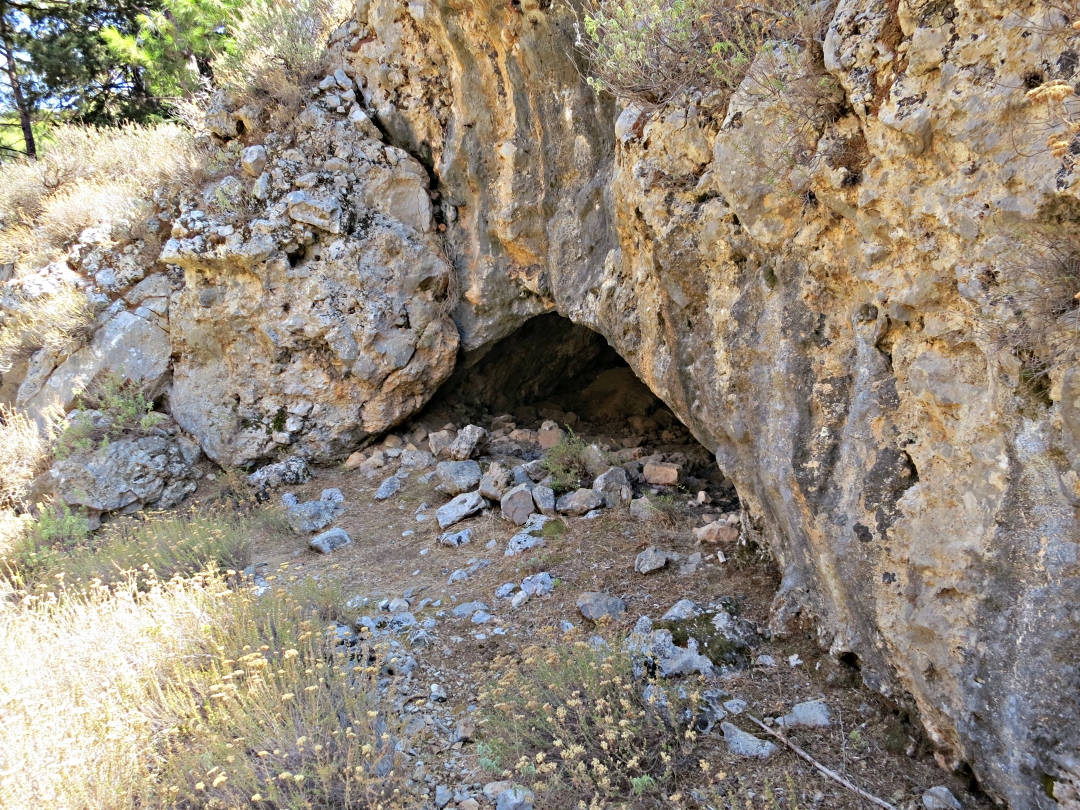
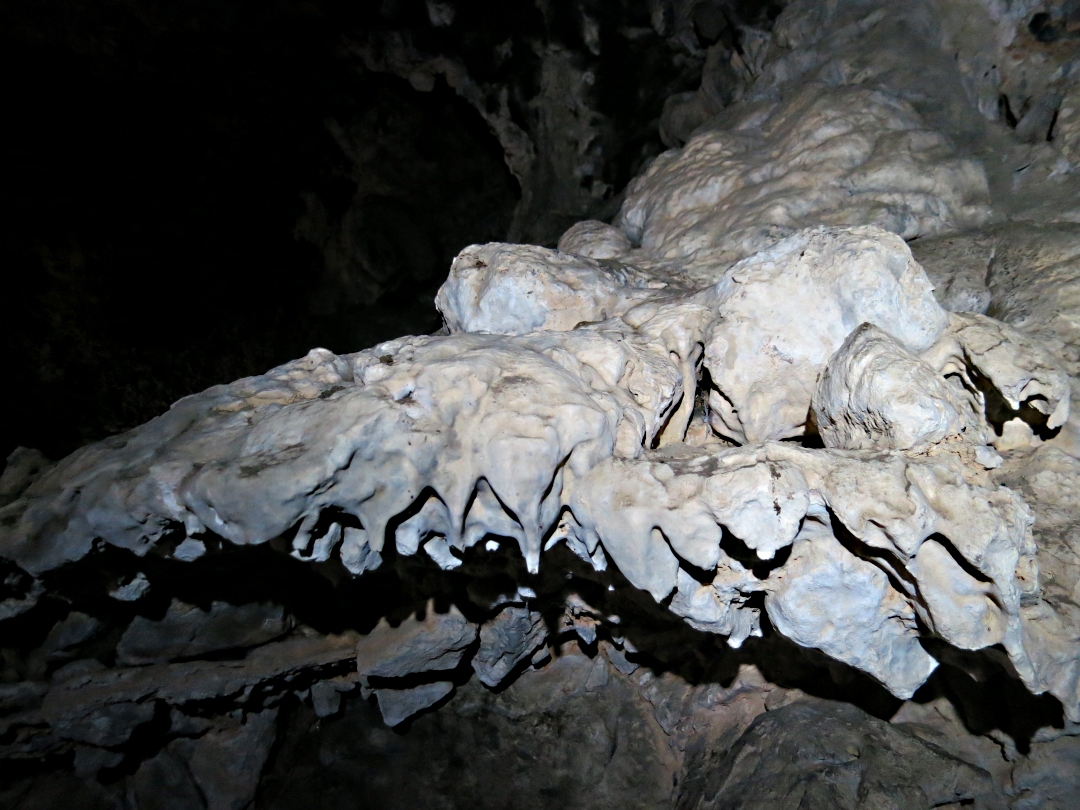
Rounding a bend and the path passes the entrance to a cave.  On previous visits I had poked around inside but with only the light from the entrance could see little of the interior which had been disappointing.  This time I had come prepared and packed a head-torch in the rucksack.  With that it was clear that the cave was far more extensive with more vertical development than I had expected.  Large deposits of calcite decorated significant areas, water still dripping slowly from straws hanging from the ceiling. 

‘Early man’ often lived in caves such as this.  It was certainly large enough with a broad level floor and there was evidence of blackening on the ceiling which may have been from fires long ago.  My guess is that others have had the same thought as there are small rectangular trenches dug in the floor which weren’t there last time I was here.  I know that in Wales caves of this size have been found to contain dinosaur bones and on the Dodecanese island of Tilos to the west were famously found the bones of pigmy elephant, the last of its kind in Europe.  Who knows what lies under this floor.

I hadn’t packed my bump cap nor the romper suit which I wear when crawling around in caves over here, without which I didn’t fancy climbing up into the higher corners of the cave.  I couldn’t detect any draft which would have indicated longer passages but I would still have liked to explore further.  Next time.

The entrance to Skordelos Cave

The entrance to Skordelos Cave

Clam-shaped calcite

Clam-shaped calcite deposit

Calcite veining on the ceiling

Calcite veining on the ceiling

Groups of stalctites like multiple udders

Groups of stalactites like multiple udders

Knife-like calcite curtain

Knife-like calcite curtain

On the way out

On the way out

Eventually I made it down to the beach, located my friends relaxing on sunbeds outside the taverna, and had a very refreshing swim to wash off the perspiration and the grime of the cave.  Then a return with the taxi boat.


Reaching the chapel behind the beach

Reaching the chapel behind the beach


Altogether just over 5 ½ miles, a taxing but very enjoyable trek. 

I have started writing up the route as a walking guide to both Nanou and the mountain-top monastery of Agios Stavros Polemou.  The guide isn’t yet finished but you can check it out if you want to try the route.

To Agios Stavros Polemou and Nanou Beach

Posted in Greece, Hiking, History, Landscape, Mountains, Nature | Tagged , , , , , , , , , , , , , , , | Leave a comment

Symi: a trek to a time before Greece

It began when I was lying on a wall at Agios Nikolaos Stenou monastery on the top of the ridge between Nimborio Bay and the open channel which separates Symi and Greece from Turkey, the dividing line between Europe and Asia.  I was taking a siesta, luxuriating in the sunshine with enough breeze to prevent overheating. In the silence I became aware of rhythmic footsteps.  I looked up as a laden donkey and an elderly guy ambled along a path below me.   He had seen me.  We waved in greeting.  I resumed my siesta.

One of the more puzzling omissions from the SKAÏ map of Symi is the footpath from the end of the beach at Nimborio to Ag Nik Sten.  Paint-marked, well trodden and recently maintained, it has obviously been there much longer than the 14 years I have been walking it.  It’s a great viewpoint, has a large shade-tree and an accessible sterna with good water.  A short walk with good pay-back for effort. 

The guy with the donkey disappeared behind a crag and I was intrigued to know where they were heading.  The terrain looked completely barren and there was no settlement shown on the map.  I was on my way back from a long walk and had began to salivate at the thought of having an ice-cold frappé when I got back to Yialos so I declined to follow but returned another day to find out where they were going.

I had not noticed before but the path split, bearing off to the right along the line of the ridge at a lower level rather than continuing left and upwards to the monastery set below a limestone crag above a narrow plateau.

On the unmarked path below Agios Nikolaos Stenou monastery

On the unmarked path below Agios Nikolaos Stenou monastery

Unsurprisingly, like the path to the monastery it was not shown on the map but unlike that path it was not way-marked with paint splodges or cairns.  However, it was certainly well trodden with plenty of evidence that the donkey walked it regularly.  It headed along the narrow peninsula towards an area marked on the map as ‘Κοκκινόχωμα’, translating as ‘Red Soil’ with the promise of ‘Hellenistic Period Ruins’.

Initially it skirted to the northwest of an outcrop of very sharp rock, the ‘tear pants limestone’ of an earlier blog, or perhaps more appropriately given its nature in this location, ‘razor limestone’.  Then it passed through a small col onto the southeast side of the ridge where the nature of the rock changed with coarse red intrusions.

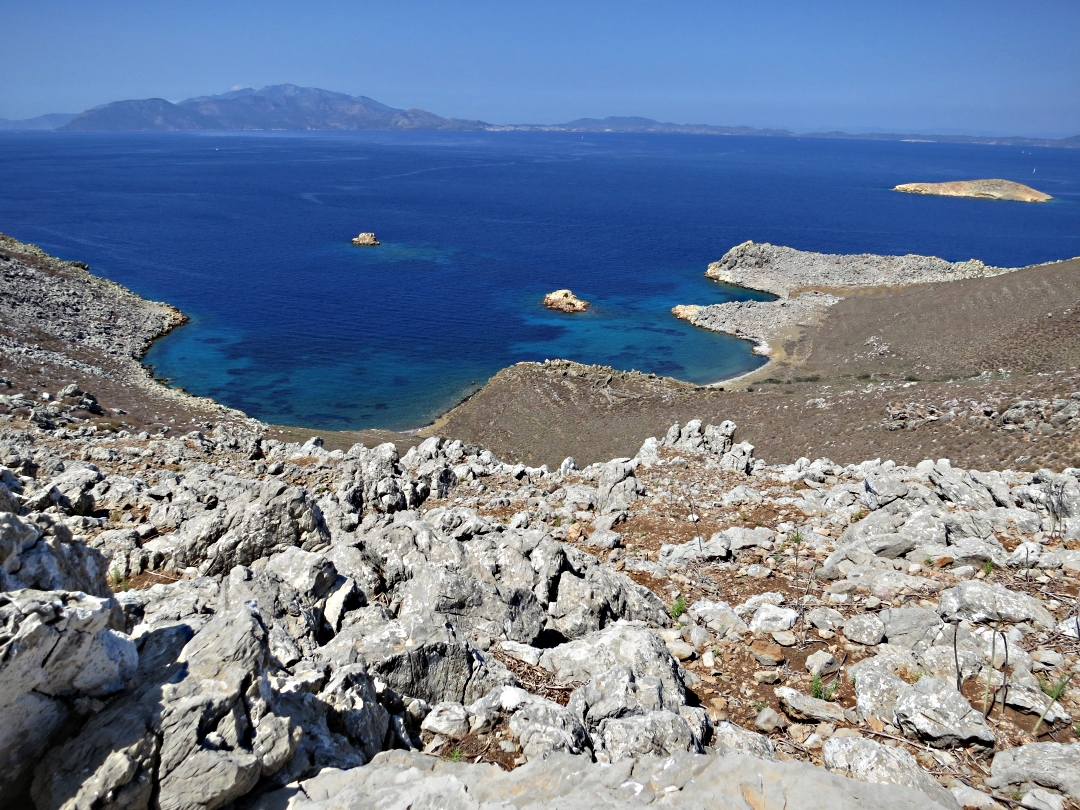
Sharp limestone on the northwest side of the ridge looking across the open channel towards Turkey and Asia

Sharp limestone on the northwest side of the ridge looking across the open channel towards Turkey and Asia

Typical of the 'razor limestone' along this section of ridge

Typical of the ‘razor limestone’ along this section of ridge

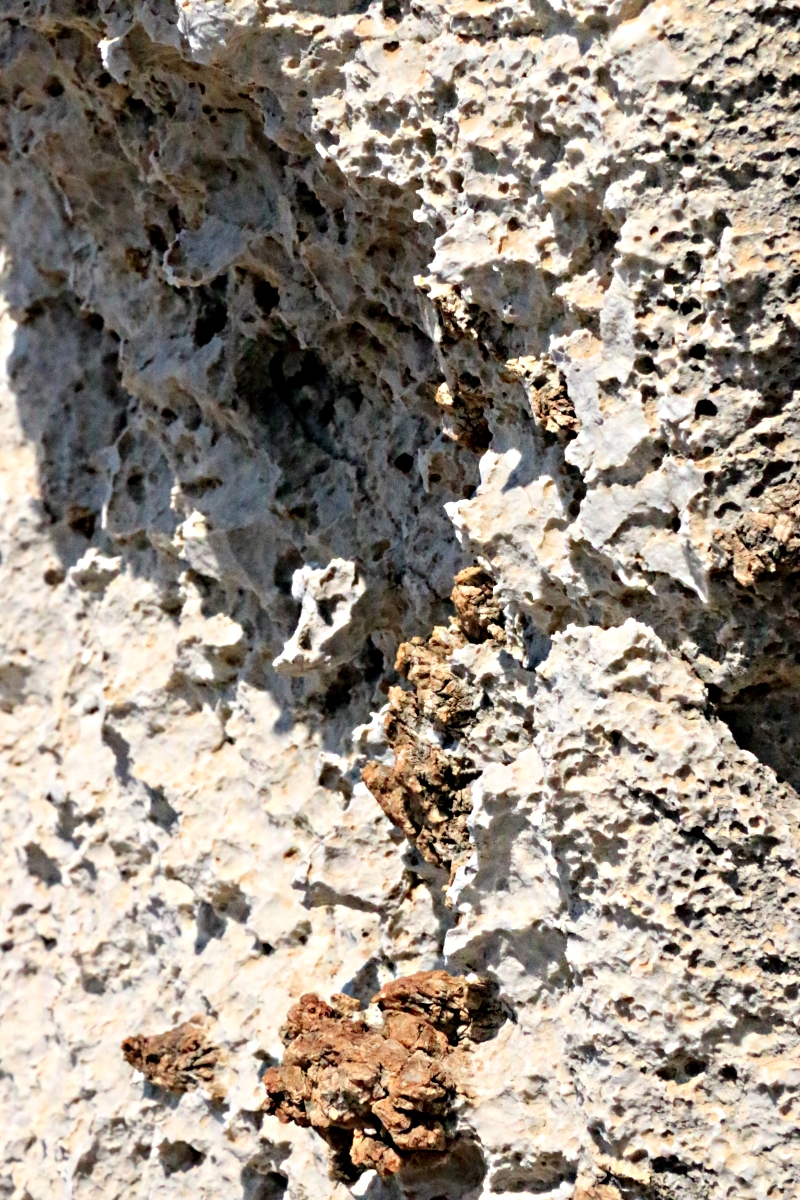
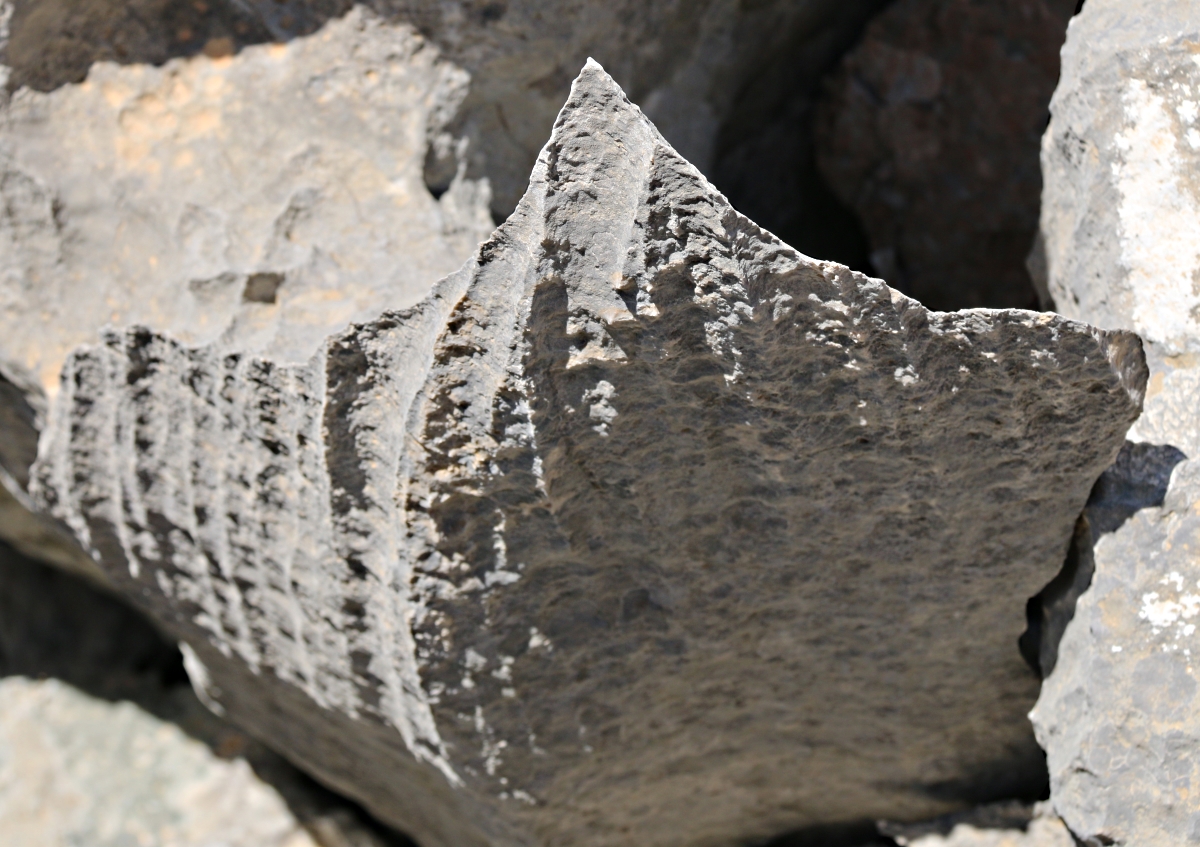
Massive limestone blocks sharpened and shaped by solution weathering

Massive limestone blocks sharpened and shaped by solution weathering


Switching to the southeast side of the ridge and a change in the rock

Switching to the southeast side of the ridge and a change in the rock

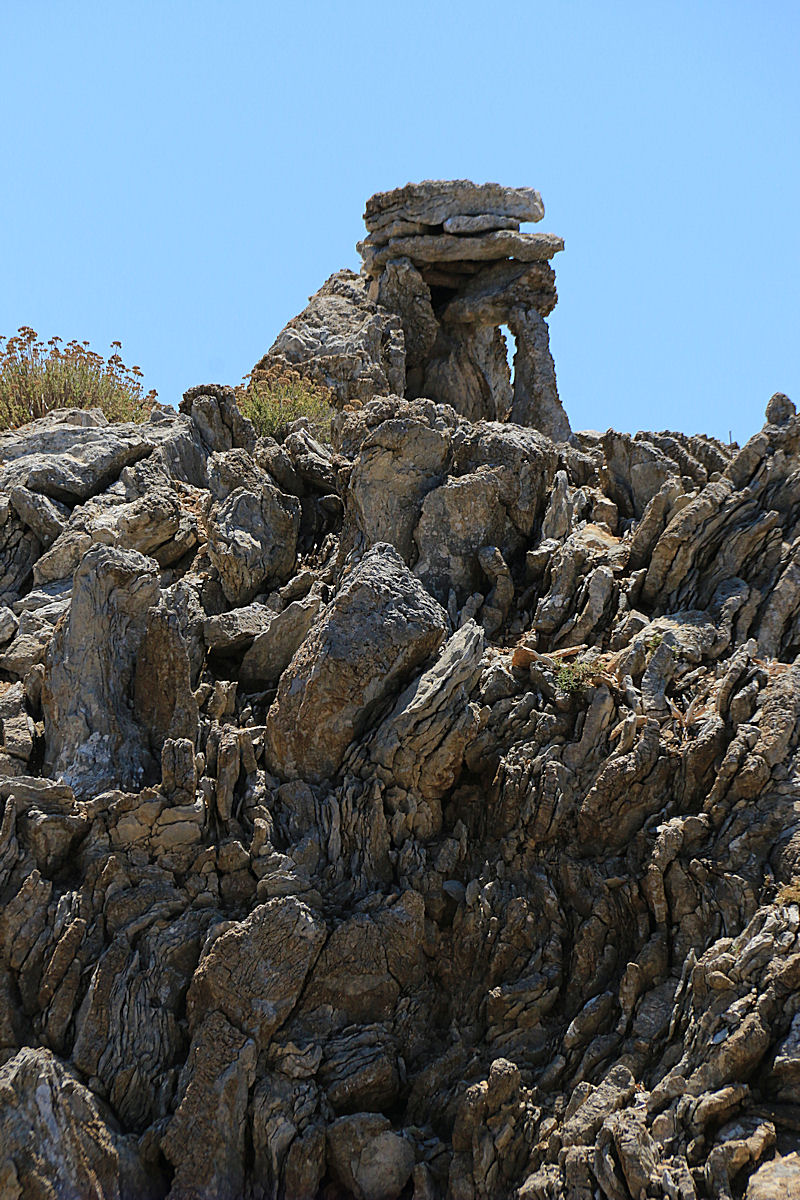
After a short way it crossed to the northwest of the ridge again and started to drop down at the foot of a vertical crag.  Given my predilection to climb things I left the path and did so, with considerable care to avoid cuts and abrasions.  At the top was a formation or structure which looked like a miniature version of the cromlechs scattered on mountains around Wales.  Flat slabs were lying horizontally across vertical ‘legs’.  I don’t know if it was natural or man-made but on the adjoining crag was a very definitely man-made structure, a wall built into the rock. 

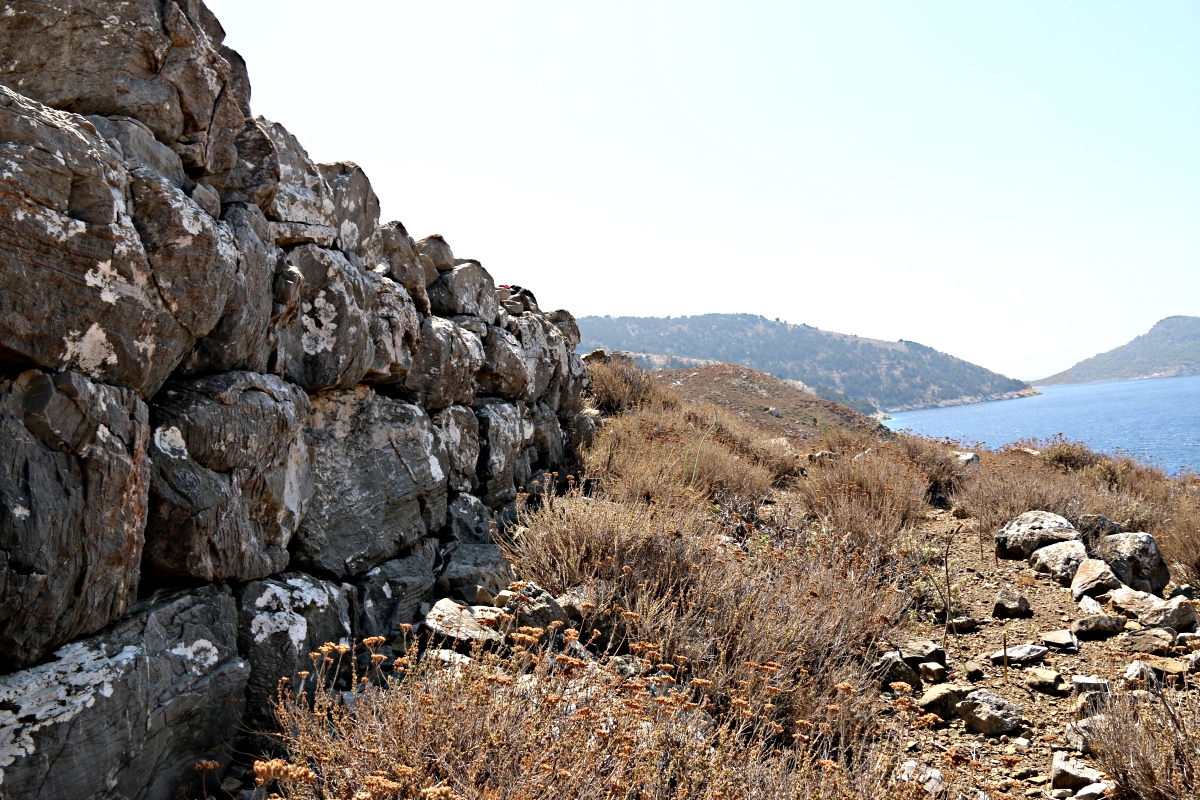
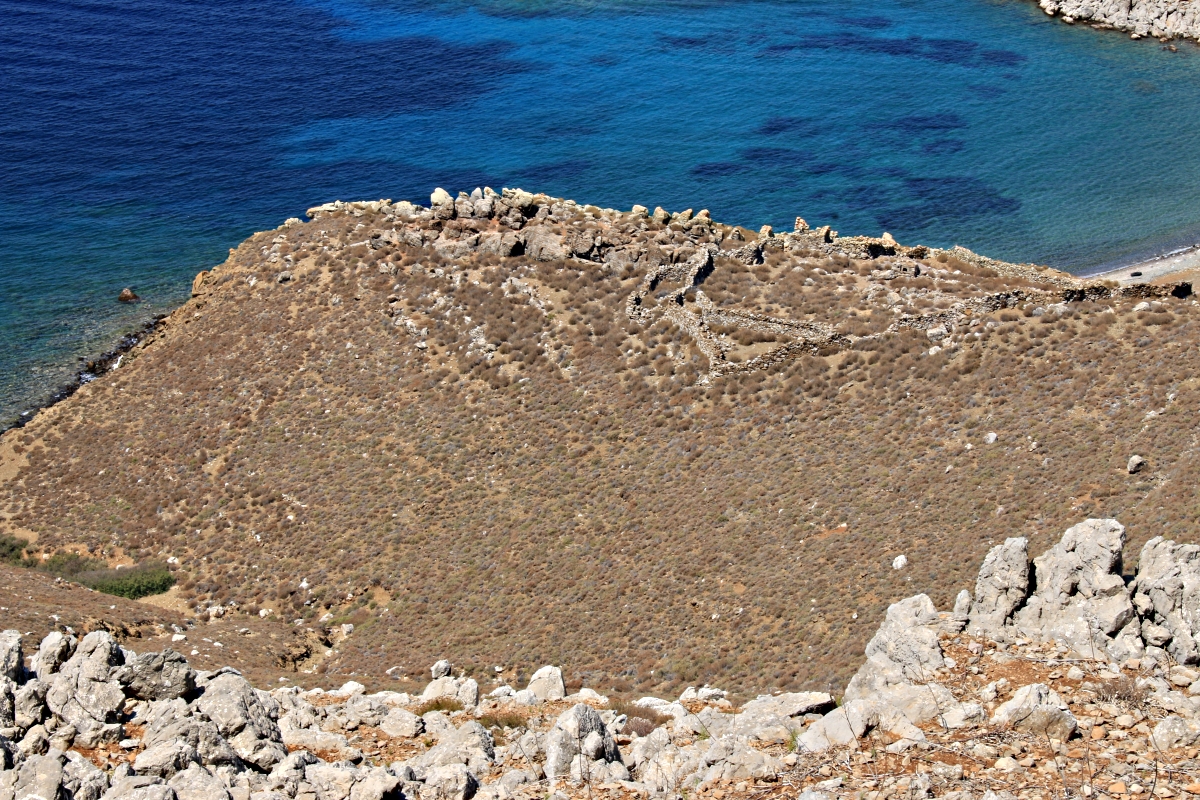
Rough-built stone wall fortification set in the top of the crag

Rough-built stone wall fortification set in the top of the crag

Looking back to the 'cromlech' on top of the adjoining crag

Looking back to the ‘cromlech’ on top of the adjoining crag

It was more difficult to climb that crag but on top was a level earth-floored platform with a sheer drop on all sides, not very large but about as defensible a position as it was possible to get.  Assault from any direction would hazardous and easily repulsed.

Looking from the platform across Nimborio Bay and the entrance to Yialos harbour to the ridge above Pedi

Looking from the platform across Nimborio Bay to Horio and Mount Vigla behind

From the platform looking towards Turkey

From the platform looking towards Turkey

Photographer on the edge of the platform looking down about 500 feet to the small 'locals' beach.

Photographer on the edge of the platform looking down about 500 feet to the small ‘locals’ beach reachable only by boat.

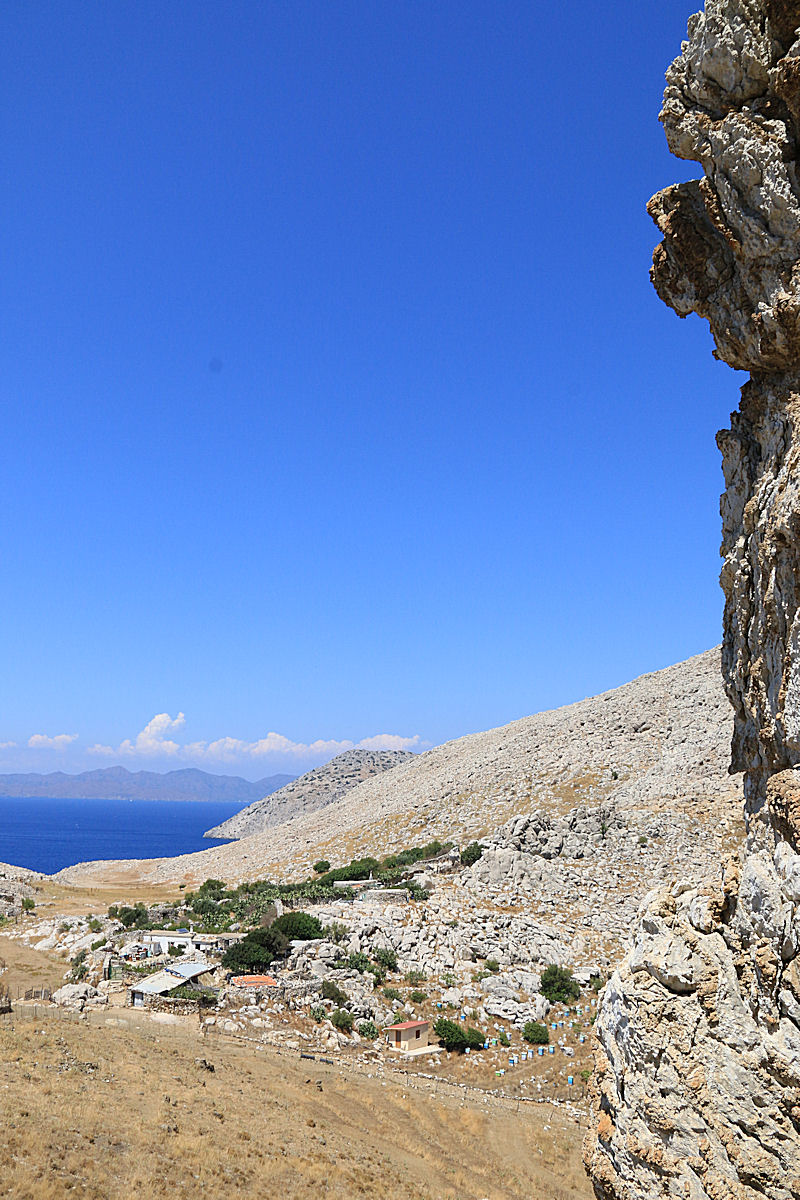
Below the fortified position was a broad col with agricultural enclosures and buildings, still in production but undoubtedly with a history going back many centuries.  Farming activity in the col, about 300 feet ASL, is completely invisible from the sea, an important consideration in days when pirate raids were common.  The fortification would have provided a refuge to which to retreat in case of attack.  It is unlikely that productive land would have supported a large population but a small community could well have subsisted here and defended itself.

Looking from the fortification across the col  with its agricultural enclosures and building

Looking from the fortification across the col with its agricultural enclosures and building

Part way down the crag looking towards the col

Part way down the crag looking towards the col

From my limited knowledge of archaeology and the history of this area of Greece I suspect from the rough-stone construction of the fortification that it is Pelasgian, dating back to before the Hellenic period.  Little is known about the Pelasgians.  It is uncertain whether they were the ancestors of the Greeks or lived here before the Greeks but in either case they spoke a different language referred to by early Greeks as ‘barbaric’ and had a different culture and weapons.  Some think they may be related to the Mycenaeans or Minoans or Ionians, or that ‘Pelasgian’ may have been a generic term applied to a number of pre-Hellenic cultures and languages.

It was interesting to sit on top of the crag and try to imagine. Certainly, here the pre-historic past seemed closer, more real than the 21st century.  It is known from excavations on Limnos that Pelasgians were in the North Aegean not that far away so it is a reasonable hypothesis that there were small populations on Symi a little to the south.

I’ll have to investigate further.  And I’ll have to track down the ‘Hellenistic Period Ruins’ on the other side of the col.

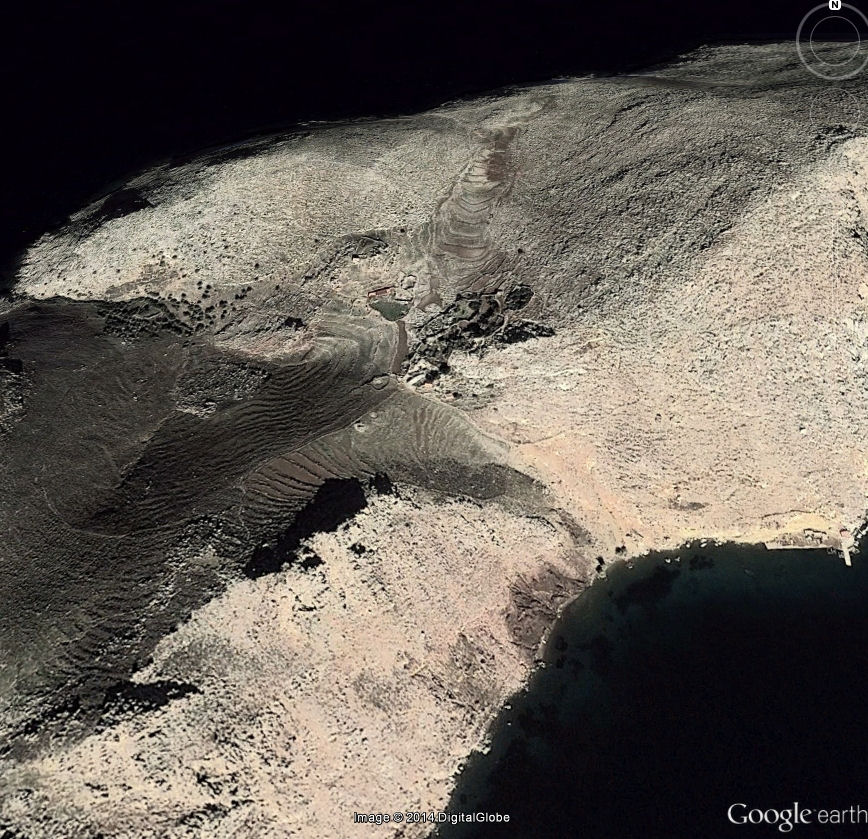
Google Earth view of the ridge, Nimborios beach bottom left, fortified crag up and left from centre

Google Earth view of the ridge, Nimborios beach bottom left, fortified crag up and left from centre

Zooming in on the crag and the col

Zooming in on the crag and the col

x

Posted in Greece, Hiking, History, Landscape, Mountains, Wales | Tagged , , , , , , , , , , | Leave a comment

Symi: a jaunt down a mini-gorge

The pattern of my days on Symi is different to previous years.  I spend the morning doing chores around the house and writing.  By midday I have had enough of both and need to get out into the mountains and/or head for a beach to have a swim.  There a few favourite routes I take depending on what time I set out, whether I’m bursting with energy or flagging, and whether I need to go to the shops around the harbour.

One of those routes is particularly good fun.  Head up to the ridge via the very good and spectacular kalderimi past Agia Paraskevi then turn right onto a not so well maintained kalderimi past rock slabs looking straight down into the harbour and on up to the road for a mile overlooking the army camp, cutting off a few bends by going over rough terrain and then turning right onto a rough track.  There are 4 options from here, all of them on rough paths through striking landscape.

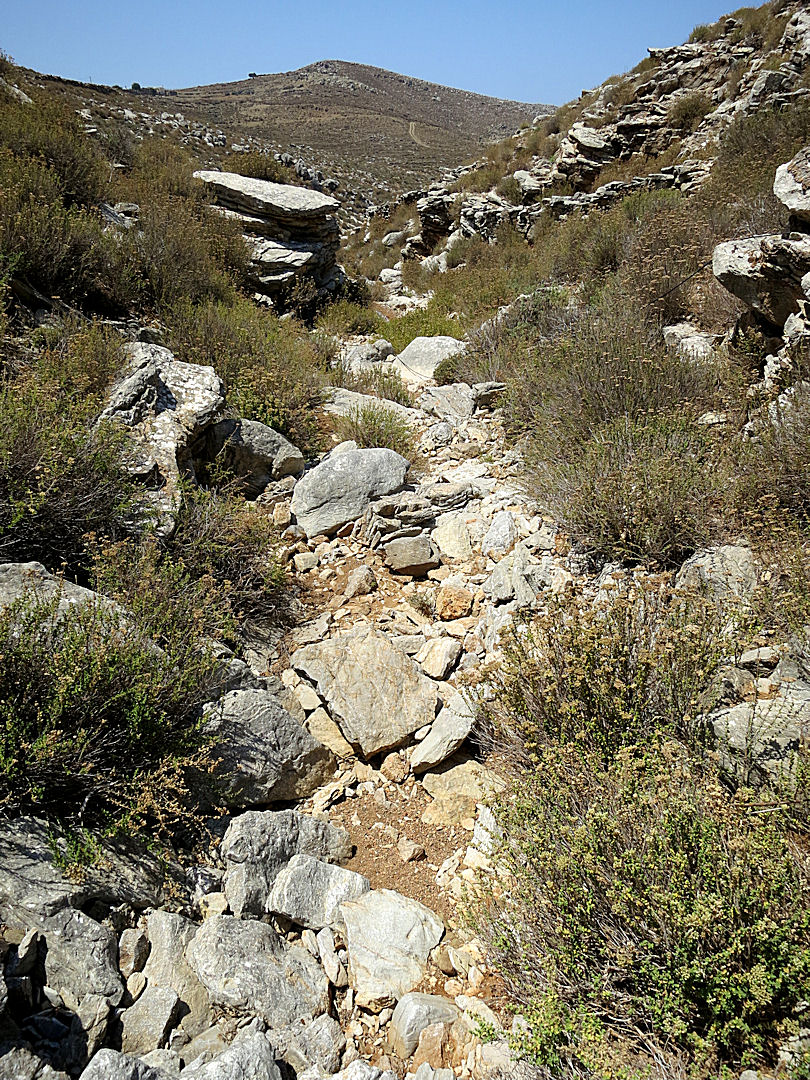
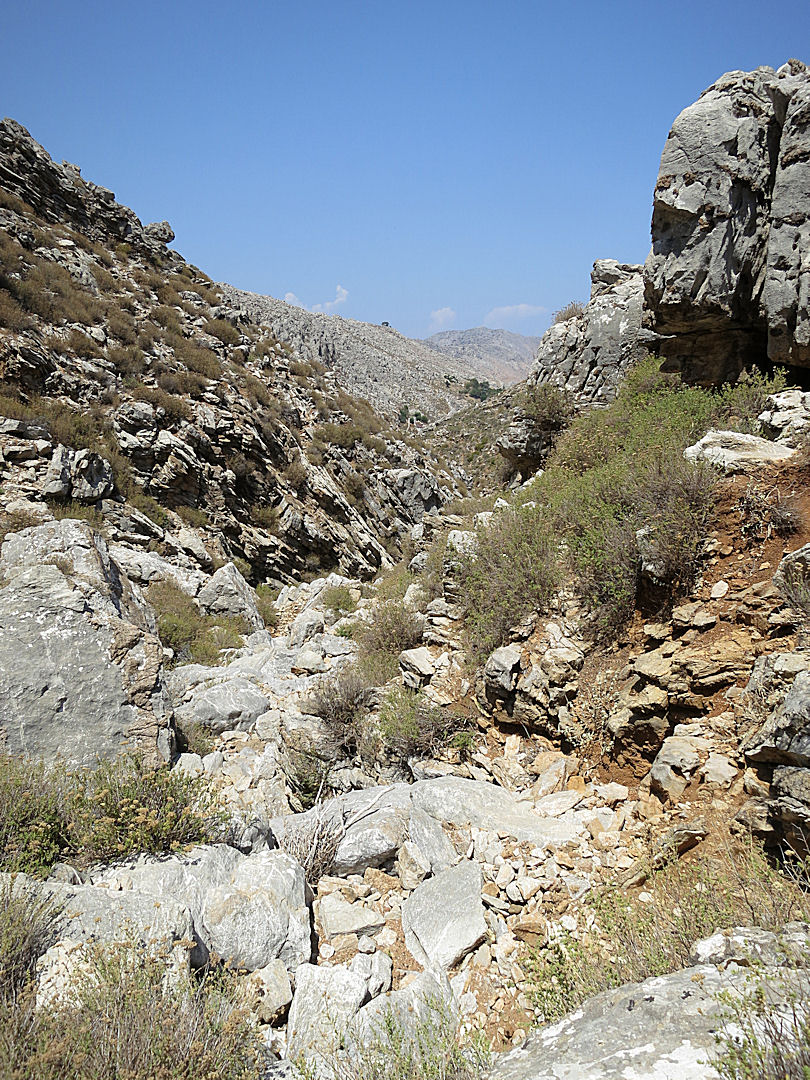
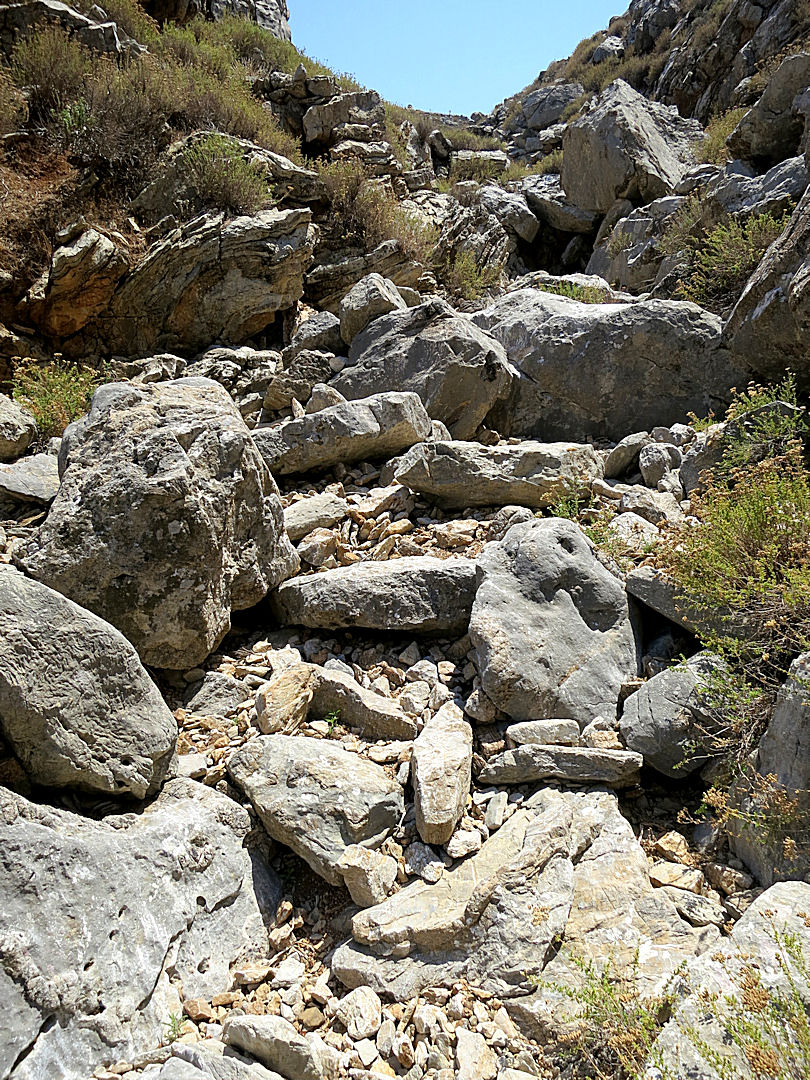
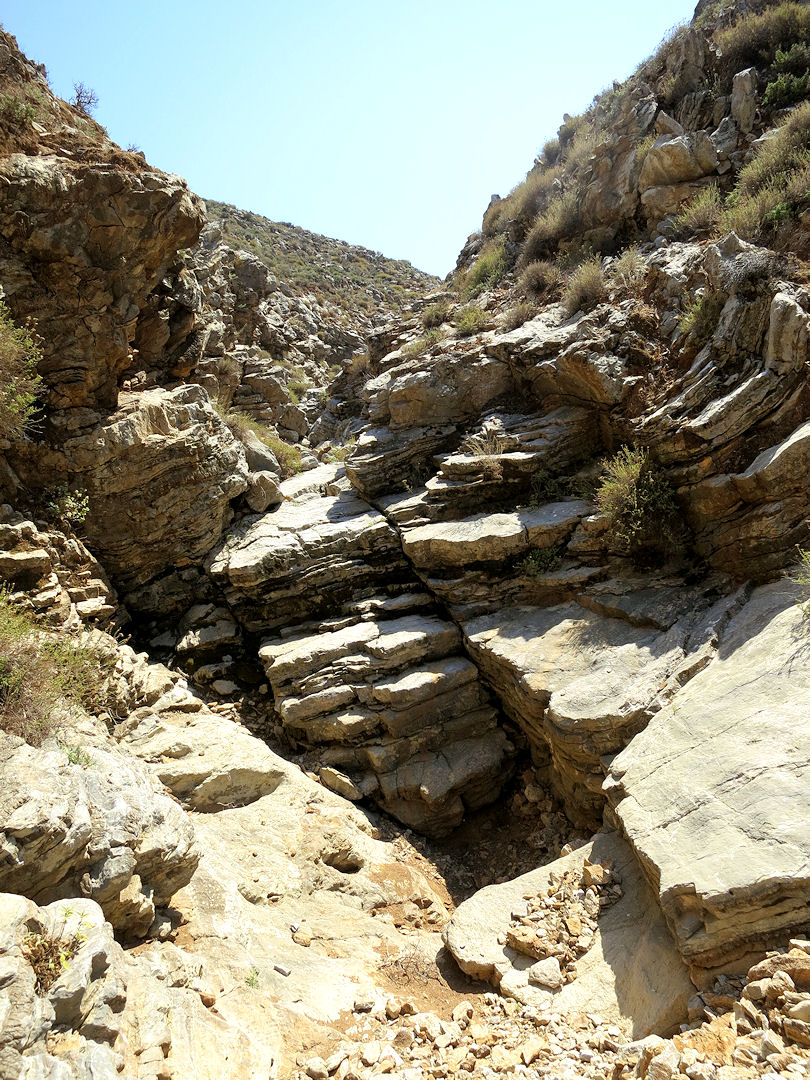
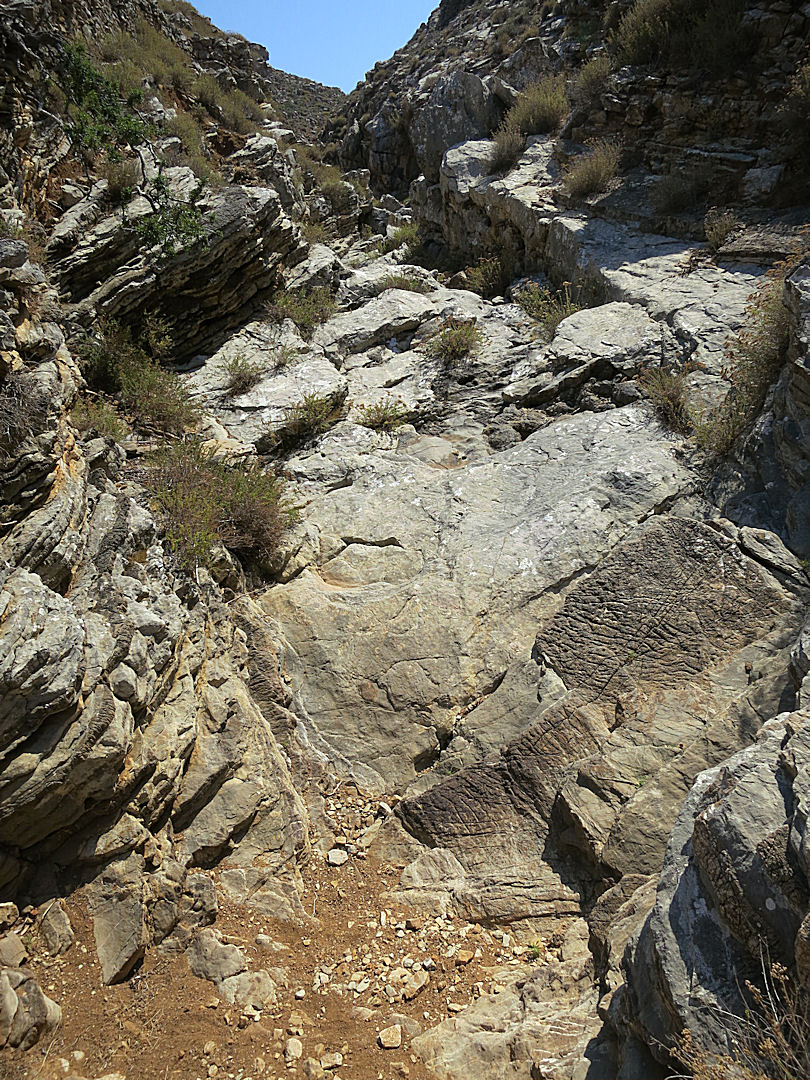
Perhaps the most impressive is to drop down a small gorge to Nimborios.  It’s only about a mile long with a drop of about 500 feet to sea level but it’s good fun, especially the lower section where the falls are bigger and the sides cliffed and more closed-in.  It doesn’t require any climbing skill, just a bit of confidence at rock-hopping and the occasional careful negotiation of a drop.  Some of the falls are vertical, others are inclined slabs but none is very high.  Sometimes climbing down into and then out of a dry plunge-pool can be avoided by traversing around the rocky sides.  Why lose height that you have to regain even if it’s only a few feet?

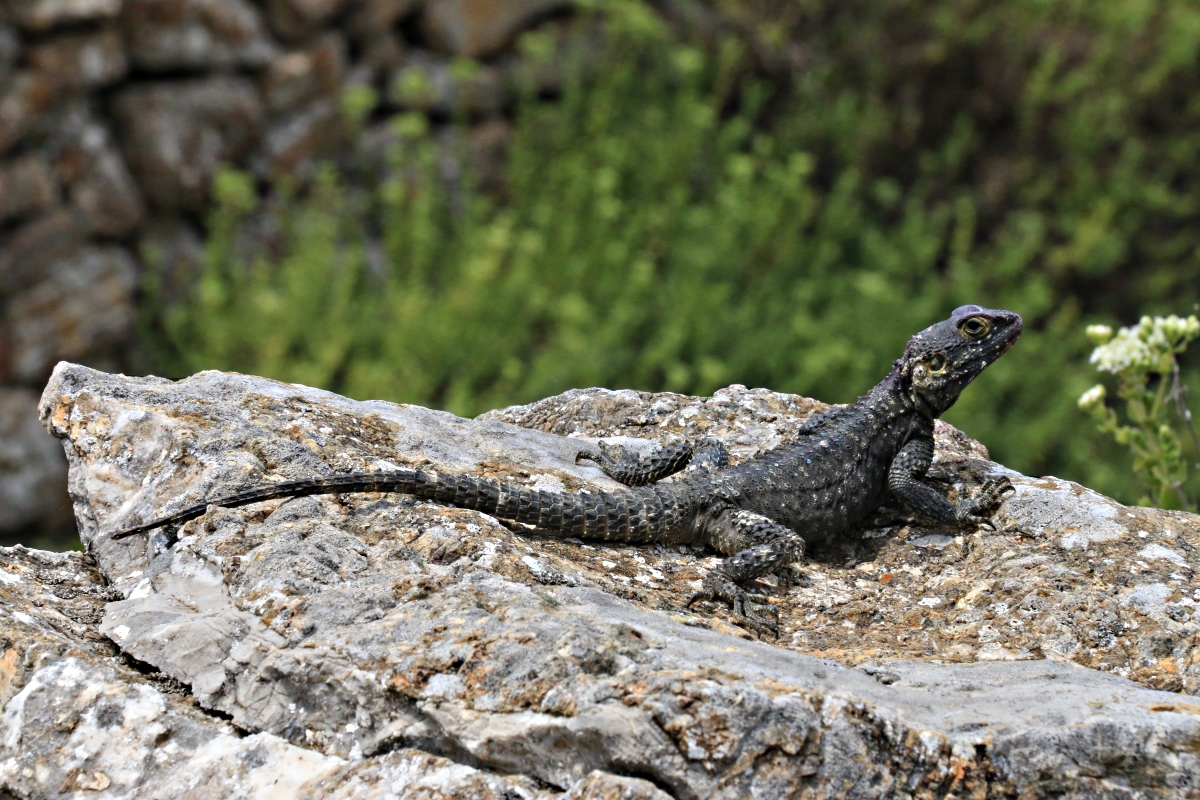
Earlier in the year it helps to carry a stick to move high-tensile webs which spiders stretch taut across narrow gaps at head height so that they wrap round your face and get tangled in your beard (if you have a beard).  At this time of year small flocks of rock partridges rise up in panic and fly off, chuntering manically.  If they stayed still you wouldn’t know they are there they are so well camouflaged.  Occasionally a lone Little Owl flies out from the crags, completely silent, no cry and soft-edged feathers which make its wings noiseless in flight.  Painted Dragon lizards, head up, suspicious, imperious, watch from rocky outcrops and dart into crevices if they feel threatened.   Oertzeni lizards dash across the riverbed in front of you and hide in the dense oregano lining the sides.  Butterflies flit around, pausing only occasionally, often in unlikely spots.

No wonder progress is slow.

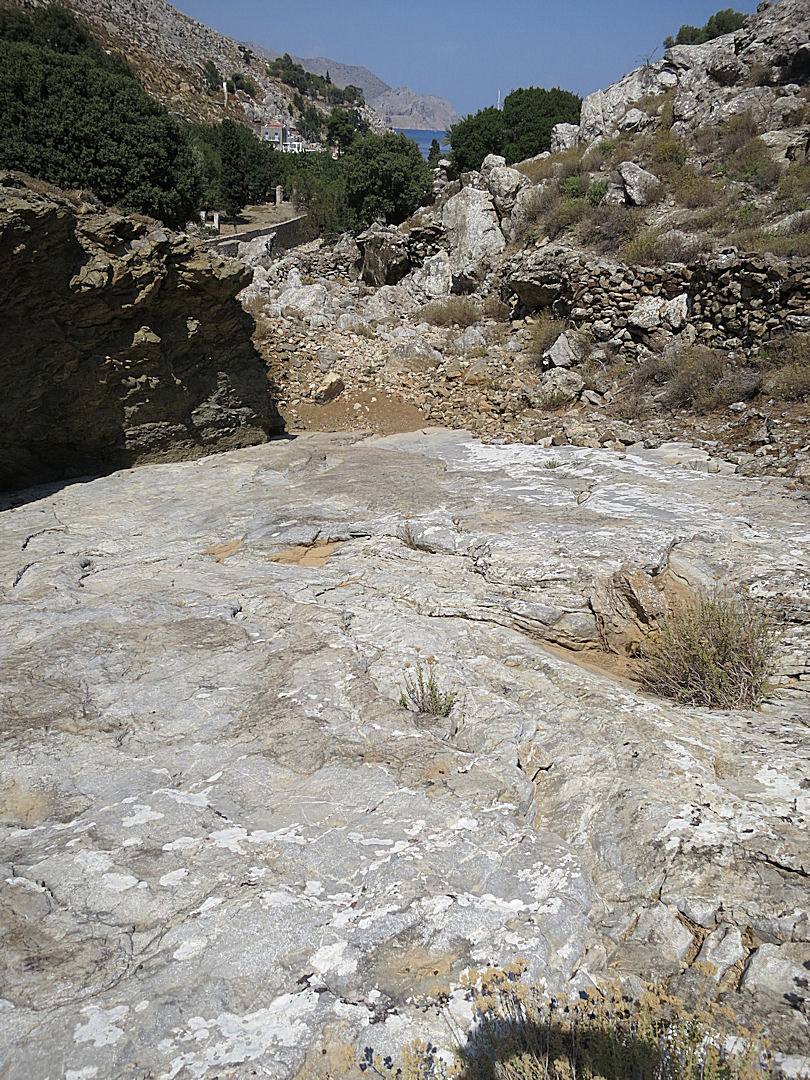
The last fall is the highest, a broad inclined slab with the sea and the buildings along the beach in sight.  After the still, hot air in the gorge a swim is a very welcome prospect.

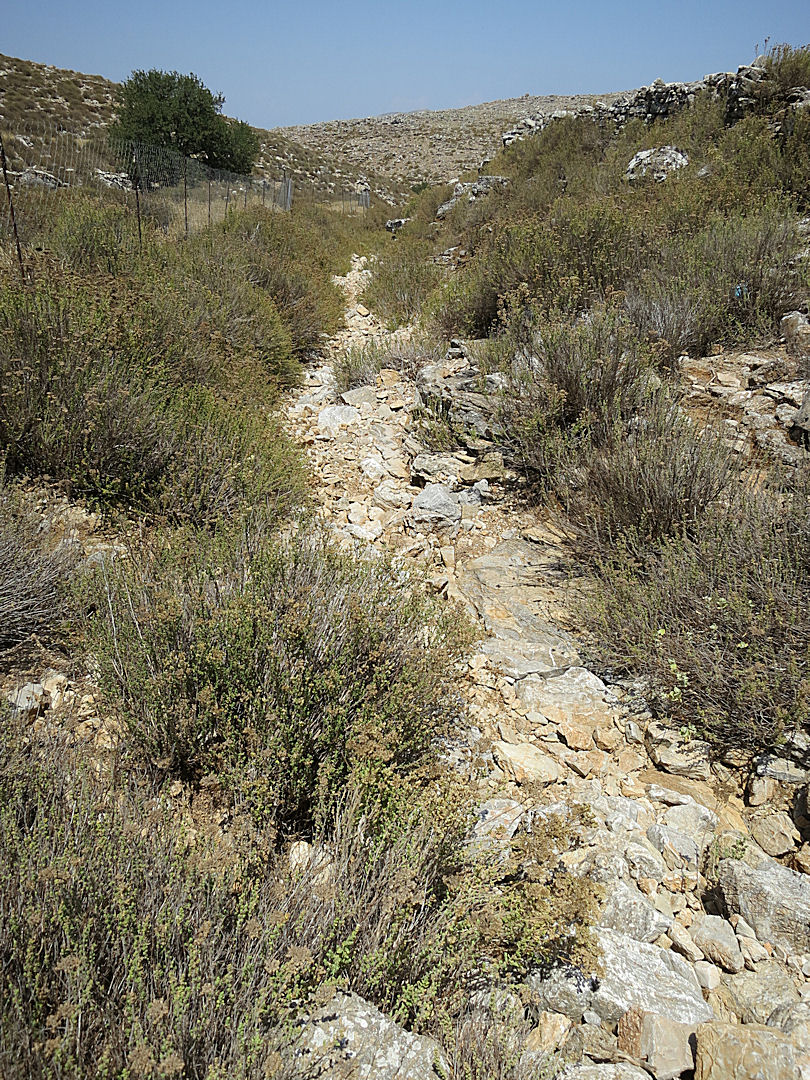
The gorge begins as a dry stream bed through the oregano

The gorge begins as a dry stream bed through the oregano

... steepens slowly and stones get bigger

… steepens slowly and stones get bigger

Reaching the first real drop, the first real interest

Reaching the first real drop, the first real interest

Looking back at it puts it in context, no more than 6 feet

Looking back at it puts it in context, no more than 6 feet

Inclined slab towards a longer drop

Inclined slab towards a longer drop

Begins to get steeper, slabby inclined beds on the left, massive limestone crags on the right

Begins to get steeper, slabby inclined beds on the left, massive limestone crags on the right

Looking back up at the same drop, good rock-hopping

Looking back up at the same drop, good rock-hopping

Fairly simple fall to down-climb and a sandy landing

Fairly simple fall to down-climb and a sandy landing

Traversing around the edge of the rock on the right of photo avoids dropping into the plunge-pool

Traversing around the edge of the rock on the right of photo avoids dropping into the plunge-pool

This traverse is a straightforward walk albeit on an inclined plane

This traverse is a straightforward walk albeit on an inclined plane

Overhanging cliff about 30 feet high coloured with calcite deposits

Overhanging cliff about 30 feet high coloured with calcite deposits

A small recess which could once have been a cave opening but now collapsed and sealed with calcite

A small recess which could once have been a cave opening but now collapsed and sealed with calcite

One of the inclined slab falls

One of the inclined slab falls

Looking down the final drop, a broad slab with the sea now in view.

Looking down the final drop, a broad slab with the sea now in view.

Painted dragon lizard, alert, superior

Painted dragon lizard, alert, superior

Butterfly on rock

Butterfly on rock

x

Posted in Greece, Hiking, Landscape, Mountains, Nature, Wildlife | Tagged , , , , , , , , | 2 Comments