November Daily Blog 25: Wet in the wetlands

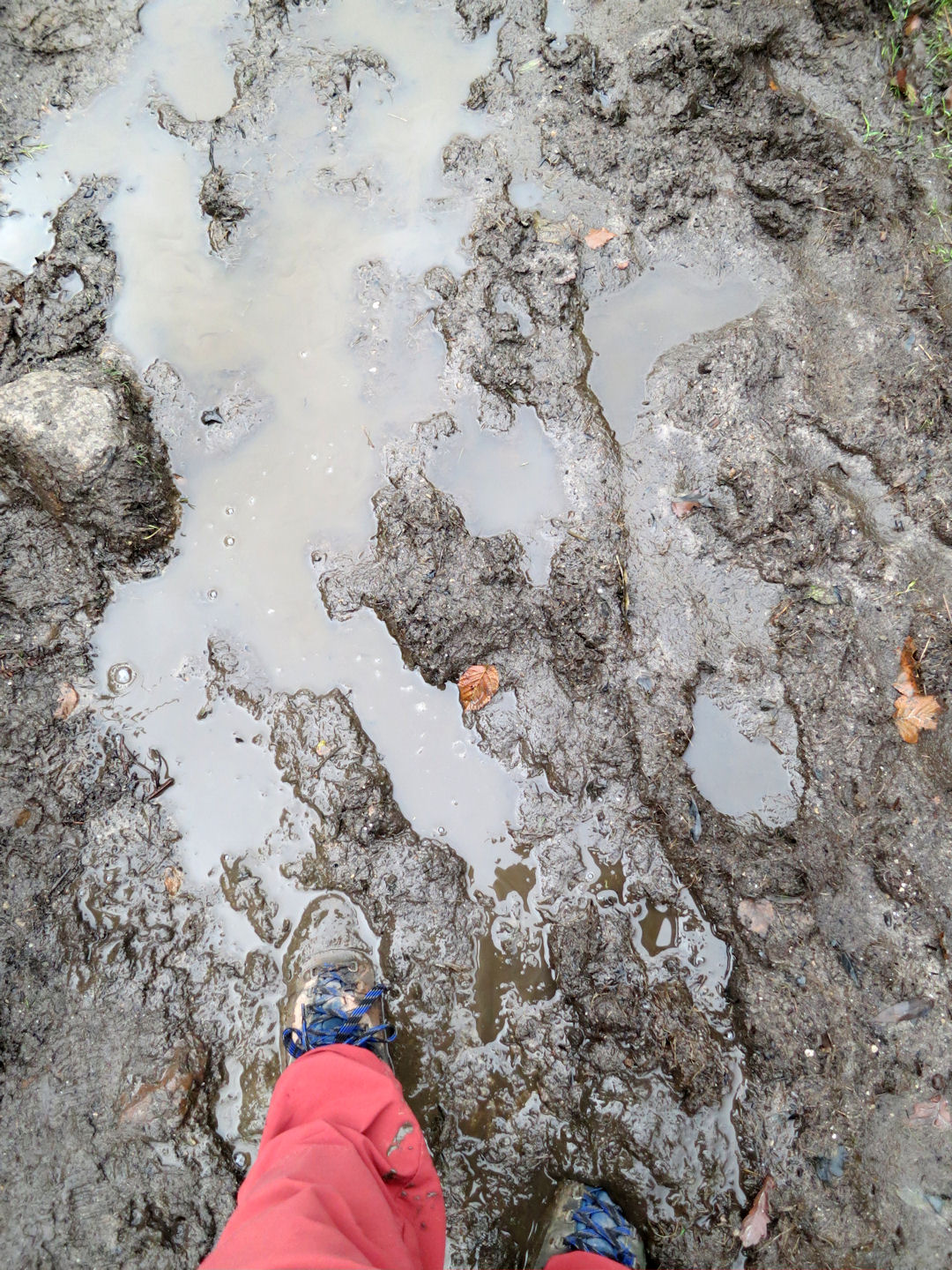
Another very wet and muddy footpath again today.  This time I guess it was only to be expected as I went down to the coast and the Newport (Gwent) Wetlands Nature Reserve.  The mountain behind the house was clagged in with low cloud and heavy rain was forecast.  That plus the fact that I was advised by the physio to avoid rough terrain until my knee has properly healed up meant that  the coastal nature reserve with its ‘made’ paths was the best option for getting out and having some fresh air.

The reserve, on the site of former ash-pits at the Uskmouth Power Station, was initially created in 2000 as a requirement of the planning permission for the Cardiff Bay Barrage to compensate for considerable loss of wetland habitat by that construction.  Designated a National Nature Reserve in 2008 it is now managed jointly by The Royal Society for the Protection of Birds, the Countryside Council for Wales and Newport Borough Council.1,2

The site has a network of well formed and maintained paths3 but on Sunday I followed a path beyond the perimeter of the reserve to reach the Wales Coast Path further to the east for an extended walk along the massive sea defences which protect ‘The Levels’ as they are known from flooding at high tide.

I usually go down to the coast at low tide as there is more to see but on Sunday I chose to visit as it was approaching high tide.  Forecast to be at its peak of 10.63 metres (35 feet) at 17.00 it was well below its highest this year (12.86 metres on 16 October) and certainly below its maximum (on 10 September 2010 it reached 13.21 metres but gets even higher than that4.    With the second highest tidal range in the world the water in Severn Estuary rises higher than the land bordering it, hence the need for substantial flood defences.

But it also means that the speed of the incoming tide is very rapid, even with Sunday’s modest tidal range it came in at an average of an inch a minute.  However, the ‘Rule of Twelfths’5 means that in the middle two hours it comes in even more rapidly, 1½ inches a minute. Therefore not only does it carry a great deal of sediment and constantly looks grey and murky but great care has to be exercised when going down on the foreshore.

Having reached the coast path I then walked back towards the Nature Reserve, the tide coming in visibly as I walked so that it soon completely covered the mud flats and began to creep up over the grassland below high water, a line marked by tree trunks and other detritus carried along in the powerful current.

From the lighthouse at the centre of the coastal edge of the nature reserve I cut across the floating pontoon over the reed beds and ponds to the visitor centre for a very acceptable snack of Welsh Cakes and a caffeine fix while watching the massed starlings swirling in the dusk sky and the coots swimming across the pond outside the window, necks jerking rhythmically backwards and forwards in their characteristic manner of a comic strip dance based on an Egyptian frieze.

It was muddy, cold and it rained heavily towards the end but it was a fascinating and enjoyable couple of hours ambling.  A higher tide is forecast for 07.49 on Friday morning, I may go back again, hopefully to take advantage of better light to take more photos.

http://www.newport.gov.uk/_dc/index.cfm?fuseaction=activities.homepage&contentid=n_066104
http://en.wikipedia.org/wiki/Newport_Wetlands
http://www.rspb.org.uk/Images/newportwetlands_tcm9-266216.pdf
http://www.pol.ac.uk/ntslf/hilo.php?port=newport
http://en.wikipedia.org/wiki/Rule_of_twelfths
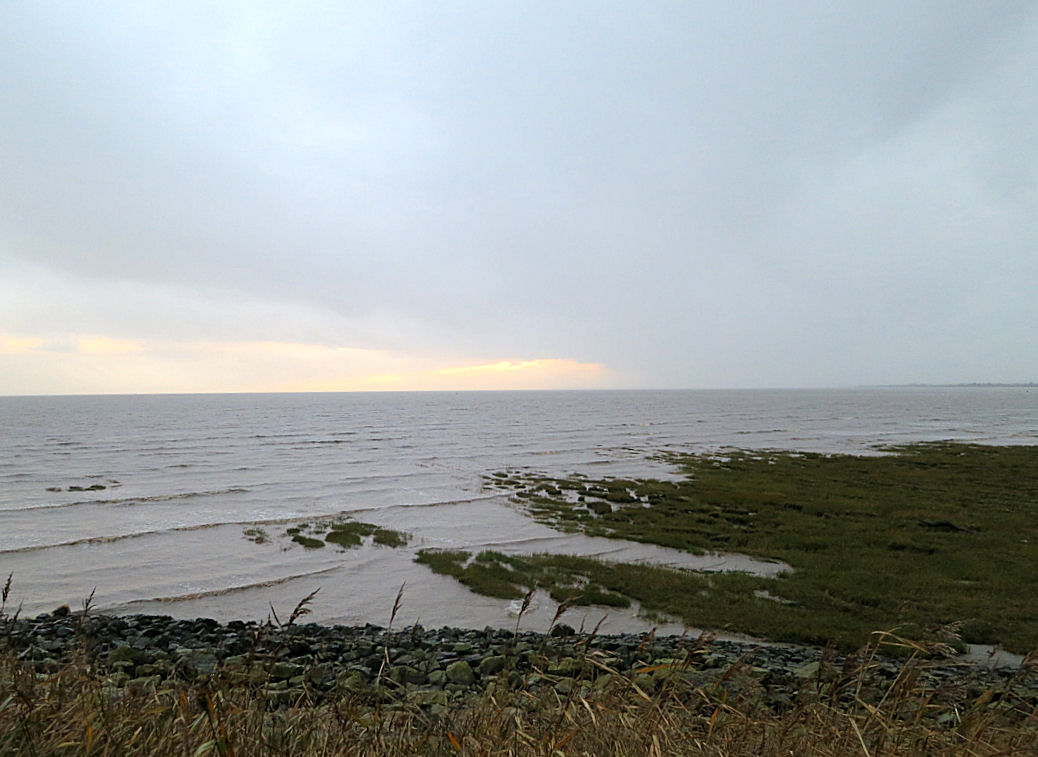
The incoming tide starts to cover the grassland on the foreshore
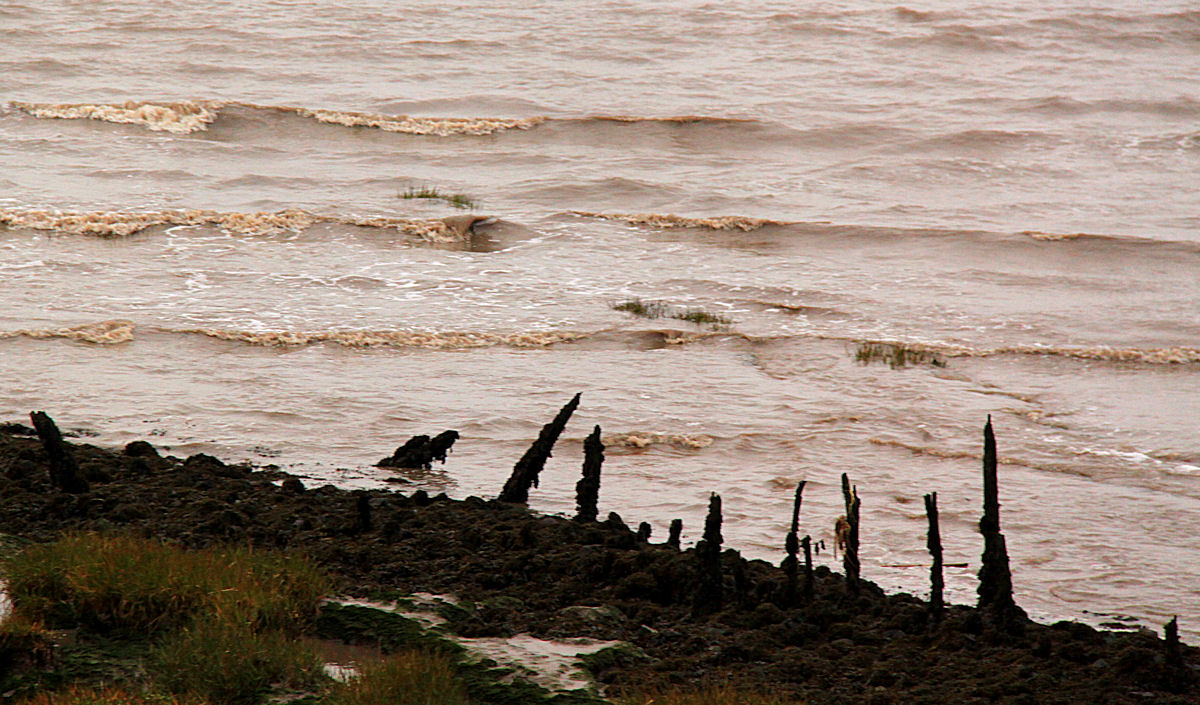
Battered and gnarled groins against murky sediment-rich waters
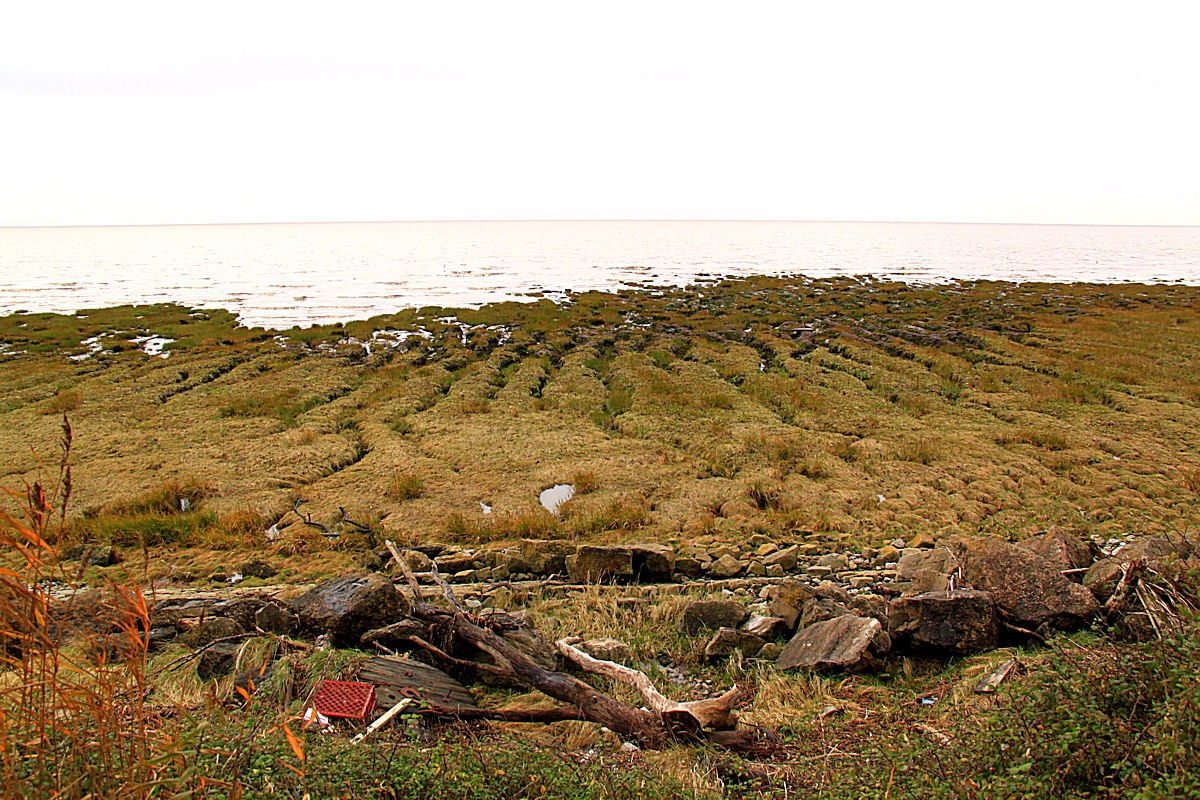
High water marked by substantial tree trunks and channels eroded through the grass-covered sediment
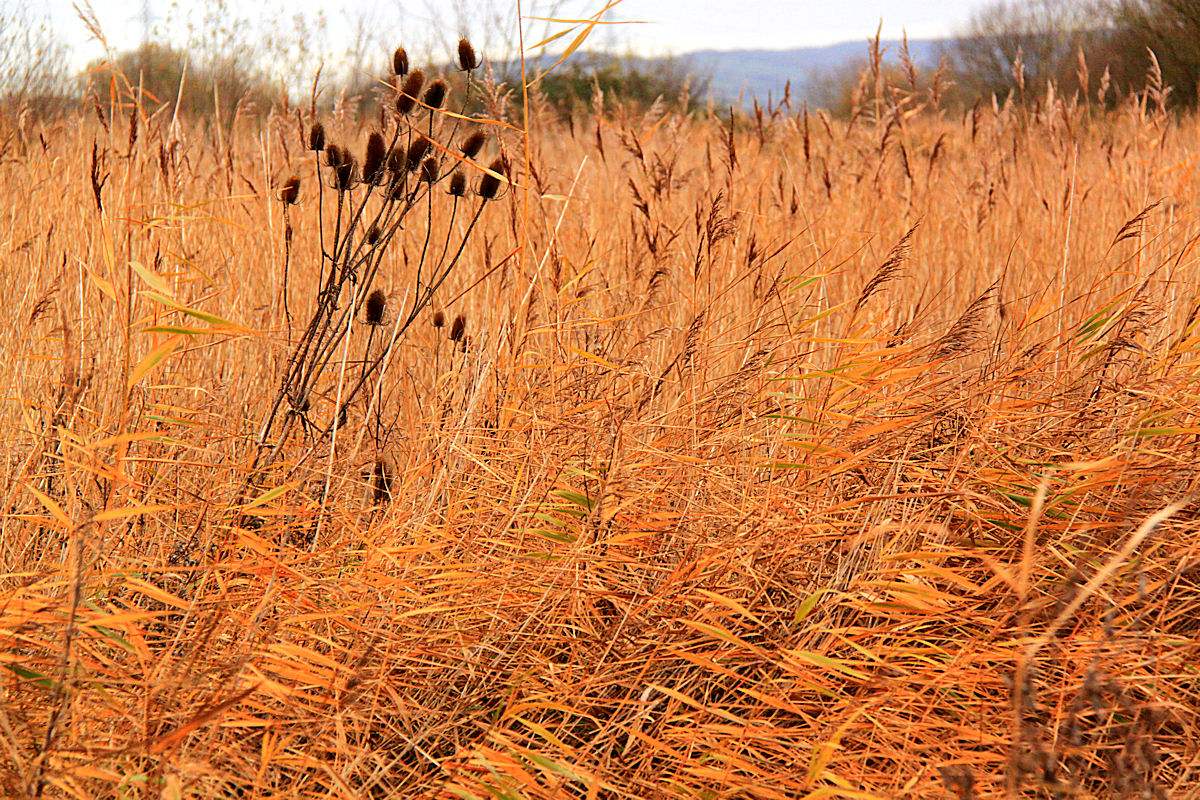
Rich colour in the reed beds even in the gloom of dusk on a grey day
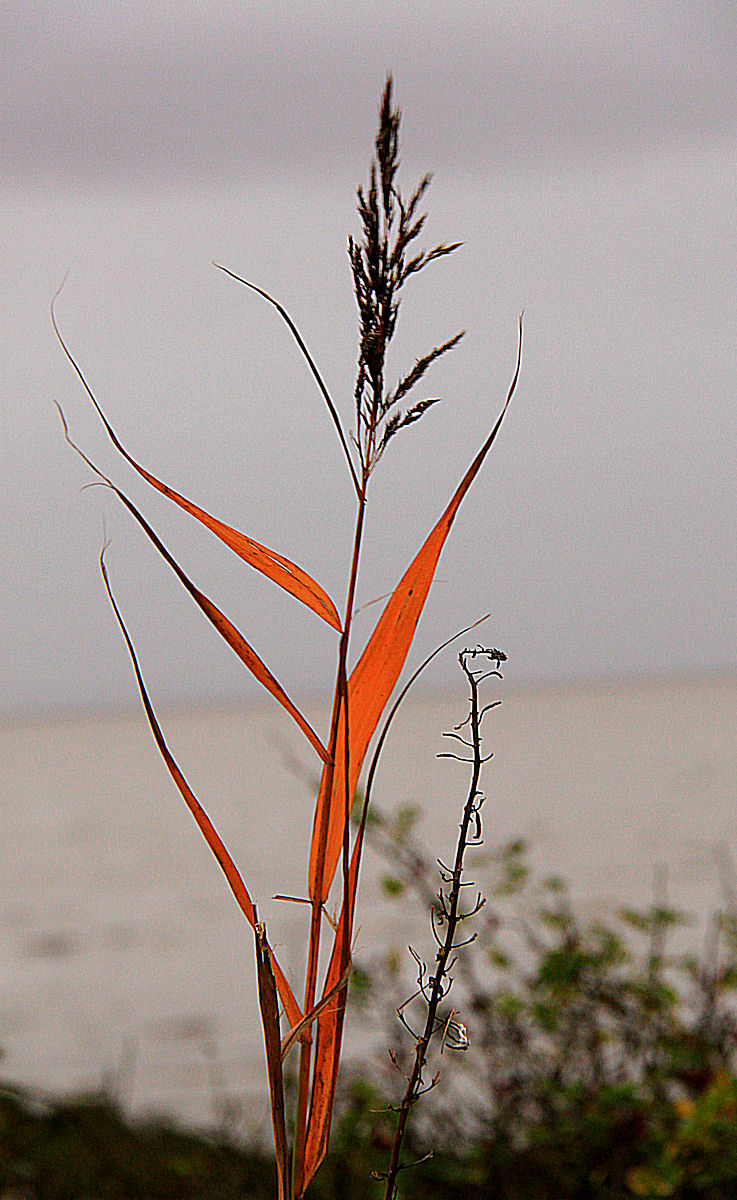
Detail

Almost fluorescent, moss and lichen cover bushes in particularly damp and shady locations
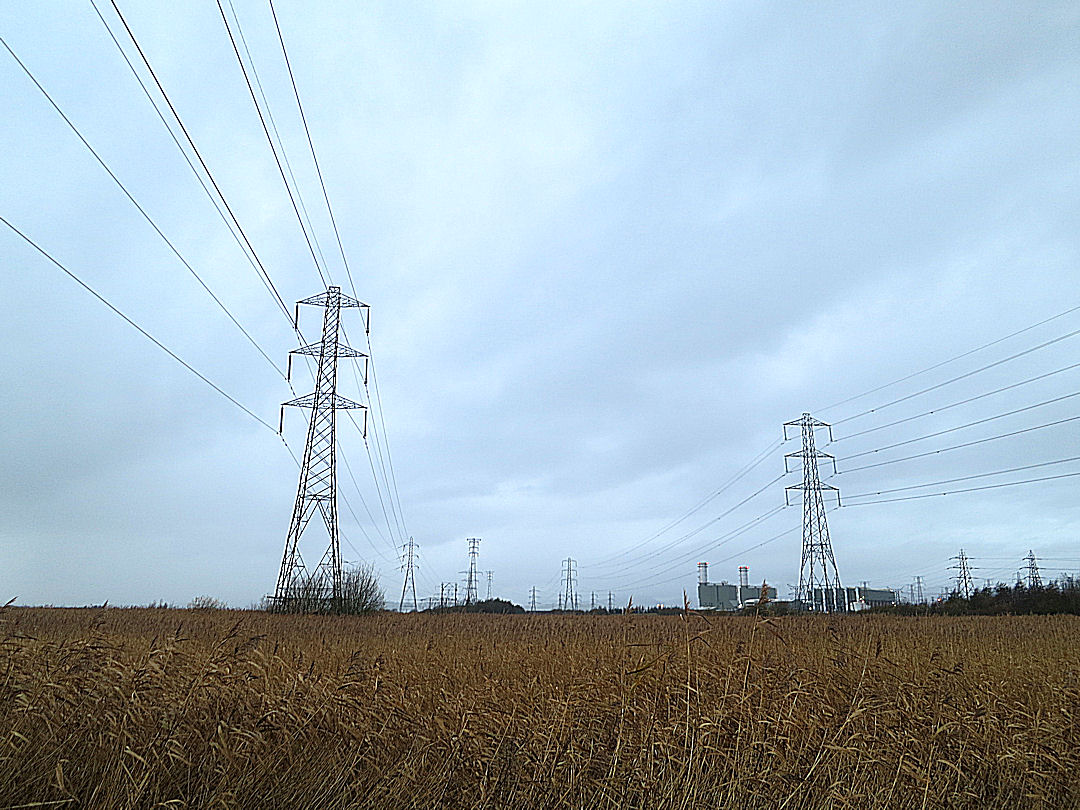
A constant reminder that the Nature Reserve is on the ash-pits of a coal-fired power station.
Posted in Autumn, Grey Britain | Tagged , , , , , , , , , , | 1 Comment

November Daily Blog 24: Footpaths – Grey Britain, Greece, Canadian Rockies.

The weather in the UK has been pretty grim over the last few days with dark grey skies and rain varying between heavy and torrential.  For 4 days now there have been 200 or more flood warnings with the South West of England seeming to be worst affected.  A combination of the weather and the fact that I have been behaving myself by concentrating on trying to sort out my damaged knee by resting it and applying ice-packs and ultrasound three times a day has meant that I haven’t been out a great deal.

So once again I’ve been turning my attention to writing up the diary of my 2012 Greek Odyssey.  I’ve completed the first draft of the 1,500 kilometre Grand Tour in May and June and am re-reading it before printing it off and turning my attention to the second part of the Odyssey from August to October.

It has been ironic to look back at photos of some of the paths to the top of local peaks in the Mani and the Dodecanese while my clothing and boots have only just dried out from walks in the Brecon Beacons. It is also ironic that I’m now starting to think ahead to my trip to the Canadian Rockies in January–February next year.  It will be mostly for the skiing but, as in 2010-11, on my rest days I intend to walk some of the trails which by then will be deep in snow.

Rank the following photos of paths in order of preference. Truth is I like extreme conditions.  Plus 35oC in Greece, minus 35oC in the Rockies.  Hmm!! Difficult choice!

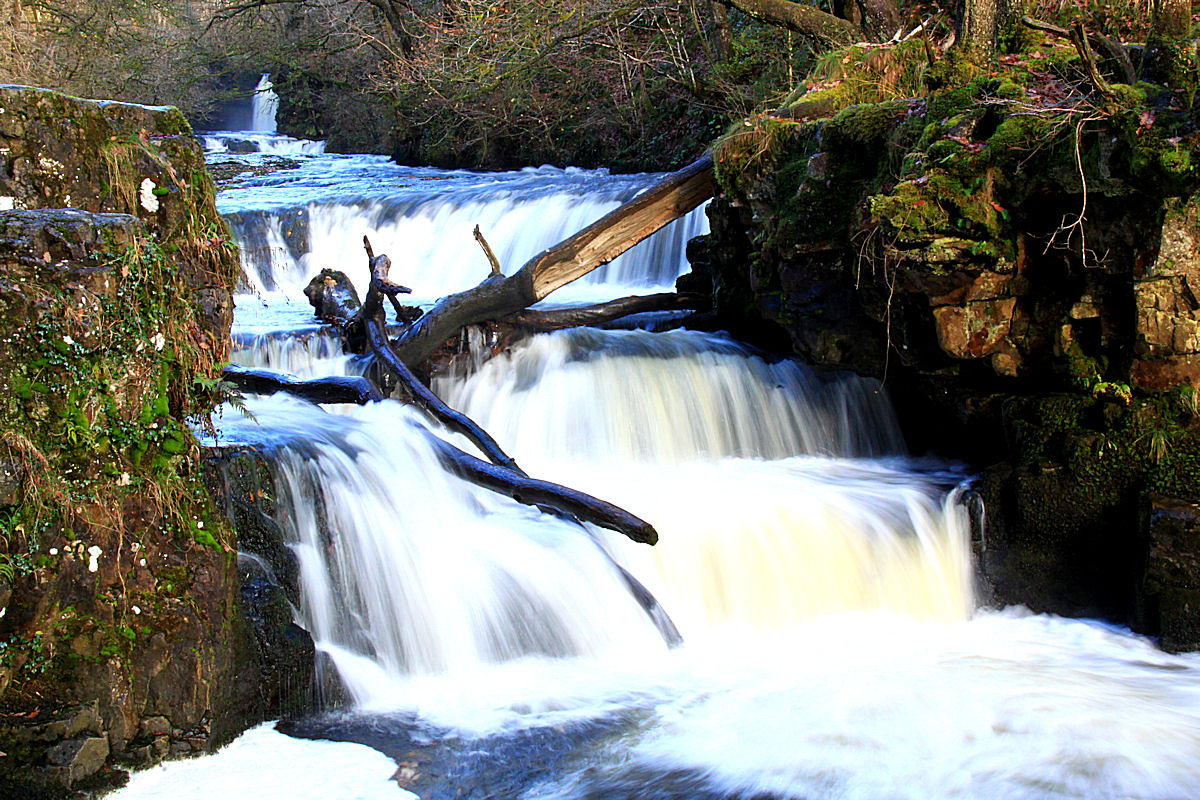
On the Sgwd yr Eira Trail 8 November 2012

The old kalderimi near the top of Profitis Ilias above Areopoloi, 19 June 2012

On the Hoodoos Trail near Banff, Canada, 10 January 2011

x

Posted in Canada, Greece, Grey Britain, Mountains, Winter | Tagged , , , , , , , , , , , , , | Leave a comment

November Daily Blog 23: Exploration and discovery, a new twist.

We rightly admire the explorers of old who sailed off the edge of the flat earth to discover what lay beyond.  Long before the giants of the Age of Exploration such as Cortes, Pizarro, Columbus, Magellan, da Gama, Drake, Raleigh, and many others in the 15th to 17th centuries, went the Vikings in their longboats to North America, maybe natives of South America reached Polynesia on balsa rafts and North Africans sailed to the Caribbean in papyrus boats.  Whether motivated by a quest for wealth, power, prestige, trade, empire … or just to see what lay out of sight, they discovered new worlds.  Well, worlds new to them, the lands they found were already home to others.

Their motivation may have been very varied but one thing all these early explorers had in common was the complete absence of maps.  They set off with no idea what was over the horizon, it was a blank sheet and they drew maps as they went.  Some of the early maps are scarcely recognisable now but gradually the accuracy improved.  It was important when a bit of New Empire was discovered and claimed that it should be properly recorded and coloured pink, or whatever other colour was appropriate, in an atlas.

The urge to ‘boldly go’, to discover new places, is arguably deeply embedded in the human psyche.  I make no pretence of being an explorer, even of the modern satellite-aided genre, but I enjoy rambling around mountains and going ‘off-piste’ especially so in the poorly-mapped mountains of the Greek Dodecanese islands.  As with most places on the planet now some-one has invariably been there before but it’s still fun to ‘discover’ remote, seldom visited places.

In a bizarre twist to the history of exploration a group of scientists from the University of Sydney recently ‘undiscovered’ an island.  It’s shown on Google Earth and Google Maps as ‘Sandy Island’ and in the Times Atlas of the world as ‘Sable Island’ as located about 700 miles east of Queensland in Australia in French territorial waters (based on French governorship of New Caledonia).   The scientists thought it a little odd that the island seemed to sit in waters known to be about 1,400 metres deep at that point and when they went to look …. it wasn’t there.1

So, in complete contrast to the early explorers who had no maps but found islands, this island is on maps but doesn’t exist.

I can’t help thinking that it is in fact the island of San Seriffe2, first reported by the Guardian Newspaper on 1 April 1977 and again in later years including 1978, 1980, 1999 and 2006.  Wikipedia sums it up thus: “San Serriffe is an island nation in the Southern Ocean. Owing to a peculiarity of ocean currents and erosion, its exact position varies. A recent report locating it in the Bering Sea was presumably an error. On 1 April 2006 The Guardian reported that San Serriffe was then just off New Zealand’s South Island, but if the rate of movement really is 1.4 km per year as published, San Serriffe should stay in the Indian Ocean for several millennia.”

My guess is that Sandy Island is San Seriffe which has changed shape, the twin island merging into one, and yet again moving around the Southern Ocean.

Speaking in Western Australia one of the members of the team of scientists, Dr Stephen Micklethwaite, who I have met so I know he exists, “claimed that one of the sources of the world coastline database is the CIA”.  Now they wouldn’t make things up, would they?


1  Sandy Island

http://www.channel4.com/news/scientists-discover-sandy-island-doesnt-exist

http://www.channel4.com/news/scientists-discover-sandy-island-doesnt-exist


2  San Seriffe  http://en.wikipedia.org/wiki/San_Serriffe

Posted in Health and humour, Reflections | Tagged , , , , , , , | Leave a comment

November Daily Blog 22: Advertising, pseudo science and manipulation

More than half a century ago our forward looking English teacher in school included in the curriculum a series of lessons on advertising techniques.  I have forgotten much about grammatical construction and the poems of Alfred Lord Tennyson but I have ever since been very aware of cynical manipulation by the advertising industry:  “Buy this, it will make you irresistible to the female/male of the species”; “Eat this, it’s better than sliced bread”, Buy from us, we are cheaper than our competitors”; “use this toothpaste and you’ll have teeth like a sabre toothed tiger”;  “our pharmaceuticals/health products are  scientifically proven to keep you running around like a spring chicken”  ………..  Anyone who believes even 10% of that guff must be running around like a headless chicken.

Nevertheless, few of us are immune to advertising.  True, if we have done the research we may well have concluded that the global brand is costing more and is no better quality or efficacy than the less glitzy alternative. However, whether we like it or not, when faced with a choice of similar products we know nothing about there is some little weasel inside our brains which tells us that the branded, smartly logoed product we have seen on TV or in magazines will be better than the one we haven’t heard of in a plain wrapper.  It’s difficult to resist and advertisers know this, which is why their aim in many cases is simply to put their brand names in front of us at every conceivable opportunity: on TV; in newspapers and magazines; on street hoardings; in store; through the letterbox as flyers or personally addressed junk mail. The more you see the name the more likely you are to prefer it to the brand you have barely heard of.

Some adverts are irritating but the advertiser continues with them ad nauseam.  A TV advert for a price comparison web site starring a Welsh opera singer Wynn Evans launched as part of its marketing campaign in 2009 was soon voted the most annoying advert and now, 3 years later, is widely considered to be the most annoying advert of all time.  Yet the jingle became an ear-worm and was very successful in driving the company’s rapid business growth.  The opera singer is now reported to be approaching the finale.  We wait to see.

However, though that and other adverts may be irritating, they do not arouse my contempt, unlike adverts recently appearing for pet food.  I’ll nail my colours to the mast straight away and say that I regard the pet industry in the UK as immoral to the point of obscenity.  It seems we spend more than 3 billion a year on our pets, £1.5 billion of that on food.  I temper my prejudice by admitting that there is good aetiological evidence that having a dog or a cat in the house when children are very young (up to 18 months is optimum) helps to reduce the likelihood of asthma.

But the pet industry goes far beyond that.  It is common to see one side of an aisle in supermarkets given over to pet food.  In the last year or so manufacturers looking to maintain or increase market share have started marketing pet foods on the basis of ‘healthy eating’, meat which is grilled to reduce the amount of fat.  Two recent adverts have gone even further, and to my mind, have gone beyond the pale.  One claims that their food gives a dog its necessary ‘4-a-day’, blatantly cashing in on the (human) health slogan ‘eat your 5-a-day’.  That campaign was sponsored by Government to promote good health outcomes.  Though now shown to have been based on wrong interpretation of the science it still persists because encouraging the eating fruit and veg helps achieve a balanced, healthy diet.  It has entered the language as a catch-phrase and is generally reckoned to be A Good Thing To Do.  But the 4-a-day for your dog has no scientific basis, it’s merely a cynical marketing ploy.  You can almost hear the discussion in the meeting when it was agreed: “If we pitch it at 5 a day it will look too much like the fruit and veg thing and people will see through it.  We can’t go for 6 because that’s looks like too many.  So let’s go for 4.  All agreed?”

The other advert which grates with me is marketing food specifically for cats which have been neutered in order to reduce weight gain and to protect the urinary tract.  What!?!?! For years cats have been fed on food which did not distinguish between those which had had the snip and those which hadn’t.  Were they overweight with diseased bodies?  I think not.

I fully agree that we should all be free to spend our money on what we want.  It just saddens me that so many choose to spend it on animals when there is so much need among people.

For years products have been marketed on the basis of pseudo-science.  The first one I remember was an advert in 1960 for toothpaste with ‘hexachlorophene in the stripes’.  That was about the time our English teacher was opening our eyes to the lies and manipulation behind advertising and marketing.  One of the most valuable life-lessons we could have had.  More than ever relevant today when the pseudo science is common-place.

Posted in Grumpy Old Men, Health and humour, Reflections | Tagged , , , , , , | Leave a comment

November Daily Blog 21: The news. Informative? Depressing? Trivial? Necessary!

I used to be addicted to TV news, pride myself on knowing what was going on in the world..  I would hush the family so I could watch catch every morsel of it as we ate our evening meal.   I would watch it again at the end of the evening giving it the same rapt attention as 3 hours previously even though it is unusual for any new news to have cropped up in such a short time.  My wife and I kept to the same pattern when the kids grew up and left home.  I took early retirement and for 4 years the TV news formed the framework for mealtimes and thus for the day, with the addition of the mid-day news.

After my wife died I still kept to the same pattern but then, viewed from a different perspective, a different personal context, my attitude towards it changed.  Instead of turning it off when I got hot under the collar because Margaret Thatcher started preaching or patronising I would turn it off because I found it depressing or superficial, irrelevant.

When I went to Greece for the summer 6 months later I abandoned the news completely, developing a new framework for the day based on activity.  That meant that mealtimes became much more flexible.  True I still ate breakfast at more or less the same time but my mid-day snack was taken in the mountains when I got hungry, an early evening drink was inserted into the framework depending on what time I arrived back, evening meal a couple of hours after that.  The news nolonger played any part in my day.

I could have watched news on Greek TV or on the BBC 24-hour service on my netbook.  But I didn’t. Deliberately.  I had enough to contend with adjusting to new circumstances and I wanted to keep all that depressing stuff out of my life. When I came home in October 2010 the new flexible framework stuck and the TV stayed turned off.  It still is.

Shutting off from what is happening in the world is frankly inexcusable and my conscience started to tell me I should take steps to be better informed.  When the owner of a hotel in which  I stayed in the Mani in June this year showed me to my room he proudly pointed out that there was satellite TV and I could watch BBC news.  I knew he would ask me if I had watched it so I turned it on and tuned it just as the loop on the 24-hour news channel got back to the beginning.  The top item on BBC news that day was that the Duke of Edinburgh had been unable to attend one of the Queen’s Jubilee functions because he had a bladder infection.  Sorry guys, if that’s top of national and international news you can keep it.  Instead I watched the news on Greek TV when I was in a coffee shop or a taverna.  That at least was highly relevant what with the elections and the state of the economy.

Now that I’m back home I find that the flexible framework to the day rarely coincides with news on the TV and, quite frankly, I still can’t take half an hour of national and international news, much of which I find depressing, followed by half an hour of local news, much of which I find trivial.  So now I make an effort to listen to the news on BBC Radio 4 which each hour on the hour concisely summarises the main items and I can decide whether any of them are worth tuning in for more detail.

On Tuesday one of the lead items was that a ceasefire between Hamas and Israel was imminent, brokered by Egypt with Hillary Clinton flying out to add weight with an announcement expected that evening.  Heartening news indeed. Wednesday morning and the lead item was that Hamas had claimed responsibility for a bomb on a bus in Tel Aviv and that Palestinians had come out onto the streets in Gaza to cheer. One Middle East expert interviewed on R4 put it down to each side establishing their negotiating strength, a final violent thrust to gain advantage.  If true, and it might well be, such a cynical negotiating tactic targeting innocent people is deplorable.  This doesn’t make me angry, it makes me sad.

As in so many internecine, ‘local’ conflicts there is right and wrong on both sides.  It is impossible to allocate blame.  The only certainty for me is that it is wrong to kill people just because they are from a different culture.

With such constant reminders that many people in the world regard it as not only legitimate but praiseworthy to kill those from a different culture the temptation is to stick my head back in the sand.  But I won’t.  I’ll try not to let it make me depressed and I’ll be cheered and encouraged when something good happens.

The world isn’t a computer where you can hit the ‘redo’ button and wipe out past actions. History has happened and protagonists must come to terms with that if bloodshed and suffering are not to become normalised.  It is good to focus on successes such as South Africa after apartheid and Northern Ireland.  Not perfect but considerably better than they might have been.  I’ll keep listening ….  and praying.

Posted in Greece, Grumpy Old Men, Reflections | Tagged , , , , , , , , , | 1 Comment

November Daily Blog 20: knees, frustrations, running to stand still

Some days don’t go as planned.  Some days don’t bear any resemblance to what was planned.  Some days seem to just go haywire, full of activity but with no forward momentum.  Running fast to stay in the same place.  Tuesday was one such day.

It got off to a slow start because I was awake until after 03.00 trying to get things done on the internet with the connexion dropping out at random and very disruptively. I got up only half an hour later than usual but was very sluggish.

I had resolved that I had to seriously address the problem of my damaged knee, not only avoiding exercise which would worsen the problem but taking positive steps to speed the healing process.  I dislike admitting it but beyond the age of 35 the body’s healing process gets progressively slower …. and I’m well beyond 35.  I’m now resolutely doing exercises to strengthen the muscles which hold the knee stable and, following the discussion with my physio friend from church, I’m also determined to ice it at least 3 times a day.  He also kindly loaned me an ultrasound machine so I can use that 3 times day as well which should accelerate the healing process.

Icing and ultrasound treatment satisfyingly completed in parallel with breakfast I then found that the internet connexion had dropped out big-time.  I walked out on it, assuming that it was a network fault which the internet provider would get round to resolving, and went to the shops to buy ingredients for lasagne for when the family come for a meal on Wednesday. (I make a mean lasagne)

The retail therapy failed.  The internet problem was still there when I arrived back burdened down with minced beef, strong cheese and milk and a whole load of impulse buys of ‘special offers’.

A phone call to the IP set in motion a chain reaction which took up most of the rest of the day.  A 30 minute call to check my security details established that the basics were all in place beginning with confirmation that the modem was plugged in and the fuse didn’t need changing.  Then line tests and a series of txt messages to my mobile over an hour or more to confirm that there was no fault. I begged to disagree.

The final txt message came just as I was at a crucial stage in making the lasagne, instructing me to phone from my mobile, not my landline, to the help desk on a different number.  That call lasted over an hour and had me grovelling under the desk to unplug ethernet cables, re-plug said cables, go on-line with a wired connexion to reconfigure the modem …. and then the credit ran out on my pay-as-you-go mobile.

In despair I went back to the lasagne and couldn’t remember whether I had added the oregano or just taken the bottle out of the cupboard.

The trauma reached a peak when at 16.30 the landline and the mobile rang simultaneously.  The mobile call was a recorded message from the provider offering me ways to add more credit to the account.  The landline call was from an old college friend confirming arrangements to go out for a meal in the evening. Aaaaagh!

Eventually, a call-back, few final tweaks and the lady in the call centre  wished me a pleasant evening and the ordeal was over.

At the end of a day of frustration and frenetic activity I was back at square one.  The internet connexion now seems to be working consistently.  Given that I regard a computer and the internet as tools, like pen and paper, not ends in themselves, I seem to have expended a lot of mental energy getting back to my starting point.  Which is good. No forward progress but I haven’t gone backwards.

Over the meal in the evening my friend opined about his problems with getting a repair to water damage to his house, I wearily recounted my internet problems, but we shared a common relief at finally having reaching a satisfactory outcome.

Posted in Grumpy Old Men, Reflections | Tagged | Leave a comment

November Daily Blog 19: knees, lifestyle choices, mental well-being

Walking in the weekend sunshine was very enjoyable but by the time I dropped back down the ridge to the house on Sunday afternoon I was struggling with my damaged knee ligament and knew I had done it no favours.  It had been stressed more than I expected clambering around off the path down by the waterfalls on Saturday and, had I been sensible, I would have resisted the temptation to go out on Sunday.   As it is, the healing process is almost back to square one.  But not quite.

Earlier in the week I had walked to my local pub to meet a friend for a pint and had become aware that the natural pronation of my ankle (tendency to turn over inwards each step) seemed to be more pronounced and was irritating my damaged knee.  When I examined the walking shoes I was wearing, a cheap pair I have had  for a long time and keep for urban wear, it was clear that the heels were very worn down on the inside and increasing the tendency to tilt the ankle inwards.  I reckoned that that was making the knee worse as it put increased pressure on it so when I arrived home I took the shoes off at the gate and tossed them into the rubbish bin to be collected next morning.  Hence the trip to Cardiff to buy a replacement pair.

I arrived home from the walk on Sunday in time to clean up and make the evening service in church and was very conscious of pain in the knee the whole time.  Afterwards I chatted to a guy who is a physio and he said that the cause of the problem could have been the shoes, a gradual deterioration rather than one traumatic incident.  He also hammered  home what I had been told previously that I should avoid walking on uneven surfaces until it has cleared up.  More fool me for not heeding the advice first time round.

But it set me thinking, how typical it is that we ignore what we know is good for us, not just in respect of minor injuries but in terms of lifestyle choices which we know are likely to affect our health.  The obvious example is smoking, not, I hasten to add, that I ever have, but millions do.  The evidence is now regarded as irrefutable that smoking increases the likelihood of developing lung cancer, is a risk factor for heart disease and causes emphysema and other bronchial complaints.  Not only does it shorten life but it reduces quality of life prematurely.   So why do people do it?   Is it some sort of nihilism?

Yet most of us do things which to a greater or lesser extent are potentially deleterious to our health and well being.  I remember chatting to a guy while resting in my kayak in an eddy at the National Whitewater Centre at Holme Pierpoint who very gloomily told me that my two major sports at that time, white water canoeing and rock climbing, made it likely that I would develop arthritis in my hands.  Did I stop doing either?  A few years later I reduced the amount I was doing not out of concern for my health but because I took up paragliding and had less time.

So why do we make these decisions to carry on with what we know is potentially harmful?  I reckon that it’s to do with enjoyment and that in turn is to do with mental well-being.  If I did nothing but look after the house and garden, meet up with friends for meal or a drink, become a mountain voyeur, it would be like having part of me amputated.

The urge to do these things is there but I suppose I must admit that at times it makes sense to lay-off for while.  Therefore, for the next week my blog posts will be from the safety of the house and garden.  And level footpaths.

Posted in Health and humour, Reflections | Tagged , , , , | Leave a comment

November Daily Blog 18: broad views and small details in the Brecon Beacons National Park

Sunday was indeed another good day.  Sunny days in Grey Britain are rare, opportunities not to be missed.  So, despite warnings to rest my knee, I walked up the ridge at the southern tip of the Brecon Beacons National Park to the Goose and Cuckoo for a pub lunch with a friend.

The sunshine couldn’t take the chill out of the air when we set out but the climb from the canal at 84 metres ASL steeply up to the Folly Tower and then up to Mynydd Garn Wen, at 425 metres the high point on the ridge, soon had us abandoning outer fleece layers.  A tongue of mist lay like a giant white snake down the length of the Severn Estuary, blanketing Somerset and Devon from sight but views in other directions were as good as they get.  As well as nearby mountain ridges Pen y Fan and Corn Du, the high peaks of the Brecon Beacons, came into view to the northwest as we left Garn Wen behind.  The Malvern Hills could be seen to the northeast and the rim of the Wye Valley somewhat hazily to the east.

With the sun on our backs the walk along the ridge top was very pleasant and we didn’t hurry.  In places there was a thin skin of ice on some of the pools of water which had been out of the sun.  The drop down to the Goose and Cuckoo from the ridge-top path took us into deep shade and a different world with pockets of white hoar frost.

I usually walk on my own but walking with a friend gave opportunity for conversation.  That, the frequent stops to photograph both broad perspectives and small details, plus increasing problems with my damaged knee meant that it took nearly 3 hours to reach the pub and a bowl of very fine bean soup and a crusty roll sitting by the woodburning stove.


The Monmouthshire and Brecon Canal at the point where it becomes the eastern boundary of the Brecon Beacons National Park


On the way up to the ridge top through the fields


The beginning of the open common


Looking over the Folly Tower to the ridges to the east


Photographer on top of Mynydd Garn Wen looking north


Looking north from further along the ridge to the Skirrid and Abergavenny far below


A section of ridge-top path so badly damaged by illegal off-road trial bikes it has now become a permanent pond


In places small pools of water shaded from the sun have a thin layer of ice


…….. while the weak winter sun can’t melt the thin ice even on some larger pools


In permanent shade, there are pockets of hoar frost on the ancient ‘sunken way’ from the ridge-top down to the pub


While lower down water droplets are still there even after two days without rain

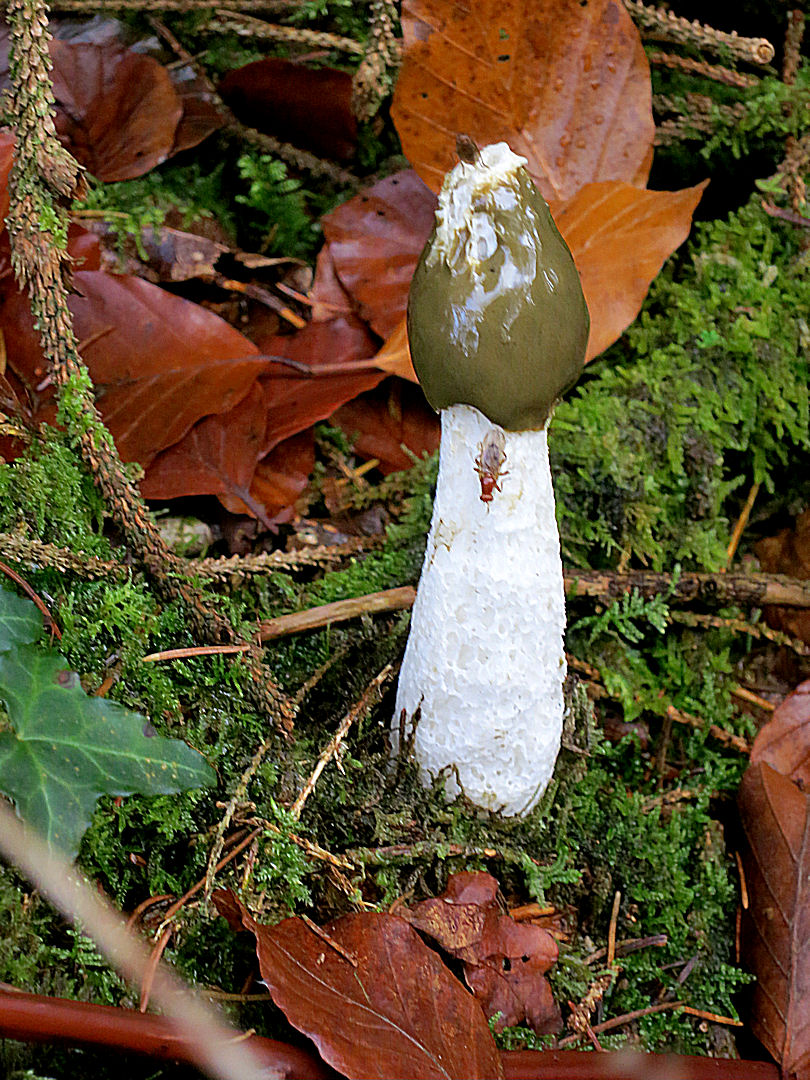
Named by a French mycologist with a sense of humour, the Phallus Impudicus or Common Stinkhorn

Apologies for the delay in posting photos, caused by internet outage for  9 hours.  

Posted in Autumn, Monmouthshire, Mountains, Pontypool, Uncategorized, Wales, Winter | Tagged , , , , , | Leave a comment

November Daily Blog 17: waterfalls, footpaths and shepherds

On Friday night grey and gloom was forecast for Saturday morning clearing to sunshine in the afternoon.  So I planned a return visit to ‘Waterfall Country’ further west in the Brecon Beacons National Park.  Despite the forecast I opened the curtains to mostly blue sky with yet another sliver of red between the bank of cloud and the ridge-top.  Optimistically I chose to ignore the old saying about shepherds and red sky in the morning and headed west on the Heads of the Valleys Road.  It clouded over.

But I stuck to my guns, parked the car, at the information centre in Pontneddfechan (Bridge over the River Nedd Fechan) and set out to walk up the eponymous river to a series of waterfalls marked on the map.

Unlike the path to Sgwd yr Eira with its wall-to-wall mud the Elidir Trail has been much improved and is well maintained with steps and metal duck-boards at key points.  Boots are still needed but on the path itself the mud is superficial.  Of course it’s a rule of photography that the best shots are to be had by going off-piste, climbing crags or, as today, squelching through deep mud and skating over expanses of slimy rock pavement.  It was great fun and as a bonus by mid afternoon the cloud cleared and the sun came out.

The coincidence of a good path, a weekend and a sunny afternoon meant that there were a good number of people on the path: taking all shapes and sizes of dogs for a walk, taking children for a walk, or like me, taking a camera for a walk.  In towns and cities no-one looks at strangers let alone greets them, with the exception of Crocodile Dundee in New York, but in the mountains it’s a universally accepted courtesy to say hello and maybe exchange a few pleasantries.  Ignoring someone is rudeness.  So it was on the Elidir Trail today.  In places only a single person width, given the fact that it skirts the edge of a precipitous drop into the river, people would wait for each other to pass, call dogs and children to heel, simply act in a thoroughly considerate and pleasant manner.  A group of girls anxiously enquired after my well being when they saw me slithering about on the smooth rock platform at the foot of one falls.

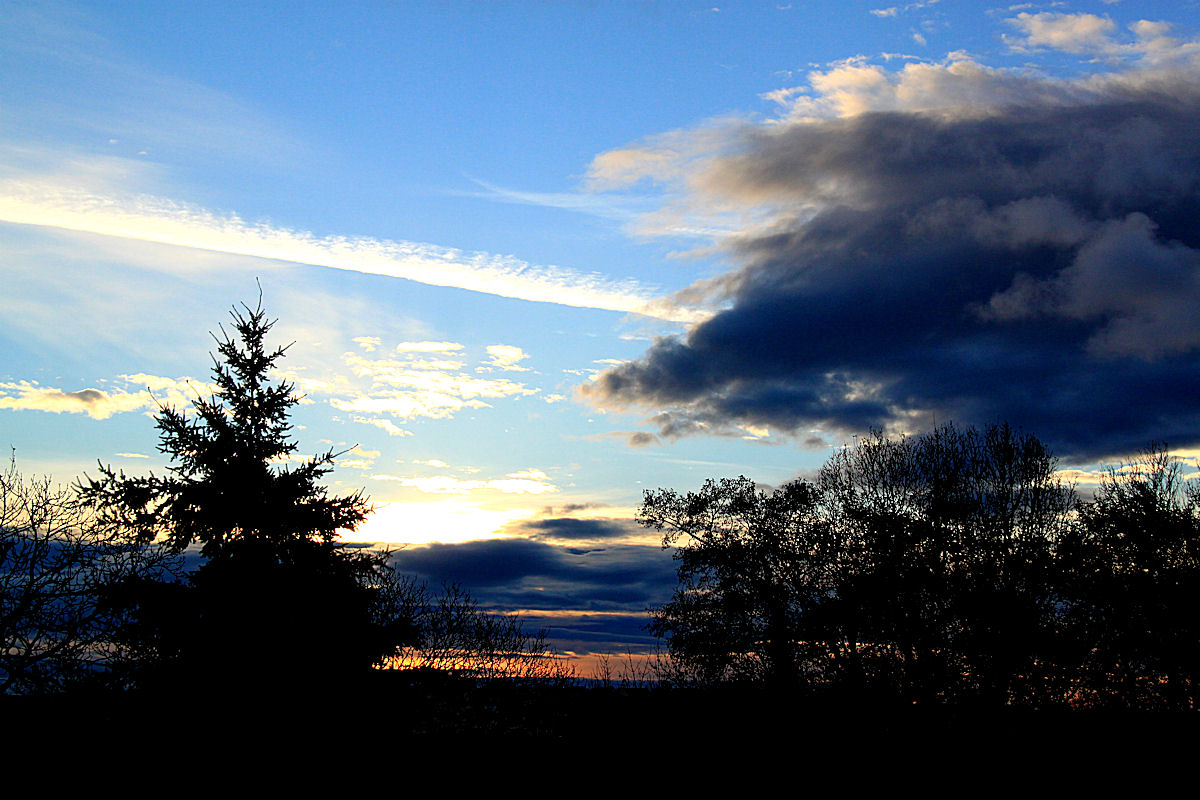
On the way home I noticed that the setting sun behind me had set the sky on fire so I drove to the top of the ridge behind the house for a better view.

I reckon I’ll believe the old saying about shepherds and red sky night.  Should be another good day tomorrow.

View from the early morning balcony: blue sky and a sliver of red

steep drop down to the river

One of the side streams tumbling into the river below

The sun lights up the mossy trees and rocks

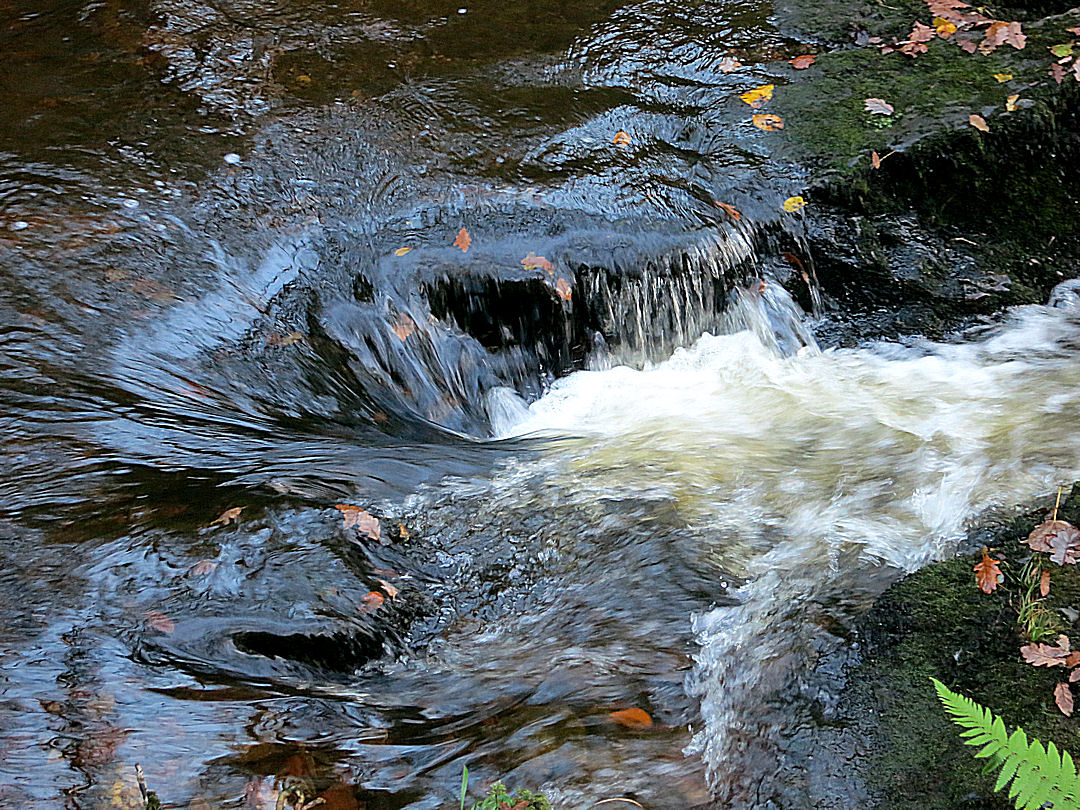
Detail of one of the minor rapids

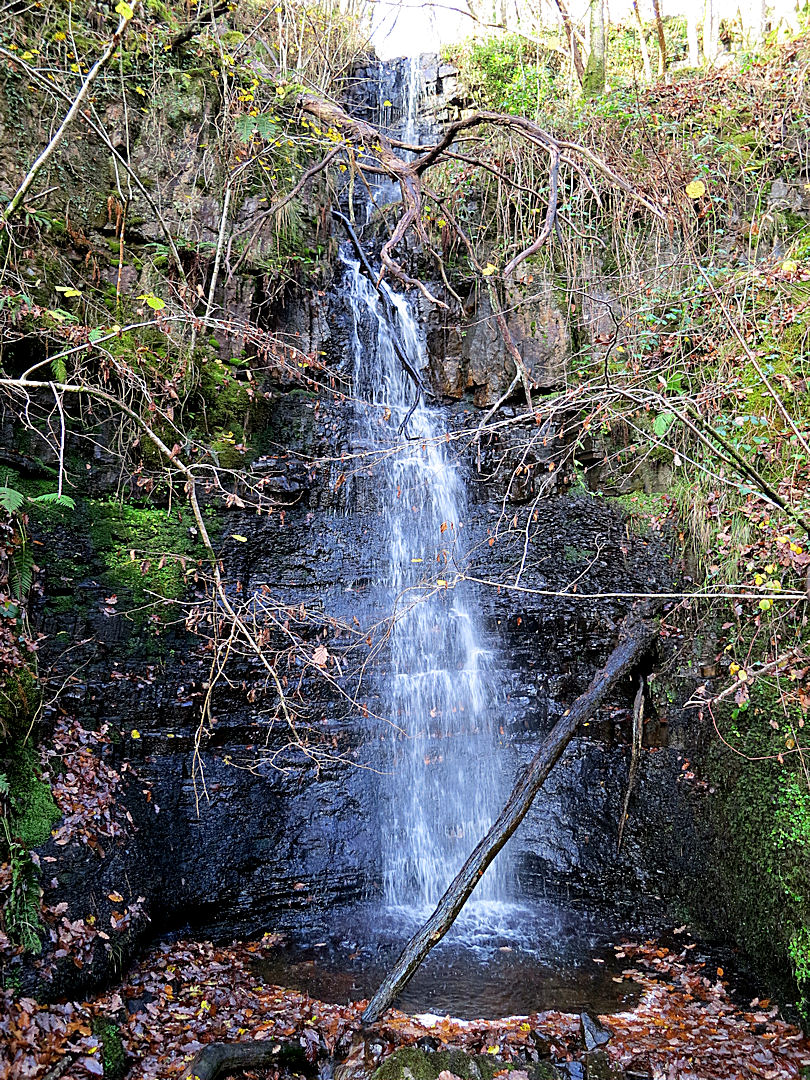
Sgwd Gwladys

Faster shutter speed freezes the action and shows the soil washing down after heavy rain

Sgwd y Bedol

Trees washed down in flood

Sgwd Dwli

View from the ridge-top, red sky at night


Posted in Autumn, Mountains, Wales | Tagged , , , , , | 1 Comment

November Daily Blog 16: feuds and buses

When I arrived home after spending the summer in Greece I start to turn the daily blog into a diary partly to keep the memories alive as long as possible and partly to remind me in years to come (assuming that there are years to come) of what I did and how places looked.  I’m not hurrying the process.  When the weather is as gloomy and grey as it has been again on Friday it’s very pleasant to look back at the photos of blue skies, blue seas and bleached mountains.

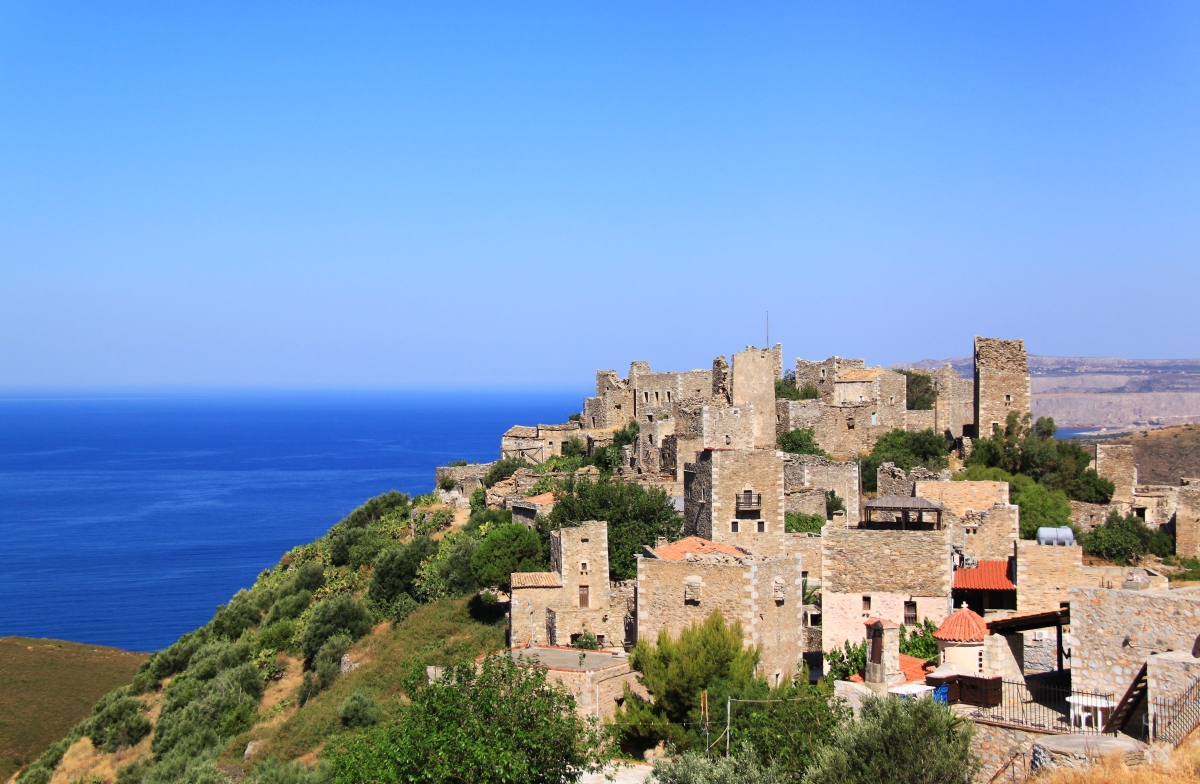
Today I have been writing up Sunday 24 June, nostalging about the day I went to Vatheia, the archetypal tower-house village in the never-conquered far south of the peninsula. The tower houses were built not to resist invaders but from which to attack each other, family against family, in sometimes decades-long blood feuds triggered by some perceived slight or disrespect.  One thing which I wrote then was that: “It is amazing that people should have lived in these towers, tightly crammed in cheek by jowl so close physically and yet so distant from each other socially”.   Not surprisingly with such a naturally aggressive people, the Deep Mani was never occupied by invading armies and it was clan chiefs from here which spearheaded the fight for Greek independence from the Ottomans in 1821.

The tower-house, blood-feud village of Vatheia from above

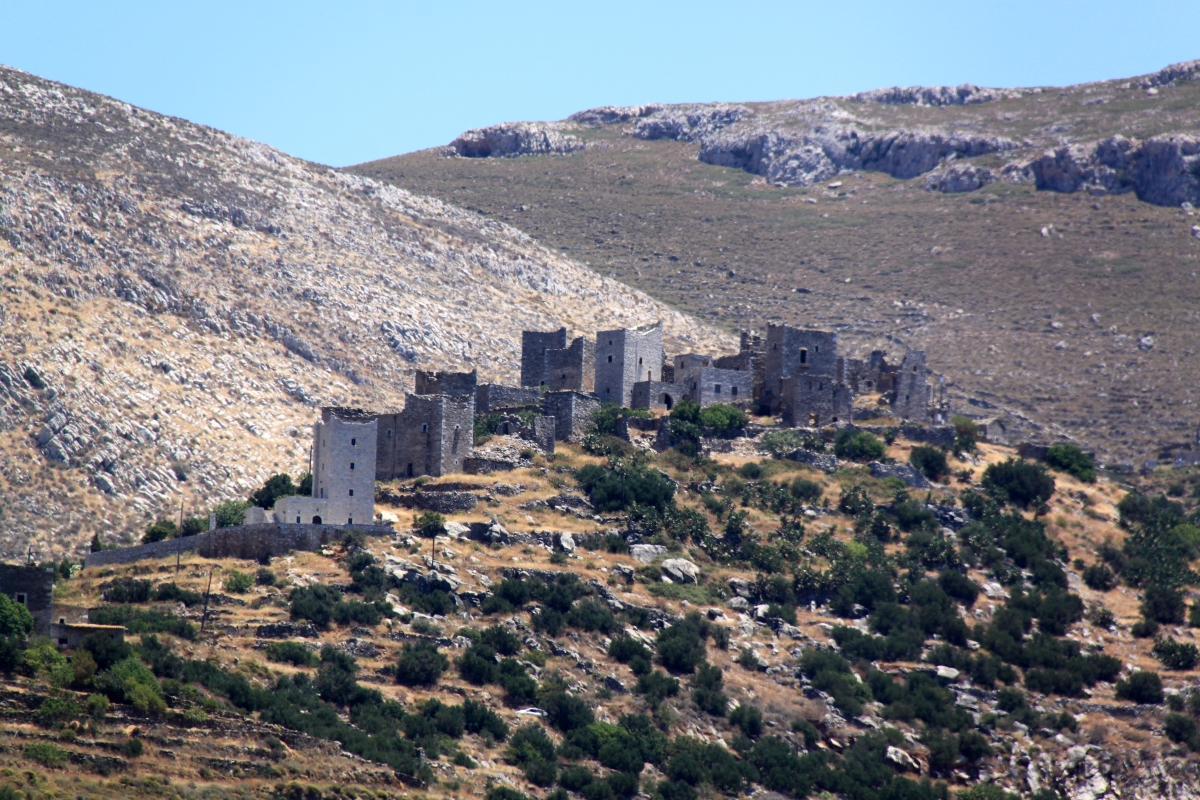
Looking back up to its craggy hilltop setting , mountains behind

PICIt was almost as misty on Friday as on Thursday.   When I opened the curtains the field on the other side of the Monmouthshire & Brecon moat was just visible beyond the garden but nothing further, the other side of the valley lost in mist and drizzle.

My Thursday afternoon escape to Cwmbran to buy a new pair of walking shoes had failed, so still feeling hemmed in, I planned an early morning escape on Friday to an outdoor gear megastore on the outskirts of Cardiff.

For those who don’t know, I should explain at this point that some years ago Wales pioneered a scheme for issuing Bus Passes free to those over 60.  This has had a dramatic effect. Buses are now often full and few more so than the X3 between Abergavenny and Cardiff, which just happens to stop at the end of my road and outside the afore-mentioned megastore.  So no marginal cost to my shopping.

But more than that, what struck me yet again on the journey there, reinforced on the way back, was the social role that the bus now plays.  On the way home there was only one spare seat by the time we left the outskirts of Cardiff.  People were chatting with neighbours and friends, exchanging anecdotes about where to find comfy shoes on the sale, a new place to have a good cup of tea, enquiring after grandchildren, or griping about the length of the waiting list to have a bunion removed on the NHS. Nothing could have been further removed from the tower-house villages of the Mani.  True it isn’t under a Mediterranean sun but at least there isn’t a legacy of firing canons at each other’s houses.

It’s good to talk.

Posted in Greece, Grey Britain, Reflections | Tagged , , , | Leave a comment