Vancouver: surviving a grey, wet Family Day

In his book ‘Notes from a Small Island’ Bill Bryson records that when he arrived one Sunday in Blaenau Ffestiniog in North Wales that it was raining and that it was closed (I paraphrase from memory because someone has borrowed my copy which I read many years ago).

On Monday, after a gloriously sunny Sunday in a Vancouver thronged with people ……. it was raining and it was closed.

My hotel was ideally located for exploring on foot.  On the Sunday I had crossed False Creek immediately to the south via Granville Street Bridge and then walked along The Seawall promenade to English Bay.  On Monday I headed north to Canada Place on the other side of the peninsula with the intention of following The Seawall westwards from there to Stanley Park and then south to English Bay and back to the hotel.

The contrast could hardly have been greater.  There was a heavy drizzle, the kind of rain which wets you through without noticing until it is too late, and the cloud was so low it shrouded the tops of the tower blocks.  And the streets were deserted, the shops, the offices, the coffee bars, the Art Gallery, even the Canada Place ‘Welcome Centre’ were all closed.

I was particularly disappointed that also closed was the exhibition to commemorate the 200th anniversary of the War of 1812.  No not the Napoleonic War.  That was going on in Europe but in that year the newly fledged USA invaded Canada, a war about which little is heard of in Britain but the outcome of which reinforced Canada’s pride in nationhood and secured a more dignified place for the indigenous population compared with the USA.

It seemed very odd that on a Monday morning I was virtually the only person out and about in Downtown.  Was every Monday like this in Canada outside of ski resorts?  Or did I just happen to be there on a public holiday?  Eventually I found an open coffee shop near the seaplane terminal and enquiry soon elicited the fact that it was indeed a public holiday, Family Day.

After a caffeine fix I continued rambling as I had planned, clicking away with the camera despite the pervading clagginess and complete absence of sunshine.  There were others out and about in Stanley Park at the tip of the peninsula but not in large numbers given that Downtown was almost completely closed.  I guessed that many of the city’s residents had headed up to Whistler or somewhere else out-of-town.

Not what I had expected but it did not diminish my view of the city.  I’m back home now and trying to come to terms with the contrast.  I certainly hope to return to Vancouver and spend longer exploring it.  Hopefully in the sunshine.

Ice rink at the University, one of the very few places open Downtown on Family Day
Ice rink at the University, one of the very few places open Downtown on Family Day

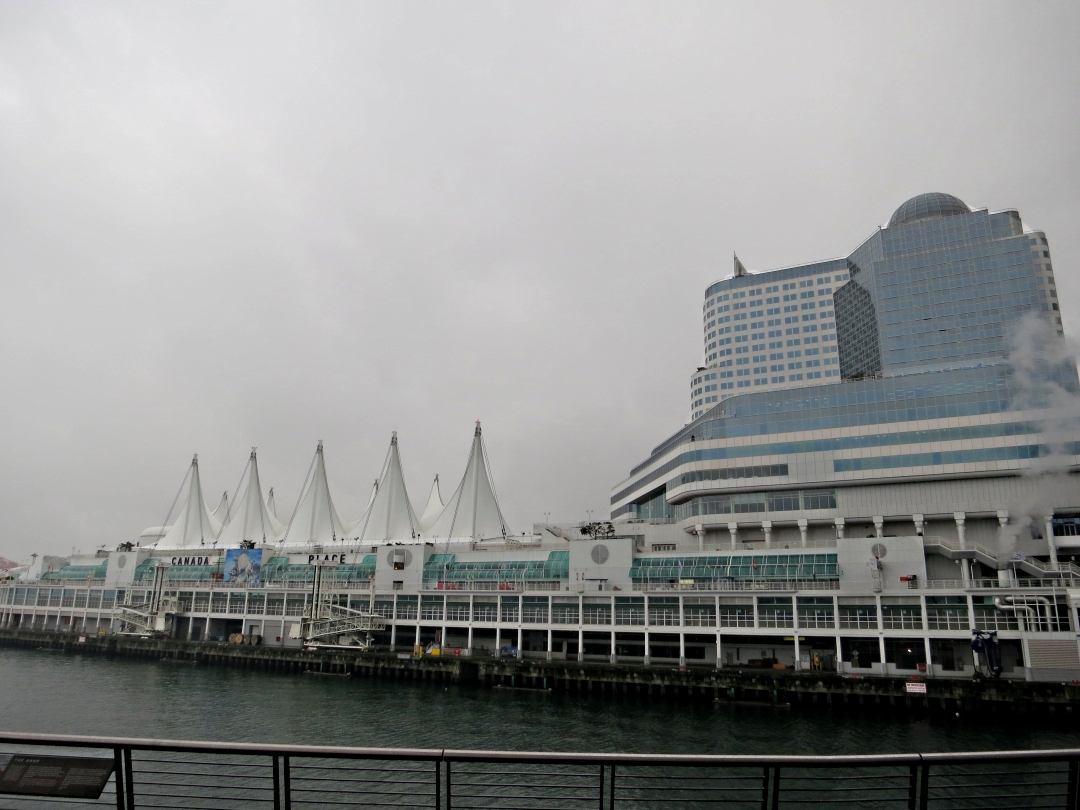
Exhibition Centre East at Canada Place, built to represent an ocean liner .... and all closed up on Family Day

Exhibition Centre East at Canada Place, built to represent an ocean liner …. and all closed up on Family Day

Part of the seaplane terminal between Canada Place and Coal Harbour

Part of the seaplane terminal between Canada Place and Coal Harbour

'The Light Shed', sculpture representing a freight shed which once stood at Coal Hartbour

‘The Light Shed’, sculpture representing a freight shed which once stood at Coal Harbour
A bit of colour in a grey scene
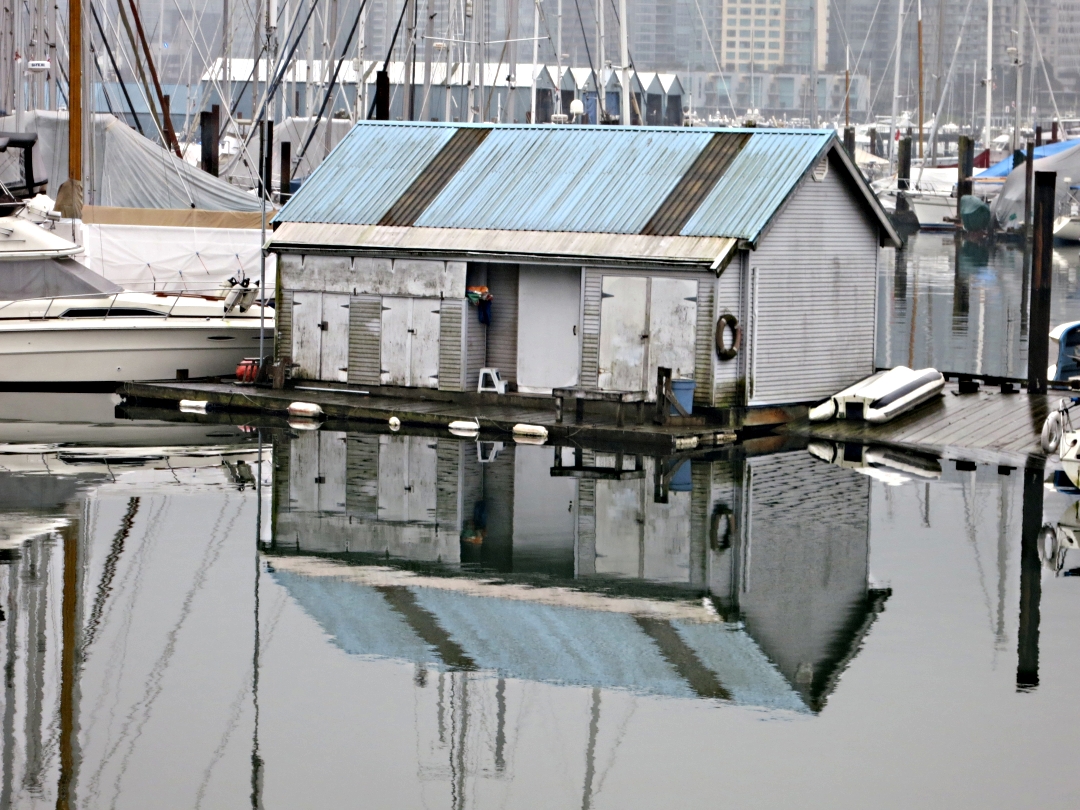
A bit of colour in a grey scene

Pale reflection, fabulously tranquil
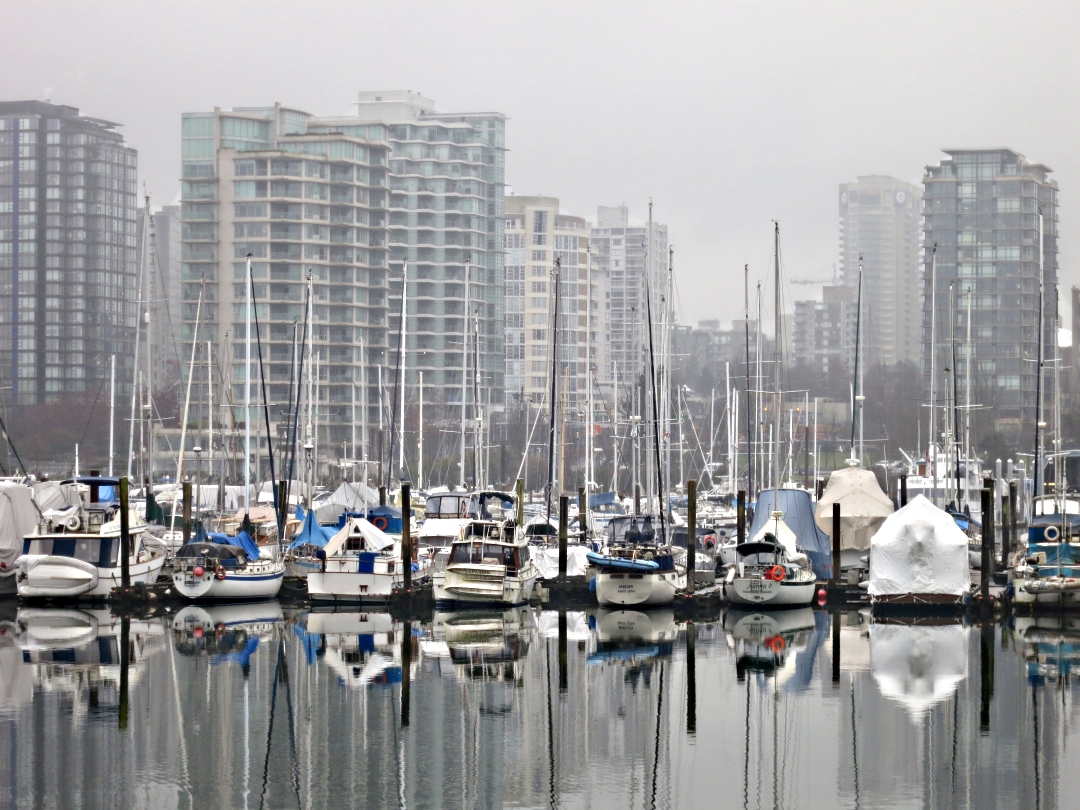
Pale reflection, fabulously tranquil

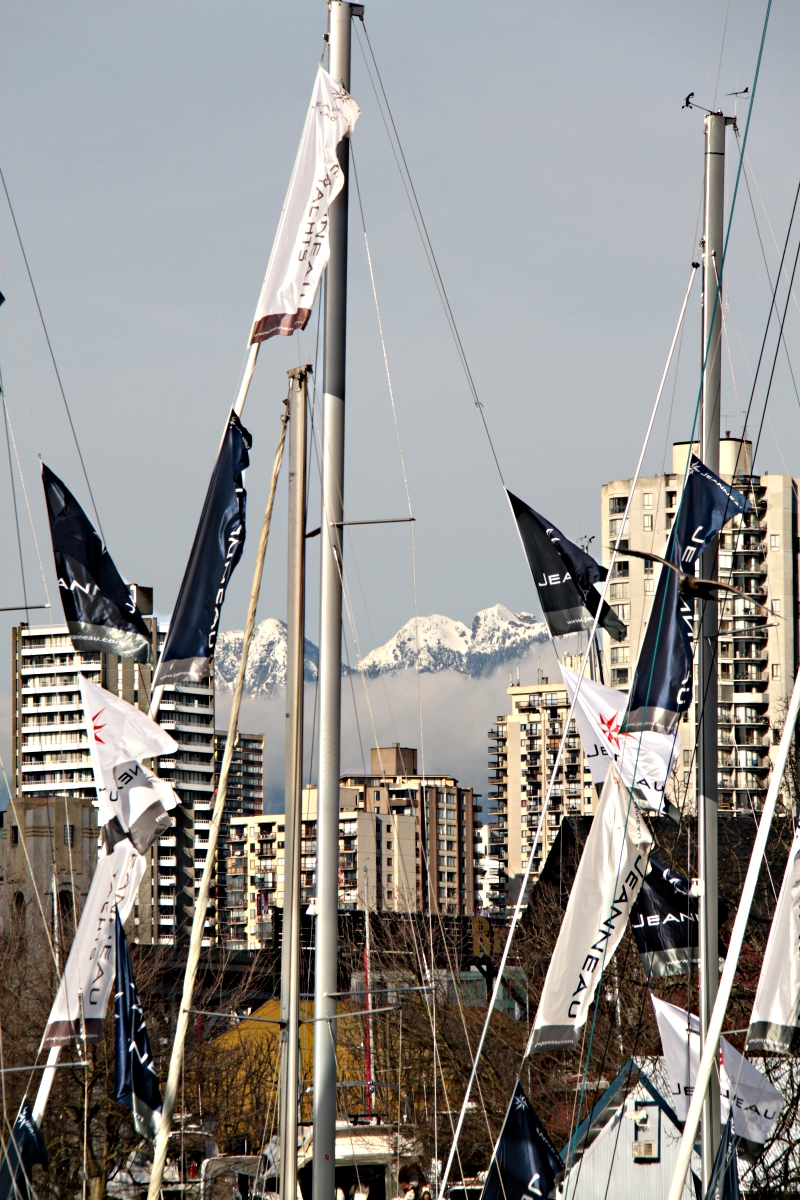
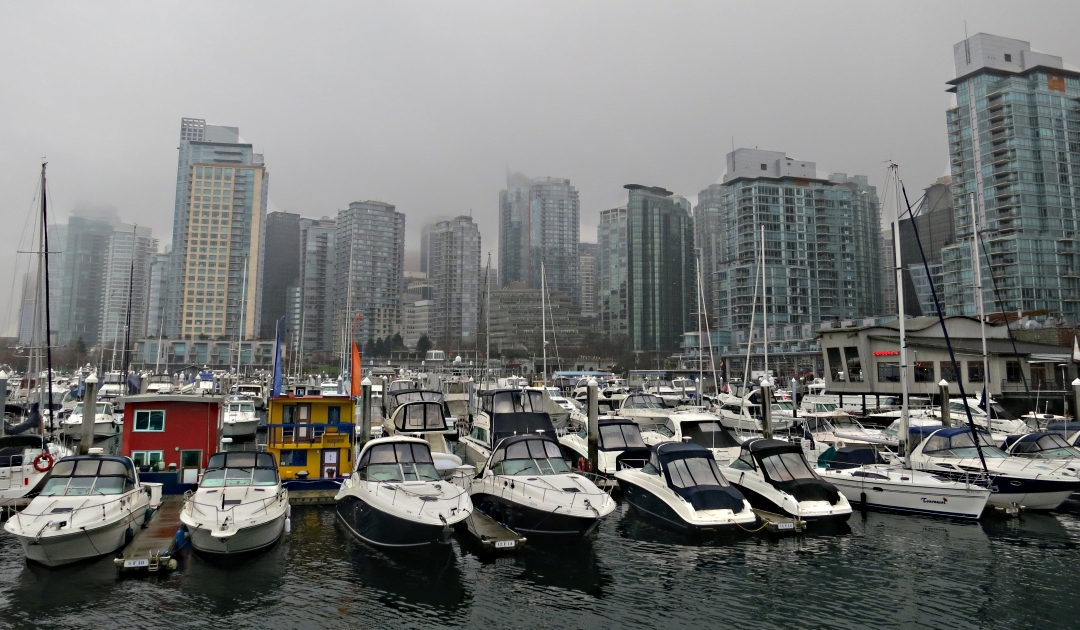
Tower blocks, boats, masts .... and shrink wrapping.,

Tower blocks, boats, masts …. and shrink wrapping.,
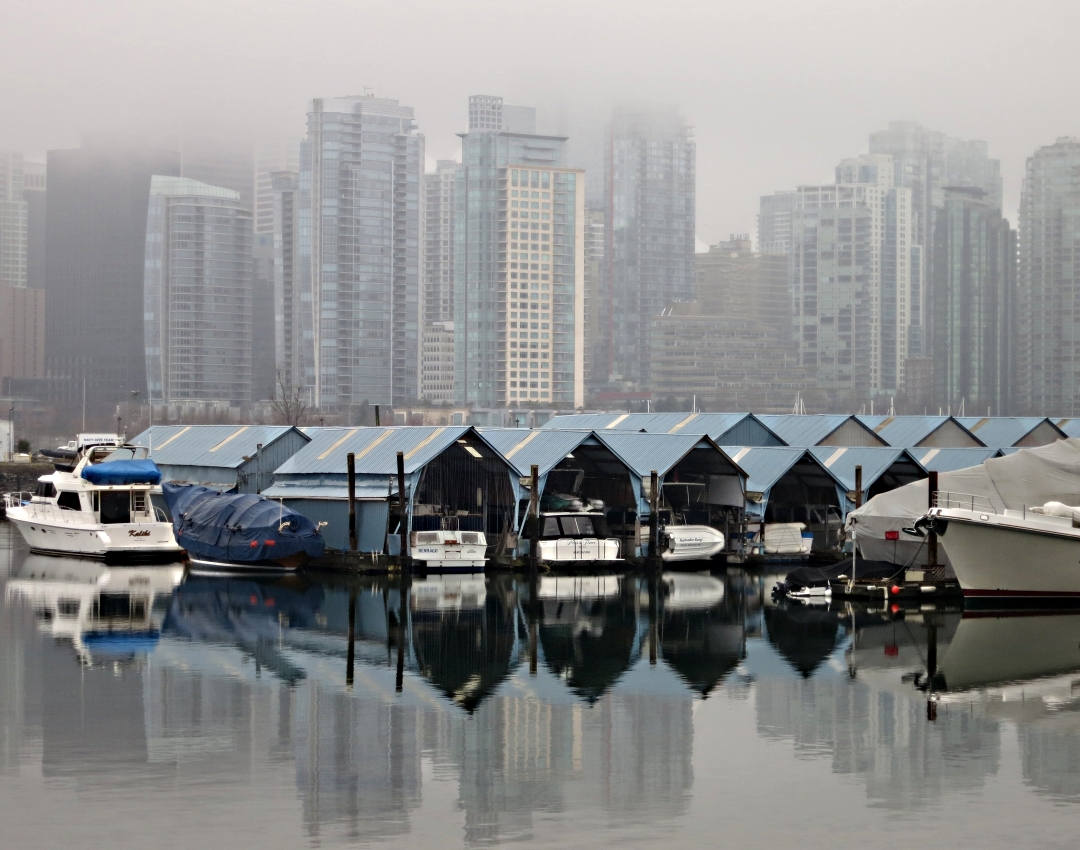
If you can afford it, put the boat in a garage.

If you can afford it, put the boat in a garage.

Sulphur: a reminder that this is still a working port with a history of mineral extraction
Sulphur: a reminder that this is still a working port with a history of mineral extraction

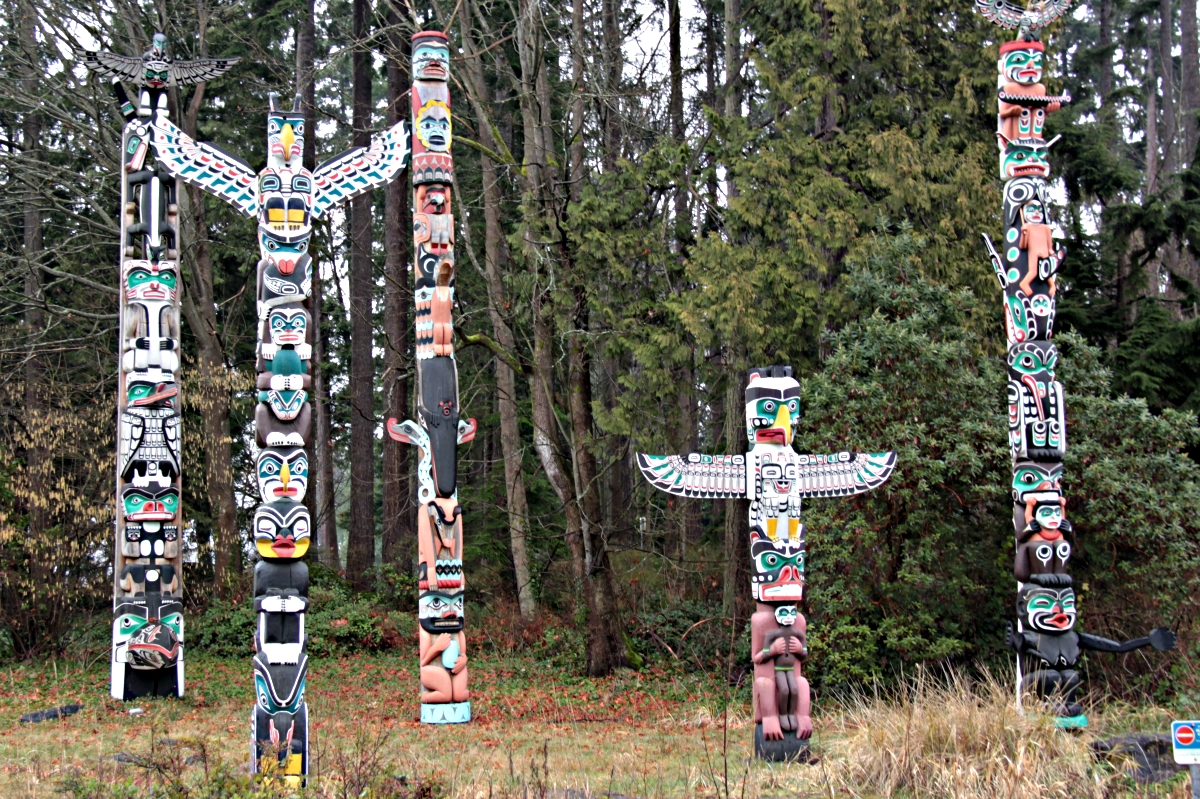
Some of the First Nation totem poles in Stanley Park
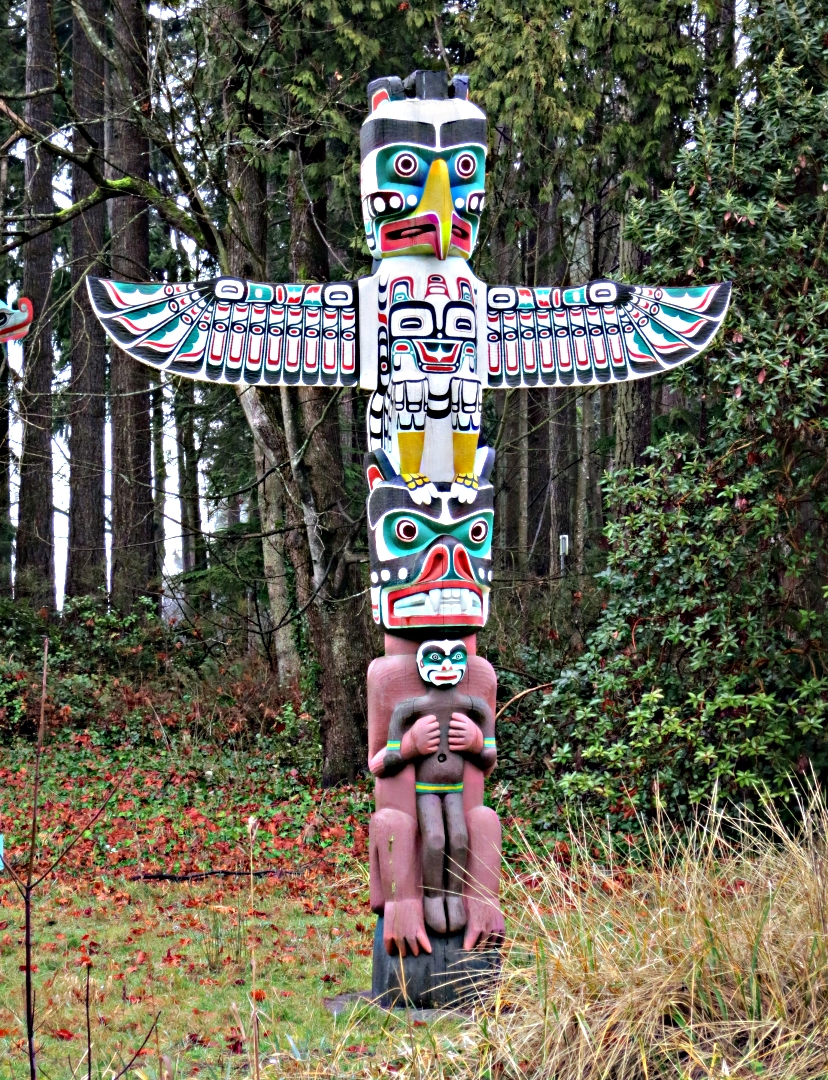
Some of the First Nation totem poles in Stanley Park

Detail
Detail

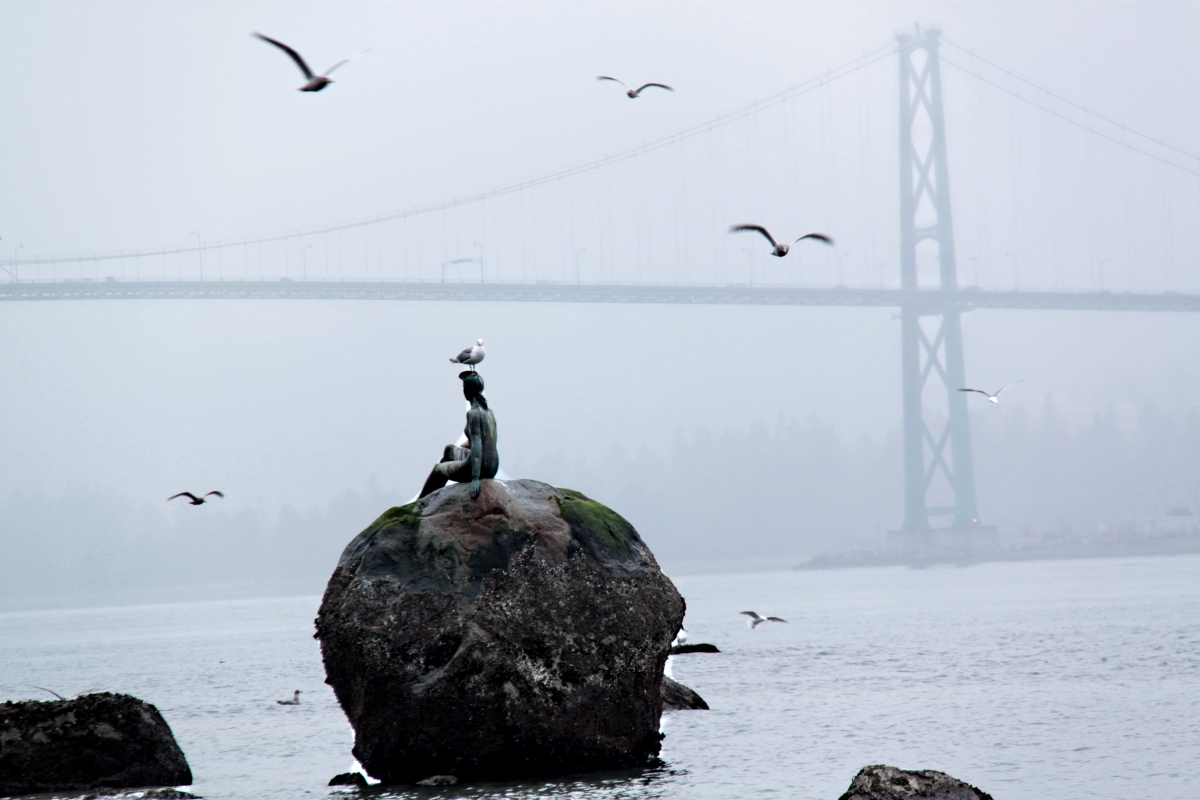
'Girl in wetsuit' keeping an eye on Lions' Gate Bridge

‘Girl in wetsuit’ keeping an eye on Lions’ Gate Bridge

Figurehead from 19th Century Japanese merchant ship trading between the Canadian Pacific coast and Japan
Figurehead from 19th Century Japanese merchant ship trading between the Canadian Pacific coast and Japan

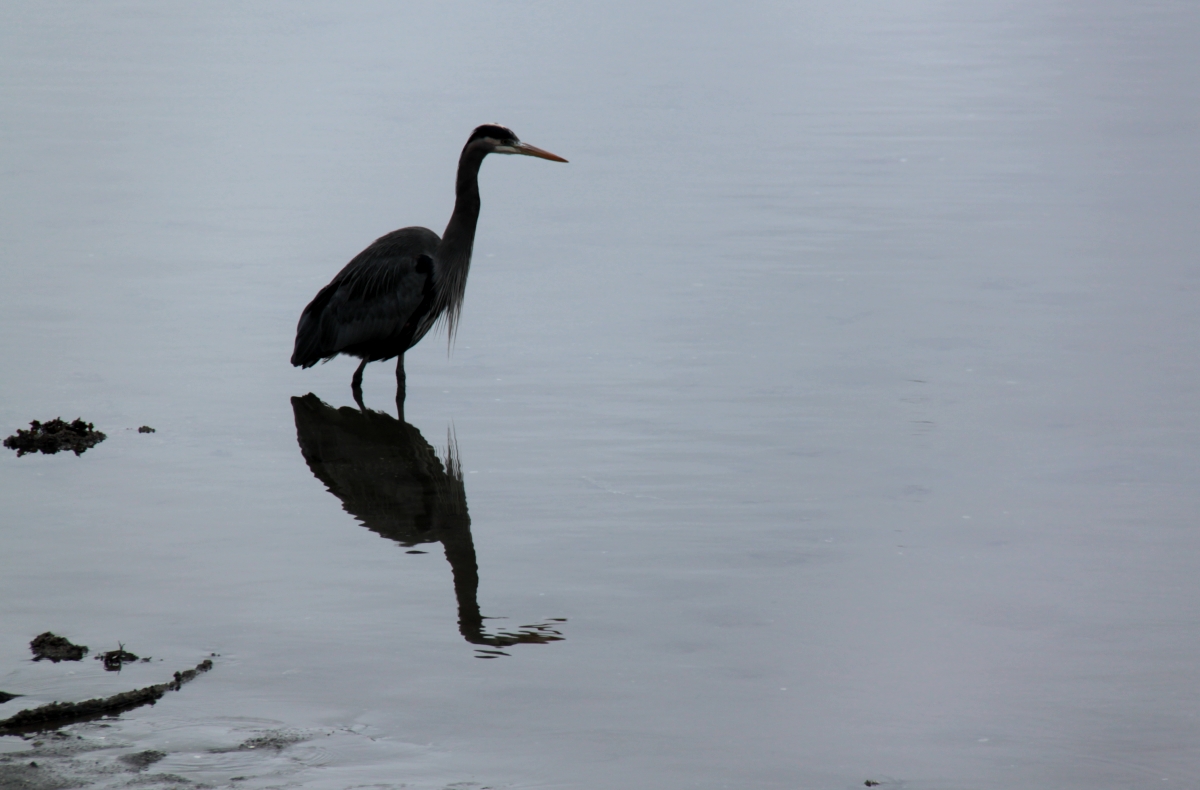
The waters of Vancouver harbour are so well protected that they are flat-calm and reflective
The waters of Vancouver harbour are so well protected that they are flat-calm and reflective

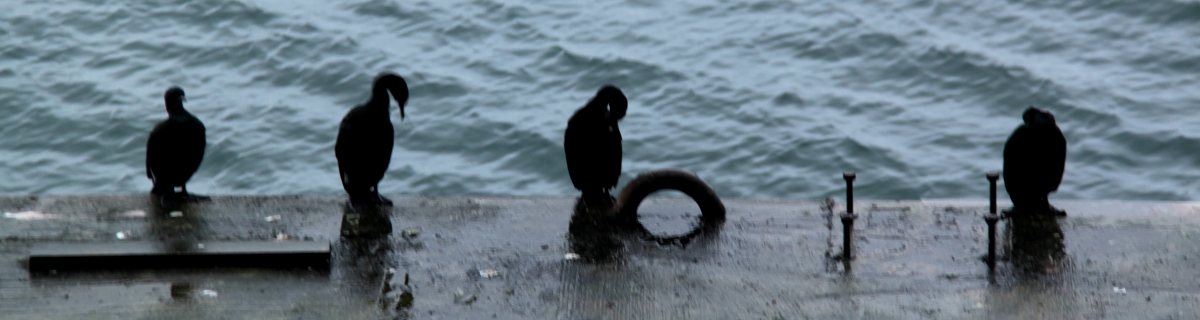
Too wet for the cormorants to stretch their wings to dry them

Too wet for the cormorants to stretch their wings to dry them

There will be a gap now before the next time I post on the blog as I have to write a chapter for a book with a deadline of 1 March.

Posted in Art, Canada | Tagged , , , , , , , , | Leave a comment

Vancouver on a sunny Sunday in February

A month skiing in the Rockies is at an end.  My visit to Canada is nearly at an end.

I had heard so many good things about Vancouver that I decided to spend a few days in the city before heading for the airport and flying back home.  I haven’t been disappointed.  The only problem is to do the place justice in a short blog.

Opening the curtains high on the 6th floor I looked out to clear blue sky and tower blocks blazing gold in the early morning sun.

Tower blocks blazing gold in the early morning sun

Tower blocks blazing gold in the early morning sun

Navigating around a city of 2 million when you know nothing about it is ….. interesting.  I wanted to go to Sunday service in a large Anglican Church which had been recommended.  Located by a Google search on “17th and Cambie” I had intended to walk but became suspicious when I saw the address was  “Baillie and 37th”, between Cambie and Oak”, obviously a lot further out from the centre.  A quick phone call confirmed the latter to be correct and the need to use the Canada Line of the Skytrain transit system.  I had harboured a hope that the Skytrain would be an elevated  monorail but it isn’t, it’s an underground system.  Very fast, very efficient, very clean, very cheap ($1.75 concession fare) with information clear and unambiguous.  I had negotiated my way around Athens on the Metro which is not too difficult given a knowledge of Greek and in comparison this was a piece of cake.

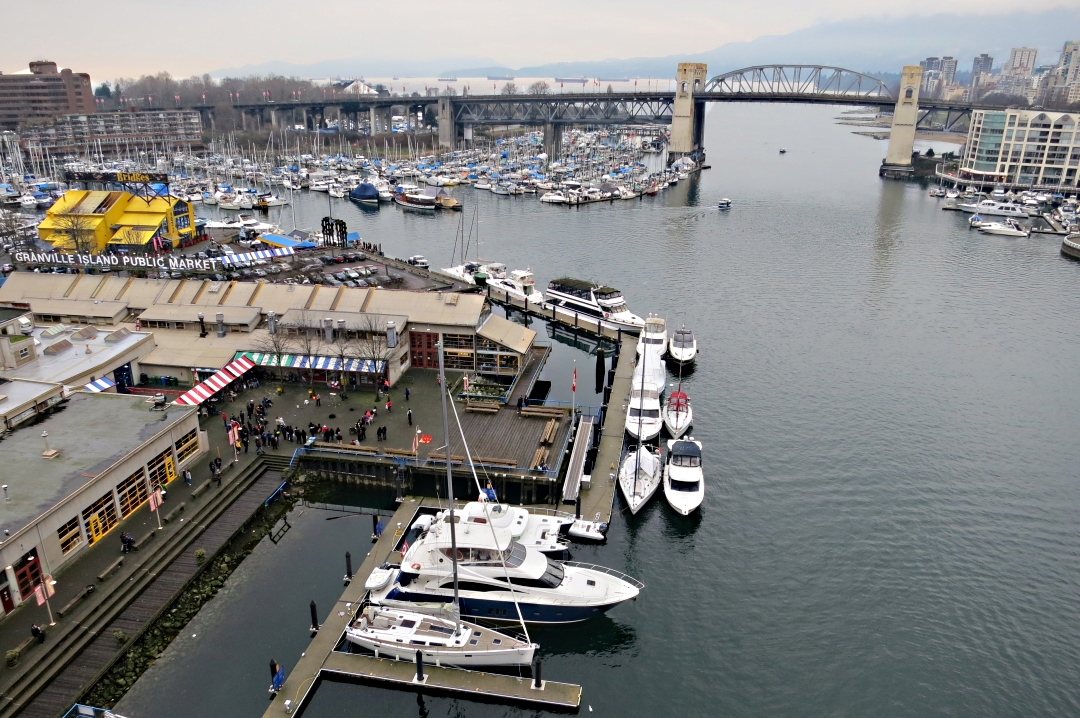
Back to the hotel at the northern end of Granville Street bridge and in time to walk across to Granville Island for a bite to eat.  Crossing the bridge afforded great views down False Creek to Burrard Street Bridge, the many high rise residential towers bordering the ocean front and the cloud-shrouded mountains beyond.

From Granville Street Bridge over False Creek

From Granville Street Bridge over False Creek

Looking down on the Granville Island Food Market from the bridge

Looking down on the Granville Island Food Market from the bridge

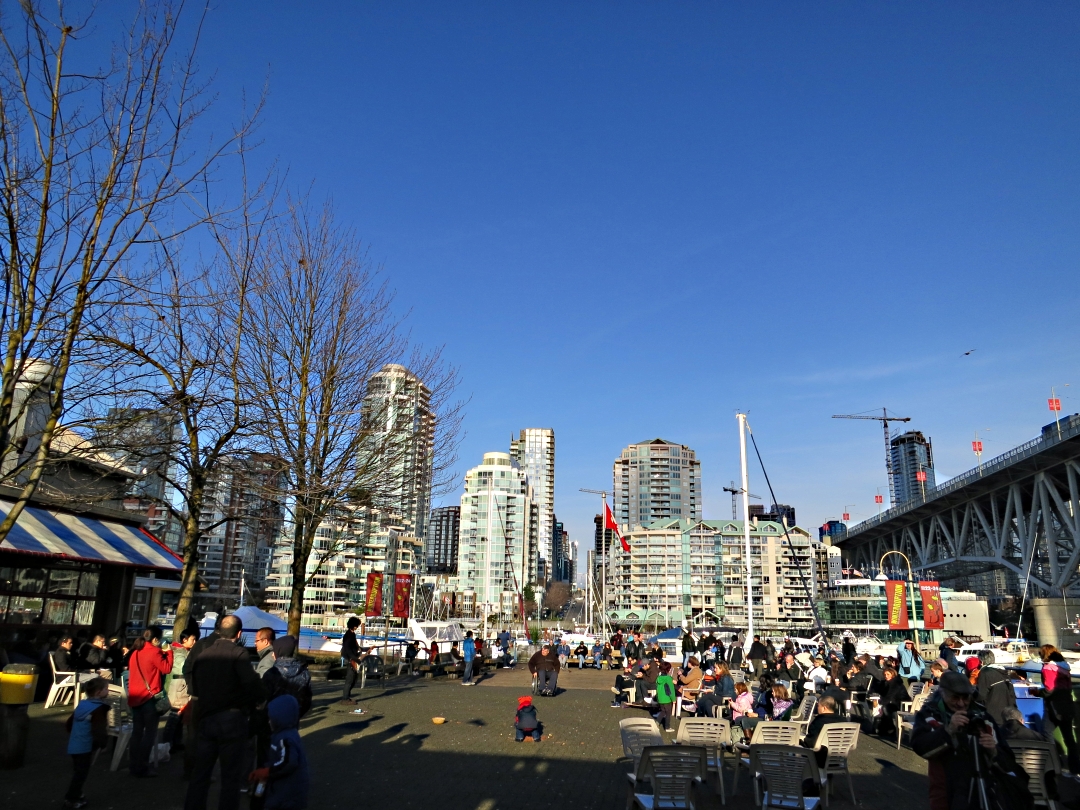
If you have only time to visit one place in Vancouver, from my very limited experience I would say make it Granville Island, it’s an amazing place.  The Food Market is like no other I have seen anywhere, with an amazing range of top quality fresh food and cooked meals, packed with people so you can hardly move.  Outside the Food Market the many shops sell everything from fine art to sea kayaks with a pause to have a beer in the Granville Island BrewPub should you so wish.  The island is edged with a dense fringe of boats of all shapes and sizes which, together with the fact that the Vancouver Boat Show was on meant that yachties and wannabees rubbed shoulders with locals doing food shopping and tourists like me.  On Sunday afternoon in the sunshine it was a great place to stroll around or just sit and soak in the music and the atmosphere.  I did both.

Jammed traffic trying to get into Granville Island

Jammed traffic trying to get into Granville Island

Looking down-creek towards the open ocean, Stanley Park and the mountains beyond

Looking down-creek towards the open ocean, Stanley Park and the mountains beyond

Looking up-creek under Granville Street Bridge

Looking up-creek under Granville Street Bridge

The Food Market concourse looking across False Creek

The Food Market concourse looking across False Creek

Some of the boats are shrink-wrapped !!!

Some of the boats are shrink-wrapped !!!

Out of sight the locals keep their heads down

Out of sight the locals keep their heads down

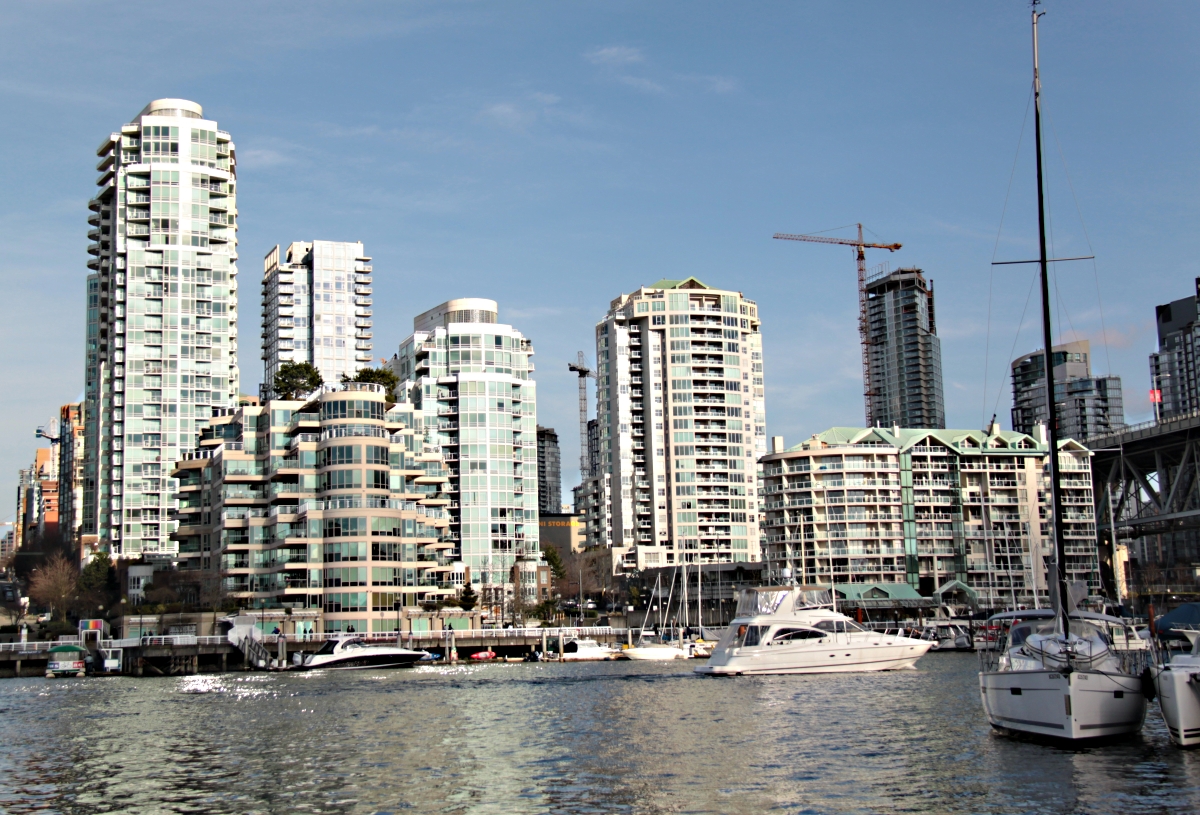
Looking across the Yaletown

Looking across False Creek to Yaletown

At one point the cloud lifted off the mountain peaks in the distance showing snow-caps which made me nostalgic for skiing.  But that was now over and I distracted myself with the new place.

Masts, bridge, Tower-living .... snow capped mountains

Masts, bridge, Tower-living …. snow capped mountains

... another view

… another view

I could have stayed much longer on Granville Island but wanted to go explore further.  I had walked across the bridge but decided to take one of the tiny ferries back across the Creek, rectangular tubs of boats which are confusing by not having a pointy bit at the front.  Very quick, very efficient and very cheap ($1.75 concession fare).  It took me under Burrard Street Bridge and set me down at the end of Sunset Beach for a walk along the The Seawall.

That’s when it struck me that this was the not just the seafront but the Pacific Ocean.  I know the Atlantic, the Mediterranean, the Adriatic, the Aegean but somehow the thought of the Pacific conjures up an image of something altogether vaster.  On the other side lay Japan and China, not the USA and Canada.  Hardy types have rowed across the Atlantic, I guess the Pacific is just too vast to even contemplate that.

So I walked along The Seawall promenade past Sunset Beach to English Bay with thousands of others enjoying a sunny Sunday afternoon in February.  They strolled, walked, jogged, ran, roller-bladed, bicycled, unicycled, tandemmed.  The Seawall was separated into two with a small kerb, each clearly marked as to whether it was for those on foot or on wheels.  At one point a knot of people gathering to watch as about 12 or 15 stripped to their swimwear and plunged into the sea for the benefit of TV cameras, shrieking with the shock of the cold water.  I wasn’t tempted.

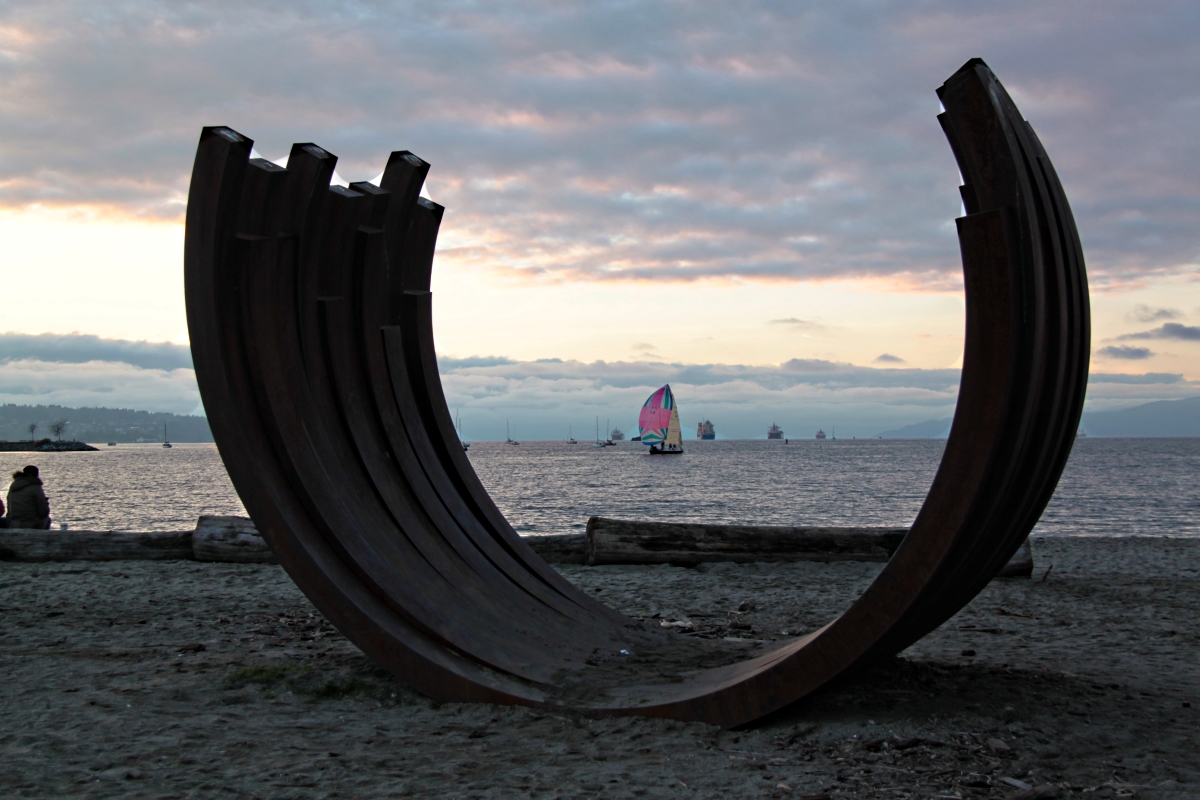
One of the many sculptures around Vancouver

One of the many sculptures around Vancouver

13Canada129w9368

Vancouver Inukshuck

13Canada130w9378

……….. doing a Samson and pushing over tower blocks

13Canada131w0988

Towards sunset

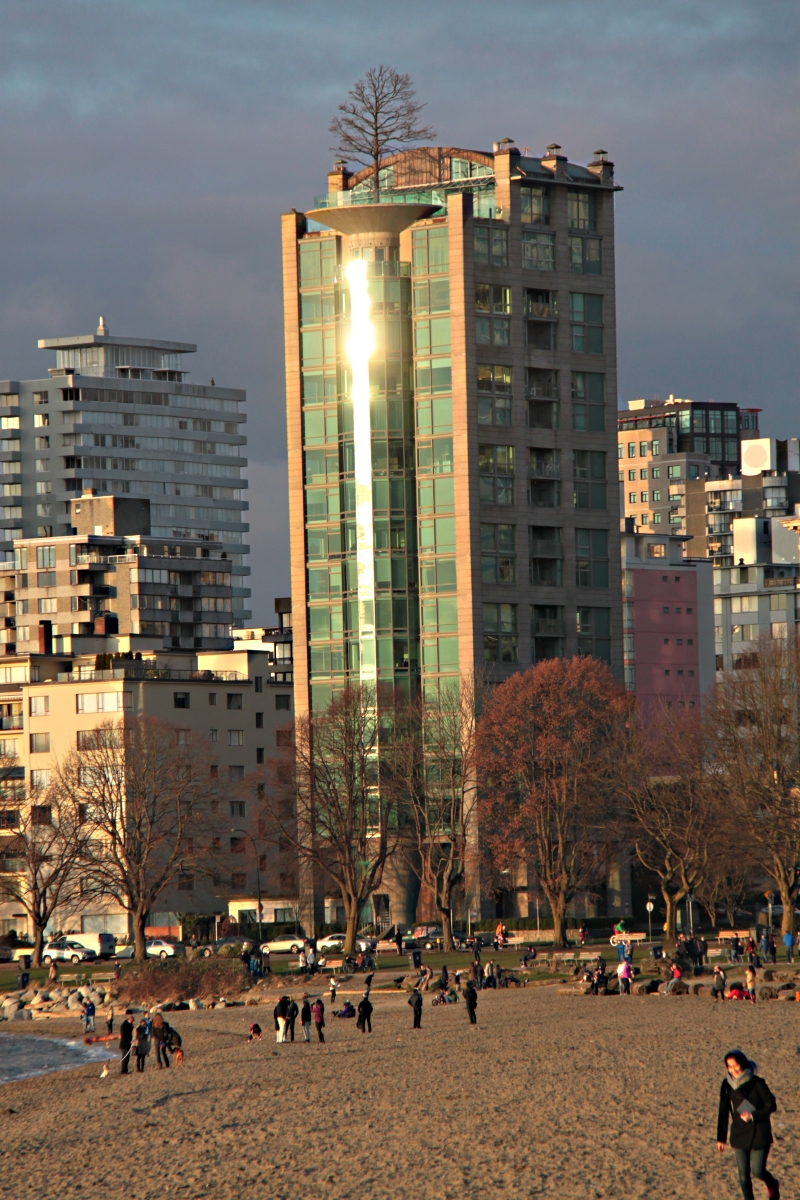
At the west end of English Bay, Tower-top Tree

At the west end of English Bay, Tower-top Tree

13Canada132w9396

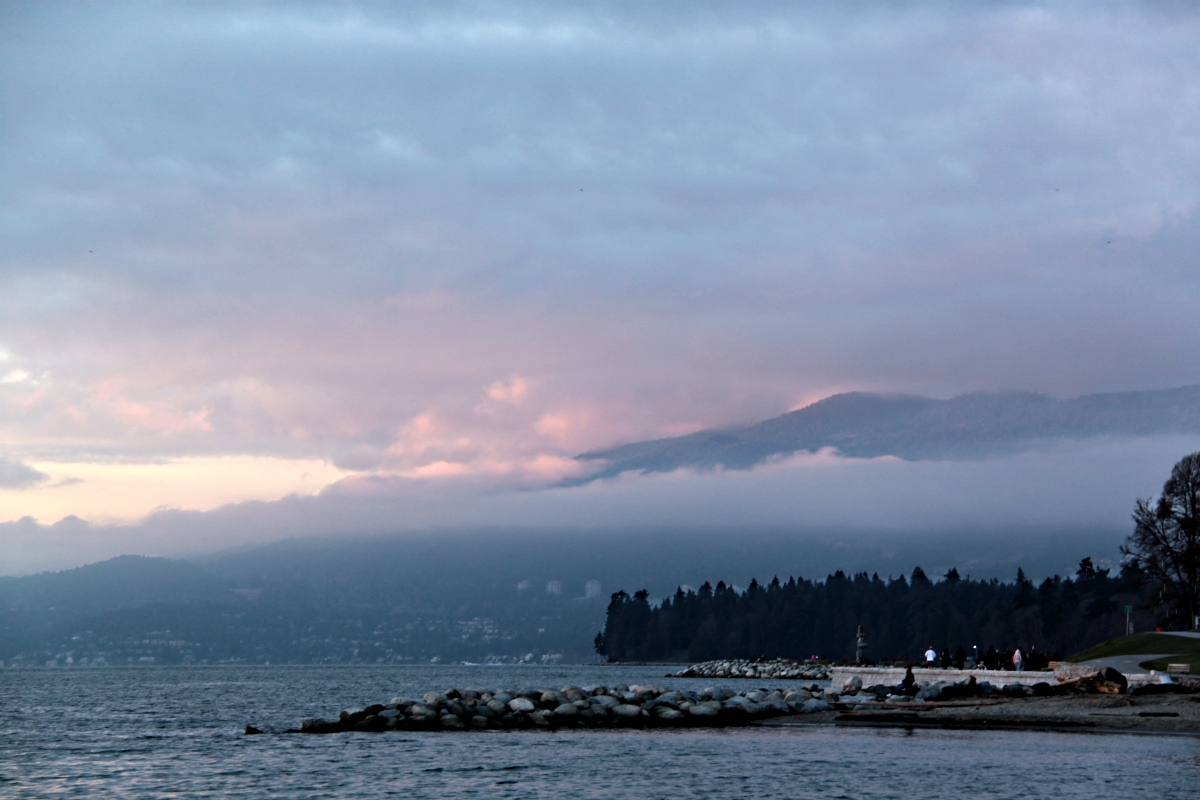
Coming in at dusk

13Canada133w9397

The Rockies briefly on fire with the setting sun
13Canada134w9406

Final reflections in the glassy towers

I have often said that though brought up in a city I’m not a city person.  But for Vancouver I could make an exception.  If only I could afford the price-tags of the high rise apartments along the ocean front.

Posted in Art, Canada, Reflections, Winter | Tagged , , , , , , , , , , , , , , , , , , , | Leave a comment

Whistler in brief

Whistler is very different from Banff in many respects.  It has a resident population of 10,500 compared with Banff’s 7,500 yet styles itself a village and nurtures that image. 

Banff retains the character of a ‘frontier’ town, a place which has grown incrementally over many years whereas Whistler is very much a resort town, a newcomer to the block, in many ways a theme park built around skiing and boarding with money-spinning  add-ons.  It’s a party town, glitzy, buzzing with life until long after I’ve gone for my beauty sleep.

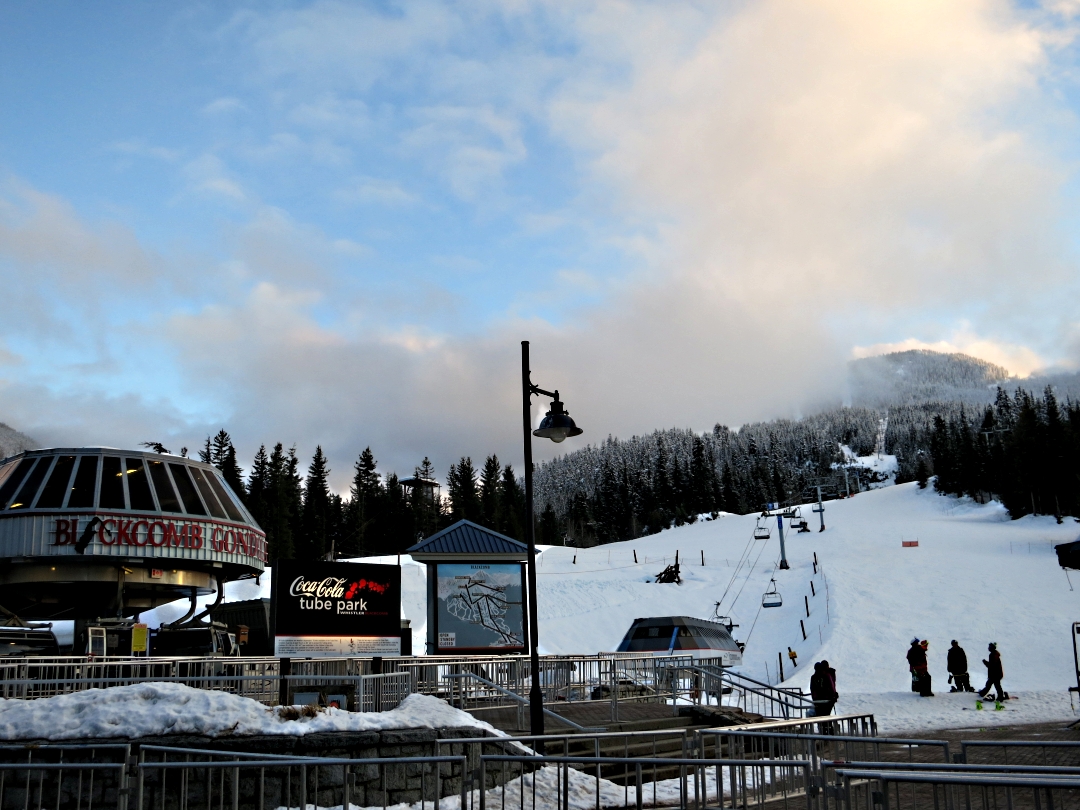
Unlike Banff the ski runs finish in the town centre, sometimes a bit slushy as the temperature can be above freezing at the base but still you can swish to a satisfying sliding halt and step out of skiis onto the square at the top of ‘The Stroll’, the pedestrianised street meandering down through the village, and do the ski-boot jerky shuffle the few paces to one of the many bars.

Most of the bars and restaurants lining The Stroll and in the small squares off it have large outdoor seating areas which, no matter what the weather, are thronged with people straight off the slopes.  It can be difficult to get a table.  Having hovered until a table comes free you can then sit in your ski gear, accumulating snow as it drifts silently down and waiting for the waiter to notice you.  Mere tourists may be more smartly attired but are not dressed for these exigencies even despite the patio heaters scattered liberally around, hissing and steaming as the snow lands on them and instantly evaporates.

Though the outdoor seating therefore remains the preserve of the hardy skier and boarder, skis and boards not being allowed among the tables and so are propped up around the edge like an ever changing, multicoloured fence.

Even when the snow turns to rain, as it can, it really is rather pleasant at the end of a hard day’s vigorous exercise and some seem to sit there for hours.  Many are not-so-young Canadians, skiing all their lives and enjoying a relaxing pint in the twilight at the end of the day.  Youngsters drink weird fluorescent concoctions and swap tales of epic adventure and near misses:  “I nearly died, man.  I came over this, like, great jump, did a 360 (degree turn), got massive air (was a couple of feet off the ground) and landed straight into this tree-well (the hollow which forms around trees in heavy and blown snow).  Like I was buried upside down and couldn’t get out.  Man it was epic.”   Very strange sounding to the characteristic understatement of mountaineering:“Interesting trip.  Great fun.”

The higher temperatures in Whistler are more conducive to this outdoor café culture, reminiscent of Paris in the Springtime or Greece in the summer.  There is no sitting outside for après ski in Banff at nearly twice the elevation and continental climate, it’s generally much too cold and frostbite and frozen beer are real possibilities.

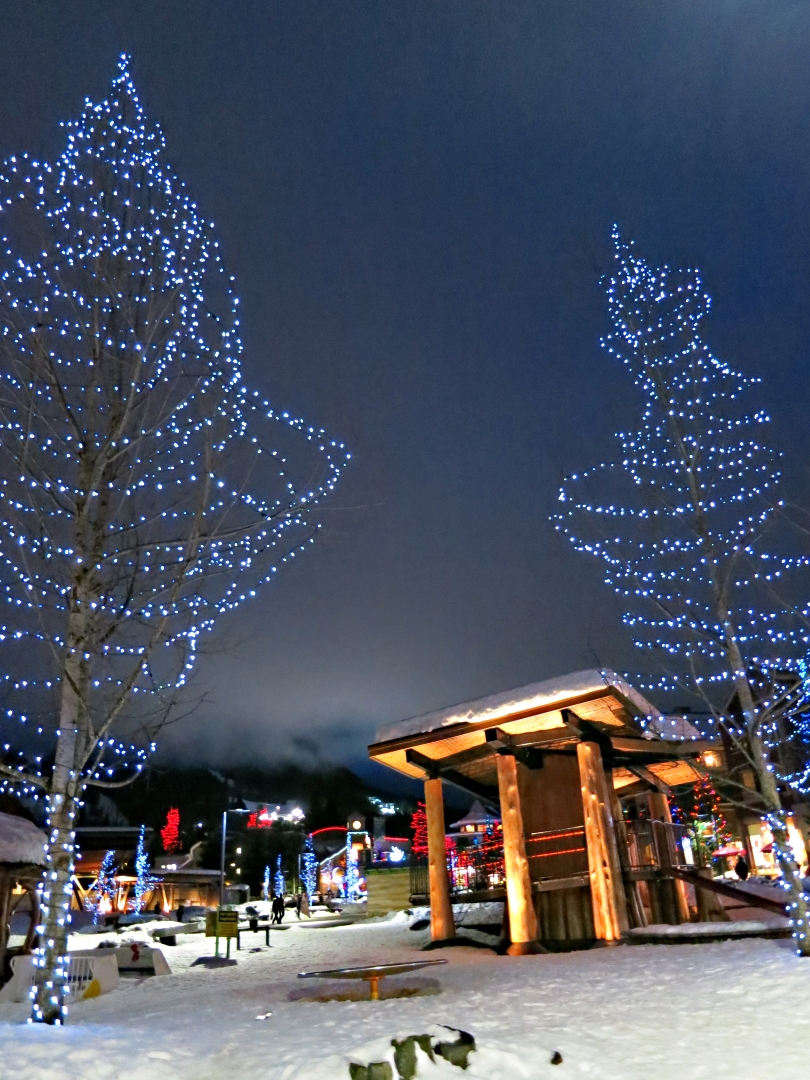
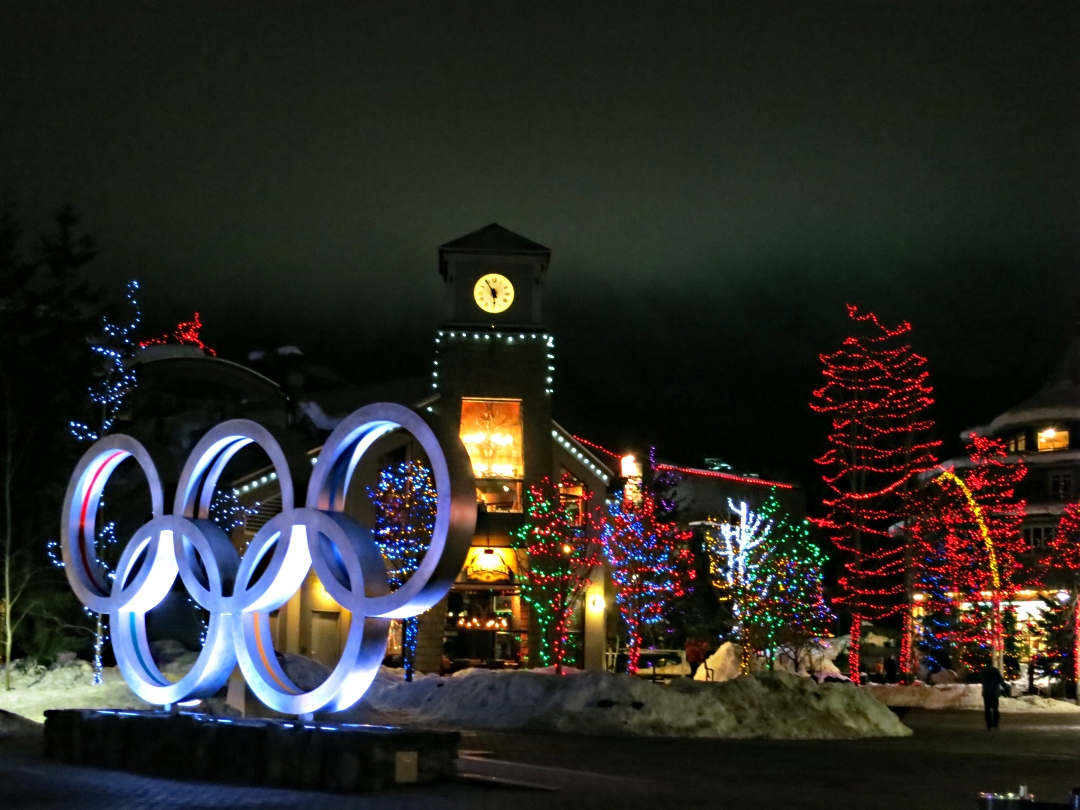
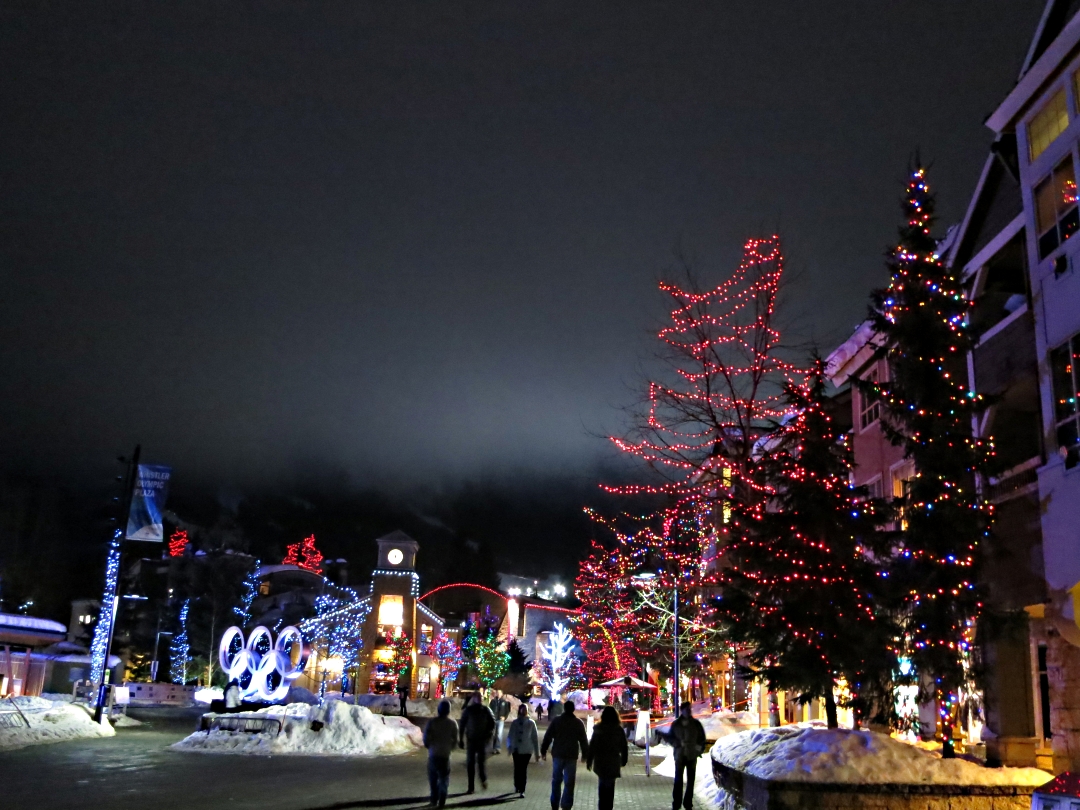
Later in the evening The Stroll becomes a brightly lit, hedonistic magnet. Winter-bare trees are wrapped in thousands of lights, First Nation street-art is spot-lit,  buildings are adorned with ‘look at me’ illuminations.  It is very enticing, thronged with restaurant goers, meandering window-shoppers, frenetic buyers-of-presents for Auntie Maud and little Jimmy, the simply curious wandering around with cameras, as well as not a few who have still not made it back to their lodgings after a day on the slopes, clumping wearily and haphazardly along with skis over their shoulders.

At the bottom end of the Stroll, Olympic Square, legacy of the 2010 Winter Olympics,  offers free outdoor activities including ice skating, children’s adventure play area and a roaring fire to sit around and exchange yet more tales of epic doings.

I’m not a bright-lights guy but there is something endearing and mesmeric about Whistler which I’ll miss.

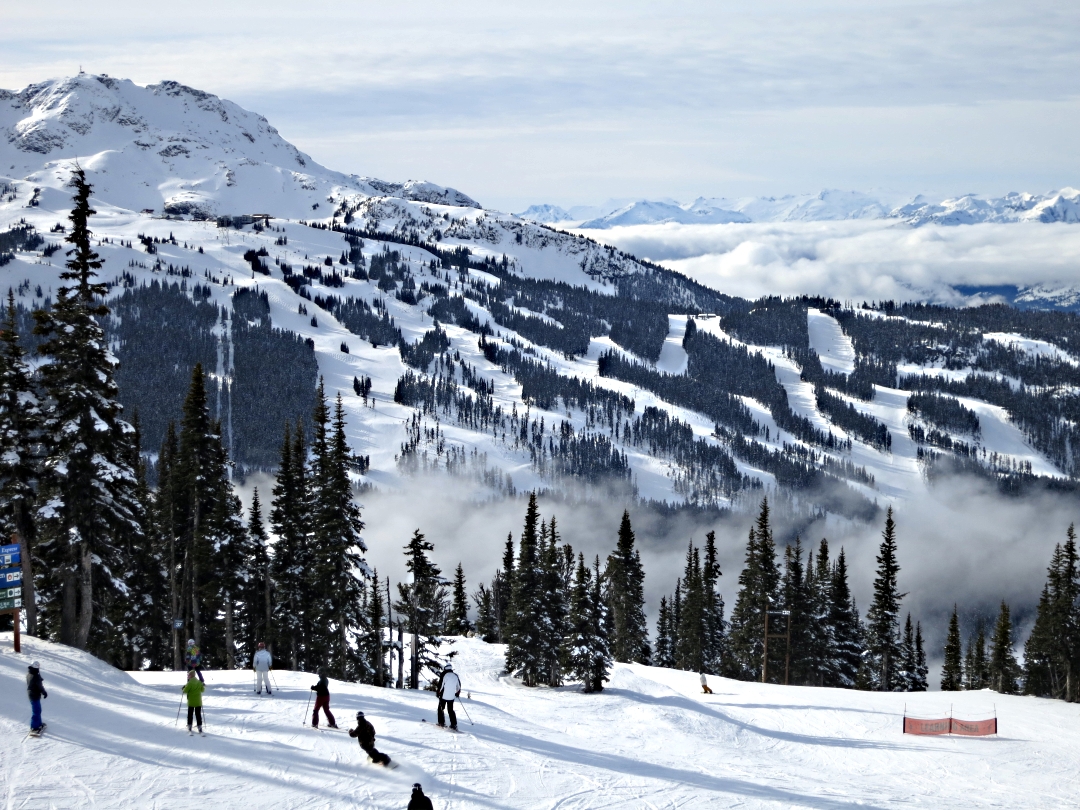
Main ski run back to the village stops at the edge of 'Skiers Square' at the top of The Stroll

Main ski run back to the village stops at the edge of ‘Skiers Square’ at the top of The Stroll

As the sun sinks lower it lights up the ski runs at the top of the mountain a golden colour

As the sun sinks lower it lights up the ski runs at the top of the mountain a golden colour

Waiting for the bus the fresh snow on the trees stands out vividly against the snow clouds behind

Waiting for the bus the fresh snow on the trees stands out vividly against the snow clouds behind

The children's adventure play area at the bottom of The Stroll

The children’s adventure play area at the bottom of The Stroll

13Canada095w0850

The top of Olympic Square and the Brew Pub clock tower

13Canada096w0851

Strolling up towards Olympic Square

13Canada097w0856

Even small side paths are like wonderland

13Canada099w0860

Some trees are wound up into weird shapes

13Canada100w0864

A bridge over a dry, snow-covered and illuminated creek has small sculptures of scientific endeavour along the handrails

Detail of one of the sculptures

Detail of one of the sculptures

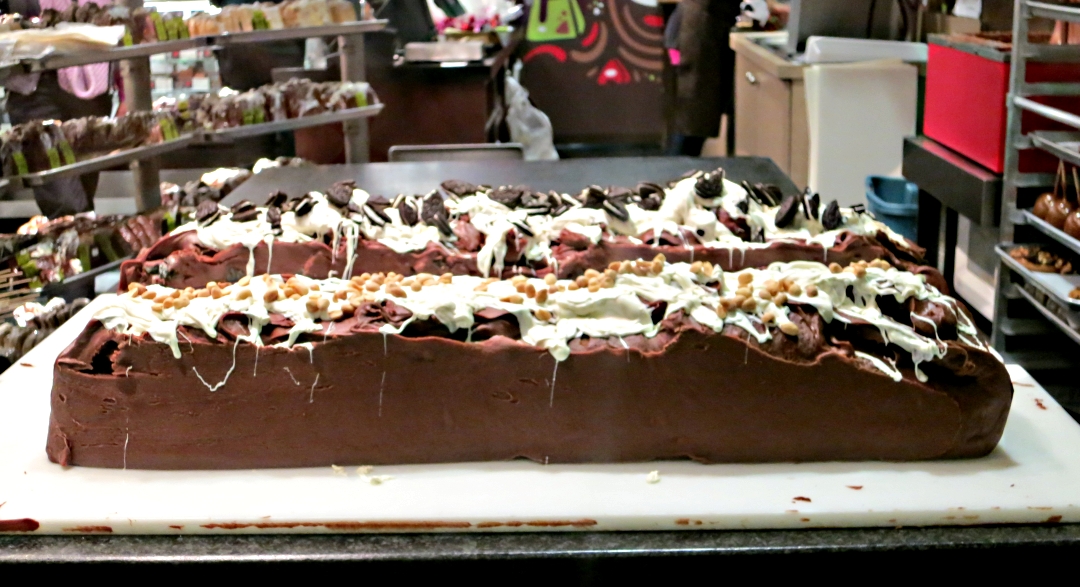
Among the delights on offer along The Stroll are great slabs of fudge, made over a metre long and carved into thick wedges

Among the delights on offer along The Stroll are great slabs of fudge, made over a metre long and carved into thick wedges

First Nation street art at various points onThe Stroll is flood-lit

First Nation street art at various points onThe Stroll is flood-lit

Now for the bright lights of Downtown Vancouver.

Posted in Canada, Mountains, Winter | Tagged , , , , , , , , , | 1 Comment

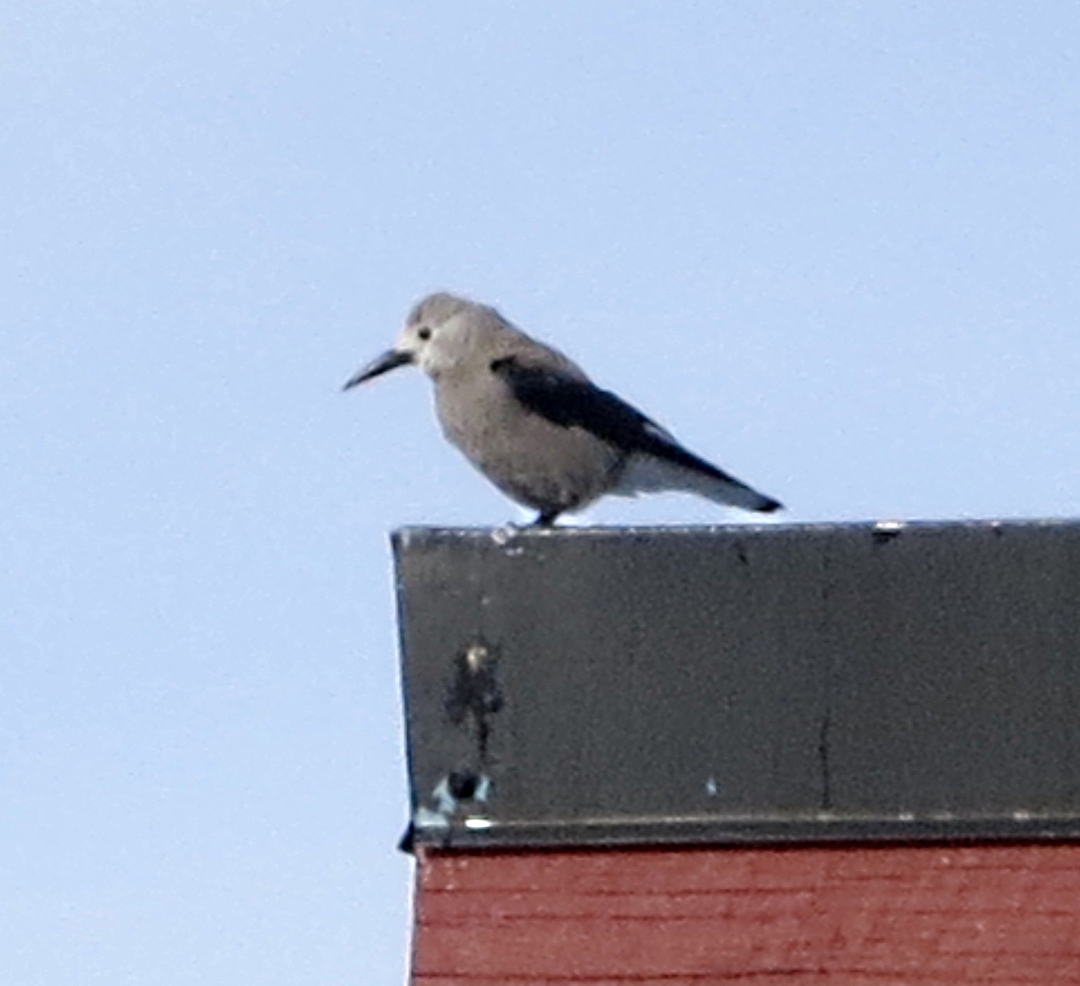
Given the bird

Skiing finished now.  I survived relatively intact.  Tomorrow I’ll post impressions of Whistler but this is just a very brief note to correct a mistake

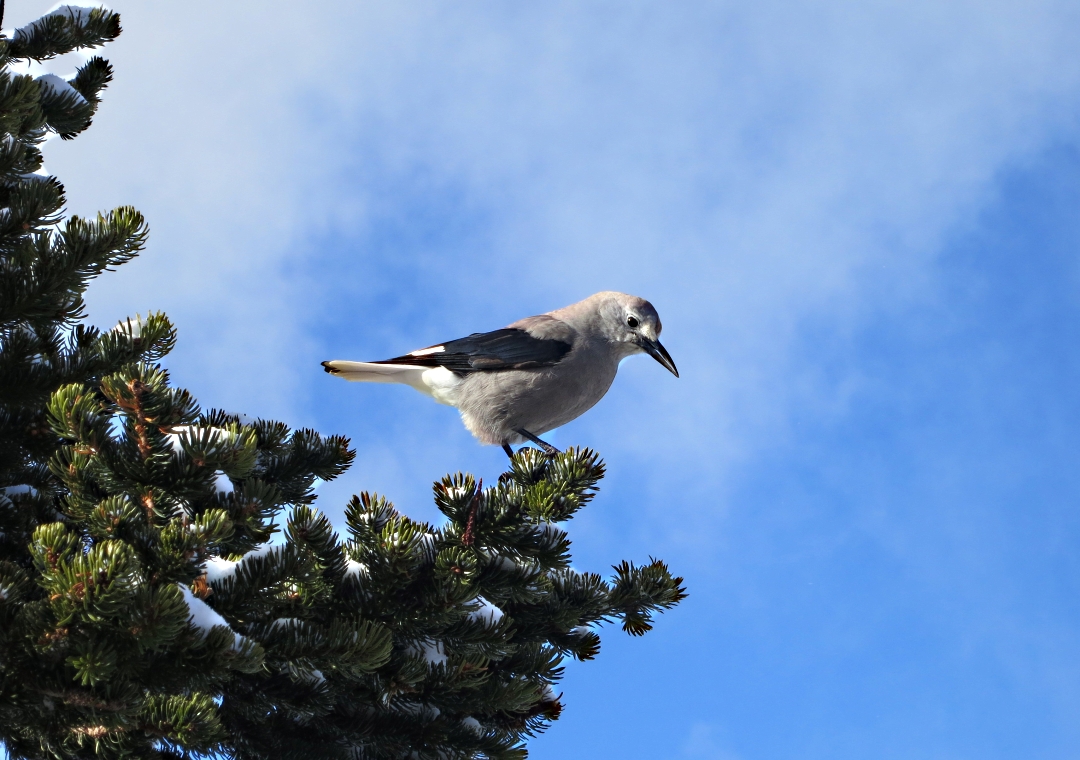
In the last post on the blog I included photos of a bird which I named as a Canada Jay.  Incorrectly.

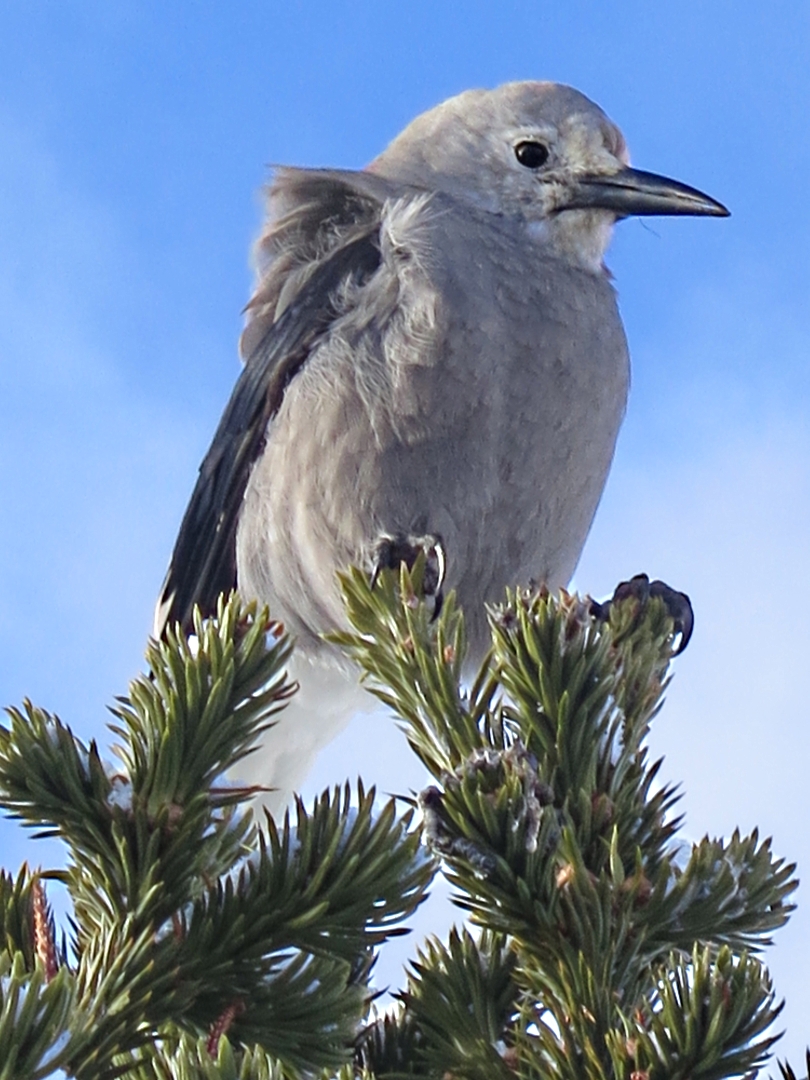
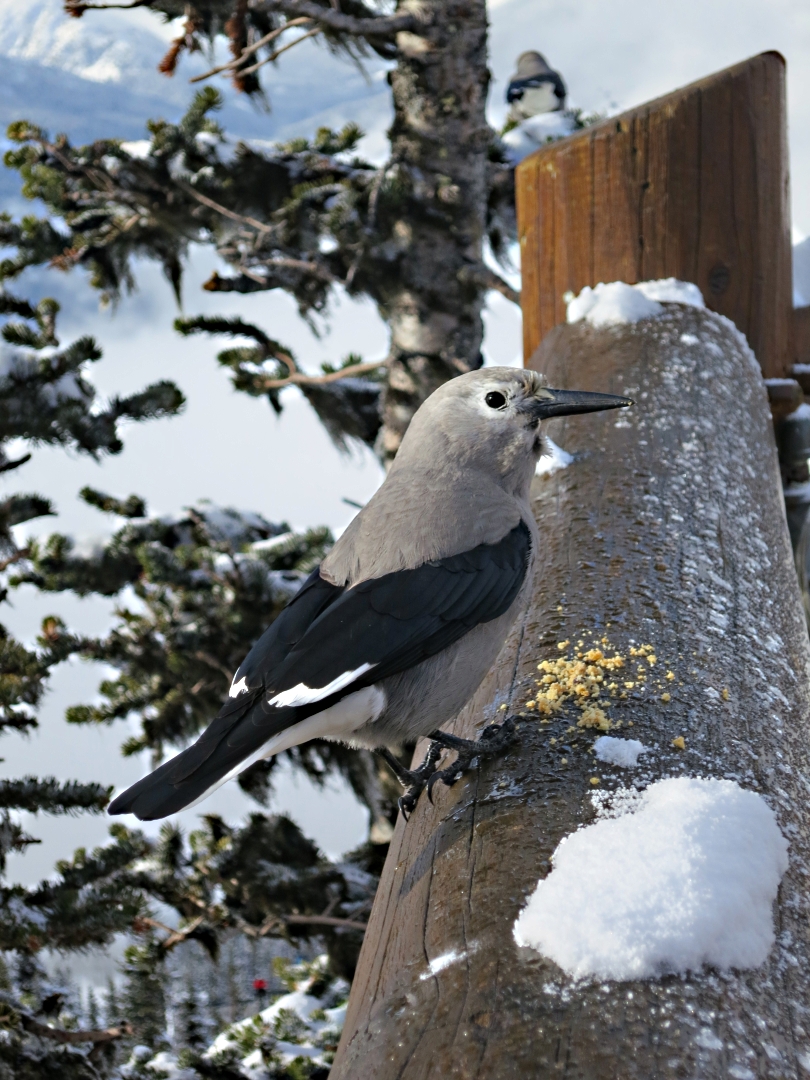
A friend correctly identified it as a Clark’s Nutcracker.  They hang around all the mountain restaurants and I took a few more photos at Crystal Hut on Blackcomb Mountain where we went for extremely fine waffles on Thursday.

For information see: http://en.wikipedia.org/wiki/Clark’s_Nutcracker

Perched on the top of a tree waiting its chance

Perched on the top of a tree waiting its chance

Getting closer

Getting closer

... and finally swooping down

… and finally swooping down

x

Posted in Canada, Mountains, Winter | Tagged , , , , , | Leave a comment

Whistler-Blackcomb: snow and skiing

OK, so I’ve been skiing now for 3 weeks and apart from a brief gripe about snowboarders there has been virtually no evidence on the blog that I have done any skiing.  Time to correct that.

But first a brief discourse on snow.  It has been debated since the 1980’s whether or not the Eskimos have an unusually large number of words to describe snow, in 1984 an editorial in the New York Times inflating the figure to 100.  Some regarded the claim as a hoax and contested it.  It seems, however, that it may well be just a matter of semantics, all to do with how different languages are structured and words formed to express concepts1.

Whatever, there is no doubt that the snow in Whistler on the west of the Rockies is very different from that around Banff on the east.  Whistler has a maritime climate with warmer temperatures and larger amounts of snow which is typically large flakes, ‘wet’ and heavy, while Banff has a continental climate with significantly lower temperatures and fine, powdery, light snow.  Indeed, because Whistler is only about half the altitude of Banff it is not uncommon for it to be raining in the village even though snowing on the mountain half a gondola ride way  (that’s a mountain gondola or ‘cable car’ not the sleek black things poled around Venetian canals, and pronounced ‘gondola’  rather than ‘gondola’ by some Canadians to differentiate the two).

There had been heavy falls of snow early in the season in Whistler giving an almost caricature Christmas card look to the town when we arrived with roofs covered in thick overhanging layers of the white stuff.  And it was still snowing, although not the large, wet flakes I had been given to expect.

A Christmas card look to the road where we are staying in Whistler

A Christmas card look to the road where we are staying in Whistler

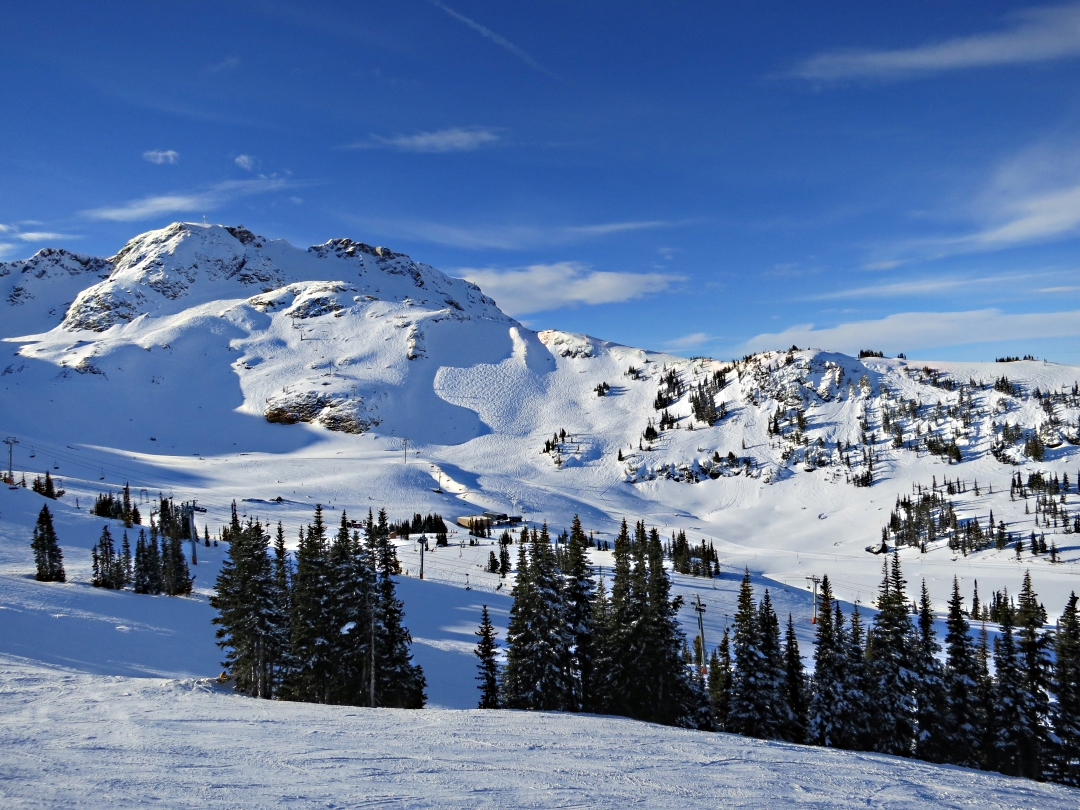
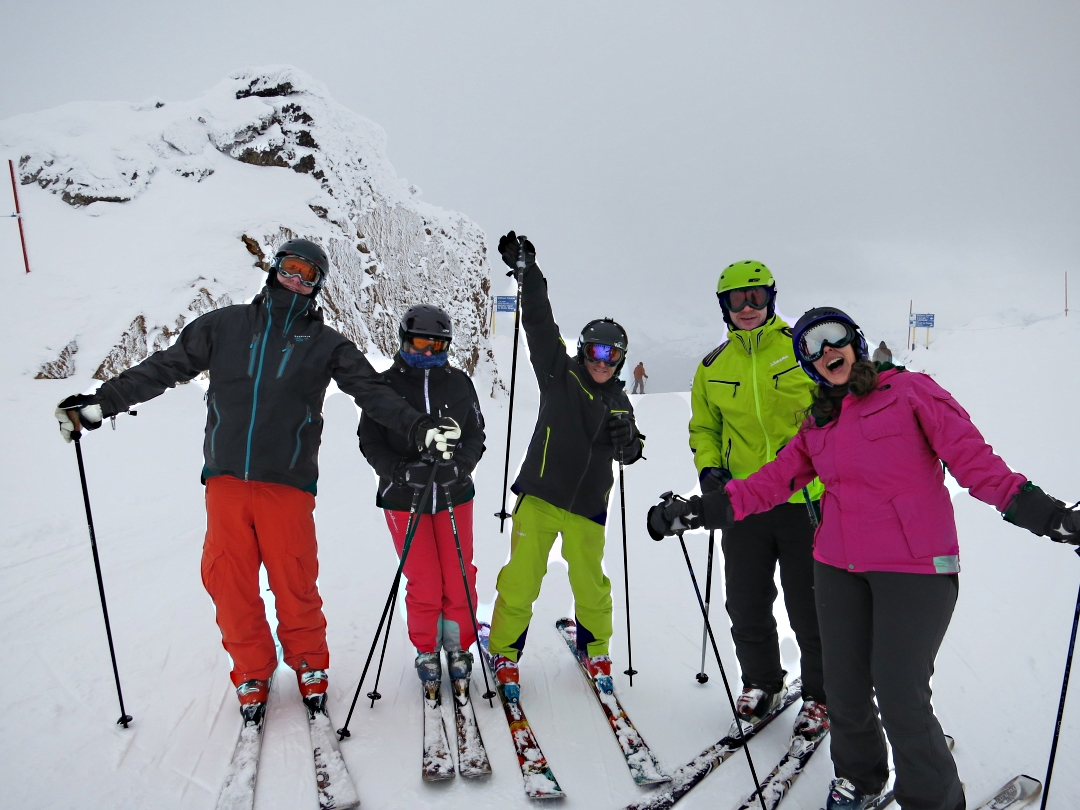
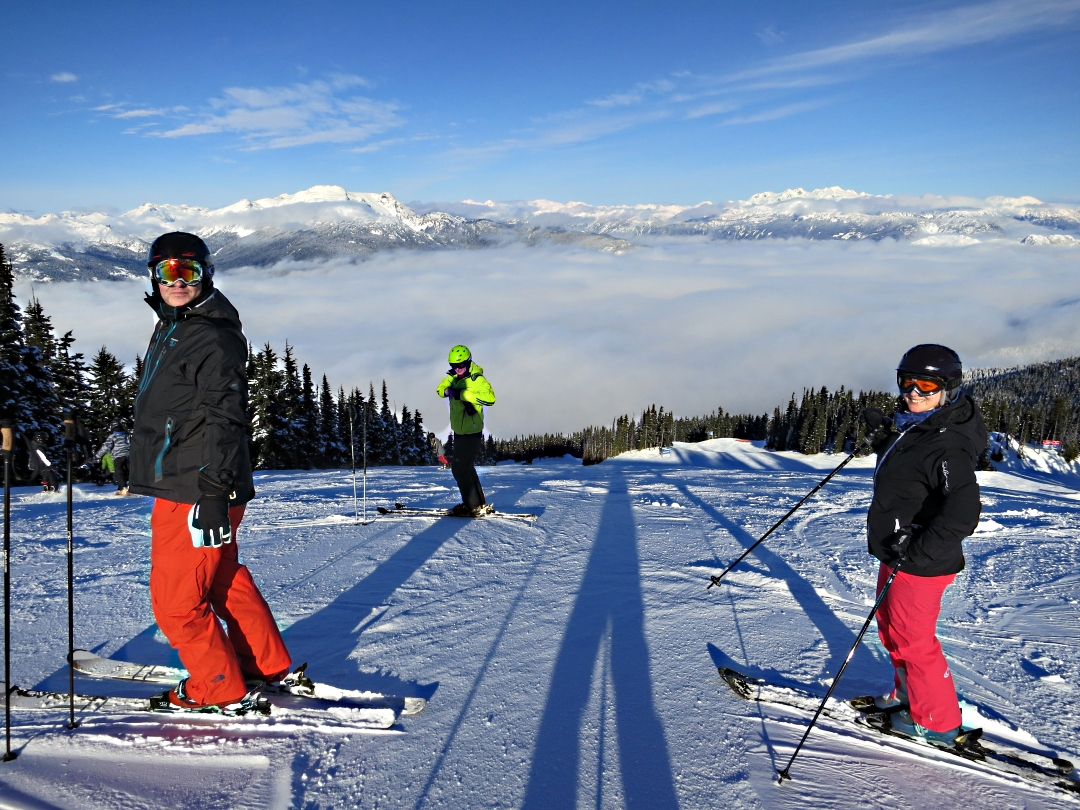
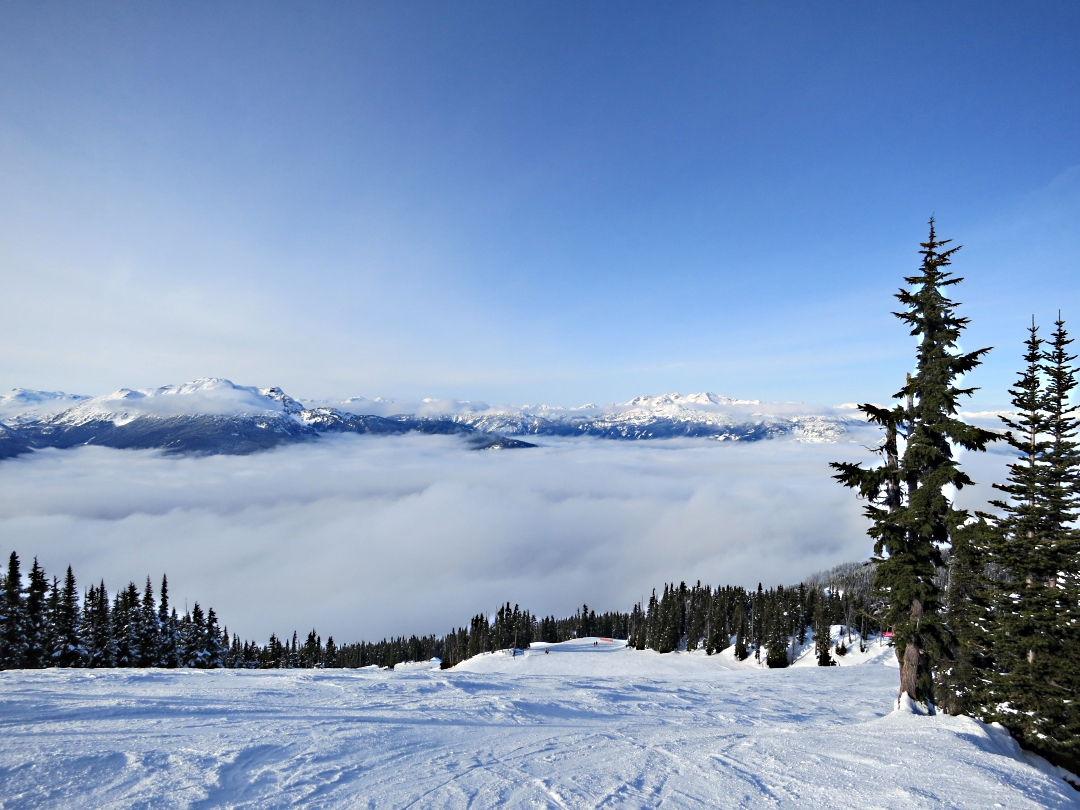
Nevertheless the skiing was very different not only because the snow was heavier and therefore slowed the skis more but also because of the pervading cloud cover.  Some days the cloud masked the entire mountain giving a very ‘flat’ light and making it impossible to see the shape of the snow-covered ground, a problem for skiing incompetents like me.  Other days the gondola carried us through a cloud band and into bright sunshine towards the peaks. And then a crystal clear day with blue sky everywhere.

Skiing has its origins going back possibly 5 millennia as a means of transport over snow, but as a sport it dates back only to the latter part of the 19th Century.  Don’t get me wrong, skiing is very enjoyable but looked at objectively it is a somewhat bizarre sport. The name comes from the Old Norse word  “skíð” meaning ‘stick of wood’ and basically that’s what we do, strap modern high-tech, expensive, fashionably decorated planks to our feet and slide downhill trying to achieve a compromise between speed and control.  And occasionally stopping to look at the scenery which is breathtaking when it’s not wreathed in cloud.

Strapping planks to our feet is strange enough but in order to keep them there we encase our feet in rigid plastic boots and clamp them tight to prevent any possibility of movement.  Typically these days boots each have four metal camming devices which are ratcheted as tight as they will go and then clamped shut, usually accompanied by much grunting with the effort as each clamp is levered into place.  It would be regarded as inhumane and cruel if we did it to others, like Mediaeval torture devices or Chinese foot-binding, but somehow it’s OK if we do it to ourselves.

Walking in ski boots is an art, but neither a very pretty nor dignified sight.  It is impossible to stand upright.  This is because the legs cannot be straightened, the boots holding them in a forward inclination in order to help achieve the best skiing position, tilting the body forward towards the front of the skis.  Walking is therefore a series of articulated jerks, going up or down steps more exaggerated jerks.  It’s a relief to get them off and put on normal boots or shoes.

Clamped into ski boots and ready to go.  Compare this with my Gravata which what I normally wear

Clamped into ski boots and ready to go. Compare this with the sandalled feet in my Gravata

The boots are clamped onto the skis and off we go trying not to cross the front of the skis over each other as that way lies discomfort, pain and, worst of all, indignity.  As we do so a group of 2 year-olds is likely to ski past like tiny ducklings in neat formation following the mother-duck in a  green jacket labelled ’SKI SCHOOL’, zooming downhill in perfect smooth curves.  If only ……

But being up in the high mountains in winter conditions makes it all worthwhile and I always go armed with a camera.

Skis slotted in the outside of the gondola passing trees heavily laden with fresh snow

Skis slotted in the outside of the gondola passing trees heavily laden with fresh snow

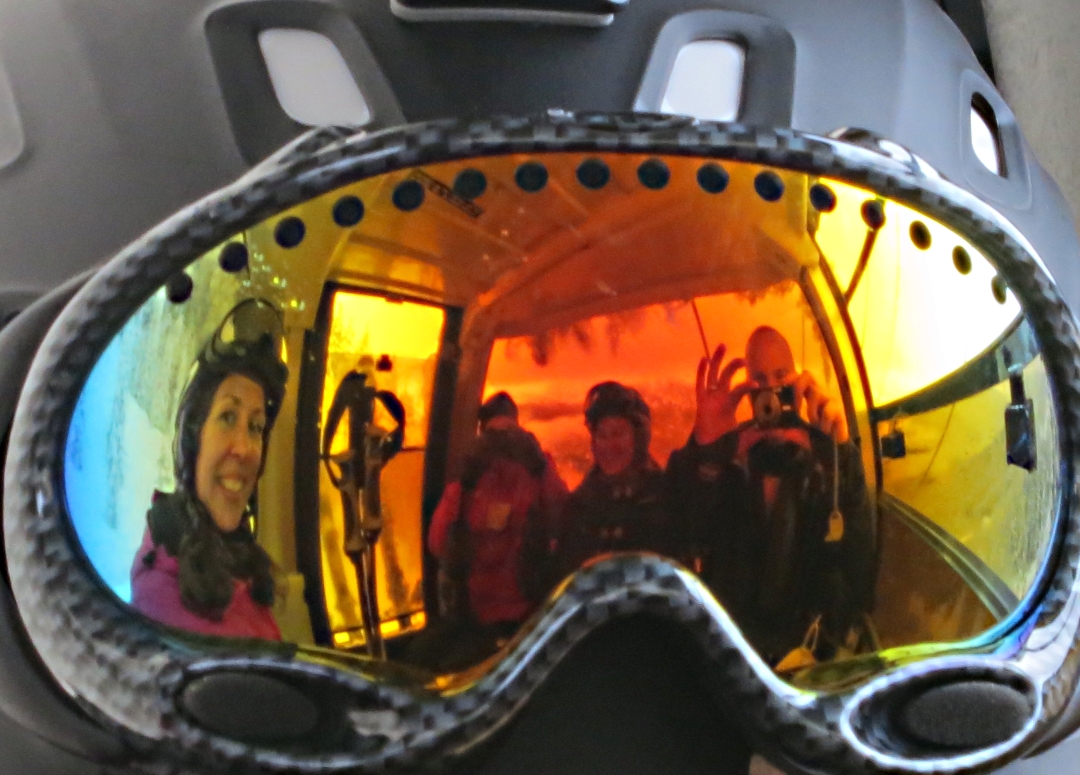
Time for reflection riding up in the gondola

Time for reflection riding up in the gondola

Reaching the top of the gondola and looking across to the next peak

Reaching the top of the gondola and looking across to the next peak

... and then a chairlift to the snow-blasted rocks close to the summit

… and then a chairlift to the snow-blasted rocks close to the summit

Long shadows as we pause before the ski down

Long shadows as we pause before the ski down

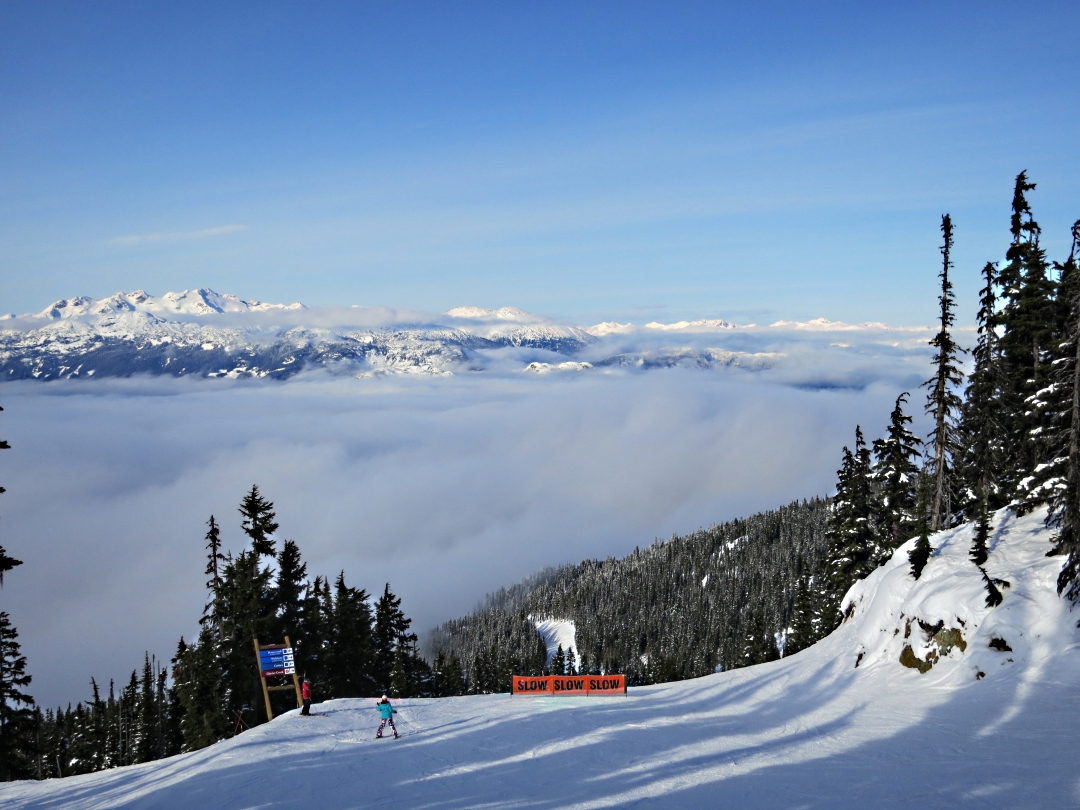
Beginning the ski down, aiming for the orange sign just right of centre

Beginning the ski down, aiming for the orange sign just right of centre

'SLOW' signs are put just before a sharp drop

‘SLOW’ signs are put just before a sharp drop

In places the run narrows

In places the run narrows … and then drops steeply

Pausing to look back up the mountain from which we have come

Pausing to look back up the mountain from which we have come

Looking up the run between trees heavily laden with snow at a critical point on the long descent

Looking up the run between trees heavily laden with snow at a critical point on the long descent

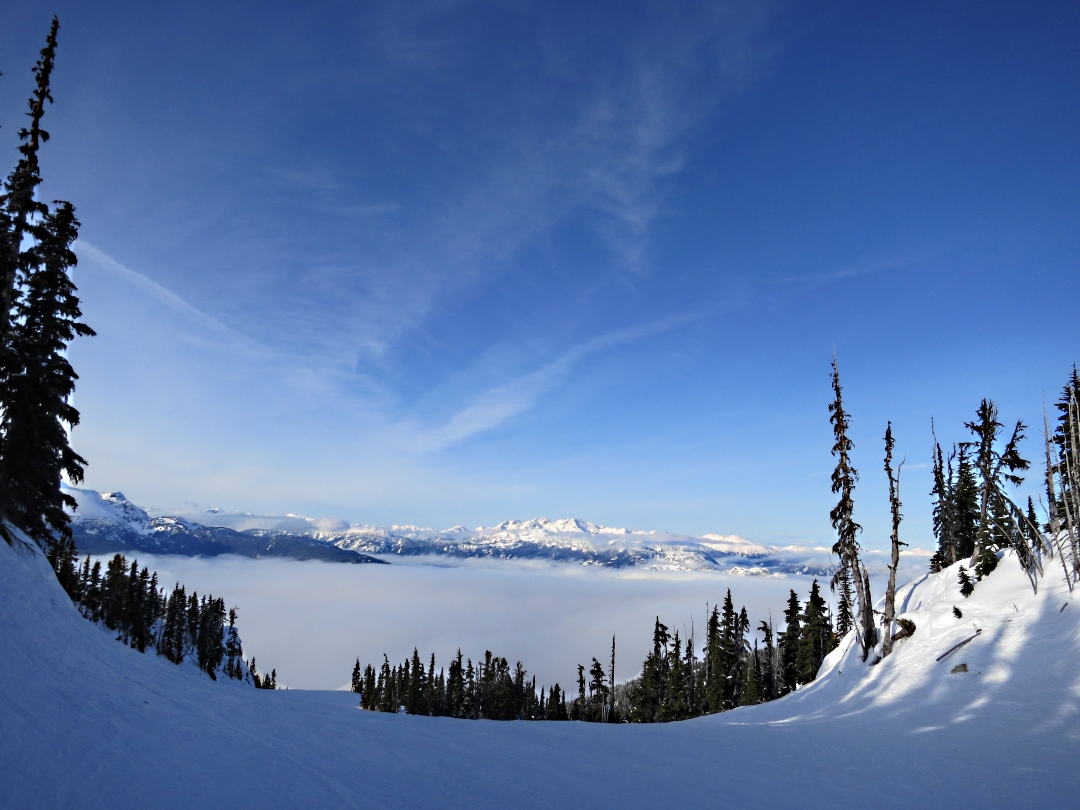
Looking downhill from the same point into the cloud into which we are just about to ski

Looking downhill from the same point into the cloud into which we are just about to ski

Back jup to the top and a look across from Blackcomb Mountain to Whistler Mountain

Back up to the top and a look across from Blackcomb Mountain to Whistler Mountain

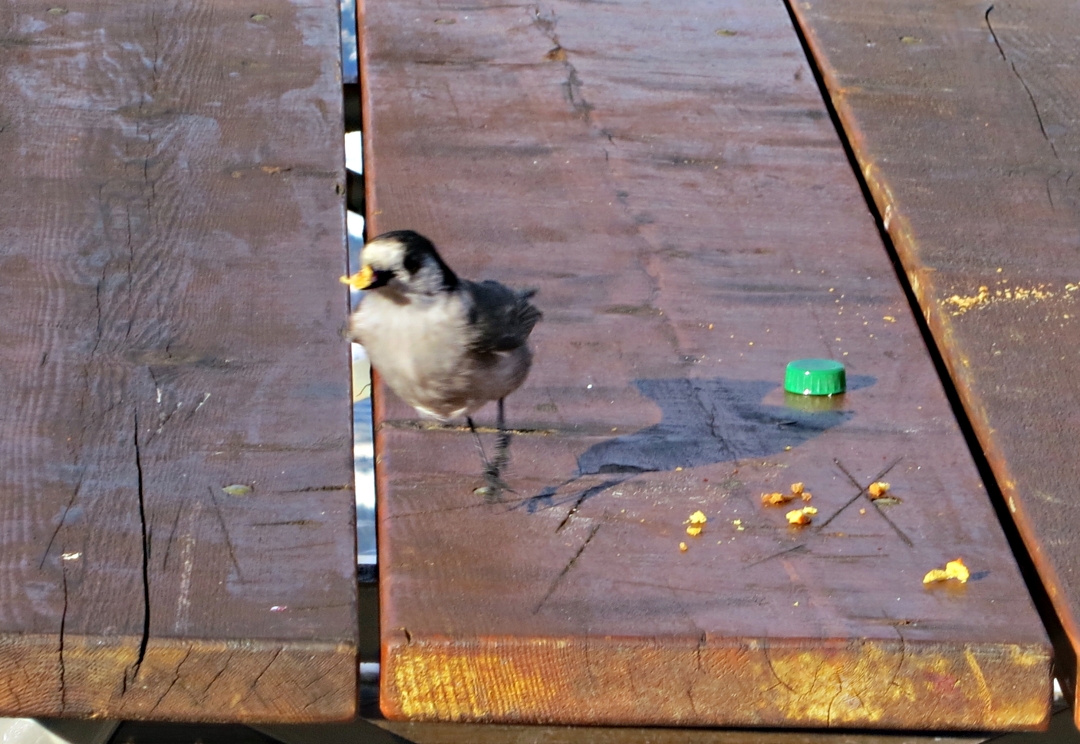
Mountain restaurants are frequented by 'Camp Robbers' , properly known as Canada Jays but also known by a variety of names including Whiskey Jacks

Mountain restaurants are frequented by ‘Camp Robbers’ , properly known as Grey or Canada Jays but also known by a variety of other names including Whiskey Jacks

They perch, watching ....

They perch, watching ….

and when they see a few crumbs they swoop down and straight off again to hide the food, coated in adhesive spittle, in tree bark

and when they see a few crumbs they swoop down and straight off again to hide the food, coated in adhesive spittle, in tree bark

x

Posted in Canada, Health and humour, Winter | Tagged , , , , , , , , , , , , , , | Leave a comment

Banff: a Canadian Rockies town in Winter

Apologies for the blog-free zone.  I’ve been in Whistler since Saturday, skiing every day on either or both of Whistler and Blackcomb Mountains.  But I’ll come to those another time.  I couldn’t leave Banff behind without giving some impressions of the town.

In the eponymous National Park, Canada’s first, it maintains a ‘frontier’ atmosphere while catering for an up-market clientele in terms of hotels, shops and restaurants.  It has the character of a ‘real’ town though I guess it wouldn’t have a raison d’être without the tourist trade but strict limits are placed on that by the National Park Authority in order to limit its growth and its environmental impact.  Busy in winter with people coming for the snow sports by all accounts it is far more manically busy in the summer with those coming for summer mountain sports or just passing through on an itinerary between Calgary and Vancouver.

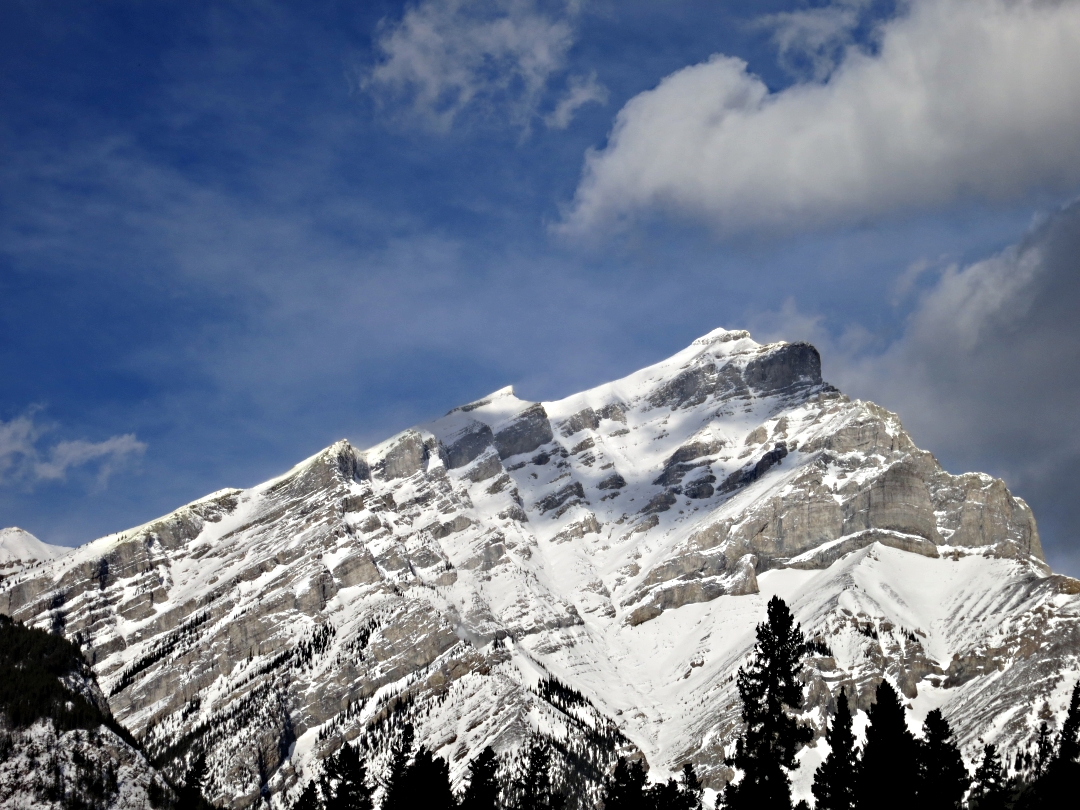
Cascade Mountain, dramatic backdrop along the length of Banff Avenue

Cascade Mountain, dramatic backdrop along the length of Banff Avenue

.... and after dark

…. and after dark

The sweet shop on Banff Avenue, perahps the biggest selection of sweets I have seen anywhere.  Shame I don't eat sweets.

The sweet shop on Banff Avenue, perhaps the biggest selection of sweets I have seen anywhere. Shame I don’t eat sweets.

It partly owes its thriving tourist trade to the fact that it lies on both the spectacular Trans Canada Highway and the (so I’m told) equally spectacular railway across the Rockies.  The Trans Canada Highway cuts right across wildlife migration routes and so is furnished with bridges and underpasses and, within the National Parks at least, is fenced on both sides.  Any winter treatment is with gravel and not salt as that would attract animals by providing a linear salt-lick.  Even so there is concern that animal deaths on the road are increasing and so consideration is being given to installing electric wires across the top of fences or electric mats at their base.1

13Canada072w0579

Castle Mountain. one of the notable features on the Trans Canada Highway

One of the wildlife corridor bridges over the Trans Canada Highway

One of the wildlife corridor bridges over the Trans Canada Highway

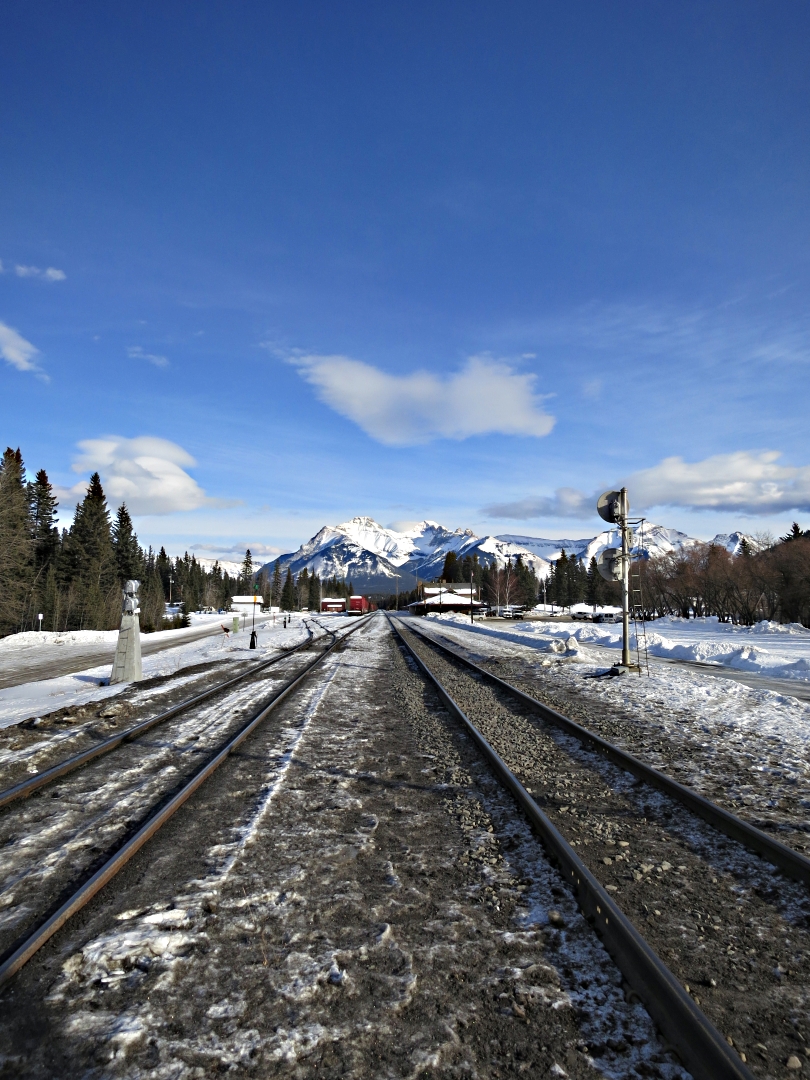
The railway line is much used by freight trains which, when you are standing at the side of the track waiting to cross, seem to be miles long, as indeed they are.  Double stacked container trains are limited to 4.2 kms, while general cargo is limited to a mere 3.7 kms.  However, despite the fact that there is a station in Banff there are no scheduled passenger services.  Instead passenger traffic is limited to what basically amount to luxury cruises.  The cheapest ticket I could find on the internet from Calgary to Vancouver via Banff was $1,200 plus tax, the top of the range ‘gold’ service was $5,800…. all exclusive of tax as is the Canadian custom.  An aside here, Canadians prefer everything to be priced with tax added at the checkout  so they can see how much the Government is taking off them.  As Barbara Flynn used to say in the Beiderbeck Trilogy “It’s a point of view”

13Canada059w0752

Looking along the lines to Banff Station

Train coming

Train coming

Train going .... and going .... and going .....

Train going …. and going …. and going …..

Rail bridge over  the creek dwarfed by the trees and mountain behind

Rail bridge over the creek dwarfed by the trees and mountain behind

Train line on the opposite said of one of the Vermillion Lakes

Train line on the opposite side of one of the snow-covered Vermillion Lakes

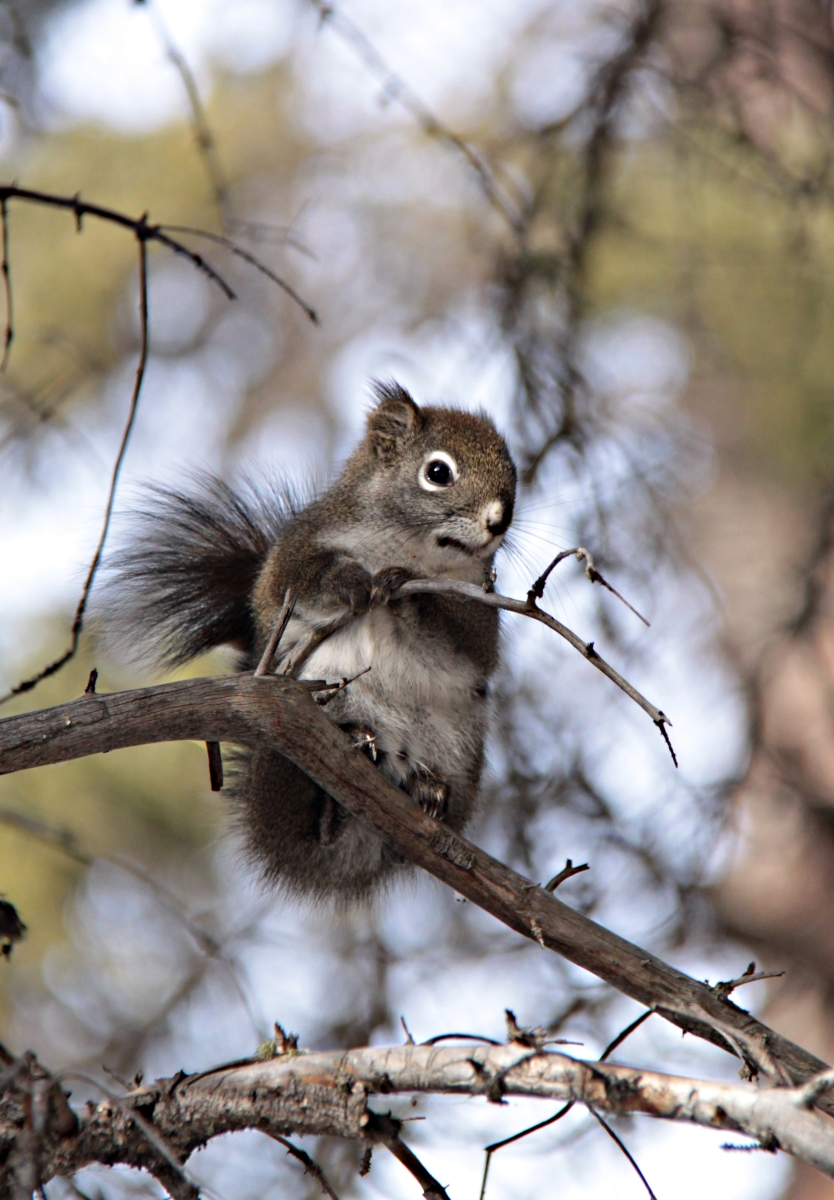
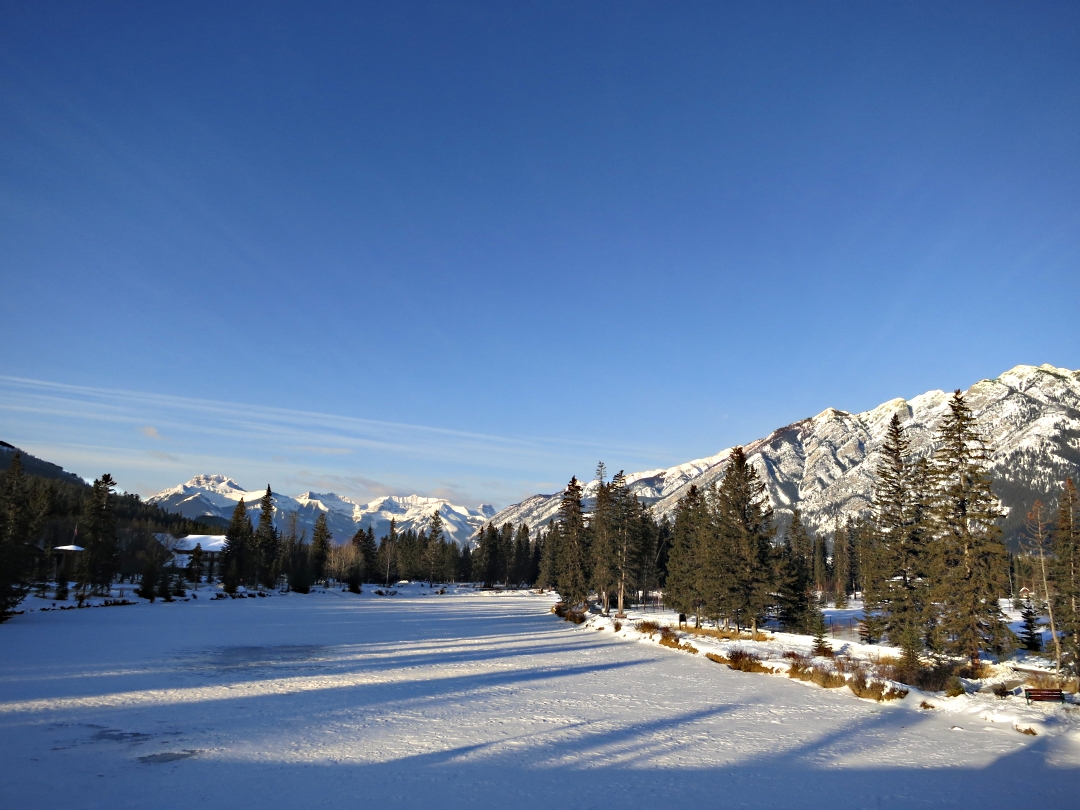
 I have to admit that I love Banff in Winter because as well as offering relatively nearby skiing there is plenty of opportunity to explore the ‘trails’ even in winter.  I love walking by the frozen river or up Tunnel Mountain and more recently I followed a creek around to the frozen Vermillion Lakes just a brisk jog from the town centre, pleased to see a  Canadian Red Squirrel on the way.

Mount Rundle across a snow-covered Vermillion Lake

Mount Rundle across a snow-covered Vermillion Lake

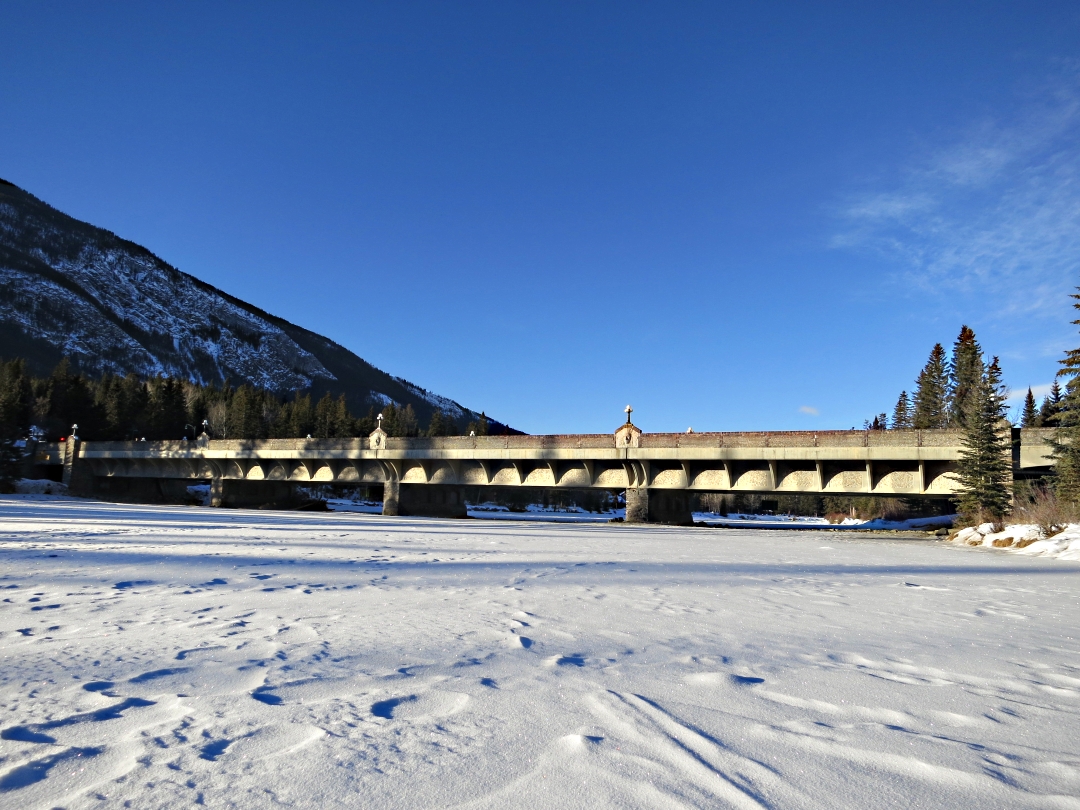
The bridge from the surface of the snow-covered river

The bridge from the surface of the snow-covered river

Looking upriver to the Banff Bridge over the Bow

Looking upriver to the Banff Bridge over the Bow

Canadian Red Squirrel

Canadian Red Squirrel

Canadian Red Squirrel having dinner

Canadian Red Squirrel having dinner

Ina  harsh environment it seems that the only members of the crow family which survive are ravens and magpies

In a harsh environment it seems that the only members of the crow family which survive are ravens and magpies

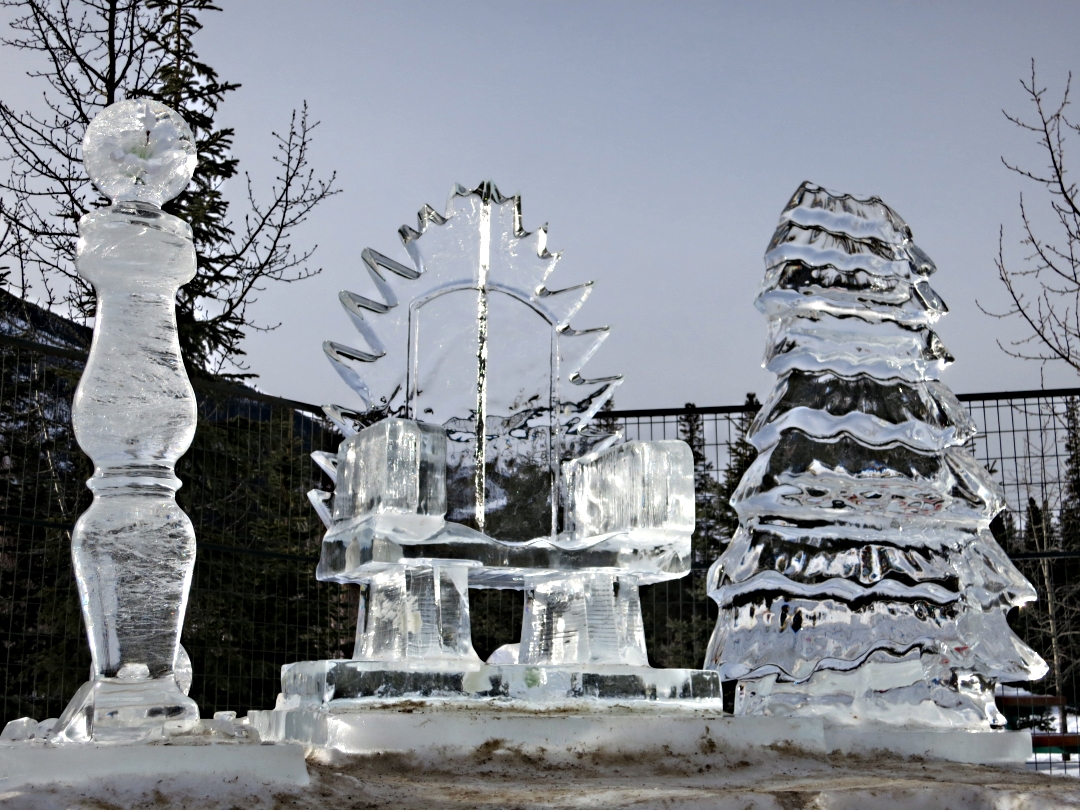
One thing which characterises the east side of the Rockies in Winter is that is cold.  Not as cold this time as last (2010-11) but temperatures are generally well below freezing for months.   This coupled with winter tourism imparts a character to the town like nowhere else I know.  Where else would you find a skating rink and ice-climbing wall in the main street or an ice-sculpting competition?  Brilliant.

Bicycles half buried in snow are scattered around the town for weeks on end

Bicycles half buried in snow are scattered around the town for weeks on end

Ice throne will be around for Pretenders until Spring

Ice throne will be around for Pretenders until Spring

Ice serpent

Ice serpent

Ice climbing wall in the main street

Ice climbing wall in the main street

.... changing colour

…. changing colour

.... again

…. again

.... and again

…. and again

.... must be outputting when you're hanging on by toes and ice-axe tips

…. must be offputting when you’re hanging on by toes and ice-axe tips

13Canada075w0662

…. quite mind-blowing in fact

For those thinking of  a trip to Banff I recommend  Barpa Bill’s, the Greek food take-away2, The Banff Avenue Brew House for real ale/microbrewery aficionados3, and the Keg in the Caribou for top quality steaks4.

http://www.calgaryherald.com/travel/National+parks+scramble+address+spike+human+caused+wildlife+deaths/7142603/story.html

http://www.banffpages.com/food_drink/restaurants/barpa_bills.html

http://www.banffavebrewingco.ca/

http://www.banfflakelouise.com/Things-To-Do/Dining/Canadian/Banff-Keg-Steakhouse-Bar-Caribou-Lodge-Spa

Posted in Canada, Mountains, Winter | Tagged , , , , , , , , , , , , , , , , , | 1 Comment

Survival: skiing, snowboarding and ice hockey

A small part of the church service which I went to in the Banff Presbyterian Church on Sunday morning was to exchange with the person next to or close to you something which you regarded as a  blessing during the last week.  This is not a feature in the church which I attend at home and the suggestion that we exchange such intimacies took me by surprise.  Being very reserved by nature I froze and tried to sink into the pew.  When the lady nearest to me smilingly asked what I had found a blessing I blurted out what first came into my head as being true – I don’t and can’t bullshit – and I said  “I survived” .  She thought this hilarious but I meant it.

She asked at the end of the service “are you a skier?”.  I answered, again truthfully, and said “No.  But I ski”.

What’s the difference?  I reckon that to be an “-er” or an “-ist” you need to be good at it.  I ski but I’m not a skier.  On the other hand I am a canoeist albeit rather rusty now.  Until I dropped out of the organisation I was an instructor. Similarly I would count myself as a paraglider pilot (I used to be a coach), a climber, a mountaineer, even a caver.  But I’m not yet approaching the level of competence to call myself a skier.

Which is why when asked I said I regarded it as a blessing that I survived the previous week.  I go out in the morning and am apprehensive and therefore pleased when I get to the end of a day on the ski hill in one piece and without major incident rather than being carted off on a meat-wagon.

Thursday was the first time that I reckon I made any progress in increasing competence. Snow conditions were near-perfect, 14cms of powder over a groomed base and my daughter and husband, both qualified ski instructors, spent the day with me on what was basically a 2-on-1 private lesson. I was conscious that for the first time I began to learn and improve and by the end of the day I was tired but felt more confident and skied more smoothly.  Not a lot but enough to work on over the next couple of weeks.

It was therefore a bit of a downer when, on the final glide to the lift to go back up to the top of the runs on which we were doing training laps, I was suddenly hit forcibly in the back by a snowboarder.  Again!!!  This was the third time in 10 days I had been in a collision and each time with a snowboarder.  First time the guy went over the back of my skis as we got off the chairlift leaving me sprawling across the unload area.  Second time a girl crashed into the back of me on the run down to the top of Easy Street at Lake Louise (like with cars the person behind is at fault).  On Thursday a girl on a snowboard came into the ‘merge’ of two runs at high speed and backwards, so not looking in the direction of travel.  In terms of statistical probability there is only a 12.5% chance that all three collisions would be occasioned by snowboarders.  Would you bet money on tossing a coin three times and it fall heads each time?  So is there a problem here?

I reckon that there is.  I have no beef about snowboarding as a sport.  It’s as legitimate as skiing.  But I’m afraid I go into Grumpy Old Man mode here.   Many of those who snowboard are youngsters who unfortunately have little consideration for others or appreciation of the consequences of their actions.  Furthermore, there is a functional disadvantage.  Because they stand on the board sideways they can only see one side of the piste and so have a very marked ‘blind spot’.  This combined with the inconsiderate attitude of youth means that snowboarders, particularly those who straight-line down the slope on easy runs in order to get somewhere else,  are more likely to be in collision with skiers, or each other, than are other skiers.

Not all snowboarders are guilty of inconsiderate behaviour but it is a generalisation which many skiers with far more competence and experience than me hold to be true.  Some ski resorts such as Deer Valley in Utah ban snowboarding outright.  Not that I’m suggesting that here.  I’m just making a plea that snowboarders should be both more considerate and more aware of others.

Thankfully, snowboarding is not a sport in which provision for testosterone–fuelled aggression is built into the rules …..  unlike ice-hockey, a contact sport if ever there was one. There is ice hockey on the TV screens in all the bars and restaurants in town most of the time.  It is quite legitimate within the rules of that sport to smash your opponent into the barriers and generally slam each other around.  It is even legitimate to have a punch up with another guy as long as it’s one-on-one and you keep helmets on and don’t use sticks.  Arguably this is  sublimation of aggression: if players do it on the ice others are not doing it in the streets or the bars.  Shades of ‘Rollerball’.

By contrast, on the ski hill ‘Alpine Rules’ apply which basically boil down to a considerate and watchful attitude to all other mountain users, rules with which, as a mountaineer, I’m well familiar.  Being wiped out 3 times in 10 days and each time by snowboarders to me indicates a generic problem.  It is not statistically probable.  Two of the three snowboarders apologized but that doesn’t heal the bruising on my hip.

Friday the snow was if anything even better and I spent the day practicing what I had been taught on Thursday.  It was the last day in Banff, the last day skiing Sunshine and Lake Louise.  Saturday morning we head off to Calgary, fly to Vancouver, meet up with other friends and shuttle up to Whistler.  Leaving behind good friends but a new and probably very different experience for me.

Posted in Canada, Grumpy Old Men, Mountains, Reflections, Winter | Tagged , , , , , , , | Leave a comment

More Rockies Rambling around Banff

On Sunday I had another day-off skiing, went to the morning service in the local Presbyterian Church of Canada, a building shared with the Korean Presbyterians, and then in the afternoon set out to walk the trail to Sundance Canyon. 

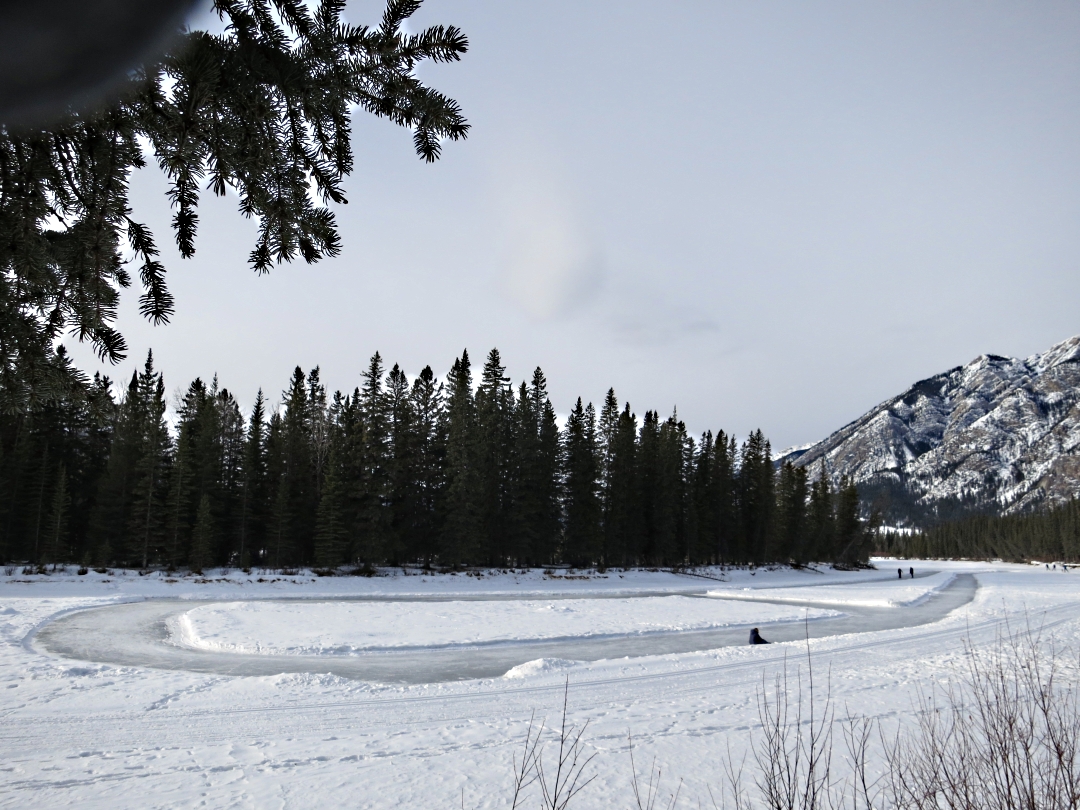
The first part of the trail follows the Bow River to the Hot Springs.  The river is thickly frozen upstream of  Banff Bridge and there are not only winter paths across it but informal, semi-organised activities including an ice-skating oval which is cleared of snow by a snow-blower.

Looking upriver from Banff Bridge

Looking upriver from Banff Bridge

One of the footpaths across the river-ice

One of the footpaths across the river-ice

A skating oval cleared of snow on the river

A skating oval cleared of snow on the river

At the point where the stream flows into the Bow River at the Hot Springs the ground alongside is not only clear of snow but there are water plants growing and a distinct whiff of sulphur.  Two years ago when I was here in considerably colder temperatures the trees and shrubs alongside the stream were thickly covered in hoar frost.

I follow the ‘Marsh Loop’ in the trail which keeps close to the river and part way along it come to a staging point for the  ‘Lake Louise’ to Banff’ cross country ski race with a guy directing ski traffic and proffering cups of hot drink.  The sign on the Trans Canada Highway just after Banff  says it is 55 kilometres to Lake Louise so they have clearly come a good distance and it shows in the tautness of the faces.  This was the point where the competitors are diverted off the trail and onto the river ice.

For some distance now I dodge out of the way as skiers come fast towards me, some poling with skinny skis flat in well marked grooves, others ‘skating’ from foot to foot much like speed skaters, rising to full height as they pole on each forward push using both leg and upper body strength.  Not all of them are super-fit youngsters, there are a significant number of older competitors who look seriously weather- and activity-toughened.  I envy them their toughness as I trudge slowly on.

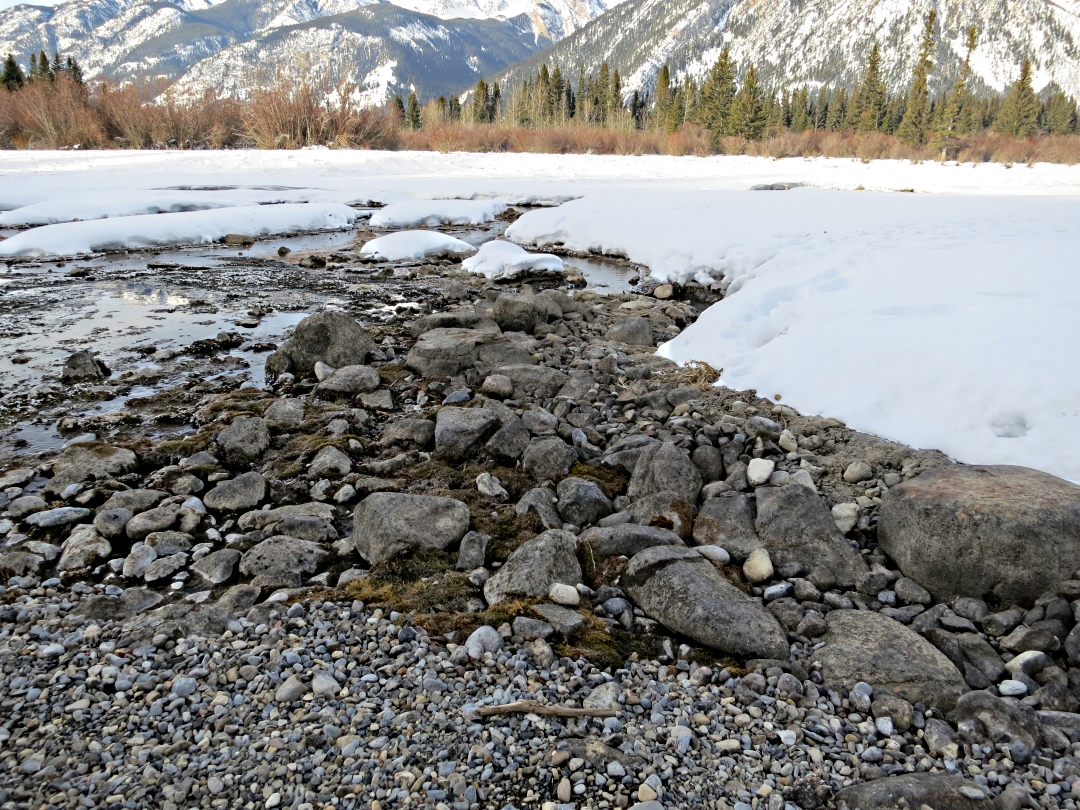
A little further along is a small stony beach presumably kept clear of snow by another hot spring draining into the river.  I sit in the sun on a rock at the edge of the beach and eat my banana and nut bar and think back to doing the same thing on Greek beaches less than 4 months ago.  Then I swam in the Aegean, today I wandered the river-ice with the camera.

A stony beach kept clear of snow by the warm spring emerging into the river

A stony beach kept clear of snow by the warm spring emerging into the river

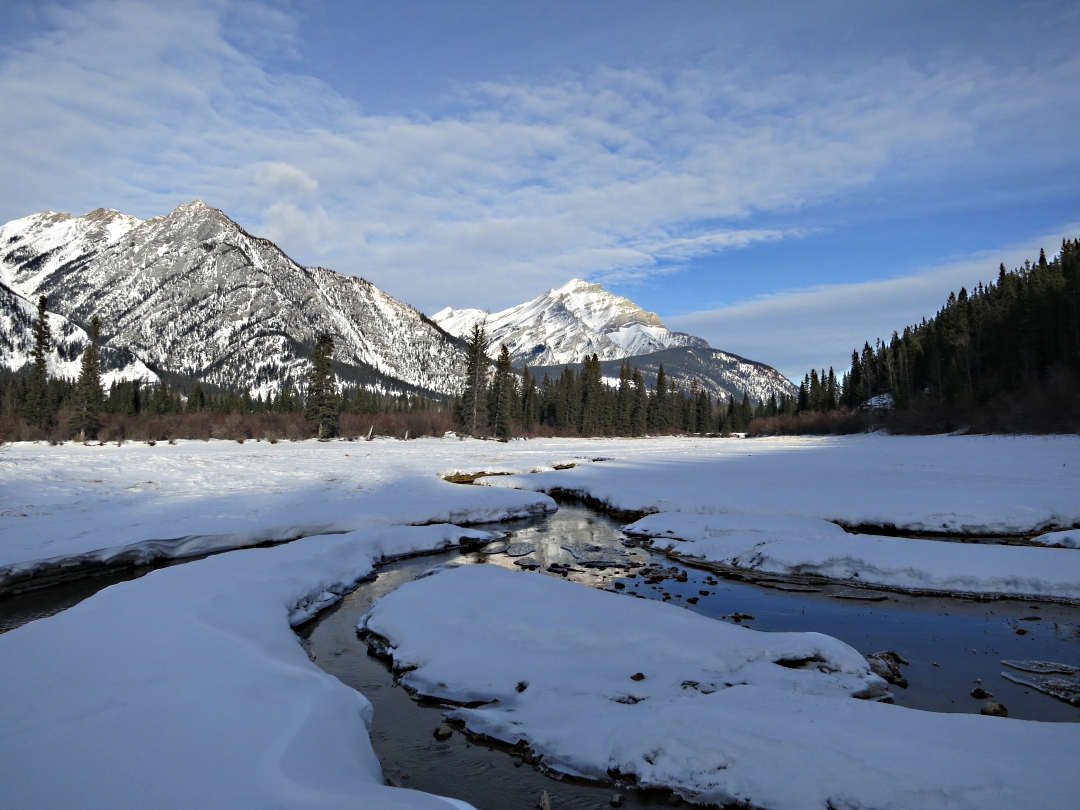
The warm spring water keeps narrow channels open snaking downstream through the thick ice

The warm spring water keeps narrow channels open snaking downstream through the thick ice

Continuing along the trail, broad at this stage because it is the old road from Banff, now dedicated for walking, cycling and skiing, I pass a picnic site with tables and a large covered building with long tables and benches inside to keep it free of snow and then a ‘washrooms’ as they are called over here.  Snow is piled up against the door but it opens easily and inside are very simple earth closets, dug deep to escape the frost, and equipped with seats and paper.  Amazing!

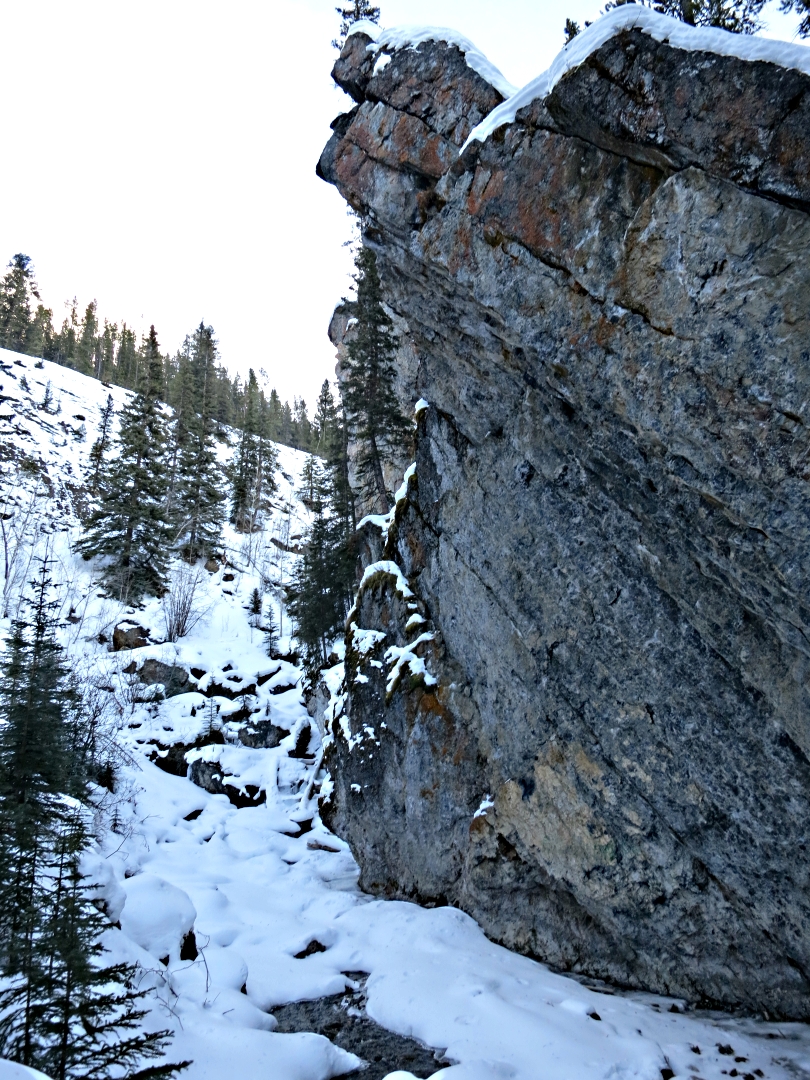
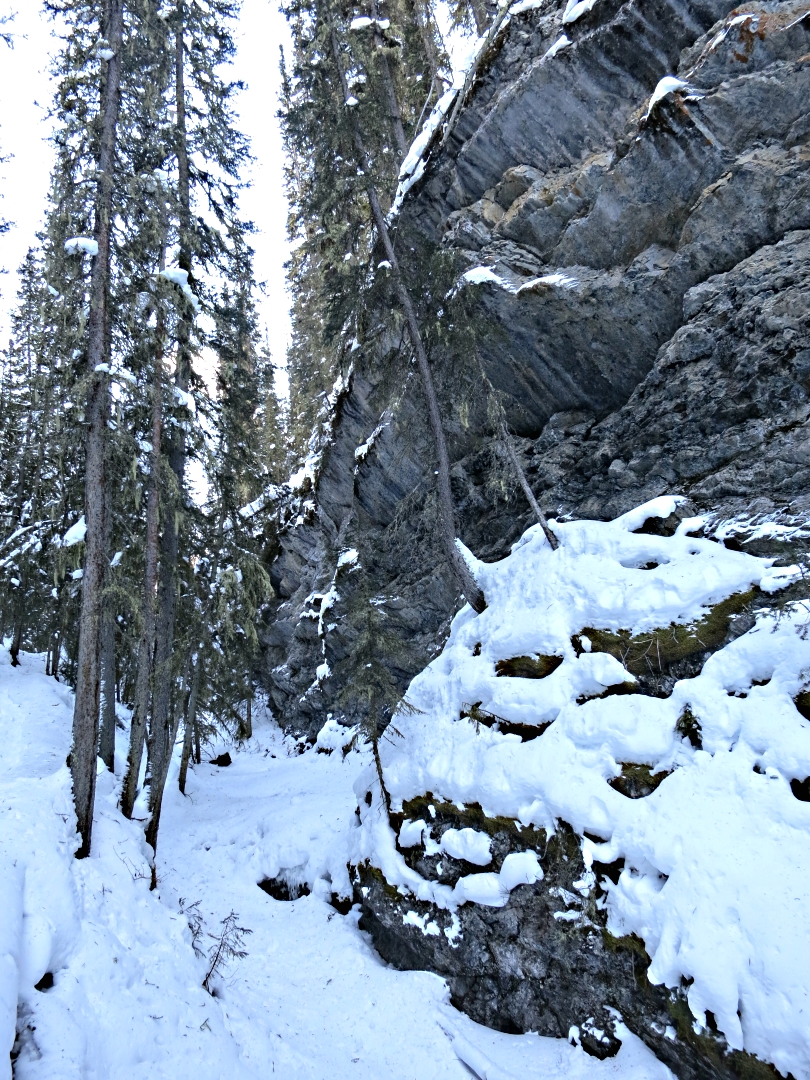
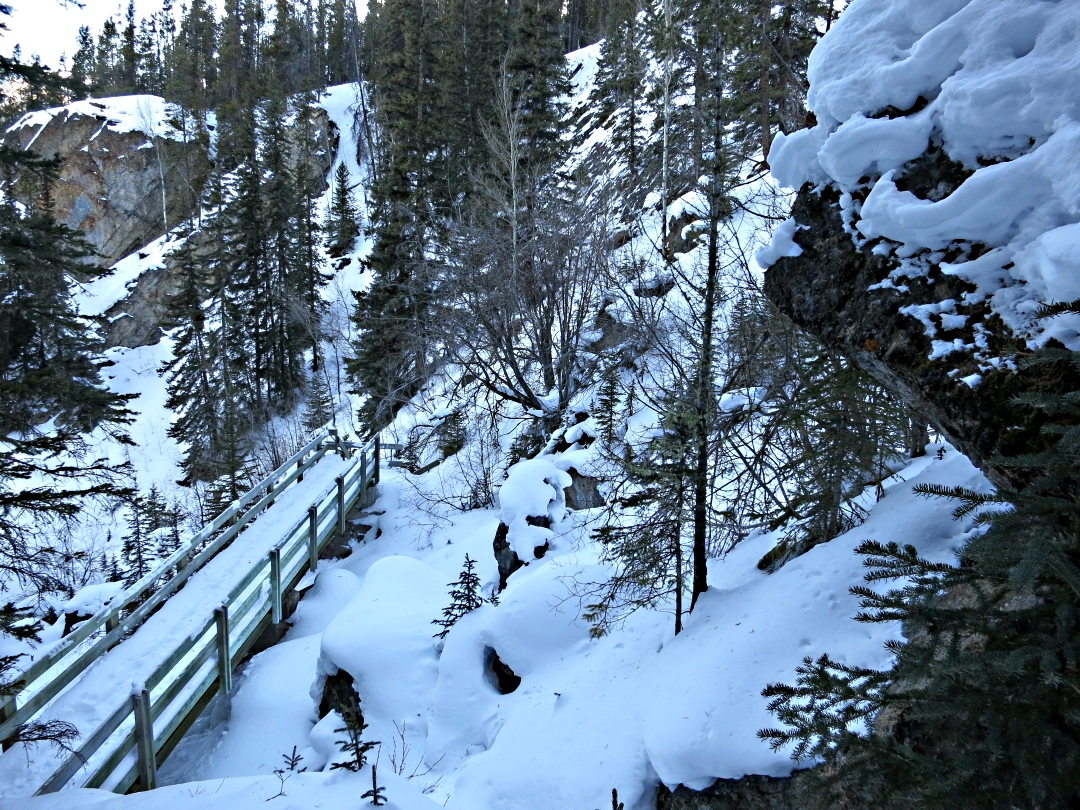
A little further and at yet more picnic tables the path to Sundance Canyon dives off to the left alongside a small stream which tumbles down the steep rocks under a covering of snow at the foot of towering crags.  Having crossed the wooden bridge over the stream I climb up the narrow path, obviously not the first to do so since it last snowed.  In places it is clogged with snow and shiny as others have slithered up and down but it presents no real problem.

What is a problem is taking photographs which adequately represent the dramatic pleasure of it, partly because the vertical height is too much to get into a single shot and partly because it is deep in shade  while the upper slopes are in bright sunlight.  The human brain can compensate for the difference and take it all in at one glance but I haven’t yet found a way of doing so adequately with a camera.

The beginning of the steep climb up into Sundance Canyon alongside the snow-covered stream

The beginning of the steep climb up into Sundance Canyon alongside the snow-covered stream

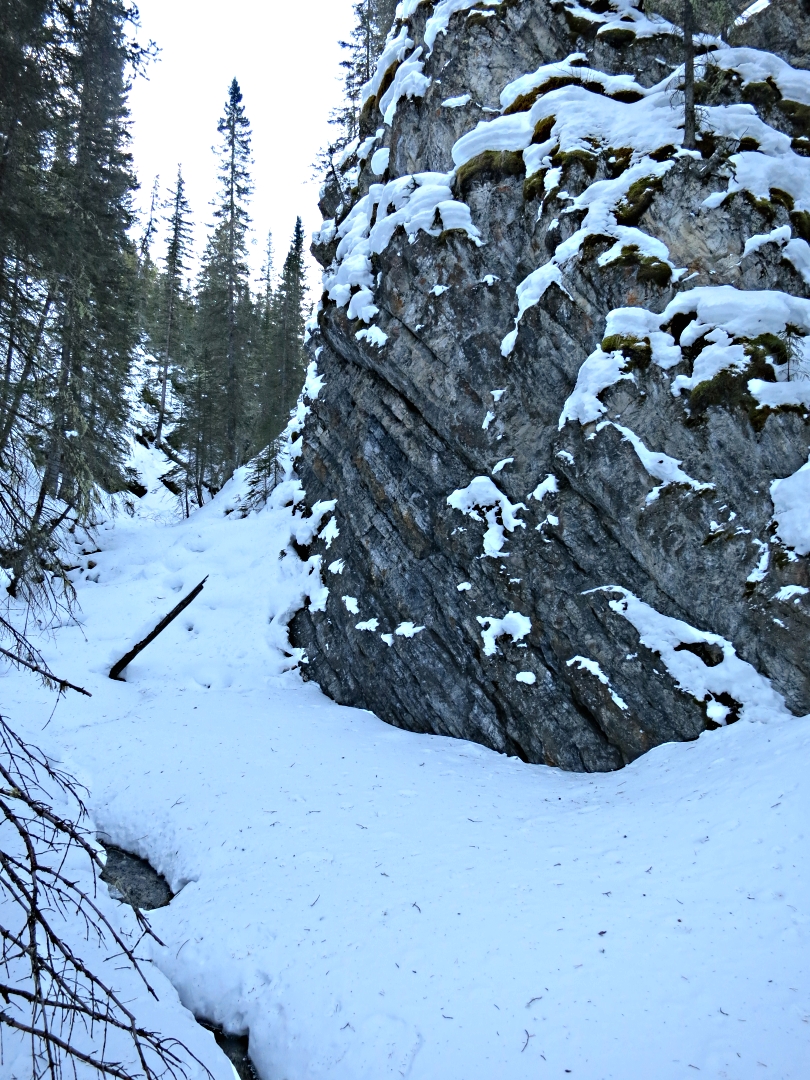
Climbing higher into the canyon the way forward gets narrower

Climbing higher into the canyon the way forward gets narrower

The path drops onto the stream itself with holes in the snow where the water can be seen rushing below

The path drops onto the stream itself with holes in the snow where the water can be seen rushing below

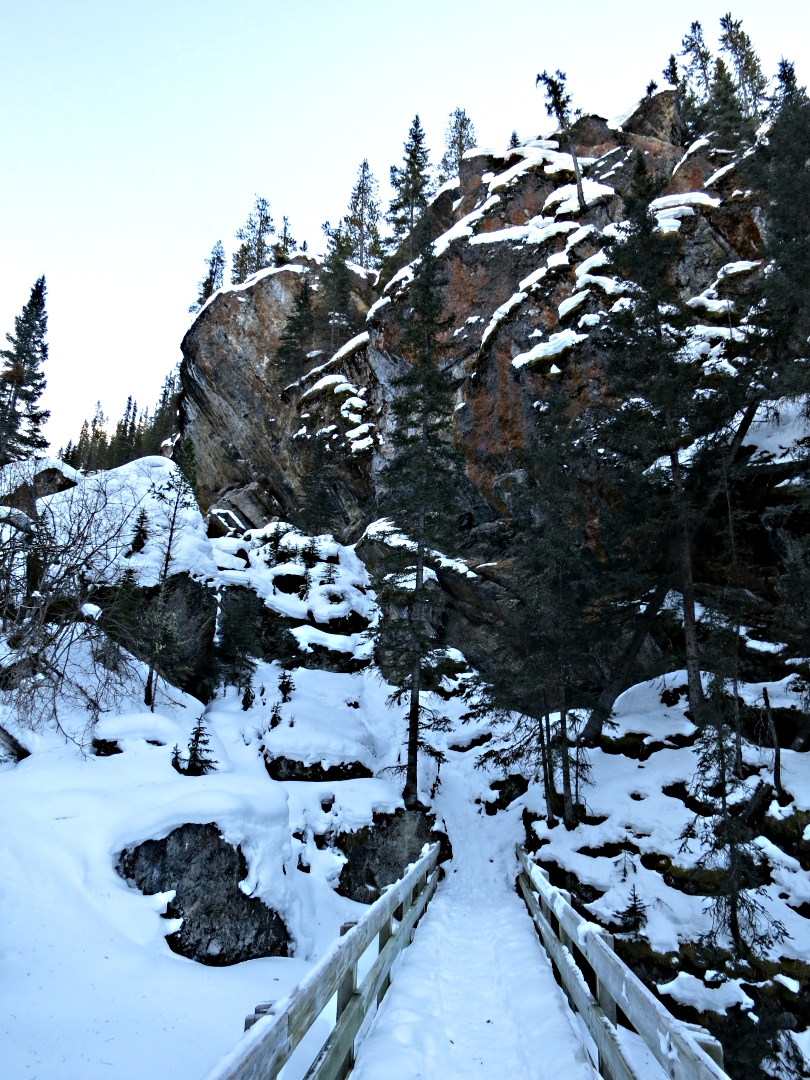
Crossing the timber bridge across the top of a waterfall  with a steep climb out to the left on the far side

Crossing the timber bridge across the top of a waterfall with a steep climb out to the left on the far side

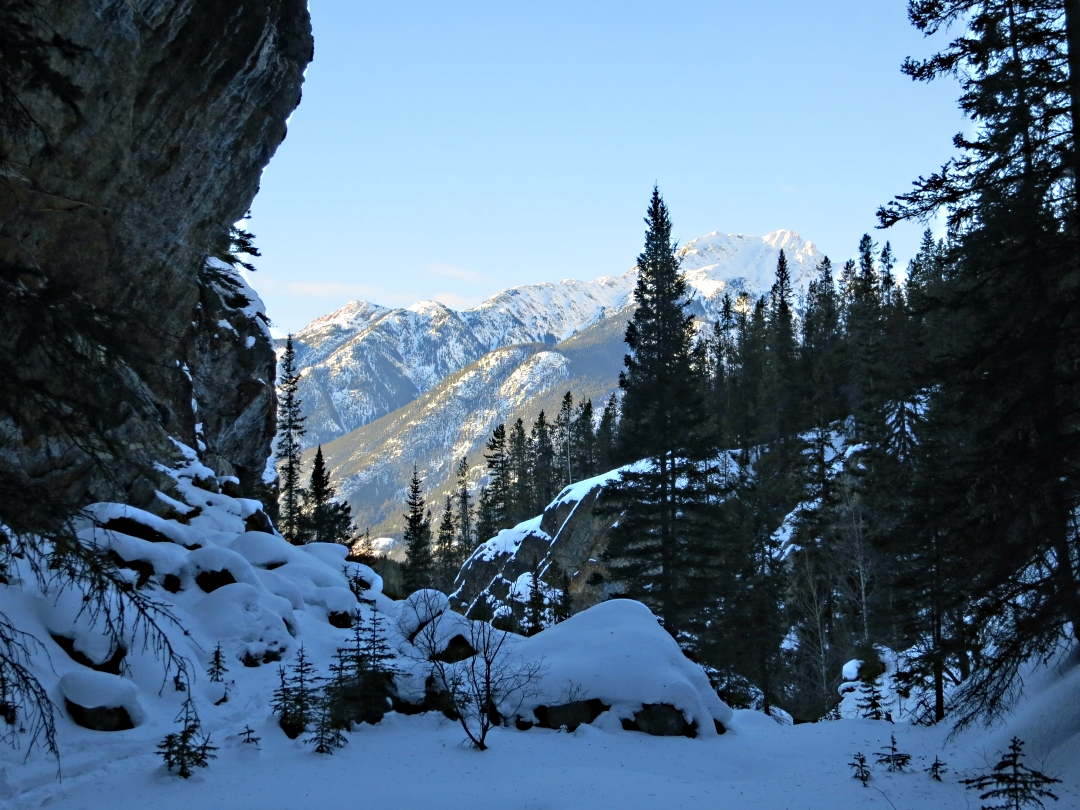
Approaching the steep drop on the way back down, sunlit cascade Mountain in the background

Approaching the steep drop on the way back down, sunlit cascade Mountain in the background

Looking down to the bridge over the waterfall

Looking down to the bridge over the waterfall

In places the stream is crossed by bridges over the snow-filled gully, waters roaring out of sight underneath.  I only become apprehensive when, after the steep climb, the path trodden by others went onto the snow over the stream.  I cannot but remember the time when as  young teenager walking in the Peak District in Derbyshire I fell through a crust of snow into the plunge-pool of a waterfall with a snow-roof 20 feet above and had to climb out using my rucksack as an ice-axe.  This time I was very cautious and escaped going through into the water which appeared from time to time through holes in the snow.

I follow the trail made by others, who by now were using snow-shoes judging by the tracks, up into the top of the canyon and then out onto the ridge at the side to reach a viewpoint through the trees.  This is where I decide that I should turn back.  The snow shoe tracks continued but I don’t know where they were going or what retrieval arrangements they might have made.  The altimeter on my watch told me I was at  just short of 5000 feet and I had reached a natural destination point.  I hate turning round in the middle of nowhere, I prefer to get to somewhere definitive, preferably a peak.  From the viewpoint the tracks went downhill and in the opposite direction to which I needed to go so turning round was an easy and natural decision, given that now it was past 15.00 and it was a 2 hour walk back to Banff.

I was hungry when I got back to town so went straight to Barpa Bills, a Greek take-away on Bear Street and had spanakopita (cheese and feta pie), Greek salad and tzatziki.  Delicious!  A very satisfying end to a very satisfying afternoon.

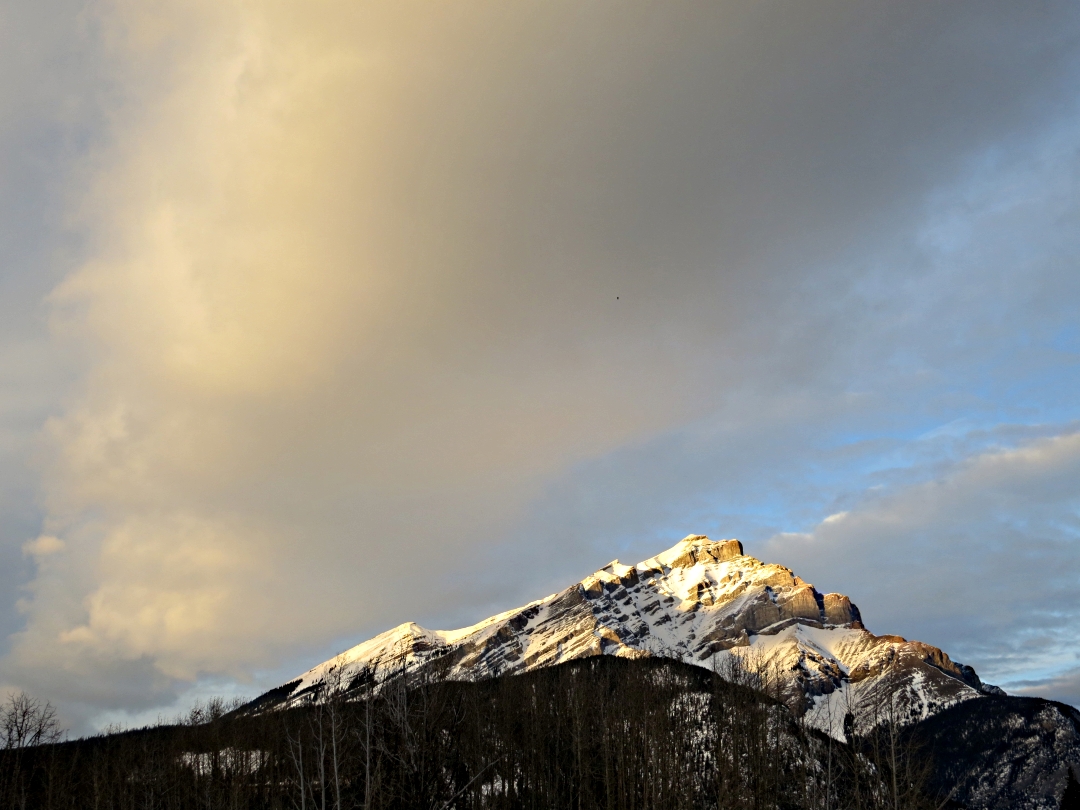
The snow-capped Cascade Mountain turning golden in the setting sun

The snow-capped Cascade Mountain turning golden in the setting sun

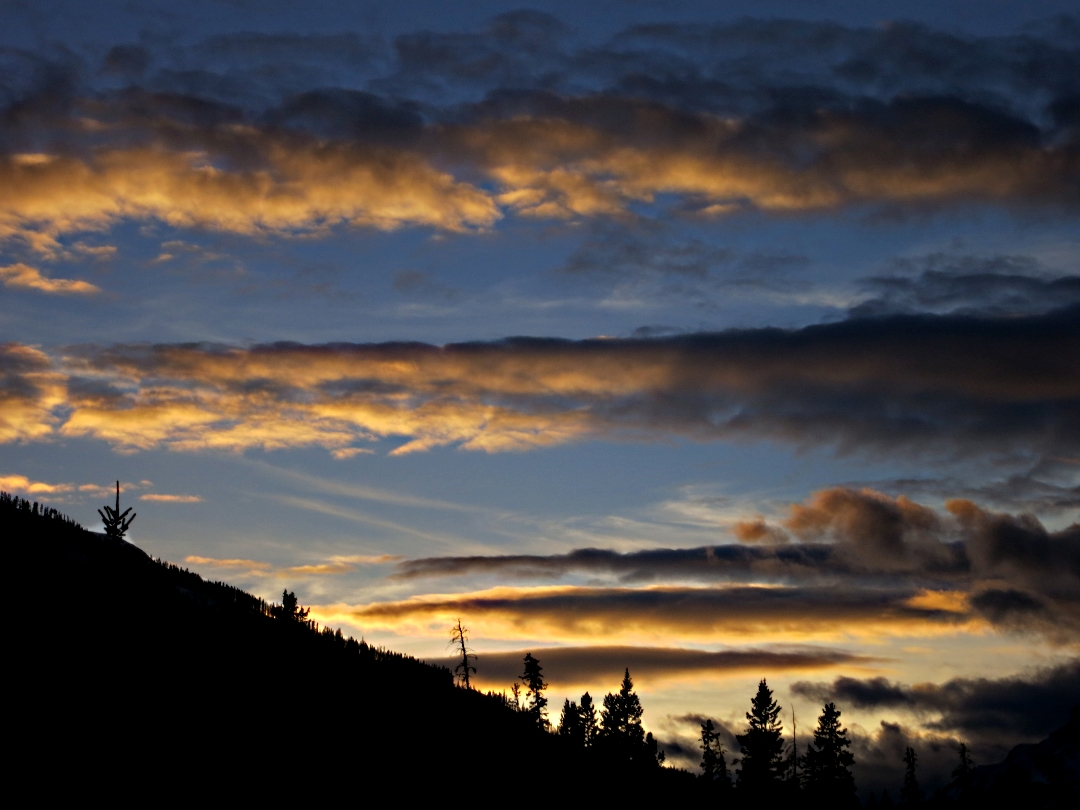
.... and even more gold in the clouds

…. and even more gold in the clouds

x

Posted in Canada, Mountains, Winter | Tagged , , , , , , , , , , , , , | Leave a comment

Rockies Rambling around Banff

Though the sight of the deer carcass on the frozen river was a sobering reminder that the Canadian Rockies are not just picturesque and benign but are nature in the raw (the previous blog post), Thursday’s rambling along the Bow and Spray Rivers and up Tunnel Mountain was a graphic reminder of just how dramatic this landscape is. This blog post is just a series of images from those walks.  

13Canada031w9260

Looking downstream to the bridge across the river at the top of the Spray River Loop Trail

13Canada032w0610

Snow blows horizontally off Mount Rundle in the strong wind

Looking across the Bow River to Cascade Mountain North East of Banff

Looking across the Bow River to Cascade Mountain North East of Banff

13Canada034w0629

Wind-blasted trees at the top of Tunnel Mountain, looking northwards along the Bow Valley as the sun dips down towards Sulphur Mountain

13Canada035w0636

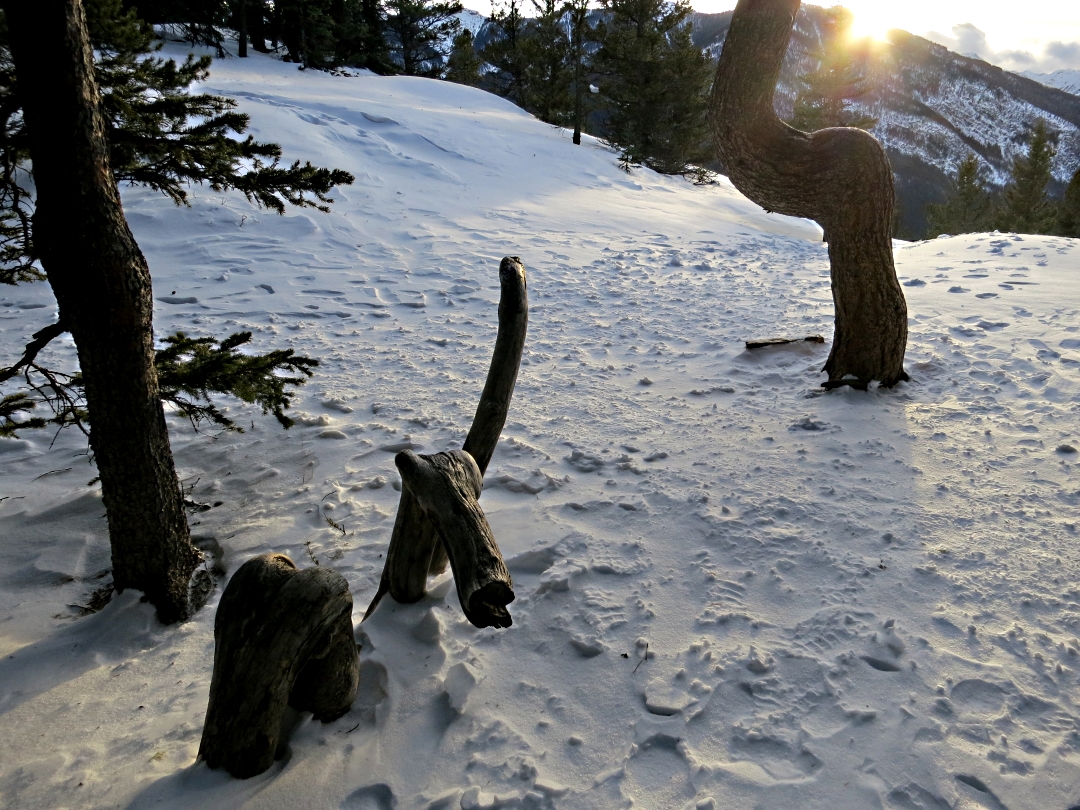
Some trees are well-gnarly and not all survive

13Canada036w0636

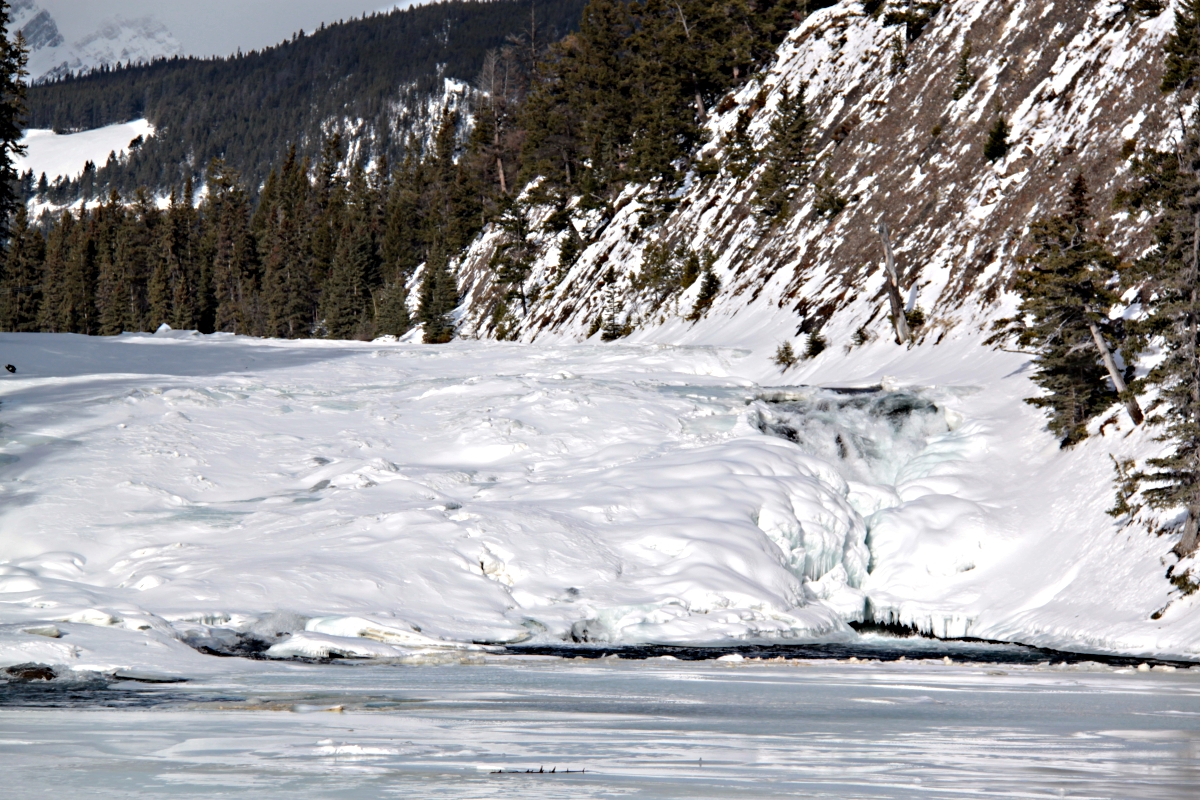
Looking upstream to the frozen Bow Falls, water still powering down on the right

13Canada038w9241

The edge of the river-ice thaws and refreezes in jagged icicles

13Canada039w0627

The wind whips up the snow which a few seconds later engulfs me as the sun sets behind Sulphur Mountain

13Canada040w0627

Looking eastwards from the top of Tunnel Mountain along the Bow Valley towards the Fairholme Range with Mount Rundle on the right

13Canada041w9624

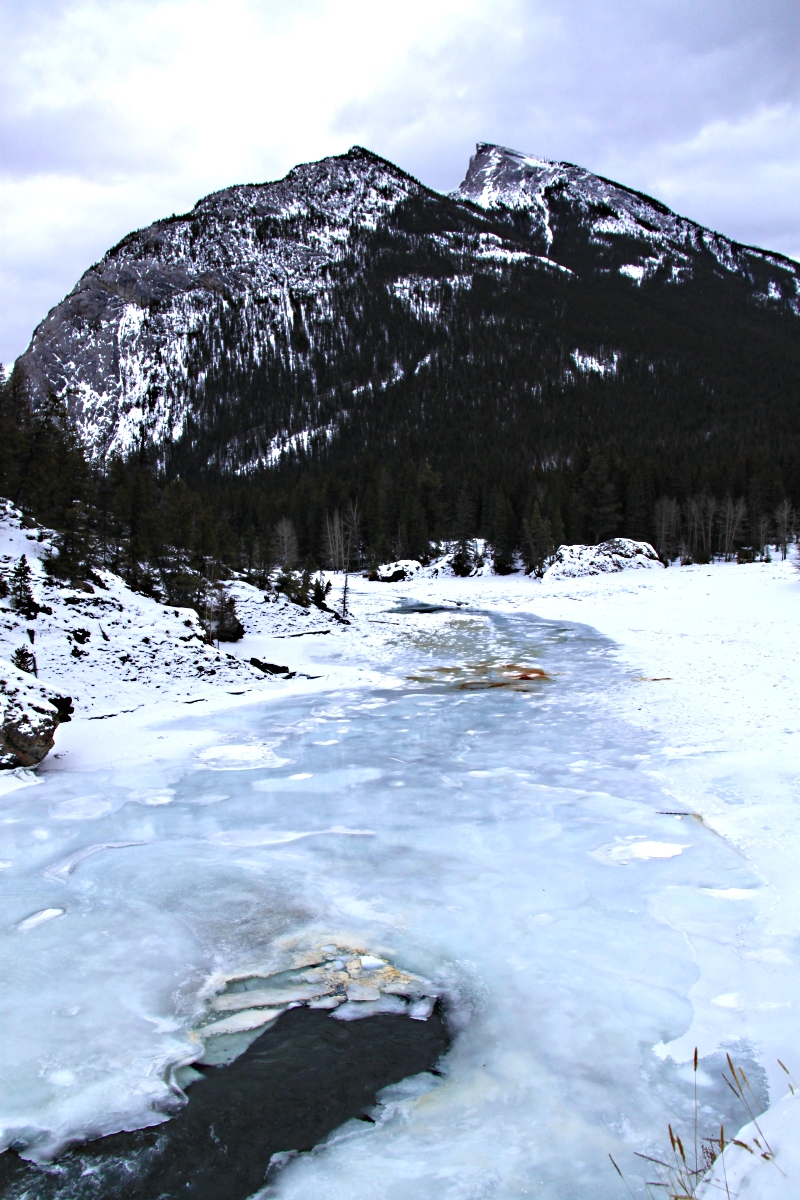
Looking across the jagged river ice eastwards towards the Fairholme Range from alongside the Bow Falls

13Canada037w0637

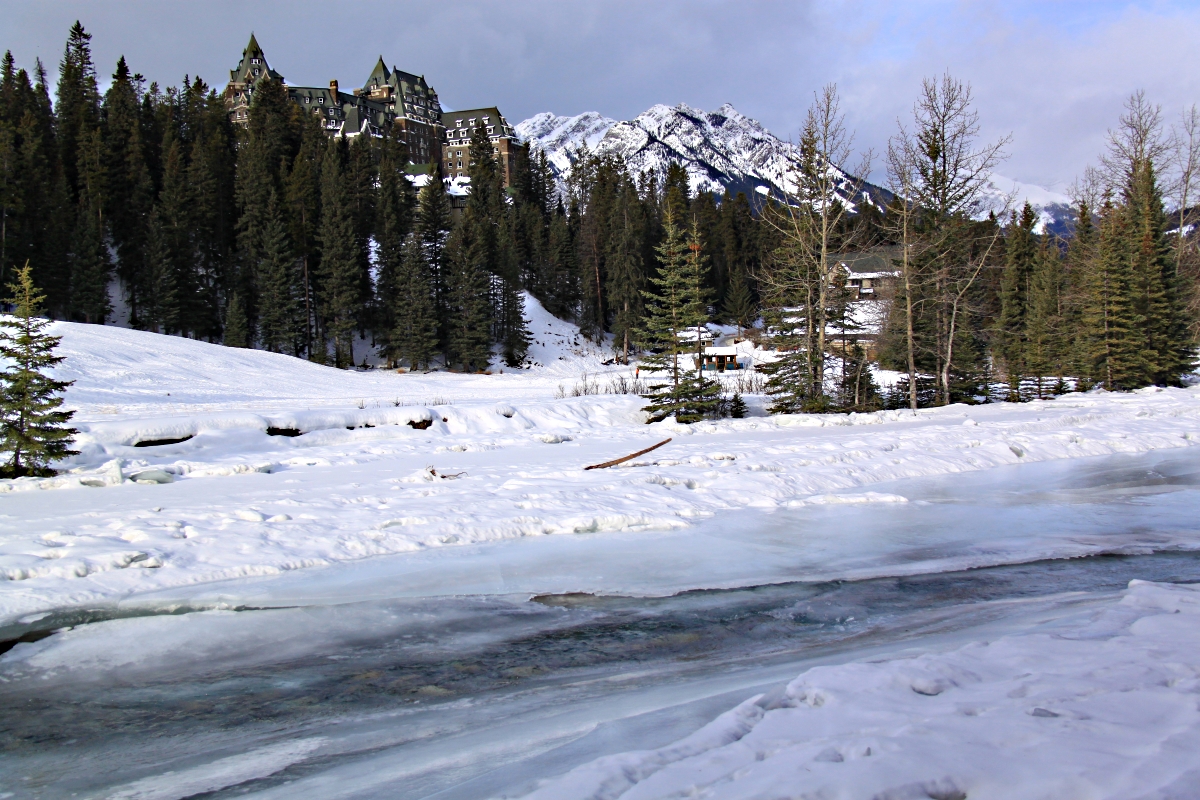
Looking across the Spray River to Sulphur Mountain beyond the monolithic Banff Springs Hotel


For much better and exceptional quality of images from this part of the world I recommend ‘Canadian Hiking Photography by Patrick Latter, a guy who lives around here and obviously knows what he’s doing technically and photographically.  See for example his ‘Lake Minnewanka by night’: http://hikingphoto.com/2012/11/12/lake-minnewanka-by-night/

Posted in Canada, Mountains, Winter | Tagged , , , , , , , , , , | Leave a comment

Canadian Rockies: where wildlife is red in tooth and beak ….. but it’s all a matter of perspective

Enlarge the images by left-clicking on them

Thursday was a day-off from skiing.  But not a day for sitting on my backside or mooching aimlessly around the shops as some seem to do (generally spouses here with significant others who go off and ski).

Instead I walked along the trail to Bow Falls, from there up the River Spay to a footbridge and then back down the opposite bank.  In the afternoon I went up Tunnel Mountain just to make quite sure that a day-off skiing was not a day of inactivity.

Not having to focus on balancing on the planks on my feet on steep, slippery slopes I took far more photos.  So I’ll deal with the day in two parts in separate posts.  First the gory stuff so if you’re squeamish exit now and wait for the nice pictures.

The path climbs a crag dropping straight down to the iced-up river as it reaches the Bow Falls and offers a good view not only of the jagged ice over the tumbling falls but also of the broad expanse of ice at the right angle bend in the Bow River at the bottom as the River Spray joins it from the south.  There was more open water than the last time I was here indicating that temperatures have not been as low.

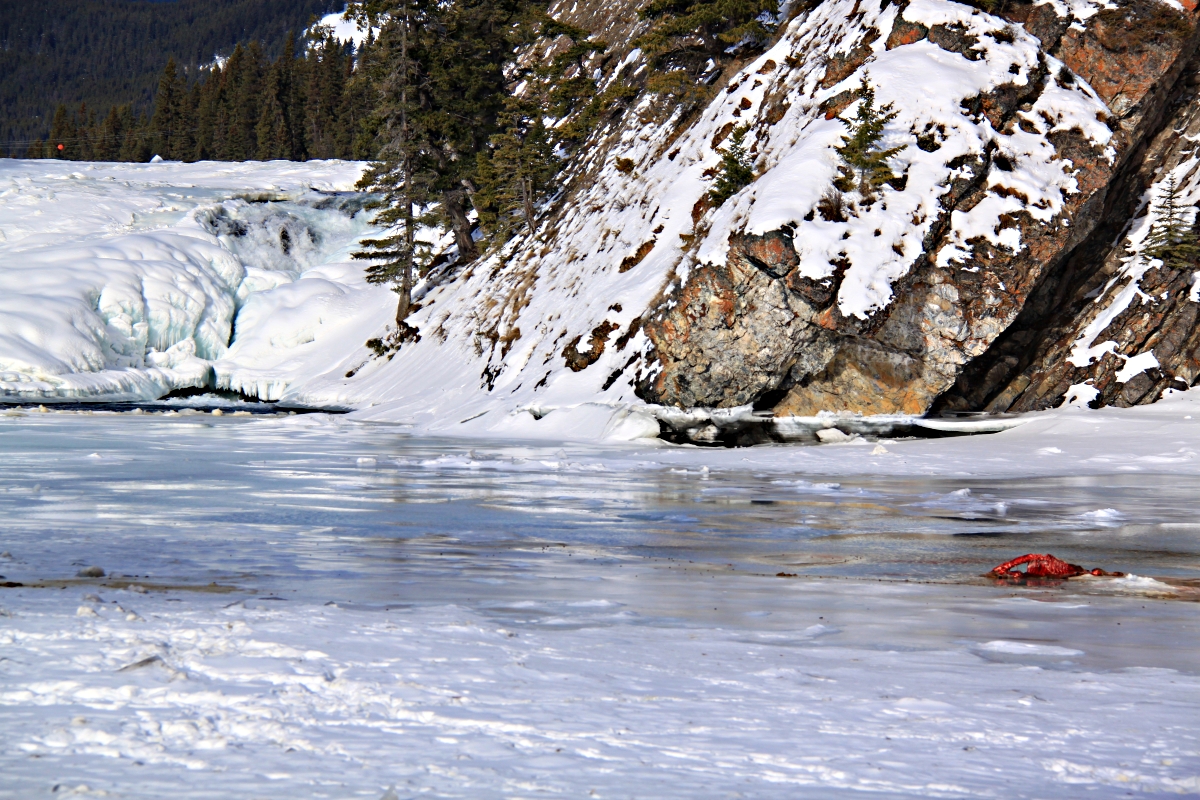
From the top of the bluff two patches of discolouration could be seen on the ice.  The closer of the two was fairly clearly mineral deposits washed downstream, the other was less clear but I guessed from the magpies sitting on it and squabbling that it might be a carcase.

Problems with the contrast between snow/ice and trees, but the discoloration of the ice is obvious

Problems with the contrast between snow/ice and trees, but the discoloration of the ice is obvious

Dropping down the path from the cliff to the river’s edge it became clear that it was indeed a fairly large carcass and from the size and shape I reckoned it was probably a deer.  There was guy standing on the frozen river out towards it so I ambled over to take a closer look and have a chat.

That it is the carcass of a deer becomes clearer from closer to

That it is the carcass of a deer becomes clearer from closer to

From this angle the freshly stripped rib-cage was bright in the sunlight.  I thought it unlikely that the ravens circling overhead and the magpies perched on the bones would have cleared all that flesh, carrion-eating birds tend to finish off the job begun by  large predators.  I had seen coyotes on this stretch of river barely half a mile further downstream on one of my winter ramblings in 2011 and wondered if it was they who had killed the deer or merely taken advantage of the beast’s demise.

The bright red rib-cage close to the bottom of the iced-up waterfalls

The bright red rib-cage close to the bottom of the iced-up waterfalls

.... and zooming in

…. and zooming in

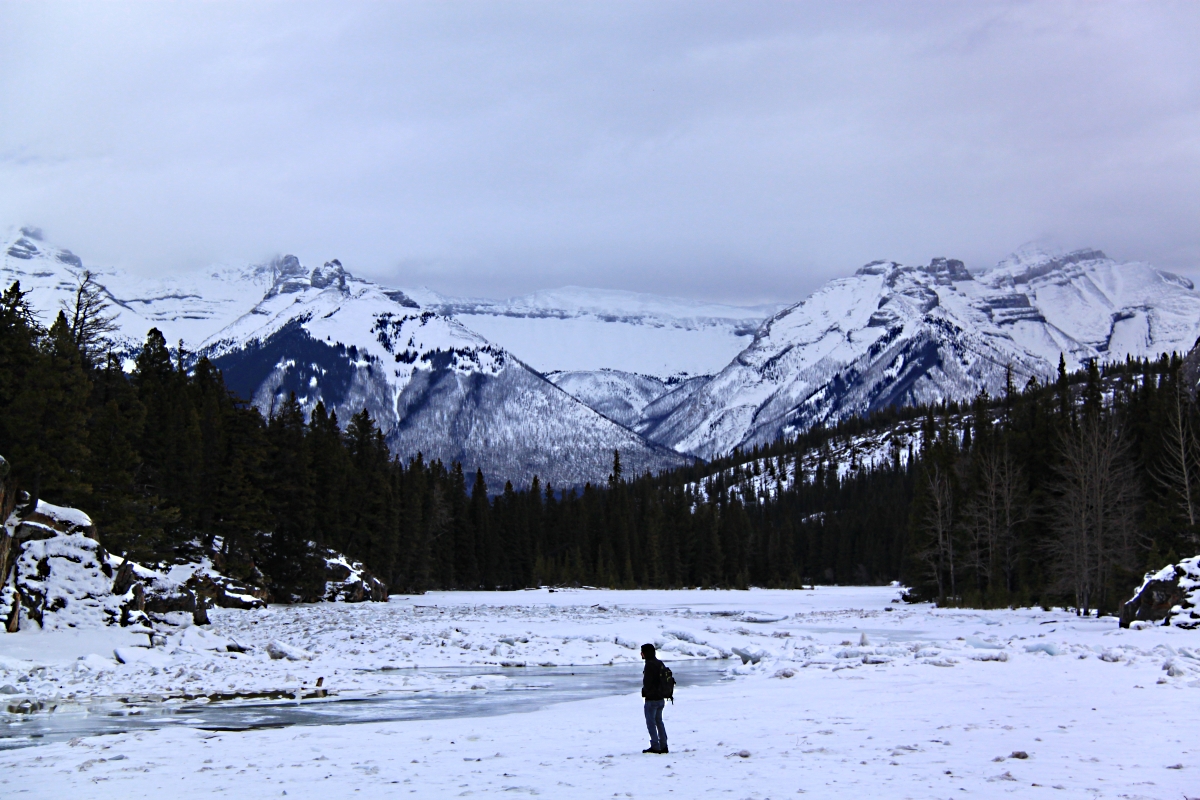
The guy, an Australian working in the new diamond mine in Saskatchewan, said that a few minutes ago he had seen a coyote on the other side of the river barely a couple of hundred yards away.  Circumstantial evidence but I thought a fairly probable explanation.

Australian diamond miner on the ice below Bow Falls

Australian diamond miner on the ice below Bow Falls

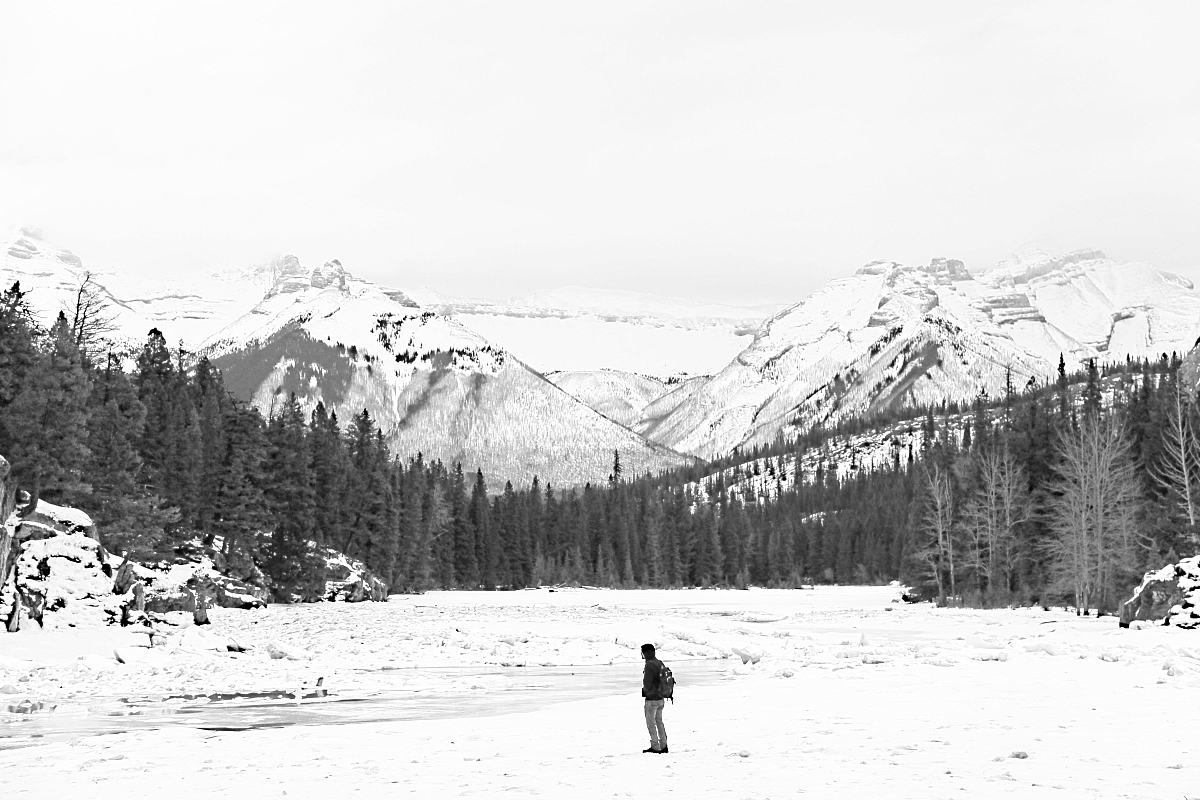
Because of the problems with contrast I did a quick pencil sketch.  Well, OK, I used the photo manipulation software

Because of the problems with contrast I did a quick pencil sketch. Well, OK, I used the photo manipulation software

It served as a reminder that the wildlife in the Rockies is …. wild.  There are big things out there which kill and eat other big things.  Of the larger predators, as well as coyotes and wolves there are cougar, lynx and wolverine as well grizzly and black bears, the later thankfully hibernating at this time of year.  There are many deer and elk and a remaining few caribou so it should really come as no surprise that there are freshly killed carcasses around.  It’s just that they aren’t usually so highly visible.
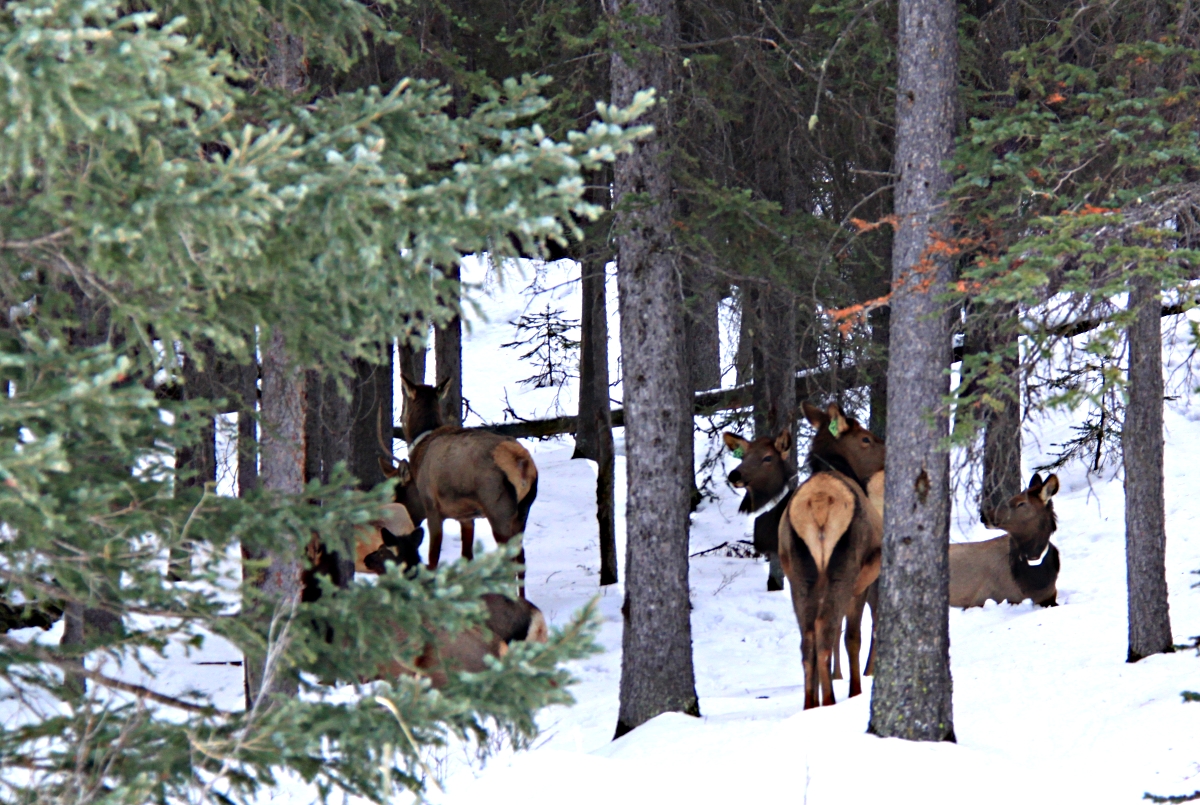
A few minutes later I passed a small group of deer partly concealed in the trees.  Coming back into the town I passed a deer wandering around gardens looking for nourishment.  Banff is part of the National Park, the oldest in Canada, and so nothing is done to stop the deer wandering where they want.  The problem is that they then attract predators which would just as likely attack a dog or a cat …. or a person.

Deer barely concealed in the trees

Deer barely concealed in the trees

Deer wandering around the gardens and parking places within the Banff

Deer wandering around the gardens and parking places within the Banff

Possibly the most dangerous is the cougar and there are many reports of cougar attacks including in 2011 on Tunnel Mountain where I went in the afternoon following my ramble along the rivers.  Thankfully I didn’t come across any cougars and I persuaded myself that the large paw prints I saw in the snow towards the summit were those of a dog and not a wolf.  Why would a wold be up there?  Easier pickings down at river level.  Also, they were too big for a coyote.  I know, I saw coyote prints on the Hoodoos Trail on the south side of Tunnel Mountain in 2011.

Need to check out the footprints around here!

Need to check out the footprints around here!

Considering the huge number of people who come to the Canadian Rockies for outdoor sports including skiing, hiking, climbing, biking and canoeing such attack are very rare.  There have been only 3 fatal cougar attacks in the whole of North America since the turn of the millennium, only one of those in Canada, though that was in Canmore just outside the Banff National Park boundary.  I don’t know what the overall figures are but I would be amazed if the number of people killed by predatory animals is not far less than those killed in car accidents.  Perhaps I had better stay off the roads and stick to the trails.  They are  a lot safer.

Posted in Canada, Mountains, Winter | Tagged , , , , , , , , , , | Leave a comment