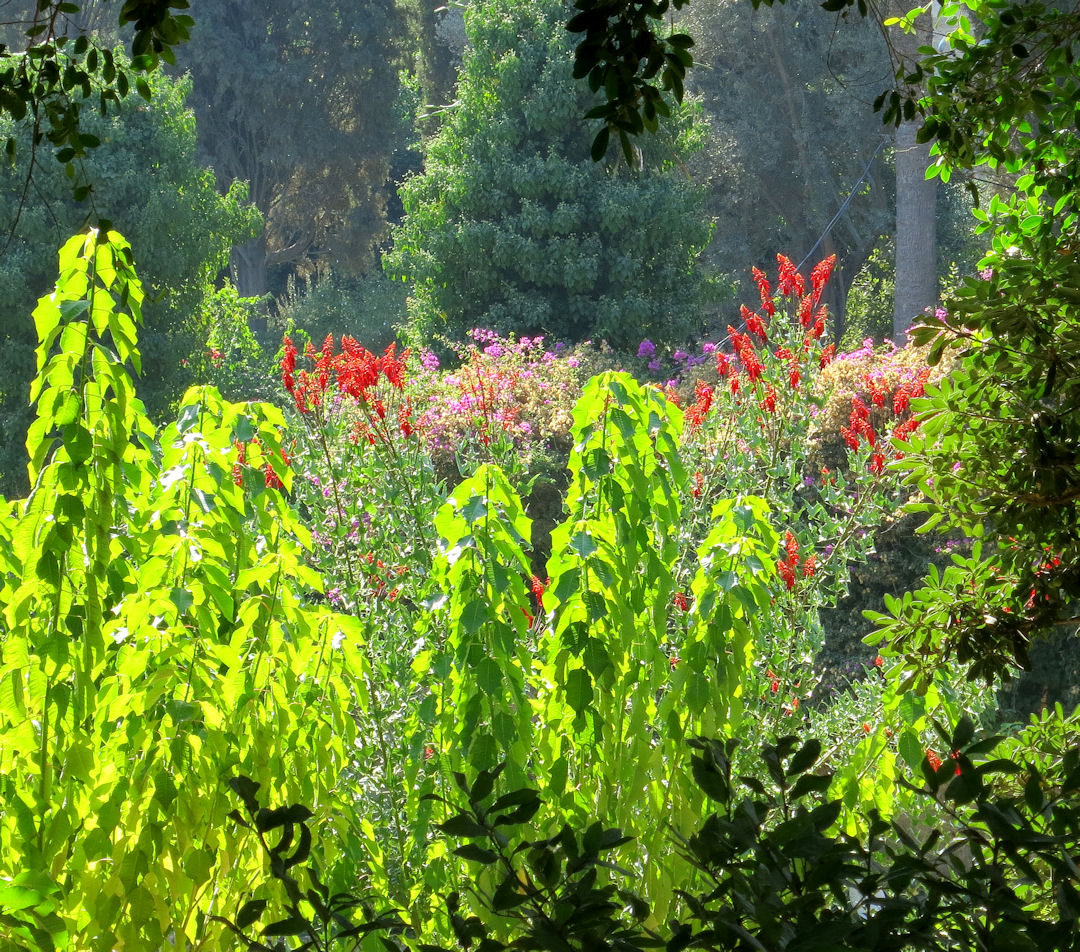
November Daily Blog 5: clichés, truth and poetic cobblers.

Mention ‘Autumn’ and like-as-not someone will think of and, if they don’t have a filter between their mind and their mouth, trot out the line “season of mists and mellow fruitfulness”.  It has become so much a cliché that I suspect the fact that it is the opening line of a poem by Keats is lost in the mists of time1.

I can’t write poetry and don’t often read it but I sometimes admire the skill that some people have to express amazingly succinctly thoughts/ideas/observations which chime with my perception of ‘truth’.  But “season of mists and mellow fruitfulness”, and indeed the rest of the poem, strikes me as poetic cobblers.  Poetic, yes.  But it certainly doesn’t accord with my take on Autumn, not now nor at any time I can remember.  I guess that it was also far removed from Keats’s experience of Autumn, but was rather a romantic flight of fancy.  He was, after all, along with the likes of Wordsworth, Byron and Shelley one of the ‘Great Romantic Poets’ of the mid 18th Century onwards.

That style of poetry is not to my taste but I don’t denigrate it for that.  What gets me is the total distortion of the ‘actualité2 which it perpetrates and perpetuates, fostering a perception of Autumn which only existed in the poet’s mind.   True there are odd days when there are mists, the dry fallen leaves rustle underfoot and fruit is on the trees.  But not often.  Certainly this Autumn it is mostly a gloomy grey, strong winds and heavy rain having brought the leaves down, and they have become a soggy mass underfoot. The Autumn raspberries are going mouldy on the canes and the birds have pecked the apples which are rotting on the branch before they too fall to earth.

Better to face reality rather than try to escape into a Never-Never Land

It was great working in the garden on Monday under cloudless blue sky but the Autumn colour in my tiny ‘acer glade’ is now carpeting the ground.  There is still colour in the leaves but they are already decomposing and what it offers is not so much aesthetic as a promise of improved soil next year.

Brightly coloured maple leaves now carpet the ground in my ‘acer glade’

Remnant of colour as they start to decompose

1   Read the poem for yourself:  http://www.artofeurope.com/keats/kea1.htm

2  Coined by Alan Clark MP in a statement in Parliament in 1992 when he admitted being ‘economical with the actualité’ to avoid admitting to the House that he had lied.

Posted in Art, Autumn, Grey Britain, Grumpy Old Men, Reflections | Tagged , , , | Leave a comment

November Daily Blog 4: back to gloomy grey and the problems of weather forecasting.

The weather in Britain is highly unpredictable.  Low pressure systems coming in from the Atlantic at some point run up against the high pressure systems over Europe and where and how they do is subject to a whole host of macro-variables which, despite vast amounts of monitoring and research we still know relatively little about.

Because the weather is unpredictable the weather forecasts are notoriously unreliable, except during the odd couple of weeks in the year when high pressure moves west, settles over the UK, and Met Office forecasters heave a collective sigh of relief.  A great deal more data is now routinely collected to assist with forecasting,  prediction models have become increasingly sophisticated, and the Met Office has been give one of the most powerful computers in the world to play with.  Yet the man-going-out-into the street still doesn’t know whether to take an umbrella.  This uncertainty induces a kind of paranoia, as evidenced by the number of blokes carrying brollies and women surreptitiously hiding telescopic versions in their handbags even when the sun is beating down from a cloudless sky during a high pressure ‘event’.

The result is that it is difficult to plan ahead for any activity outdoors.  As I spend as much time as possible outdoors that is a problem.

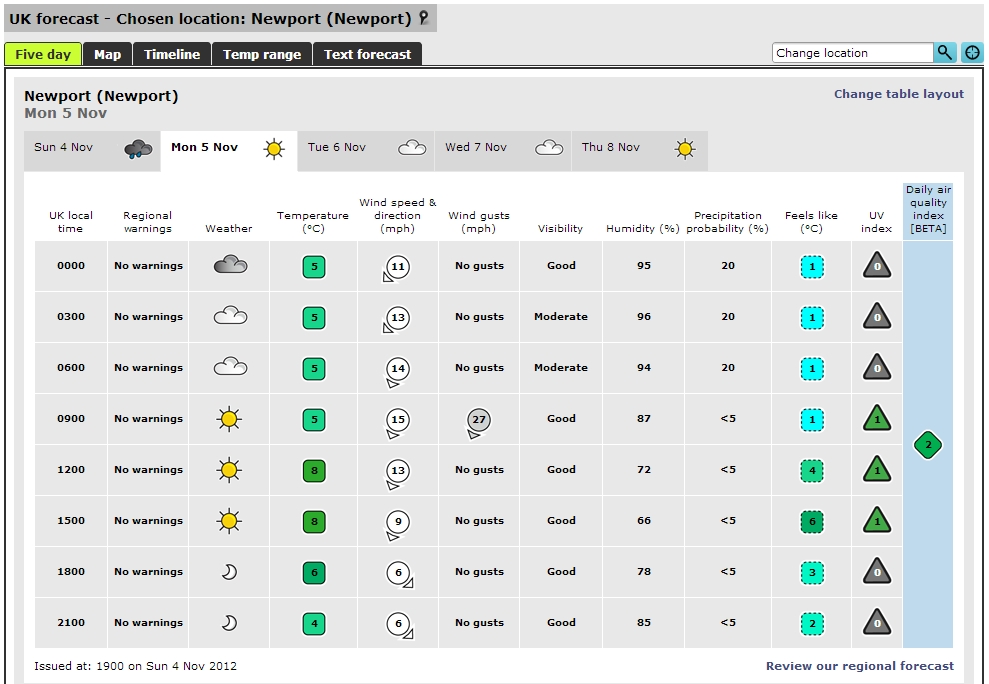
Forecasts are improving and the new format includes a ‘% precipitation probability’ so I now know if there is a 20% or 80% probability of being precipitated upon.

So what is the way to deal with this uncertainty in practical terms?  For short term activities locally, decisions can be made at the last minute if the sun is shining or, failing that, if it’s grey but dry.  On Saturday I dashed up to the American Gardens in the morning because, despite the forecast, the sun was shining. In the afternoon it rained heavily despite a forecast of grey but dry.  Sunday it was grey and wet all day. So when I got home from church I spent the rest of the day doing indoor chores and writing.  Now that I’m not tied to working hours I have the freedom to be flexible like that but it’s far more difficult for those with regular working hours.

And it’s far more difficult for activities which depend on dry weather and dashing back to base when the clouds leak isn’t an option.  Committing to a long distance walk requires a rucksack full of optional clothing. Rock climbing may just get knocked on the head as the crag channels water downwards.  Paragliding means sitting on the hilltop if the wind is too strong and you don’t bother going out if it’s raining.  Conversely, white water canoeing may prove impracticable if expected rainfall in river headwaters doesn’t materialise.

I suspect that the Met Office sets targets for its forecasters.  Maybe successful target achievement is rewarded by Performance Related Pay: get the forecast right for 5 out of the next 8 three-hour slots on a regular enough basis (just to make sure that it isn’t occurring by chance) and receive an annual bonus.  It would be interesting to know how many forecasters would apply for the job if that was the sole basis of their income. I know I wouldn’t apply.

However, the new style forecasts also include UV index and it is comforting to note that at night the UV index is forecast to be Zero.  Now that’s a forecast target I could achieve with 100% success.

The forecast for tomorrow, 5 November, is looking good all day and with a low UV in the evening it should be good for the Guy Fawkes celebrations.

Posted in Autumn, Grey Britain | Tagged , | Leave a comment

November Daily Blog 3: trees and autumn.

Not since the introduction of a virulent strain of Dutch Elm disease from North America in 1967 have trees been a main news item in the UK but, thanks to the Chalara fraxinea fungus affecting native ash, trees are now in the headlines once again.  The first case of ‘Ash Dieback Disease’, which has killed 90% of ash trees in Denmark, was confirmed in the UK in February this year and Government ministers were told in April yet it is only in the last few days that action has been taken.  However, it’s all OK because the Government assures us they are taking it ”very seriously”.  One grower, claimed to be the biggest grower of native trees in Britain, is suing the Government for £200,000 alleging that early warnings were issued in 2009 but no action taken.  The obvious question must be answered: ”why has there been such  a long delay before action was taken to prevent the introduction and then the spread of such a virulent disease?

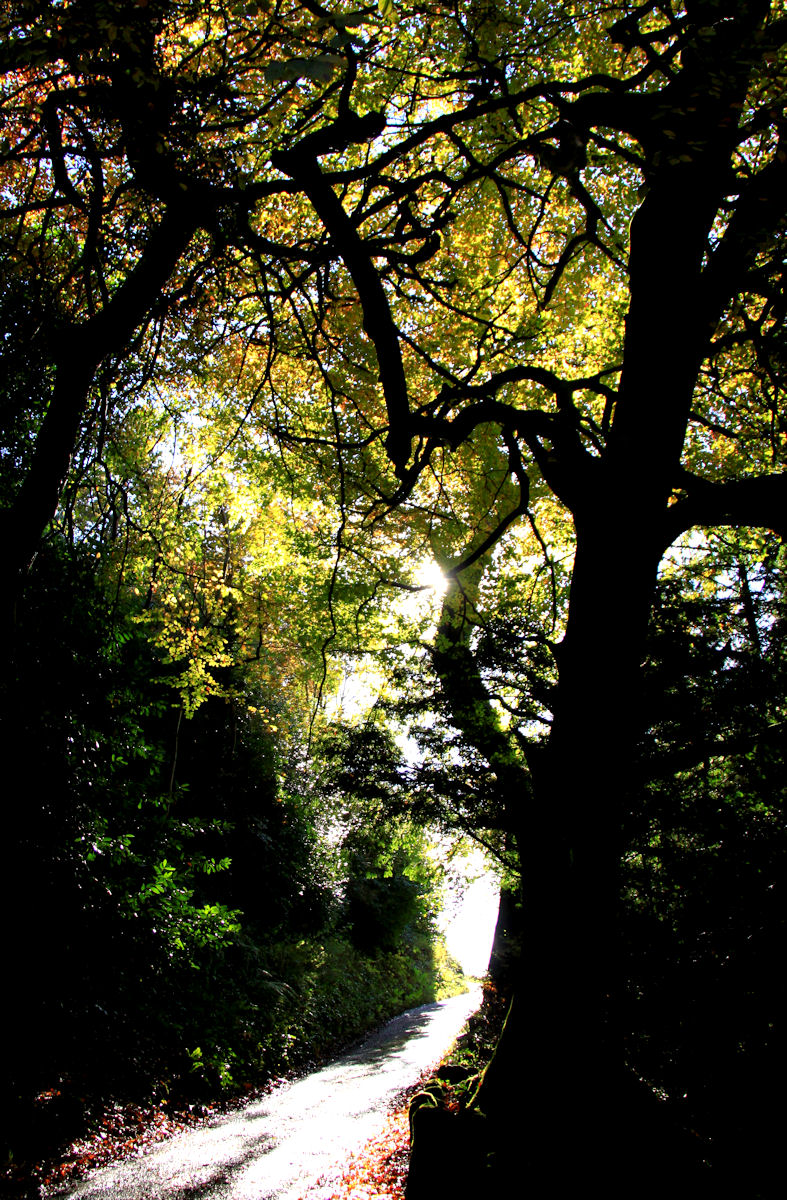
Saturday dawned bright and sunny.  With heavy rain forecast I took my camera for a walk mid morning to visit the American Gardens at the top end of Pontypool Park to look for Autumn colour.  ‘Gardens’ is a misnomer, it’s really an arboretum planted in the mid 19th Century with trees from the Americas mainly conifers including sequoia and auracaria (Monkey Puzzle) but also hemlock and oaks.  They are now mature, some a considerable size.

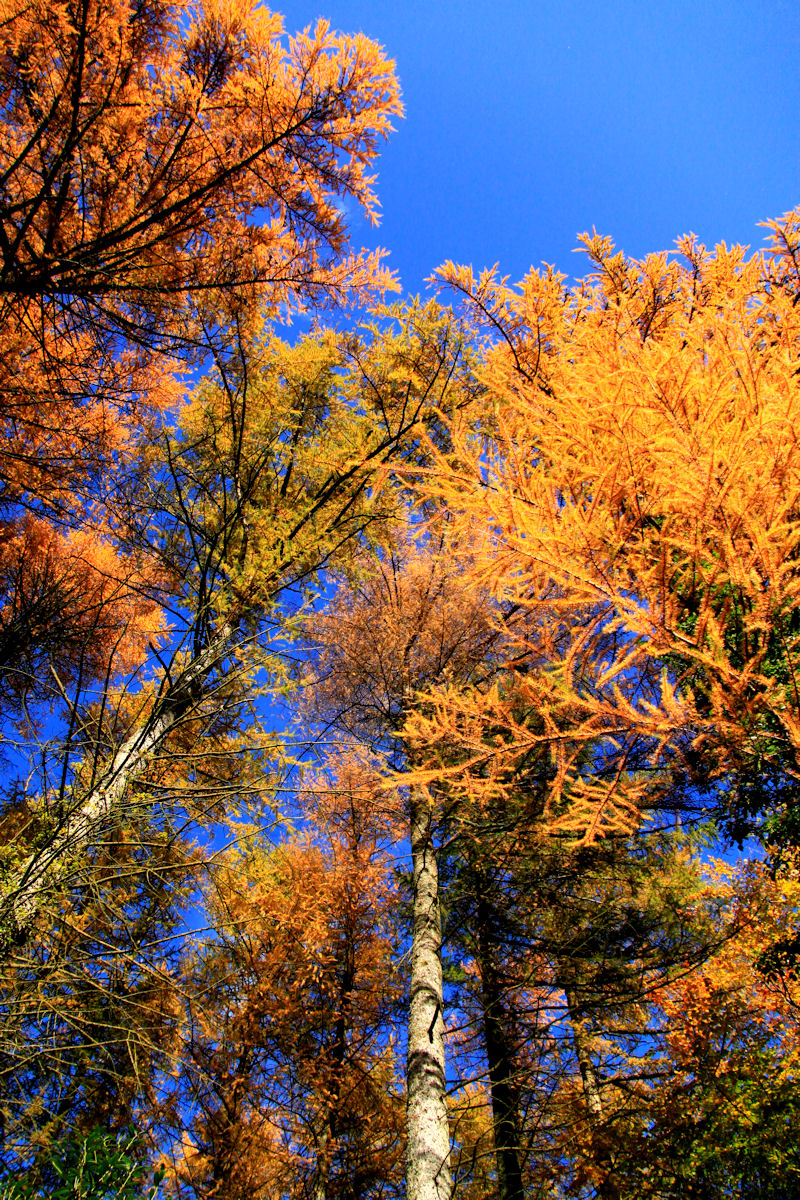
The colours were not as vibrant as are maples or cherries at this time of year but there were patches of brightness set off by the gloom of much of the woodland floor which was in deep shade in the low -angled winter sun, unable to rise above the tall densely packed trees.

Just a few images.

Ancient beech tree

Sun shafting through branches of beech and hemlock

Looking out of the wood to the mountain beyond

Deciduous conifers

Towering upwards

The fairytale styled ‘Hansel and Gretel’ cottage in the middle of the wood

Sun reflecting off the trunks

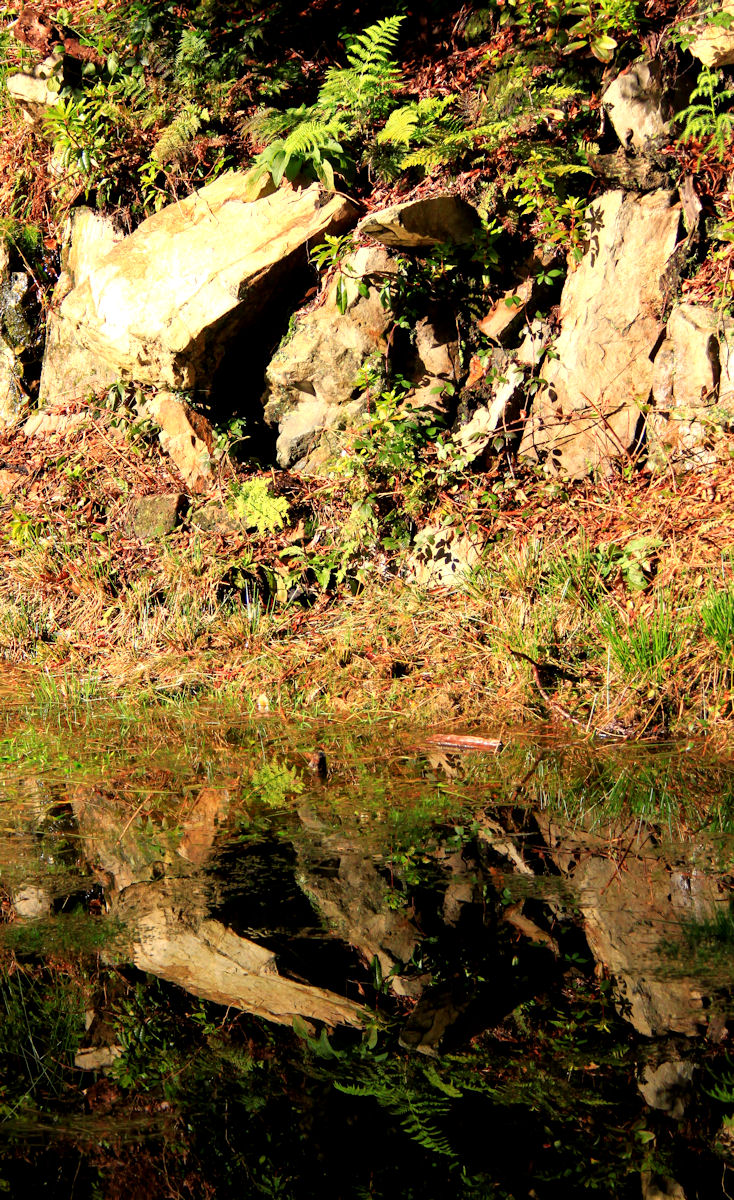
Reflections in the pond

Posted in Autumn, Pontypool, Reflections | Tagged , , , | 1 Comment

November Daily Blog: towards a philosophy of enjoyment.

With the challenge to find something worth blogging about every day it was disconcerting to see Friday begin very grey, very wet and with a mountain of clearing up after having friends over for a meal on Thursday evening.  I’m an outdoor guy and prefer to be outside at every opportunity.  Inclement weather and indoor chores don’t sit with well with that predilection.

Somewhat morosely sorting through the after-dinner detritus set me thinking about how time is allocated each day.  Whether we like it or not we do ‘allocate’ time even if we just sit on our thumbs and contemplate our navels (don’t try this at home, it sounds very uncomfortable).

I guess that, simplistically, stuff can be divided into the things we have to do, like clearing up after a meal or cleaning the loo, and things we want and choose to do, like summiting a mountain or spiralling to the top of a thermal on a paraglider.  But there’s a whole lot of stuff between these lows and highs, and a lot of stuff which is in a grey area in the middle.   And in any case it’s not as simple as that bald distinction.  (lots of mixed metaphors in there)

I’ll just home in on two issues.

Unless we are independently wealthy and can pay others to clean the loo and all the other chores then such things are inevitably going to take up some of our time. But how much?  It seems that there are always more chores than time to do them, particularly if you are a one-person household.  With varying degrees of conscious decision-making we decide at what point we will call a halt to the drudgery and instead choose to do something that we want to do.   I like the British Mountaineering Council’s poster to promote female interest in rock-climbing with a photo of a young lass clinging by her fingertips to a rockface with the caption: ”Sod the ironing!”

We each strike a balance with which we are comfortable but in doing that there are trade-offs.  We have to decide how many un-ironed clothes we are prepared to put up with and we have to square it with our conscience.  “How much time can I devote to pleasing myself and how much should I consider the needs of family/friends/the local and global community”.  Putting it bluntly we each strike a balance between altruism and hedonism. We might never overtly face that consideration but we all draw the balance somewhere.

As an aside, I think it’s important not to lose sight of the fact that it has not always been so and is still not so in less affluent societies.  With the exception of the wealthy minority, leisure, the freedom to do what we choose to do rather than simply doing what is necessary to keep bread on the table and a roof over our heads, is a very modern option and confined to ‘Western’ cultures.  Sadly, in the West the pendulum is increasingly swinging towards hedonism with open espousal of selfishness as the ‘right’ motive.

The second issue is that, for the majority, work is no more than a means of earning a crust and to be able to do other things in leisure time.  If work is tedious and unsatisfying how about changing careers and earning money doing an enjoyable activities?   The problem is that the activity then changes from something which we choose to do to something which we have to do as an obligation, a commitment.  It changes the whole dynamic.  It becomes a chore.

I also venture the suggestion that the things which we choose to do are the more enjoyable by virtue of the contrast with the tedium of daily living and the work/chores we have to do.  That climbing weekend can be savoured all the more if we anticipate it through the week.

So what did I do on Friday?  I finished clearing up by which time it had stopped raining, the sun had come out, and I took my chain saw for a ride in the car.  Friends in Cardiff had stumps of trees in their garden which were a bit too big to tackle with a bow saw so I offered to take them out.  I enjoy felling and lopping trees and even though these were garden not woodland trees it was good fun.  It was all the more pleasing to do it because these were the friends who identified the Biarum marmarisense which we saw on Symi.  One good turn deserves another.

Postscript: While photographing the flowers I found a corm which had been dug out of the ground by feral goats in search of roots to eat.  I brought it home and planted it in a pot on the kitchen window sill.  It has now flowered.  It’s smaller than the ones in the wild but still a minor triumph.

Biarum marmarisense on the kitchen windowsill

Posted in extreme gardening, Grey Britain, Reflections | Tagged , , | Leave a comment

New challenge: A blog a day during November.

When I’m in Greece, which has been most of the summer for the last 3 years, I post a blog every day.  Similarly when I was in the Canadian Rockies for a month 2010-2011 I would come back from the ski-slope or the frozen trail each day, defrost my various parts and put finger to keyboard.  Ostensibly it was so that I could let family and friends know that I was still alive, that I hadn’t dropped into a fumerole or been avalanched, but really it was to do with sharing experiences.

After 40 years of marriage you get used to sharing everything: “Come and look at this”, “What is that?”, “How can that happen?”  Being in new places and doing new things with no-one to share them with detracts from the pleasure.  So now I share things on the blog with anyone interested enough to read it.  When I’m travelling there is always new stuff but back at home everything is familiar, everyday chores take over.

Via the group on the writing course, the ‘Ty Newydd 13’, I’ve just committed myself to writing and posting on the blog everyday throughout November.  The challenge is to make sure that I do something worth blogging about every day for a month.  Not a bad habit to get into.   Not a bad way to live.  I’ll give it my best shot.

Posted in Reflections | 2 Comments

Symi, Kardamyli and Cricieth: a short tale of literary connections.

One of the pleasures of travelling is meeting people.  One of pleasures of returning to familiar places is renewing friendships.

A conversation with a friend in a taverna on Symi in 2010 sparked my interest in the author Bruce Chatwin.  I had been very impressed by the powerful film ‘On the Black Hill’ based on his book of the same name, not least because it captured all the moods from spring sunshine to grey winter wetness of the dramatic Black Mountains north of Abergavenny which I know from walking and paragliding.  I subsequently read the very tightly written ‘Utz’ but then nothing else by Chatwin.

The spark of inspiration for my extended ramblings around Greece in the first part of summer 2012 came from reading ‘Mani’ by Patrick Leigh (Paddy)Fermor.  I found the writing style heavy going but his description of the ‘desolate’ limestone Taygetos mountains and feud-tower villages of the Mani peninsula in the south of the Peloponnese fired my imagination. It sounded like my kind of country.  I built the entire 1500 kilometre trip, mainly by bus, around that as my main destination and I stayed a month.

Paddy Fermor, hero of the WW2 campaign in Crete, walked across the spine of the Taygetos from inland Sparti to Kardamyli on the west coast.  I arrived on a KTEL bus from Patras via Kalamata.  It was everything I expected.  I walked many miles into the mountains up the Viros Gorge and on well signed, if sometimes overgrown, footpaths to small villages, getting to know the area inland of Kardamyli fairly well before moving south to Areopoli and then Gerolimenas, ever deeper into the Deep Mani.

One walk led me down to the beach at Kalamitsi just to the south of Kardamyli where, drying off in the sun after a very enjoyable swim, a cut-glass English accent brayed loudly to anyone within half a mile: “that’s Leigh Fermor’s house”.   Apparently he lived there until a few days before his death in June 2011 at the age of 96 when he expressed the wish to die in England.

Looking towards Kalamitsi beach

A few days later I was making my way up the dry, rocky bed of the Viros Gorge in search of a path to the tiny, decaying monastery of Likaki when I stopped to chat with a guy walking down the gorge.


The crumbling Likaki church in the Viros Gorge

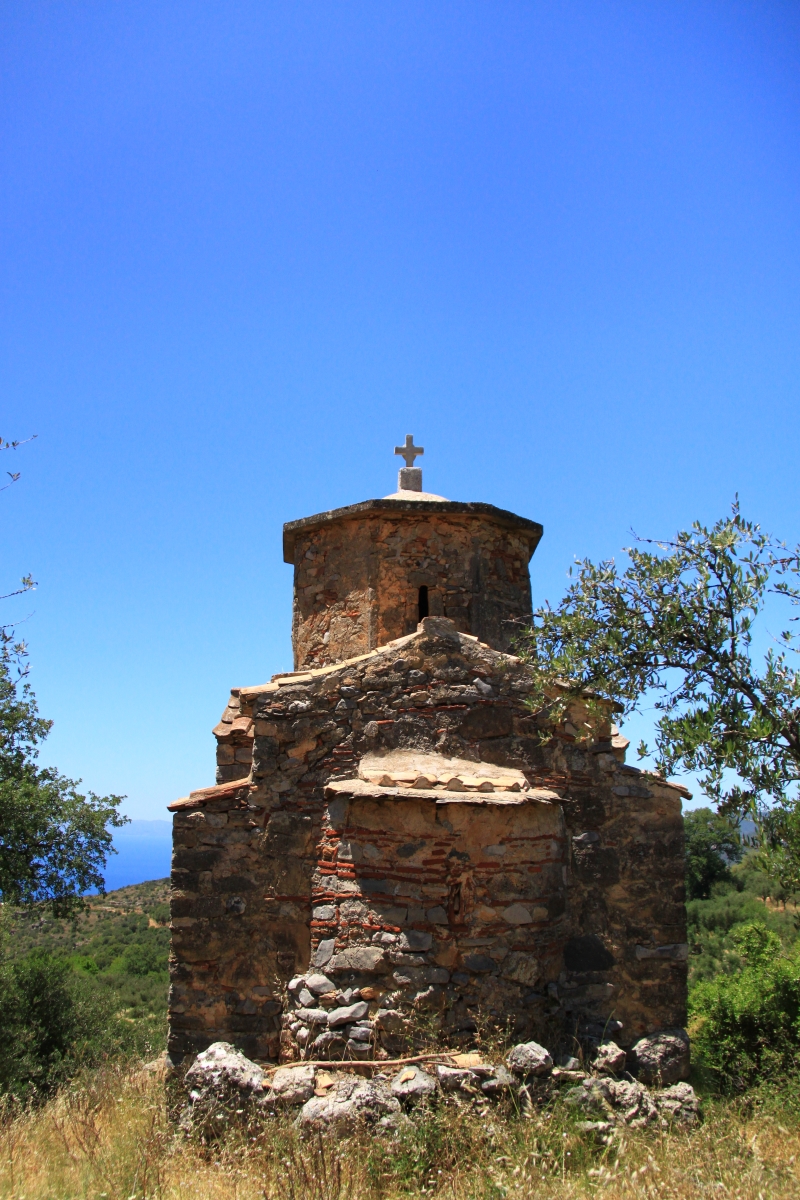
I’m not sure how the subject cropped up but he told me that Bruce Chatwin’s ashes were buried at a small church in the mountains above the gorge.  When I expressed interest he fished out a small guide book which had a photo of the church, though he didn’t know where it was.  It was one I had visited and photographed the day before.

The Byzantine Church outside which Bruce Chatwin’s ashes are buried

I wondered vaguely if the two authors had known each other but gave it no real attention.

They were good writers, good people, on the writing course I went on at Cricieth in the Llyn Peninsula a few days after returning from Greece at the beginning of October.  We  got on very well, so much so that we all agreed to keep in touch and created a blog to facilitate that and put work-in-progress forward for peer comment.

One piece put forward a few days ago was about famous writers who have swum across the Hellespont between Europe and Asia.  It’s a work not yet completed but it closed a few loops for me.  Two of the authors who undertook the swim, though not at the same time, were Paddy Fermor and Bruce Chatwin.  The draft also indicates that the two were good friends, a fact obviously widely known but new to me, so I checked it out on the internet.  It seems that when Chatwin visited Kardamyli he stayed with Paddy Fermor and they walked together extensively in the Taygetos.  When Chatwin died in 1989 aged 48 his ashes were flown to Greece for burial in the grounds of the tiny byzantine church near Exohori above Kardamyli. Paddy Fermor was there.

Some internet reading for more information:

http://en.wikipedia.org/wiki/Bruce_Chatwin

http://en.wikipedia.org/wiki/Patrick_Leigh_Fermor

http://patrickleighfermor.wordpress.com/2012/01/06/chatwin-and-paddy-in-the-footsteps-of-bruce-chatwin/

Posted in Greece, Reflections, Wales | Tagged , , , , , , , , , , | 1 Comment

Remembering

Posted in Reflections | 1 Comment

Symi: looking back, connections and a bit of history.

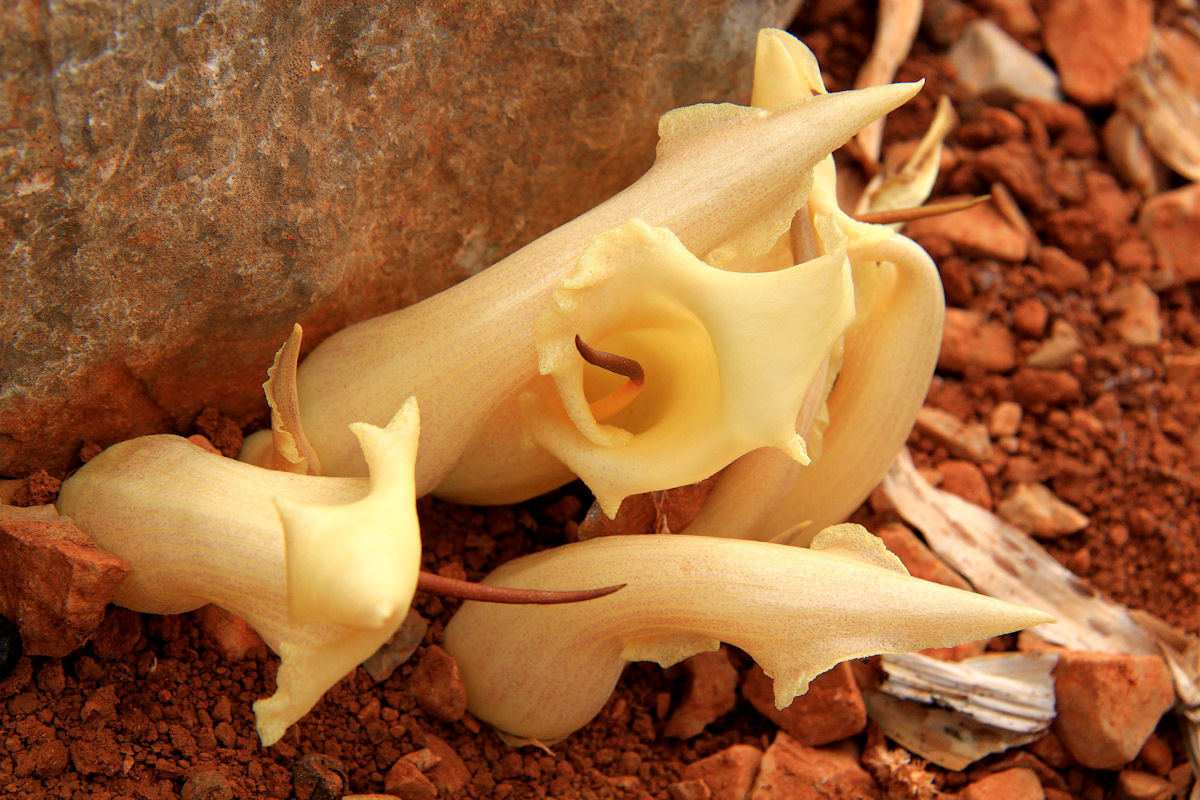
Those who followed my ramblings while I was in Greece may remember photos of a flower which we found growing in profusion on the last walking day on Symi at the beginning of October.   I had no idea what it was and no idea how to find out as it was stranger than anything I had seen before.

Previously unidentified, now known to be ‘Biarum marmarisense’

Pushing up through the rocks and powder-dry soil

Fortunately a friend of mine in Cardiff took on the challenge of identifying it.  It doesn’t seem to have a common name in English but its Latin name is Biarum marmarisense.   ‘Biarum’ because it’s related to Arum lilies, which indeed it looks like, and ‘marmarisense’ because it’s native to South West Turkey where lies the town of Marmaris.

Hardly surprising then that it’s found on Symi which is about the width of the Bristol Channel from Turkey and shares the same arid limestone mountainous landscape.

An arid limestone landscape, Biarum marmarisense, and presumably other flowers, are not the only things which the west coast of Turkey and Symi have in common.

For a start there is a 400-year history of occupation by the Ottomans, Symi becoming part of that Empire in 1522.  It gained much wealth during that time as the ‘By Royal Appointment’ supplier of sponges to the Turkish Court, and it also developed a reputation for the quality of its shipbuilding. Though active in the Greek War of Independence in 1821 Symi remained under Ottoman control until eventually declaring independence in 1912, just in time to be occupied by the Italians who retained it until 1943 when they were pushed out by the Germans.  Though all this time Greek in language, culture and religion the island only became part of the Greek State in 1948 as part of the settlement at the end of Second World War.

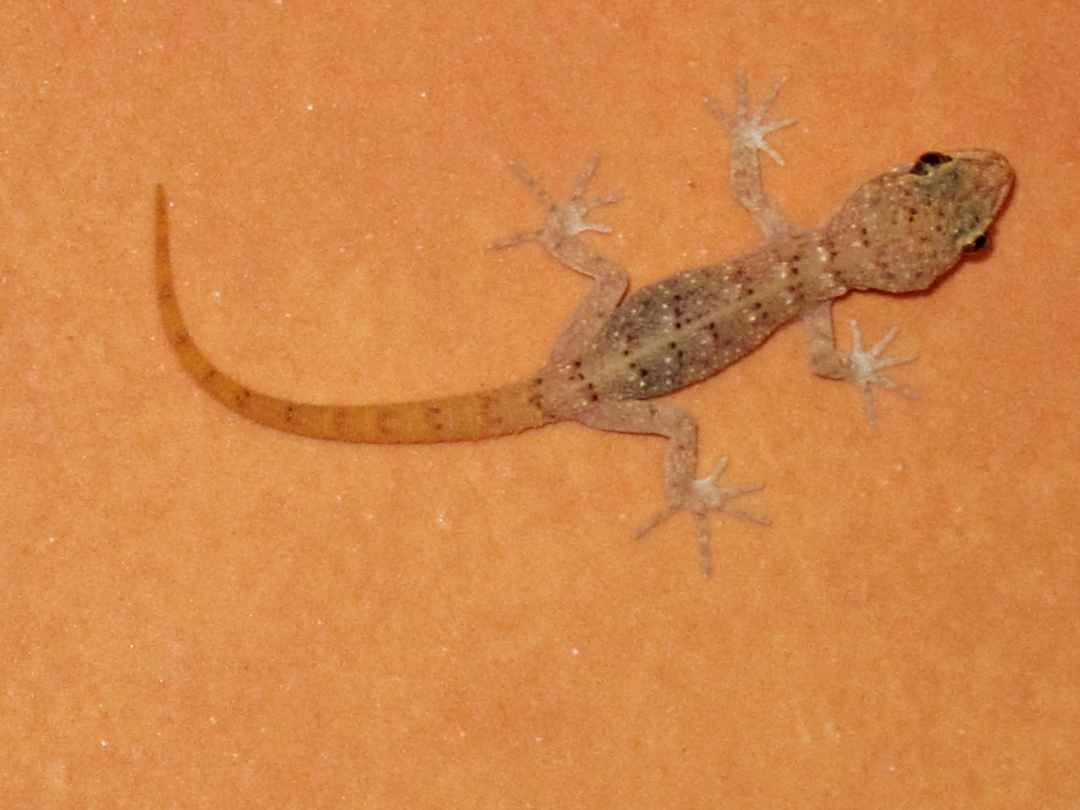
Ottoman occupation apart, there is a shared fauna as well as flora. When I rented a place on Symi in 2010 I had a regular visit from a Turkish Gecko which was clearly raising a family in the walls of the house as, after the initial sighting, youngsters started to put in an appearance.

Turkish Gecko on my doorstep in August 2010

One of the youngsters a few weeks later

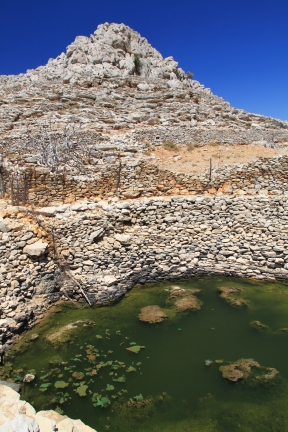
I don’t know whether there is any hard evidence for this but Symi may be linked to the Turkish mainland in another way.  Though it is often said that Symi has no surface water that is not correct.  I know at least 4 permanent ponds with water levels which don’t drop significantly even in the severe drought of summer.  Symi is basically a great lump of limestone and so at least some of the winter rains will go through the rock and into underground strata.  Certainly there are freshwater springs which are increasingly being tapped and piped to provide water for a growing tourist population and to feed the increasing demand from local population for washing machines and showers.

Permanent pond at the edge of the deserted village of Gria in the mountains behind Pedi Bay

The level of abstraction is to my mind unsustainable but that is a separate issue and may be partly to blame for the increasing number of dead trees.  However, the issue here is that because Symi has a common limestone geology with the Turkish mainland it is possible that some of the ponds and springs on Symi might be risings from underground sinks in Turkey.  It is not infeasible given the geology and the distances involved. Both the mountains and the rainfall in Turkey are significantly higher than on Symi so there may well be enough volume of water and enough ‘head’ to make this possible and may explain why the ponds do not dry up.  I have heard this hypothesis advanced for the permanence of some of the springs in Tilos which is even further from the mainland.

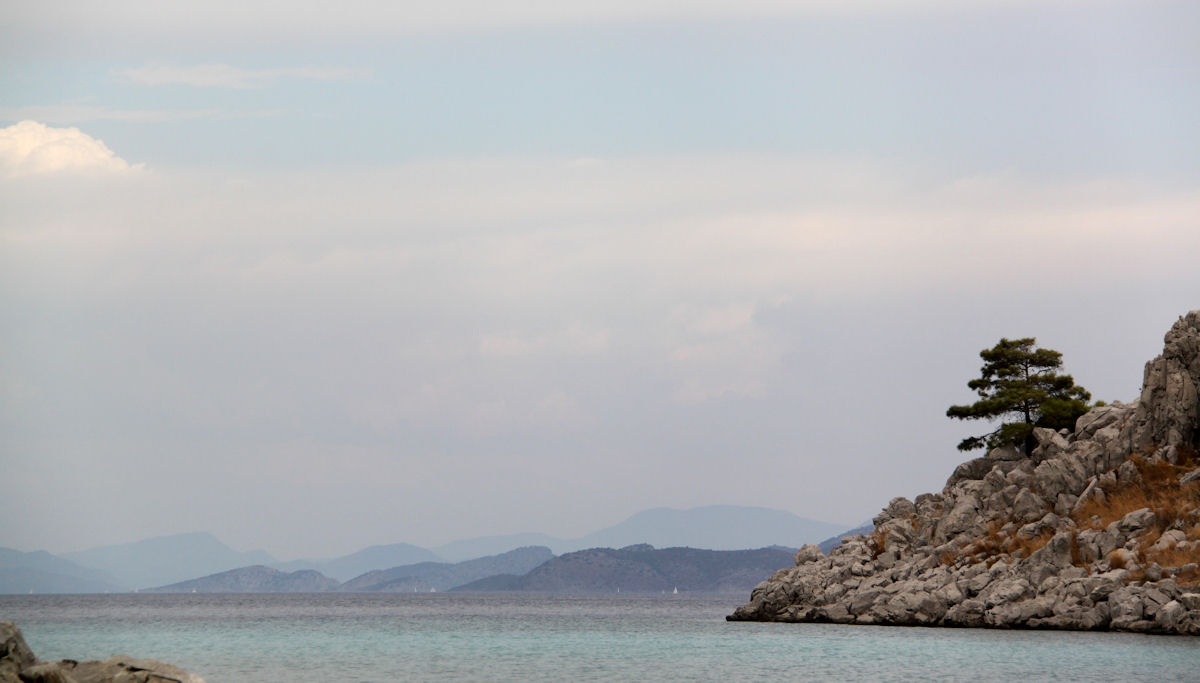
Standing close to one of the small permanent ponds at the back of the beach at Nanou, the Turkish coast just across the channel.

Perhaps I should try to follow up the canoe trip under the Sahara with a canoe trip from Turkey to Symi under the Aegean.  If you haven’t read about the Sahara trip, published in the ‘Canoeist’ magazine in April 1988, it’s here.

Why am I looking back to Symi?  It’s a lot more cheerful than the weather in Grey Britain at the moment.

Posted in Greece, Grey Britain | Tagged , , , , , , , , , , , | Leave a comment

The Llyn Peninsula: looking for variety.

For the last week I have been on a ‘travel and landscape’ writing course at the Welsh National Writers’ Centre at Ty Newydd near Cricieth on the south coast of the Llyn Peninsula, an area of Wales I have never visited.  Outstanding course, outstanding group of people.  My writing may, or may not, improve but my priorities have changed.  I insisted on brutal honesty in the tutorials. No point in politeness hiding unpalatable truth.  I now recognise that in order to have a book published and see it in the shops I must first become a TV celebrity.  The alternative of having famous parents has passed me by.

In the meantime the blog will continue and will hopefully improve as I strive to reduce the amount of waffle and to make it a cliché Not-Spot.  It seems that my tendency to go off at a tangent is a literary technique known as a ‘turn’ designed to maintain interest, though I suspect that it is intended to be used more subtly.

Ty Newydd, the former home of Lloyd George, who neither knew my father nor was known by him, is set in modestly large grounds near the small village of Llanystumdwy to the west of Cricieth.  The structure of the course allowed time each afternoon for the 15-minute walk from a small gate at the edge of the lawn down to the Wales Coast Path and follow it around to Cricieth.

On Tuesday I took my camera for a walk down to the coast and along the beach. The path was muddy, in places liquid mud, inimical to sandalled feet so I wore boots for the first time in months.   Under grey skies I couldn’t but reflect wistfully that less than a week ago I was swimming in the Aegean, still enjoying warm sunshine.  I had no inclination to swim in the grey murkiness of Cardigan Bay.

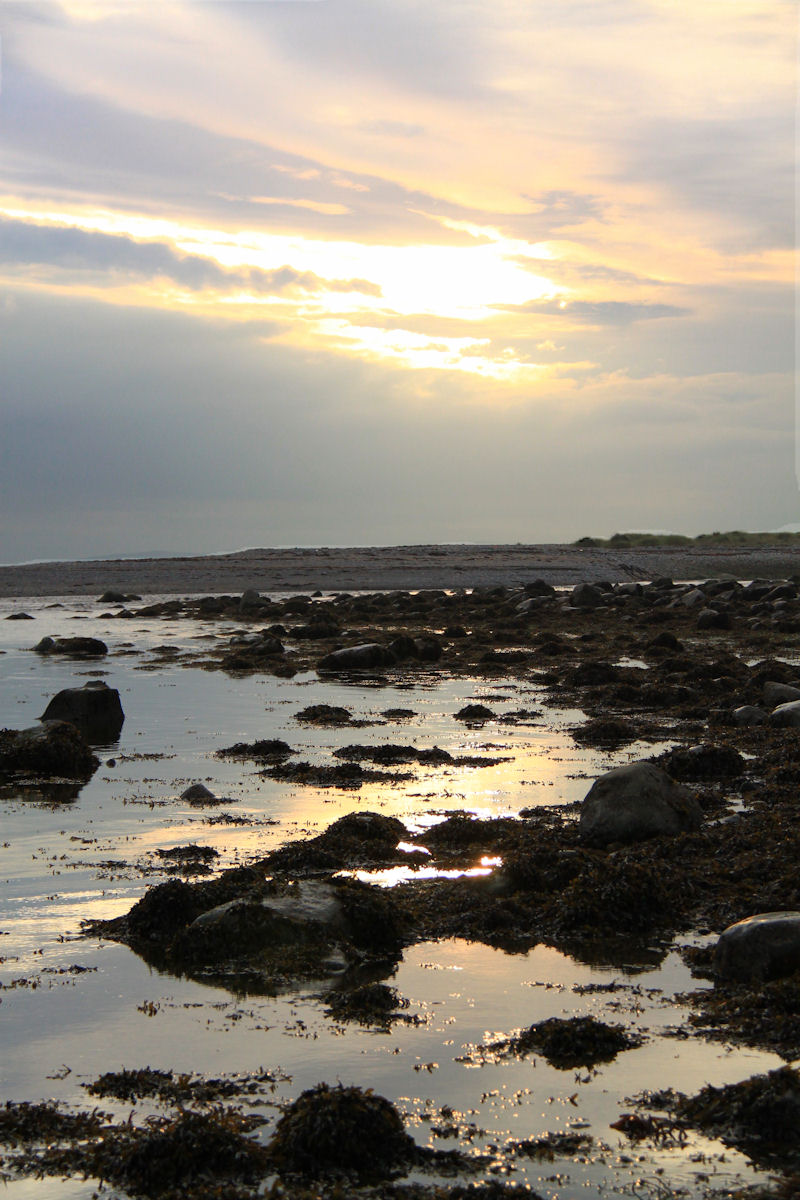
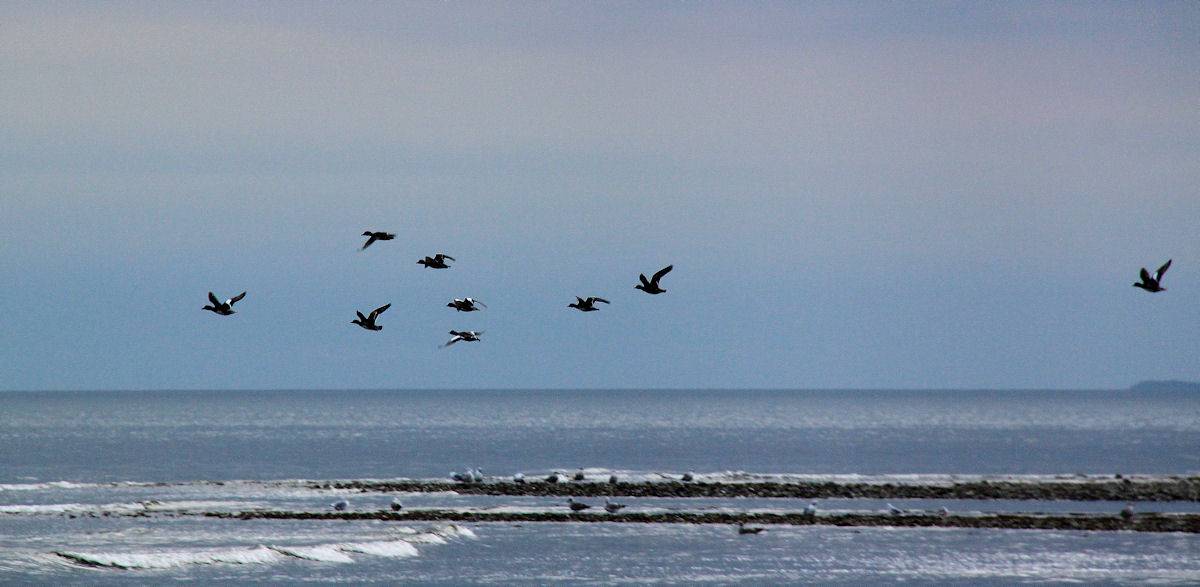
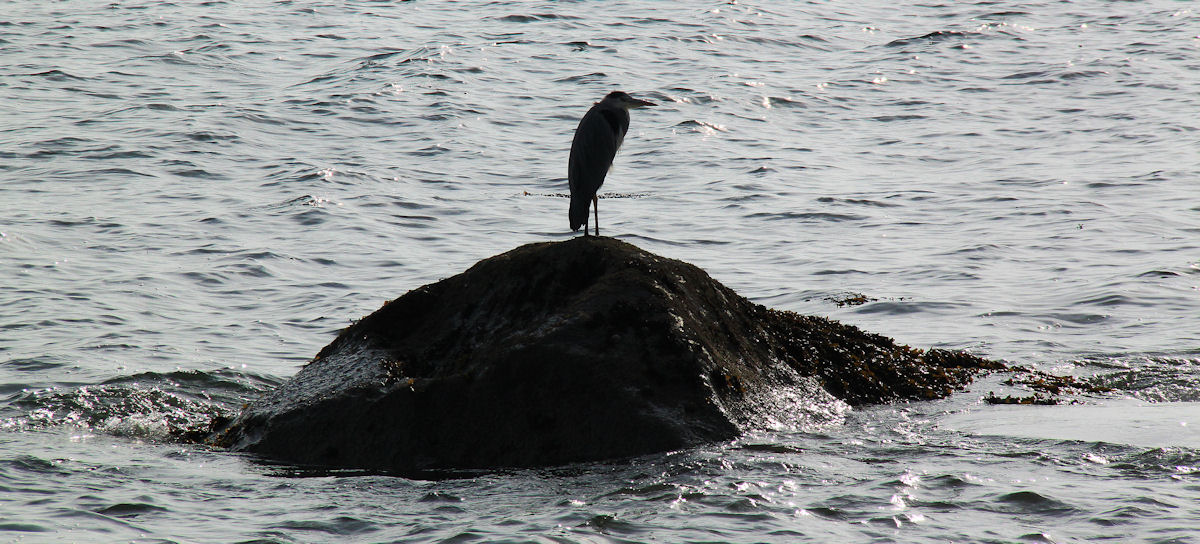
However, as I walked someway morosely along the grey beach by the grey sea under the grey sky my attention was suddenly taken by the richness of the micro-environment.  Seaweeds, shells and multicoloured pebbles, products of a tidal range considerably greater than the 6 inches in the Aegean, almost shone in the grey light.  Birdlife too, oyster catchers, gulls, herons, curlews, cormorants and even swans, thriving in the food-rich habitat of the intertidal range and the small estuary where the fresh water met the salt.  I saw more birds and more species of birds in 10 minutes than in 3 months on Symi.

Wednesday and the sky was blue but the sea was still grey, the air cold.  Again I walked along the beach, this time continuing into Cricieth.  A few flowers added small splashes of colour but were very much end-of-summer rather than Autumn life bursting out of powder dry Symi soil.  A few elderly end-of-summer visitors, swaddled against the cold in winter clothes, walked hunched up along the road in front of 4-story terraced Victorian B&Bs

I had checked the internet before I left and planned to get cash from the town’s only free-withdrawal ATM but found that in order to justify their bonuses the directors of the “The world’s local bank” had closed this local bank a month ago and taken their ATM with them.  I was directed by a disgruntled local to ‘Bargain Booze’ opposite where I could get a very modest amount of ‘cash back’, but it was enough for a caffeine fix in the very good ‘Caffi Cwrt’.

Thursday afternoon and a small group of us walked along the beach into Cricieth …. in rain which increased from a steady drizzle to a downpour. We sat somewhat glumly in Cadwalader’s Ice cream Parlour, dripping water all over the floor and licking ice cream before the route-march back along the road.  The weather was so wet that this time my camera stayed in the rucksack.

Three days, same walk, three very different experiences.  Once again I couldn’t help but reflect that a major attraction of the Greek islands is the consistent warm, sunny, blue sky weather in summer.

Towards a watery sunset

Life and colour in the intertidal range

Oyster catchers feeding at the edge of the incoming tide take off when disturbed

A cormorant dries its wings after a fishing trip

A heron, morose as usual

A pair of swans live around the mouth of the estuary

Approaching Cricieth along the beach

Getting closer. The groins arrest long-shore drift, a process which adds great variety to the rocks contributing to the pebbles on the beach

I came to a conclusion over the week.  It was evident from the group sessions that I lack the descriptive skills of the others on the course and when I try to adopt a different style, a different ’voice’ as Rory Maclean, one of the two very good course tutors, calls it, it doesn’t work.  It’s not me.  I guess I lack the imagination and verbal dexterity.  So I’ll stick with my own ‘voice’, letting the photos show the place and add comment on the experience.

Posted in Art, Autumn, Grey Britain, Reflections, Wales | Tagged , , , , , , , , , , , | Leave a comment

Surreal change to Autumn: A backward look from a cold climate to the Hot Rock.

The last few days on Symi were unusually hot and sunny for the end of September and beginning of October but there were signs of Autumn approaching.

From Panormitis Monastery on Monday a strange layer of cloud could be seen wafting around the edge of the mountains and humidity was higher than previously with correspondingly poor long-distance visibility.  But it was still hot weather and the cloud soon dispersed.

On Tuesday, with necessary tasks completed in the morning we walked to Agia Marina via the direct route from Horio and took considerably longer over it than anticipated.

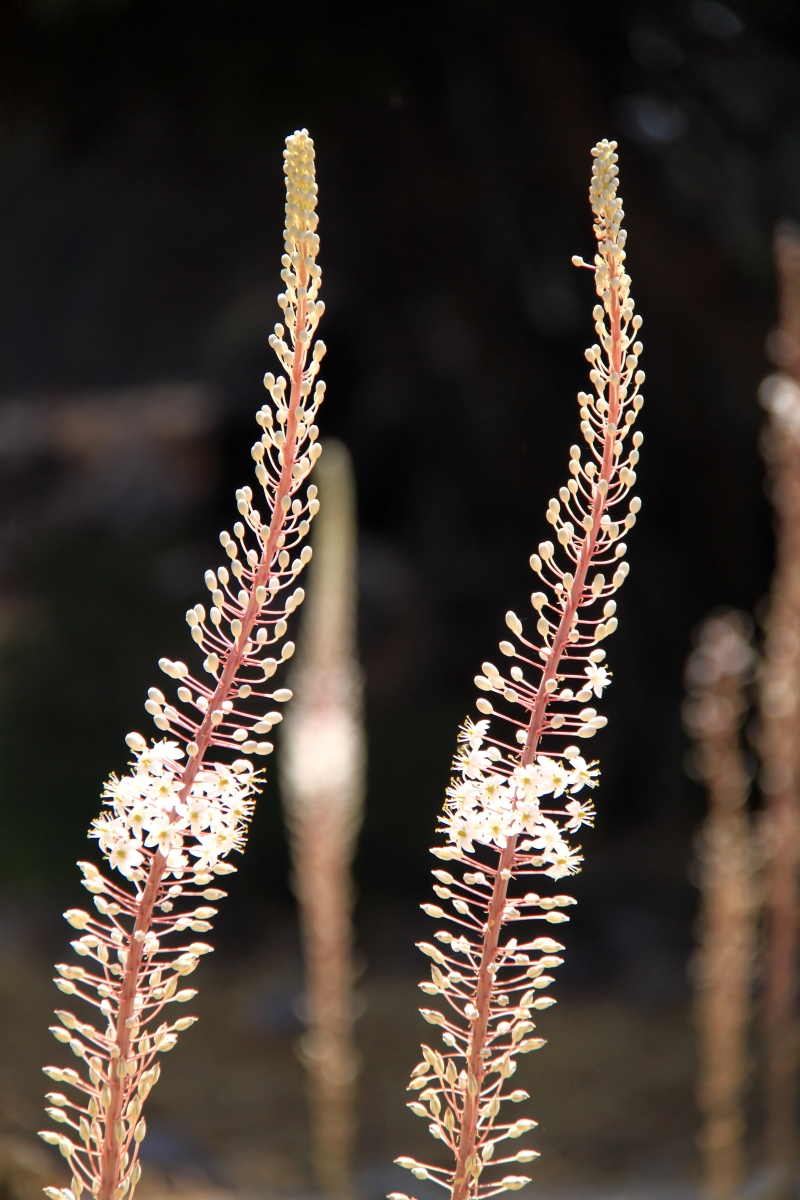
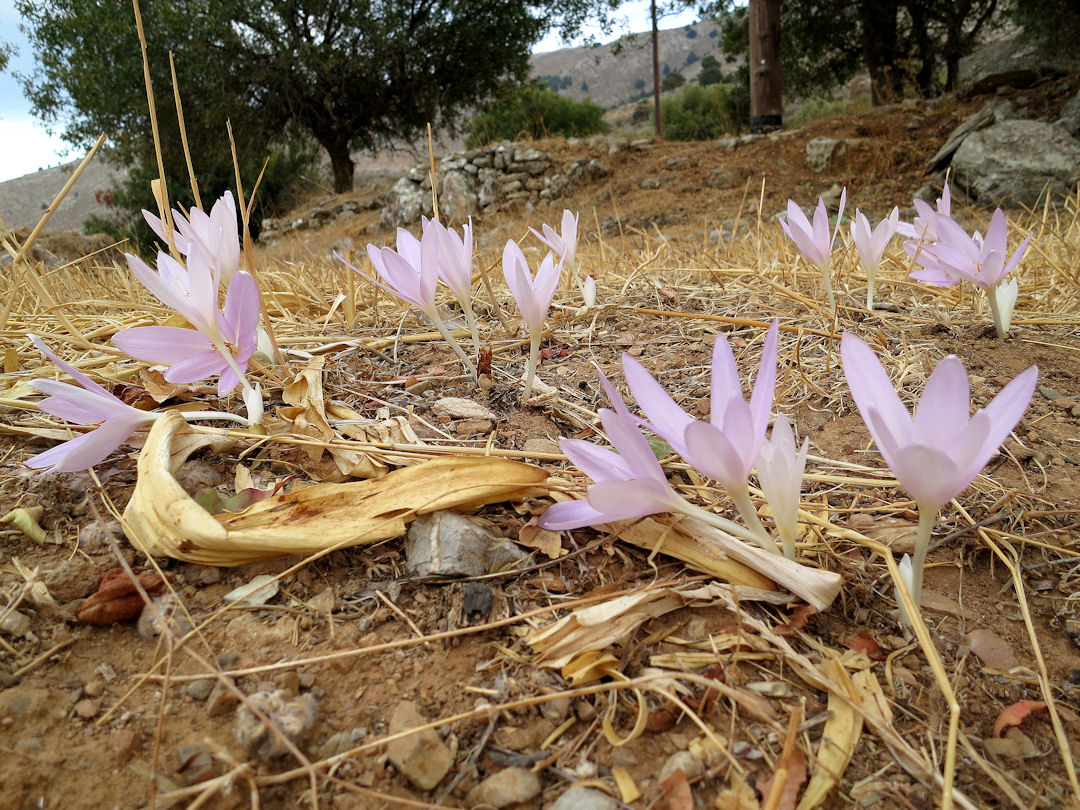
Unlike Northern Europe where the majority of plants flower in the summer, in Greece the severe drought of summer is the dormant period and some plants start flowering as Autumn approaches.  Some of them seem to push their flower straight from the soil without any leaves which follow at a later stage.  The most dramatic and prolific is the squill which can get up to a metre high on long solitary stems with tapering spikes of white flowers and must number in the millions.  A few times we had seen Autumn crocuses bravely pushing broad pink trumpets up out of the powder-dry soil.

But on the walk to Agia Marina we passed perhaps the most intriguing flowers I have seen for a long time seemingly growing out of barren rock, not just a few but hundreds.  I have no idea what they are but hope to find out.  Again a sign that Autumn is on its way.
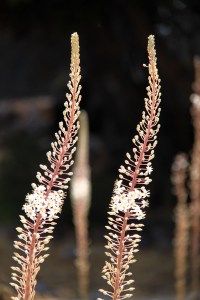
Stately squill, just two of millions
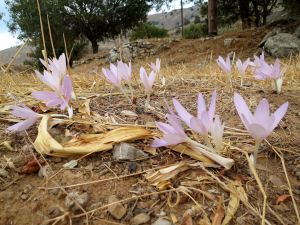
Autumn crocus
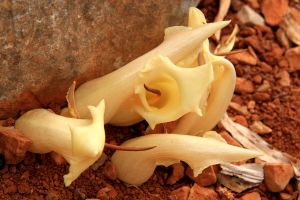
Unidentified flowers
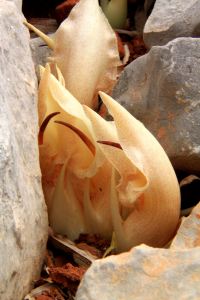
…. just crawling out of the rocks

It clouded over during the morning as we dawdled taking photos of the ’new’ flowers and while a good deal of perspiration was generated walking over the mountains to the beach it clearly wasn’t the weather for hanging around drying off after a swim. Latent heat of vaporization (evaporation) cools the skin.  For the first time I used the towel rather than letting the sun and the breeze do the job.
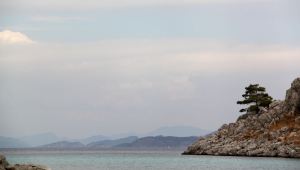
Grey at Agia Marina looking towards Turkey

Another indication that Autumn was approaching was that the Management of the beach-side taverna had removed half of the sunbeds (half the number of beds, not half of each bed). They were all there only a few days before at the end of September but now that we were into October, albeit only the 2nd of the new month, it was obviously time to start to batten down the hatches.  And back in Horio locals were wearing coats and jeans while the tourists still flounced around in shorts and short-sleeved shirts.
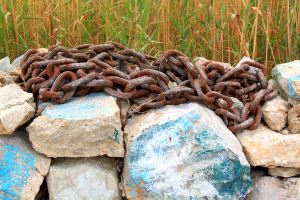
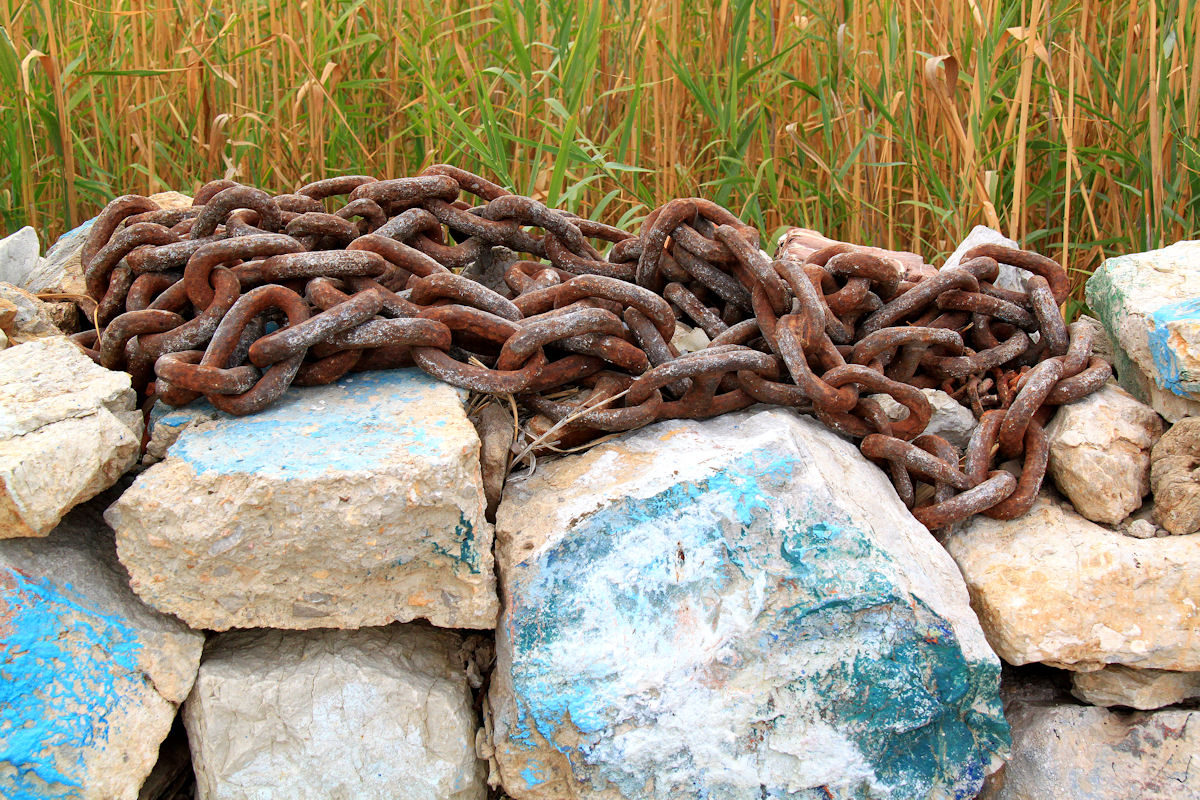
Chain on wall at Pedi

Crossing to Rhodes early on Wednesday morning we were back to cloudless blue sky and hot sunshine.  Perfectly comfortable for sitting outside on the deck of the catamaran and looking wistfully back as Symi receded into the heat haze.  Wistful because we had made the mistake of checking out the weather forecast and knew what to expect when we landed back in Grey Britain.

It had been an exceptionally good end to the second part of my 2012 Greek Odyssey.

The change in 4 hours was surreal.  From cloudless skies and bright sunshine wandering around Rhodes Old Town to the gloom of cold Grey Britain.
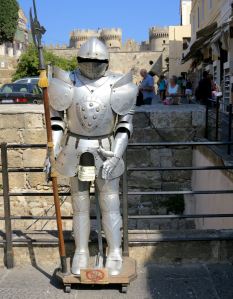
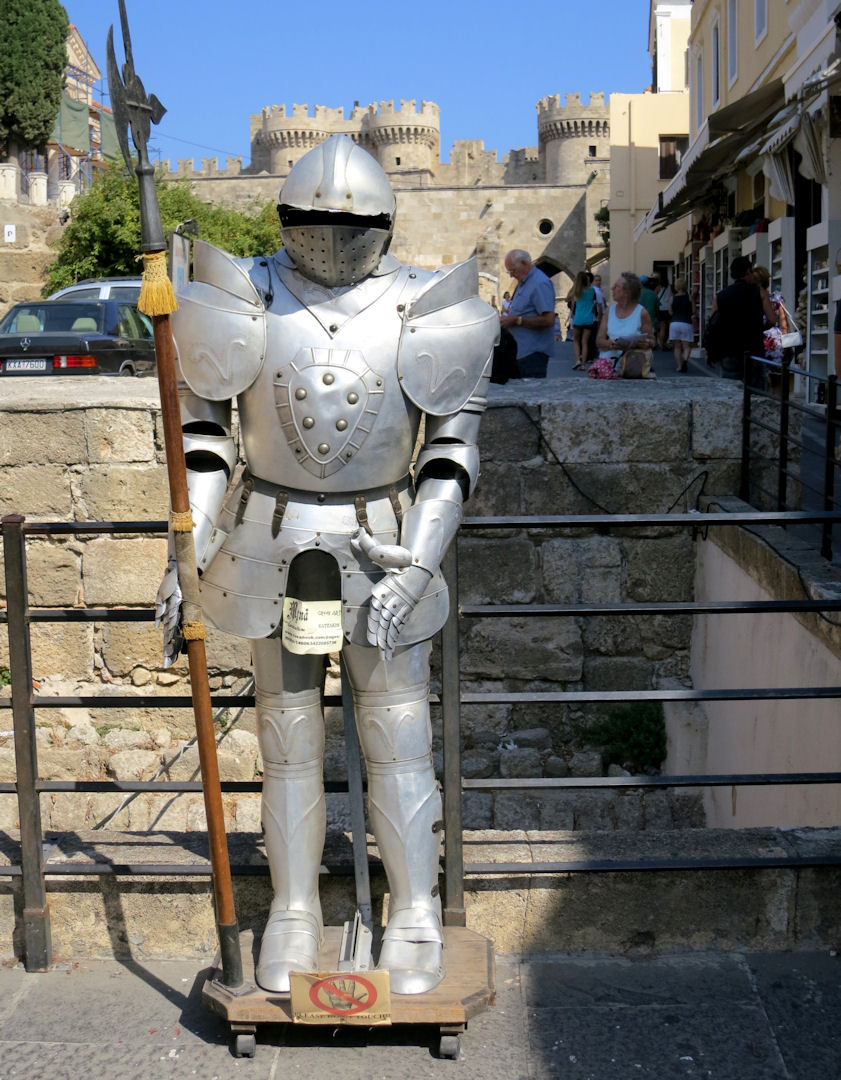
Somehow symbolic of Rhodes Old Town: a mix of genuine historical interest and tourist tat ….. under clear blue sunny skies
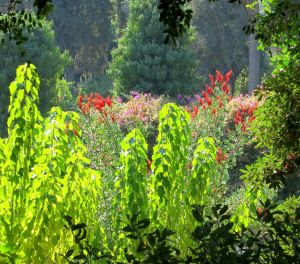
Dazzlingly bright colour in the gardens around the Old Town

To be fair, back in Grey Britain has been mixed.  The weather on our arrival in Manchester was as cold but not as wet as forecast. The drive down to South Wales and home on Thursday was very pleasant in sunshine, warm even if not Greek-hot.  Put my shorts on again.

I made a foray into the garden to check how things had changed in my absence and came back quite depressed.  The soil was sodden after a cold wet summer and giant caterpillars had munched their way through all the cabbage I planted for the winter and most of the Brussels sprouts and purple sprouting broccoli.  The Charlotte potatoes I had carefully planted in July and earthed up before I left for Greece in August so as to be ready for Christmas dinner had disappeared completely.  Not a trace.  Autumn raspberries had fruited and were covered in mildew on the canes.

The only roaring success was the solitary tomato plant which I had put in the Blue House (a very large greenhouse but painted blue).  I watered it copiously before I left and as the rain had been kept off it and the temperature is always a good few degrees higher so it had grown to 3 metres across.  And this year the mice hadn’t eaten the beetroot which seems to have cropped fairly well.

Elsewhere in the garden the persistent weeds which I had painstakingly cleared before I left had returned and had set seed.  The edge of the ‘Acer Glade’ at the bottom of the garden which I had carefully cut down with a new strimmer bought for the purpose was overgrown once again and the path to the shed had to be found by Braille.  It needed a lot of TLC.

But not on Friday.  It was grim.  Grey Britain at its worst.  The cold, wet summer sliding unnoticed into cold, wet autumn just as the sunny, dry summer on the Hot Rock had slipped almost imperceptibly into autumn.  By the end of the day there was standing water on the soil.

Saturday was considerably better, Autumn sunshine all day, but after heavy overnight rain it was the afternoon before the garden had dried out enough to work on.  Ho hum!

I made a start but there is a lot more to do.  Going away for a few months at a time in the summer doesn’t sit well with having a quarter of an acre of garden.  I look at the smallholdings on the dry but fertile soils of Nisyros, with courgettes, tomatoes, peppers and much else irrigated in summer by water collected in tanks in the winter, unblemished by the wet and untouched by slugs ….  and get a little jealous.  I really need to develop a better planting strategy to be able to leave the garden in the summer and have winter veg when I’m around in winter.

But that’s not an immediate priority.  Short term I have to pack to go away again.  This time to North Wales on a course to learn how to rite proper.  Maybe even learn to write properly.  Maybe turn Barry’s Ramblings into a book.  Now there’s a plan!

And then skiing in Canada January/February ???

Have to do something to get the grey out of the brain.

Posted in Autumn, extreme gardening, Greece, Grey Britain | Tagged , , , , | 1 Comment