It’s good when a plan comes together: poetry and wild gardens

A couple of things are starting to come together.

I have finally sorted everything out for publishing the book of Enfys’s poems.  Completed the artwork and taken it to the printers.  I collected the proofs on Friday and gave the go-ahead for the printing Monday morning.   Hopefully it will be printed by Tuesday 24 May, possibly a little sooner.

All profits from the sale of the book will go to St Anne’s hospice where Enfys’s spent her last days.   As it says in the introduction:

I and the family publish these poems in the hope and with prayer that through them Enfys will continue to be a blessing and help to others”.

It has taken me long enough to finish it but now it is done.  A milestone reached.


Front cover

back cover

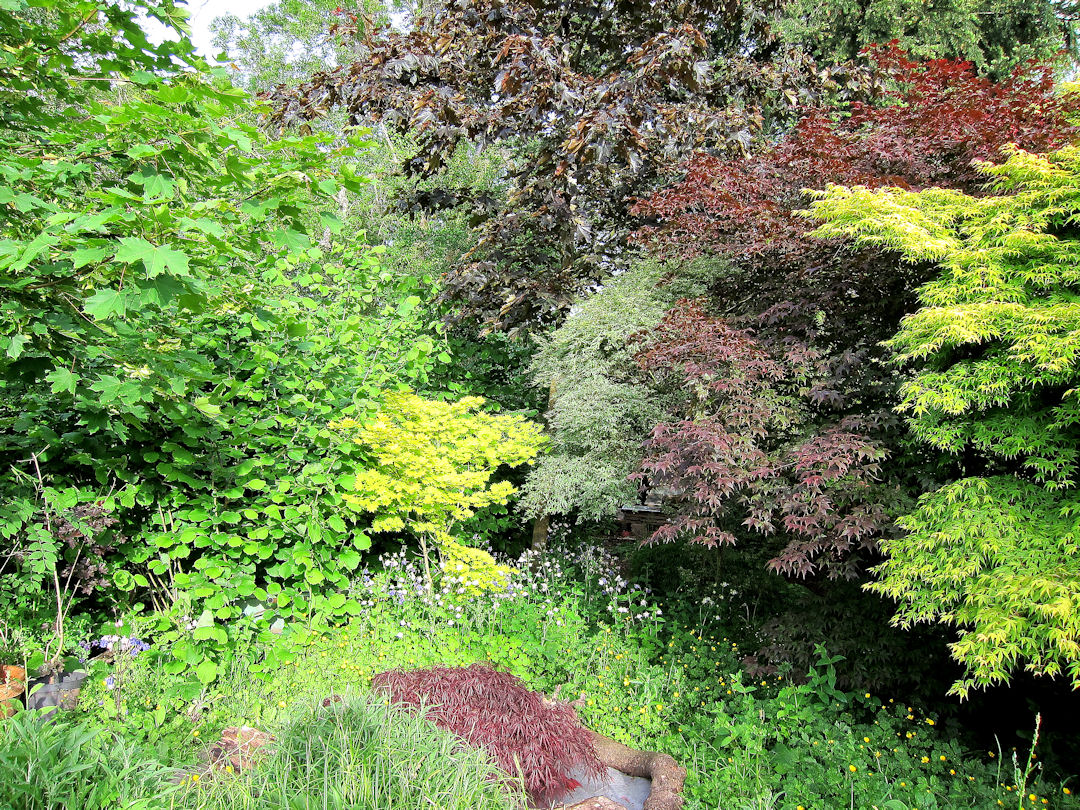
And the wild garden?  A number of years ago we started to prepare for old age and decrepitude by planting Acers at the bottom of the garden to replace the ‘bottom lawn’, the intention being to replace an area which required regular mowing with an ‘Acer Glade’ requiring zero attention.  We let the chickens roam in the area, fencing it off from the vegetable garden. They loved it and the eggs were fantastic with rich orange yolks.

Before I went to Greece last summer I re-homed the hens which, between the 8 of them, had reduced the bottom lawn to bare earth / mud depending on the amount of rainfall.  They were even starting to dig out around the roots of the Acers.

Re-homing the chickens had two very direct consequences.  First, emerging seedlings were nolonger grubbed up and eaten.  Second, the young seedlings had a richly manured soil to get their roots into.

By the time I returned home in October there was an almost impenetrable jungle of weeds with thistles 8 foot high.  Daunting to say the least.

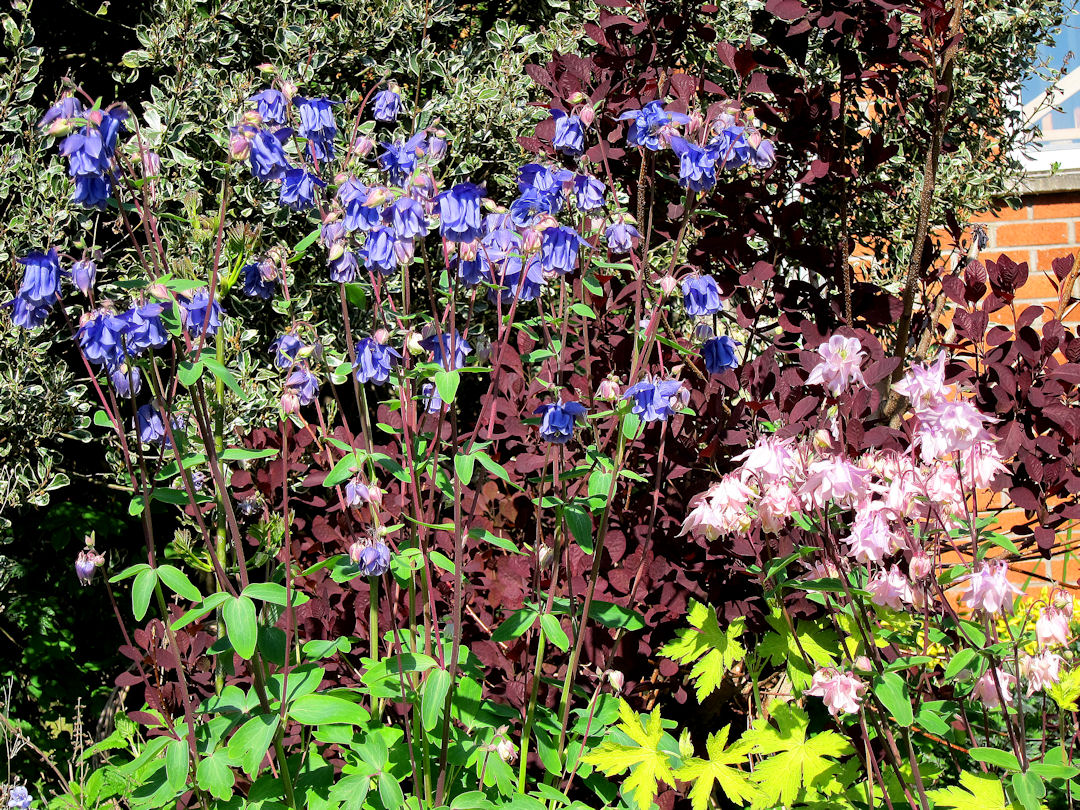
Since getting back from Canada in mid January I have been trying to ‘weed-out’ what I regard as undesirable plants, mainly thistles, nettles, ‘flicky weeds’ ( hairy bittercress or Cardamine hirsute  to aficionados), and dandelions, making sure I grub them out before they seed.  By contrast I have been shaking out seed heads from Aquilegia and relocating foxgloves from the vegetable garden.

It is an ongoing battle but there are signs of success with a dense growth of Aquilegia in particular.  The Acer Glade is beginning to look good!!!

Preparing for decrepitude: the ex-lawn

A closer look

Aquilegia gone wild

Posted in extreme gardening, Reflections, Spring | Leave a comment

Unearthing art, philosophy of decision-making, deadline-brain

I’m back home again now, my house-sitting duties having come to an end.

The garden usually springs into life during April, growth accelerating towards the end of the month and into May.  This year the change in the 10 days that I was up North has been particularly dramatic with perennial flowers, in tight bud when I left , fully open when I returned and significantly more numerous and luxuriant than usual. I reckon that this is partly a survival mechanism of plants after a particularly testing winter and partly a response to the unusually long period of warm, dry, sunny weather.   The display of colour has been quite spectacular and, as a bonus, clearing away the weeds and debris revealed odd bits of artistic expression.

One such was a piece I created a few years ago in the Crap Art genre, the natural progression of Brit Art.  If the well known patron of the genre, Michael Scratchy, is a reader of this blog, the work is for sale for £1.25 million plus dealers fees which as usual amount to a further £1.25 million.  Small beer for him I know but then I’m just an enthusiastic amateur without years of training in art school so I can’t expect my work to sell for high prices.

Cornflowers: colourful, attractive ..... but can be invasive

Dutch iris standing proud, very prolific this year

Azalea with the gargantuan agaves in the Blue House behind

Another azalea, amazingly vivid red

Aquilegia self-seed everywhere but are preferrable to most weeds

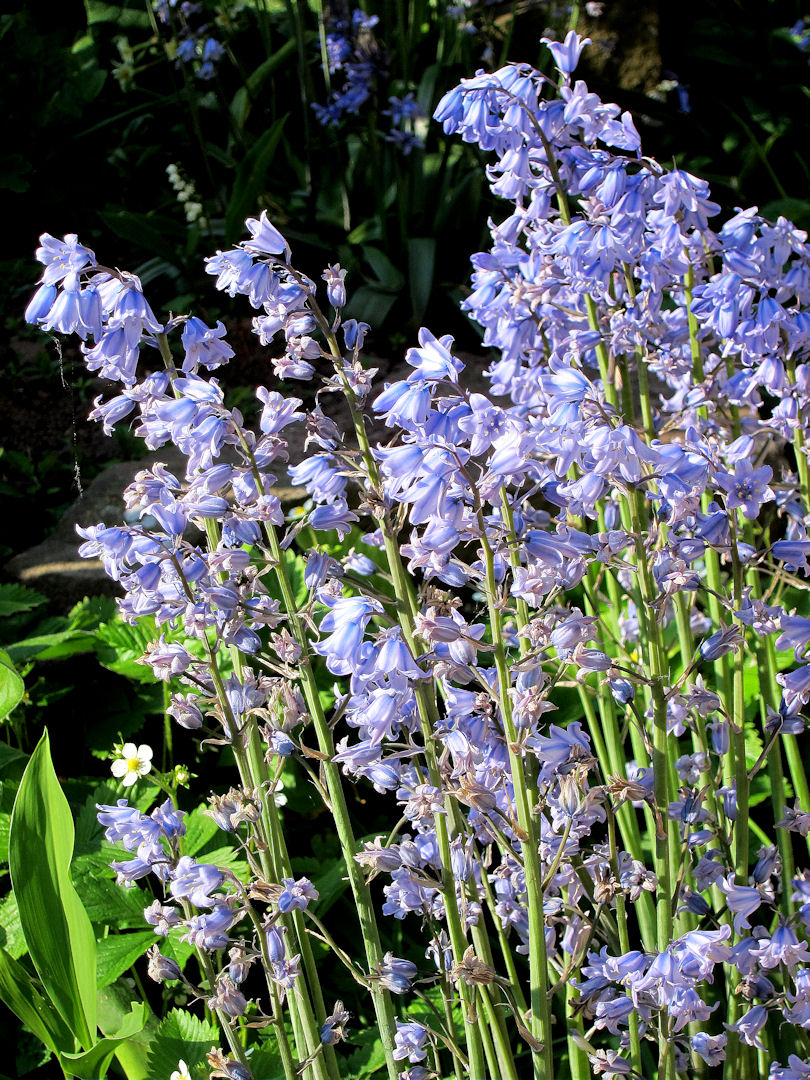
Bluebells have an all-too-short flowering lifespan

'Bicycle Fork', the work of art which might, or might not, take the art world by storm.

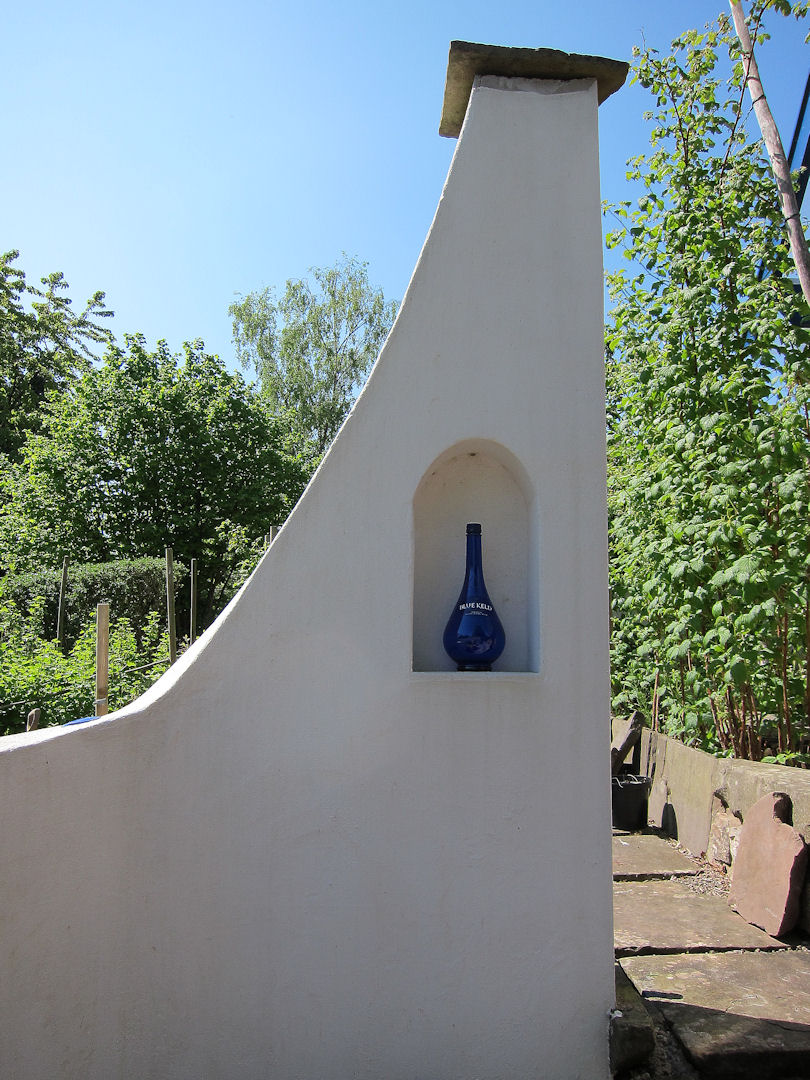
My tribute to Greek design - it waits to be finished.

XXNow that I am back home there are a great many things to do, a lot of decisions and choices to make.  Which is why the blog has taken a back seat for a few days.

When I was working I used to make a distinction between tasks which were ‘deadline driven’, completion required by an inflexible date such as the start of a public inquiry, and those which were ‘quality driven’, standard and content required by inflexible specification.  Project directors, particularly those with no real grasp of the job, usually require perfection delivered on time,  fail to grasp this fundamental distinction, fail to grasp that in some cases it is either one or the other but cannot be both.

Life-after-retirement is not often like that.  Few everyday tasks are truly deadline-driven.  But some are, some deadlines are inflexible.  So it is for me now.  I’m facing a deadline-driven task – getting the house and garden ready to leave when I go back to Greece on 4 June.  That is a ‘hard’ deadline, non-negotionable,  the flight is booked.  Therefore, because there is far more to cram into the remaining time than can possibly be achieved, the decision is already made that some things just won’t get done and the quality of some of the things which do get done won’t be up to standard.

That’s what poses the dilemmas.  Setting the priorities.

The main problem is the garden because that is dynamic, in constant change, growing.  I may not get the house cleaned and tidy as I would like but if necessary that can wait until I get back.  The garden by contrast got out of control last summer and could get really bad if let go again.

The strategy is to plant up the vegetable patch with winter veg using weed-suppressant fabric to control the weeds and to get the fruit garden under control.  Simple.  Simple???

It’s not just a matter of having a ‘Four-Week Plan’ to get things sorted.  The weather is an unpredictable variable.  On Friday for example rain was forecast for early evening so I worked until it was dark on digging out leaf mould from the leaf bin and lugging it up the garden to earth up the potatoes.  I finishing 10 minutes before the rain came.  On Saturday every time I stuck my head out of the door it rained  so consequently very little was achieved.

Which meant that I devoted the day to another priority, getting the book of Enfys’s poems ready for publication before I leave for Greece.  It’s now just about ready to take to the printers so I’m hopefully on target with that one.

But this all suits me down to the ground.  It’s how my brain works.  I can only get myself into gear when there are deadlines.  It was one of the things I enjoyed about work, constantly adjusting workloads and priorities as the work programme was disrupted by changed circumstances, new tasks and reduced resources.  This isn’t on the same scale but suits my deadline-brain much better than drifting.

Posted in Art, extreme gardening, Reflections, Spring | Leave a comment

Art, architecture, monasticism, power and influence

It has been a very mixed few days.  Not in terms of weather.  For Britain that has been remarkably stable.  Dry, sunny and warm.  Very pleasant indeed.  It hasn’t yet lasted quite long enough for people to start complaining about it. In fact I passed the time of day with one bloke out cycling along the river bank with his young daughter who ventured the opinion (the bloke not the daughter) that it would be nice to have this heatwave until September.  If only!!!  Temperatures of 24 in April are pretty good by any standards.

No, it has been mixed in terms of my rambling around the North of England. And rambling around in my head.

Friday I ambled along the river on the Trans Pennine Trail.  Not that I reached the Pennines because I was ambling in the opposite direction.  It seemed that all the world and his dog (and his kids and his bike) were out enjoying the amazingly Good Friday Weather.  Blazing sunshine.  Shorts very much in evidence.  Young families paddling in the river at canoe access points (Don’t let those two amazing things pass you by: 1 – the local council provides and equips canoe access points  2 – the Mersey is now clean enough to swim in, unheard of when I lived up here.  The quality of Mersey is now strained – or at least filtered).

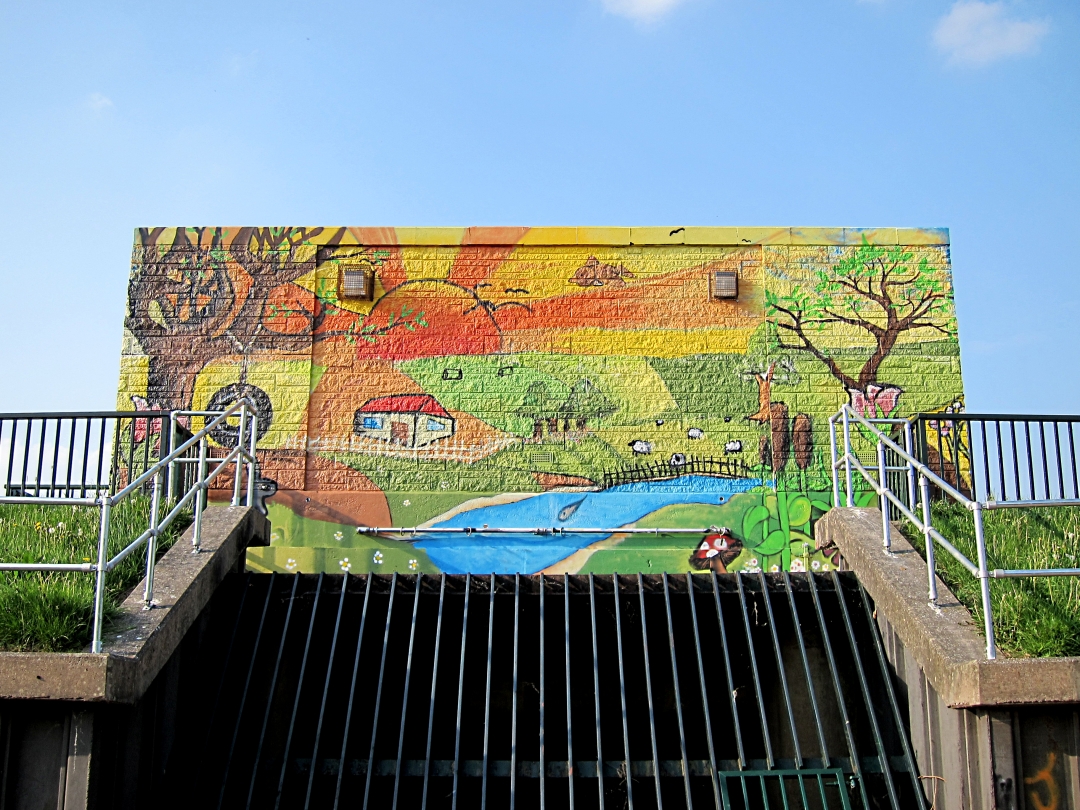
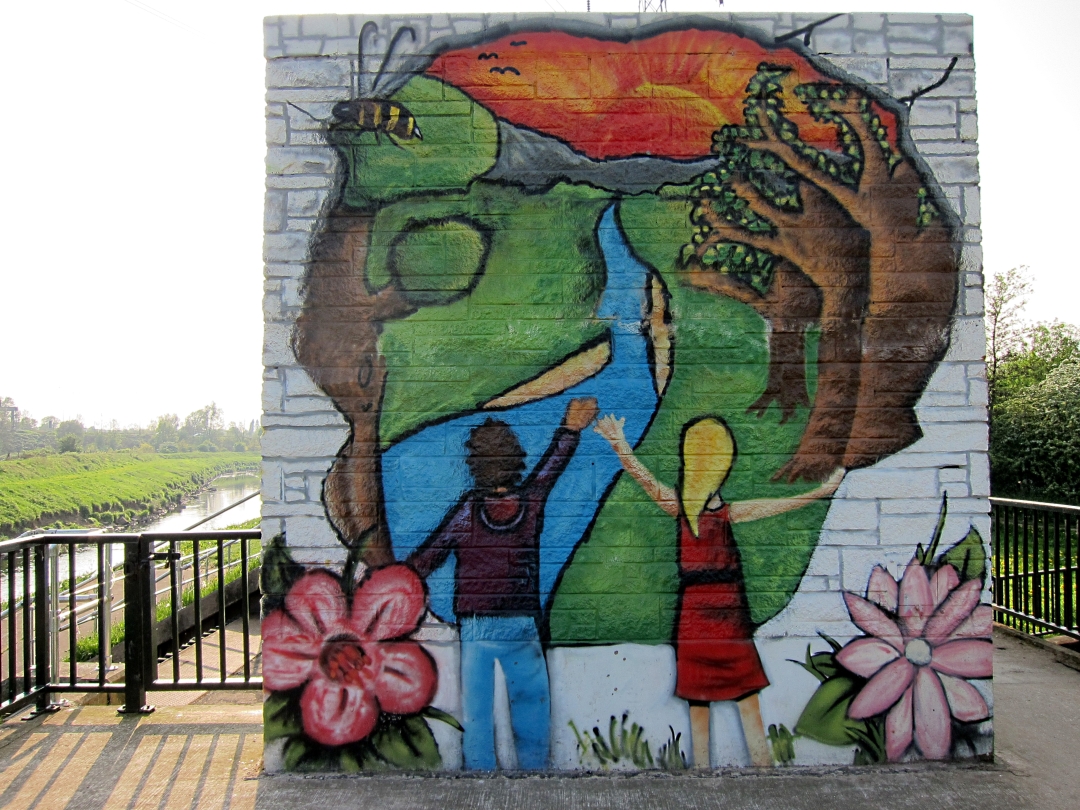
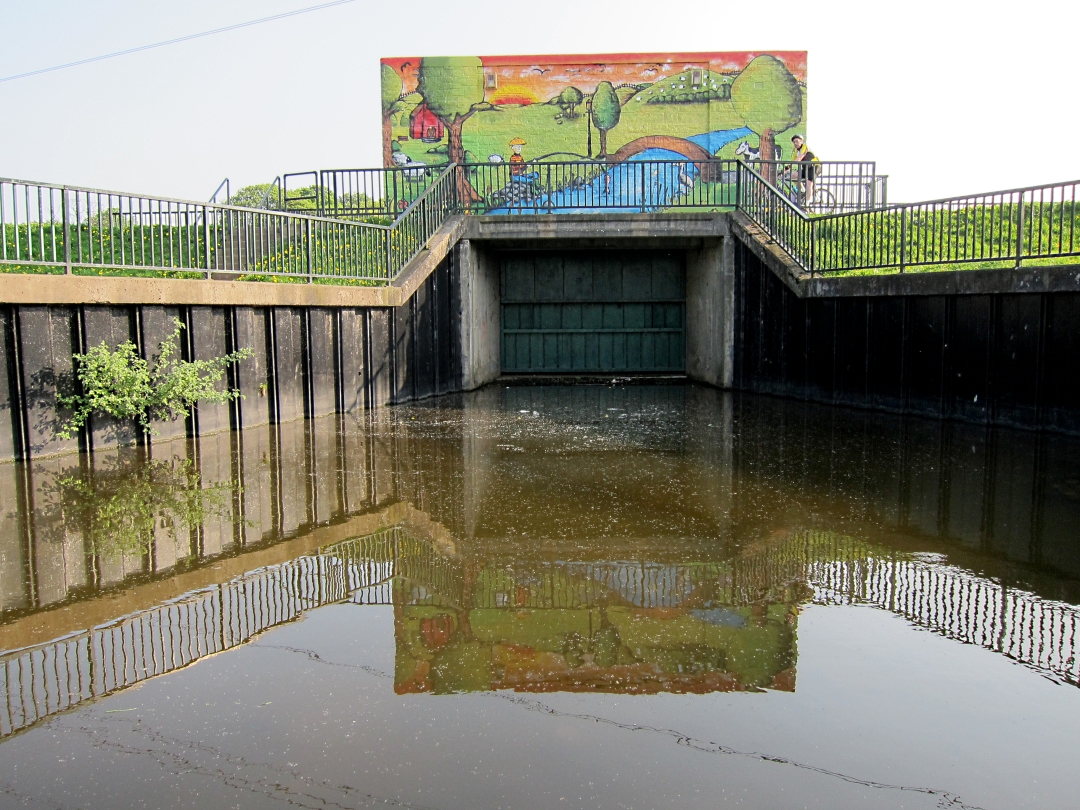
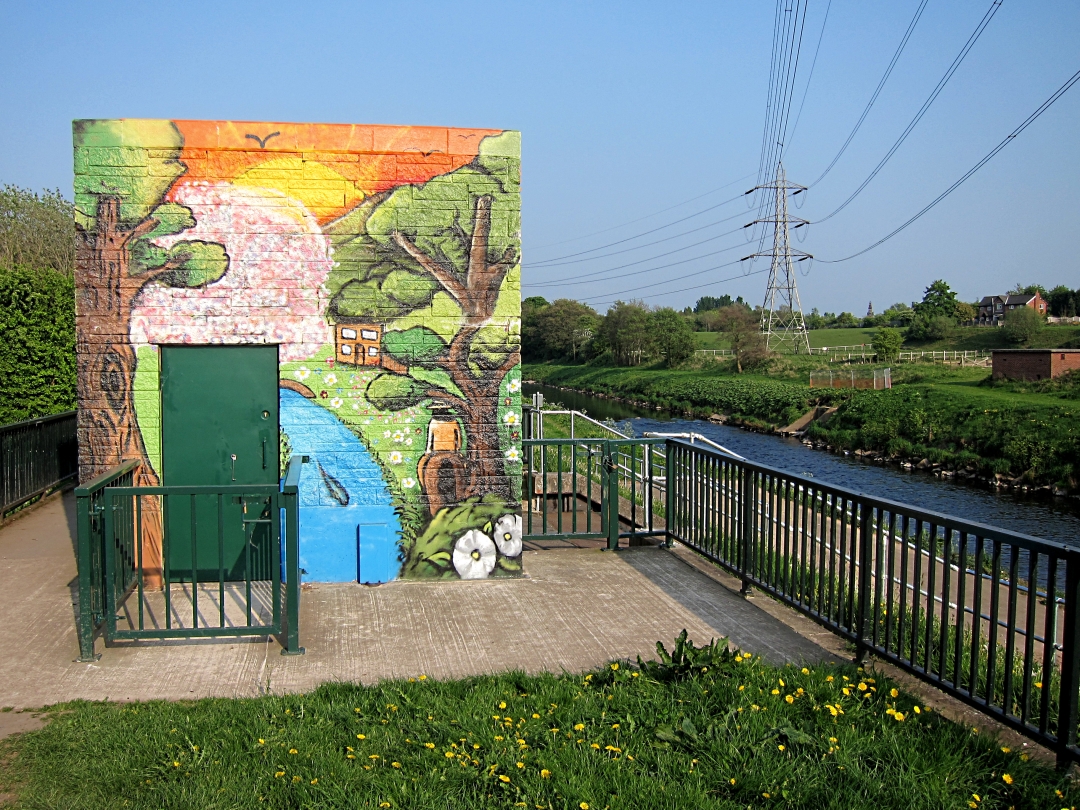
As if to echo the joi de vivre of the afternoon I came across some kind of pumping station on the river bank which has been painted like I’ve never seen a utilitarian building  before.  Whoever is responsible – “Thank you!!”

Pop art overlooking the river

approaching from the east

tributary side

west side story

On Saturday I took my life in my hands once again and crossed into Yorkshire, this time on the train.  I reckon this must be about the 10th visit I have made to Yorkshire in my life.  Who said Lancastrians are narrow minded!

I went to see a girl I met on the internet.  Well alright, don’t be too shocked, I met up with friends Enfys and I made in Greece a few years ago having had an e-mail exchange about ferry timetables.  It was a very good day.

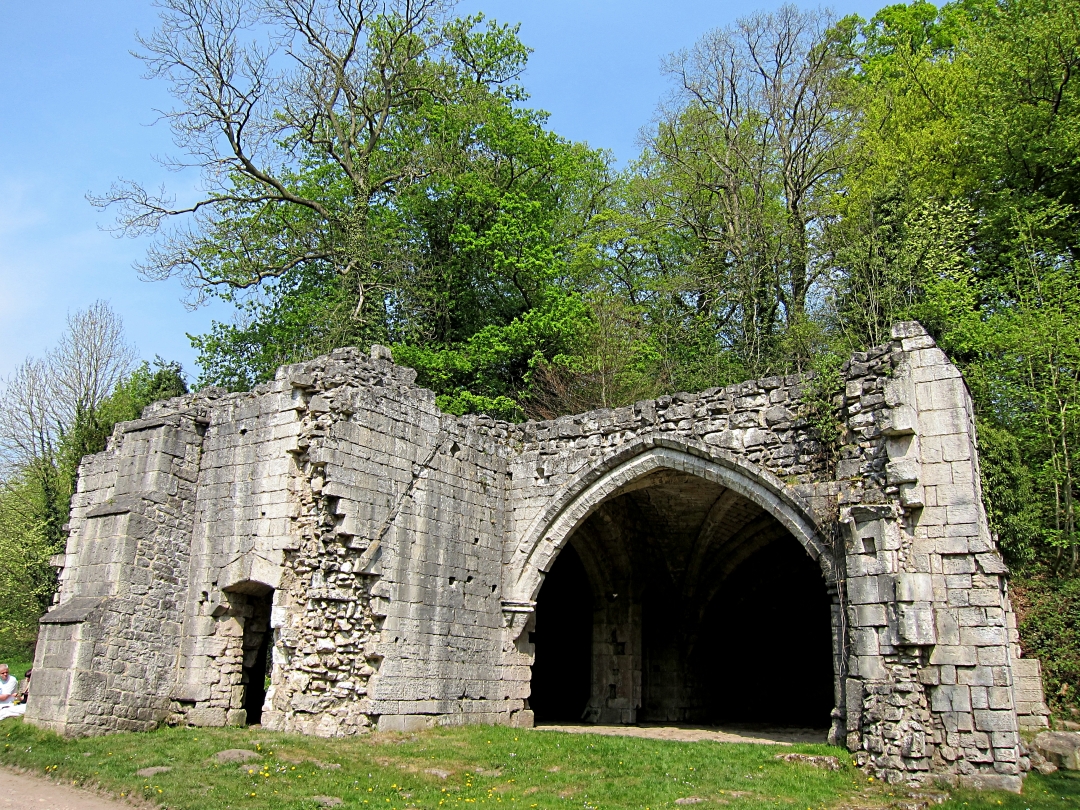
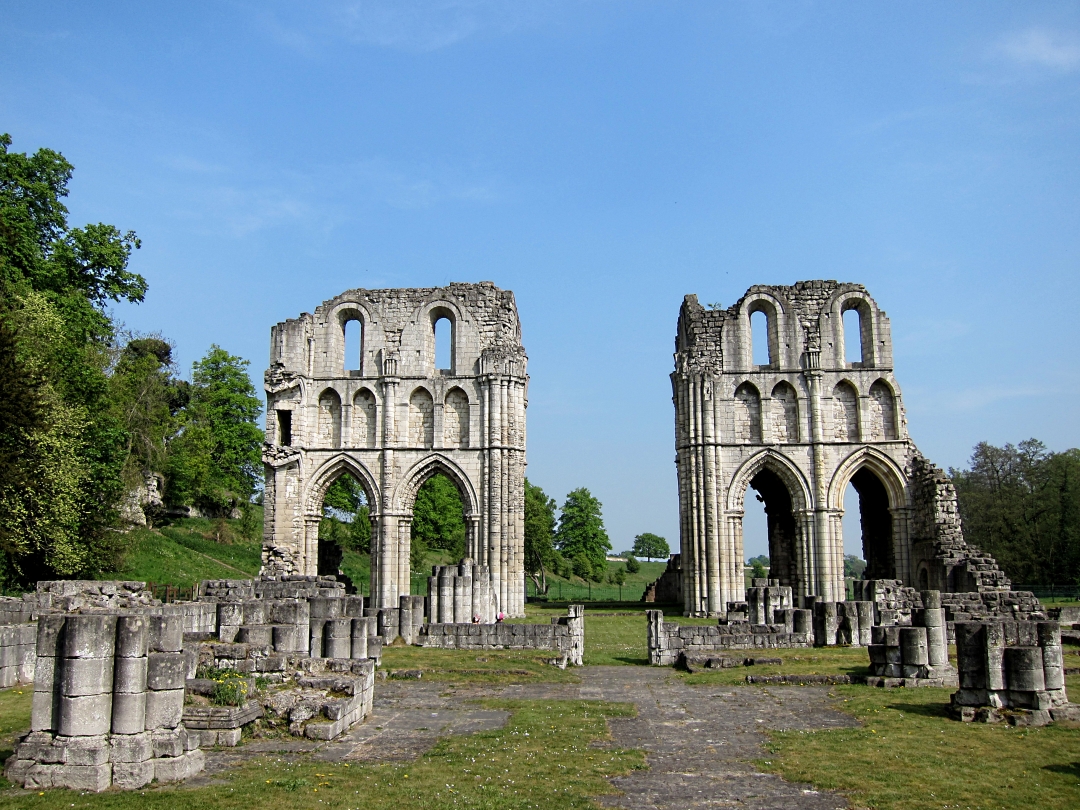
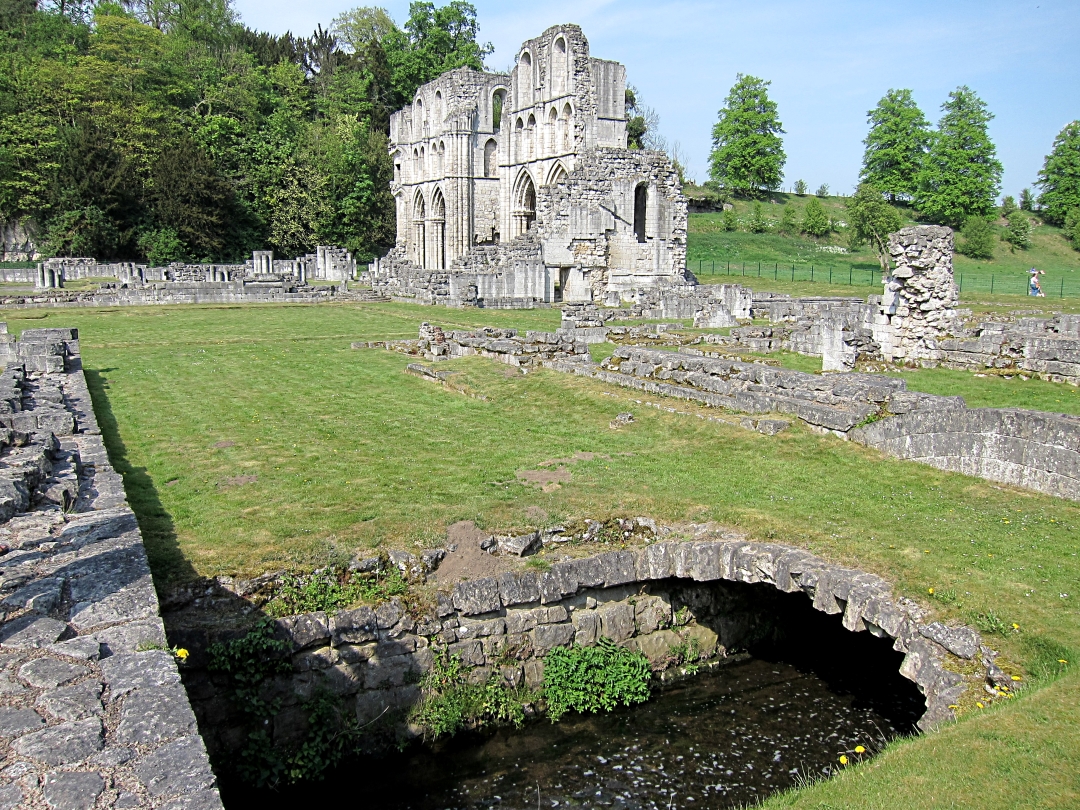
I got there towards the end of the morning and after a sandwich we went to Roche Abbey on the outskirts of Rotherham.  With blue sky, green lawns laid out by Capability Brown no less, some significant bits of extant structures considered among the most beautiful styles of Medieval architecture,  and a river flowing through the site it was very attractive.

Entrance to the Abbey precinct

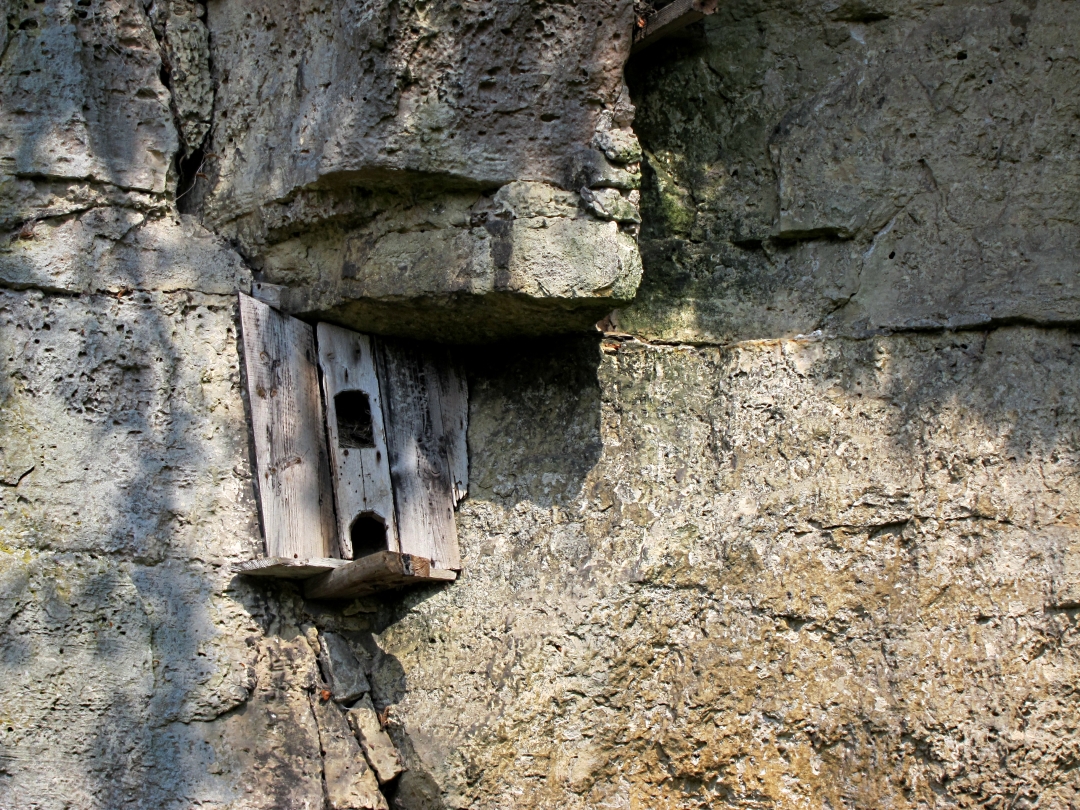
Roche pigeons

Built in the 12th Century

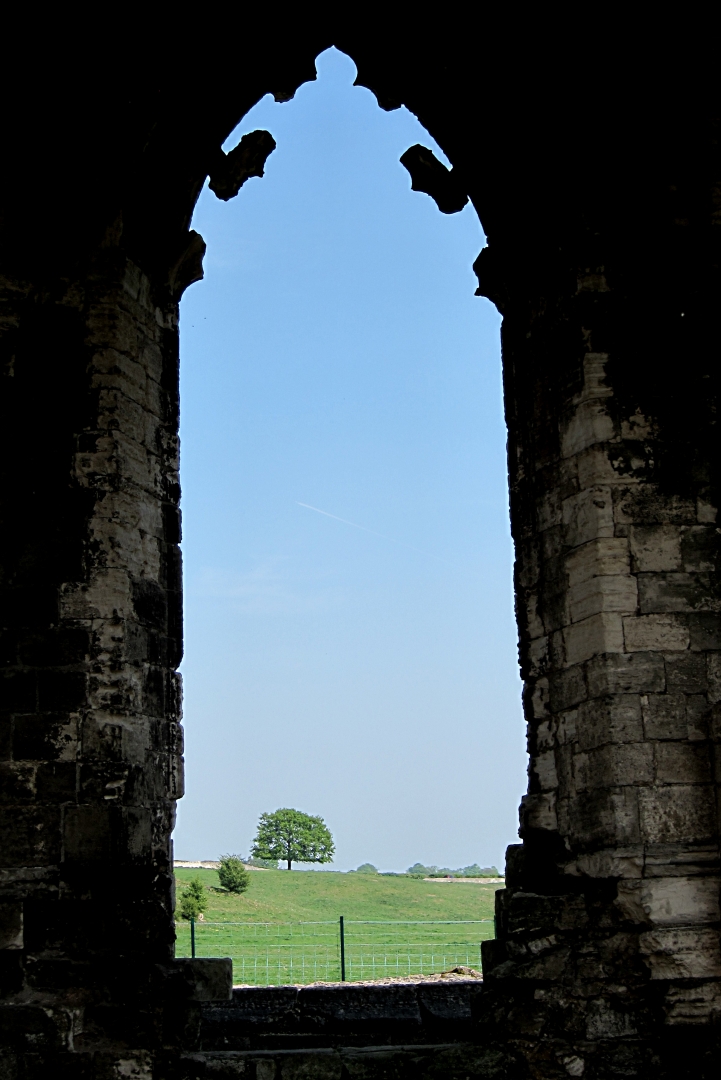
Through an arch

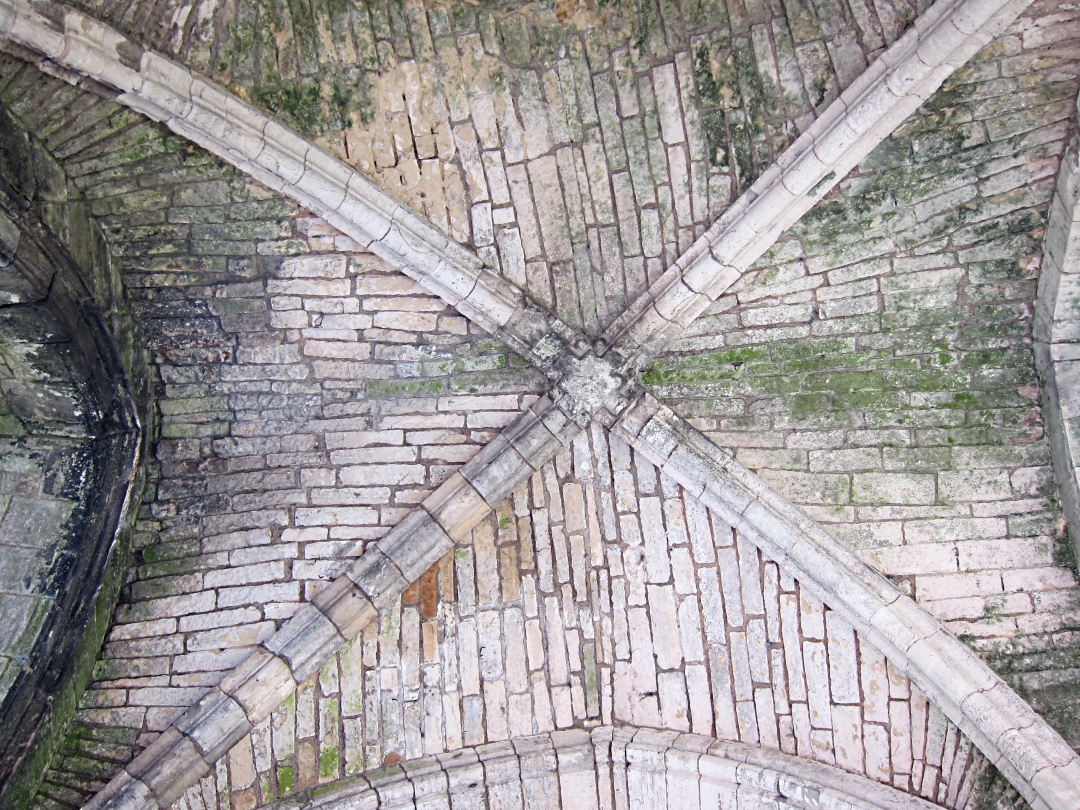
12th Century ceiling!!!

Looking across one of the bridges

But to me abbeys, cathedrals and the like are always pose a dilemma.  On the one hand there is the thought that these grand architectural monuments are built with on the back of a forcibly tithed population which can ill-afford it.  On the other hand religious institutions provided an order and structure for society, considerable employment and artistic achievement.  So what is the balance? A force for good or ill?   I guess there is no single answer, it depends upon the particular institution and the circumstances.

I’m no expert on the history of monasticism but I know that the Cistercians arrived from France shortly after William the Conqueror and established many abbeys in Britain, principally in Yorkshire, Scotland and Wales.  The arrival of the Normans meant a major change in the structure of society to a feudal, very hierarchical system, with the land and its people carved up between Norman overlords who maintained law and order often brutally.  Perhaps an irony is that one of the two Norman landowners giving land to create Roche Abbey was one Richard de Bully.

The Cistercians based their order on a return to the strict observance of the Rule of St Benedict with its emphasis on ‘work and prayer’, especially manual field labour.  They valued self sufficiency rather than dependence on an exploited population and supported themselves principally by agriculture and brewing.  By modern standards they were quite enlightened and liberal for their time.

Along with other such monastic orders the Cistercians became a very powerful, multinational economic force based on great agricultural wealth. They had monasteries and therefore agricultural operations across much of Europe including France, Britain, Ireland, Italy Spain, Portugal, the Balkans and Poland.  This was part of the cause of their eventual downfall as they came into conflict with the secular state both because of their economic wealth and their control over people.  In Britain the end was accelerated by the Reformation.

But one can’t help wonder about the modern equivalent, multinational corporations controlling the lives and destinies of populations to a much greater extent than the state as well as controlling vast areas of land and property.  In this modern battle between governments and the controllers of wealth, governments seem singularly incapable of keeping such institutions under control.

I digress.  It was a very enjoyable amble around the remains of Roche Abbey ….. until the thunderstorm by which time we had arrived back at the car.

Storm cloud silhouette

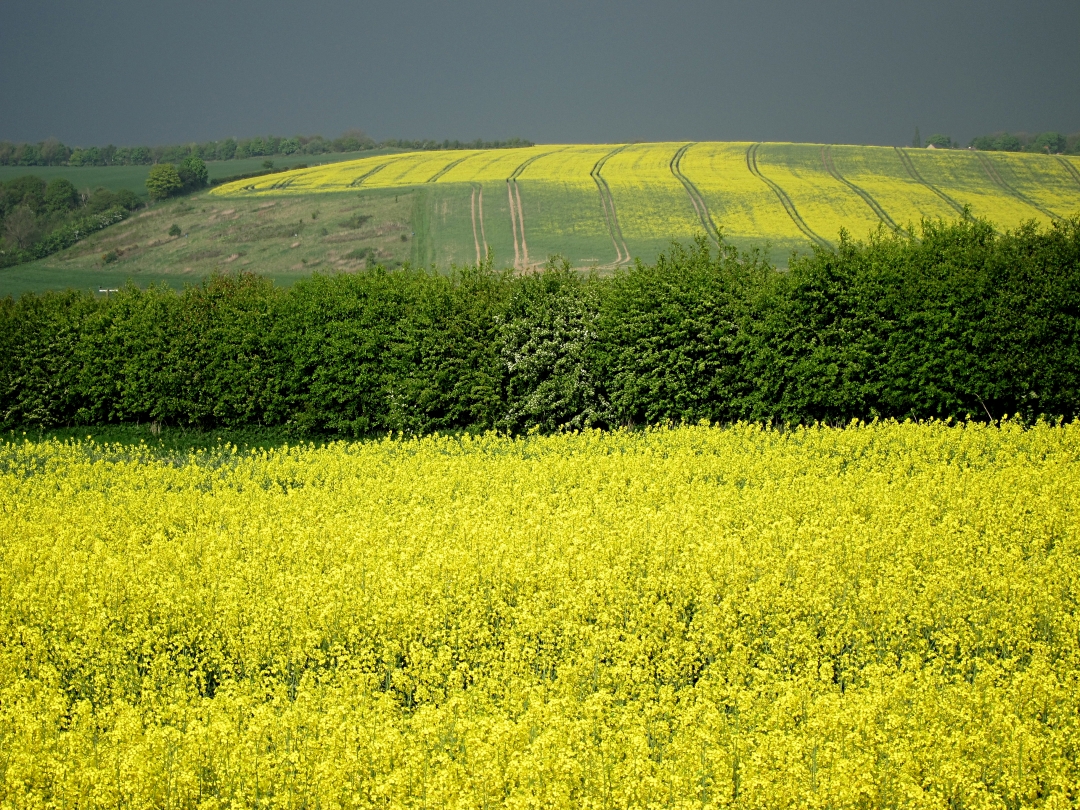
colour palette

Posted in Art, Reflections, Spring | 1 Comment

The Second Home: hideaway or albatross?

I’m back up North again in my 3-month game of slow-motion ping-pong up the M5/M6 corridor. Backwards and forwards, backwards and forwards ….  For the first time I travelled by car partly to bring a load of tools to tackle jobs in the garden, partly to take the stuff home which I have been gradually trickling up on the train and leaving here.  This will be the last time as Ruth and Tim get back home at the beginning of May so I need to take my clobber back to my place.

So time for reflection.  What has it been like living in two places?  The short answer is ‘increasingly tiring’.

It has been a bit of an insight into having a second home, not about the ethics of owning two houses, that is a separate issue, but about the practicalities.  Since early February I have been spending 10 days alternately in Ruth and Tim’s and my place.  Each time I have needed to clean the house when I arrive and again when I leave – doubling that particular chore.  The gathering of dust stops for no man.

On top of regular chores there is essential one-off, urgent maintenance: the chimney falling through the roof in the middle of a hard winter, a leak into the boiler cupboard; leaky taps ….. never ending problems.  Age takes its toll not only on the fabric of the house but on my inclination to sort things out.

Then there are the gardens.  Each garden has 10 days of rapid Spring growth to contend with when I change location meaning that I have to play catch-up before I can get to grips with any improvements.

At my house catch-up is made more difficult by my absence last Summer and the consequent massive and cumulative growth of weeds.  A quarter of an acre of weeds is a lot. I am coming to the conclusion that my only hope of getting back to square one is either a flamethrower and a scorched earth policy …… or to hire in some pigs.

The size of the task isn’t as overwhelming at Ruth and Tim’s because not only is the garden smaller but the soil is sandy.  Push in a garden fork, wiggle it around, grab the weed and pull it out of the soil and shake …… all the soil falls off, perfect for composting.  Compare that with the heavy clay in my garden:  push in the fork, lever it up, lift out a great clod, attack it with a hand-fork to get some of the soil off, give up and ditch the lot.

Three months has been enough for me.  Keeping up with the increasing job list is gradually wearing me down.   I’m doing it because it needs doing.

But what if the other house was on a Greek island? Somewhere great to spend Summers.  Available whenever I wanted to fly out.  Small traditional house, close to the sea, away from the Brit-pack, two-bedrooms so friends and family could come and stay.  Tempting?

The last 3 months has reinforced me in my view that even if I could afford it I wouldn’t buy a second home.  One reason has always been that I would then be tied to going back to the same place all the time and that would be very limiting.  Now I would hesitate because of the additional workload of maintaining a second place.  It wouldn’t simply be the cleaning and so on it would be the maintenance, dealing with a leaky roof and damp problems in winter, idiosyncratic electricity.

When I go to the islands I want to go walking in the mountains, swimming in the Aegean, sitting on the balcony having a drink.  Not indulging in continual DIY, I have more than enough of that at home.

You have no idea how much I am looking forward to going back to Greece.  Flight booked for 4 June.  No more cleaning.  No more maintenance.  No more weeding.  Chill!!!!

Second home?  Who needs a double dose of stuff to do?  I’m supposed to be retired!!  Who needs an albatross round the neck?  There are no albatrosses in Greece.

Posted in Grumpy Old Men, Reflections, Spring | Leave a comment

The Lawn: a pretentious British middleclass anachronism

I like to inject a little culture into the blog every now and again so I’ll begin with a poem:

Spring is sprung

The grass is ris

I wonder where the birdies is

…….

That’s enough, you know the one.

Spring is now very definitely sprung.  And the grass is very definitely ris.  (We’ll not get onto where the birdies is)

The warm sunny weather of the last week has dramatically accelerated growth in the garden.  Which as usual means that the weeds grow first and fast.  But this year the weeds are far more numerous having had their head all last summer while I was in Greece.   Weeds are a major unavoidable problem that owners of gardens have to live with.

The lawn, however, is another matter.  In the 10 days I was away up Norht it got to look very shaggy, loads of dandelions, daisies, plantains, celandines …. even the wrong kind of grass.  From now on it will need cutting at least once every two weeks.  And this is the cruncher, what on earth is the point????  And it is completely avoidable!!!!

There are probably more books written about how to care for lawns and stuff on sale to improve lawns than any other part of the garden.  Dr DG Hessayon, prolific author of ‘Expert Guides’ to many aspects of gardening devotes an entire book to The Lawn. http://www.amazon.co.uk/gp/reader/0903505487/ref=sib_books_pg?p=S001&keywords=hessayon+d+g&ie=UTF8&qid=1302484068

But what is the use of a lawn?  They just sit there looking a patchy, pock-marked green.  Once every 20 years or so, if the weather gets hot and dry, they look patchy, pock-marked yellow.  Most of the time if you walk on them they turn to slimy mud and if you habitually walk across them on the same line, say to get to the garage or the shed, you inevitably have to build a path.  Your or your neighbours pets pee on them and create bare patches surrounded by fairy rings.

Lawns need applications of weed killer, moss-killer, fertiliser, pH balancing, as well as mowing, edging and spiking for aeration, all requiring different bits of expensive kit.  Lawn mowers, strimmers, fertiliser ‘applicators’, spiking machines are needed which are so valued and cosseted that they have long-since displaced the car as the principle occupants and purpose of a garage.   I mean, lawns are so important to our middle-class, semi-detached life-style that it make sense to park the £20,000 car on the road so we can put the £200 lawnmower in the garage.

Be honest, how often do you use your lawn?  Probability is that it’s once a year when a warm sunny day happens to coincide with the kids being off school and you’re not all in the out-of-town-shopping centre buying a new lawnmower or some lawn-feed on a 2-for-1 offer.  You put your patio furniture on the decking, it’s only in period dramas that people sit on the lawn for afternoon tea.  Similarly with ‘traditional’ lawn-games like croquet.

Which brings me to the point.  ‘The Lawn’ is an inherited figment of British middle-class imagination.  A key feature of the Grand Garden Design for the upper classes pioneered by such as Capability Brown in the 18th Century, they were aped by the upper middle class and then from early 20th Century onwards, on the back of the ‘garden city’ ethos The Lawn became a feature of the burgeoning stock of semi-detached as well as detached houses.  Throughout this progression The Lawn got smaller and more futile, struggling ever more for survival as it became shaded by over-sized Leylandii hedges.

We used to have 5 lawns in our garden.  Two miniscule and totally useless ones in the front of the house.  We got rid of those very quickly after moving into the house in 1975 for purely practical reasons – I couldn’t get the inherited petrol lawnmower onto them.

Top, Middle and Bottom lawns at the back sloped down to the canal.  The Middle Lawn is simply the vestige of a much larger Bottom Lawn at the side of the vegetable garden we created.  It was and still is a pointless framework for the stone-slab path we had to build down to the hen-run as much trampling was in danger of creating a sunken way.  It won’t be there much longer.

About 10 years ago we decided to plant maple trees in The Bottom Lawn with objective of covering it with trees that would take it over and so be easier to look after in our old age.  This process was accelerated by fencing it off to let the chickens have the run of it.  It was soon reduced to bare earth or mud depending on how wet the weather was.  However when the chickens were re-homed before I went to Greece last Summer the weeds took over, flourishing with the benefit of years of direct manuring by the chickens.   Thistles grew to 6 feet high.

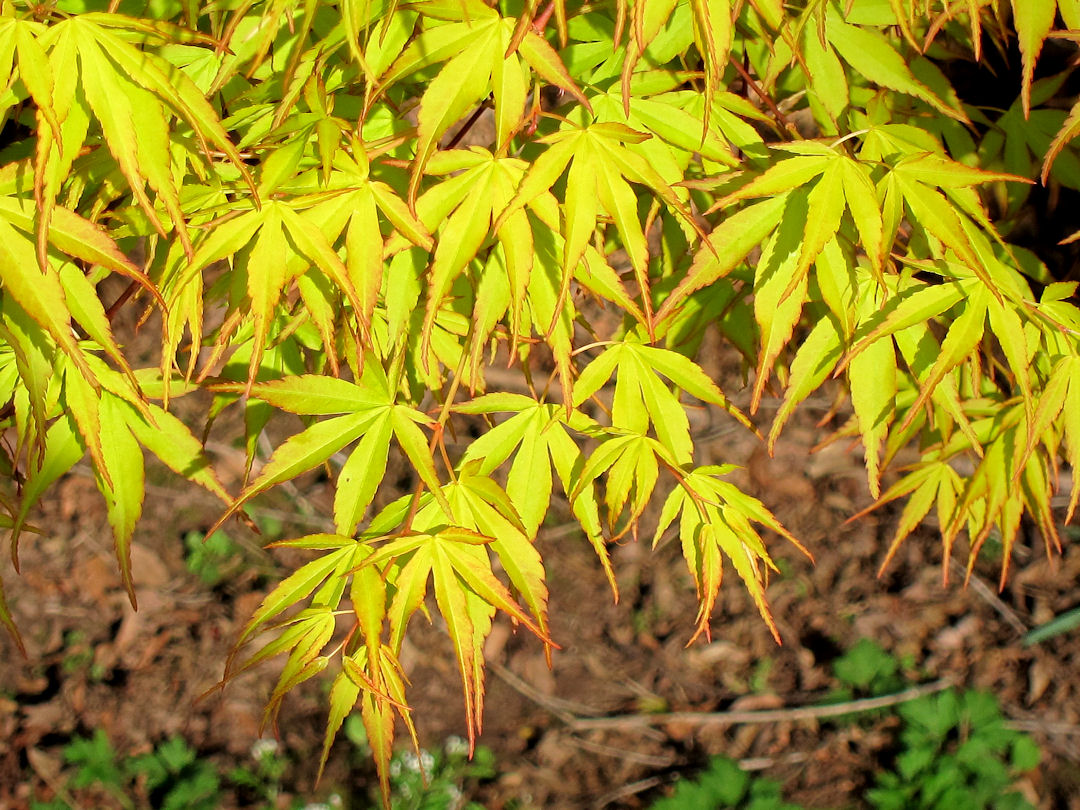
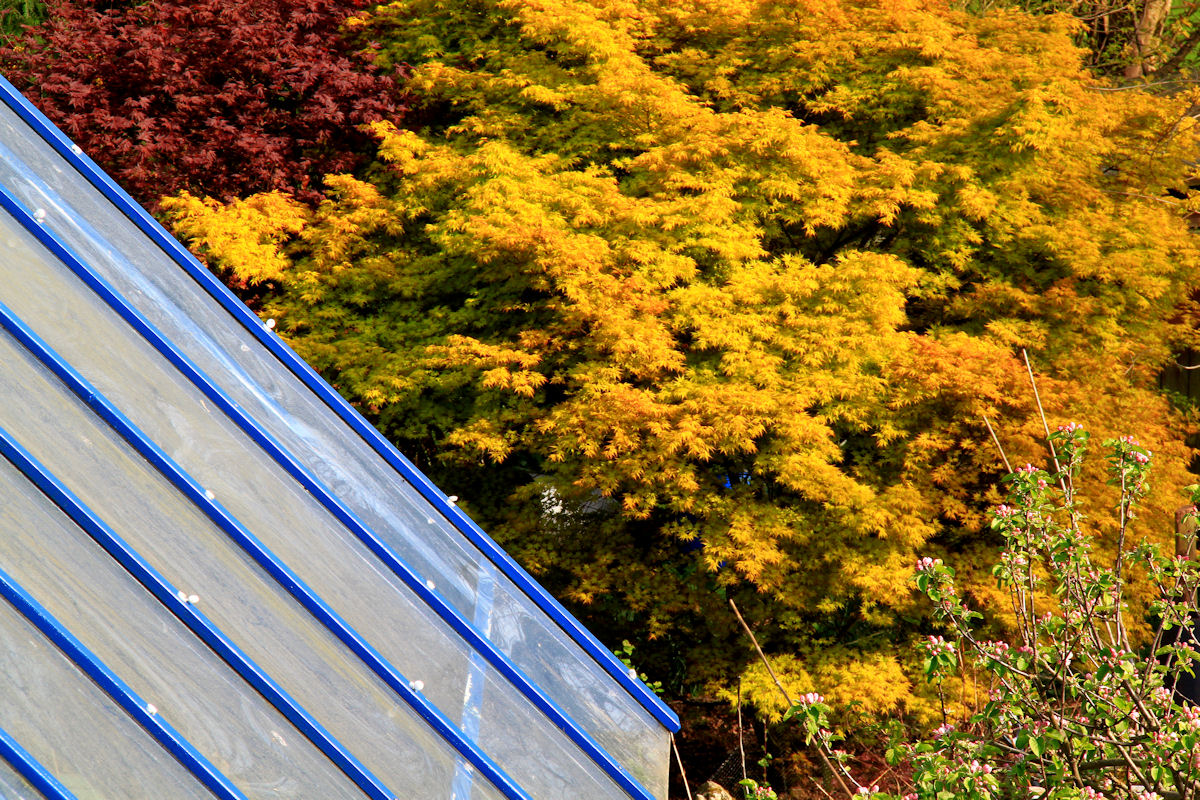
Now the Bottom Lawn is well on its way to becoming an, admittedly somewhat pretentious, ‘Acer Glade’, though I am having to fell the weeds and have an uphill battle with the Wrong Kind of Grass which survived the chickens.  Pretentious or not, in the Spring it offers dramatic, vibrant colours.  I shall plant more to fill in the gaps.  Much easier to look after than a lawn!  I think I may start a campaign to propagate this sedition – the Lawn Abolition Group.  And I’ll be the original Old LAG.

Maple

Another maple

... and yet another one

Looking over the Blue House to what was the Bottom Lawn

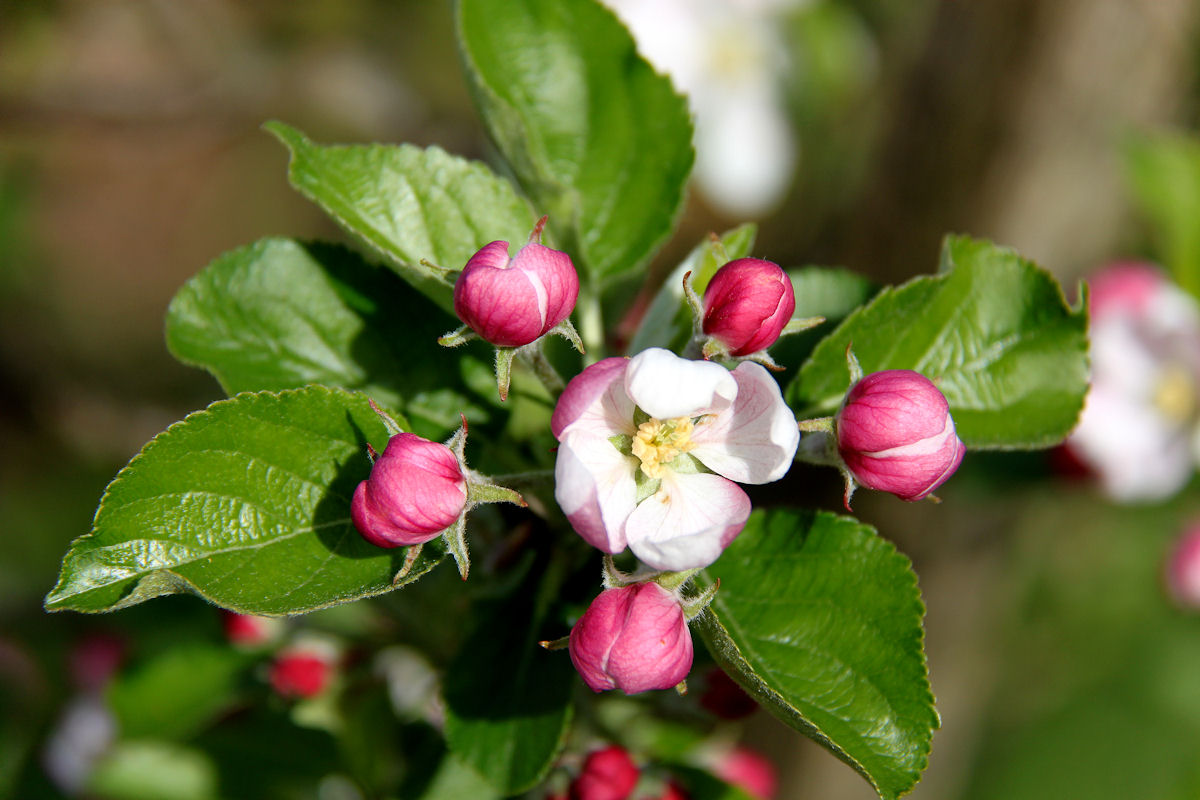
One of two particularly floriferous apple trees

Acer brightening up the gloom

Against clear blue sky

Copper maple in flower

Posted in extreme gardening, Grumpy Old Men, Reflections, Spring | Leave a comment

Travels in 3 counties; The Lowry and Salford Quays; architecture as art

This time I was up North I’ve been gadding around a bit seeing people and places I haven’t seen for a while.  Monday I met up with my old college friend Ross and went over to Sheffield to see another old college friend.  Having been brought up in Lancashire I have rarely ventured over to Yorkshire so I reckon that was a pretty brave step.

Wednesday I went to Wilmslow in deepest up-market Cheshire.  I used to cycle there when I was a teenager, very much out of my class for a lad from Seedley.  Now it is even more upmarket as the town tries to help some of the highest paid football players in the world part with their hard-earned cash.  At least one car sales place seems to have only 6 figure price tags on the forecourt.

Thursday I really put myself about a bit.  In the morning I went by train up to Leyland in North Lancashire and met up with a former colleague and his wife for lunch.  It was in a golf club restaurant so it has to be classed as ‘lunch’ even though it was dinner time.  I do try to adapt to changing circumstances though I guess I’m a bit like a chameleon with a slow response mechanism.  Then I got back on the train and went to Sandbach in south Cheshire to see my uncle and have tea.  I’m allowed to call it ‘tea’ because though we were in Cheshire my uncle is originally from Seedley like me so working-class meal time nomenclature is appropriate. Otherwise it would have been ‘dinner’ or even ‘supper’.  It can get very confusing flitting about between working class and posh.   I finally got back to the house at 22.30 and the cat was right put out after being on his own so long.  If he could have articulated it I’m sure he would have made it clear that attending to his requirements was half the reason I was there.

Then on Friday I indulged myself.  I met up with Ross again and went to by train and metro to The Lowry and on walkabout in Salford Quays.  Though the metro was introduced to Manchester many years ago now it was the first time I had been on it.  It seemed strange going around Manchester on rails with overhead electricity wires.  It brought to mind the trams and trolley buses which served the town centre when I was a lad.  Trams running on rails which were subsequently tarmaced over and trolley buses running from overhead cables which were subsequently removed.  The metro has been so successful that it is continuing to be extended including to a new stop at ‘Media City’ where swathes of the BBC are being relocated and pleasingly close to The Lowry in the pouring rain.

‘The Lowry’, as it is properly called, is an art gallery housing a permanent display of works by the late and very great artist LS Lowry and a performance arts venue. Completed in 1999 it was a very bold venture, innovative and unconventional architecture on the old Salford Docks.  Very pleasingly it has been followed by other equally challenging architecture and the whole area is an exciting amalgam of buildings and spaces where straight lines and the horizontal and vertical are virtually banished.  So too are pale colours and pastel shades.  Bold white, black and primary colours are everywhere and rarely seem to clash.  The inside of The Lowry itself is a series of multidimensional sweeping curves in deep purple, orange and red.

The Lowry and the concourse in front

Looking along the line of the footbridge to The Lowry

Outside is a curving white footbridge bridge reflected in the bronze glass facade of the offices on the opposite side of the dock. Further down the dockside a new and equally attractive footbridge has recently been completed.

Distorted reflection

Remnant of the old dockside with the new footbridge and buildings beyond

The new footbridge

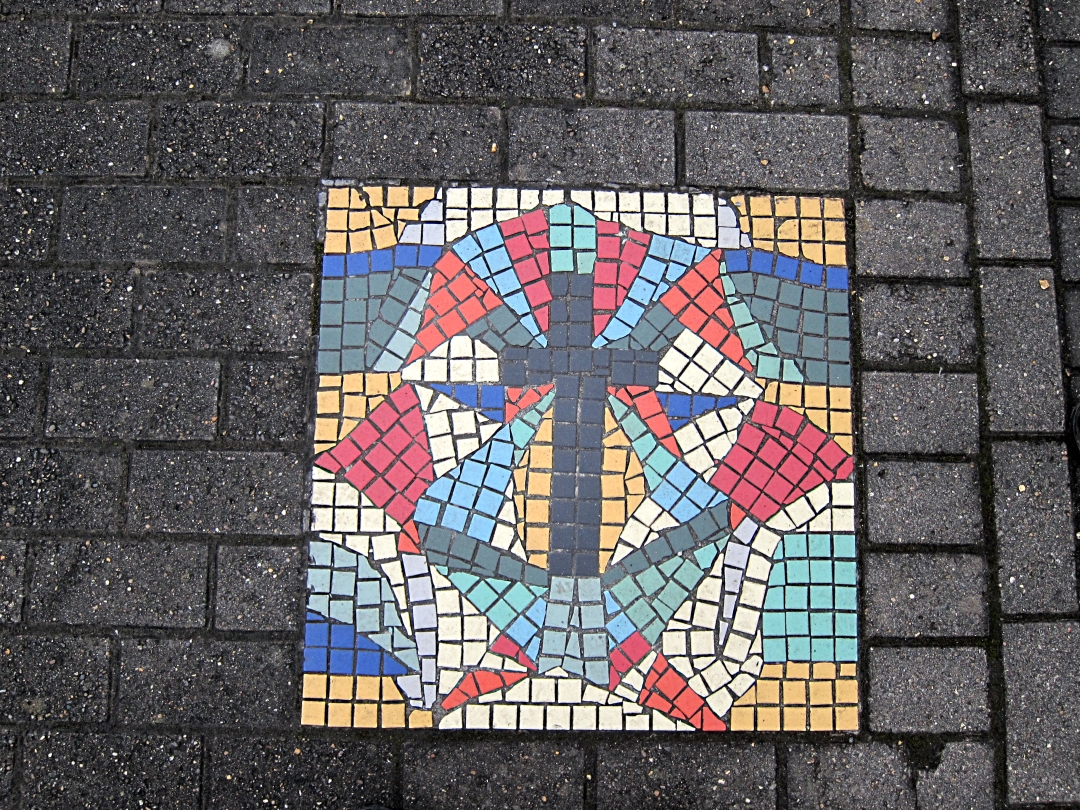
The paving is brightened up by mosaic cartoons.

Even under grey skies the whole area is colourful and attractive.  I must go back one day when the sun is shining.

Looking up to the end of the dockside

art is at the forefront even in the design of functional buildings

Posted in Art, Grey Britain, Reflections | Leave a comment

Rambling around the Classic Slum, or Images from childhood and adolescence

It was no good, I had to go back.

The morning two weeks ago when I re-visited the bit of Salford I knew as a boy the weather was very grey with the consequence that I took very few photos.  The cliché would have just been too great, particularly as the sun came out as we left.

Now I’m back up North and the sun was shining so I went back on my own to take photos of the Classic Slum, and other bits of Salford in the sunshine.  So this is largely a pictorial blog with a few memories and reactions thrown in.  Word of caution, the reactions and comments are those of a casual observer, not informed local opinion.  I left the area over half a century ago.

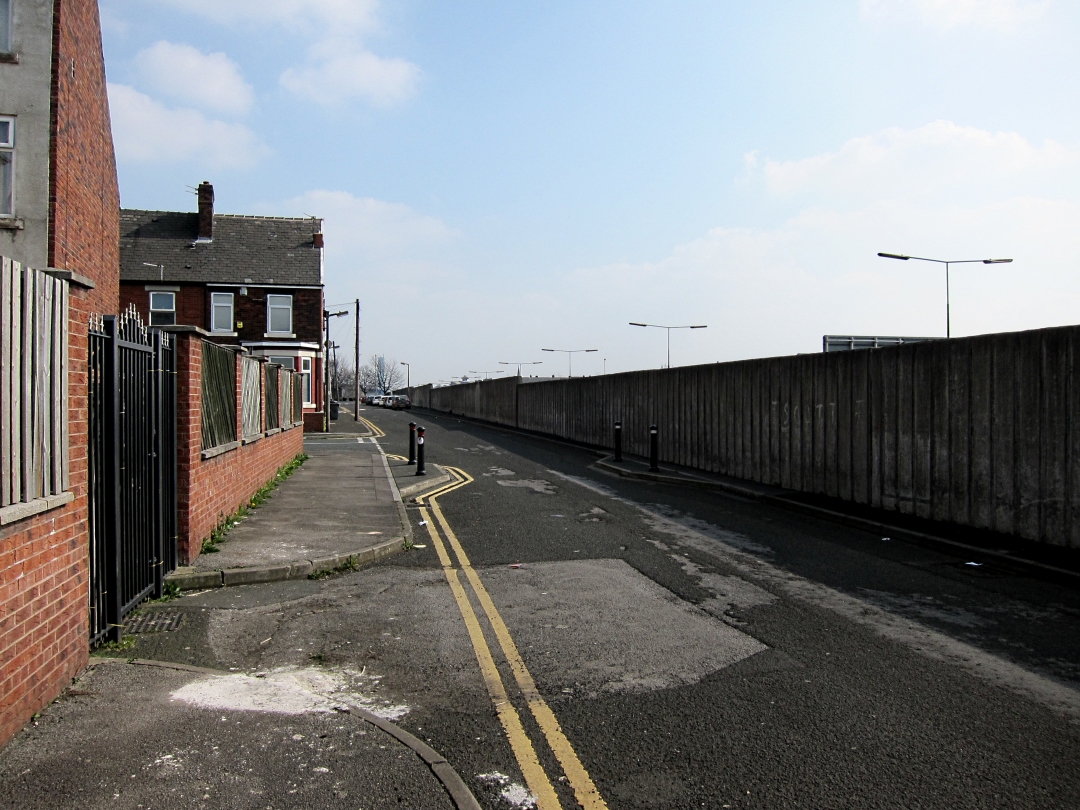
I was born and brought up in Seedley.  Though the house in which I was born is still there, the house in which I lived until the age of 12 is now under the hard shoulder of the M602.

The vividly remembered gateposts of the house where I was born

The long terrace of houses on White Street now under the hard shoulder of the M602 from the motorway sign gantry onwards

Standing on White Street outside what was Number 49 on the right

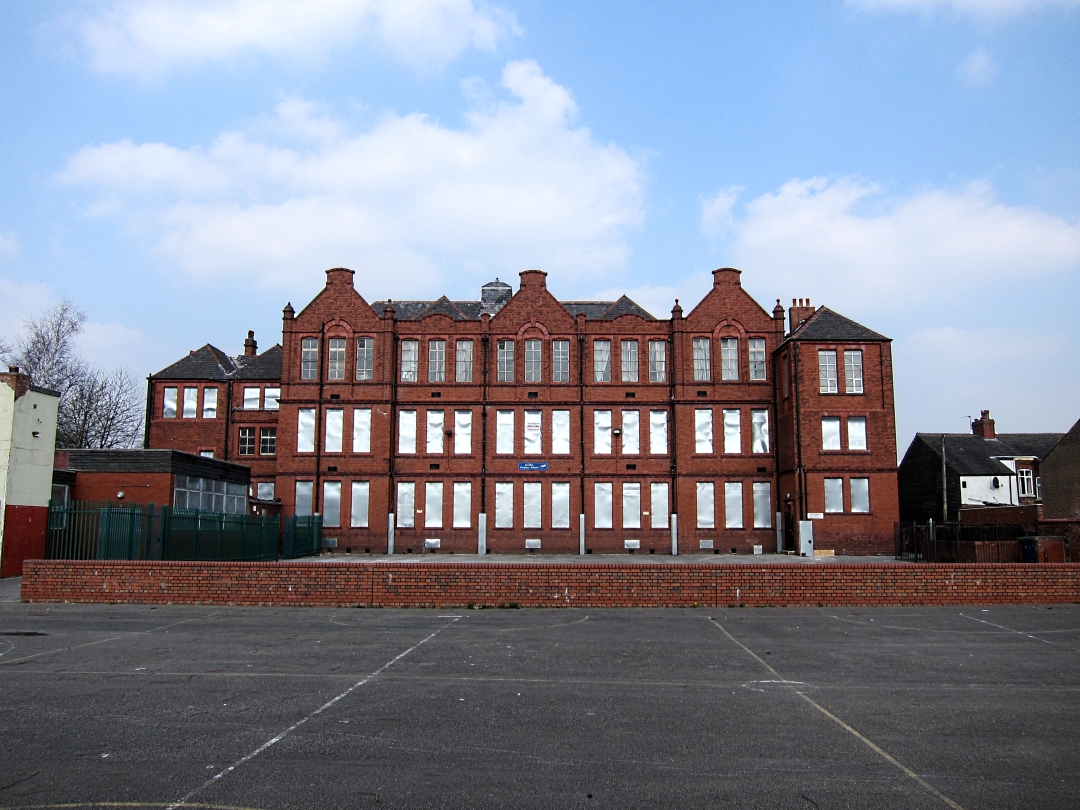
At the top end of White Street, my old school, now closed and shuttered up

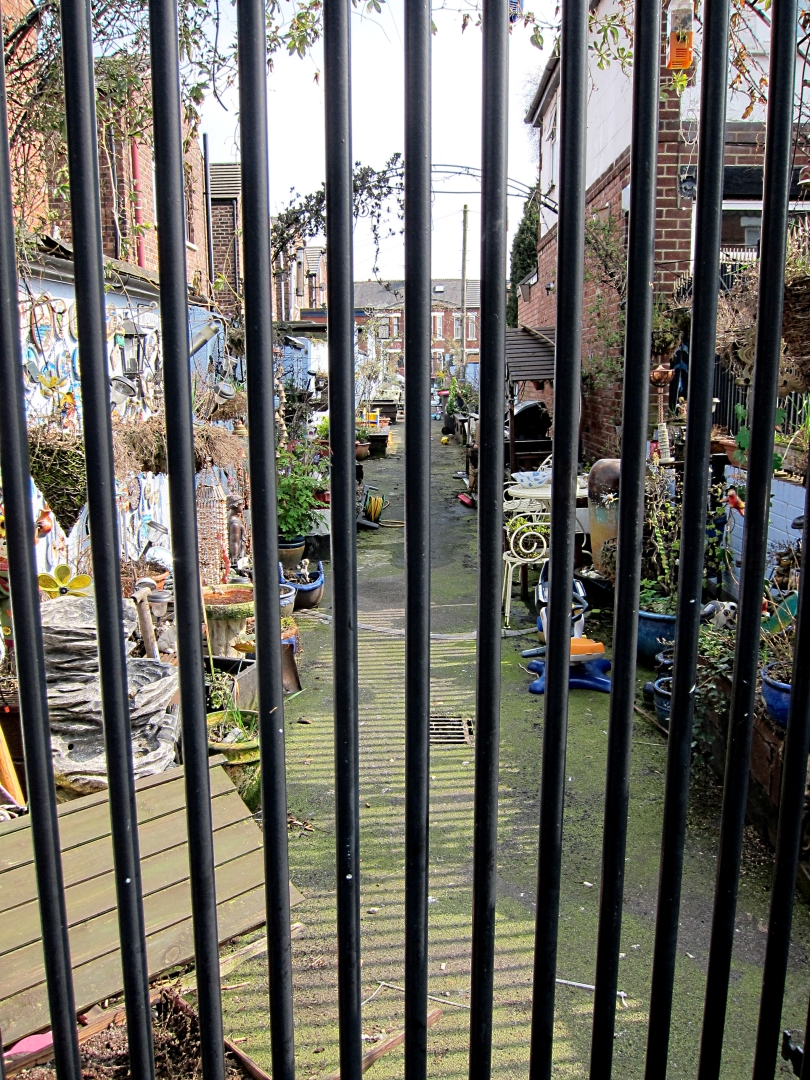
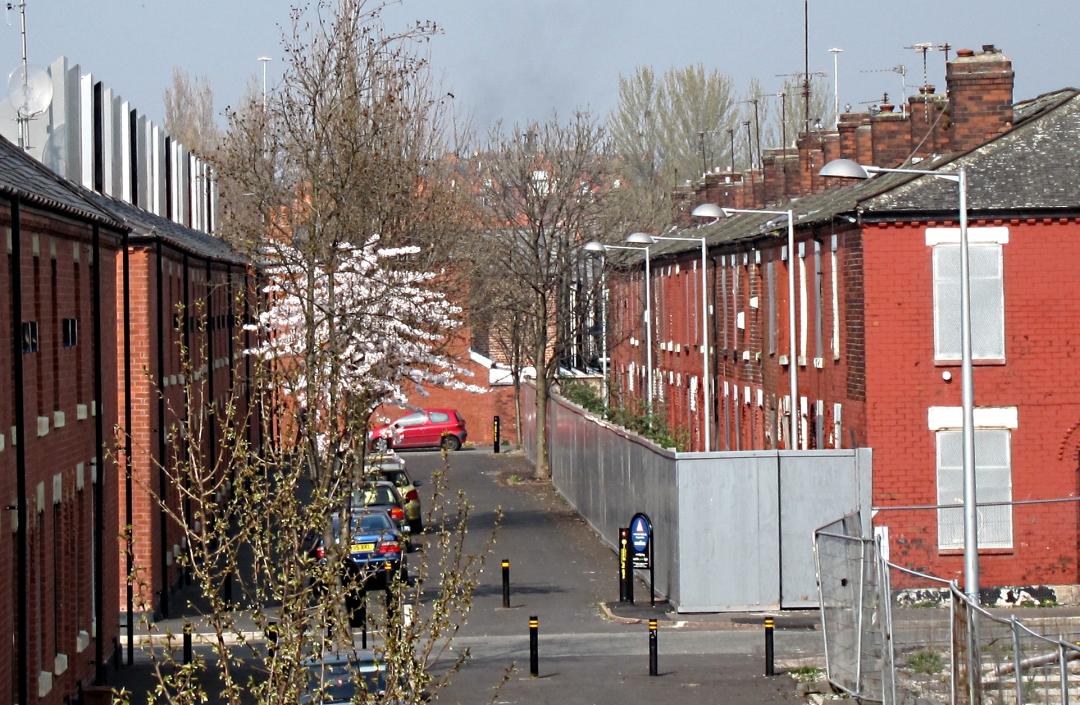
One of the features of the streets of terrace houses in the area is what we called the ‘entry’, otherwise known in the North as a ‘ginnel’ or back alley, cobbled or stone-flagged.  Our parlour window, which we got to look through once a year at Christmas, looked straight across the street at the entry between Cardigan Street and Pembroke Street.  I remember ‘the twins’ who lurked in the entry and pestered my sister and when I was sent to sort them out I got half a brick in my head for my trouble.  I guess things got a lot worse in later years because now all the entries have iron gates to protect the backs of the houses and presumably to prevent them being used as escape routes.

The now-gated entry opposite the house where I lived until the age of 12

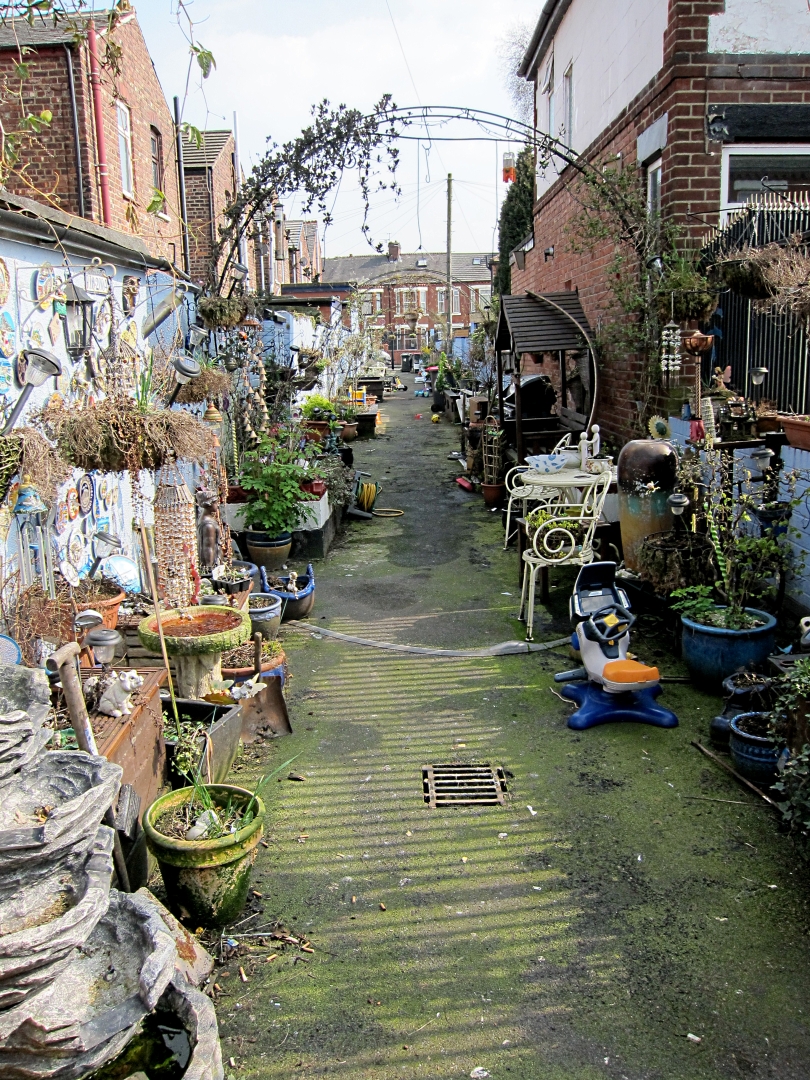
At the age of 11 I started in Salford Grammar School which meant a walk of about a mile uphill and up through the social strata.  The terraced streets on the way up the hill had the air of being a little grander with the houses on Derby road having small but ‘proper’ front gardens.  Though the entries here are now gated there is an air of something more positive being done with them as semi-private open spaces for the benefit of residents.

Positive use of a gated entry

..... and without the bars

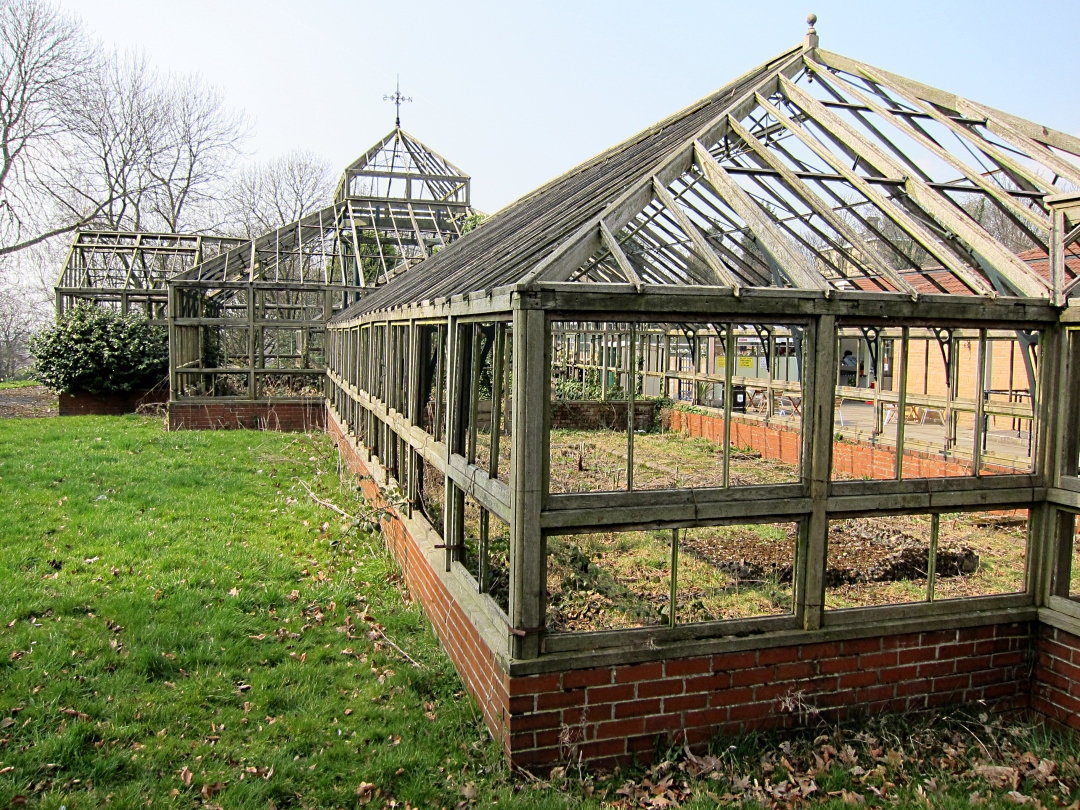
The second part of the walk was through Buile Hill Park which is itself largely unchanged but the buildings, including in particular the museum (Buile Hill Mansion!) and the greenhouse are now derelict.  To a lad from Seedley Buile Hill Park was like a green lung, a breath of fresh air.

Part of art-on-the-fence at the bottom end of the Buile Hill Park

Looking down through the Park towards the tower blocks

The old greenhouses on my route to the Grammar School

The Tropical House on the right had a large tank of exotic fish

Buile Hill Mansion, once the museum

Then at the top of the park is the ‘posh’ area.  When I was a lad I thought that this was as posh as it got and for some reason it engendered resentment.  I never regarded myself as ‘deprived’ living in the Classic Slum, it was just home.  But resentment kicked in when I realised that others had more and better.  I think that that is a pretty general reaction and has had a major impact on attitudes as the ‘underprivileged’ have had affluence flaunted on film and TV and offered as attainable via the Lottery and the like.

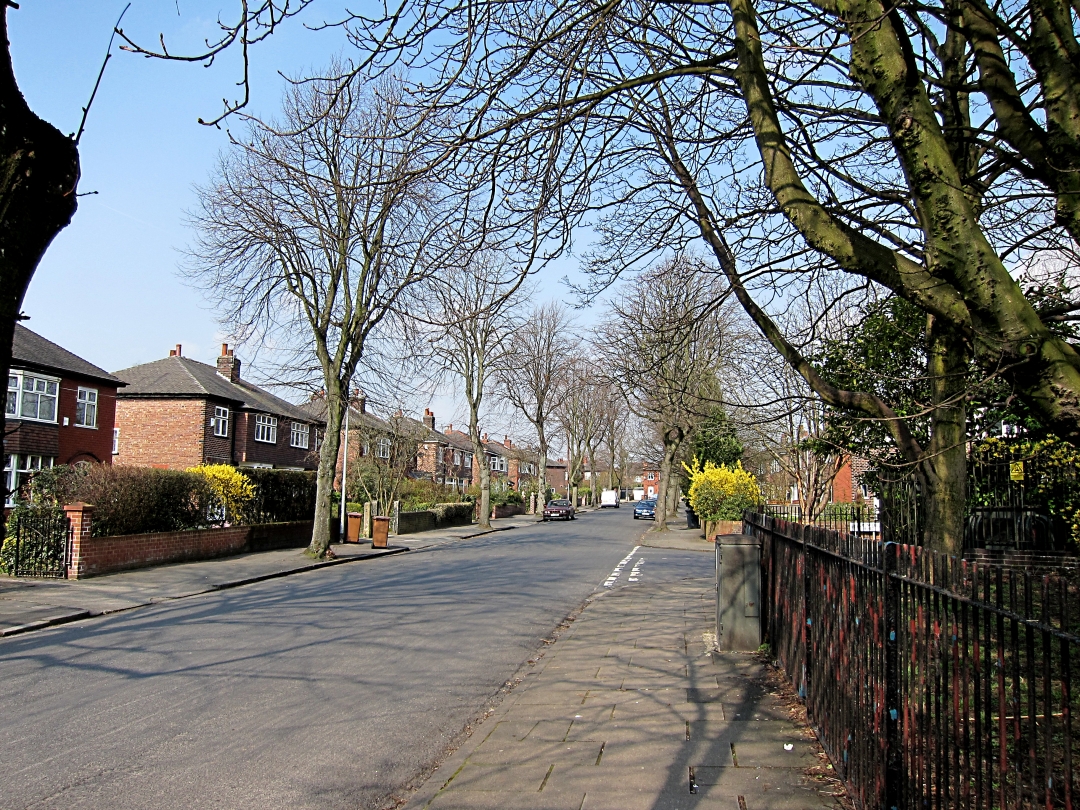
Manor Road, the 'posh' bit at the rear entrance to the Grammar School

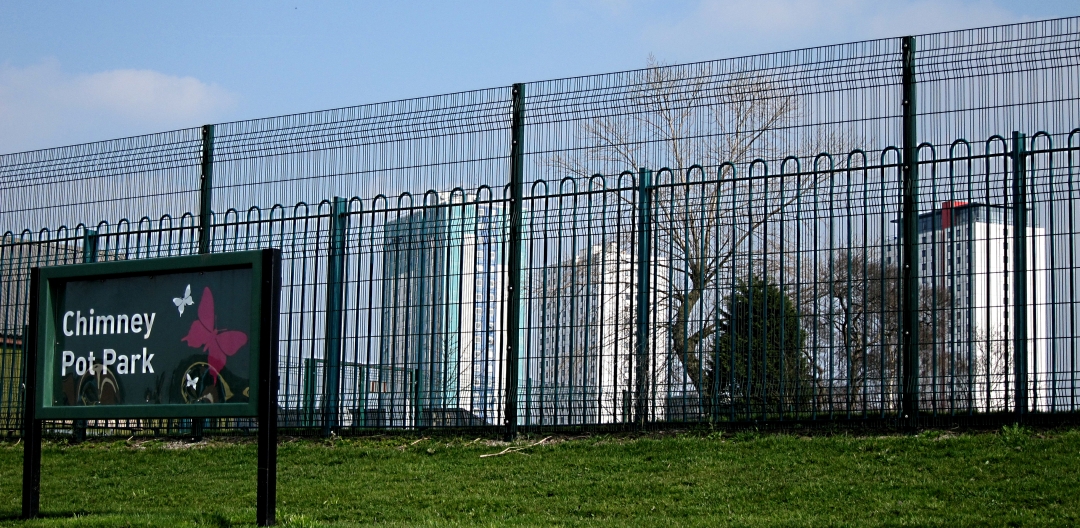
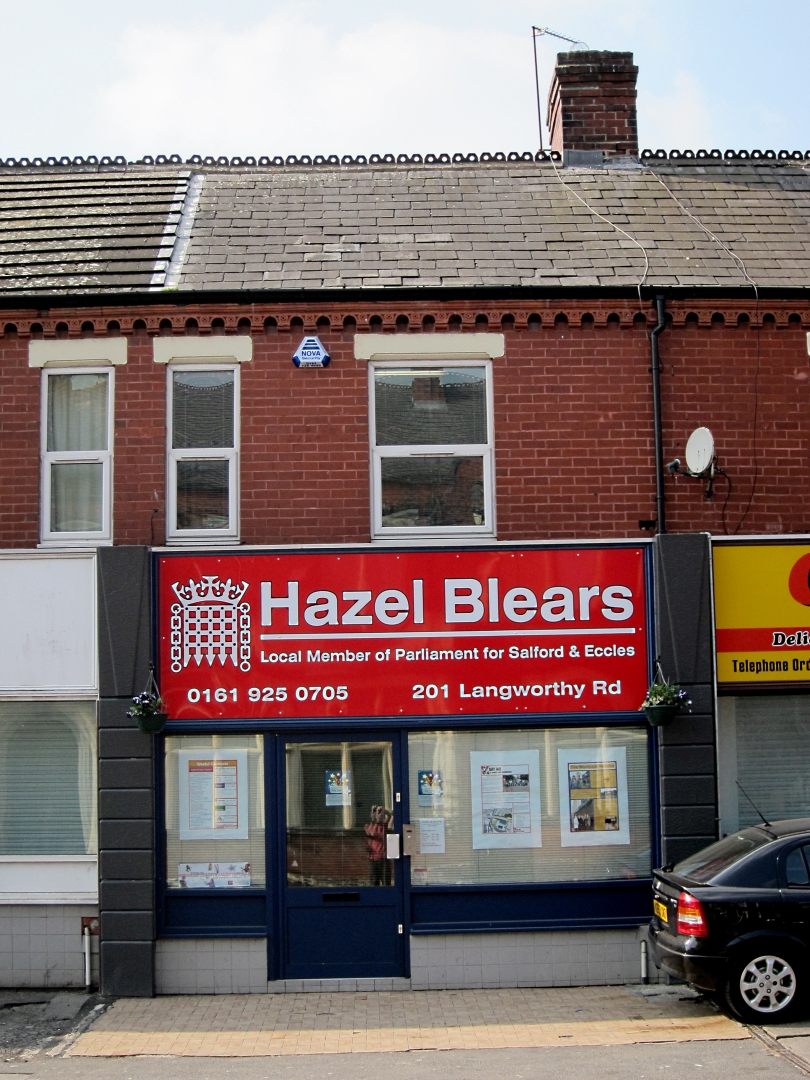
The other route up the hill from Seedley is Langworthy Road behind which Friedrich Engels, who dubbed the area ‘The Classic Slum, had his cotton factory.  As described previously, at the bottom of the hill is Langworthy Park, affectionately known then and now renamed as ‘Chimney Pot Park.

The gulag-entrance to Chimney Pot Park

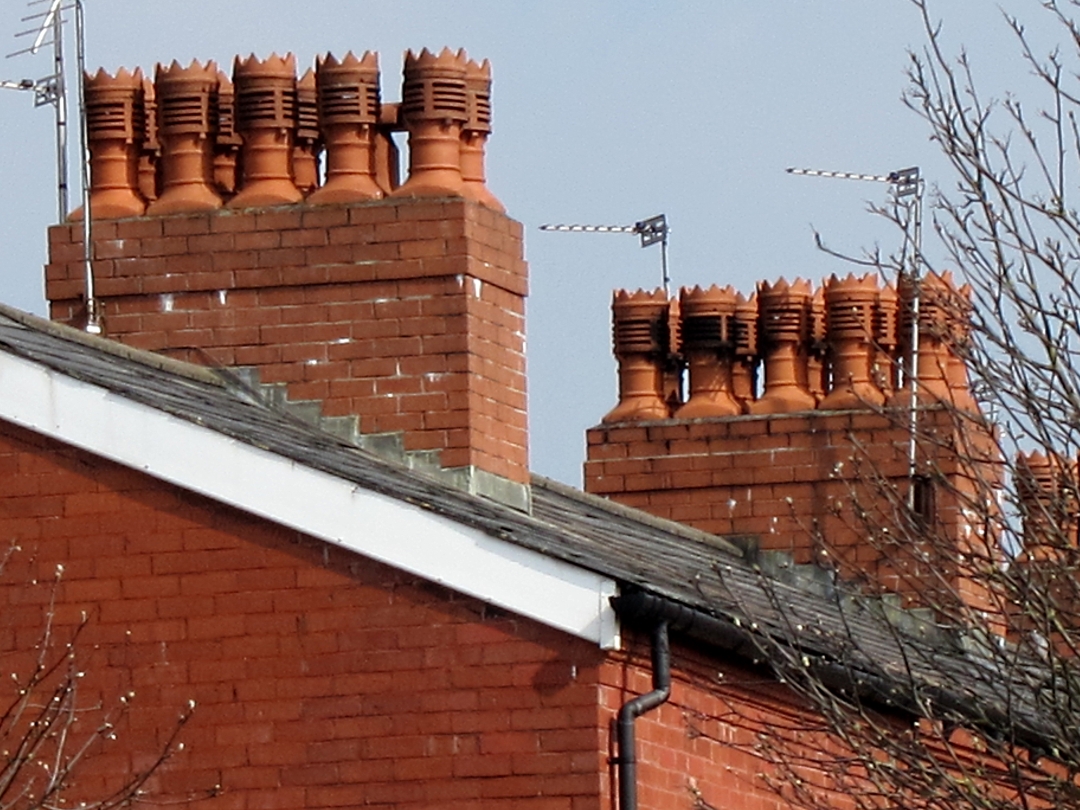
Old chimney pots to the right, new chimney pots to the left

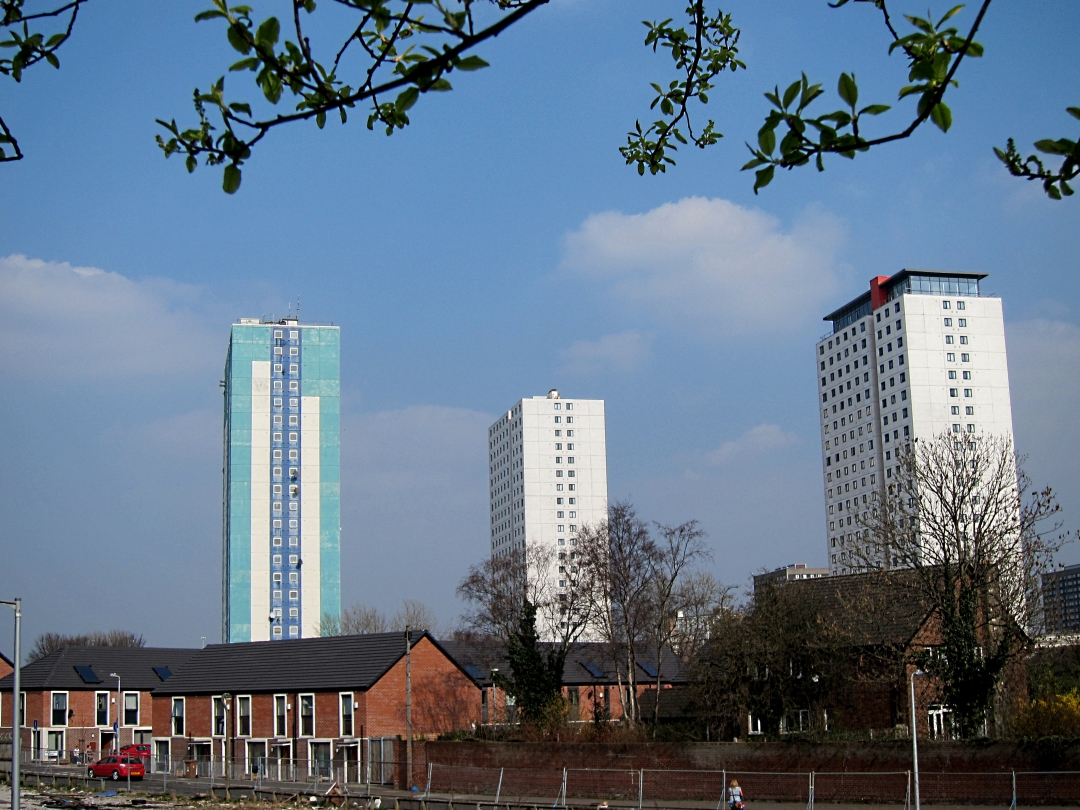
The tower blocks of the once infamous Fitzwarren Street artea

21The many small shops in Langworthy Road are much changed but most are still there as shops, though the two cinemas have gone and the Langworthy Hotel is boarded up and awaiting demolition.  Apparently the Council, which bought it to preserve it as a landmark structure, have given up hope of attracting a developer.

Some derelict buildings have sitting tennants

waiting to be demolished, the landmark Langworthy Hotel, with the Fitzwarren high rise in the background

Drawing attention to yourself in the Langworthy Road shops

Old chimneys

Renovated chimneys

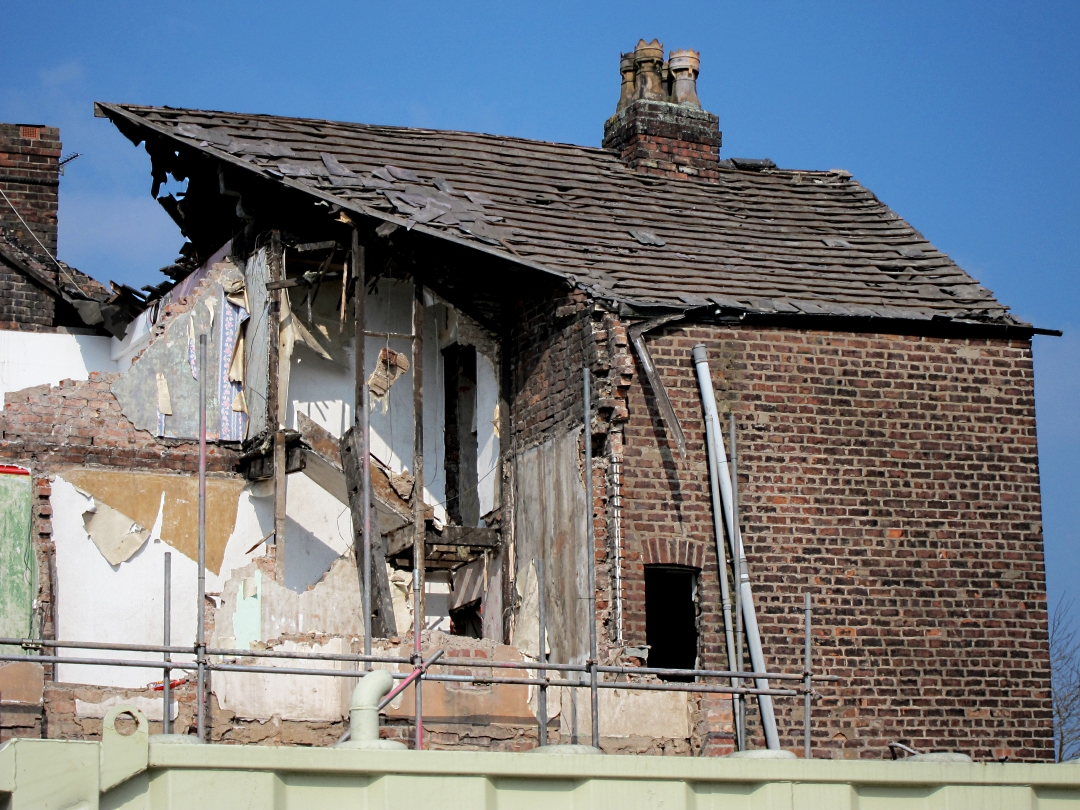
Away with the old

My reactions to Seedley now?  Nostalgic?  I don’t know really.  It’s encouraging both as a planner and as an ex-local to see pockets of the old terraces being preserved.  On the other hand the demise of the greenhouse in Buile Hill Park is very much to be regretted, I was looking forward to that as a ‘high point’.  But that’s about it in terms of positive reaction. Certain bits rekindle memories but they are neither good nor bad, emotionless.

I was offered a post in Salford University when I completed my research but after  discussing it with Enfys I turned it down.  That was in 1970.  Even then the Salford I knew was no more, a memory.  It held no emotion for me.

Author LP Hartley opens his book ‘The Go-Between’ with the words “The past is a foreign country: they do things differently there”.  That’s how it is.  I lived and grew up in Seedley but now I’m a tourist there.  I even carry a camera.

Posted in Uncategorized | 7 Comments

Sustainability, heritage …. nuclear power

A fundamental principle of the concept of sustainability is that we should not leave problems for future generations to inherit, not make the world a worse place to live.  But in some ways that is not always a clear issue.

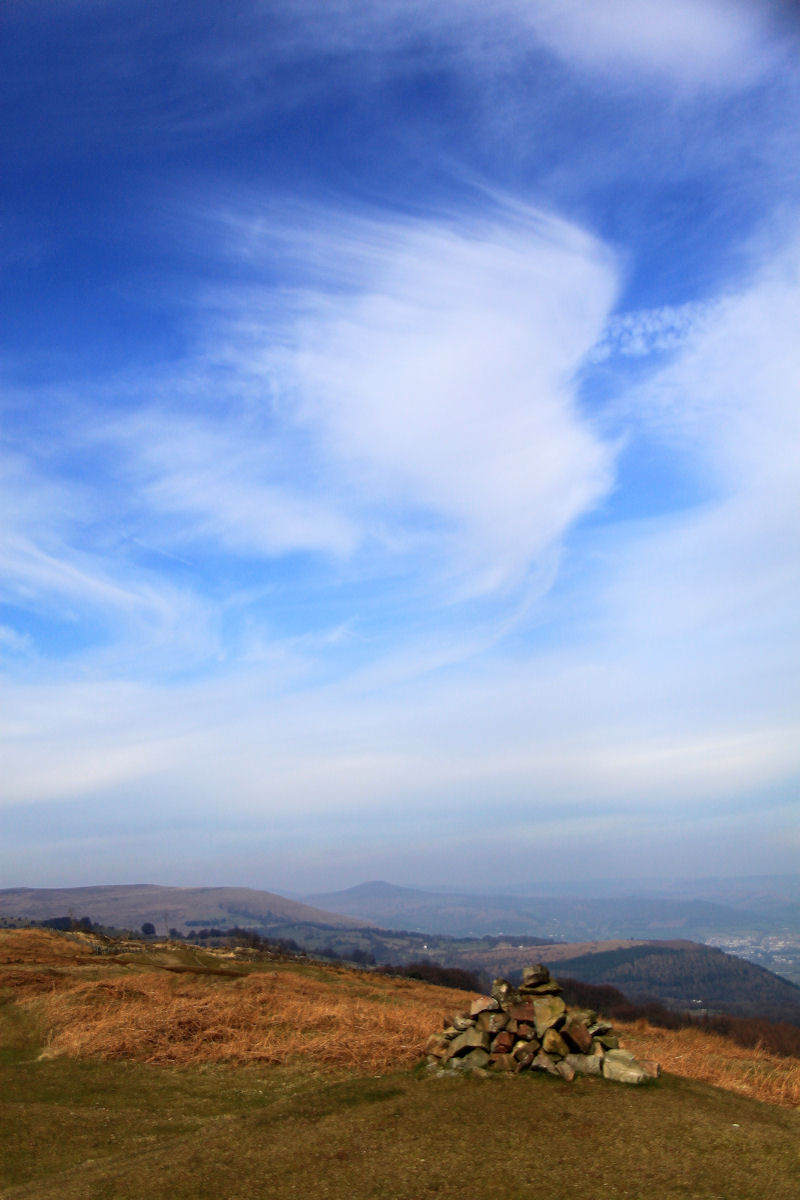
One of the great things about living at the edge of the National Park is being able to go walking in the mountains straight from the house.  It’s good to be back.  In the last few days I’ve been out walking up on the ridge tops twice.  The views are expansive, taking in the ridge-tops of the South Wales Coalfield to the West, the Vale of Usk and the rim of the Wye Valley and the Malverns to the East, the Severn Estuary and Somerset to the South, and the Brecon Beacons to the North.  Dramatic.  Impressive.

But the mountains are also very interesting historically.  To walk these ridges is not just to walk through a landscape but through a history, a history which was pivotal for the whole world.

The brutal fact is that the views are so expansive because the mountains were deforested in the Industrial Revolution.  At one time they were largely covered in beech and oak forest with ash and wild cherry. Three key factors lie behind the North West rim of the South Wales coalfield, centred around Blaenavon and Merthyr Tydfil, becoming the first area in the world to manufacture iron and steel on an industrial scale, the birthplace of Industrial Revolution.  Here were found in close proximity iron ore, limestone for fluxing the furnaces …… and vast areas of good quality, easily accessible hardwood for charcoal.  The technique for smelting iron ore with coal was perfected half a century before it was introduced commercially but as long as there was a plentiful supply of wood there was no incentive to change.  The result was that the scenery was altered dramatically as the mountains became largely devoid of trees.  It was coincidental that when the charcoal supplies were exhausted the coal underlying this corner of the coalfield was found to be of coking quality, the sort needed for smelting iron and steel the new-fangled way.

Was deforestation a bad thing?  Concern about the environment is a luxury in which only the relatively affluent can indulge.  The period of the Industrial Revolution was characterised by much poverty and hardship.  The ‘entrepreneurial spirit’ is often harsh and cruel, uncaring for its workforce, and nowhere more so than here. A few may have mourned the changes but the majority would have been only concerned with where the next job, and therefore the next meal, was coming from.  Nowadays we protect and quite rightly venerate the vestiges of ancient woodlands but we also value and cherish the open-topped mountains.  Personally I get little pleasure from walking in mountains where all I can see is trees.  However it is also true that the once-forested mountains were a much richer and more varied habitat, with much greater biodiversity.  So was deforestation a bad thing?  I don’t know but no-one now mourns what once was.

Bare ridge-tops under blue sky

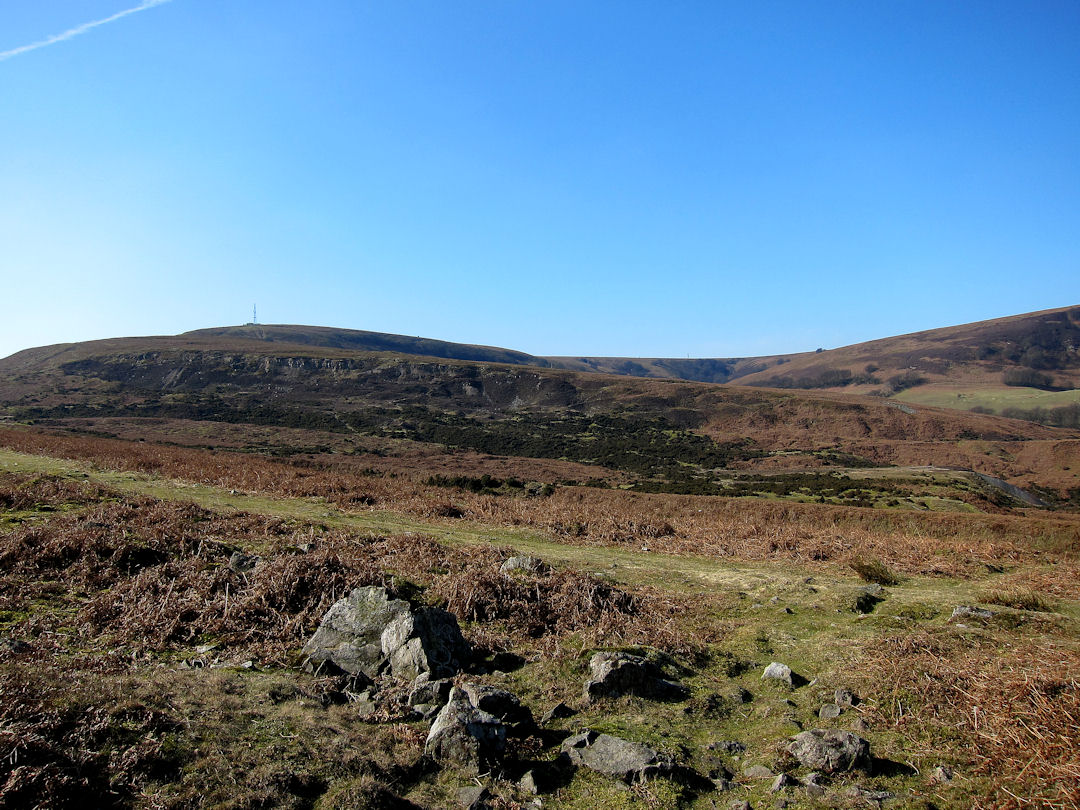
Treeless common land is extensive

The ridge tops are mostly commonland and kept bare by overgrazing by sheep.  The commons are the poor quality land left over during the enclosure of farmland during the Agricultural Revolution.  At that time fields in this area were bounded by stone walls and/or by hedges, often made from ‘laying’ beech trees.  That was a dramatic change from the historic openness of the land and again could have been regarded as detrimental.  Now the field system with its stone walls and hedgerows are regarded as the essence of the ‘natural, landscape, clearly seen from the lofty position of the ridge tops.

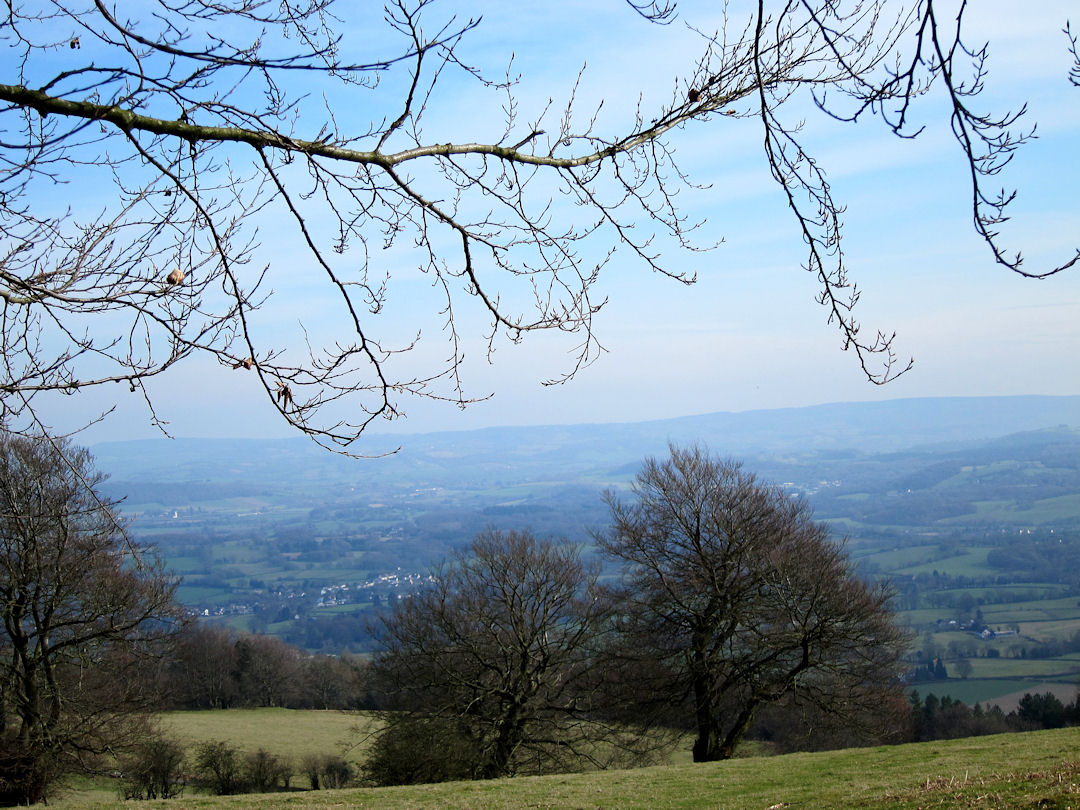
Looking across the fields on the flanks of ridges to the 'old' field system of the Vale of Usk

A sharp reduction in the agricultural workforce produced a very distinctive feature on the ridges of the South Wales coalfield, beech ‘stools’.  Young trees are cut partly through and then laid horizontally to create a stock-proof hedge.  But they have to be maintained, cut back annually to restrict their height and thicken them up.  When that annual maintenance stops because there are too few workers to carry out the work, the beech reverts to its natural tendency to grow into mature, tall, thick trunked trees growing up from the horizontal ‘stools’.

Altogether it is an indication of overwhelming economic forces bringing about change of massive historic proportions.  Changes for good or ill?
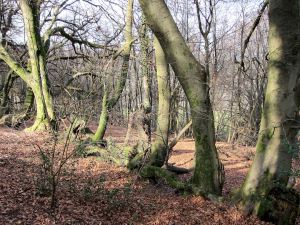
There are countless examples of beech 'stools' up on the ridges

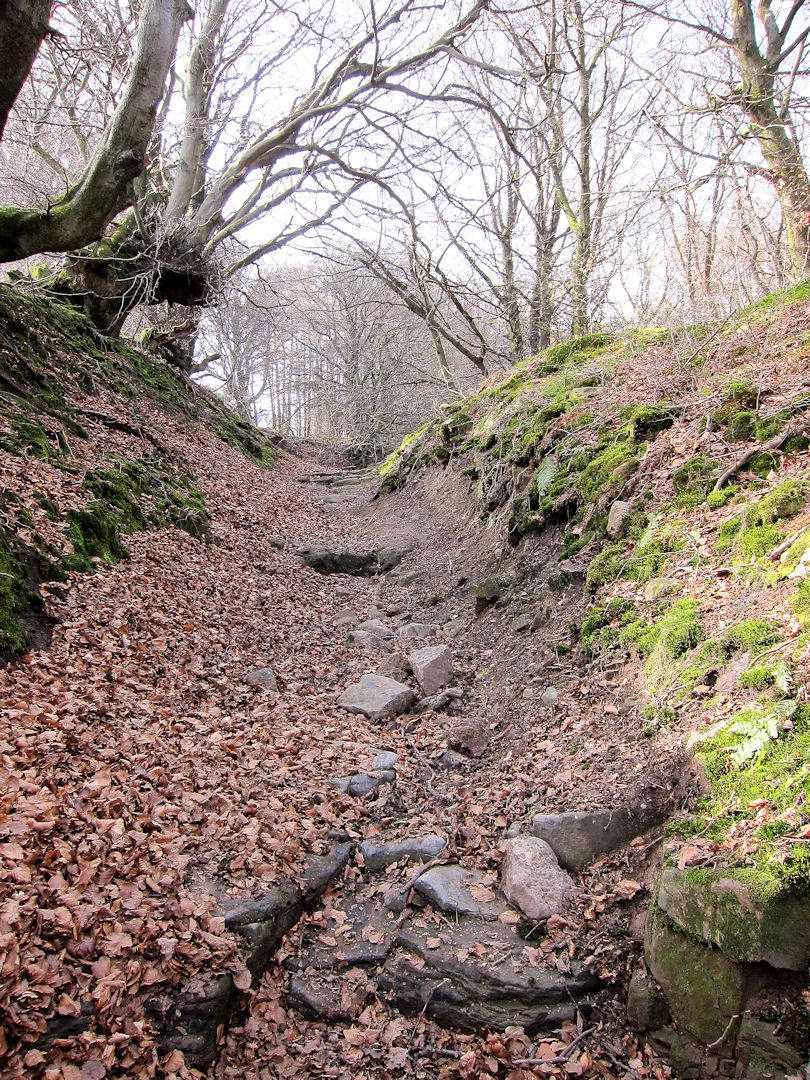
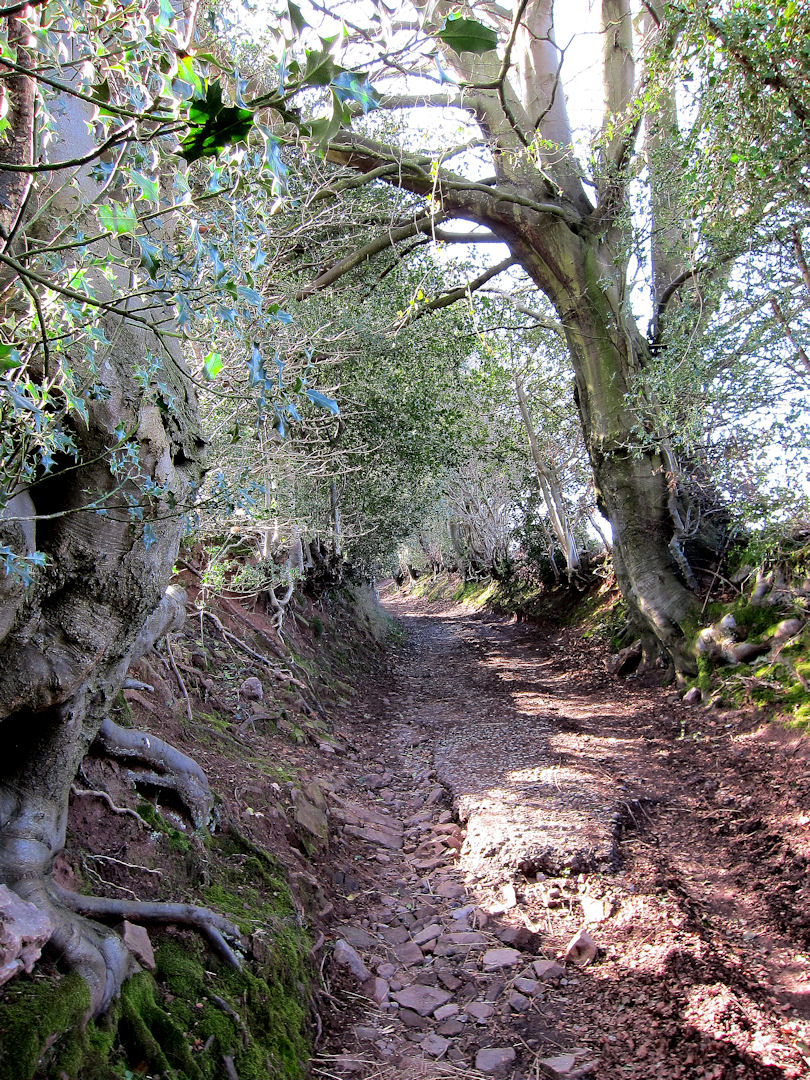
The antiquity of the area is shown in the many ‘sunken ways’ on the paths up to the ridge tops.  Once again these are now regarded as of ‘heritage’ value.  But in reality sunken ways are nothing more than erosion caused by over-use.

A fairly shallow 'sunken way' flanked by beech and ash

In places the path has sunk through to bedrock

.... and in places there are sunken tracks broad enough for vehicles but very rough

So, is the decision as to whether landscape and environmental change is ‘good’ or ‘bad’ dependant on the perspective from which they are viewed?  And is that in turn dependant on the historical distance from the change?  And is it a valid conclusion that sufficient historical distance makes any change acceptable however distasteful at the time?

In many cases it is true that historical perspective is generally forgiving.  Which brings me to the nuclear disaster in Japan.  Nuclear power, for a long time in disrepute in the UK, has in recent years been rebranded as a ‘renewable’, the answer to meeting stringent EC targets for energy from renewable sources and, quite shamefully in my view, given good PR by the late Labour Government.   Hopefully the positive outcome of the terrible disaster in Japan will be to put an end to that particular con-trick.

The glaringly obvious lesson which should be learned from what is now going on in Japan is that nuclear power stations should not be built in areas subject to earthquakes nor on coasts where there is the possibility of a tsunami.  But the real lesson is much deeper than that. It is that clear, as evidenced by Chernobyl and now Japan, that not all eventualities can be anticipated and that the consequences of something going wrong are of such great magnitude that to take the risk is completely unacceptable.  The potential consequences are not just local or national but potentially world-wide.  The Chernobyl incident released 400 times as much radioactivity as had been released by the Hiroshima bomb and was detected all over Europe except for Spain and Portugal.  Sheep farmers in North Wales are still suffering the after effects of the Chernobyl disaster 25 years later.

Can it ever be considered acceptable to build facilities in the knowledge that workers may at some point be required to work in lethal conditions to bring the situation under control, in the knowledge that they will die from the work?  That is barbaric. It happened at Chernobyl and it’s happening again now in Japan.  Is it right to build yet more nuclear power stations producing yet more nuclear waste when there is still no acceptable way of dealing with it when it is ‘spent’?  That is irresponsible and the antithesis of ‘sustainability’, the concept now being used to excuse it.  My guess is that future generations will look back on history and judge us harshly if we take any more steps down that road.

It is a supreme irony that the argument wielded in favour of nuclear power is that it is necessary to reduce carbon emissions so as to reduce the rate of the rise in sea-levels.  Yet the disaster was caused by one quick, short-term rise in sea levels, a tsunami, caused by forces over which we have no control.

If it is concluded that our western way of life is dependent on building more nuclear power stations then we must seriously consider drastic changes to our way of life if we mean business about protecting future generations.


 

Posted in Grumpy Old Men, new technology, Reflections, Spring | Leave a comment

Garden devastation and uncertain future

Another stint in the North is over.  Back home again to try to get to grips with the wreckage in the garden left by my absence last summer and the unusually cold winter.  By now it’s emerging which plants have survived and which are beyond hope.

With the trend to warmer winters many people, including me, have planted Cordeline palm trees to take advantage of the Mediterranean climate the media has led us to expect.  Reports of ‘Global Warming’ have almost universally dumbed down or completely ignored the science to the extent that the possibility of UK climate being dramatically cooled by a switch in direction of the Gulf Stream has been largely ignored.  Garden centres have increasingly stocked semi-arid plants so that householders can prepare for the drought and the heat.  Now many of these xerophytes are dead.  There are solitary Cordeline trunks sticking up like fingers all over the place, either completely devoid of foliage or with a few bedraggled leaves flopping down from the crown.  Some, the longer established ones, have shoots appearing at the bottom.  Whether the more recently planted ones, like those in my garden will survive is another matter.

Little has survived in the Blue House.  That was planted up specifically with tender plants which couldn’t withstand the cold and the wet of a British winter.  But they couldn’t survive -10oC for weeks on end.  The toughest of the plants has turned out to be the agaves.  Supposedly able to withstand down to -5oC with very few exceptions they seem to have come through unscathed.  In particular the 2 largest, each about 5 foot high and 6-7 feet across look untroubled.  Which could be an irony.  They are reaching the size where in their natural environment they might soon be flowering and the shock of the winter could have triggered that.  Flower spikes on these agaves are usually 20 feet plus.  The Blue House is 15 feet at its highest so that the flower spikes may have to be cut off.  After they put out a flower spike they die.

The 10 days that I am at home before returning once more up North is crunch time.  A number of strategic decisions are required for the garden and the Blue House.   In particular, what do I plant in the veg garden?  Which raises the big question, “What am I going to be doing in the Summer?”. Will I be around to weed, earth-up and harvest?  No point in planting crops which will be producing while I’m away.

I still don’t know.  Haven’t made my mind up.  There are many options.  The future is a blank sheet.

I have more or less decided that much as I would like to, for a number of reasons not least of which is cost, I won’t be going back to Canada this ski season.  And I have also more or less decided to knock on the head the idea of going to Greece for Easter, something I have wanted to do for a long while.   But mulling over the options for the summer I am still no clearer.

I’m still inclined to go to Greece again for many reasons not least of which is that the creaks in my body are more comfortable in Greek heat and my brain is more stimulated by bright sunshine rather than the tepid murk of Grey Britain.

So what to do in the garden in the next 10 days?  I have started to clear the winter’s devastation including massive clumps of now dead phormiums.  I have also started to clear some of the weeds which flourished in my absence in Greece last summer.   It’s at times like this that a large garden can make one quite despondent.  There is a massive job to do to restore the status quo never mind continue the rolling 5-year improvement plan I have had for the last 35 years.

And planting?  I have ordered some of the ‘Salad Blue’ seed potatoes which I planted very successfully a couple of years ago and when they have chitted I shall plant those for a start.  I also had a lot of garlic plants last summer which are starting to sprout.  So I’ll plant them.  It will be wrench not to have courgettes, I really missed them last summer. And what else?  I really don’t know.  Yet!

But the thought of Greece is beginning to grab me again.


Posted in extreme gardening, Grey Britain | Leave a comment

Walkabout, nostalgia, the Classic Slum and ….. sunshine

I’m back up North again now and, having left the car at home and travelled by train, I’m back to walking.  Urban walking isn’t normally my thing, I’m much more at home in the mountains but this is a matter of getting from A to B so, in the words of the old adage, it’s best to make a virtue out of a necessity.  The fact that it is has been sunny most of the time has been a big bonus.

For a start I’ve taken to walking regularly to a supermarket via a large urban common.  It’s not the closest for shopping but the walk is very pleasant, particularly with a little warmth in the sunshine and the early signs of spring.   The resident birdlife is always interesting, particularly around the pond and though there are no expansive vistas the setting sun can be spectacular.

Tranquil in the sunshine

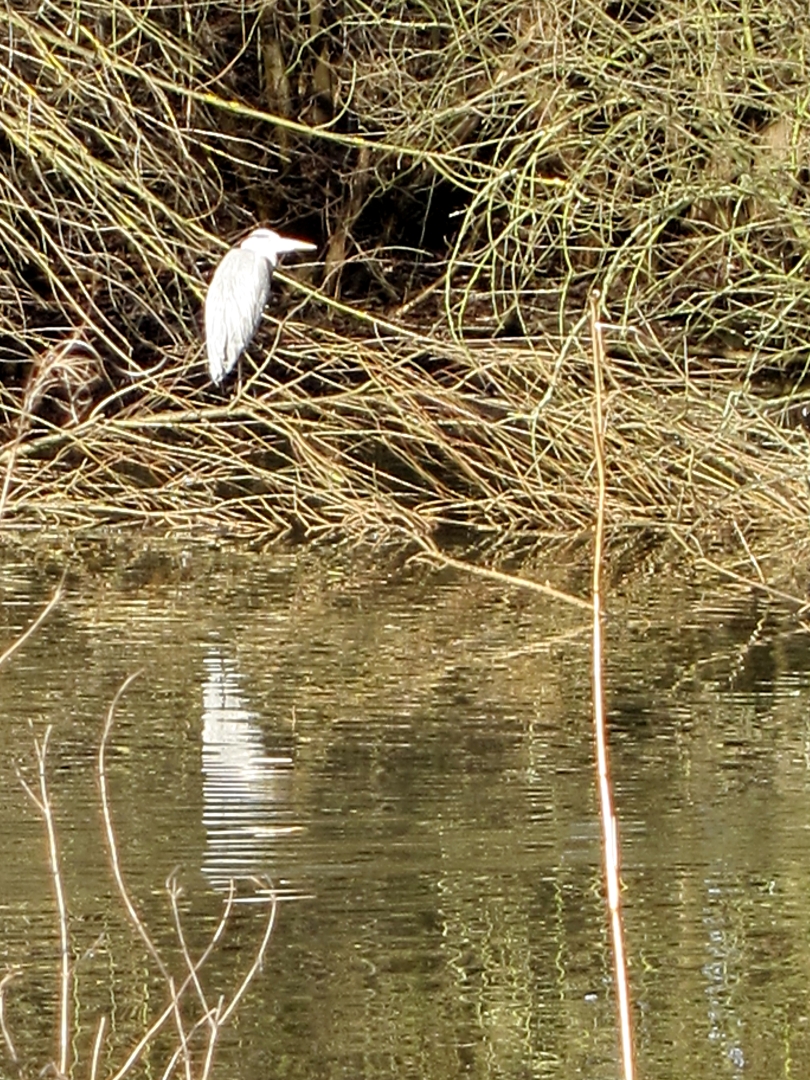
Heron reflecting in the sunshine

It's fed-up mate reflecting on what went wrong

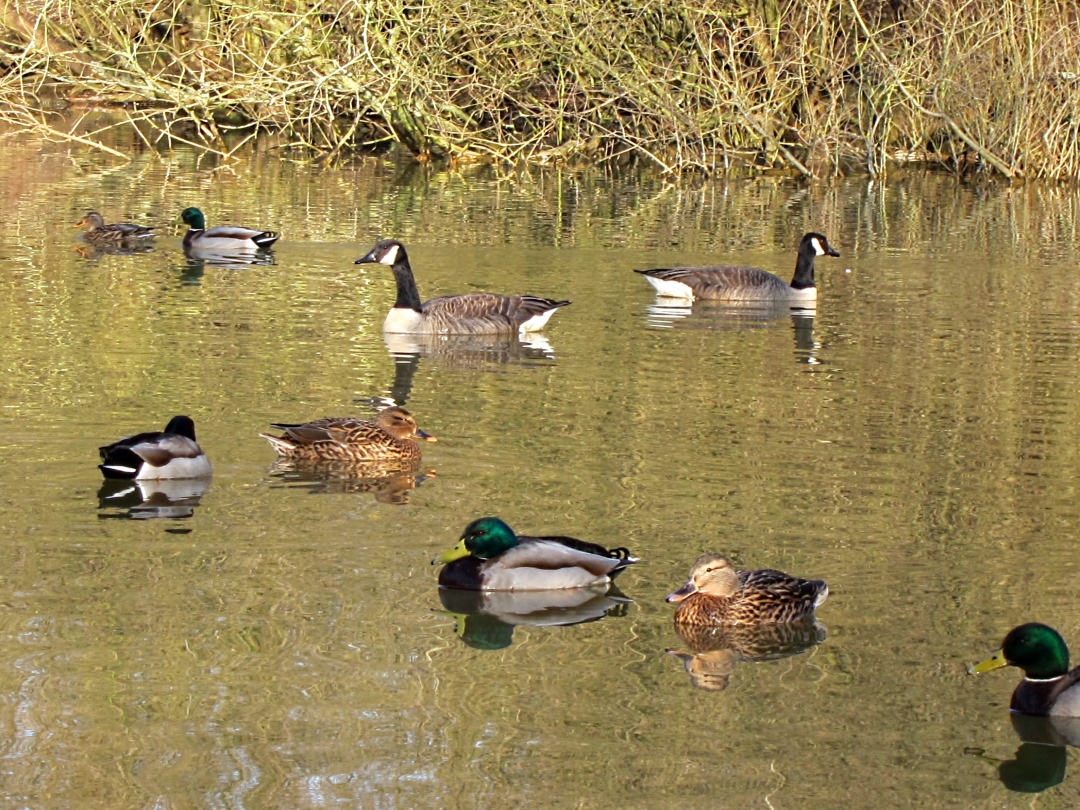
Rush-hour on the pond

Moorhen, more reflection

and behind the pond ....... sky-painting

But over and above the walking necessary to get places, on Tuesday I went on a nostalgic urban ramble in Salford with Ross, an old college friend living nearby.  Train and bus up to Irlams o’th’ Height where I lived as a teenager, walk down to my old school and then down to Seedley where I lived up to the age of 12.  Even after all this time I remembered the way.  And remembered various incidents and happenings such as the spot where I fell off my bike cornering on gravel too fast and landed on my elbow which still has a hole in it.  And the spot where I nearly knocked myself out on a street sign while seeing how far I could walk along the pavement with my eyes closed.  Strange how my memories of life are dominated by a long string of minor injuries.

It was sad to see iconic buildings boarded up or demolished.  The museum boarded up and the hot-house reduced to a skeleton in Buile Hill Park.  Both great places which should be preserved.  The red-brick, 3-storied Seedley Council School is still standing though shuttered up but Seedley Baths, once the only public provision for sport in the area, has gone.  Salford Grammar School, nearly new when I went there, has now disappeared.  Not so iconic, the house where I lived in Seedley, is now under the hard shoulder of the M602.

Indeed, many of the old terraced streets have long gone.  But not all.  The house where I was born and the surrounding terraced streets are still there, all with a Welsh Connection: Cardigan Street (I was born in number 7), Pembroke Street, Milford Street …..  Other areas of terraced houses including the once infamous Ellor Street, were replaced first by tower blocks in the ‘60’s and now even they have been demolished and replaced by ‘low rise’ but still characterless developments.  The demolition of the terraces marked the demolition of communities and a way of life.

I dragged Ross around a bit, probably past the point where he had lost interest in my reminiscences, but then we went to Langworthy Road.  It was behind Langworthy Road that Friedrich Engels, one of the fathers of communist ideology, had a cotton factory and, appalled at the squalor of the area, coined the phrase ‘the classic slum’ in his book ‘Conditions of the Working Class’ to describe it, a description taken up by Robert Roberts as the title of his book.  We never thought of it as a slum.  It was simply ‘home’.

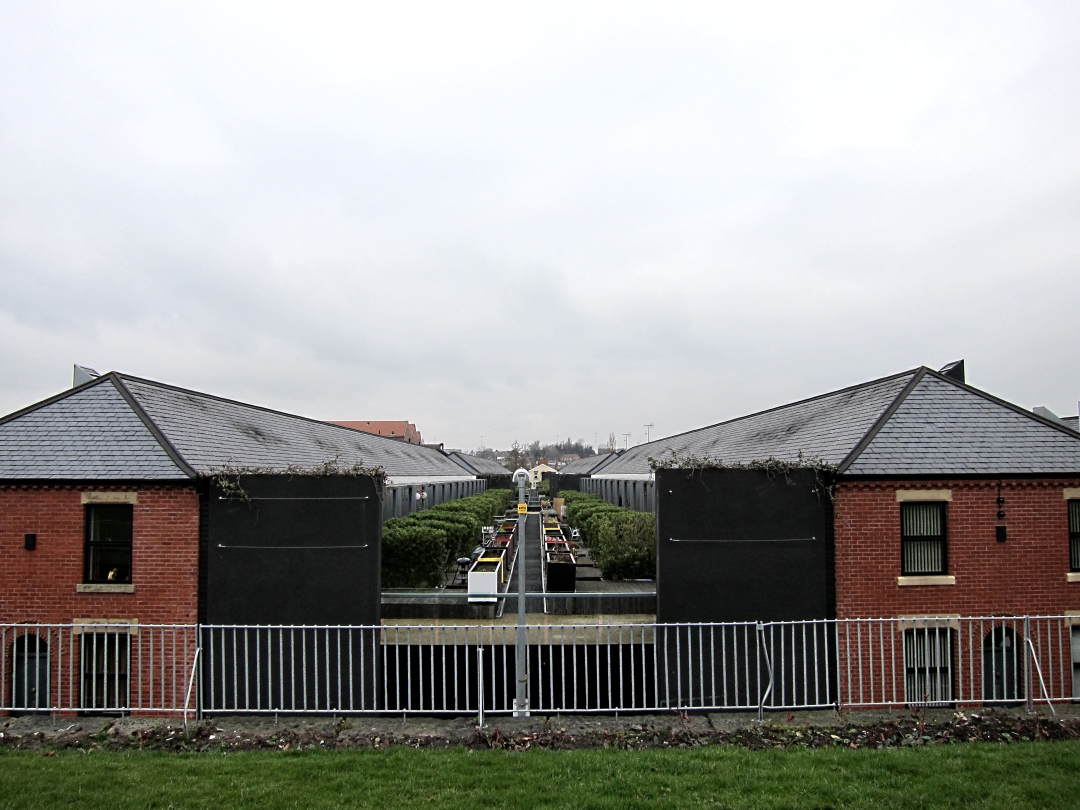
I particularly wanted to go back to what we used to call ‘Chimney Pot Park’, a nickname given to it by us locals because it was a small park with a bowling green laid out on top of a large brick-built water ‘tank’ at roof-top level – chimney pot height.  In an area of dense terraced development this elevated park was a breath of fresh air.  And so it was on Tuesday for a number of reasons.  First because it was still there.  Second because the council had obviously taken measures to preserve and improve it.  Third because it was now officially labelled with a large, cheery sign ‘Chimney Pot Park’.  And fourth because it afforded a clear view of the redevelopment work now being done to preserve the facades of the old terrace houses and to rebuild within a steel framework modern, high tech houses/apartments with elevated balcony gardens.  I loved it.  Power to the elbow of the council for being so forward looking by preserving character of the best of the past and modernising it.
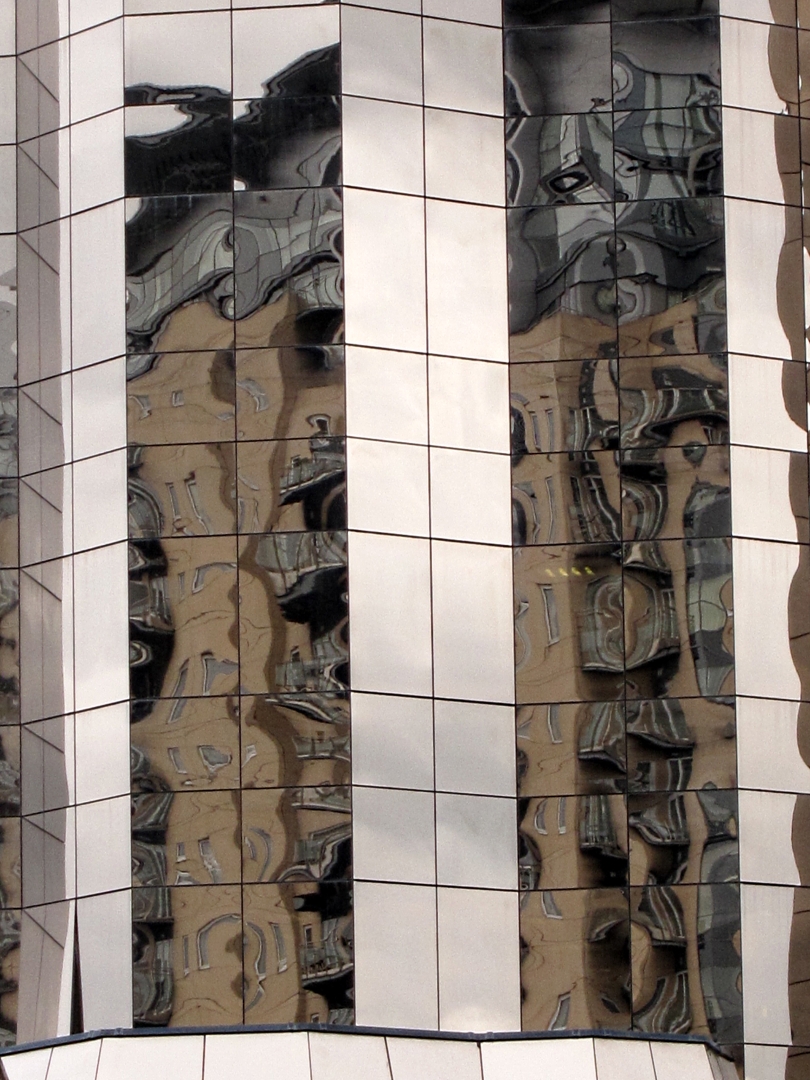
The garden-balconies of the newly redeveloped terraced houses from Chimney Pot Park

Looking across the new chimneys of the 'new' terraces to the high rise beyond

Facade retained intact

..... and the steel framework behind.

Posted in Reflections | Leave a comment