Travels in Greece by bus: planning a gorgeous time.

As I rambled on about in the last post on the blog, the first part of the plan for the coming summer in Greece is to spend Easter on Kalymnos, one of the larger islands in the Dodecanese.  Apart from a brief visit to Symi en route, the intention is that I will spend 3 weeks exploring the mountains, swimming and relaxing.  I also hope to spend a serious bit of time getting on with turning the blog of last year’s travels into an e-book.  The first trip is now barely a week away and the 14-day weather forecast is for 20oC and sunny.

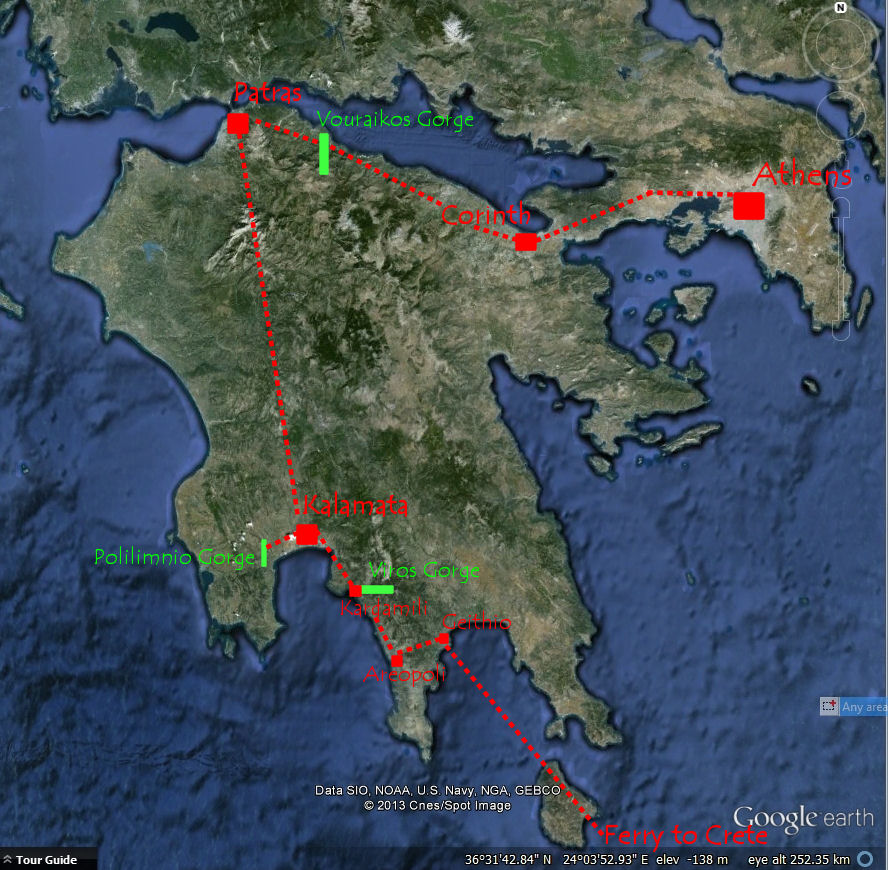
I have been working on the planning for the second trip of the summer which will be very different.  Another road trip by bus with the intention of getting into the mountains.  Literally gorgeous.

After flying to Athens for a day or two the intention is to take a bus along the north coast of the Peloponnese via Corinth to Diakofto and then take the rack-and-pinion railway up the Vouraikos Gorge to Kalavryta, a ski resort in the mountains.  The original intention for going to this area was to look up the family of a Greek guy who I met in Banff when I was in Canada earlier this year, with a day trip on the railway if time permitted.  As I read more about the area the basis of the plan began to change and a longer visit is now likely as I’m thinking of staying in Kalvryta and exploring more of the gorge and the surrounding mountains.

Already I can see the beginnings of what happened last year when I added more things in to the original plan with the result that I only got about half as far as I intended.

From Diakofto I’ll head via Patras down to Kalamata to take a look at the lakes and waterfalls of the Polilimnio Gorge in Messinia.  It seems to be a mellower landscape but the gorge should be worth a visit.  I may have to resist the temptation to travel more widely in Messinia in order to focus on the ‘gorge’ theme.

Then over to The Mani, the central of the 3 peninsulas in the south of the Peloponnese to do some walking in and around the Viros and Noupadi Gorges as well as climbing some of the peaks in the Taygetos Mountains.  I spent nearly a month in this area last summer but got nowhere near exhausting its potential.  One way of making sure that I get to places I didn’t last year is to hire a car

Assuming that I haven’t been sidetracked too much I then hope to cross from Geithio to Crete to walk the Samarian Gorge and some of the other gorges in the west of that island.

The planned route in the Peloponnese

The planned route in the Peloponnese

I’ve booked a flight out but not back as I don’t know where I’ll end up or when I will be ready to return.

Posted in Greece, Mountains | Tagged , , , , , , , , , , , , , , , , , , | Leave a comment

Easter in Greece: the joys of time travel

We had the last overnight frost Sunday-Monday but temperatures are still stuck in single figures.  Wednesday evening we settled into a grey, wet weather pattern again.  Dismal!

Not surprising therefore that my thoughts are increasingly turning to the summer’s activities in Greece and I have mapped out a rough plan.

First part of the plan is to spend Easter on Kalymnos.  Yes, that’s right, it’s not a misprint, it’s all down to a time machine, or rather the manipulation of time for the sake of convenience.

The thing is that Easter is a Moveable Feast, probably the original moveable feast.  Since the First Council of Nicaea in 325AD the date of Easter has been calculated as the first Sunday after the Paschal (Easter) Full Moon following the March equinox.  It may seem a little weird to determine the celebration of the Crucifixion and Resurrection of Christ by the phases of the moon, but no stranger, though a lot more complicated, than fixing the date of Christmas by the pagan Roman festival of Saturnalia.

Unfortunately it has been even weirder and more complicated than that since 1582.   That was the year that the Roman Catholic Church took action to correct the steady drift in the date Easter was celebrated and to bring it back to the time of year intended by the First Council of Nicaea.  So they changed the calendar, the Gregorian Calendar replacing the Julian Calendar.  At least it did in Catholic countries.  Protestant and Eastern Orthodox countries stuck with the Julian/Byzantine Calendars, gradually switching in the interests of international trade over ensuing centuries.  Britain changed in 1752. The day after 2 September that year was 14 September and there were riots as people demanded their 11 days back.  Only in 1923 did Greece change, the last European country to do so, a year after the USSR.

However, the Orthodox Church continues to use the Julian Calendar to calculate Easter.  This means that most countries celebrate Easter sometime between 22 March and 25 April whereas in Greece Easter falls sometime between 4 April and 8 May.  This year Easter Sunday in Greece is 5 May.

It really is very much more complicated than that with complexities of leap years (every year divisible by 4 unless it is divisible by 100, except for those at the turn of a century not divisible by 400). Leap seconds have taken on an increasingly critical importance as precise measurement of nano-time is essential to the functioning of GPS without which smart phones couldn’t locate the nearest pub and guided missiles would go astray. Personally I like to simplify things. I find it deeply gratifying that, because of the continuing drift apart of the two calendars, I will land in Rhodes 13 days before I take off from Manchester.  Now that’s time travel.  It gives me an additional two weeks in the sun and at no additional cost.

Just don’t mention the moon.

Additional reading (for those who don’t have a life):
http://en.wikipedia.org/wiki/Easter
http://en.wikipedia.org/wiki/Gregorian_calendar
http://www.adsb.co.uk/date_and_time/calendar_reform_1752/

Posted in Greece, Grey Britain, Health and humour, Reflections | Tagged , , , , , , , , | Leave a comment

Welsh Winter Walking: reflections on pioneering

Some years ago I was making tired but still rapid progress between High Spy and Catbells, the final leg of a non-stop 7-hour walk in the Lake District from Langdale to Keswick on the side of Derwent Water (for aficionados, via Angle Tarn, Styhead, Great Gable, Green Gable, Grey Knots and Dale Head) when I was confronted by an apparition wandering across Maiden Moor in a salmon-pink shell-suit.  At that time everyone with no taste was wearing them.  This particular apparition, blonde-haired, mincing her white trainers around the muddiest bits of the ridge-top path, burst out plaintively, almost panicking: “Is this the way?  Is this the way??? 

She had no idea where she was going only that she had seen others walking up from the car park far below and decided to follow.  With evening drawing on I made the decision on her behalf and pointed towards the top of one of the paths going directly down the nearly 2000 feet to the valley floor.  Safer down there than up on the tops.

It’s easy, and common, for mountaineers to sneer at such people but at least she was prepared to get out of her car and walk, and indeed put some real effort into getting up this high.  Equally important she showed the right kind of attitude, giving it a go, even if completely lacking in experience, having done nothing to seek advice and guidance or even buy a map, and wearing inappropriate clothing.  But then that’s how I started out.

That encounter on Maiden Moor was on a day of cloudless blue sky, warm end-of-summer temperatures and light breezes poetically described as ‘zephyrs’.  I was reminded of that incident on Tuesday this week in quite different conditions when, coming towards the end of a walk across Coity Mountain at the top end of the South Wales Coalfield, I was approached by 3 lads driving a ‘boy racer’, lurching towards me on the deeply rutted, rock strewn track.  Their question?  “How do we get to the top of the mountain?”

They were taken aback, looked disbelieving, when I replied that they would have to park the car and walk.  Their ‘Saaafeast’ accents, urban clothing and urban car made it clear that they expected to be able to drive to the top and that they had no conception of how different the conditions were on the windswept top of the mountain with no higher ground between them and the Urals.

I had targeted the mountain for a walk because it stood out from miles around as still white with snow when the ridges to the south were thawing rapidly in the sun, snow confined to isolated drifts.  Even properly clothed for the conditions and pretty experienced in winter mountains I had been surprised at just how extreme it was up there 3 days into British Summer Time.  There was almost complete snow cover, in places drifted thigh deep.  Had I not walked the route a number of times before I would not have found the way.  The usually obvious path was obliterated, indistinguishable from the rest of the mountain.  The strong easterly wind gave a significant sub-zero chill factor even in the bright ‘Spring’ sunshine.  I had faffed about taking photos before I reached the ridge and found myself short on time to get back to meet up with a friend in the evening and pushing the pace on the second part of the walk was hard work in the deep snow.

The place where I met the lads, in the lee of the main ridge, out of the wind and in the sun, was significantly warmer than it had been up on the top and on the track the snow was all but gone.  But I guess that opening the car window to talk to me had let in a blast of cold air which persuaded them that I may be right when I said that conditions on the top were pretty extreme and that they would be best advised not to go up there.   Sensibly, they had no intention of doing so and they turned round to go somewhere else where their nice warm bubble could take them.

Just south of the Brecon Beacons National Park but in a landscape indistinguishable from it, the mountains of the Coalfield are little visited.  It is rare to see anyone else out walking up on the tops and those few that do are almost invariably locals who know what they are doing.   In winter conditions like these, even hardy locals stay at home or walk the dog somewhere else.  I saw only one set of footprints on the top of the mountain. Someone had walked part of the route before me.  There is something really satisfying about making first tracks in the snow, whether on foot or on skis, a faint echo of what real pioneers must have felt.

Partly because of that and partly because of the satisfaction of overcoming difficult circumstances this was probably the most enjoyable walk I have done in the UK this year.

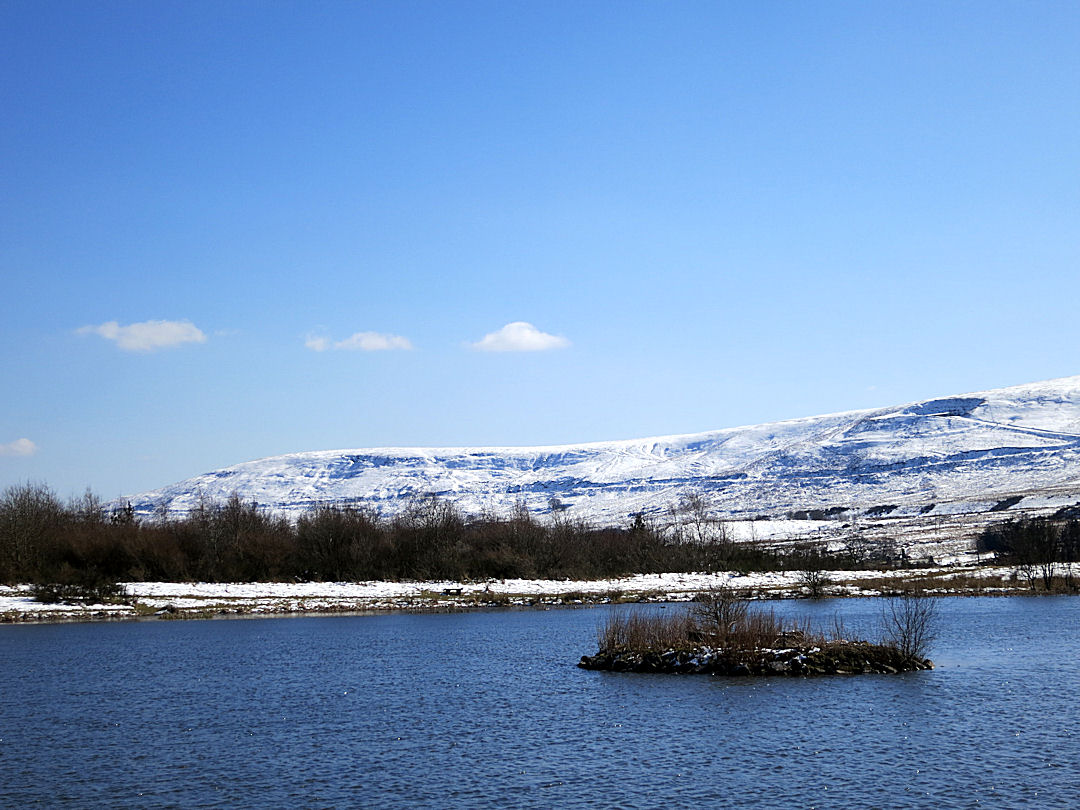
Looking across one of the Garn Lakes to the north scarp of Coity Mountain

Looking across one of the Garn Lakes to the north scarp of Coity Mountain

Starting to climb up to the ridge, the slightly sunken path filled with drifted snow

Starting to climb up to the ridge, the slightly sunken path filled with drifted snow

13Gwent003w1273

Some ewes have dropped their lambs; their survival must be marginal unless spring arrives soon

13Gwent004w1289

Closer to the top, vicious winds sculpt blown snow over the top of a layer of ice as the sun melts the snow briefly before it refreezes

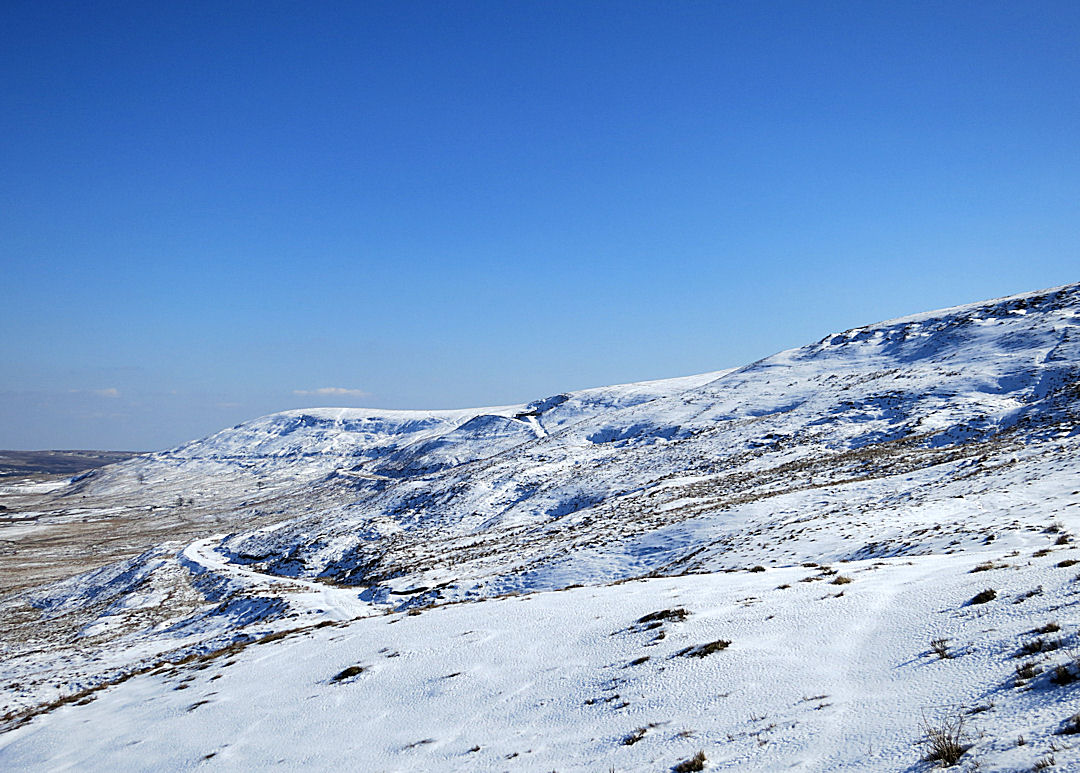
Looking along the line of the scarp from close to the top

Looking along the line of the scarp from close to the top

The top is completely wind-blasted, snow level almost to the top of a 5-foot high stone wall

The top is completely wind-blasted, snow level almost to the top of a 5-foot high stone wall

Trying to get into position for a photo I gave up when the snow was up to my thihgs

Trying to get into position for a photo I gave up when the snow was up to my thihgs

One of the reasons why this landscape is so dangerous is that there is no shelter and in strong winds exposure can be a major problem.  Which is whysome areas are used by the army for training

Lone tree.  One of the reasons why this landscape is so dangerous is that there is no shelter and in strong winds exposure can be a major problem. Which is why some areas are used by the army for training

x

Posted in Mountains, Pontypool, Reflections, Wales, Winter | Tagged , , , , , , , , , , , , , , | Leave a comment

Welsh Winter Walking: effects of Spring deferred

With overnight temperature yet again down to minus 4oC and afternoon highs still well short of double figures, the last day of March, Easter Sunday and, coincidentally, the first day of British Summer Time saw no real signs of Spring as I headed for the ridge top at the southern tip of the Brecon Beacons National Park once again.

True, daffodils were in flower along the road verges but then they have built-in antifreeze.  True also that the lowest field before striking up the ridge was full of ewes and their newborn lambs but they were desperate for food, cropping the grass to the ground faster than it could grow.  The ewes bleated their discomfort and as I crossed the field hustled me from behind, hoping I was bringing them something to eat.  One lamb lay at the edge of the wood, dead from the cold and lack of milk, its eyes pecked out by ravens.  There will be more casualties if this weather continues.

The snow has now largely gone from the fields but persists on the highest parts of the ridge and where it has drifted deeper in hollows and in the lee of hedges and walls, though even there noticeably reduced by ablation.  In the midday sun meltwater collects, forming a thin slurry, unable to penetrate the still-frozen ground.  On the ridge-top path a small stream flows under the remaining snowdrifts, emerging on the further side, certain to refreeze as temperatures fall again as the sun dips down and night draws on.

The weather is often anthropomorphised, as if it were sentient: winter is “reluctant to release its grip”, “lingers on”.  But the cold facts speak for themselves:  the coldest Easter Sunday in the UK since records began; the coldest March for 50 years; joint third coldest for Wales since records began.  And forecasters reckon the cold weather will continue well into April.

But, a big BUT, though it is still cold, on Easter Sunday the grey high pressure gave way to sunshine.  Not cloudless blue sky and unbroken sunshine but warm enough to sit outside for coffee when I got back from the mountain, bright enough to lift the winter gloom, a tantalising glimpse of a Spring yet to come.

Looking North to the top of Mynydd Varteg still comprehensively covered in snow

Looking North to the top of Mynydd Varteg still comprehensively covered in snow

Heading South down the ridge path with clear sky and clear views across the Bristol Channel

Heading South down the ridge path with clear sky and clear views across the Bristol Channel

Deeps snow drifts reduced in height but will still be around for a while to come.

Deeps snow drifts reduced in height but will still be around for a while to come.

x

Posted in Mountains, Pontypool, Spring, Wales, Winter | Tagged , , , , , , , , , , , | Leave a comment

Welsh Winter Walking: Forward planning and contingencies

Sometimes things just don’t turn out as planned.  Wednesday I had a day free of commitments so planned to take a bus up to the watershed between two of the South Wales valleys and walk back home via a couple of ridges including one in the Brecon Beacons National Park, about a 5 hour trek.  We are still in the grip of winter and, even though it was very grey, with snow lying and freezing temperatures I was very much looking forward to it.

The bus, the number 30 about which I wrote a chapter for a book to be published in the Autumn, arrived at the stop 30 seconds before I did.  The jobsworth driver shook his head at me and carried on.  I was annoyed!  The next bus, an hour later, would have meant finishing in the dark. That wasn’t too much of a problem but I was kitted up and ready to go and didn’t fancy hanging around doing nothing in the meantime.

Rapid rethink.  With all forward planning it helps to build in contingencies for when things go wrong or at least to have enough information to be able to work out alternative plans on the spot.  One alternative was to try to catch a bus and intercept the 30 at another point, a high risk strategy because I could easily end up in the wrong place if the timings didn’t coincide.  And in any case, in my annoyance I might be rude to the driver and get thrown off the bus.   In the end, after a full 30 seconds of deliberation I decided I would walk down the hill to catch a bus on another route which would take me to a different start point, a shorter walk but still on the ridge top.

Even though I walked rapidly, the other bus arrived at the other stop 30 seconds before I did.  But at least that service is at 10-minute intervals so I wouldn’t have long to wait, assuming that it was on time.  It wasn’t.

Just as I was beginning to re-evaluate the whole plan, and wonder about the meaning of life, my son pulled up in his car and offered me a lift.  He had been driving past and saw me standing abandoned by the roadside.  Sorted!  And an opportunity to have a chat as well.

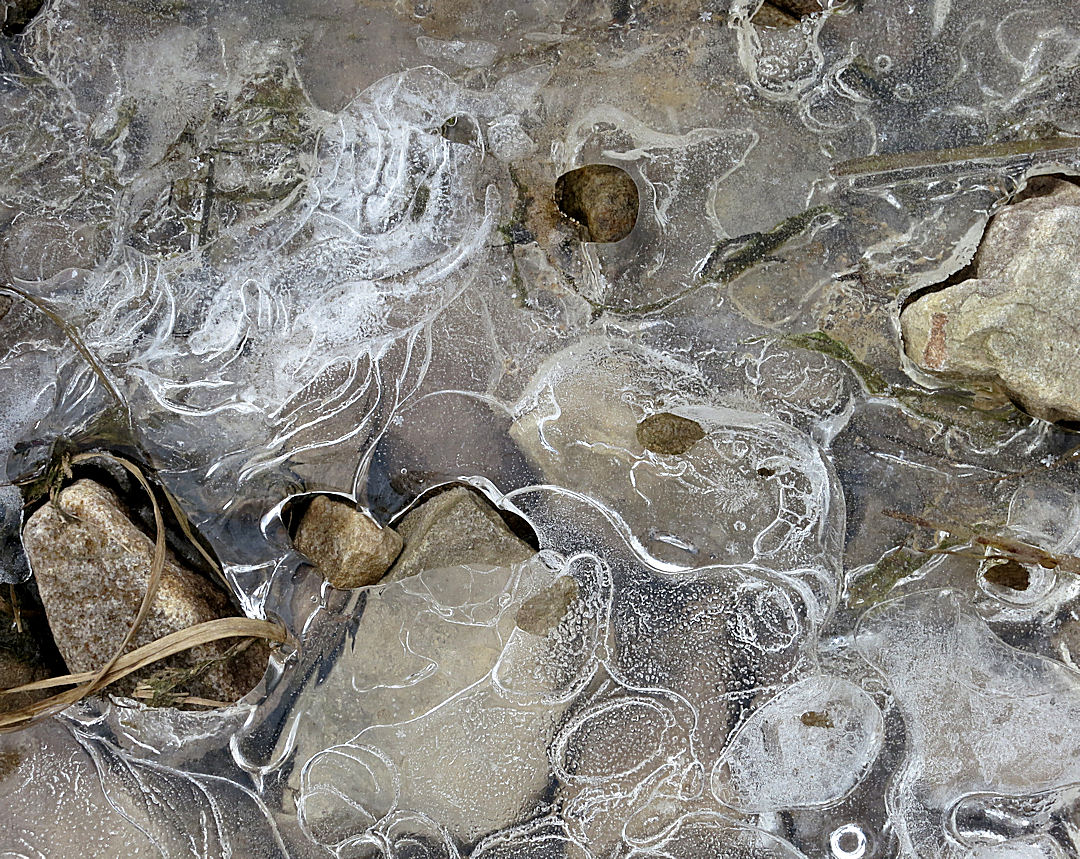
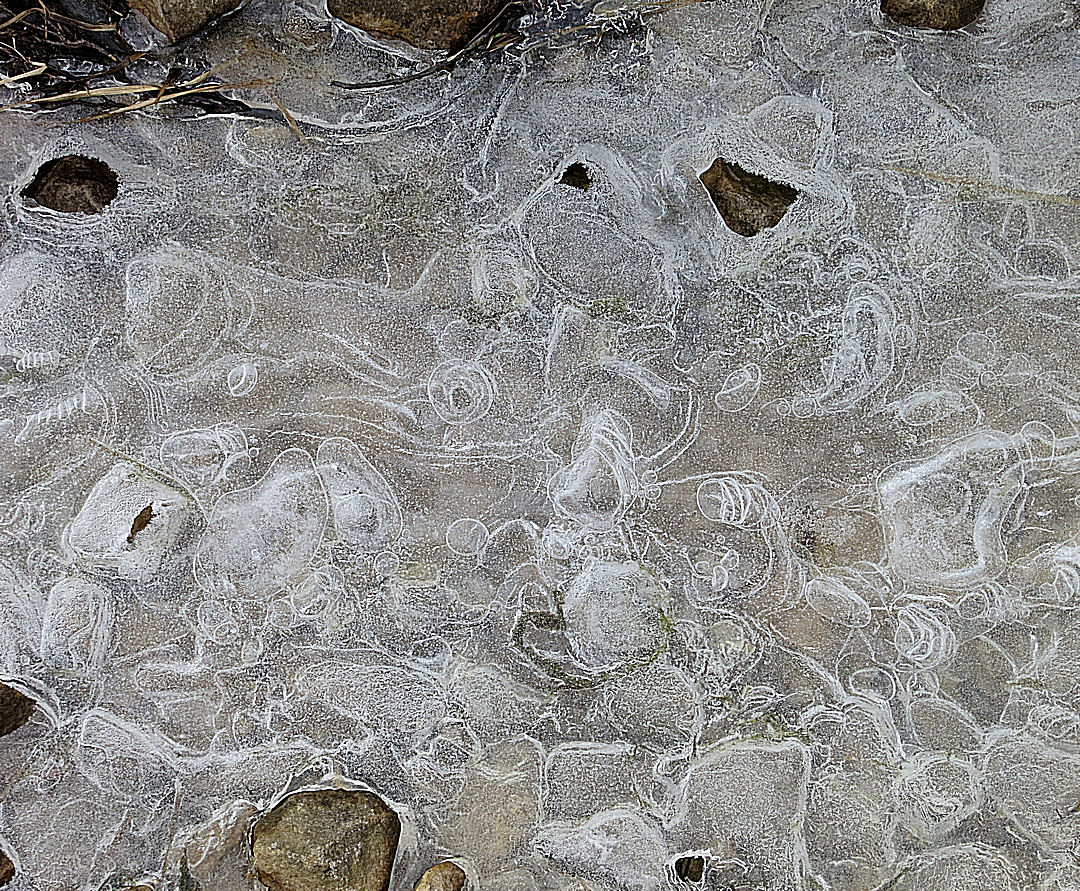
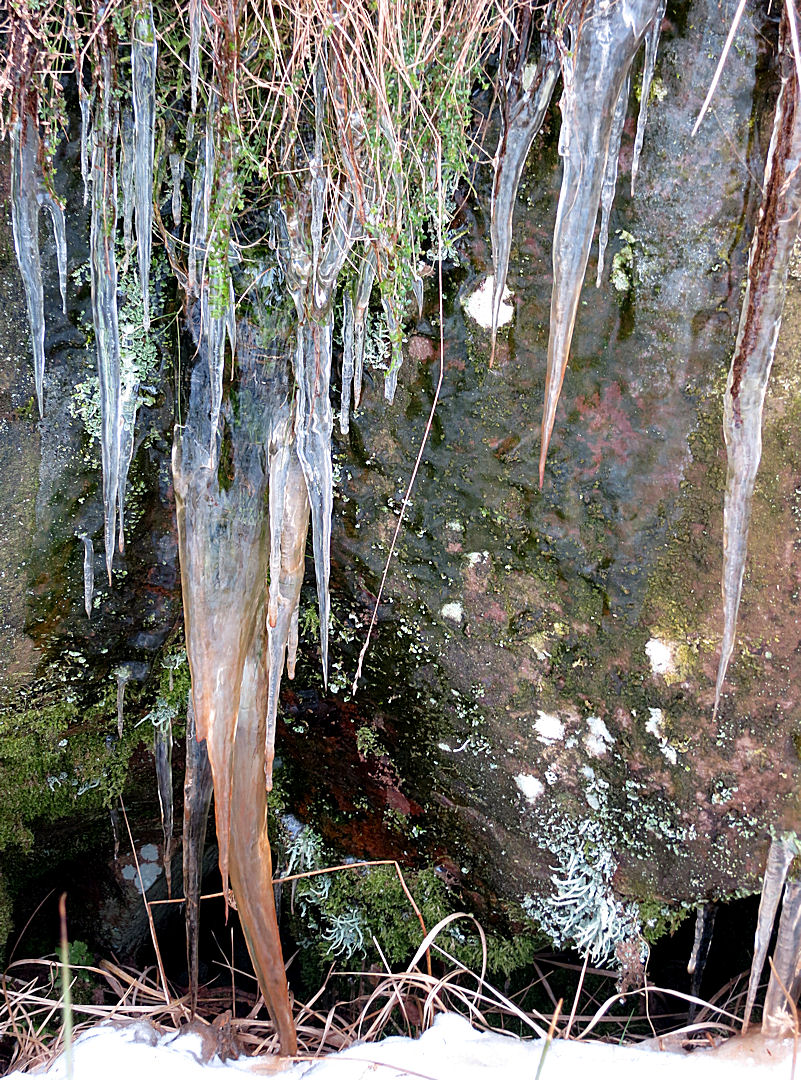
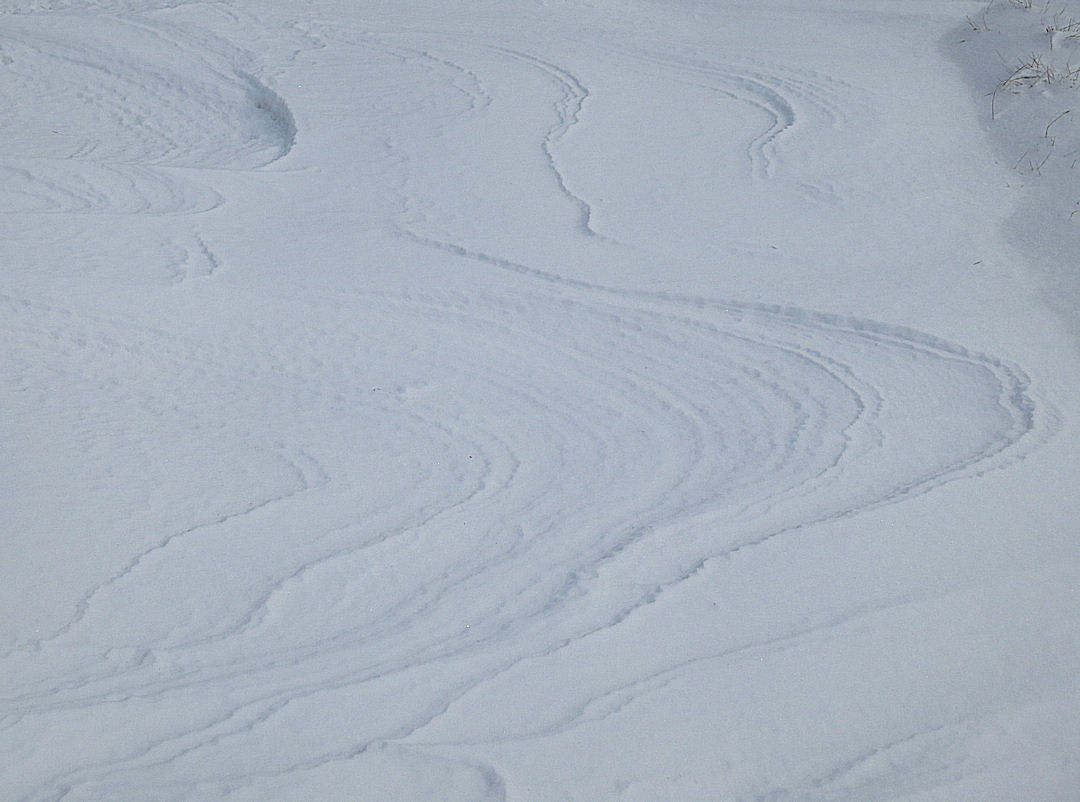
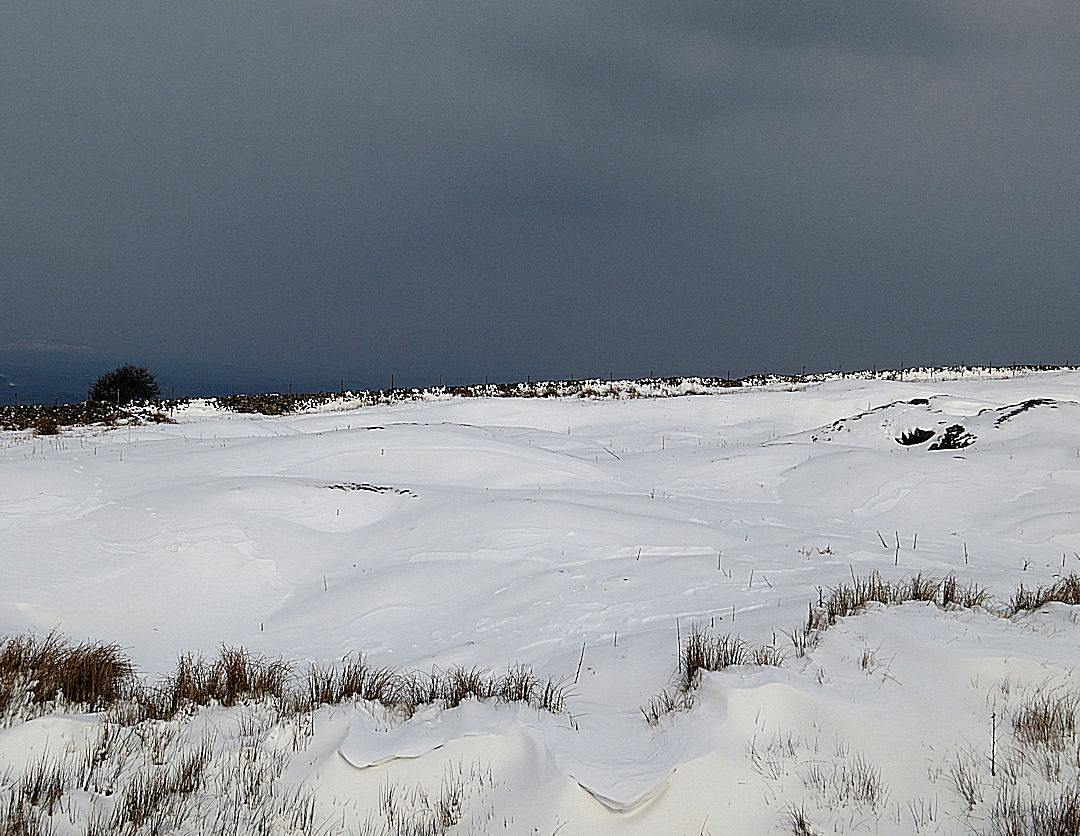
The walk was great.  There was more snow on the ridge than I had expected and it had been drifting in the wind into weird shapes and patterns.  Surface water had frozen like works of modern art.  It was slow going, particularly as I didn’t stick to the path but wandered all over the ridge top with the camera,  repeatedly telling myself that I needed to stop messing about and start to make some forward progress.

Water flowing down the path on the flank of the ridge frozen in sworls

Water flowing down the path on the flank of the ridge frozen in sworls

13Pontypool030w1191

….. should be hanging in a gallery of modern art

13Pontypool031w1207

As snow melts and drips off the edge of rock into a sink-hole it freezes over vegetation

13Pontypool032w1205

Some of the icicles are discoloured by leaching from the soil

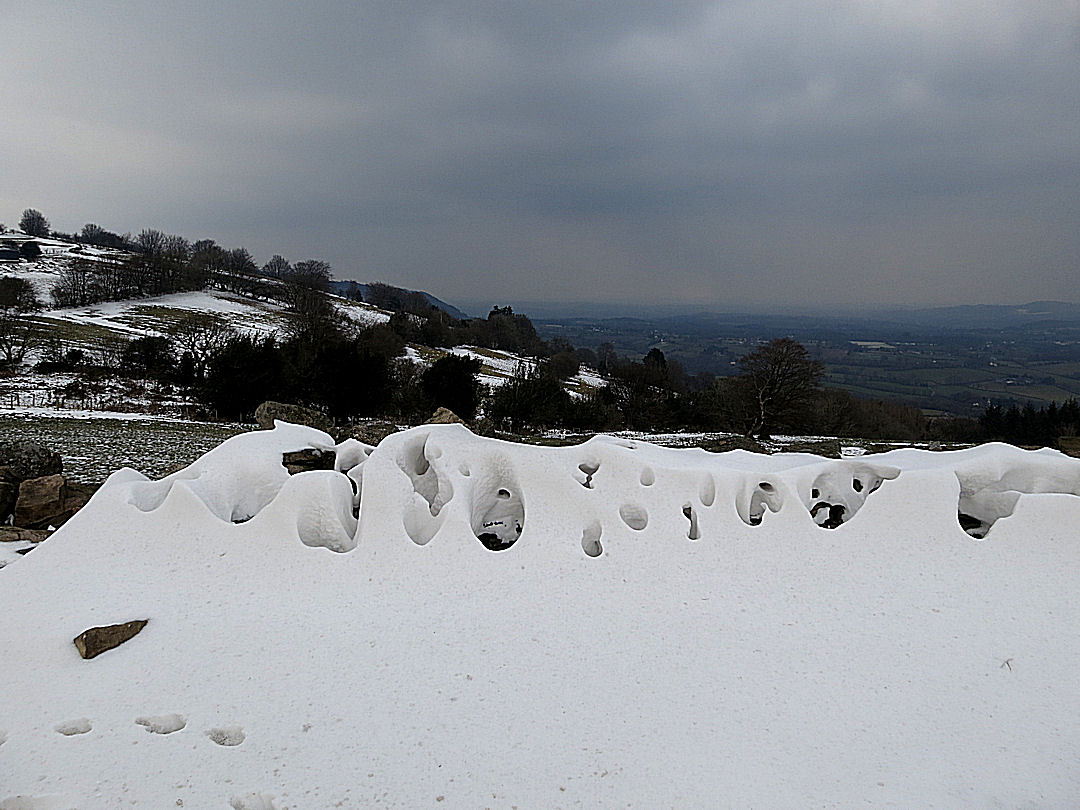
Snow is blown into weird patterns

Snow is blown into weird patterns

13Pontypool034w1223

……….. shame to walk over it

13Pontypool035w1224

Some of the snow drifts have a beautiful symmetry

13Pontypool037w1214

….. some are just rolling like waves

.. some are amazingly sculpted

.. some are amazingly sculpted

The highest farm on the ridge: it must be very bleak living up here in winter

The highest farm on the ridge: it must be very bleak living up here in winter

13Pontypool036w1235

Even lower on the ridge the snow drifts are wall-top high

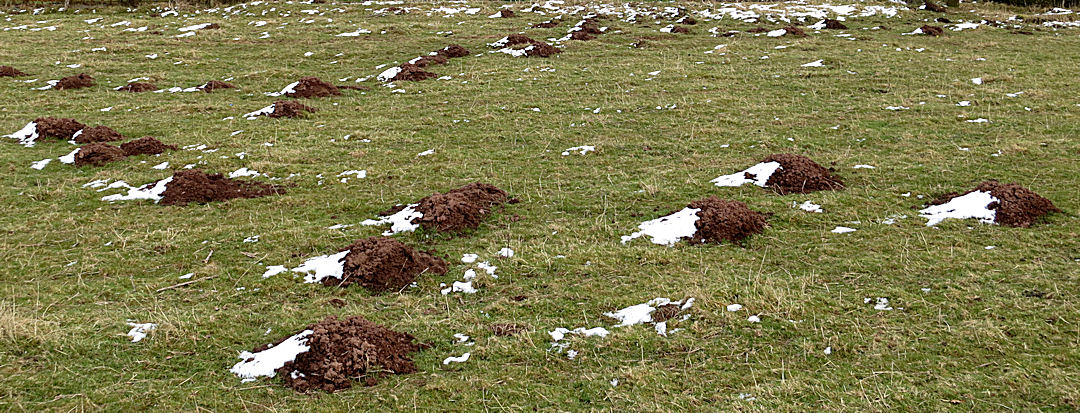
Back down at road level snow persists on the north side of mole hills

Back down at road level snow persists on the north side of mole hills

I saw no-one on the mountain. I saw very few footprints. Fabulous!

Posted in Grey Britain, Monmouthshire, Mountains, Pontypool, Wales, Winter | Tagged , , , , , , , , , , , , | 1 Comment

Spring surprise

After dismal weather since I got back from Canada my plans for summer travels in Greece are starting to take shape.  Flights booked and looking forward to Easter on Kalymnos, then another trip by bus and train from Athens around the Peloponnese and late summer in the Dodecanese.  With the equinox past, the anticipation of longer evenings and the prospect of better weather after the return to British Summer Time next weekend my mind was turning to getting some sun on my skin in preparation for Greek sunshine.  Warmth for the bones at last.

Then on Friday night winter returned.  Nowhere near as much snow in the south as in the North of Wales and England but woke on Saturday morning to a couple of inches of the fluffy white stuff, weighing down spring flowers desperately showing their heads after weeks in bud.  Perhaps distracted from their seasonal migration by the low cloud and dark grey sky, a growing flock of Siskins, somewhere between 80 and 100 I guess, landing in a silver birch in next door’s garden then in the blink of an eye departing en masse at some secret signal, swirling neurotically overhead before settling again for a few minutes in another tree, and then another, and another, finally returning to repeat the process.

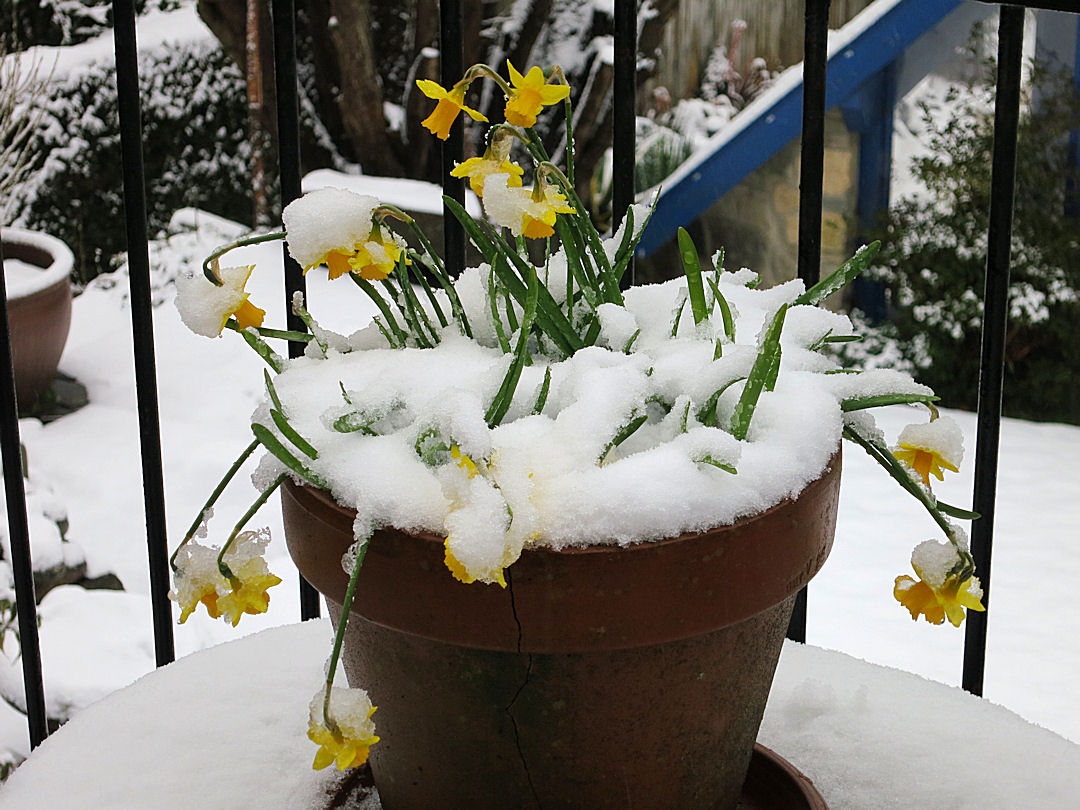
Mignon daffodils on the balcony bowed down under snow

Mignon daffodils on the balcony bowed down under snow

Flock of Siskins briefly at rest

Flock of Siskins briefly at rest

........ zooming in

…….. zooming in

I managed to escape up the mountain between the morning preparing food for the family and them arriving at the end of the afternoon.  Just a degree above freezing at the house it was freezing hard on the ridge-top, ice and snow sticking to walls and trees as well as on the ground.  The cloud was low on the flanks of the hill making for very flat light which creating stark outlines.

Dead oak tree on the flank of the ridge

Dead oak tree on the flank of the ridge

13Pontypool023w1154

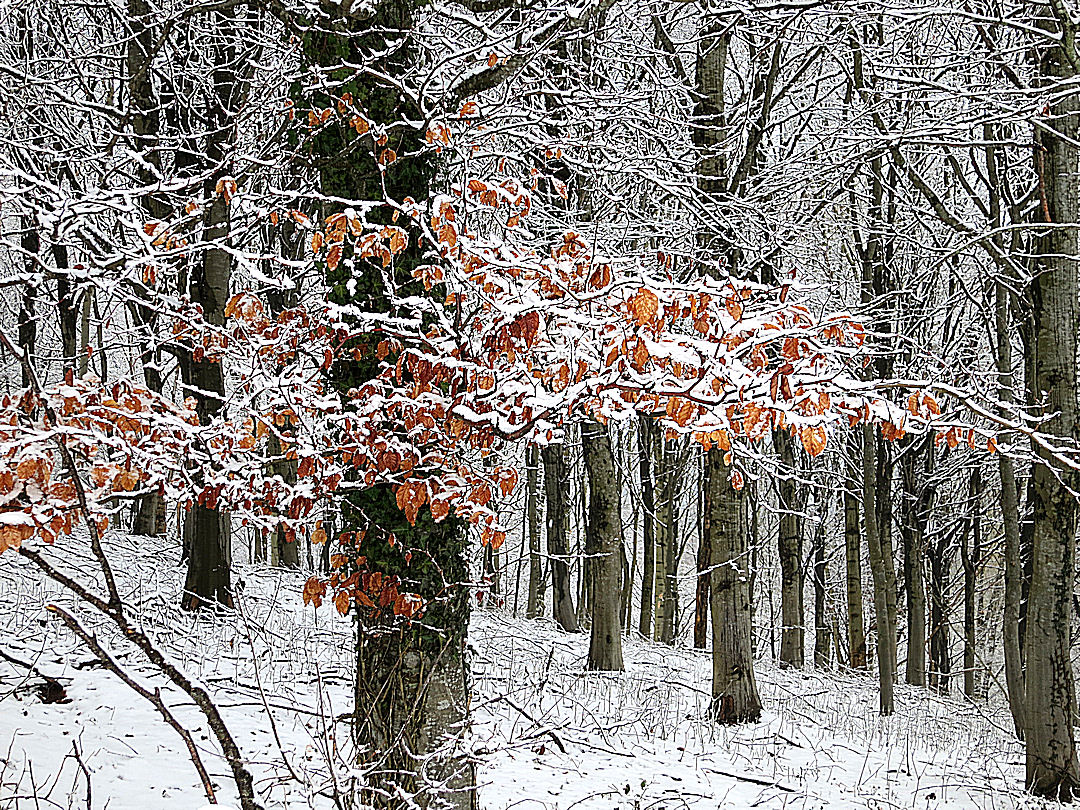
Young beech wood.

13Pontypool024w1155

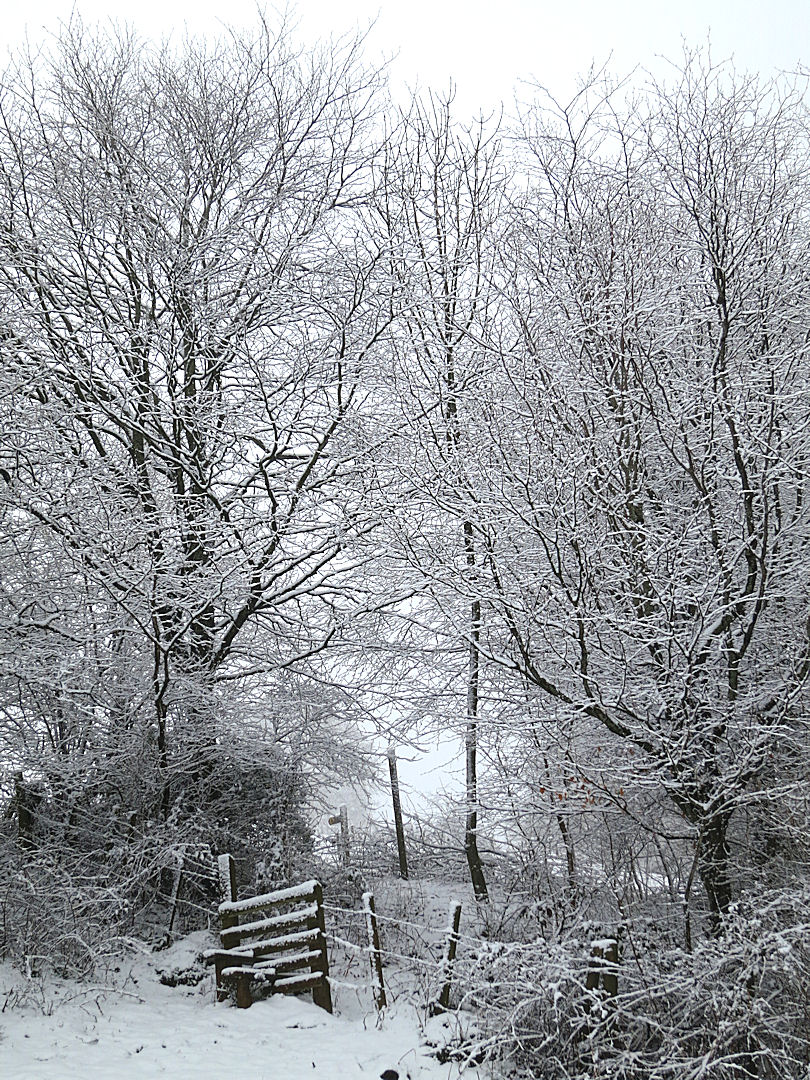
Stile at the top of the field

13Pontypool025w1164

Silhouetted against the sky close to the ridge-top

13Pontypool026w1168

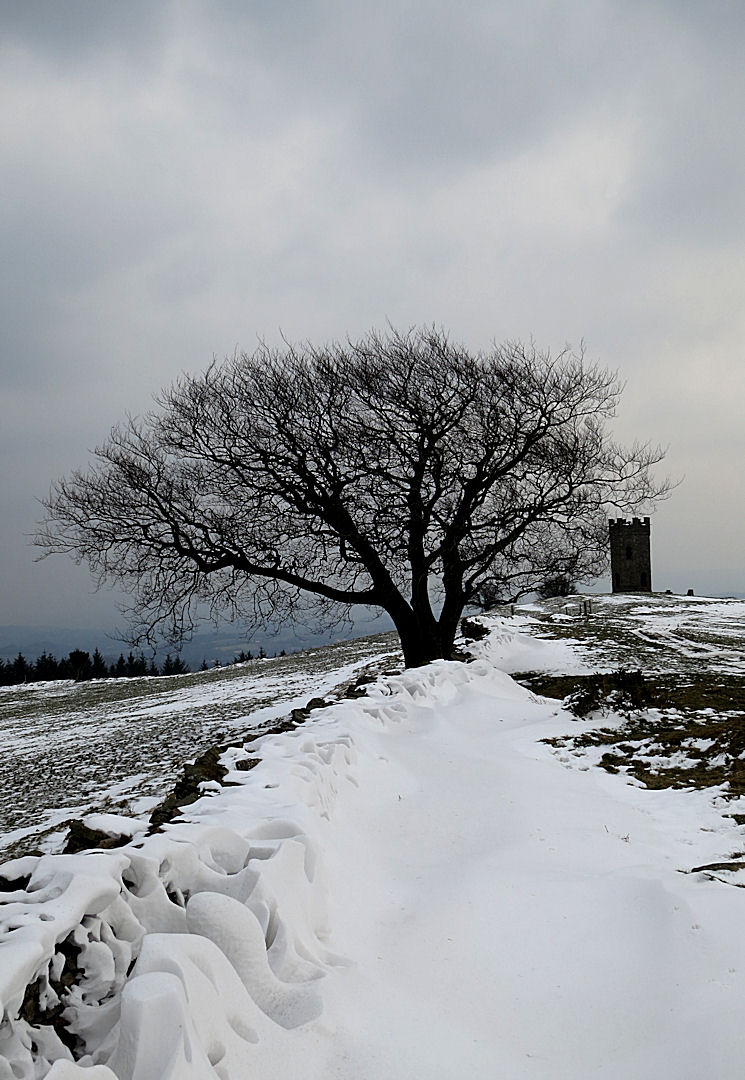
Snow blasted Folly Tower on the top of the ridge

13Pontypool027w1170

…….. stone wall alongside the ridge path

13Pontypool028w1165

Snow-blasted stile on the ridge

Then the temperature dropped and with no sign of the snow melting I went back up the mountain on Sunday.  It looks as if winter is back for at least a few days.  So it will be back up the mountain again Monday, maybe Tuesday.  Spring is on hold.

Posted in Greece, Grey Britain, Mountains, Pontypool, Spring, Wales, Winter | Tagged , , , , , , , , | 1 Comment

Sport, politics, history: when the underdog gets revenge

I don’t watch sport of any kind either on TV or in the flesh.  For a start I found that I was getting too-uptight but more importantly I decided a long time ago that I preferred to be doing something rather than watching other people doing something.

It’s not that I don’t care about the results, I do.  In the case of the Welsh rugby team, very much so.

Which is why the Welsh victory over England on Saturday was so monumentally enjoyable.  The winning margin of 27 points surpassed the previous record for the encounter set 108 years ago.  In one recent season the only match which Wales won in the 6 Nations Championship was against England but that single victory expunged the rest of the season’s losses.

Why is that beating England is so deeply satisfying for the Welsh?  And the Scots?  And the Irish?

In part it’s the satisfaction of underdogs coming out on top.  Wales has a population of 3 million, England over 50 million so a far bigger pool of talent and resources on which to draw. Support for the underdog is a widely shared sentiment.  I was fortunate to be on a small Greek island when Greece won the European Cup (soccer) in 2004 having beaten big boys like France, the then holders of the championship, on the way to the final.  The celebrations reverberated for days including firepower from a warship parked in the harbour and dynamite let off on the roofs of houses.   Takis from the leather shop on the harbourside summed it up by saying “Large countries like England expect to win.  In Greece it happens once in a thousand years”.  And the celebrations were not confined to the Greeks, there was pretty universal support for the victory from the many nationalities visiting the island.

Two years later I was on the same island and the celebrations were almost as euphoric when Greece beat the USA in the semi-finals of the World Basketball Championship.  The, USA is the 3rd most populous country in the world with 315 million people, Greece has less than 11 million and is 77th in the table.   I dare say 35 million Canadians have much the same feeling when they beat the USA at ice hockey.

Underdog gallantry is one of the limited number of story lines of Hollywood films.  Underdog victories are very sweet.

However, a Welsh victory over England goes beyond that, rooted in historical resentment of conquest, occupation, and a deliberate effort to wipe out Welsh language and culture. “I support two teams: Wales and anyone playing England” is often quoted and passed off as a joke but there is more than a steely hint of truth in it. There is a folk-memory of corporal punishment and exclusion meted out to grandparents when they had the temerity to speak their own language when they were in school.

But it’s important that rivalry should not become enmity.  The thesis has been promulgated that one of the reasons why Britain has not been riven by civil war since the days of Oliver Cromwell is that we vent our spleen on the playing field.  That may be true.  It’s certainly true that we invent more games than anyone else ….. and then play them badly compared to other countries. But whether it’s true or not I feel deeply that the differences between us should be confined to the playing field and not spill over into separatist politics.  We can enjoy and celebrate our different cultures, even look back on our different experiences of history, without splintered politics, a real threat at the moment.  Particularly in a subdued economic climate dominated by major players like China, we should be focusing on what we have in common and not pretending that small is powerful.

At the moment Wales can bask in the reflected glory of having so soundly defeated England on Saturday.  And what is even better is that we can look forward to trying to do the same again next year.

Posted in Canada, Greece, Reflections, Wales | Tagged , , , , , , , , , , , , , , | 1 Comment

Thirty minutes on top of a mountain: a duvet day

The day started very grey and minus 2oC so I did the ball-achingly boring chores which are repetitively necessary in the house – cleaning the loo, clearing the detritus in the kitchen, hoovering the hall ……  But not for long.  Increasingly the sun popped out from between racing clouds so I popped out to do more work on preparing a corner of the garden for the grandchildren.  A couple of hours of that in temperatures hovering around zero, sub zero with the chill factor of a biting-cold north-easterly wind, and then it started to snow.

I couldn’t stick it any longer.  It was too enticing.  I had to go up the mountain to play.  A thousand feet higher and stronger winds on the ridge-top would mean it would be significantly colder.  It was.  The ground was frozen hard and, except for a small stream, so was the surface water.  Unusual but by no means unheard of at the start of spring.

I wore my down-filled ‘Nuptse’ jacket, the sort which used to be called a ‘duvet’ until the term got hijacked by a labour-saving replacement for sheets and blankets on the bed.  Today it was barely adequate for the task, the wind finding gaps at neck and waist and even penetrating the fabric.  I bought my first duvet when I was doing research field-work in college and standing outside all day every day in similarly bitingly cold winter-winds.  Made by Black’s of Greenock it cost me 10% of a terms grant and is so warm that I can only wear it in the most extreme conditions.  I still have it, carefully preserving the now fragile outer-shell, and I found myself wishing I had given it an outing.

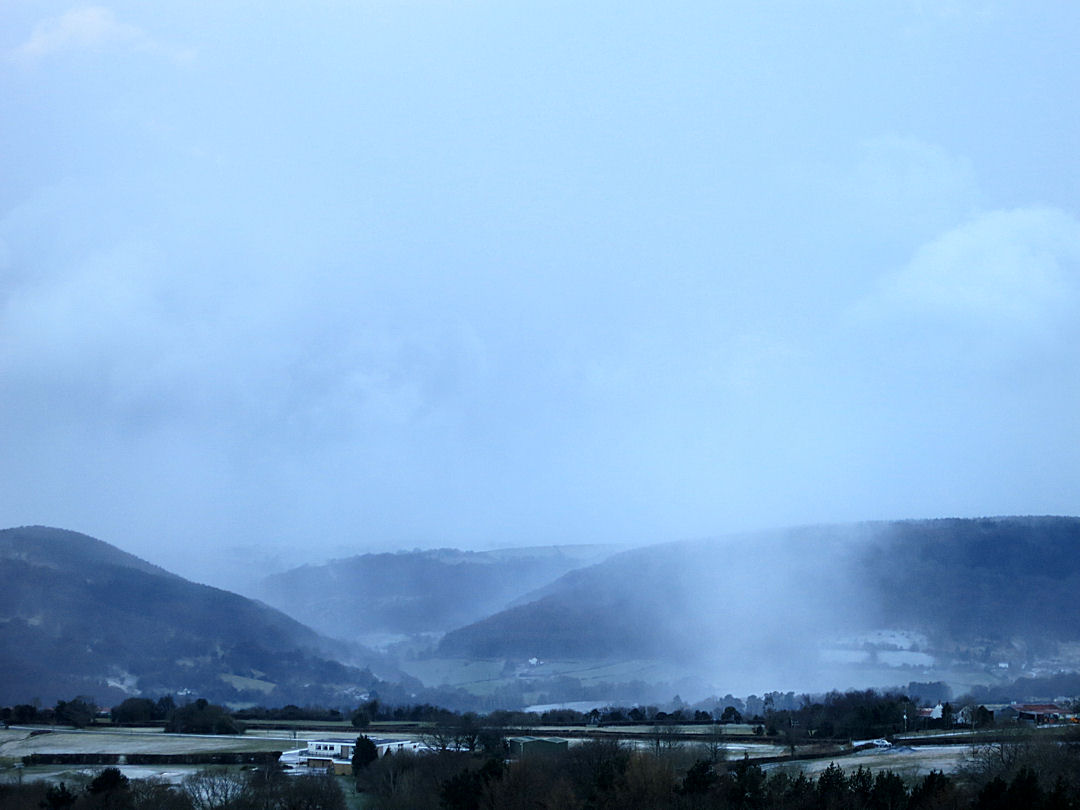
But no real problem.  It was great being up there and I lingered on the top far more than I usually do, watching the snow clouds sweeping in from the northeast, blizzarding, and then racing off over the ridges to the west.  It took less than half an hour for the snow to come and go and then the sky opened up again. As so often on this mountain, my ‘backyard’, I was reluctant to leave.  I clenched my hands into fists inside my gloves to try to keep them warm for the hour walk home and arrived as it got dark.  Fabulous.

17.22, reaching the trig point on the top with snow clouds to the north

17.22, reaching the trig point on the top with snow clouds to the north

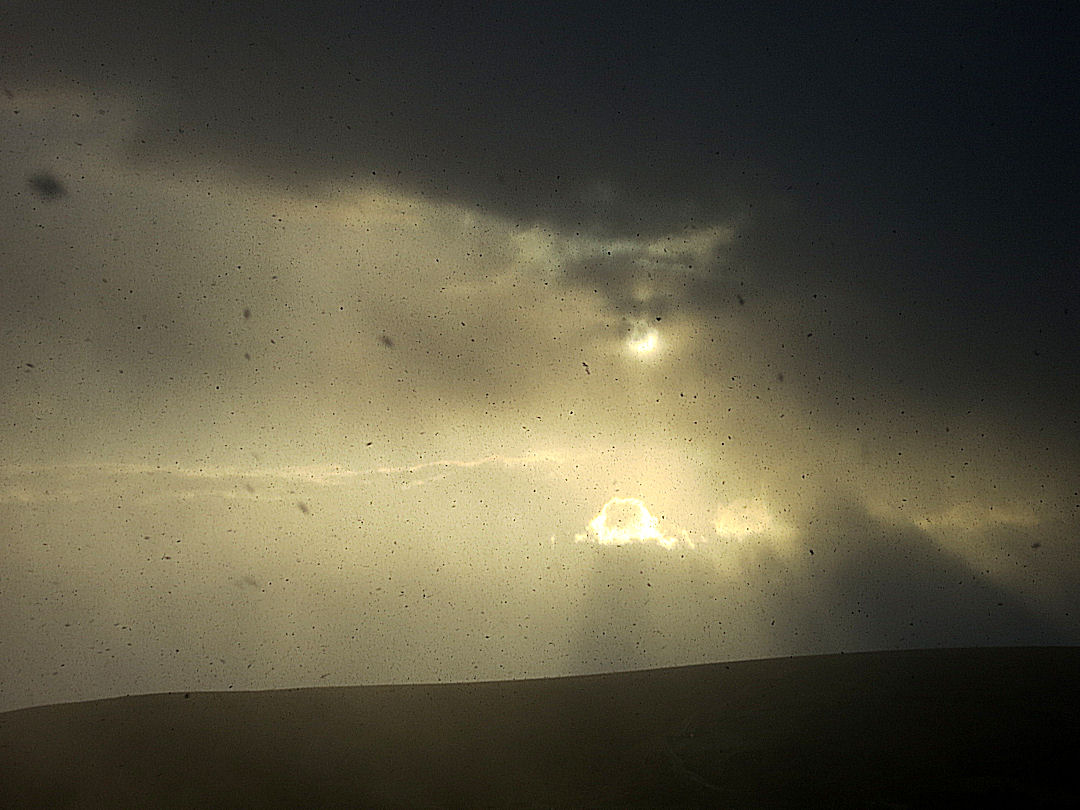
17.24, the clouds start to come across the sun

17.24, the clouds start to come across the sun

17.25, and it begins to snow

17.25, and it begins to snow

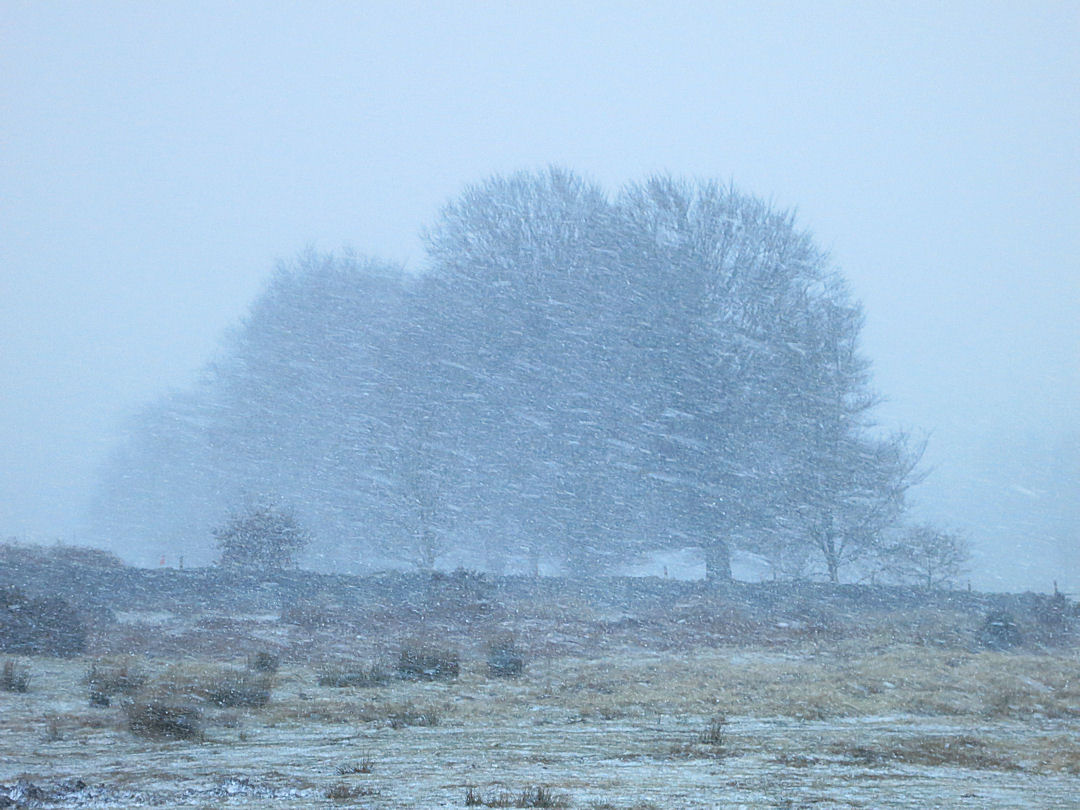
17.35 the snow is now looking good

17.35 the snow is now looking good

17.40, but it soon passes, drops into the valley and races off to the west

17.40, but it soon passes, drops into the valley and races off to the west

17.45, the sky starts to open up behind

17.45, the sky starts to open up behind

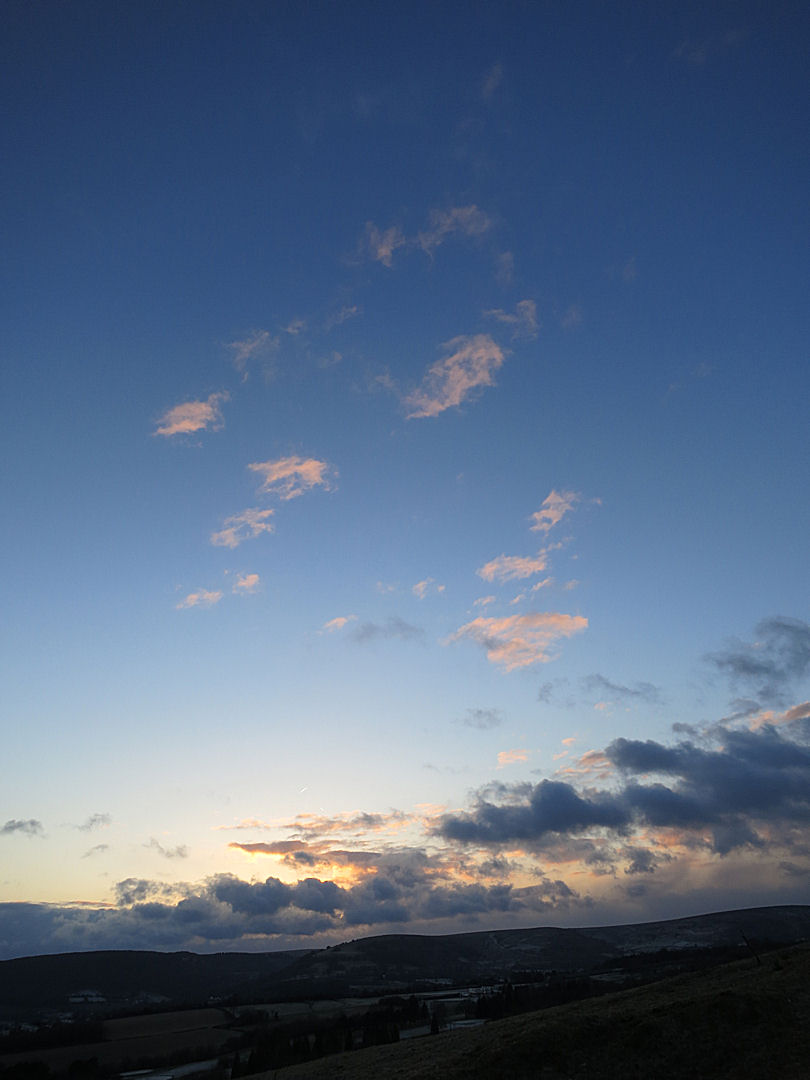
17.52, blue sky, the horizontal snow soon becomes a memory

17.52, blue sky, the horizontal snow soon becomes a memory

x

Posted in Mountains, Pontypool, Winter | Tagged , , , , , , , , | Leave a comment

Grey Britain, Canada, Greece: a philosophy of travel

It is widely believed that in the UK when the weather is dominated by high pressure the sky is blue and the sun shines, luxuriatingly hot in the summer, icy cold and exhilarating in winter.  It can be but is not invariably true.  In fact it seems to be that the frequency with which high pressure is accompanied by days, even weeks, of unremitting grey skies is increasing.

So it has been recently.  Temperatures stuck between -2oC and +2oC, damp air making it feel colder than it did for the whole month I was in the Rockies.  The occasional brief flash of the sun serving only to mock bones aching for its warmth.  I have rarely been warm since I arrived home.

I’m still wearing my down jacket zipped up tight, scarf around my neck.  From the end of the garden to the top of the ridge, flowers, birds, animals all seem to be similarly hunched up against the dismal chill. Daffodils, usually in bloom in time for Welsh button-holes on 1 March, St David’s Day, are still in tight bud.

At the end of the garden crows sit huddled in the top of an ash tree and croak their complaints to each other.

At the end of the garden crows sit huddled in the top of an ash tree and croak their complaints to each other.

13Pontypool013w1050

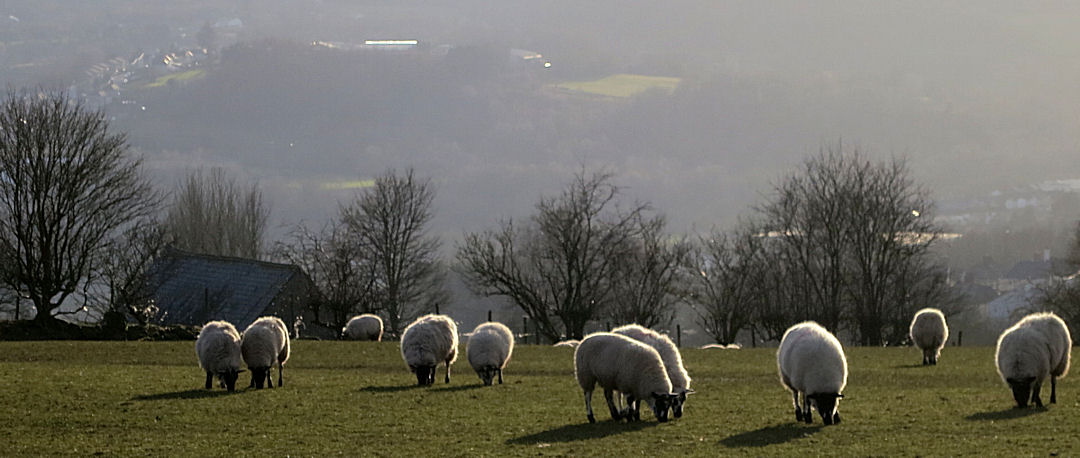
On the ridge-top sheep get on with nibbling grass still too cold to grow

13Pontypool014w1046

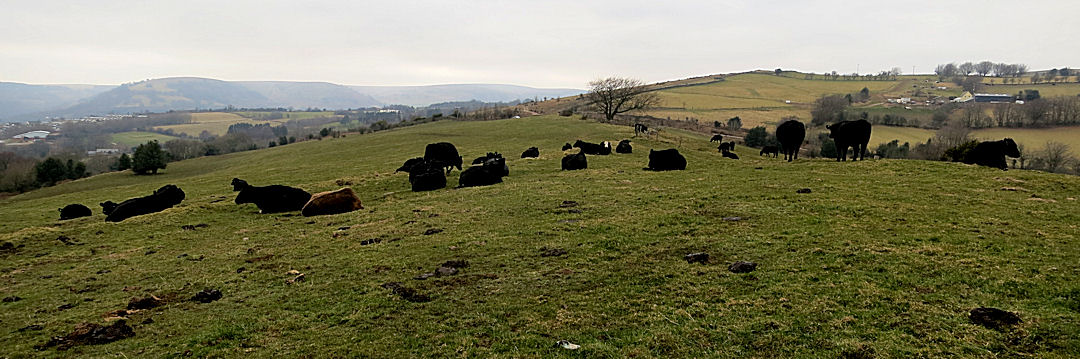
…. while the Welsh Blacks ruminate on what hay the farmer brings out for them

The occasional gap in the clouds gives an ethereal light to ridges of the South Wales Coalfield

The occasional gap in the clouds gives an ethereal light to ridges of the South Wales Coalfield

.... but it's nice to have the sun on your back even for a few minutes at the end of the day

…. but it’s nice to have the sun on your back even for a few minutes at the end of the day

Gloomy, depressing.   So I went on the internet and priced up another trip back to Banff for a couple of weeks skiing in March.  Temperatures are lower in the Rockies in winter but the air is dryer so it doesn’t feel as cold and with continuing snow-cover everything looks cleaner and fresher.  Found some very good prices on flights and hotels.  Very tempting, my finger nearly hit the ‘BUY NOW’ button on more than one occasion.  But it would hit the budget a bit too hard.

Having completed my chapter for the book on bus routes I have turned my attention to drawing up the framework for the e-book I plan to write based on last year’s trip around Greece by bus.  I found myself hiding in the memories, basking in the sunshine and blue skies which were the almost invariable backdrop for the many photos I took and posted on the blog.  And it moved me towards making some decisions on where I want to go and what I want to do for the summer.

I started by contacting people I know over there and found that I could rent an apartment on the islands for 5 months of the summer for about half what another two or three weeks skiing would cost.  But as I read through the days and weeks of last summer’s Greek Odyssey I got the urge to travel again rather than simply stay in one place for the whole time.  In particular I want to go back to The Mani and walk some of the routes, do some of the many things I didn’t get around to.  I also want to go from there to Crete and explore some of the gorges in the west of that island.

The musing led me to philosophise and a little self–psychoanalysis.  There are two extreme attitudes to planning a holiday: always go back to the same place, back to the familiar; alternatively, never go back to the same place, always explore and move on.  I know people who have been going back to the same hotel, drinking in the same tavernas and eating in the same restaurants on the same Greek islands for 25 years.  I know others who on principle rarely if ever go back to the same places.

I concluded that I enjoy doing both.  Last summer was the perfect balance with two months more or less constant travelling and exploring followed by nearly two months in familiar places, pleased to have put down roots, bask on a rock in the sun … and then have a swim.

So I’m moving towards some decision-making.  I need more researching of flights and feedback on accommodation opportunities and then …………..

In the meantime, like the other 63 million Grey Britons, I’ll put up with the gloom and the cold, concentrate my efforts on sorting out the garden and preparing a patch for my grandchildren to cultivate, grow fruit, vegetables and flowers.  Preparing for their Summer, my Autumn.

Posted in Canada, Greece, Grey Britain, Grumpy Old Men, Mountains, Pontypool, Wales | Tagged , , , , , , , , , , , | 1 Comment

Deadlines and procrastination from uhtceare to lychnobios

Sometime ago I commented in my Ramblings on a book I was reading called ‘The Etymologicon’ by Mark Forsyth.  For someone like me who is fascinated by the origins and obscure connexions of words it was a goldmine, and like goldmining it became an obsession (I’m told goldmining becomes an obsession, I have never actually upped-sticks and moved to Dolgellau, the Welsh Klondike, to try it for myself).  The book is packed with interesting information and very entertainingly written.  I couldn’t put it down and yet I didn’t want to finish it.  It was fascinating and made me regret not having a photographic memory.

I am now reading the follow-up book, ‘The Horologicon’ which goes through a typical day from waking up to going to bed via work, and work avoidance, looking at words once common in English but now faded into the past.  It is just as compulsive as its predecessor.  I am trying to spin it out by interspersing it with reading other books.  This is partly in the vain hope that some of the words will stick sufficiently close to the front of my brain to be retrievable when an occasion arises to drop them casually into conversation and bring the room to an awed silence.

Two words struck me as particularly appropriate at the moment. To perendinate is to put off doing today what can, without great inconvenience or adverse consequence, be put off at least until the day-after-tomorrow, an extreme form of procrastination. The other word eleutheromania, I was pleased to say I worked out from the Greek ‘eleftheria’ (ελευθερία) meaning freedom and mania (μανία) we all know. It is defined as a kind of crazed desire for freedom.

Why are these words apt?

I am writing a chapter for a book to be published in the Autumn comprising accounts of bus routes in Britain.  I was invited to write it before Christmas with a deadline of 1 March.  Even though I knew that Christmas was looming large with all its diversions and busy-ness, that scarcely was New Year past before I was going to Canada skiing for a month, and that there were only two weeks to the deadline when I got back jet-lagged ….. I didn’t get to grips with the writing.  I perendinated.

I did some research, reminded myself of half forgotten work I did 20 years ago, went out with the camera to take photos on a sunny day, and contacted a couple of key people.  I composed sentences in my head as I walked the mountain to get myself fit and build up the necessary stamina for the exertions in the Rockies … and forgot them before I got back to pen and paper or keyboard.  “No problem, plenty of time”, I told myself, “it will all come back, the muse will return”.

What I did write on the odd occasions that I put finger to keyboard was self-evidently too rambling to be able to pack enough good meat into the sausage.  I did have a bit of a panic one day in Whistler when I wasn’t skiing and sat at the table tapping away on the netbook for a couple of hours before I just couldn’t bear the thought of all that lovely snow outside and went out to play.

Now I have pared the chapter to the bone and, save for a bit of final tweaking, it’s ready to submit.

What changed?  The pending deadline!  Like so many people I can only produce the goods if there is a strict time limit.  If I had to write a paper or a report for committee the following morning, no problem.  Brain straight into overdrive, thinking focused, irrelevancies ignored, distractions discarded.  Two pages of A4 concisely stated and argued on the desk by end of play.  Same task for three months ahead and I don’t even take off the handbrake for a month.

I spent the summer in Greece in 2010 researching routes for a walking guide to the Greek Islands.  I had already put about 10 on the internet and planned to add about another 20 or 25.  I made notes, took GPS readings, took photos …. and haven’t yet published another route.  No deadline.  Why procrastinate when you can perendinate?

I decided instead to publish extracts from the blog I posted during my trip round Greece by public transport last summer as an e-book.  I wrote the opening paragraph when I got home in October, have revised it umpteen times since, and not got any further.  I went on a course at the Welsh Writing Centre near Criccieth and am now thinking of a different opening but not yet written a single word of it.  The material is there, I simply need to decide which bits to include and then pare them down from blog-woffle.

There is a sort of deadline in that it would make sense to write up what I did last year before I embark on this year’s Greek Odyssey, the planning of which is what I am turning my mind to.  A number of options present themselves.  Go back to The Mani for 3 or 4 weeks and then take the ferry to Crete as I had hoped to do last year but ran out of time.  Do a trip up the eastern side of Greece and then run down the islands in the North Aegean by ferry.  Go back to places I know and where I have friends.  Rent a house or appartment for the whole summer which works out considerably cheaper and would hopefully allow me to focus on writing.

This is where the eleftheromania comes in.  It’s good to be able to get up in the morning with freedom of choice, to be able to decide “I fancy doing that today”.  But freedom needs to be disciplined.  Paradoxically, it needs to be constrained if it is to have any value.  In a political context unfettered freedom is anarchy.  At a personal level, in order for time to be productive and enjoyable, for anything worthwhile to be achieved, there need to be goals, targets …. deadlines.

Incidentally, “uhtceare” 1is a word of Anglo Saxon origin referring to the period when one lies awake worrying before dawn while “lychnobios”2 strictly translates from the Greek as ‘lamp-life’, referring to time after midnight.  Those who become active late at night are “lychnobites”, often having locked themselves in a “lucubator” or room for late-night study to avoid being disturbed. So “from uhtceare to lychnobios” is just another way of saying “from morning ‘til night”, but I don’t think it will catch on.

http://blog.inkyfool.com/2009/10/anglo-saxons-had-word-for-it.html

http://j.nelsonleith.com/2010/04/02/archaic-definition-of-the-week-lychnobite/
Posted in Greece, Reflections | Tagged , , , , , , , , , , | 3 Comments