Canadian Rockies: history, bio-engineering and a strange world of ice and steam

The principle legacies of what is now known as ‘The Cave and Basin’, the location of the original Banff thermal springs, are not insignificant.  They include the town of Banff itself, Banff National Park, and the other 42 National Parks in Canada.  The ‘discovery’ of the thermal springs by the McCardell brothers and Frank McCabe in 1883 post-dated knowledge of it by the First Nation peoples of Canada many millennia earlier.  However, the McCardells and McCabe fenced it off, seeing a money-making opportunity, but their ambition was thwarted by the Canadian Government which also saw its tourist potential as a source of revenue for the Canadian Pacific Railroad, designating it as the ‘Hot Springs Reserve’ in 1885.  This and the rest is well documented history, not least by Parks Canada.
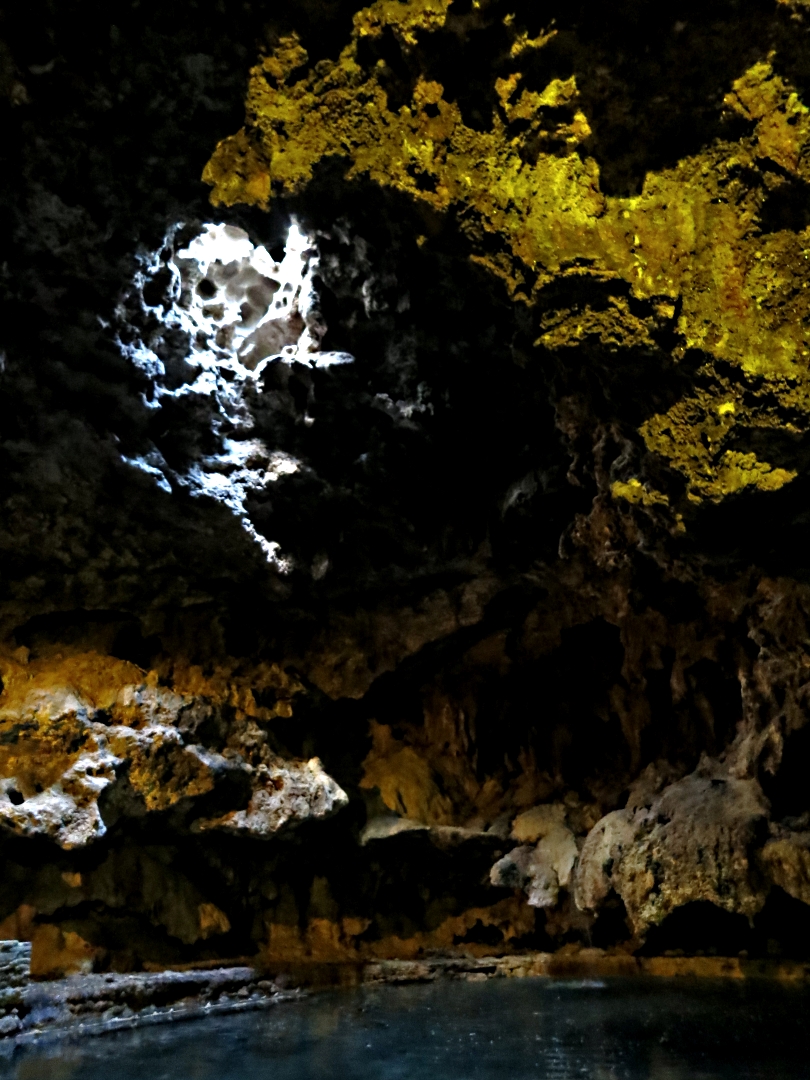
Inside the Cave

Inside the Cave

The site is also of not inconsiderable ecological value.  The springs emerge from the mountainside and drain into the marshland bordering the Bow River and set up a unique habitat.  The Banff Springs Snail, found only here, is classed as ‘endangered’.  Thankfully, there are control measures in place to protect it, measures which preclude poking around in the water to find it.

Not so the Banff longnose dace whose distribution was restricted to the small pools in the marsh fed by these thermal springs, and is now designated ‘extinct’, unable to compete with exotic and tropical species such as the Mosquito fish, introduced in the 1920’s to try to control swarms of the eponymous insects by eating their larvae.  The Mosquito fish did indeed eat their namesakes’ larvae but only in small quantities, preferring other food including the unhatched eggs of the unfortunate Banff longnose dace. Another example of bio-engineering gone wrong.  There were plenty of minnow-sized fish in the open water of the pools where the springs reached the marshland, though I couldn’t begin to identify them as they flitted around like shadows in water which I suspect never freezes over.  It is probable that they were Mosquito fish, the most common of the 3 exotic species listed on the ‘interpretation’ board.

However, though I wanted to visit the Cave and Basin for its historical and ecological importance I had a much more prosaic reason.  What particularly interested me was the amazing microclimate which is created.  In very cold weather, such as experienced recently, clouds of water vapour can be seen rising from the springs as the hot water trickles down the hillside and this freezes in thick hoar frost over the vegetation.   With no snow in recent weeks to cloak the trees, the effect is very evident.  Paradoxically, it creates a strange frozen world above the steaming water.
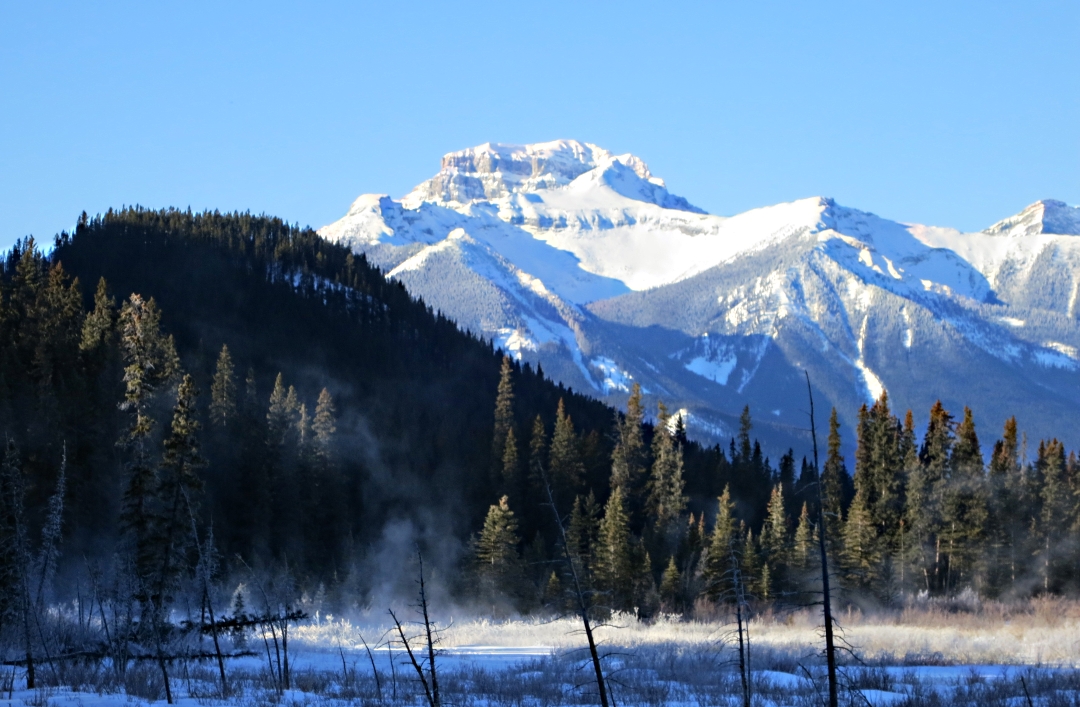
Approaching the marsh along the path from the Recreation Ground, steam billowing up

Approaching the marsh along the trail from the Recreation Ground, steam billowing up

View of the marsh from one of the boardwalks, hazy through the steam, low vegetation turned white

View of the marsh from one of the boardwalks, hazy through the steam, low vegetation turned white

In deep shade, the trail enters a frozen world.
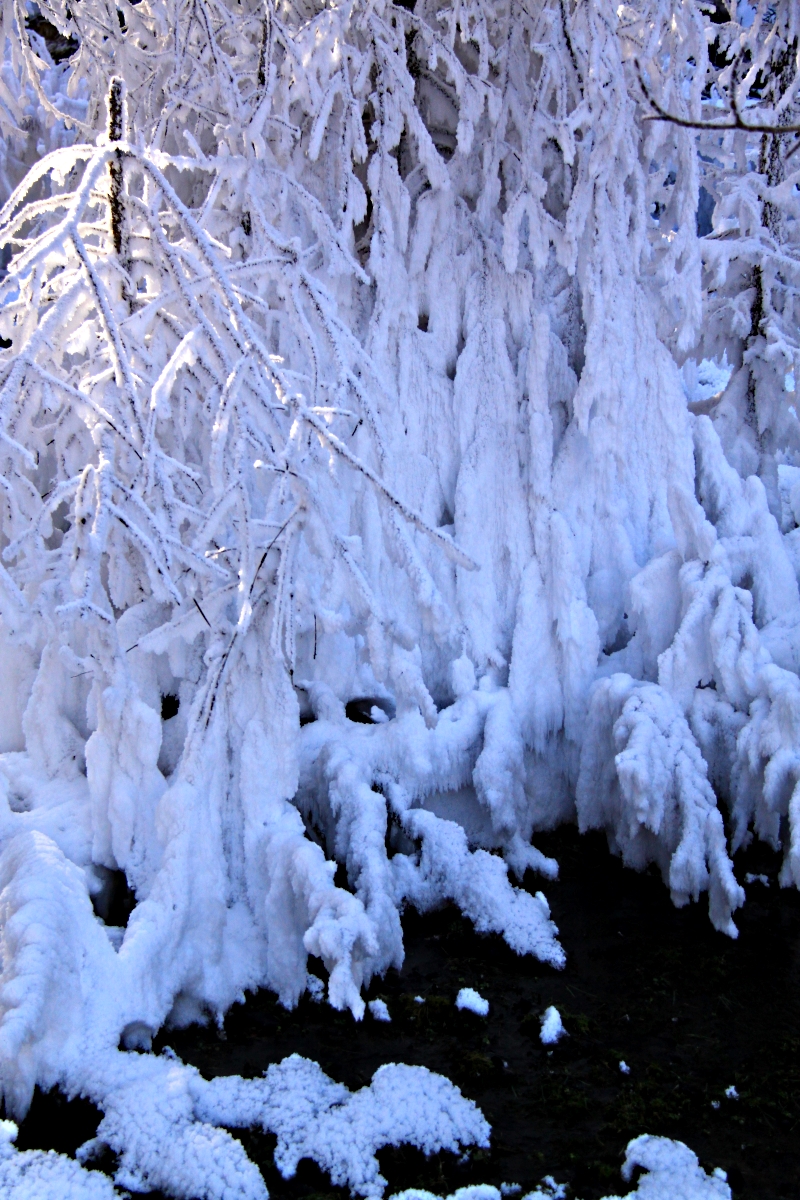
In deep shade, the trail enters a frozen world.

Sinewy tree bends towards the water under the weight of hoar frost

Sinewy tree bends towards the water under the weight of hoar frost

dead branches standing erect, thick with frost even in the sun
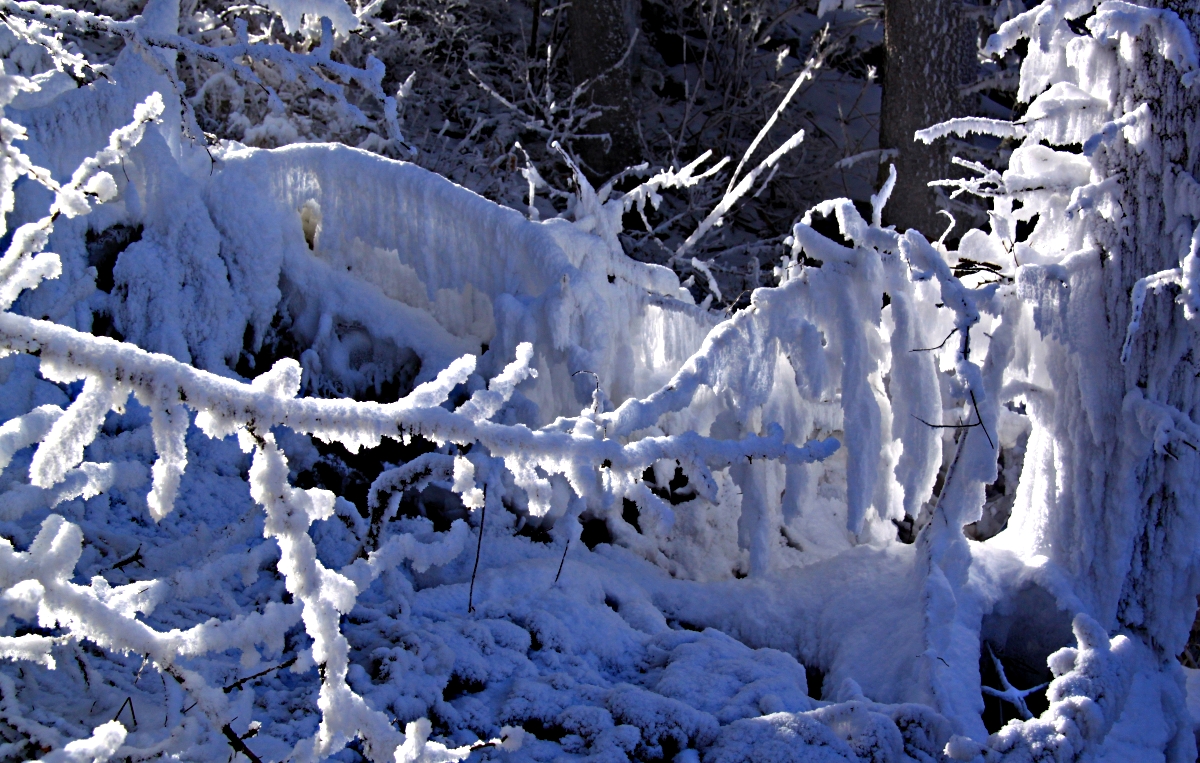
Branches standing erect, thick with frost even in the sun

Branches draped with frost

Branches draped with frost

Steam from the trickling water illuminated by the sun

Steam from the trickling water illuminated by the sun

Dead tree thick with frost, the water vapour all frozen out of the air before it reaches the height of the trees behind,
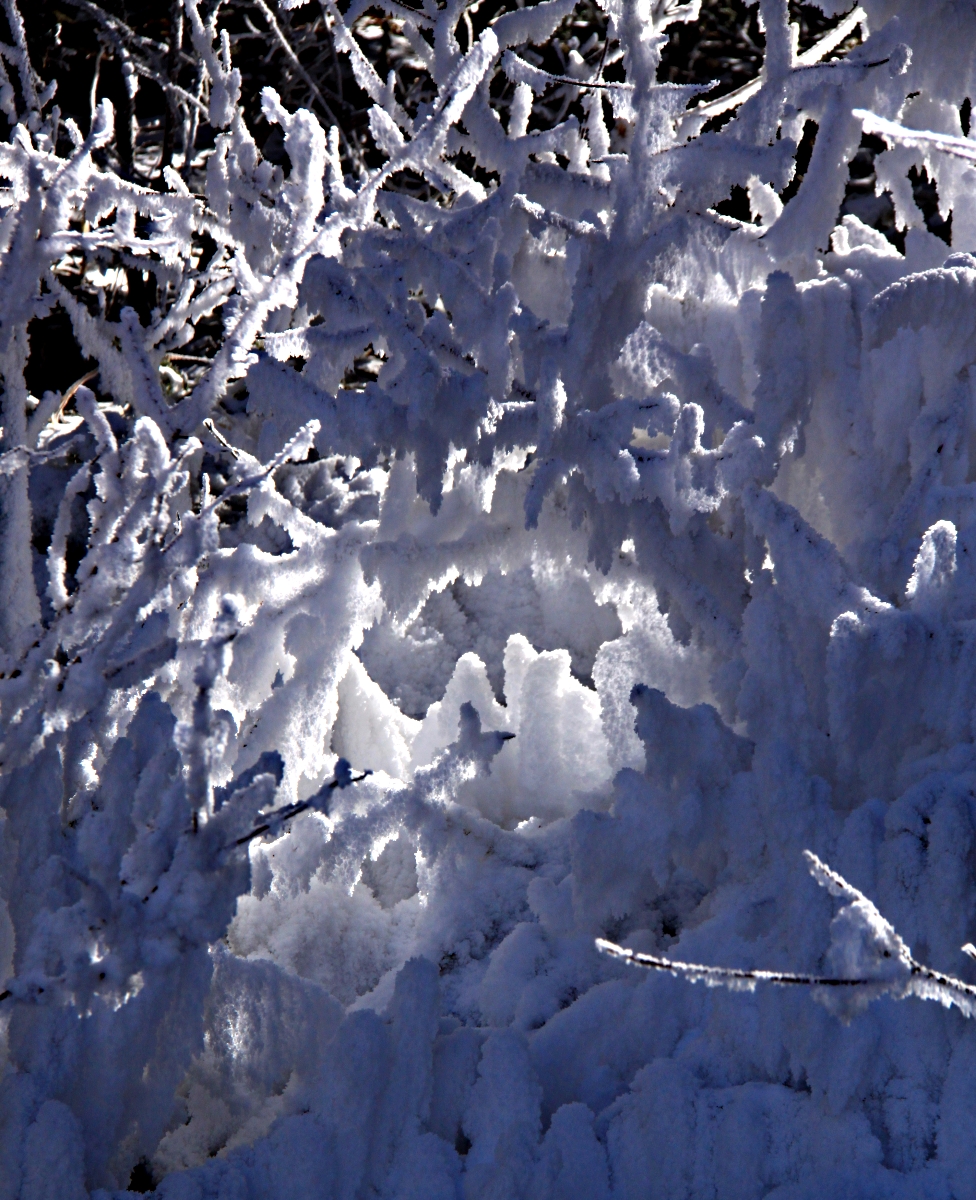
Dead tree thick with frost, the water vapour all frozen out of the air before it reaches the height of the trees behind,

A hoar frost grotto

A hoar frost grotto

Like gel on a spiky hairstyle

Like gel on a spiky hairstyle

Roots of a dead tree draped with curtains of frost

Roots of a dead tree draped with curtains of frost

Lit by the sun

Rose hips still cling on, lit by the sun

Dead tree still standing

Dead tree still standing proud

Backlit

Backlit

x

Posted in Canada, Mountains, Nature, Wildlife, Winter | Tagged , , , , , , , , | 1 Comment

Canadian Rockies: icy river, twitching senses

Apropos nothing in particular, but just a piece of trivia, geographical nomenclature, which weevilled its way into my brain,  I don’t know why it is that in the UK the convention for naming rivers is to call them “River Something” – River Wye, River Severn, River Thames ….. etc.  In this bit of the Canadian Rockies, and indeed in the rest of Canada, the convention is “Something River” – Bow River, Spray River.

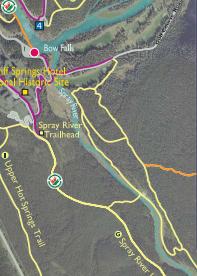
By coincidence, the last of which I decided to follow upstream on another of my days-off skiing.  Apparently the water which once flowed out of Sundance Canyon (more of which another time) was diverted by glacial action and now flows in the 64 kilometres-long Spray River, joining the Bow River at the right angle bend just below Bow Falls.

Part of Trails Map showing the Spray and Bow Rivers

Part of Trails Map showing the Spray and Bow Rivers

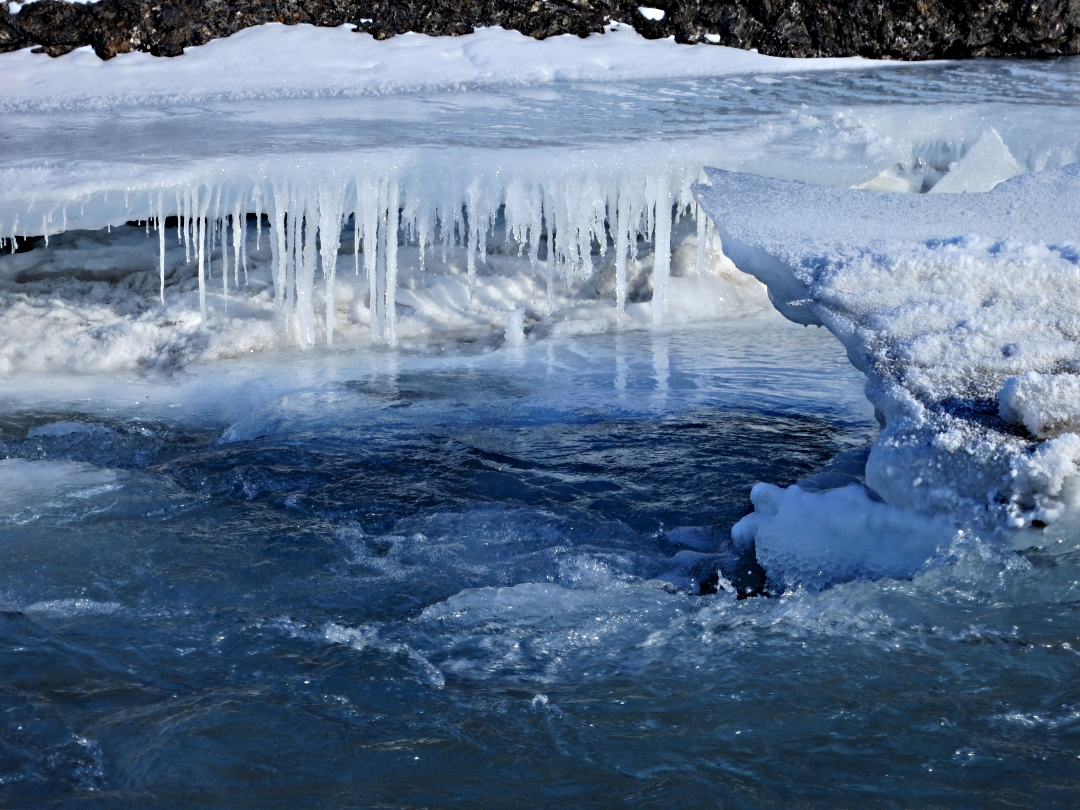
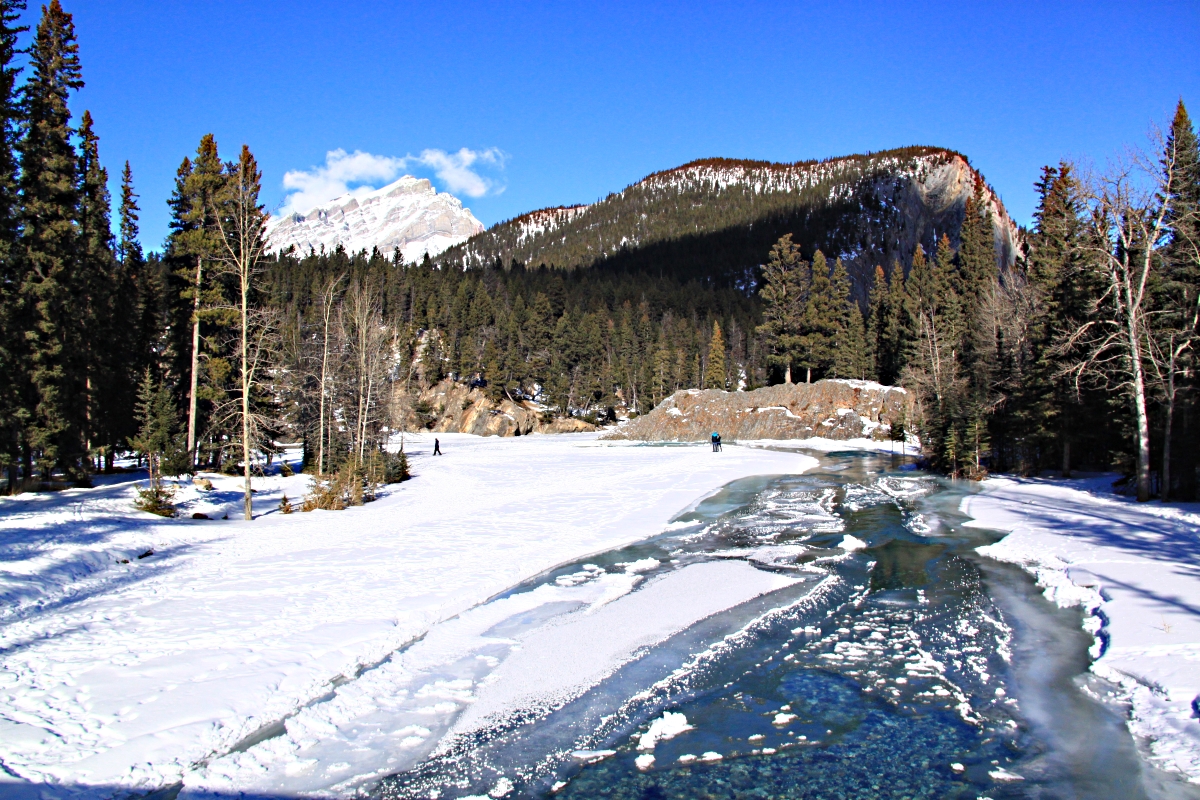
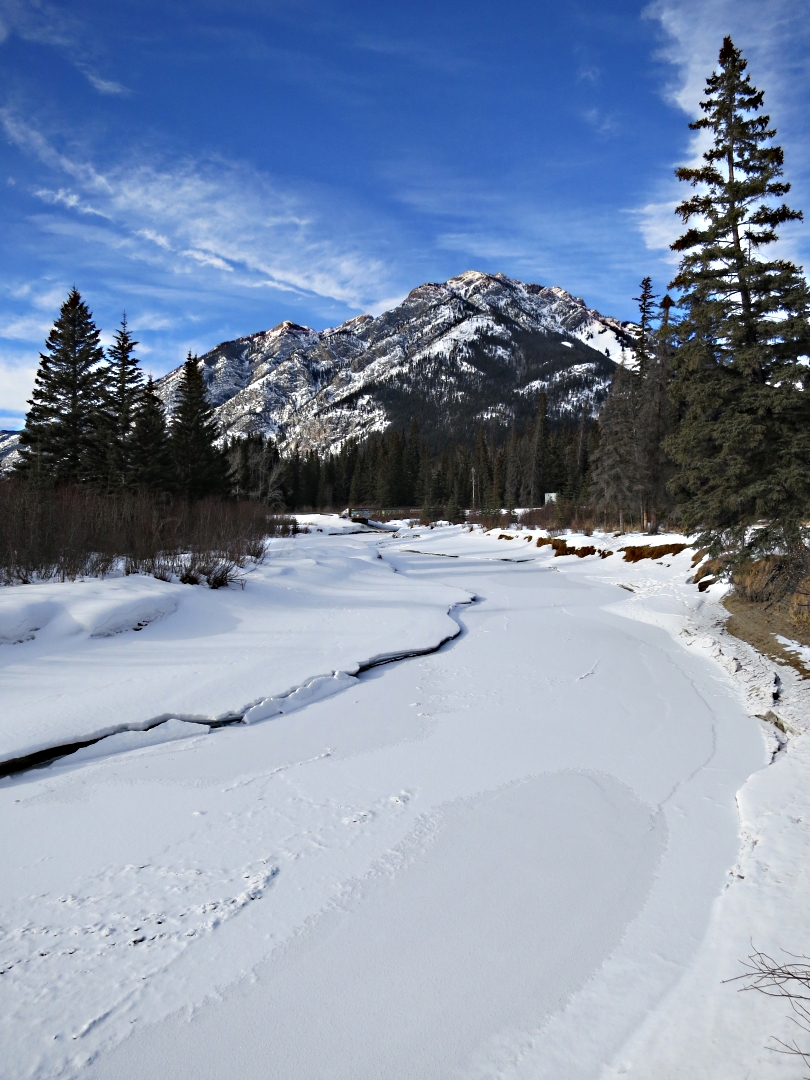
Much of the area at the confluence is snow-covered ice but after the unusually high temperatures when I first arrived the ice over the deepest and fastest flowing part of the river has broke up and is only now beginning to refreeze,  about a foot or more below the original 9-12 inches of early-winter ice.   Continuing upstream the meandering channel has substantial slabs of ice wedged against the sides, refreezing jaggedly in place.

Thick ice forms over the rocks on the rapids

Thick ice forms over the rocks on the rapids

Water level drops as the ice sheet breaks up

Water level drops as the ice sheet breaks up

Looking down the Spray towards its confluence with the Bow, Tunnel Mountain behind

Looking down the Spray towards its confluence with the Bow, Tunnel Mountain behind

Jaggedbroken-up ice refreezes into the edge of the river

Jaggedbroken-up ice refreezes into the edge of the river

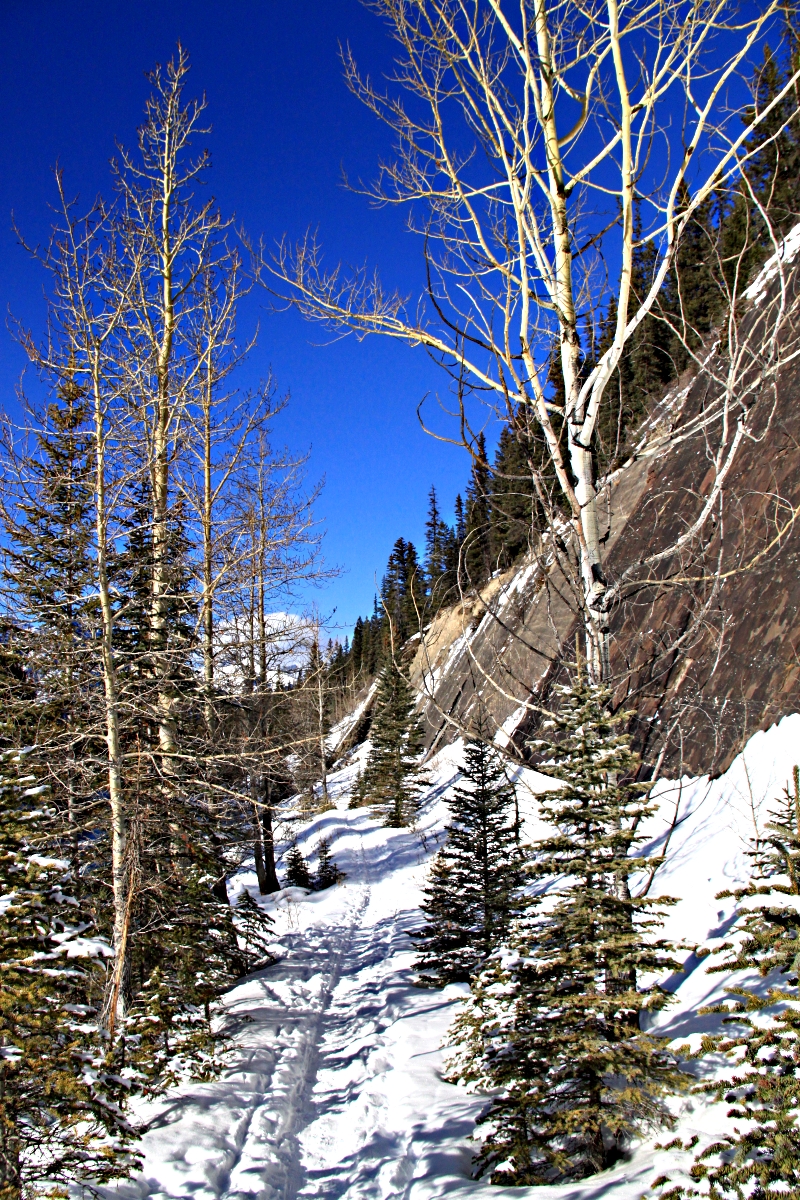
First I follow the ‘Old Quarry loop’ but when that crosses a wooden footbridge to return to Bow Falls on the other side of the river, deep in shade from Sulphur Mountain, I continue on a much narrower path along the bank with flat rocky slabs towering above and then strike upwards towards the ‘Spray River Loop’.

Looking downstream on the narrow river-side path

Looking downstream on the narrow river-side path

Path continues

Path continues

Starting to climb obliquely up to the top of the cliffs

Starting to climb obliquely up to the top of the cliffs

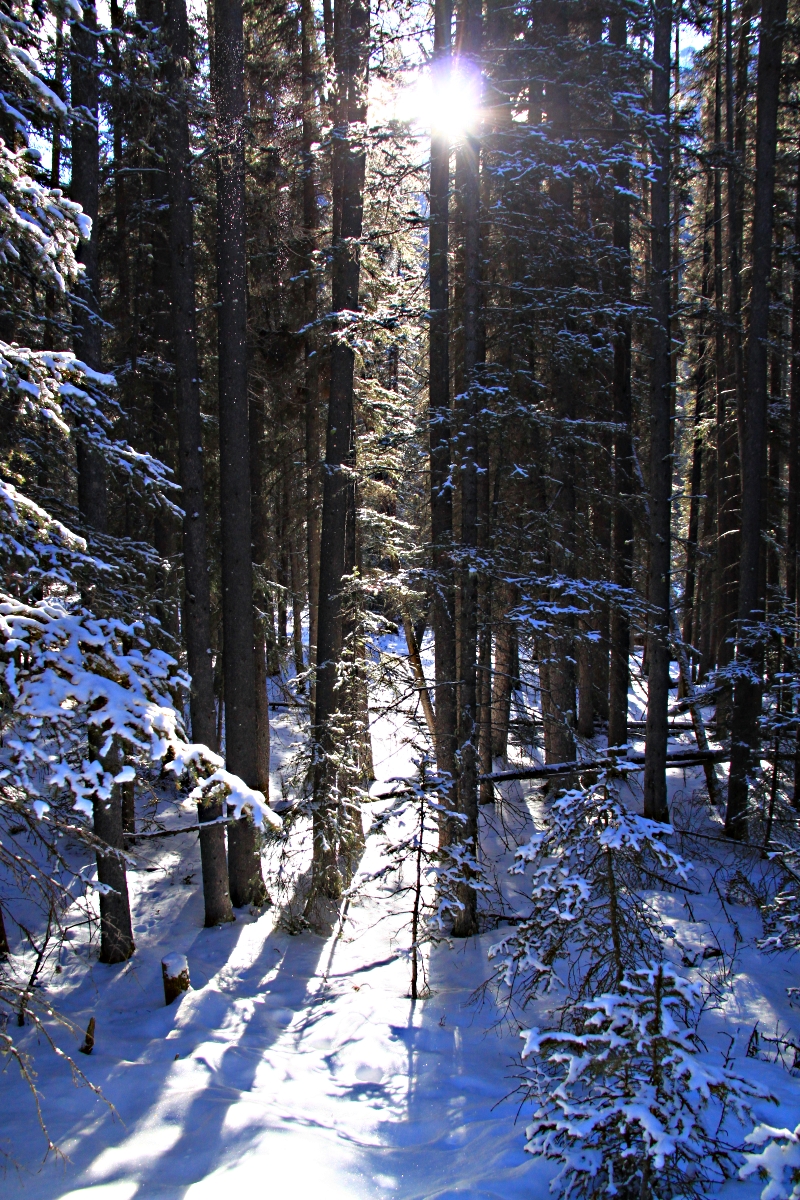
I head back to the falls at a higher level at the top of the cliffs through the forest, lodgepole pines straining straight upwards, each tree desperate to get its canopy into the sunlight.

View from the top of the cliffs

View from the top of the cliffs

Tall, straight trees filtering the sun

Tall, straight trees filtering the sun

It’s completely silent up there, sound muffled by snow, only a rhythmic squeaking between boot and snow.  Alert I strain to listen for any sound.   Occasionally, very occasionally, carnivorous predators, coyotes and cougar at this time of year, cause a problem for lone wanderers.  I even flare my nostrils to catch any unaccustomed smells.  I doubt I would hear or smell anything in the highly improbable event that I were being stalked but I can’t help but make the effort.  I take comfort from the fact that there are no deer prints so it is unlikely that predators would be roaming around just on the off-chance of coming across the odd Welsh guy.

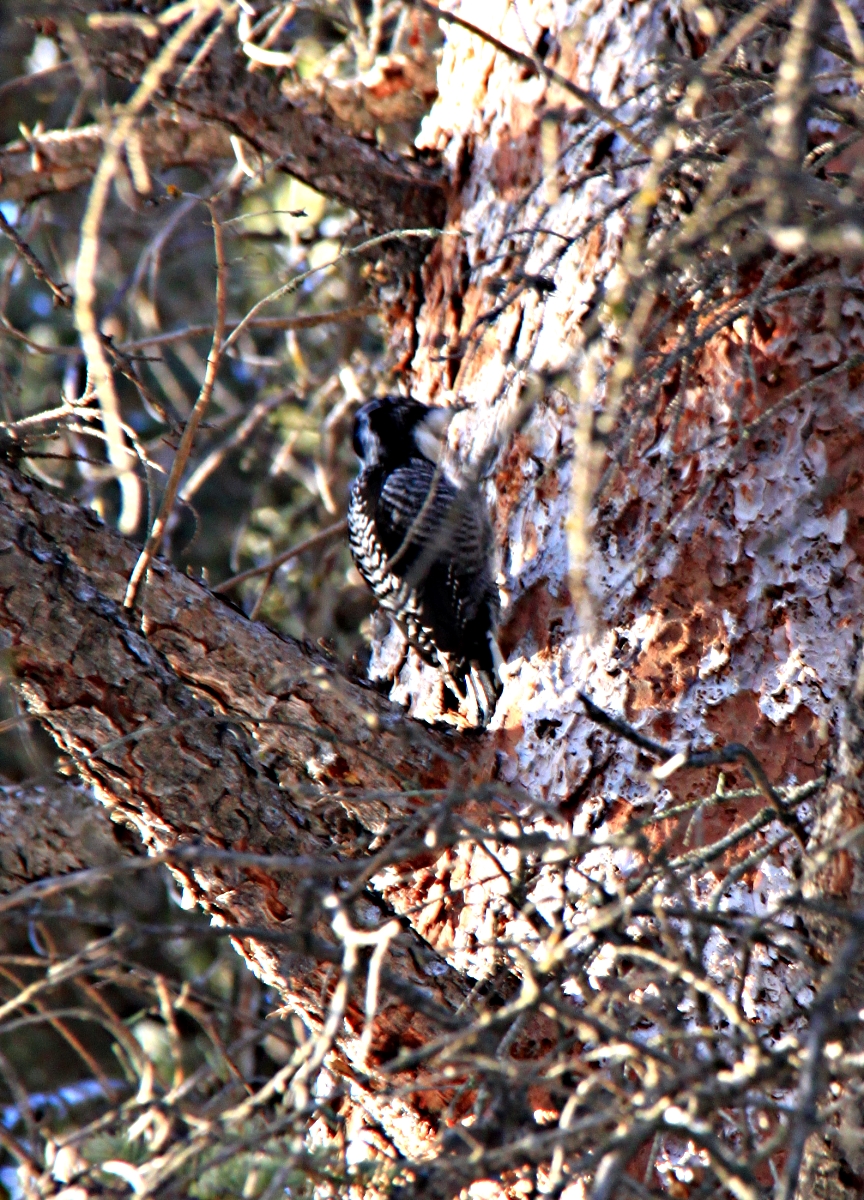
Then I hear a faint rustling as something falls through the trees and patters to the ground,  Then another.  I suspect a squirrel, locate the tree which the sound is coming from, see small pieces of bark fluttering down to join a collection around the base.  I squint upwards  against the sun and high above spot a woodpecker picking off bits of bark to find insects underneath.  My guess is that it’s a Three Toed Woodpecker, but I’ve been wrong before.

Woodpecker some 30 feet up the tree pecking off the bark

Woodpecker some 30 feet up the tree pecking off the bark

Turning slightly the red patch on its head is just visible as it climbs higher

Turning slightly the red patch on its head is just visible as it climbs higher

Only a 2½ hour trek, 5 heavy miles in the snow, but very enjoyable in the afternoon sun.

Posted in Canada, Hiking, Landscape, Mountains, Nature, Wildlife, Winter | Tagged , , , , , , , | 2 Comments

Canadian Rockies: sundog days

I spend long periods in the summer in Greece, walking in the mountains.  Preparations for the day typically consists of donning a pair of walking sandals (hence my avatar), lightweight shorts and a relatively fresh T-shirt.  Dehydration is the main danger so I pack 1½ litres of water and a couple of bananas and a nutbar in my camera rucksack.  That’s it.  I go.

Walking in July and August is the most arduous, what the ancient Greeks dubbed ‘Dog Days’, a term taken up by the Romans.  They are the most oppressively hot, enervating days of the year, usually equated with evil and bad karma.

The weather in and around Banff at the moment could not be much different from that.  Temperatures in the town in the morning are around minus 30 Celsius, some 4 degrees colder on the ski hill and brought down to below minus 35-40 by wind chill. (minus 35 Banff 08.00 Wednesday.  Gondola to Sunshine Village not operating because it’s too cold)

Preparations could not be much different either.  Upper body: two thermal long sleeved base layers; thermal mid layer; fleece lined ski jacket.  Lower body: thermal long-johns; insulated ski trousers.  Feet: silk undersocks; ski socks; thickly insulated ski boots (closely modelled on Medieval instruments of torture). Hands: mid-layer top looped over thumbs to cover wrists; fleece under-gloves; NEW ceramic-insulated mitts; disposable 8-hour handwarmers.  Head and neck: neck tube; mid-layer top zipped up to the chin; balaclava; neoprene face-mask; NEW padded helmet with vents closed; goggles.  That’s enough to keep me from becoming unbearably cold for up to an hour.  Then, along with most others, I go into the ski lodge to warm up.  Hands suffer the most.  Feet have started to suffer in the last few days.  How on earth did Shackleton cope in the Antarctic ??????????????

It’s worth it just to be up there in the high mountains.  The air shimmers as every molecule of moisture freezes into billions of tiny ice particles, each a prism, on cloudless days refracting the sun into a sundog.

Sundog in clear sky at Lake Louise

Sundog in clear sky at Lake Louise

Sundog days are well worth the preparation and discomfort.

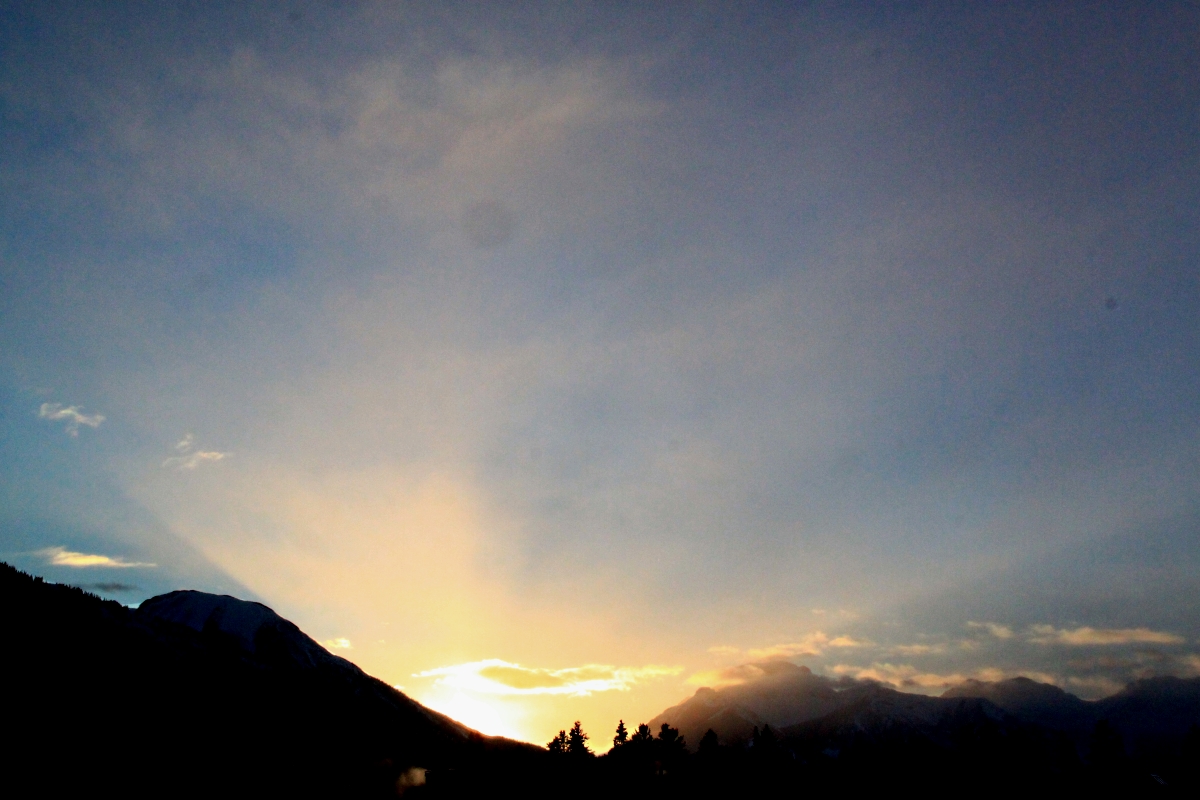
And at the end of the day, satisfaction and seeing the setting sun light up the sky beyond the mountains.

View from the window of my hotel room when I arrived back

View from the window of my hotel room when I arrived back

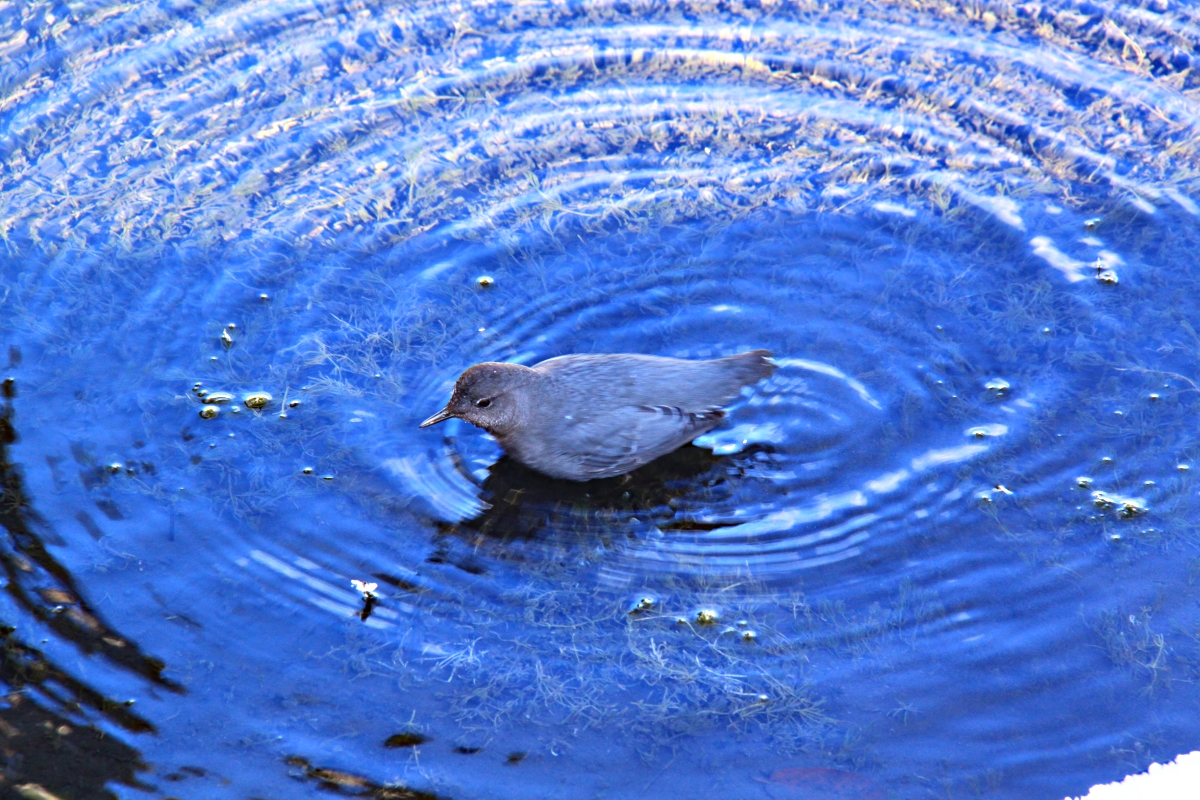
UPDATE My friend Mike identified the bird I saw on Vermilion Lakes as “an American Dipper Cinclus mexicanus,  They are similar to the White-throated Dipper or European Dipper, Cinclus cinclus here in the UK, however the European one has a white breast. They walk on the bottom of the river/pond bed looking for food under stones etc. The ones over here are always seen in faster flowing water – never seen one in still water.”

.... before it comes into the sun

Dipper  comes into the sun

x

Posted in Canada, Landscape, Mountains, Nature, Wildlife, Winter | Tagged , , , , , , , , | Leave a comment

Canadian Rockies: the icy expanse of Vermilion Lakes

Come Saturday and after 5 days of skiing, thigh muscles starting to rebel,  I was ready for a break.  So after an annual ritual of a large celebratory Melissa’s Breakfast with my daughter and her husband and waving them goodbye as they headed for Whistler after a week in Banff, I went for a walk.

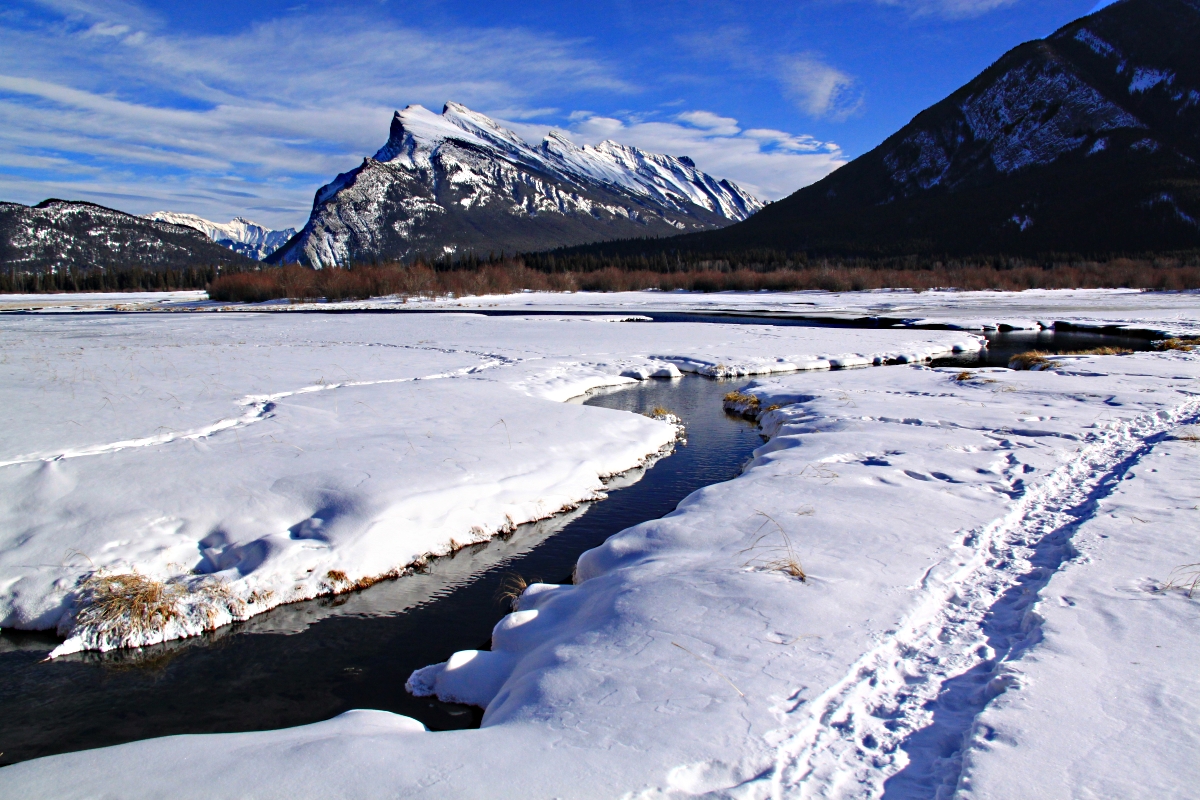
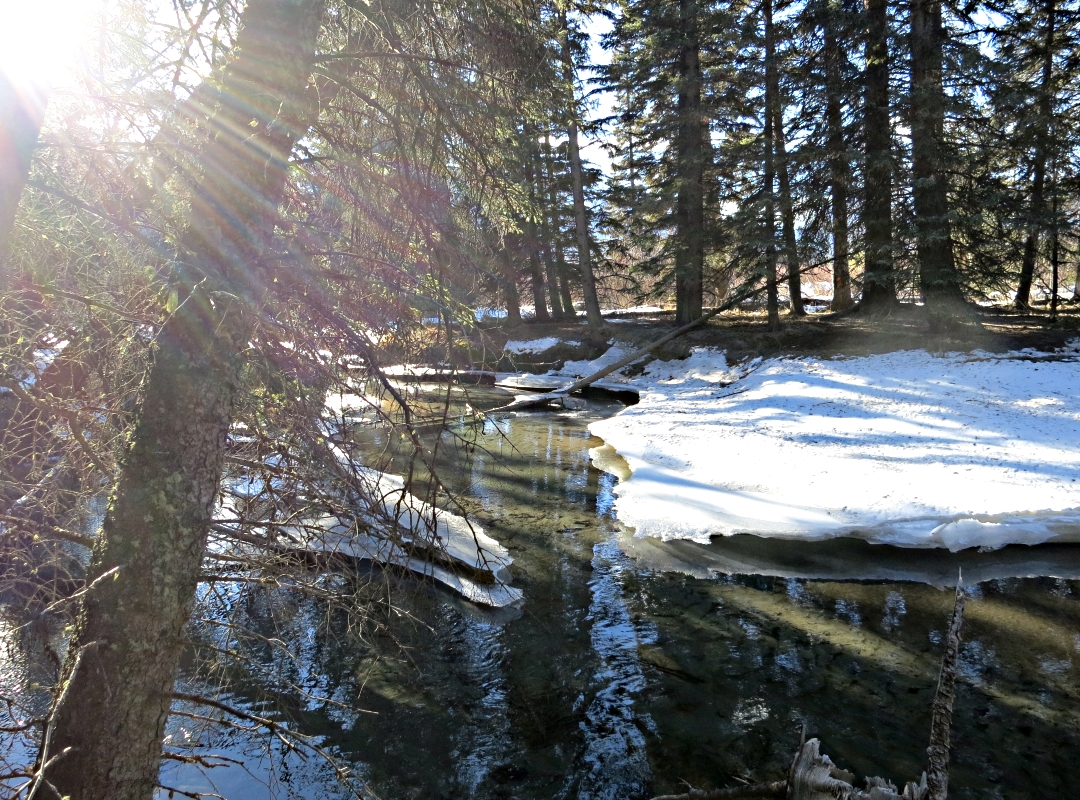
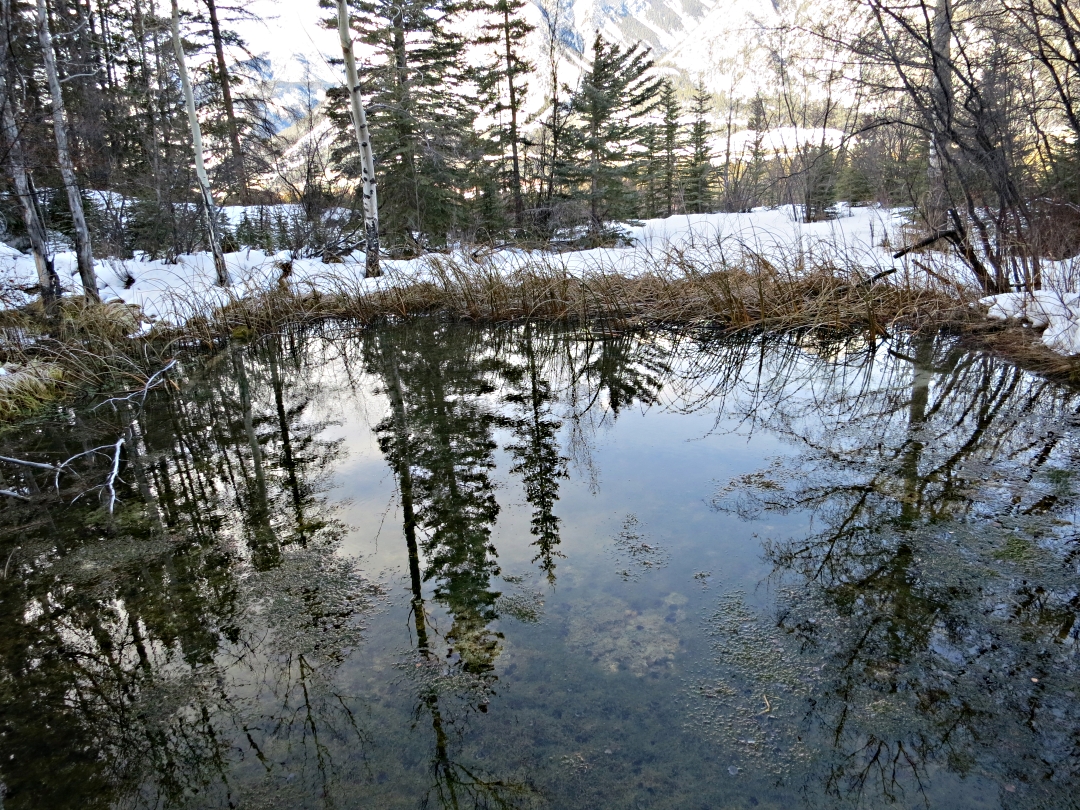
The morning’s blue sky had clouded over by the time I headed along the creek towards Vermillion Lakes.  The previous Sunday the creek had open water along its length, reflecting blue and white among the trees (see).  Now it had frozen over again, though a good few inches lower than the remnant early-winter ice along the edges, and a few centimetres of recent snow had accumulated.

Looking up the now frozen creek towards Mount Norquay

Looking up the now frozen creek towards Mount Norquay

The path joins the Vermillion Lakes Scenic Drive, a metalled road, in winter covered in hard packed snow and ice, paralleling the Trans Canada Highway some 50 feet above.  The Lakes are broad, frozen expanses of ice and snow but at various points spring emerge from the mountain above creating areas of open water, some as small ‘ponds’, others meandering through the ice-sheet.  My arrival at the lakes coincided with dispersal of the cloud cover with consequent arresting diversions onto the ice to take-in and photograph the dramatic contrasts and reflections.

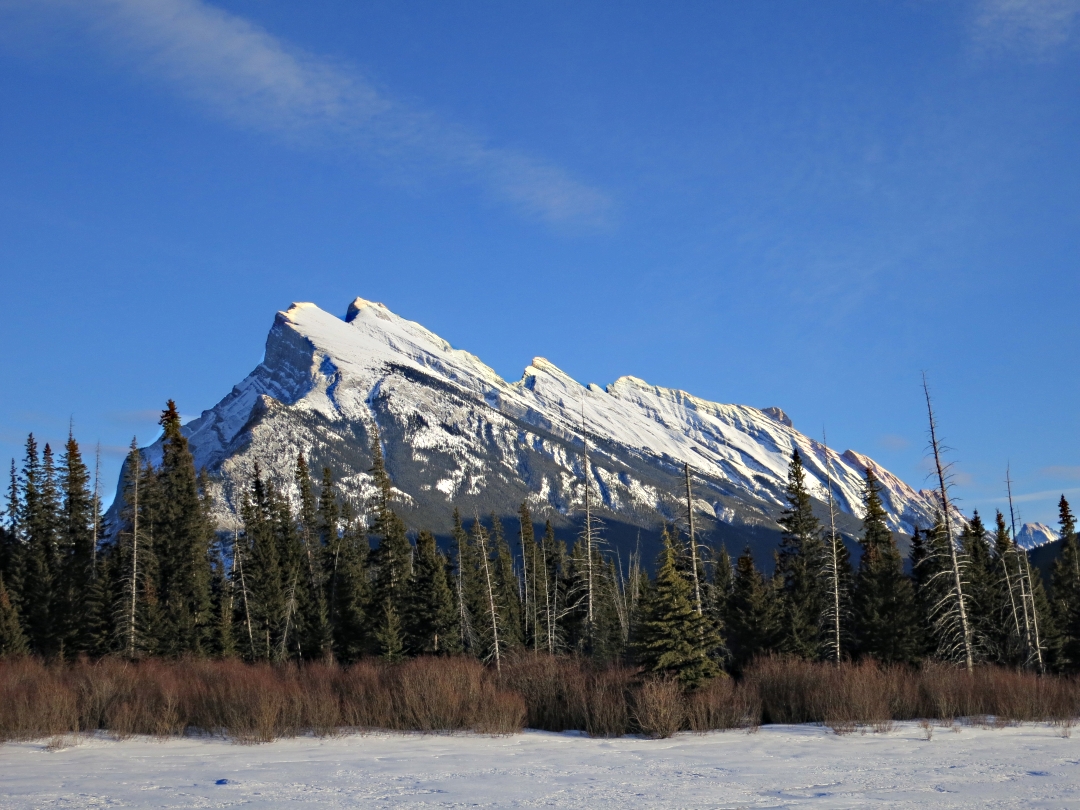
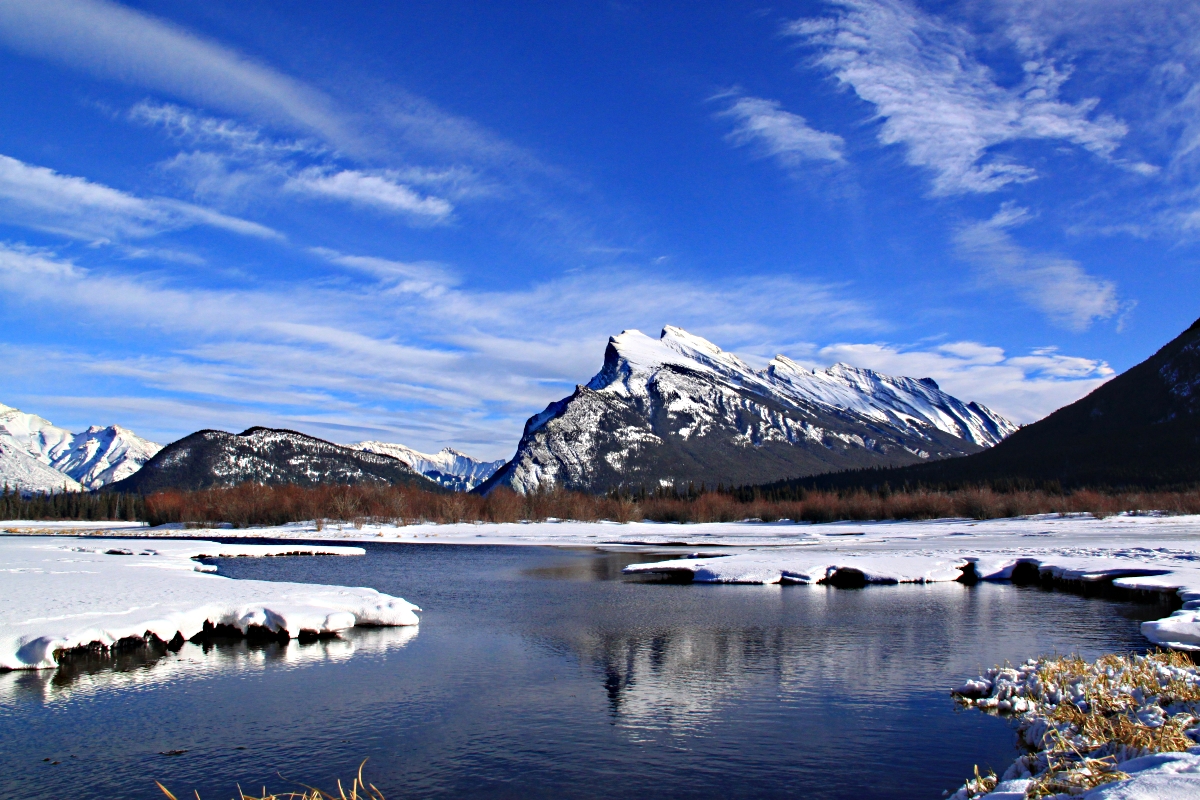
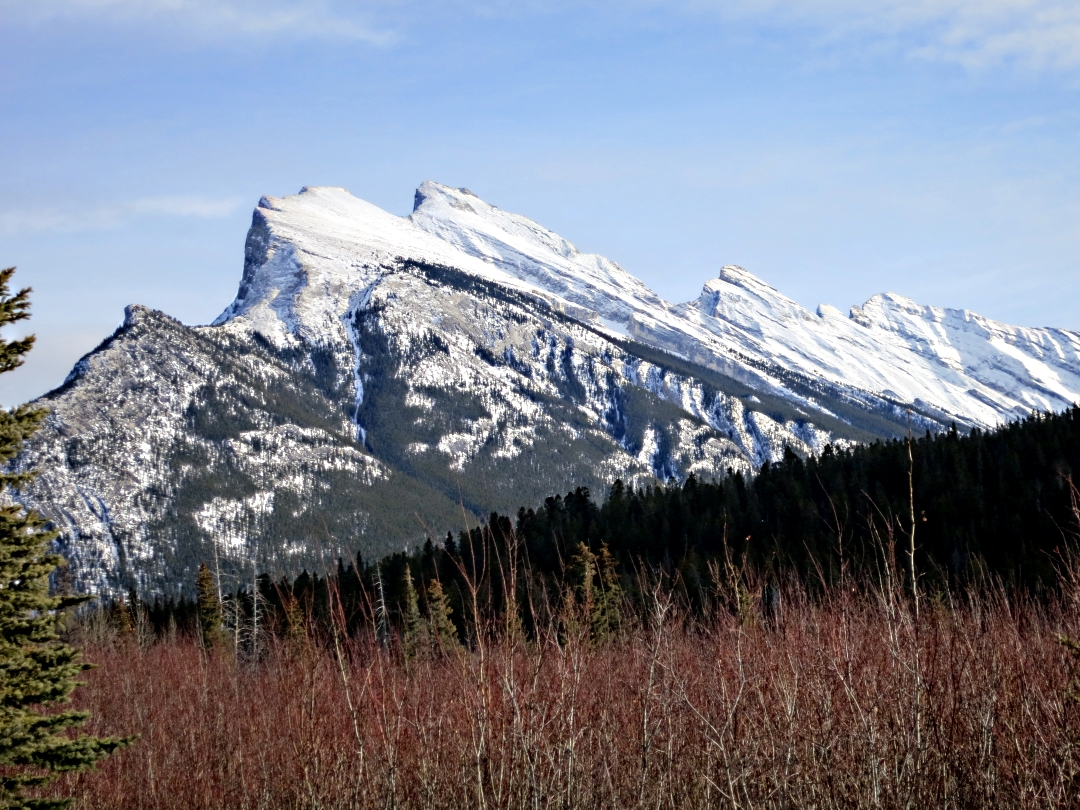
Looking across First Vermilion Lake to Mount Rundle

Looking across  the First Vermilion Lake to Mount Rundle

Many of the trees along the lake edge have died

Many of the trees along the lake edge have died

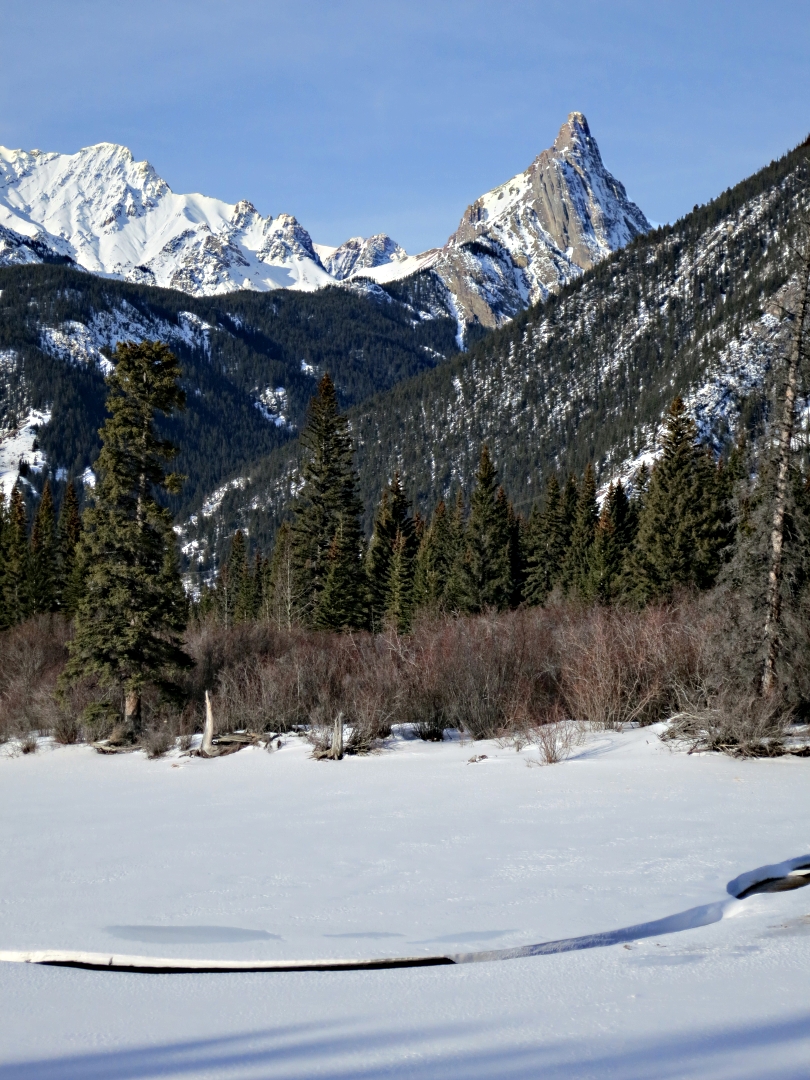
Looking along the lake to the Fairholme Range

Looking along the lake to the Fairholme Range

A small spring bubbles into the lake

A small spring bubbles into the lake

One of the fallen trees

One of the fallen trees

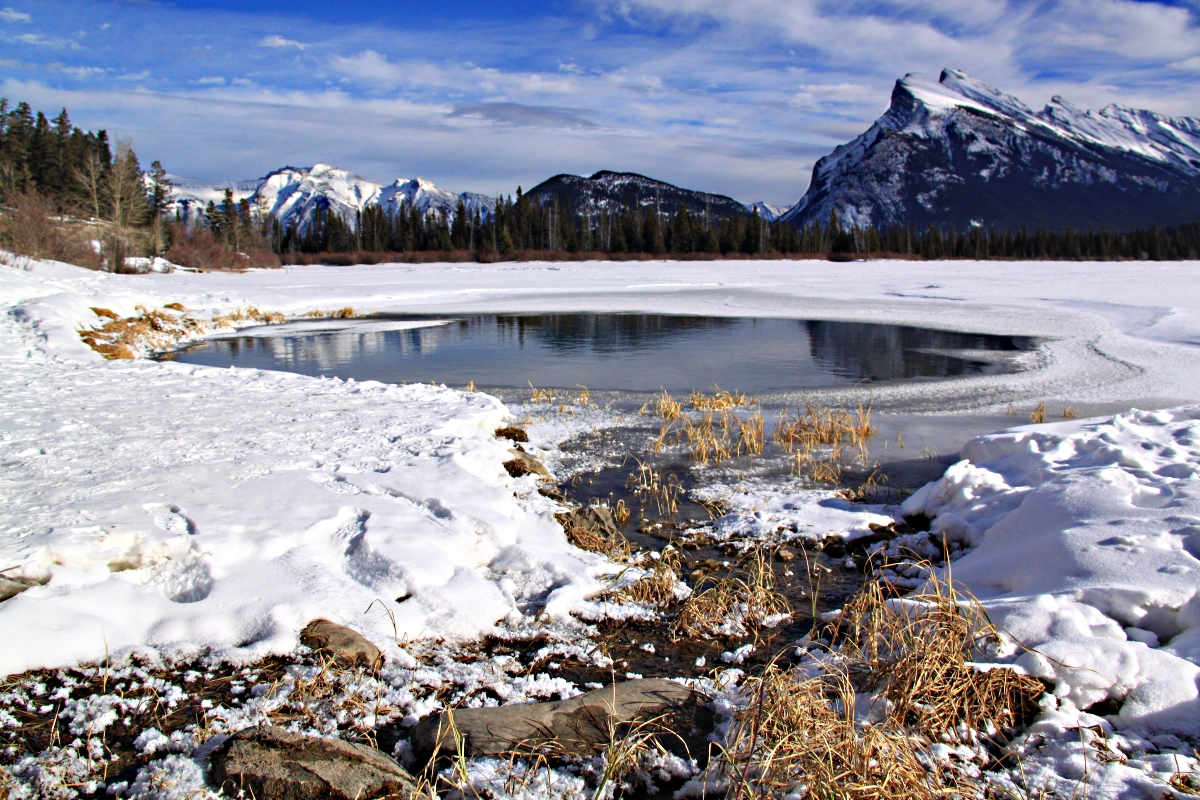
A small 'lagoon' of open water

A small ‘lagoon’ of open water

..... mirror-smooth

….. mirror-smooth

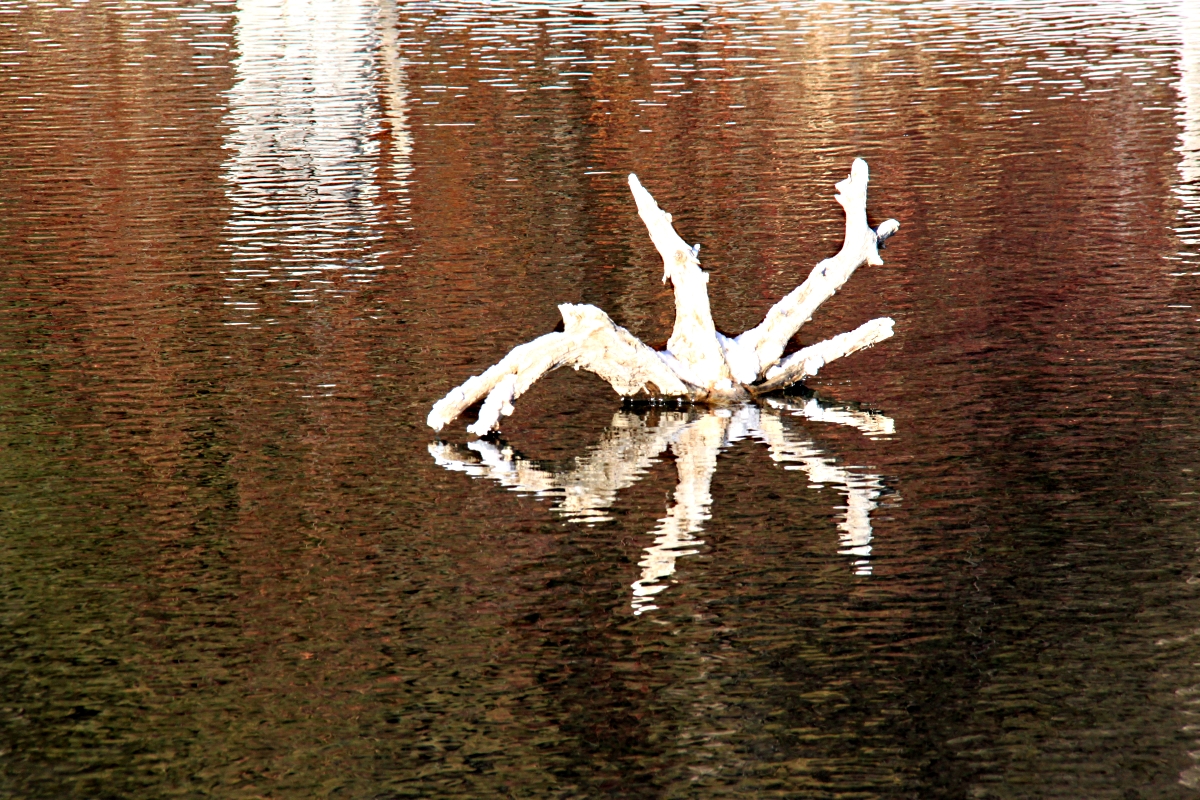
Natural art

Natural art

Open water meanders through the ice

Open water meanders through the ice

..... reflecting Mount Rundle

….. reflecting Mount Rundle

Photographer ventures onto thin ice

Photographer ventures onto thin ice

While looking at one area of open water I noticed concentric ripples on an otherwise completely mirrored water.  Looking closer I spotted a small bird, the size of a UK blackbird (the unfortunately named Turdus merula) close to the water’s edge, swimming and then diving underneath to emerge seconds later, water droplets shedding off its back as if coated in silicone and with what looked like tiny snails and worms in its beak.  It seemed unconcerned at me being there until I inadvertently cast a shadow across it and it swam away in a huff.

Spot the concentric ripples on the right, indicating something is going on

Spot the concentric ripples on the right, indicating something is going on

... then the silhouette of and reflection of a bird

… then the silhouette of and reflection of a bird

.... before it comes into the sun

…. before it comes into the sun

Paddling at the edge

Paddling at the edge

Ducking and diving is what creates the ripples

Ducking and diving is what creates the ripples

.... and then swimming away in a huff

…. and then swimming away in a huff

Heading back was no less demanding of attention, though the same route it offered different perspectives and a still changing sky.

Looking across the 'lagoon' and the frozen lake from the lakeside drive

Looking across the ‘lagoon’ and the frozen lake from the lakeside drive

Only 8 miles on undemanding terrain but an altogether fascinating walk.

Posted in Canada, Hiking, Landscape, Wildlife, Winter | Tagged , , , , , , , , | 1 Comment

Canadian Rockies: cold fingers and icebows

Usually I ski 3 days and then have a day off to let my legs have a rest.  On ‘rest’ days I usually go walking which is more my métier.  However, during the last week I skied 5 consecutive days.  I tried to concentrate on improving my skiing technique but without much success. I also tried taking photos but again without much success.

The reason for the lack of skiing success is simply lack of technique.  The reason for lack of photographic success is down to the sudden plunge in temperatures.  Morning temperatures in Banff have been below minus 20, colder on the ski slopes at significantly higher altitude.  This not only plays havoc with my hands which need to be taken into the ski lodge to warm up at frequent intervals but also plays havoc with the battery in the camera.  I keep the spare in a pocket in my mid-layer but fumbling around with zips and the battery compartment with fingers at best numb, at worst painful, makes change-over on the slopes impractical.

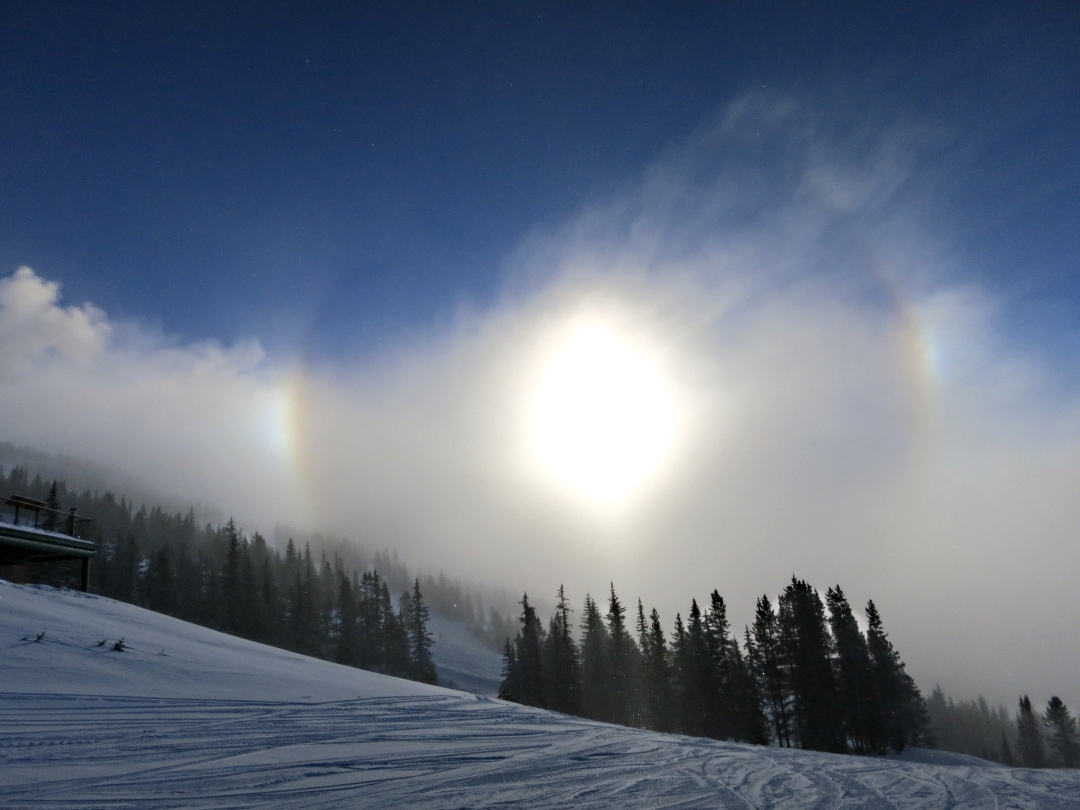
Some morning it was so cold that on the higher slopes the air was filled with billions of tiny shimmering ice crystals.  Thin bands of ice-cloud refracted like prisms with partial ‘icebows’ around the sun.  I guess these were not proper ‘sun dogs’ which form in cloudless skies, have bright spots at the quadrants and often a shaft beaming downwards.  But they were none the less dramatic.

I have enjoyed the skiing and enjoyed even more being in the high mountains with blue skies enlivened by narrow bands of cloud but photographic evidence  that I was there is scarce.

Some days it was cloudless blue sky

Some days it was cloudless blue sky

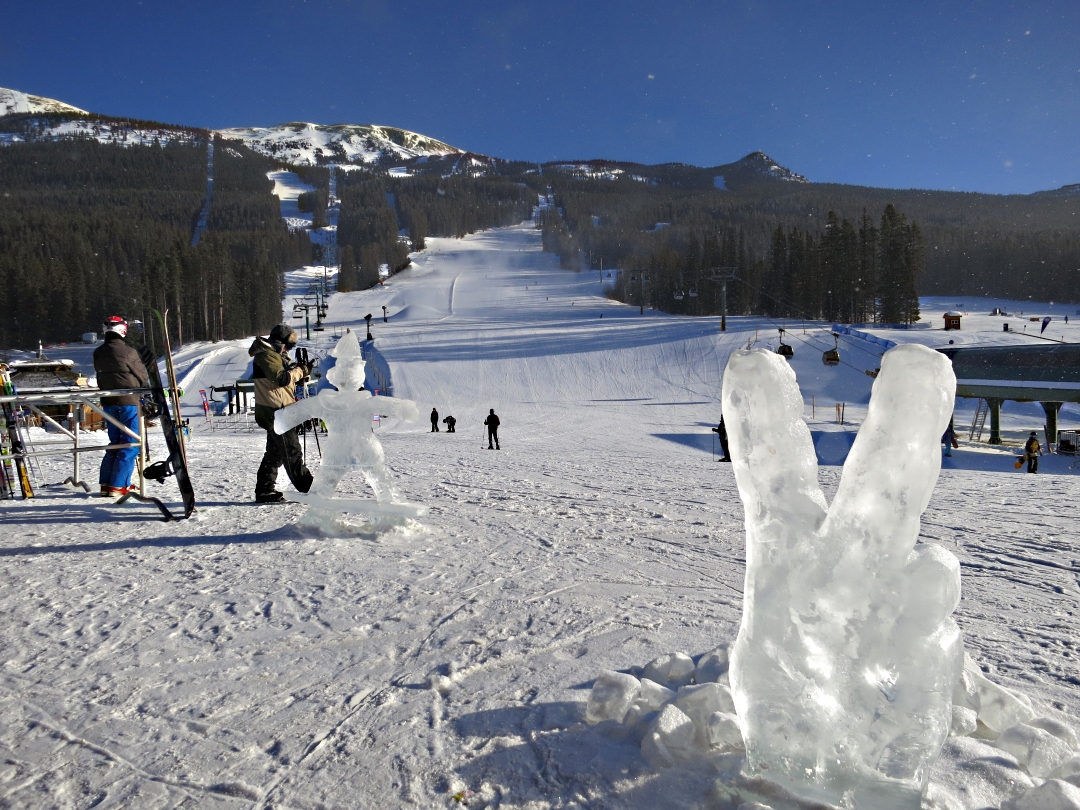
.... but now cold enough for ice sculptures to start appearing

…. but now cold enough for ice sculptures to start appearing

Partial 'icebow' refracted through a band of cloud

Partial ‘icebow’ refracted through a band of cloud

The mountains on the other side of the valley were dramatic enough to stop to photograph

The mountains on the other side of the valley were dramatic enough to stop to photograph

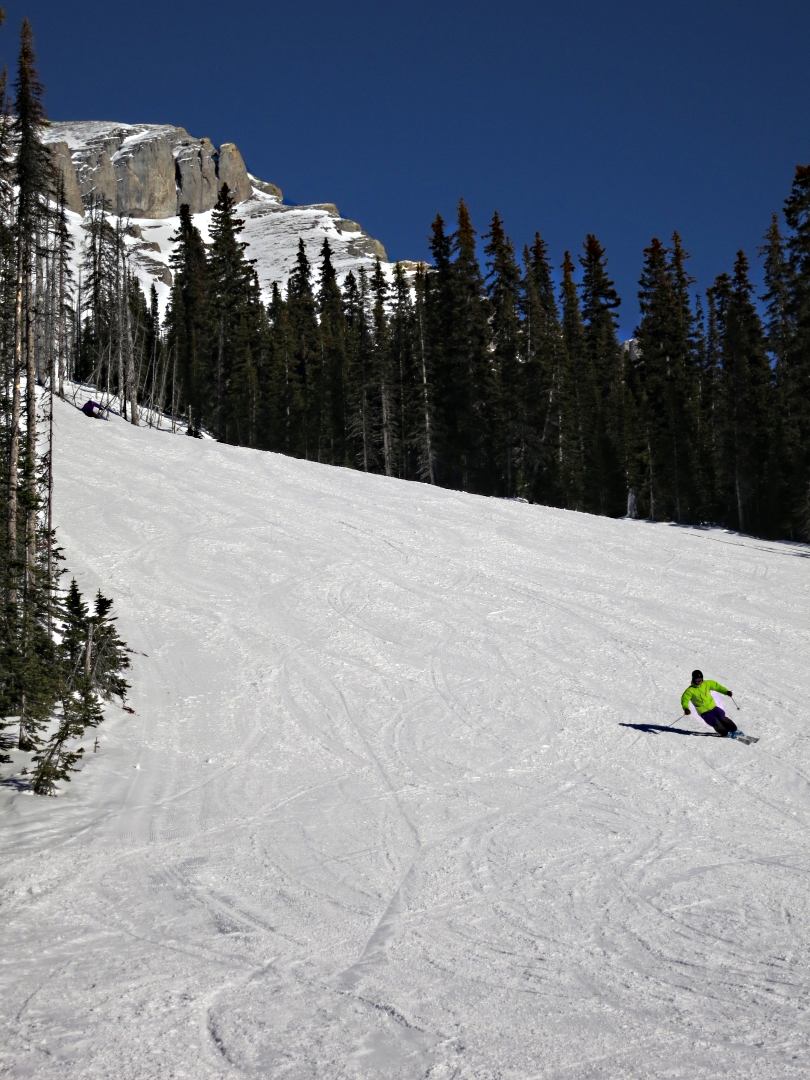
At a 'roll-over' where the ski run steepens suddenly and swoops down to the next level through snow-dusted trees

At a ‘roll-over’ where the ski run steepens suddenly and swoops down to the next level through snow-dusted trees

x

Posted in Canada, Landscape, Mountains, Winter | Tagged , , , , , , | 2 Comments

Canadian Rockies: warm weather and reflections

The weather has been warmer than usual with day after day of blue skies and sunshine.  Rather than taking photos I’ve been concentrating on trying to improve my incompetent skiing, smooth wide turns on mild slopes but still aggressively sharp turns to burn off speed on steeper runs.   

On Tuesday I was prematurely congratulating myself on neatly avoiding a fallen skier in the ‘unload’ area at the top of a chair-lift when I was struck from behind by half a tonne of rampant quad chair, the stop button in control of a ‘lifty’ with his mind elsewhere.  Shaken but not stirred.

But I did take photos on Sunday when I ambled upstream from Banff when whiling away the time between church in the morning and my daughter and husband arriving from Kicking Horse for the week.

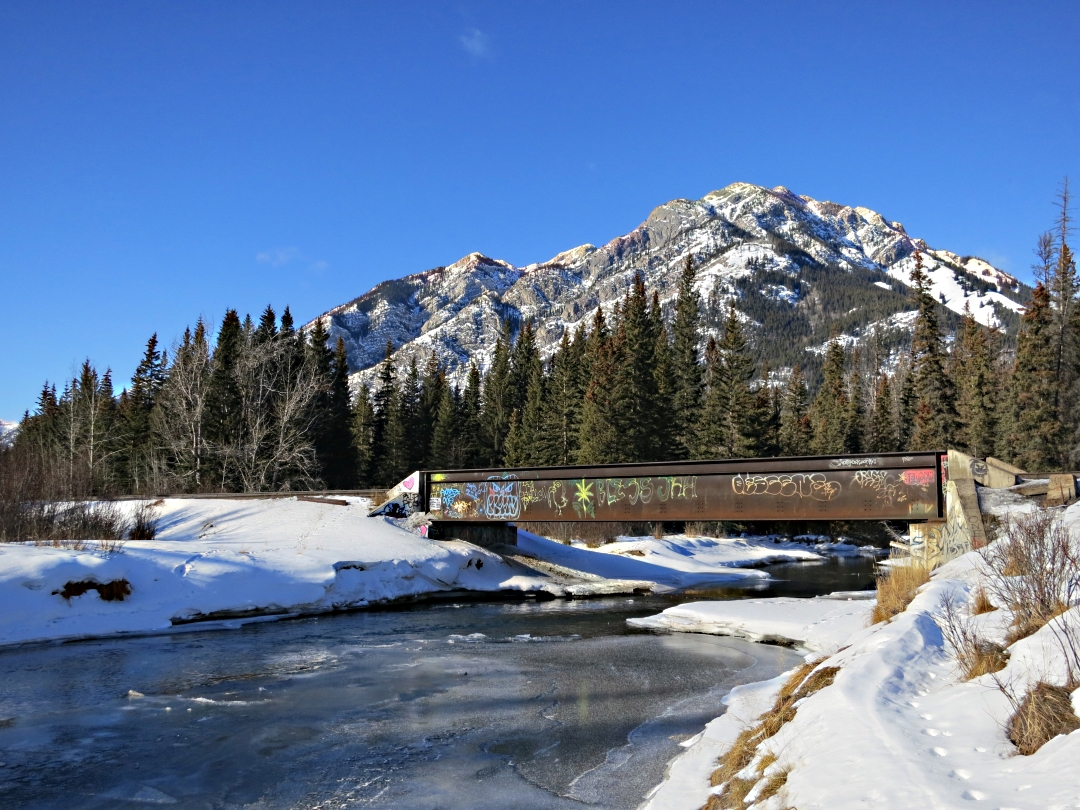
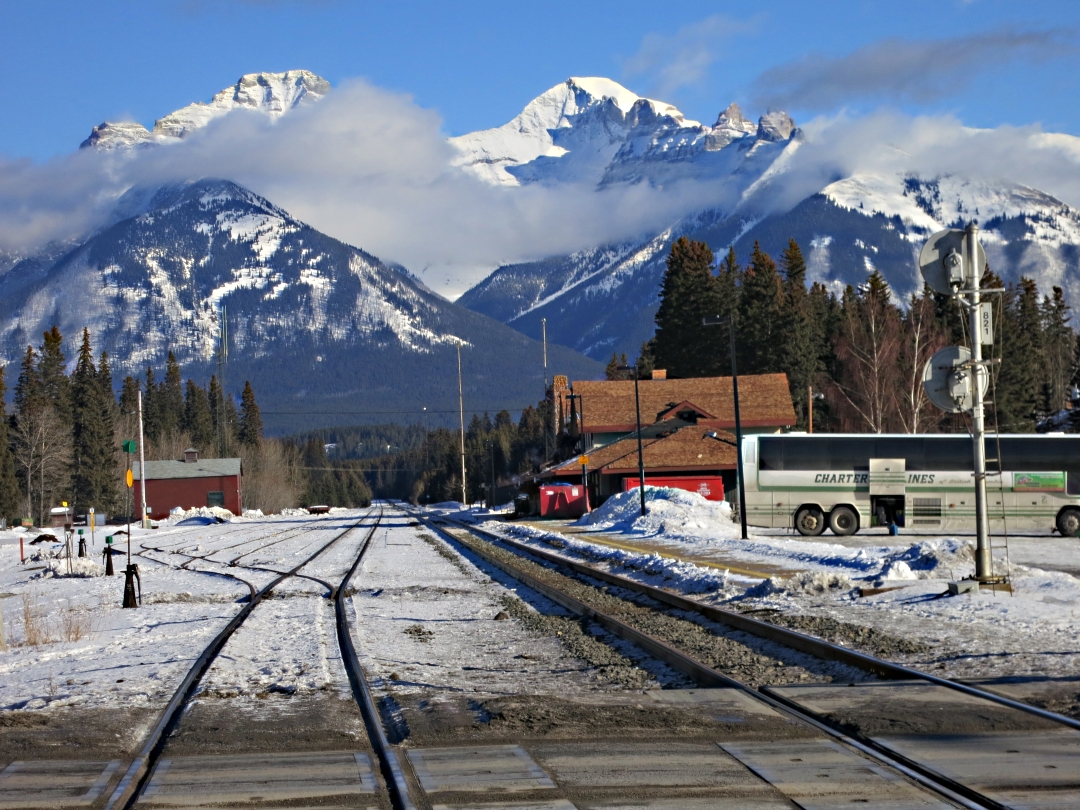
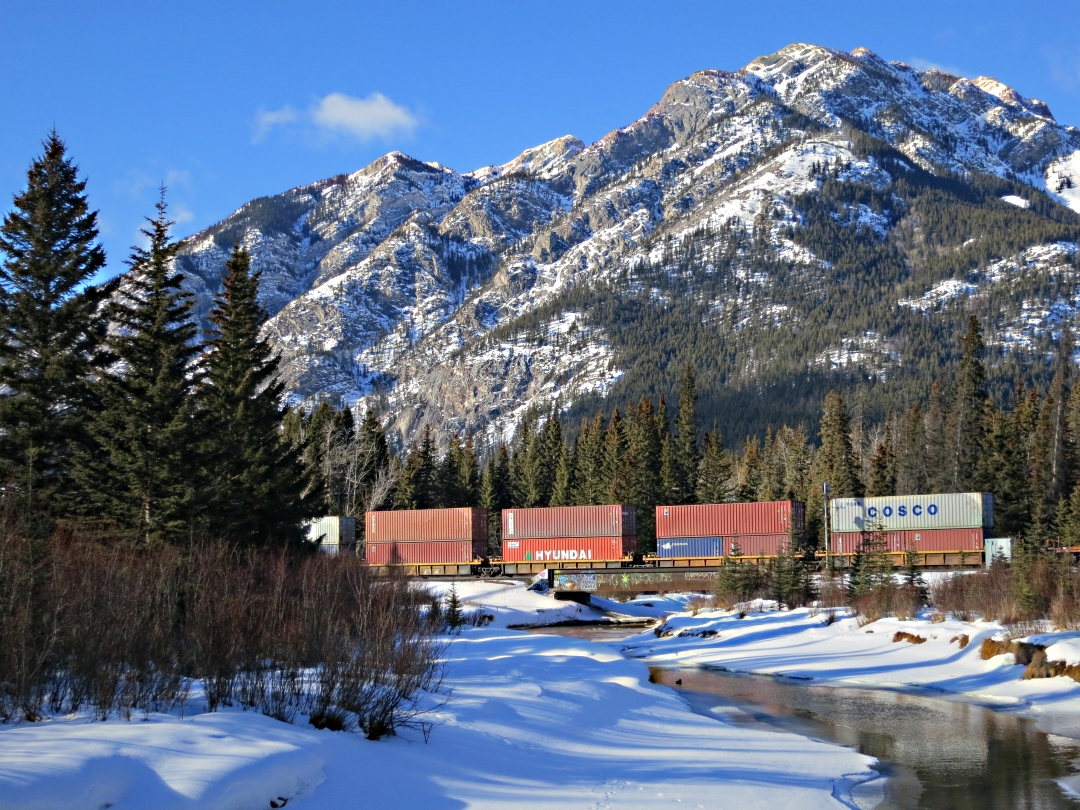
Along the gentle creek-side walk the difference from last year was dramatic.  Then the small creek, a tributary of the Bow River, was frozen solid and I walked across it at a couple of points to explore the other side or get a better angle for a photo.  Now it was flowing water, no chance of crossing it until I reached the bridge carrying the Canadian Pacific Railway.

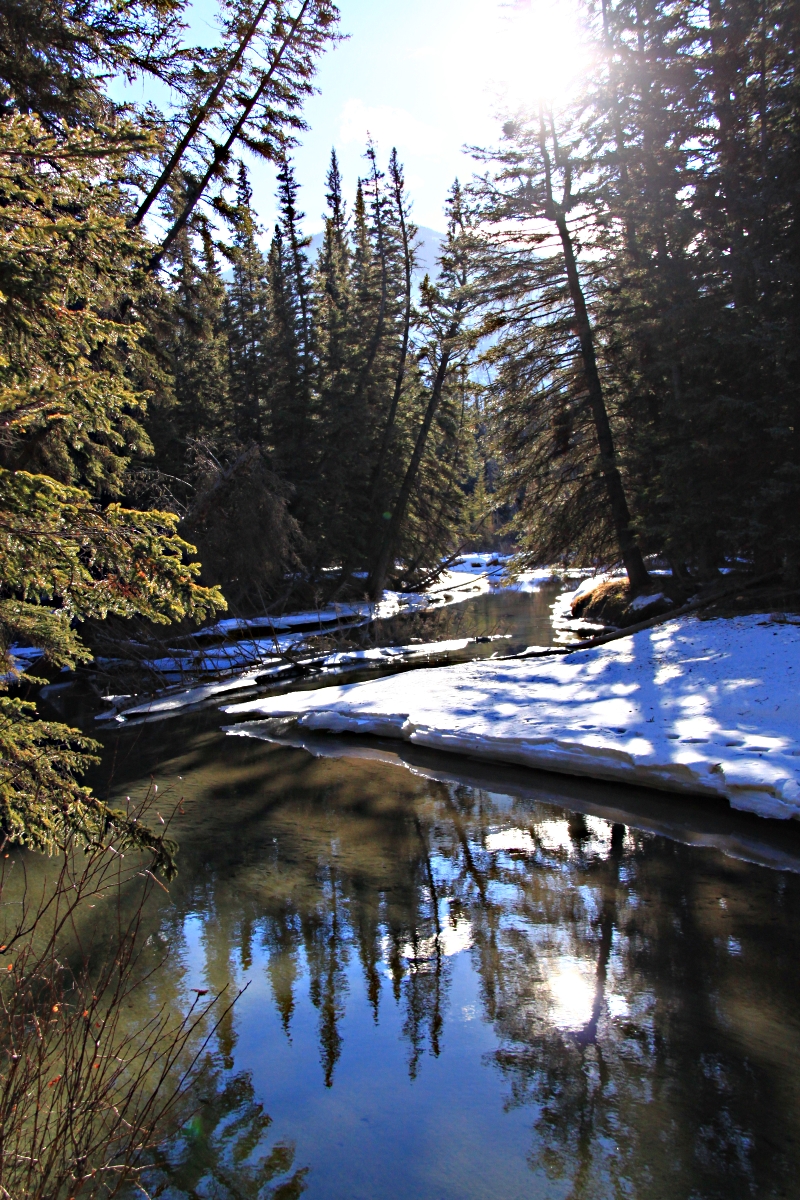
Flawless blue sky, snow and trees reflecting in mirror image in placid, clear water, I found it difficult to make forward progress until I received a text message to say that my daughter and the group of friends from Calgary who had been to Kicking Horse were now ensconced in a pizza house in Banff.  So I scurried back.  With numerous photo-interruptions en route.

Leaving the main river behind, conitnuing up the small creek and looking back to Mount Rundle

Leaving the main river behind, continuing up the small creek and looking back to Mount Rundle

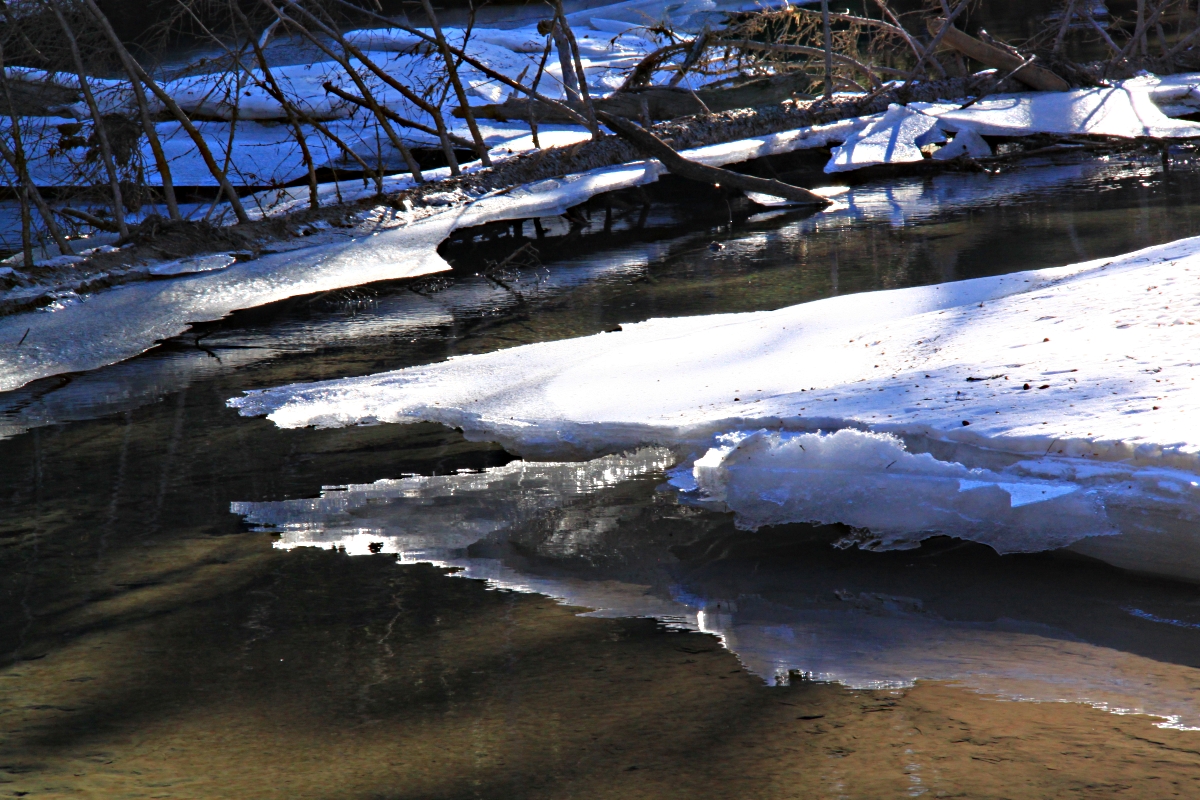
Early-winter Ice breaking up

Early-winter Ice breaking up

Reflective, placid water in the creek as the early winter ice melts

Reflective, placid water in the creek as the early winter ice melts

Zooming in on snow-covered ice which collapsed in the thaw as water levels dropped

Zooming in on snow-covered ice which collapsed in the thaw as water levels dropped

Thin ice reforming, water still reflective

Thin ice reforming, water still reflective

Looking upstream to the iron rail bridge across the creek

Looking upstream to the iron rail bridge across the creek

Crossing the tracks

Crossing the tracks

Still, clear water under the trees

Still, clear water under the trees, Mount Norquay reflected

Sun filtering through , ice sheet reflected

Sun filtering through , ice sheet reflected

no comment!

no comment!

On the way back, I barely crossed the line before a freight train, limited by law to two kilometres in length went past

On the way back, I barely crossed the line before a freight train, limited by law to two kilometres in length went past

Since Sunday it has become increasingly cold.  Checking out the weather forecast for the week ahead it looks to get colder still, with temperatures closer to the seasonal norm for the east of the Canadian Rockies, highs of minus 10oC with overnight and early morning lows of minus 25oC.  It snowed a little today (Wednesday) with more forecast for tomorrow.  It will be interesting on Sunday to return to the reflective creek and see how much of the flowing water has been frozen over.  Not that I will venture to cross it!

Posted in Canada, Landscape, Reflections, Winter | Tagged , , , , , , , | 2 Comments

Canadian Rockies: global weather patterns, local effects: wrapped in thermals not cotton wool

In January the Canadian Rockies normally experience very cold conditions.  When I first came to Banff in the winter of 2010/11 the warmest temperature in the month from mid-December to mid-January was minus 15oC and most mornings the short walk to catch the ski bus outside the hotel was in a cool minus 25oC.  How far you walked across the car park before ice formed on nasal hairs indicated just how cold it was that day.  Clear skies and very cold air meant that on several days we were treated to spectacular ‘sun dog’ phenomena, the sun refracting though billions of microscopic ice crystals to create a circular rainbow rim and a spear-like ‘strike’ to the ground.

The downside was that, afflicted with Reynaud’s Phenomenon, my fingers would become unbearably painfully cold within 30 minutes, requiring frequent visits back to the ski lodge to warm them up.  Stopping to take photos with my gloves off didn’t help.

Since I arrived in Banff on 15 January this year it has been unusually warm and sunny.  Extremely pleasant.  Temperatures have been as high as plus 6oC in Banff, some say a record for January, and my hands have only required the occasional warming up.

I suspect that the mild weather is directly associated with the exceptionally cold weather which has affected the eastern parts of Canada and the USA as far south as Florida where those who can afford it have for decades fled for winter warmth and sunshine.  Normally the ‘Polar Vortex’ is over Alaska and North West Canada but now lies to the east.  Dubbed the ‘North American Cold Wave’, the effects have been dramatic.

Why do I think what is happening in the east is relevant?.  Simple.  There is a global circulation of air, the key word being ‘circulation’.  Atmospheric circulation systems are global in scale and the cold air in the east of North America has pulled air from the warm south up the western side of the continent.  Air from Mexico and California has cooled as it travels north but has brought relatively balmy conditions to the Canadian Rockies.

No prospect of sun dogs but blue skies, high cirrus cloud and the occasional tongue of cloud along the valley below has made for some interesting photographic skies.

Cloud in the valley below

Cloud in the valley below

.... is only a thin band.  Hoarfrost on the trees, and the chair lifts below the cloud base.

…. is only a thin band.  Hoarfrost on the trees (and the chair lifts) below the cloud base.

The Ski Lodge at Lake Louise below the cloud band

The Ski Lodge at Lake Louise below the cloud band

Today, Monday morning 27 January, and the temperature was suddenly down to minus 19oC in Banff, significantly colder on the ski slopes.  During the morning my hands suffered in consequence. Painfull.

However, completely cloudless sky,  a little warmth in the sun a month after the winter solstice, and choosing runs on sunny slopes paid dividends by the afternoon. It’s better to wrap yourself up in thermals rather than cotton wool.  Lower temperatures than recently are forecast for the week ahead but with the jet stream displaced and the polar vortex migrating the forecasts are less reliable than normal for a usually very predictable Continental Climate.  So who knows?

The one nagging doubt for skiing is the lack of snowfall.  Strong winds blew the heavy snow of two weeks ago off the peaks and there has been very little since. There is a 60% chance of snow showers on Thursday so here’s hoping.  Whatever, it’s great to be here.

Posted in Canada, Landscape, Mountains, Winter | Tagged , , , , , , , , , , , , , , , | Leave a comment

Canadian Rockies: a walk along the Bow River at Banff

Thursday was another day off skiing.  I don’t have the stamina or the lift pass to ski every day.  I took my skis in for a service – sharpen the edges and wax – and set out to follow a series of trails, first to the Bow River Falls downstream and then upstream, passed the town, diverting to the Cave and Basin and the wooden walkway system up the hillside to the hot springs which in 1883 first excited interest in what became Banff, and on towards Sundance Canyon.  I stopped short of the Canyon, intending to walk that another day and, after sitting on the dry rocks of the river bed kept clear of snow by another trickling hot spring, headed back by way of the ‘Marsh Loop’. Altogether about 8 miles in 5 hours with mooching around time and frequent photo-stops.   

That’s it for the words.  The rest is pictures.

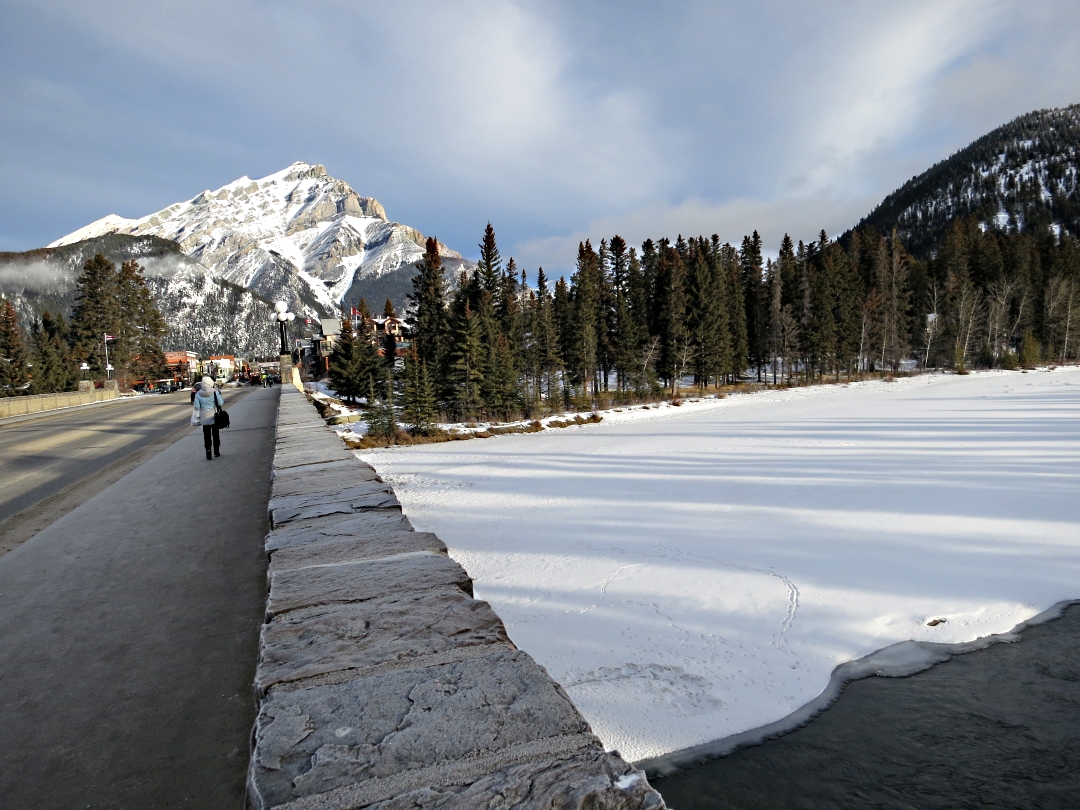
Looking across the town bridge built in 1923, Cascade Mountain at the end of Banff Avenue, the Bow River partly snow covered,partly flowing water

Looking across the town bridge built in 1923, Cascade Mountain at the end of Banff Avenue, the Bow River partly snow covered, partly flowing water

Looking towards the town bridge from the new wooden pedestrian bridge

Looking towards the town bridge from riverside trail

The new wooden pedestrian bridge, completed last year

The new wooden pedestrian bridge, completed last year

Mild weather and fast flowing water breaks up the ice on the river as it rushed towards the falls

Mild weather and fast flowing water breaks up the ice on the river as it rushed towards the falls

More open water than usual in winter below the falls seen from the top of the crag alongside, Mount Rundle towering above

More open water than usual in winter below the falls seen from the top of the crag alongside, Mount Rundle towering above

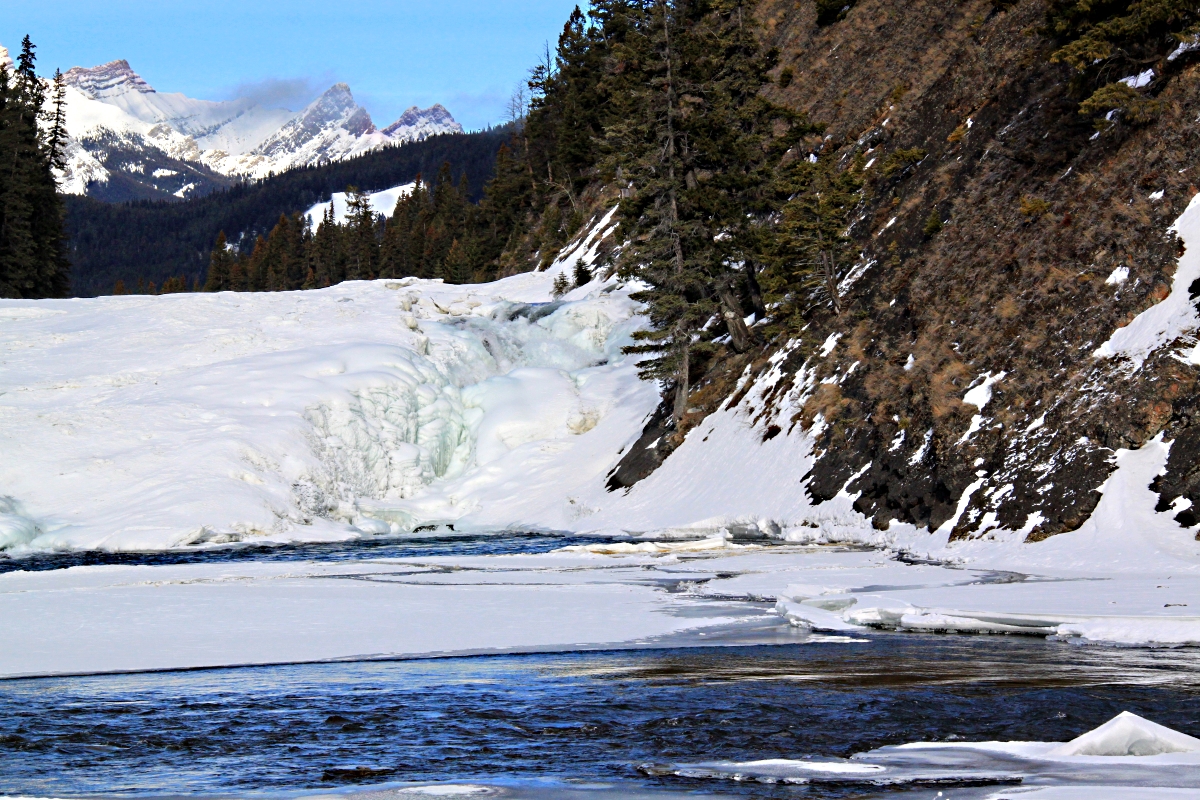
Looking upstream to the frozen falls

Looking upstream to the frozen falls

Zooming in on the still rushing water on the right as it emerges from the ice

Zooming in on the rushing water on the right as it emerges from the ice

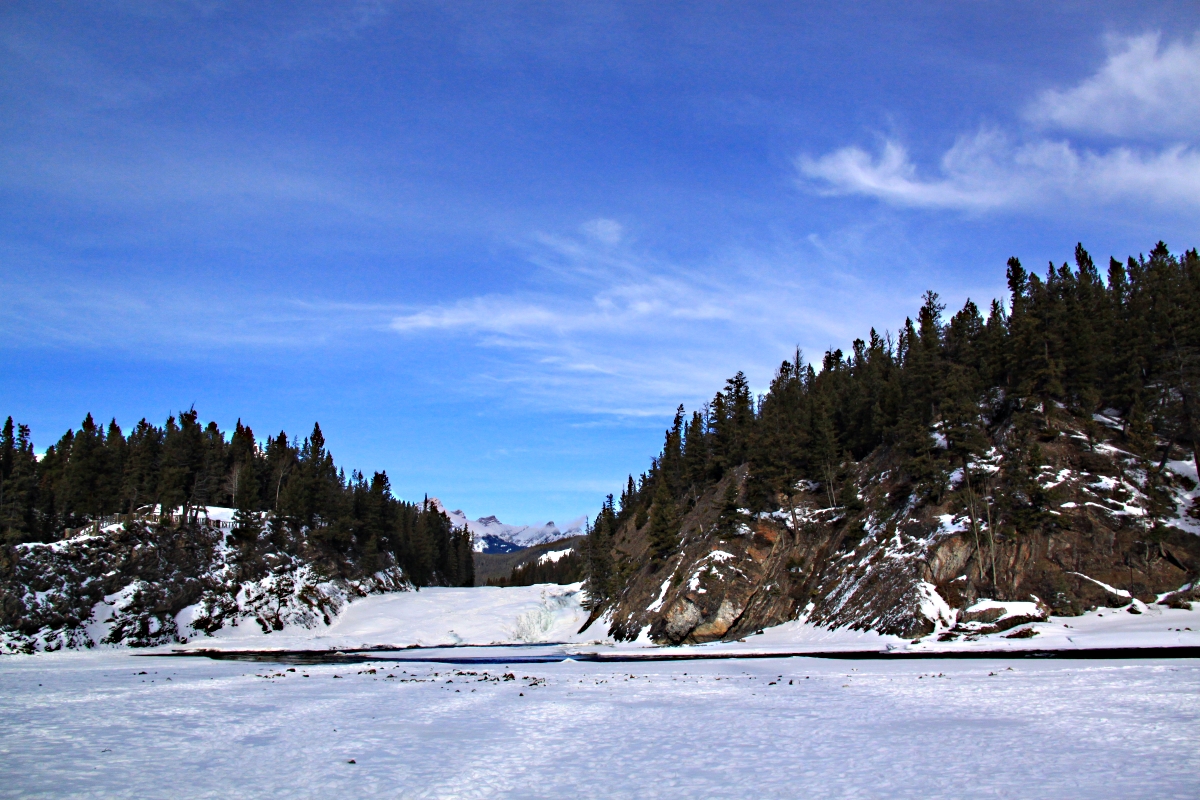
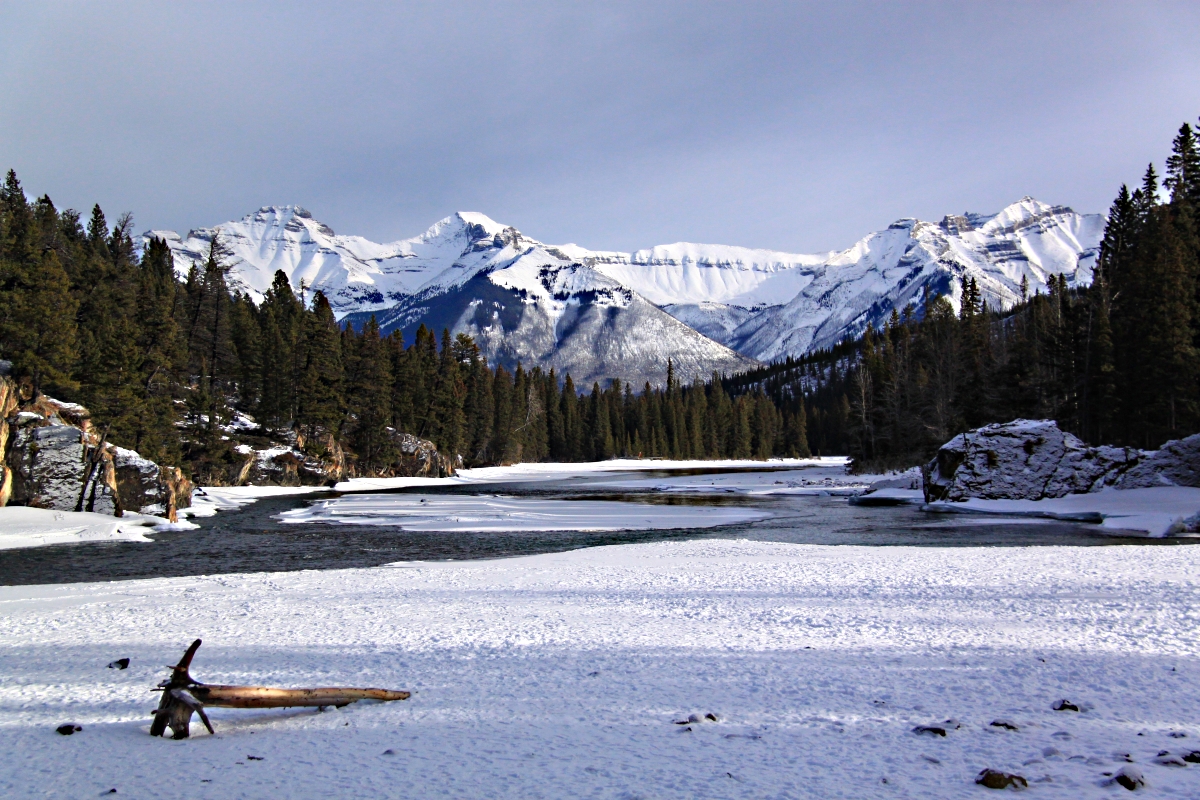
Immediately after the falls the river bends at right angles northeastwards towards the Fairholme Range

Immediately after the falls the river bends at right angles northeastwards towards the Fairholme Range

Upstream of teh town bridge the river is frozen solid enough for semi-permanent footpaths across

Upstream of the town bridge the river is frozen solid enough for semi-permanent footpaths across

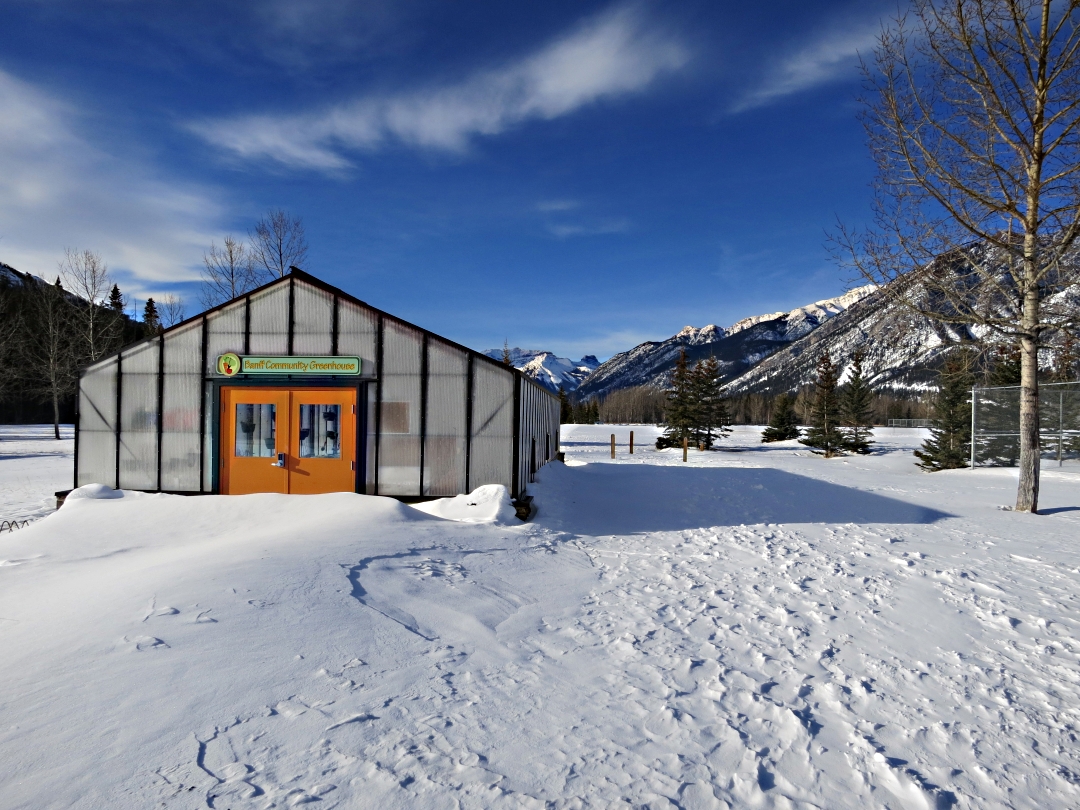
On the recreation ground is the Banff Community Greenhouse, snowed in at this time of year

On the recreation ground is the Banff Community Greenhouse, snowed-in at this time of year

Snow blown across the rugby pitch drifts in the lee of the trees.  Either the pitch rivals Pontypools famous slope or the earth tilted on its axis as I took the shot

Snow blown across the rugby pitch drifts in the lee of the trees. Either the pitch rivals Pontypool RFCs famous slope or the earth tilted on its axis as I took the shot

A hot spring feeds this pool, a rare wildlife habitat

A hot spring feeds this pool, a rare wildlife habitat surrounded by snow

The topmost pool on the walkway is home to the unique Banff Springs Snail, Physella johnsoni

The topmost pool on the walkway is home to the unique and endangered Banff Springs Snail, Physella johnsoni

Looking across the snow-covered river to Mount Edith

Looking across the snow-covered river to Mount Edith

Another view showing the narrow open channel of running water

Another view showing the narrow open channel of running water

The vegetation along the bank

The vegetation along the bank

Standing on the ice in the middle of the river and looking downstream towards Cascade Mountain

Standing on the ice in the middle of the river and looking downstream towards Cascade Mountain

Mount Rundle seen across the Marsh Loop

Mount Rundle seen across the Marsh Loop

Riding stables backed by Cascade Mountain

Riding stables backed by Cascade Mountain

Horse-drawn sleigh offers rides to visitors

Horse-drawn sleigh offers rides to visitors

x

Posted in Canada, Hiking, Landscape, Mountains, Winter | Tagged , , , , , , , , , , | 2 Comments

Canadian Rockies: the Wow! factor

“Wow!”  The Canadian guy in the seat next to me on the packed 15.30 bus coming back to Banff from Sunshine let out an involuntary exclamation of appreciation as we rounded a bend in the Trans Canada Highway and yet another snow-covered mountain range came into view.  “I live here” he said “but it still gets me every time!”

I know what he meant.  I had been skiing on Lookout Mountain at Sunshine and earlier in the afternoon had come down a steep (for me) Blue run from the Continental Divide.  I’m beginning to get the hang of it but need to concentrate, focus on the ground in front of me, so I don’t see my surroundings.  The steeper the slope the greater the need to concentrate.

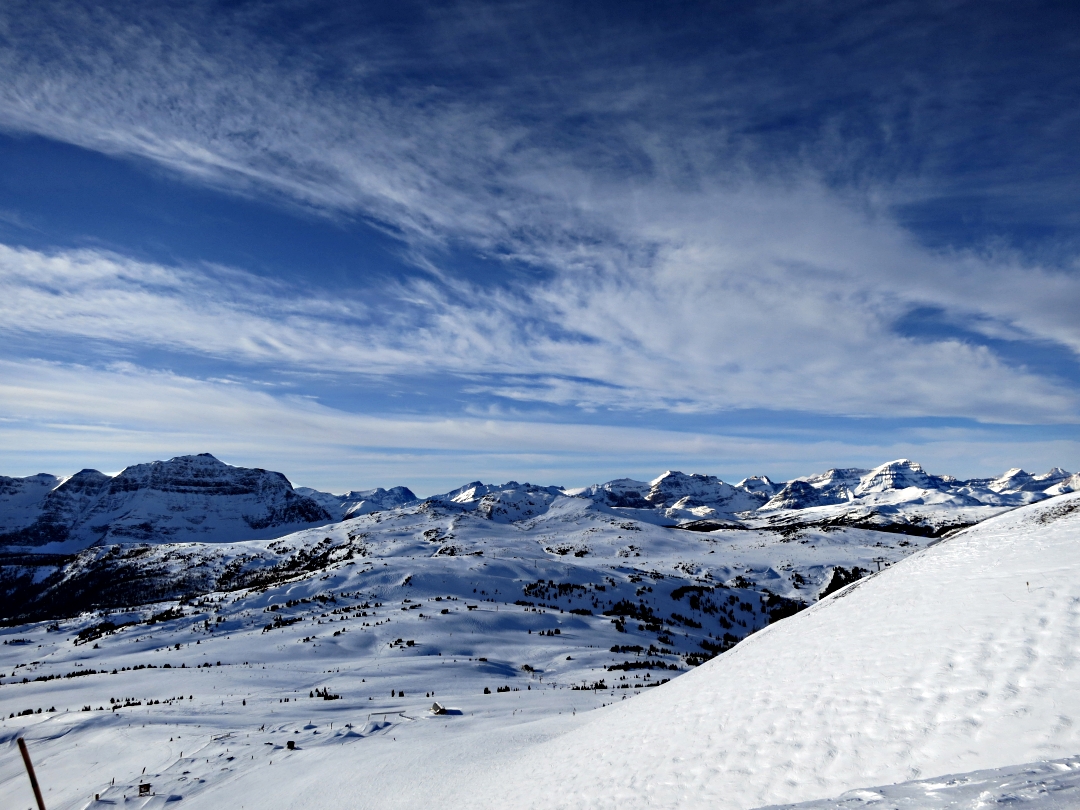
As I reached the bottom of the run it turned left as I approached an easier-gradient Green and spread out far below was the gently undulating expanse of Sunshine Meadows, glossy white, snow reflecting the low-angled sun diffused through the ice-crystals of high level thin cirrus cloud.  The Meadows, backed by serrated peaks with pyramid shaped 3,618 metres (11,870 feet) Mt Assiniboine standing above the others, was a popular tourist camping ground in the 1920’s.  The number of tents there in summer gave it the nickname ‘Tee Pee Town’, now remembered only in the name of a rickety old 2-person chair-lift part way up the mountain.

I stopped and just gazed, soaking it in through my eyes.  It was magnificent.  The reason I come skiing.

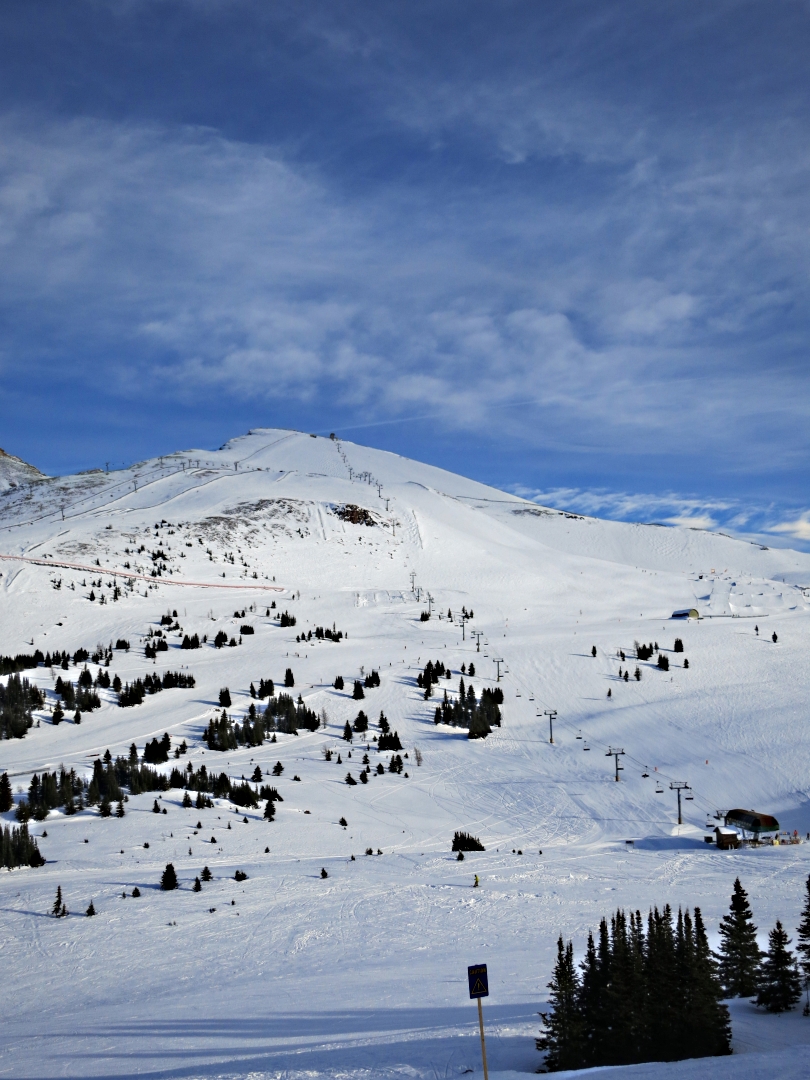
Lookout Mountain from the entrance to the Ski Lodge

Lookout Mountain from the entrance to the Ski Lodge

Lookout Mountain, the Great Divide chair lift' bottom right to above centre left, rises 422 metres (1450 feet) over three quarters of a kilometre

Lookout Mountain, the Great Divide chair lift’ bottom right to above centre left, rises 422 metres (1450 feet) over three quarters of a kilometre

Sunshine Meadows as it dips towards Sunshine Village

Sunshine Meadows as it dips towards Sunshine Village

Looking down the ski run over Sunshine Meadows, Mount Assiniboine on the left

Looking down the ski run over Sunshine Meadows, Mount Assiniboine on the left

x
Posted in Canada, History, Landscape, Mountains, Winter | Tagged , , , , , , , | Leave a comment

Canadian Rockies: to the top of Tunnel Mountain

Tunnel Mountain used to be called ‘Sleeping Buffalo’ by the indigenous Nakoda people because from certain directions it looks like ………. a sleeping buffalo.  Knew a thing or two about naming places did the original inhabitants of North America.  Now it’s called Tunnel Mountain …………… because there isn’t a tunnel.

In 1882 a 275 metre long tunnel was proposed by a team of surveyors to keep the route of the Canadian Pacific Railway along the line of the Bow River.  The General Manager of the company went nuts at the proposal, unwilling to commit to a scheme which would cause considerable cost and delay.  An alternative route was followed but the name stuck to the mountain.

At 1,692 m (5,551 ft) it is one of the smaller mountains near Banff but rising 1000 feet straight out of the town the Tunnel Mountain Trail is much used by locals and visitors.  That’s what I did with the afternoon of my day off from skiing.

It’s a sustained climb 2 miles straight up from the hotel at a good gradient but slower going than I would have liked because I’m not yet fully acclimatised to the altitude.  Under almost flawless blue sky and with a little heat in the sun a month after the solstice it was fabulous short trek with views down to the Bow Valley 1000 feet below and up to adjacent commanding peaks such as Mount Rundle, Sulphur Mountain and Cascade Mountain.

As ever I was reluctant to leave the top, seductively warm on sunned sloping rock slabs.  I was joined by a French Canadian and his Japanese lady friend and we squatted on the ground for over an hour drawing maps of Britain and Ireland in the snow, discussing national culture and the complex and still unfolding political histories of our homelands.

The gradient of the path gentles towards the top, the summit of Mount Rundle in view, rock slabs stripped bare of snow by strong winds

The gradient of the path gentles towards the top, the summit of Mount Rundle in view, rock slabs stripped bare of snow by strong winds

14Canada014w3765

Snow blown into drifts in the lee of the wind with added hieroglyphs

14Canada016w3784

Some drifts sensuously rounded

Photographer on the wind-stripped looking towards Cascade Mountain

Photographer on the wind-stripped top looking towards Cascade Mountain

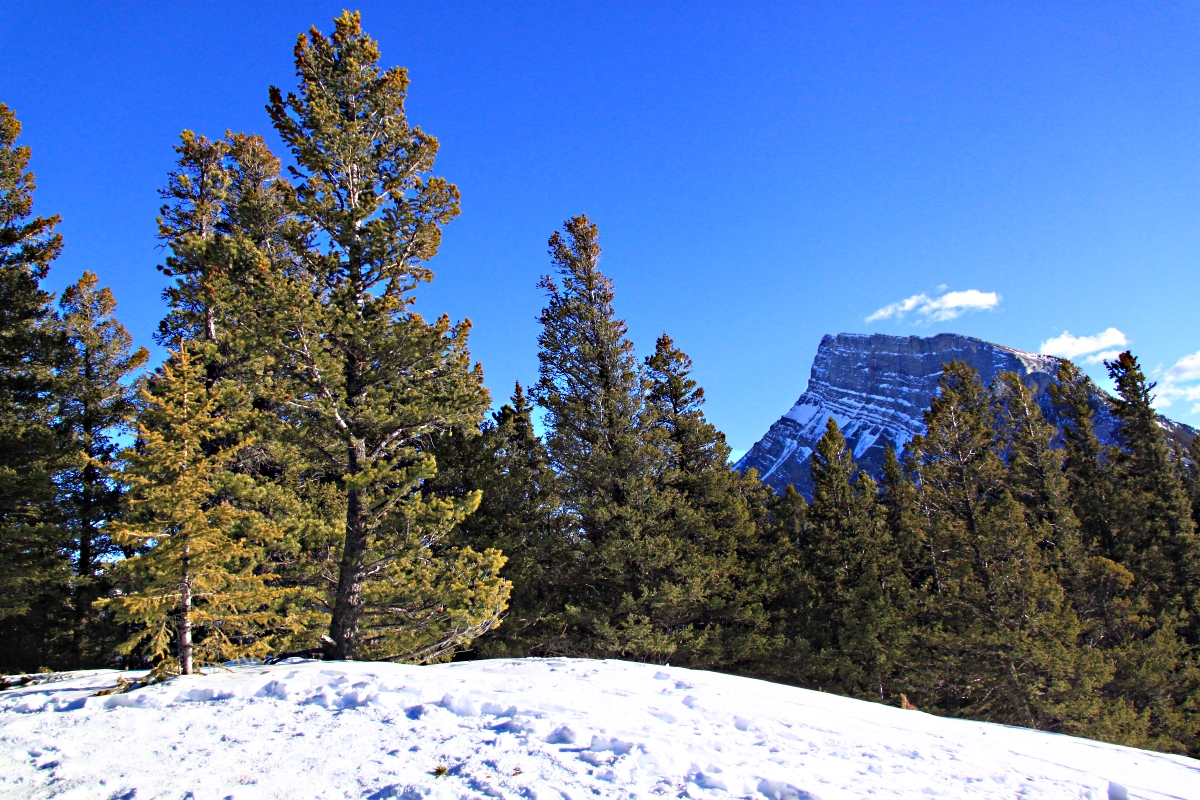
On the top looking towards Mount Rundle

On the top looking towards Mount Rundle

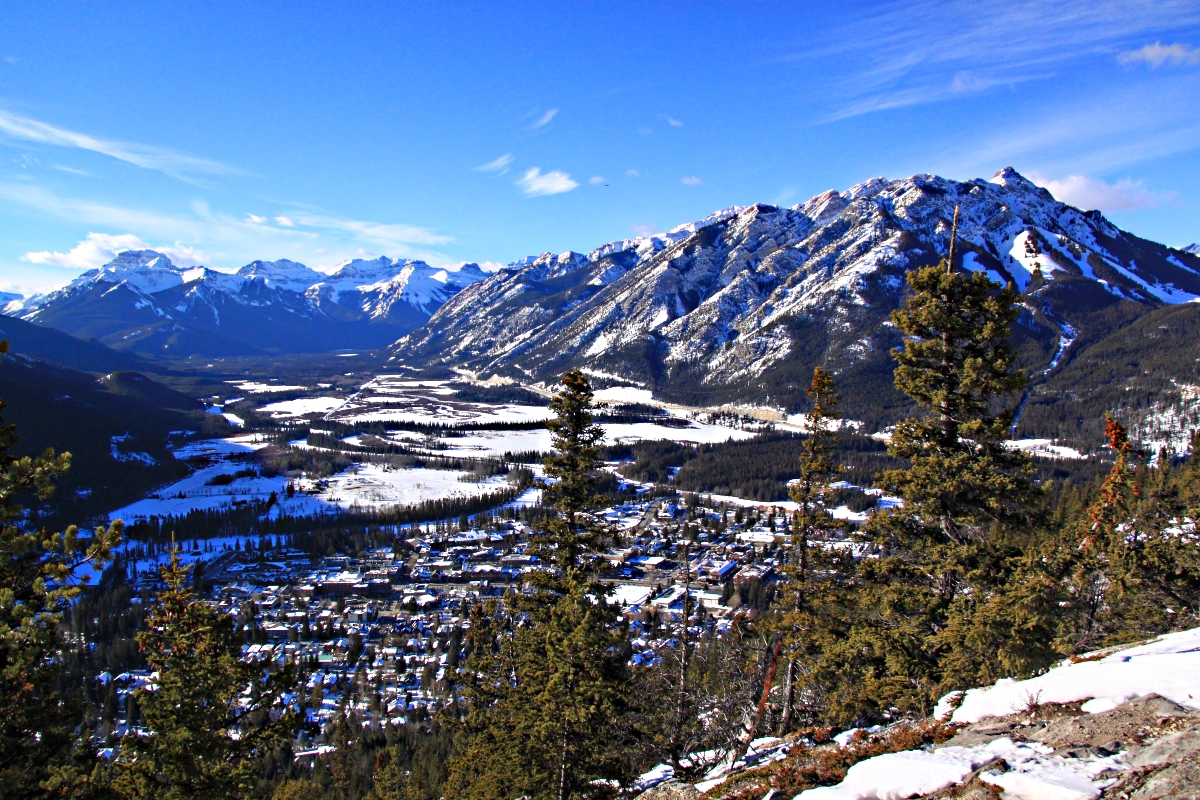
Looking over Banff and upstream along the Bow Valley

Looking over Banff and upstream along the Bow Valley

Looking downstream along the Bow Valley towards the Fairholme Range in the distance

Looking downstream along the Bow Valley towards the Fairholme Range in the distance

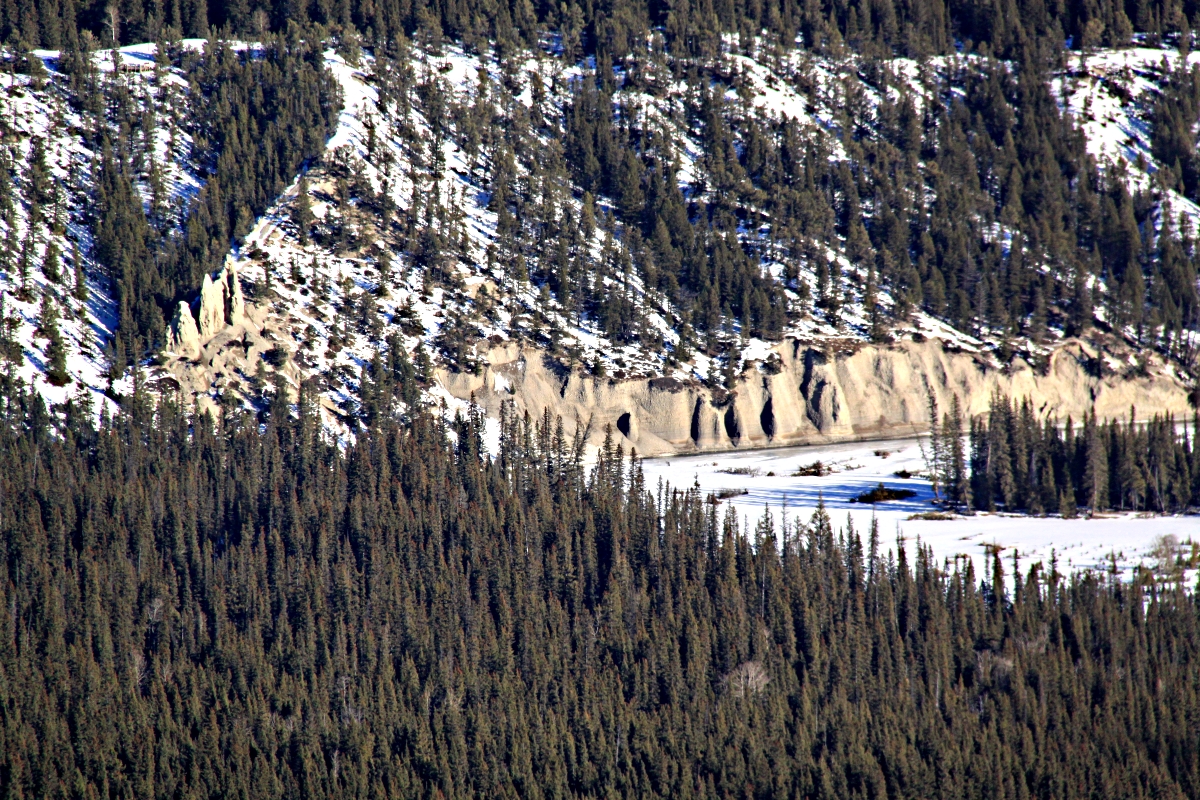
Zooming in on the Hoodoos, rock pinnacles along the further bend in the Bow River

Zooming in on the Hoodoos, rock pinnacles along the further bend in the Bow River

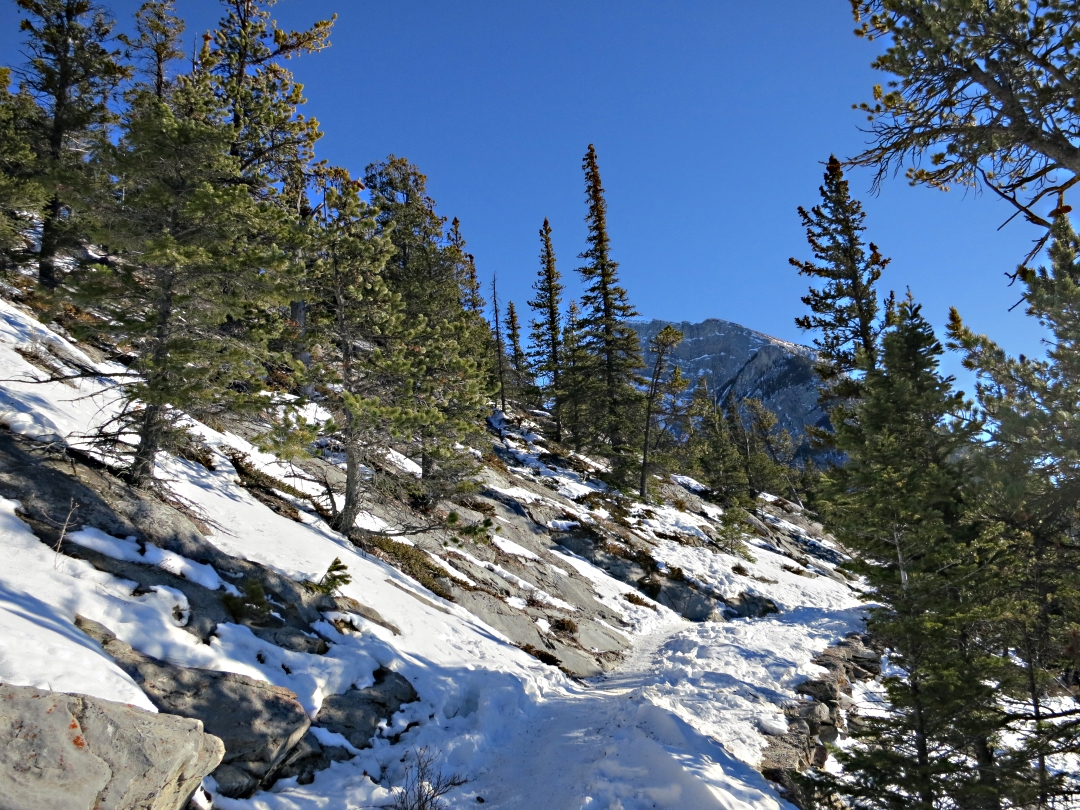
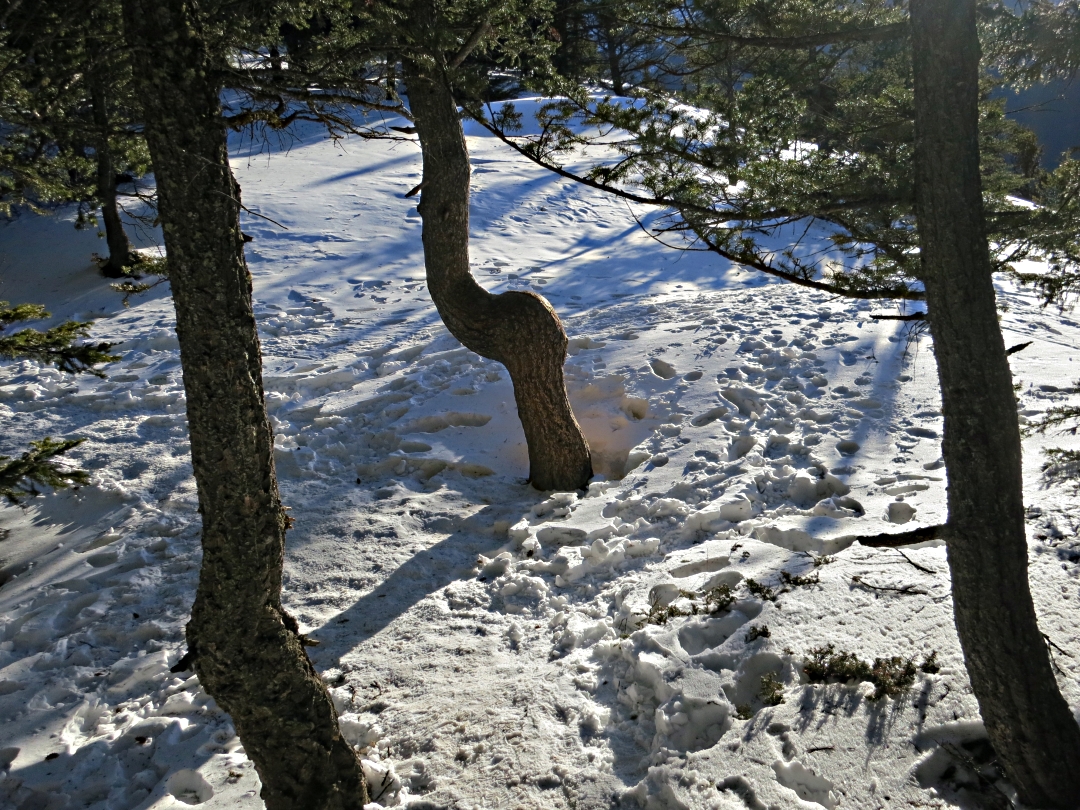
The well trodden trail leads between gnarly trees

The well trodden trail leads between gnarly trees

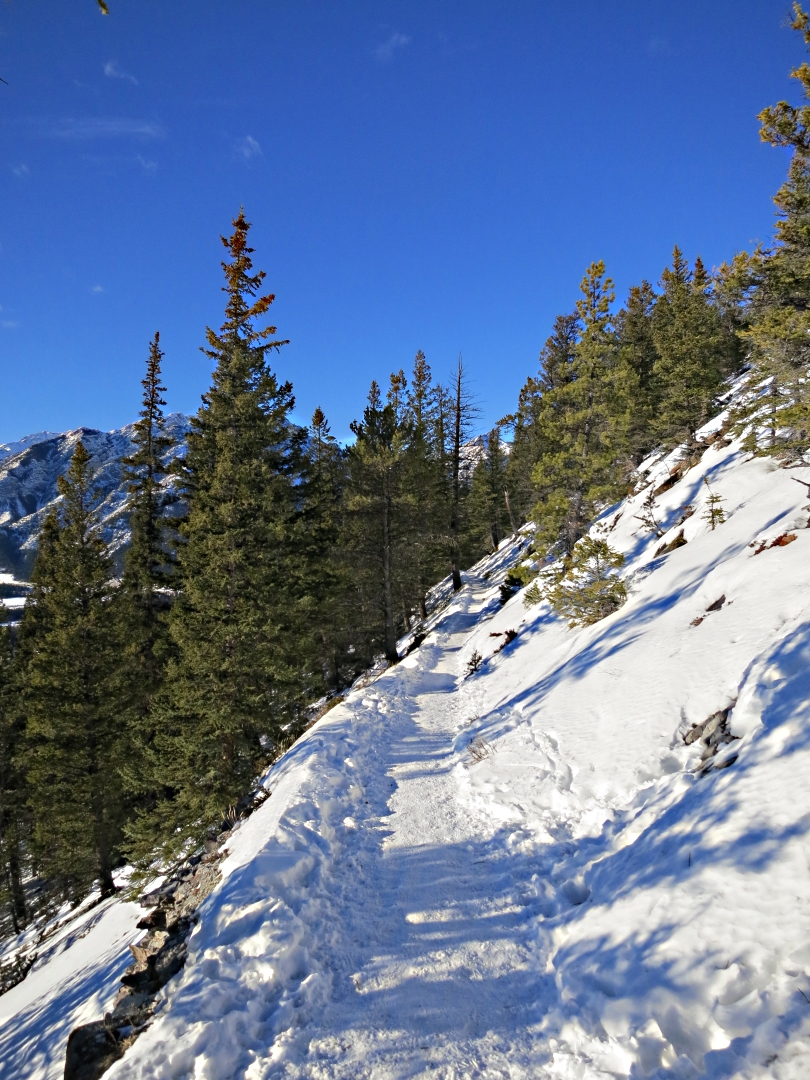
On the downhill leg

On the downhill leg

x
Posted in Canada, Landscape, Mountains, Winter | Tagged , , , , , , , , | 3 Comments