
One of the things I have learned over the years visiting, travelling and trekking around Greece, and make a point of in my book ‘Greece Unpackaged’, is to deal with the unexpected. If things don’t go as planned, find a solution, regard it as an opportunity, enjoy it!
I returned to Symi at the end of the third week in May. I prefer coming mid-April because the flowers are in full throttle, wildlife is more active, and because the body can more readily make the chemical changes to acclimatise to the heat before high summer. Brexit put an end to that. Visits are now limited to 90 days out of 180, so I try to do 6 weeks early summer and 6 at the end.
By the end of May temperatures on The Hot Rock are ramping up, the colour of wild flowers has largely gone, vegetation is parched. But at least ‘weather’ has changed to ‘climate’, with blue sky every day, no need to check the forecast before heading into the mountains. Just set a challenge, decide how much ice to put in the water bottle, check the nut-bar, and go.
Not this year. End of May and into June, weather was still unsettled, temperatures significantly lower than usual. The thunder clouds which tower in the distance over Turkey and Rhodes, built over Symi as well. The Lightening Tracker app on the phone worked overtime. For the first few weeks it was prudent to check the weather forecast before committing to any route, and to check the sky and wind direction. Locals were going around in padded jackets.
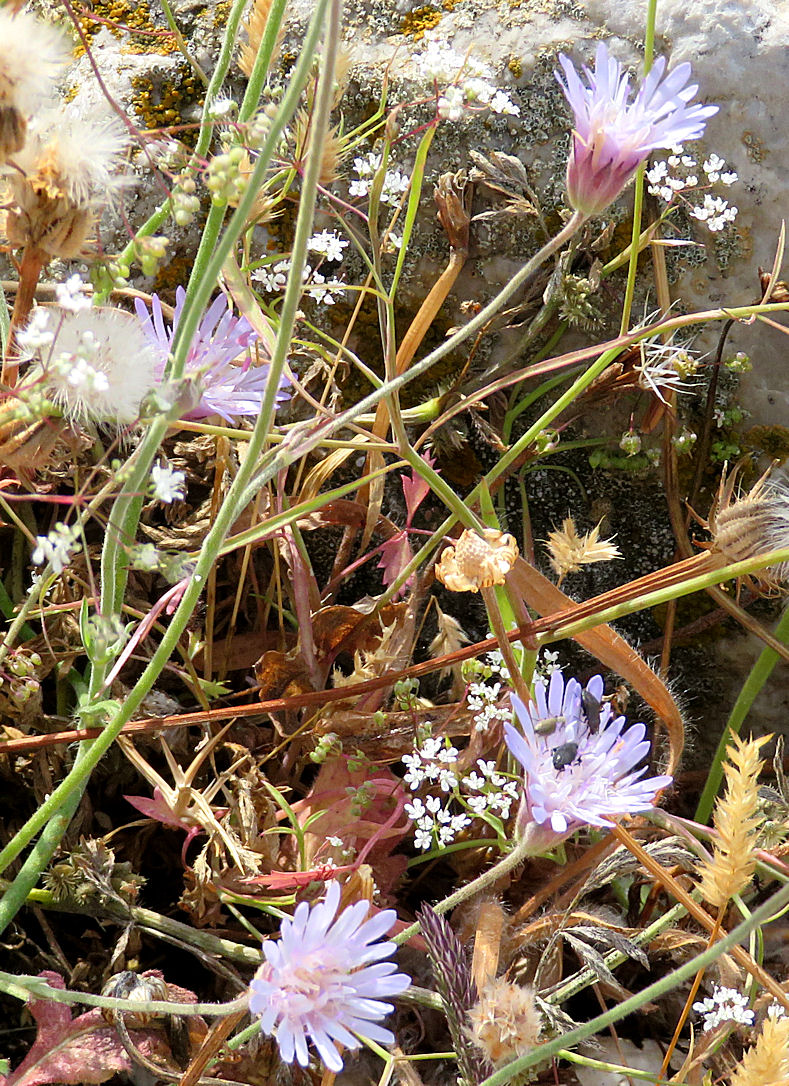
Two advantages of the unusual conditions were that cooler temperatures gave an opportunity to acclimatise, not normally possible with an end-of-May start, and the colour of wild flowers was still very much in evidence. There were no fields swathed in Crown Daisies (known, amongst other things as Edible Chrysanthemum – because they are), but there were far more colours on display.


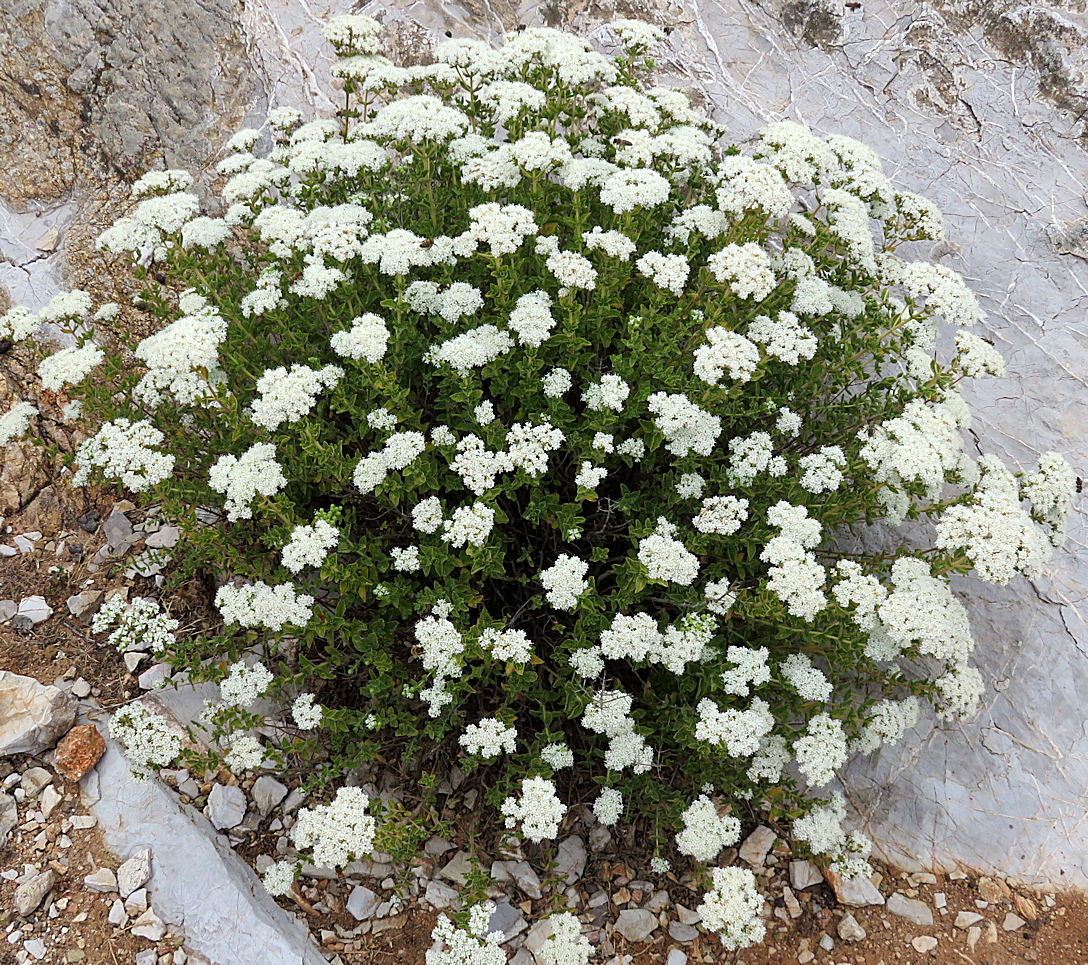
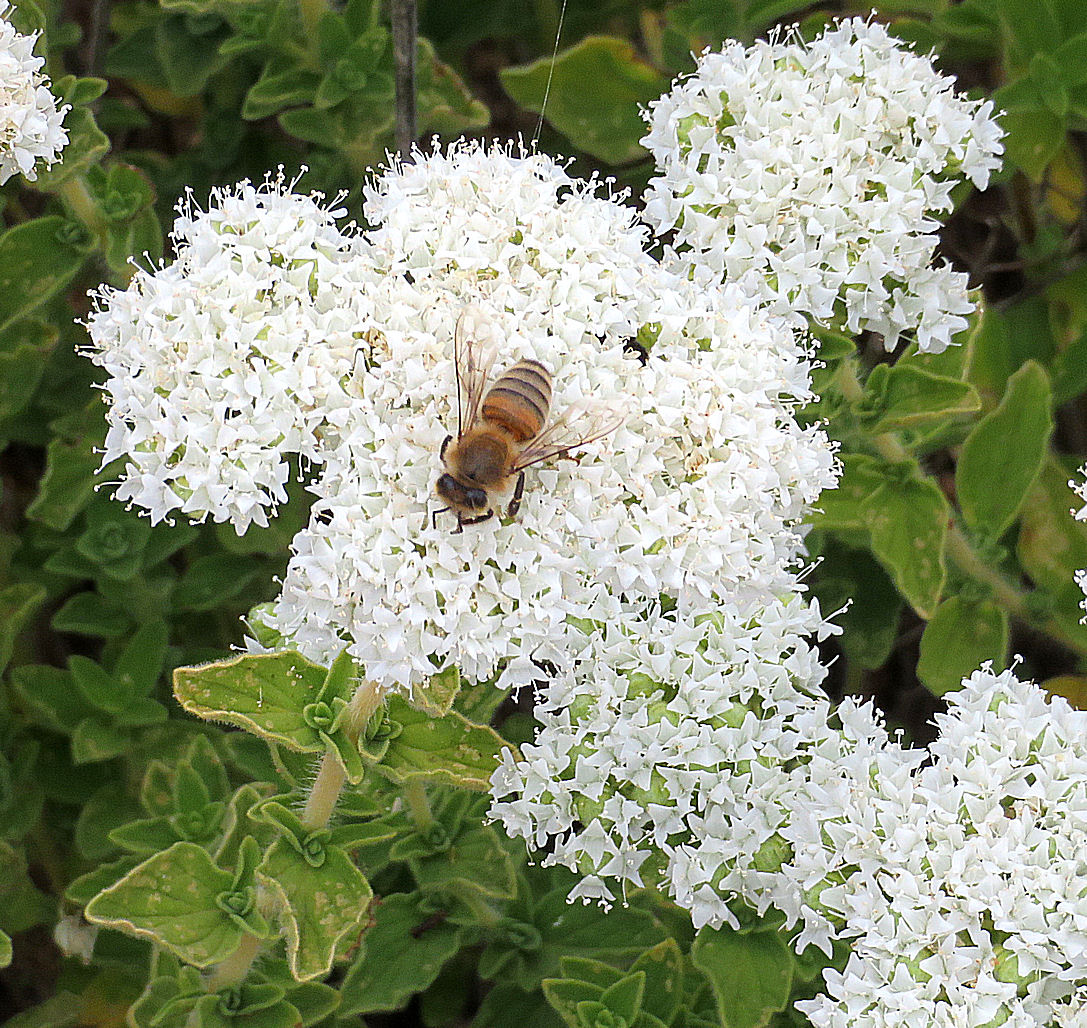
I pick Greek Oregano every year to dry and take home. Arriving middle of May onwards makes this problematic as flowering has finished and the fresh green shoots, best for flavour when dried, are turning brown and wizened. This year, no problem, plenty of fresh growth thanks to lower temperatures and more rain.
As the oregano is finishing flowering, thyme is coming into full bloom, creating a problem walking some routes as huge numbers of beehives are shipped in to maximise the ‘crop’ of much sought-after Thyme Honey. Great for the bees, great for the beekeepers, bad for walkers. Some of the routes are along paths the width of your foot surrounded by ankle-height buzzing activity. One route reaches the ridge-top in the middle of scores of hives and bees make it quite clear by deliberately and repeatedly flying into your head that you are regarded as a threat. Not normally a problem if you know which routes to avoid. This year, not problem at all because the thyme was late flowering. One route which I normally only do late April/early May, or at the end of Summer, I did three times in 10 days with not a thyme in flower or bee in sight.

On a few days I didn’t commit to long walks or go particularly high in the mountains because of forecasts for heavy showers and cloud blanketing ridges. I have an umbrella on Symi because of the possibility of heavy rain in Autumn. This year, for the first time in Summer, on a couple of days I carried it in my rucksack, though never deployed it.
One such was Sunday 28 May. I decided on a short mid-level walk because of the forecast and clouds scooting around. I went to Gria, an abandoned village with a permanent pond high above Pedi but completely hidden from it by rocky crags. After a climb on a road up to the monastery of Zoodohou Pigis (The Spring of the Waters of Life), the onward path immediately becomes narrow and vertiginous. I’m often asked by people I meet if I’ll take them to ‘The Pond’. I watch them closely on that stretch of path because if they are hesitant or have difficulty there, there is no possibility they will cope with the final part of the route down to Pedi – which is a drop of a few hundred feet down a series of waterfalls.
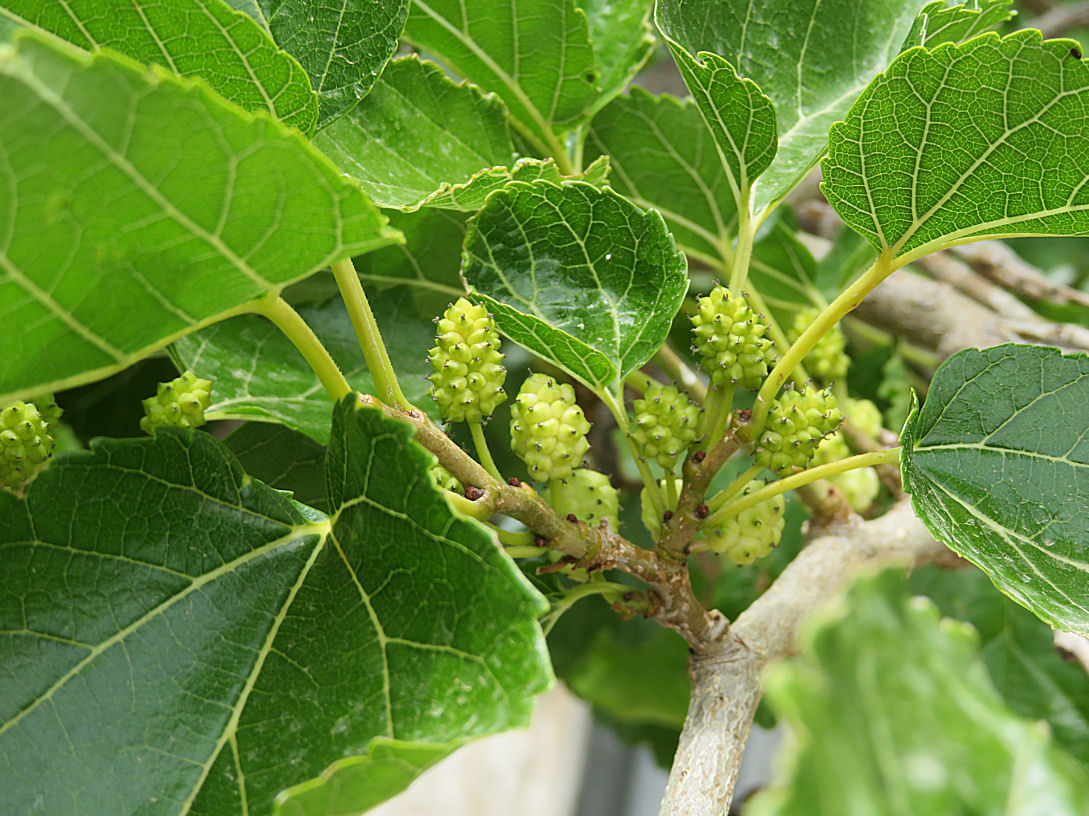
I wanted to visit to Gria to take photos of the inside of one of the abandoned houses, the communal bread oven and the white mulberry growing alongside it.


Task completed, I checked the sky again. One of the characteristics of thunder clouds is that they don’t drift on the wind like other clouds. They suck clouds from all directions so you can’t judge how the Cumulus Nimbus is moving. It was clear that one was forming more or less overhead. If you know what you are doing and where to go, the descent of the waterfall only takes about 15 minutes. The sky becoming significantly darker, I didn’t hang about.
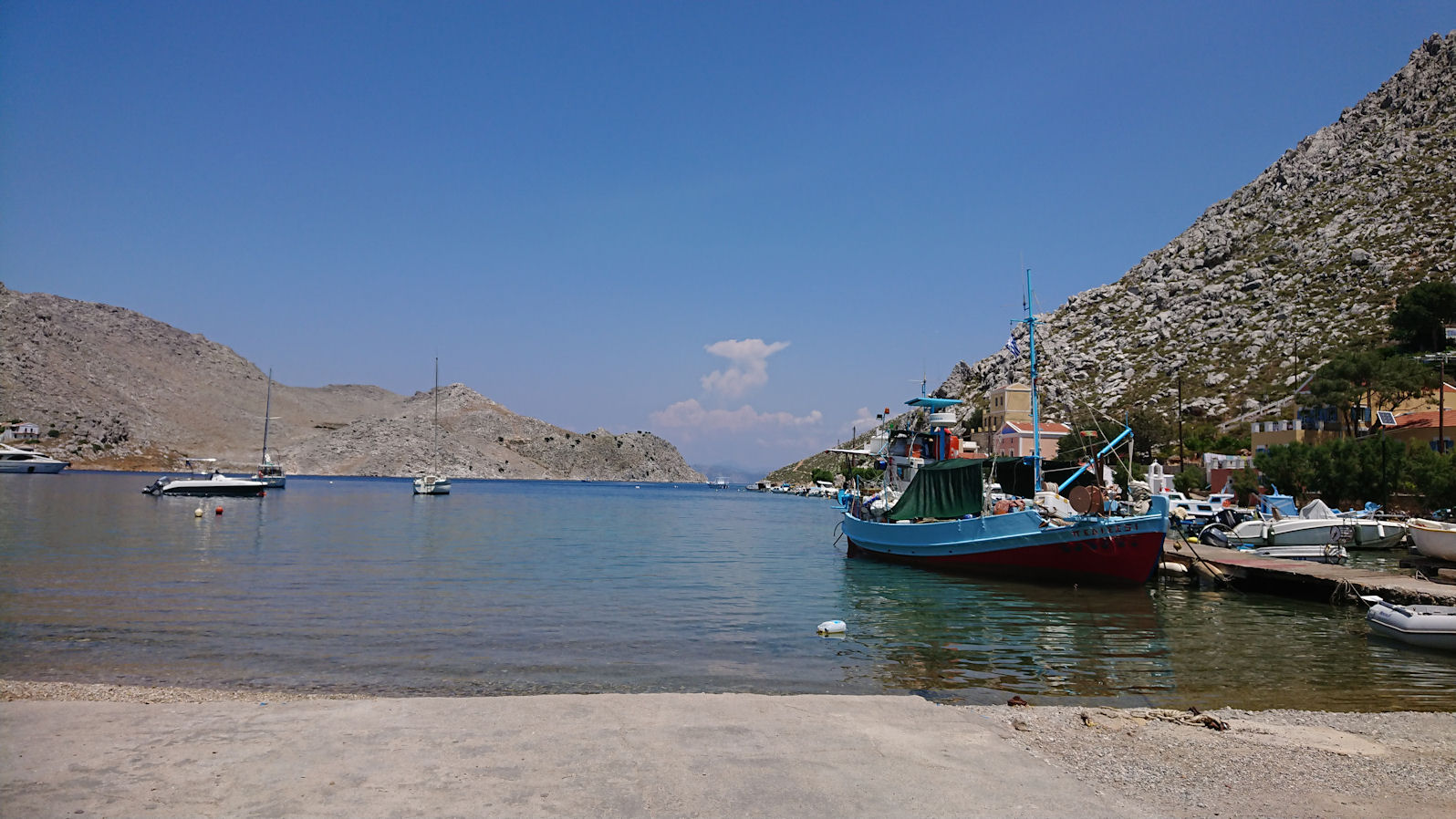
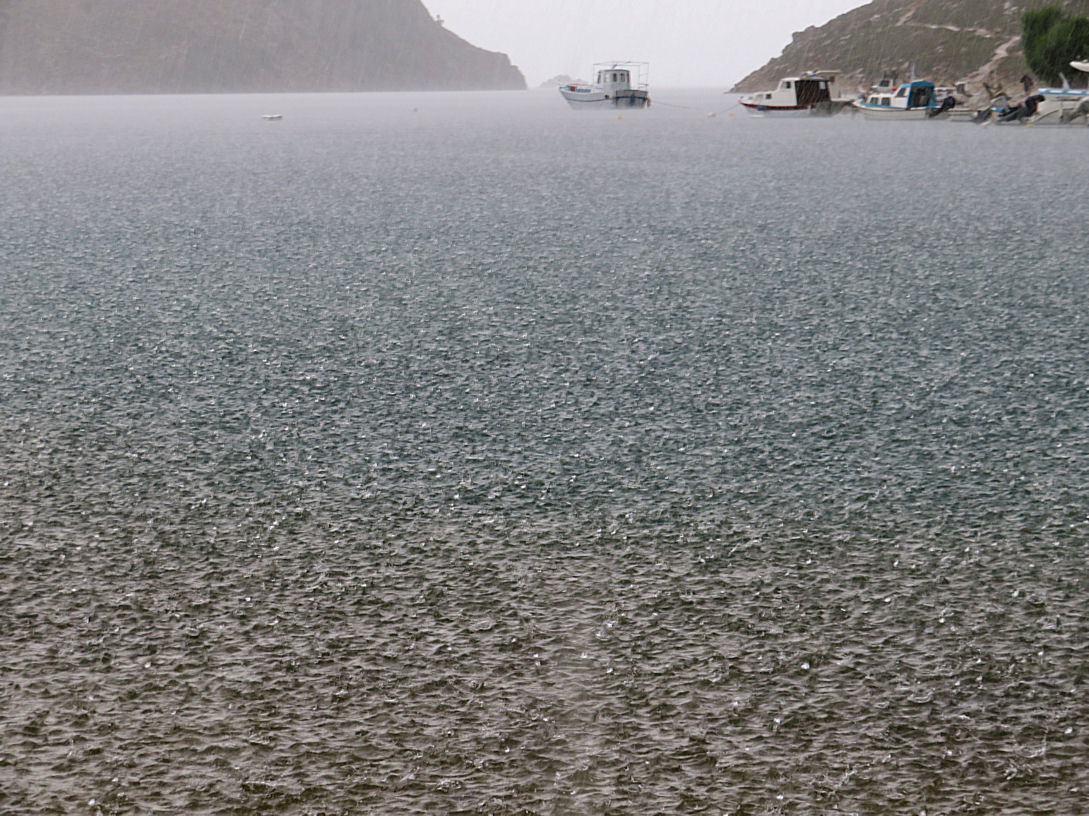
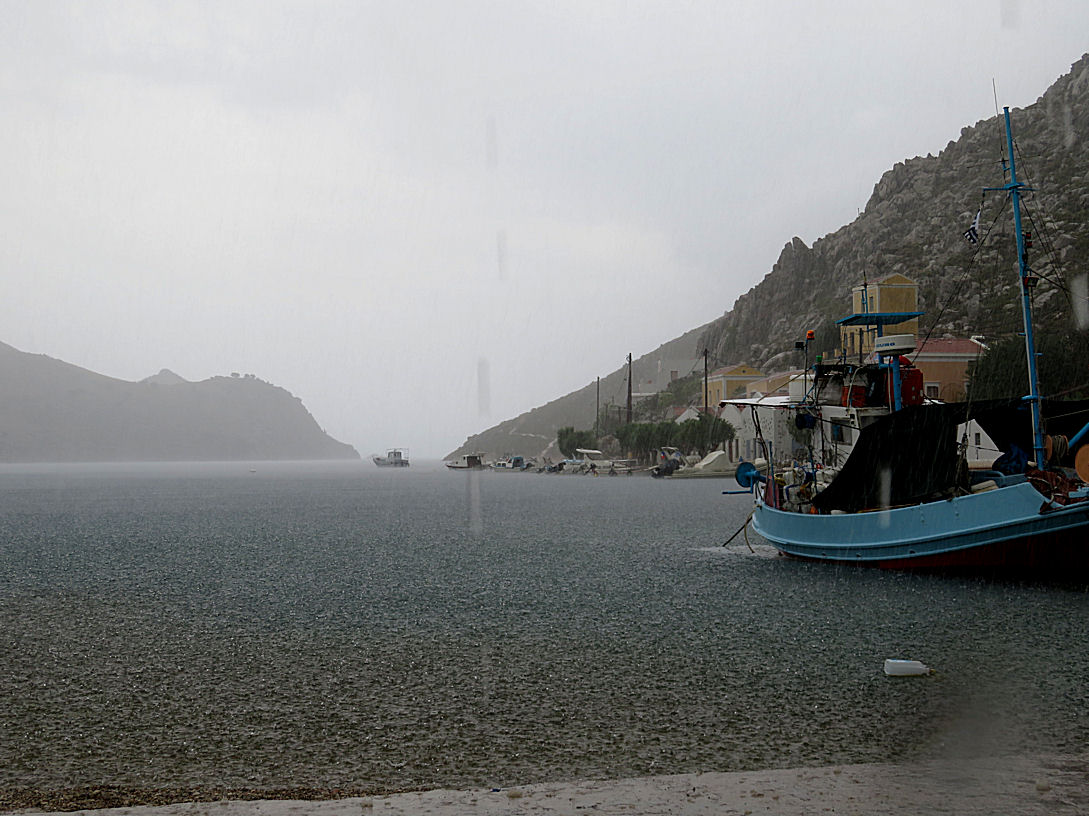
Relieved to reach Pedi, I met up with friends for a beer in the Kamares Taverna on the edge of the sea. Fifteen minutes later, it rained. If ever there was an understatement, that was it. Within minutes there was a stream flowing down each side of the taverna and into the sea. The area in front of the taverna was under water. A few days earlier I had sat in the same place looking out at Turkey beyond the end of the bay. Now I couldn’t see even half way along the bay, the usually placid sea was viciously stippled and almost black.
I was thankful I wasn’t still trying to get down that waterfall.
*******************
Want some summer reading on Kindle? You could try my book ‘A Small Life in Twenty Memories’


 Barry's Ramblings
Very nice piece!