Amorgos: a few more surprises

Monday and my last day in Chora.  Tomorrow I move to a hotel at the other end of the island in Eghiani.  I will be sorry to leave.  Chora is a comfortable place and I have come to feel comfortable in it.  It isn’t that I have made friends here. My inherited genes from both sides predispose me to fall out with people rather than make friends, a tendency I do my best to overcome.  Thankfully both Ruth and David have inherited Enfys’s genes and either make friends easily or at least bend over backwards not to fall out with people.  But that’s all by-the-by.  I have had nothing to do with jeans for years.  Give me poly-cotton, high-tech fabrics every time.

I’m rambling again. I will be genuinely sorry to leave Chora.  I have been here 10 days, done some cracking good walks and enjoyed life in the cheek-by-jowl confined spaces of the old town.

On Sunday I planned a walk for today using the bus to get further West on the island and then walk back.  When I examined the bus timetable again in the square this morning I realised that the plan was better conceived than I thought.   The English language version of the timetable said that the bus to the Western villages ran every day Monday to Friday at 12.00 from the harbour.  This morning I read the Greek version which clearly said that it runs every Monday and Friday.  So today was my one shot at catching it.

There was quite some confusion in the square not only among the thick foreigners like me who couldn’t master Greek and whose telepathic powers were weak but among the locals.  The buses have no indication on the front where they are going.  And you can’t judge by the time because the timetables run buses close together and they are often late ….. or early.  Except one bus which has a display in the front windscreen saying where it is going.  But as it permanently says ΧΩΡΑ (Chora) and it goes to lots of other places as well, that can’t be counted on.  I tend to hang back and let the locals interrogate the driver, they do it far more effectively and certainly more aggressively than I do.  I listen out for the bits I recognise and then check with the driver just to make doubly sure.

The second bus which came was the right one and whisked us off towards the West.  The road was spectacular to say the least.  I’m glad the driver knew what he was doing as at times the front corner (‘front nearside’ or the equivalent in Greek I think is the correct technical expression for that bit of a Greek bus) was either within inches of scraping the rock face on one hairpin bend or overhanging a crash barrier on the edge of a cliff at the next.

And then it got really interesting  (the word ‘interesting’ here is in the sense that rock climbers use it – brown trouser job) as a few hundred yards from the village where I wanted to get off (again, ‘alight’ or the Greek equivalent thereof I think is the  correct technical term), the bus dived off to the left down a road that was so steep and with so many tight hairpin bends I was amazed a bus could get down it.  Most people would struggle to drive it in a car let alone a full sized bus.  It turned out that it was going to a beach on the other side of the island and most people got off at that point leaving only me a few locals still on the board.

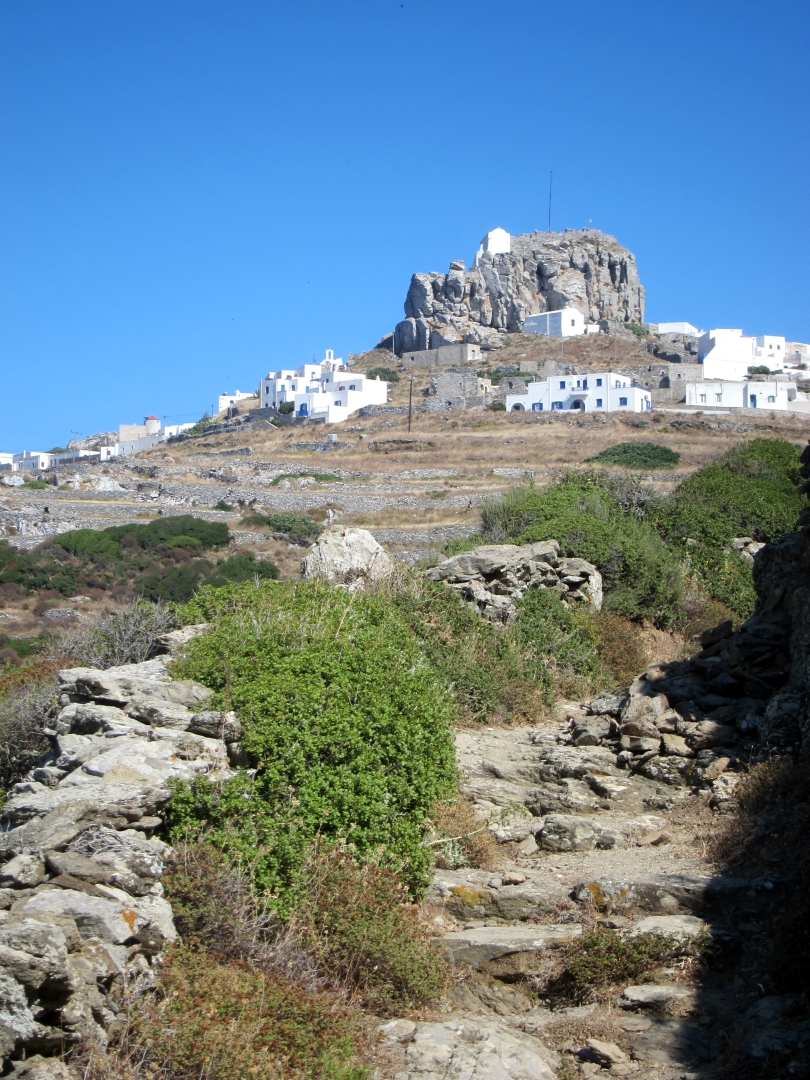
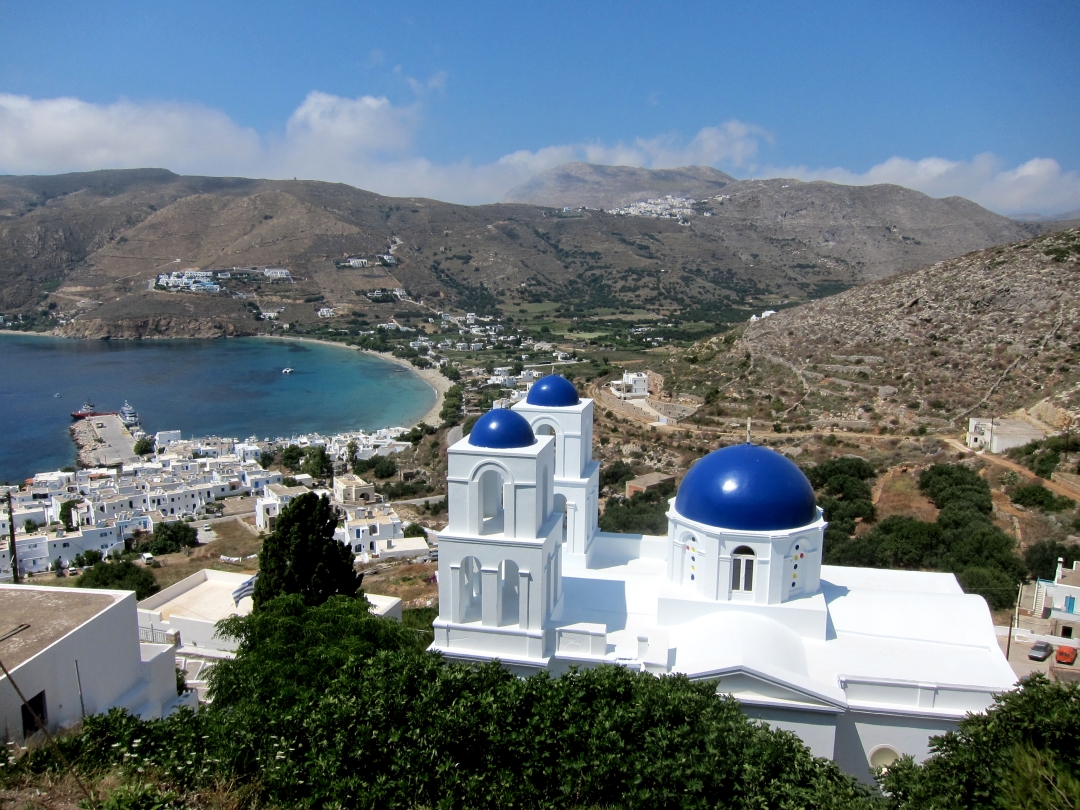
I got off at the appropriate road junction and walked into the village to look for the path to take me to the ancient castle, the Kastri as it is called.  For once the SKAI map was quite accurate and helpful, too many times I have found it not to be, and I was soon on a very good path dropping down towards a blue-domed church.  Blue domed churches seem a lot more common on Amorgos than the other islands I have been to, perhaps they are a feature of the Cyclades.  They are certainly attractive and this one particularly so outlined against the blue of the sea and the sky.

Iconic blue-domed white church as the first target on the path

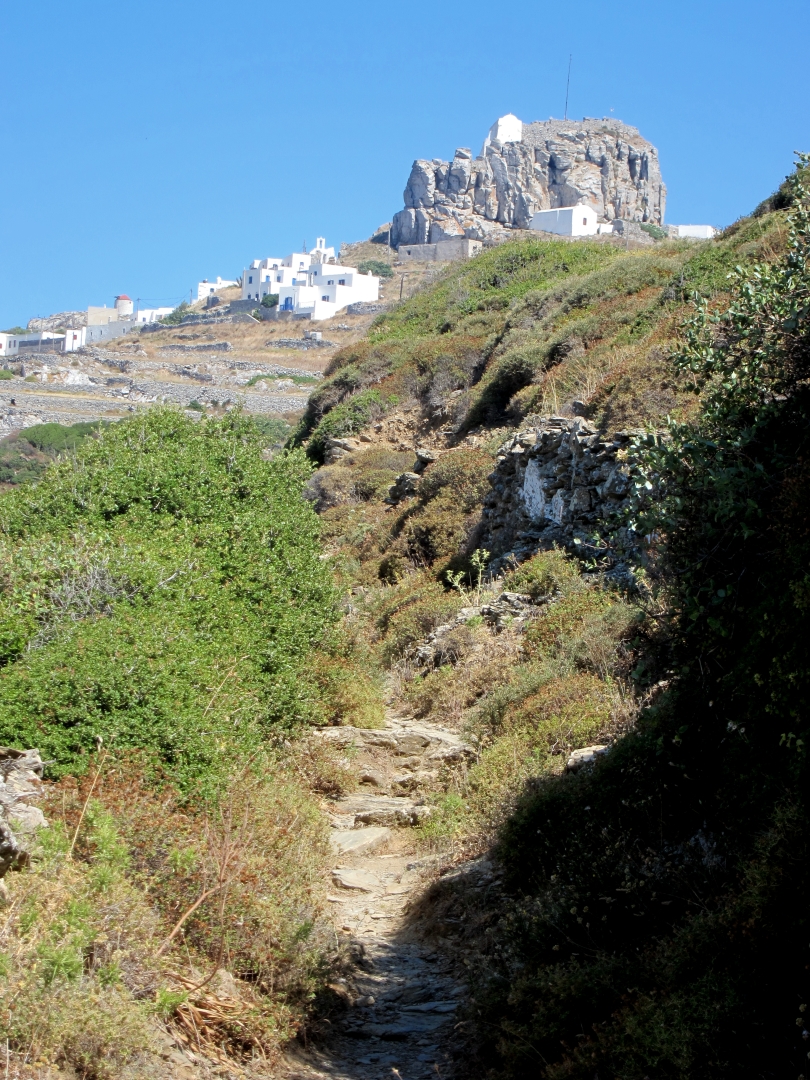
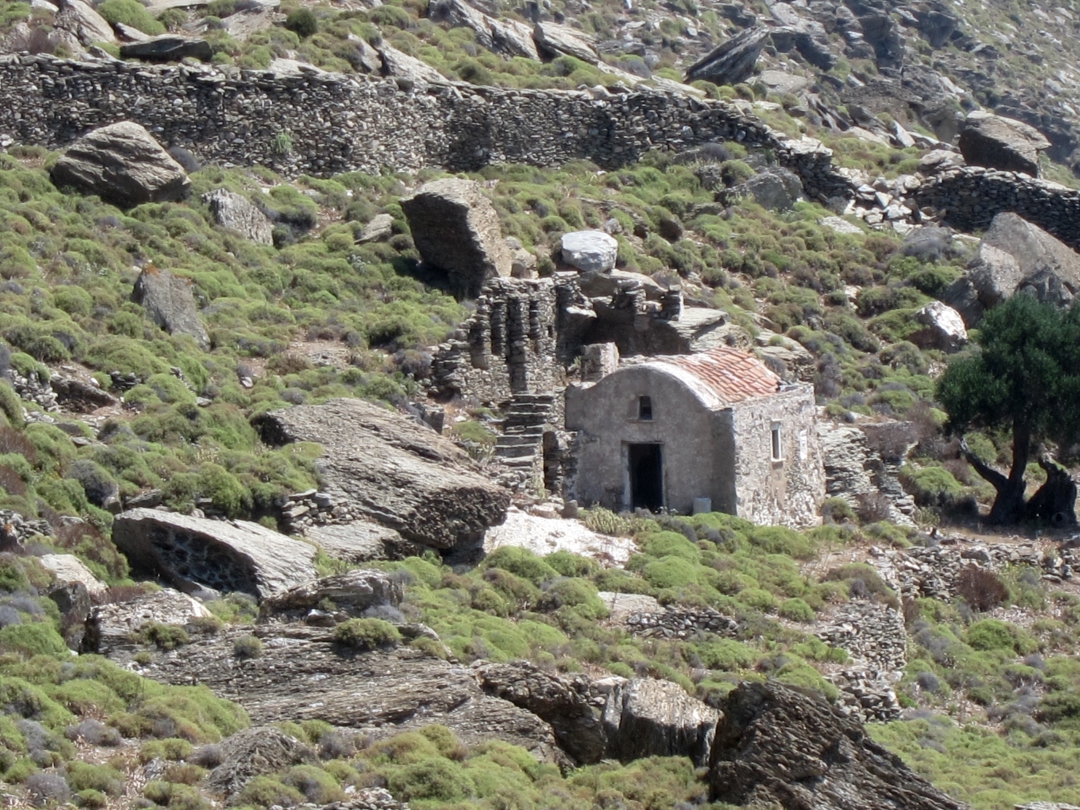
Having reached the church the path, ‘Footpath of Historic and cultural Interest Number 3’ with signs to prove it,  continued downwards towards a prominent rocky crag with the remains of the castle on top.  Very dramatic.
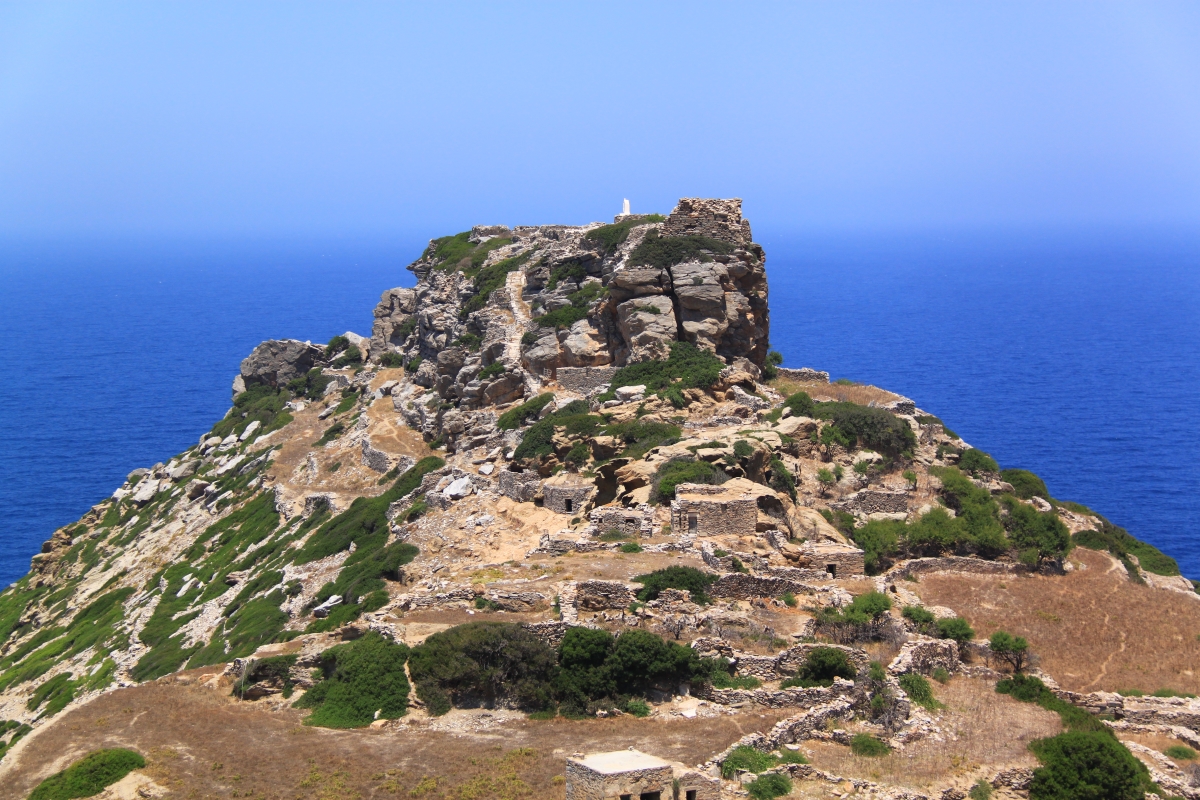
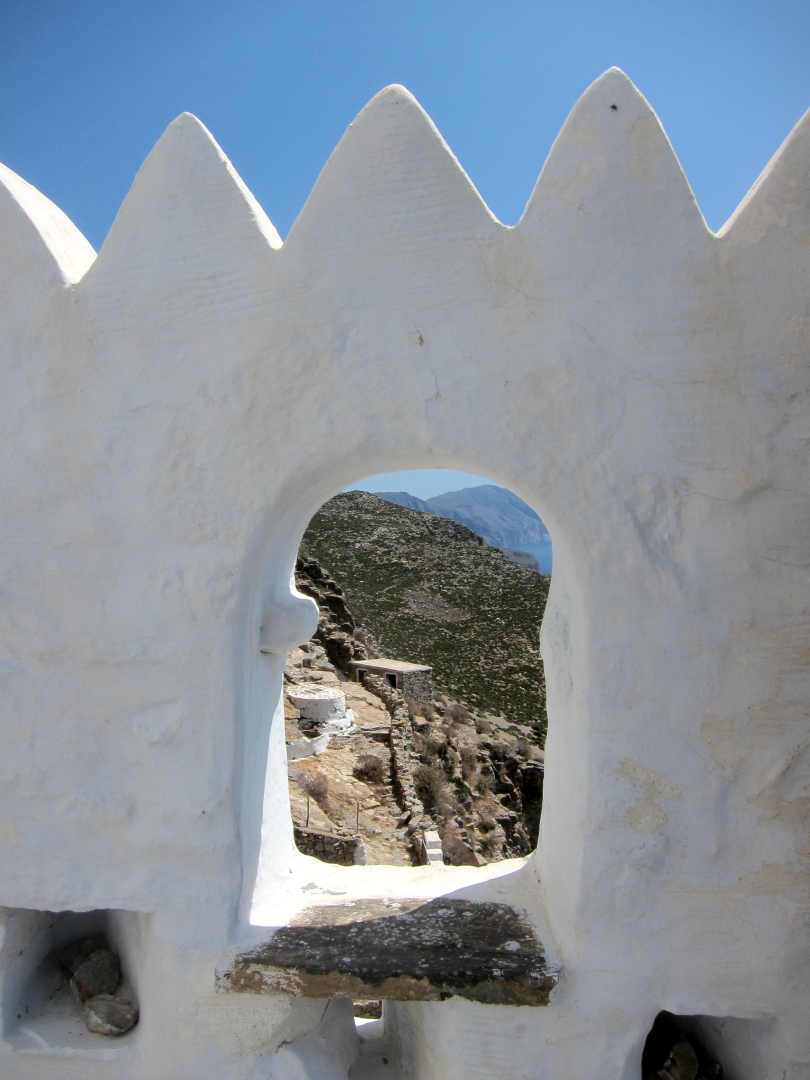
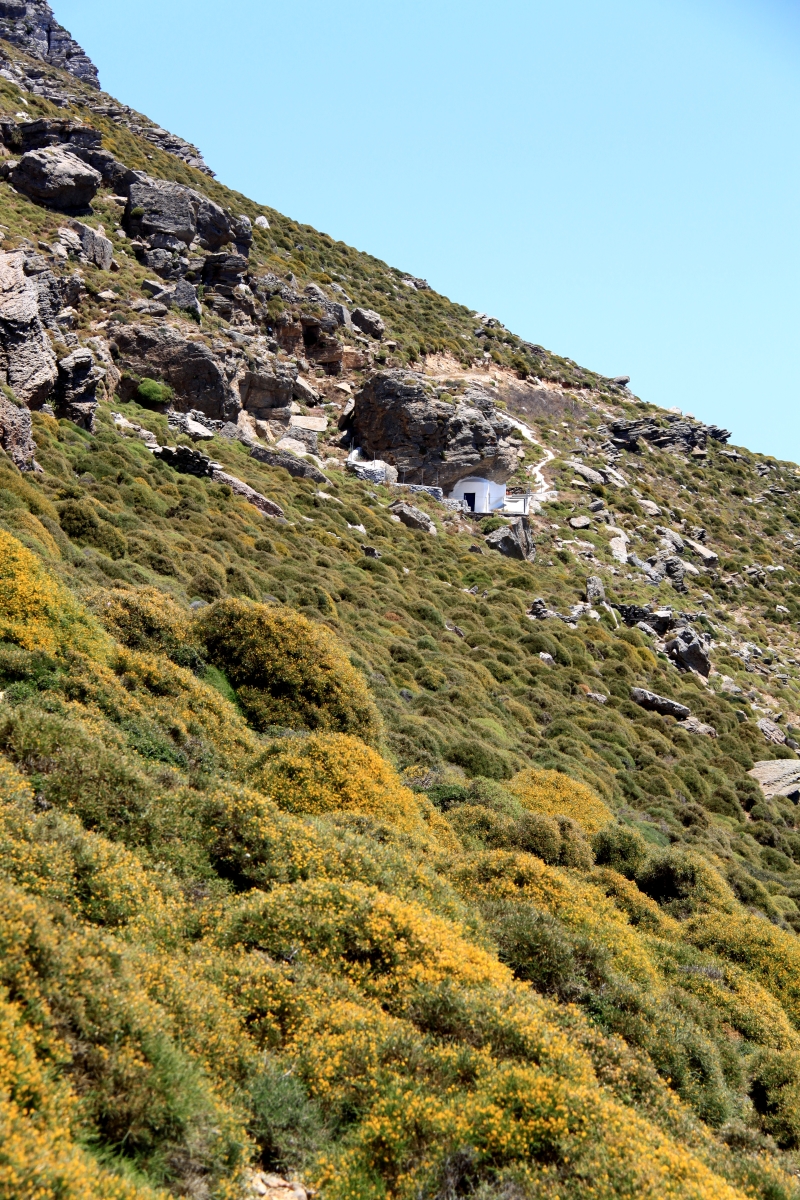
Castle cragI climbed up the steep stone steps to the top of the crag and into what is left of the castle and the small white painted church perched on the edge of the cliff and spent an hour or so having my dinner and mooching about.  There is an air of impregnability about buildings perched on the top of crags, the cliff edges continued vertically upwards by stone walls.

Church on the edge

I think it was after some of my banana

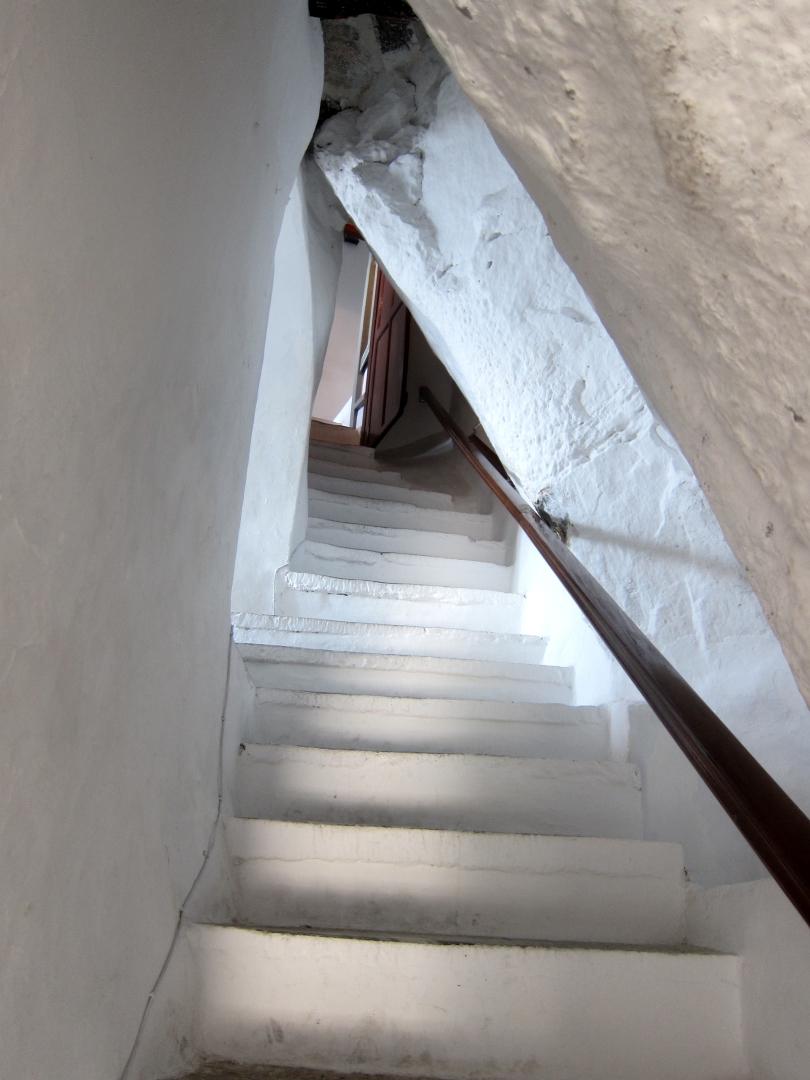
The near-vertical steps down from the castle on top of the crag: the vegetation on the left is very sharp

A look back at just how impregnable the crag is

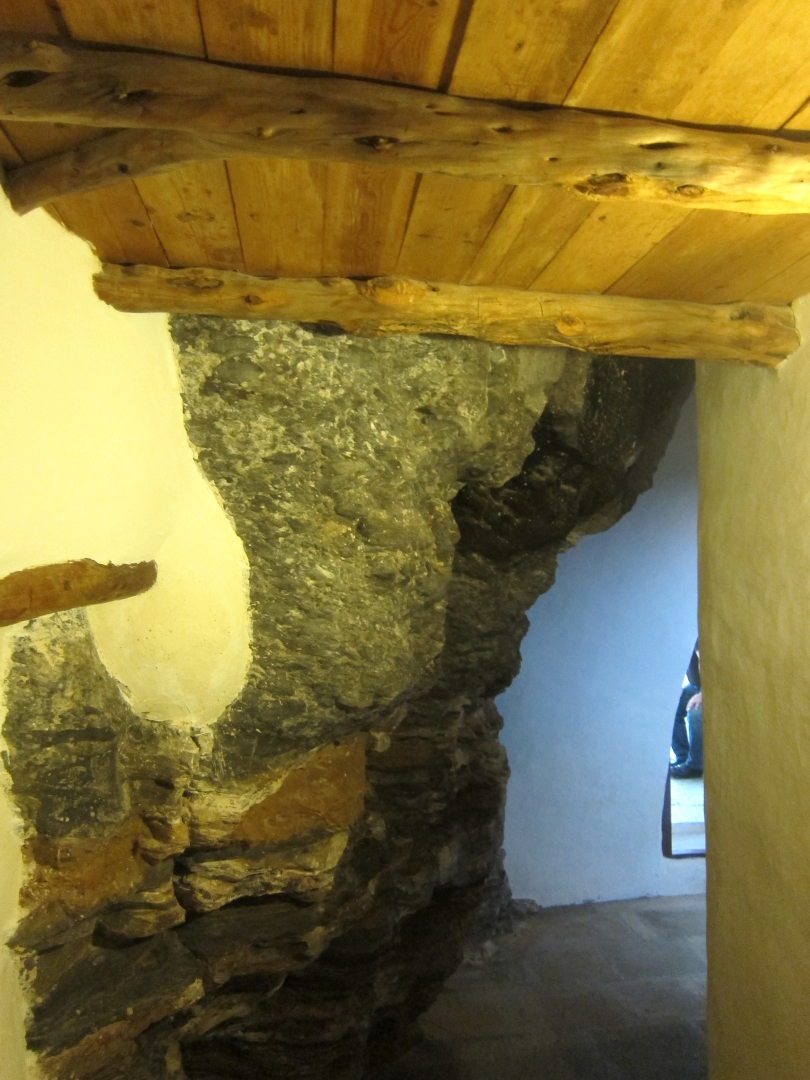
Then I went back down the stone steps and followed a footpath around the base of the crag.  There were small houses built into the rock taking advantage of overhangs  and clefts.  The path disappeared in places but eventually with a bit if scrambling I completed the circumnavigation and joined up with the onward path back to the town.

The guide book is very confusing about the timings for the walk not least because it had a series of 5 options for doing sections of the walk and I couldn’t fit them together.  So i had taken the idea from the book and worked it out an option on the map.  As it turned out I think I now know what the book was talking about and the timing was pretty good.  Two hours back to Katapola from Kastri at a fairly brisk pace.

The brisk pace was because my start time was constrained by the bus.  I didn’t start walking until 13.00.  And my estimate was that the whole walk back to Chora would take about 4 hours plus stopping time for photo opportunities and mooching about.

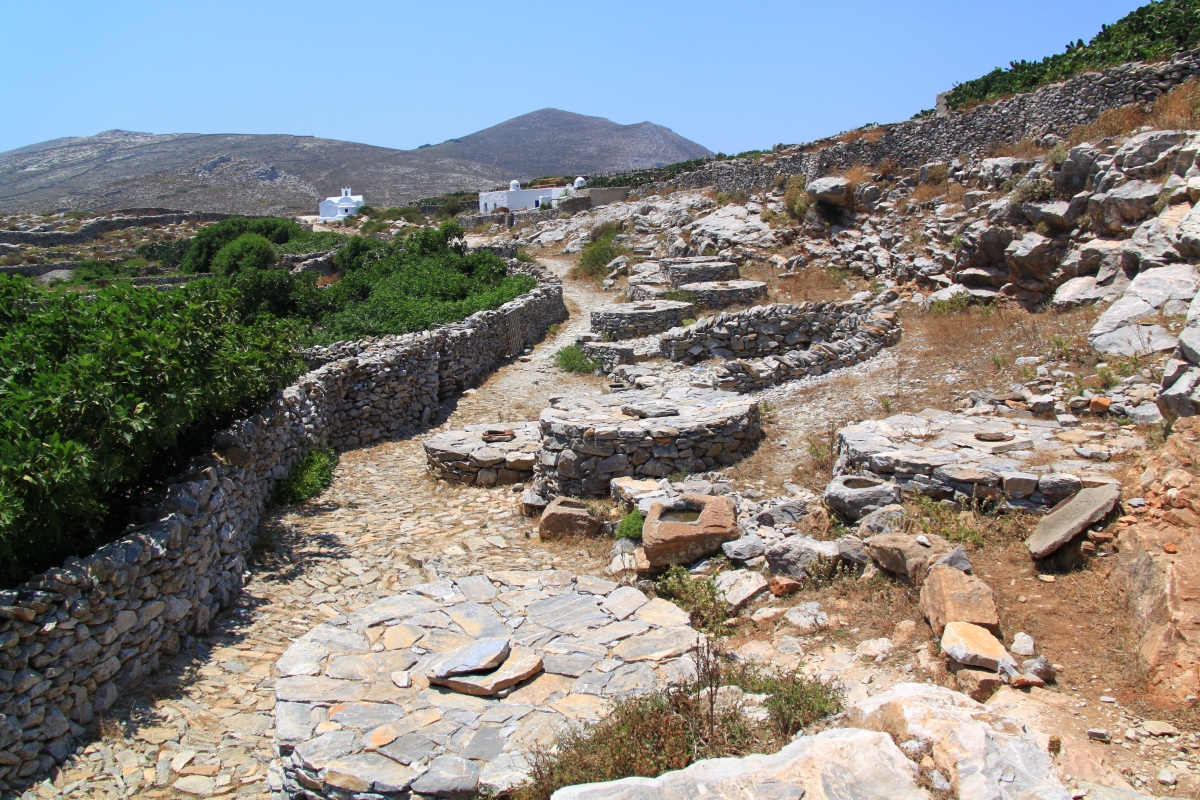
The walk back from the Kastri was different from others in a couple of significant respects.  First, the landscape is deeply incised by river valleys and so the kalderimi has to divert inland in order to maintain its height or to drop down to the valley floor and climb out the other side.  In one case it dropped right down to sea level.  The other respect in which it was different was that there was more evidence of surface water including the occasional trickle of a stream and bridges over them.  In places the vegetation in the stream beds is very lush, and seems to include in some cases vigorous growth of grapes tangled up with the all sorts of other things.
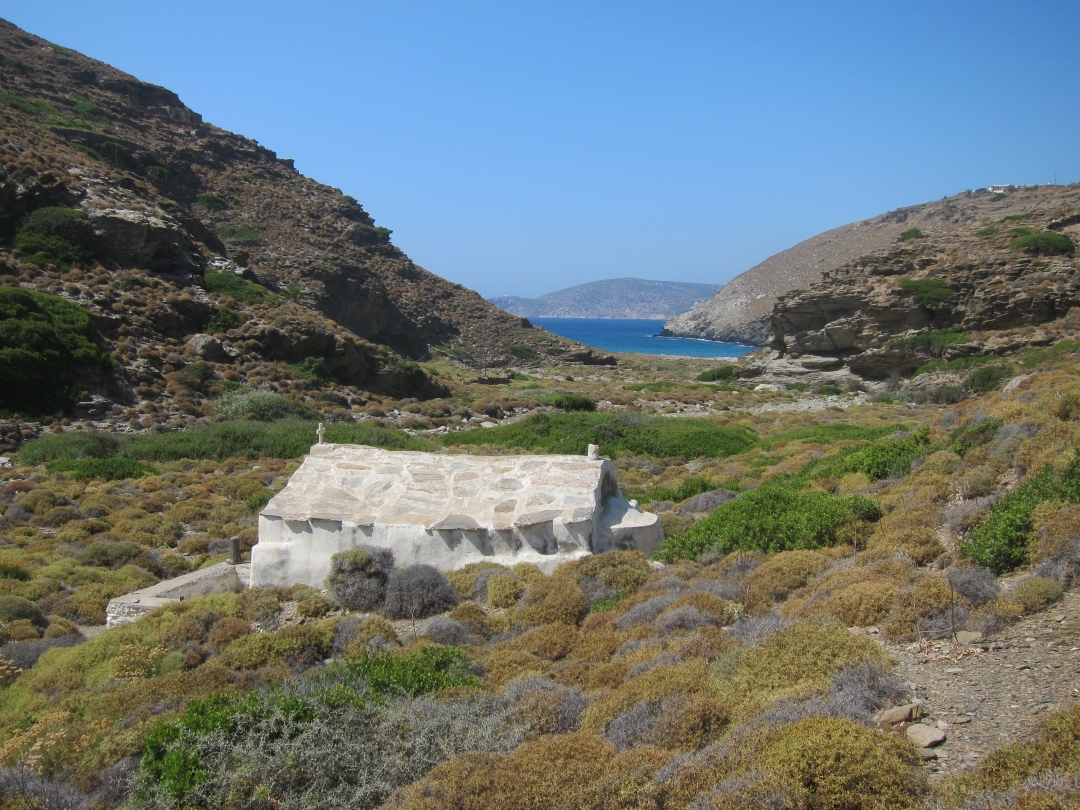
The path unusually drops down to sea level

I wouldn't like to try to pick those grapes

The last section down into Katapola I had done yesterday and from there back to Chora I had done about 3 times so it seemed familiar territory.  Strange how a place becomes familiar after only a few days.  First time you walk it everything you see is new and you take in a lot of new experiences.  After a few times it is still enjoyable but the amount of new stuff you see gets less and less, almost to the point of being an unseen backcloth to the walk.

That was particularly so on Monday on the section of path from Katapola to Hora because I was hot and tired.  I was watching my feet, too easily snagged by prickly plants trying to attack my feet and ankles, and stepping out because my aim was to get back for 18.00 to fit in the evening’s activities.  But, as I’ve banged on about before, the subconscious is constantly monitoring and picks up far more than gets to the front of the mind, dismissing most of it and sending the message to the conscious brain: ‘nothing unusual, normal stuff; don’t pay any attention to that; continue concentrating on walking’.  Until, as I was walking past one of the springs alongside the path, I jerked into non-automatic mode as out of the corner of my eye I saw the rear part of a snake on the edge of the opening into a covered tank of water, presumably having a drink.  It was a lot smaller than the one I photographed on Nisyros, probably just short of a metre long and less than an inch in diameter.

I veered sharply away from it in order to not startle it into slithering off and to dump the rucksack and get the camera out. Because I was so hot and sweaty I had put both camera in the rucksack, invariably I am carrying one or the other for just such an eventuality but not just then.  It soon realised I was there and it went mental trying to get away to safety.  It found itself trapped between me on the outside of the tank and the water on the inside.  It disappeared into the tank for a while but didn’t find that very good, came out again, went in again.  I watched it for a good 10 minutes got a few photos before it finally plucked up courage and slithered out of the tank and disappeared into a stone wall.

First glimpse as I walked past

Climbing the walls to try to escape

.... before finally making a dash for it

You don’t see too many of those if you only ride around on a hire-bike, which is by far the commonest way of sightseeing and getting to places over here.  Great conclusion to the walk.

Posted in Greece 2011 | 4 Comments

Amorgos: Greek hospitality

I struggled into the world again this morning locked into the short term automatic reactions to cope with life before the day begins.  Caffeine is a great gift.  But how did people find out what to do with the beans to turn them into this most pleasant and efficacious of drugs?  Very technical process but, as Bill Bryson records,  there were coffee houses in London before tea was even heard of in Britain.  And how come that the Greeks got it wrong for so long, destroying it by boiling!!!   Thankfully they have now got it sorted.

I have walked around the Katapola/Chora axis a fair bit now but there are mountain villages further to the west so I thought I would do a walk in that direction.  The walks book has a good walk which with embellishments would take about 4 hours – but that was one way.  Consulting the bus timetable in the square showed that those villages had weekday service only.  So I put that off until Monday.

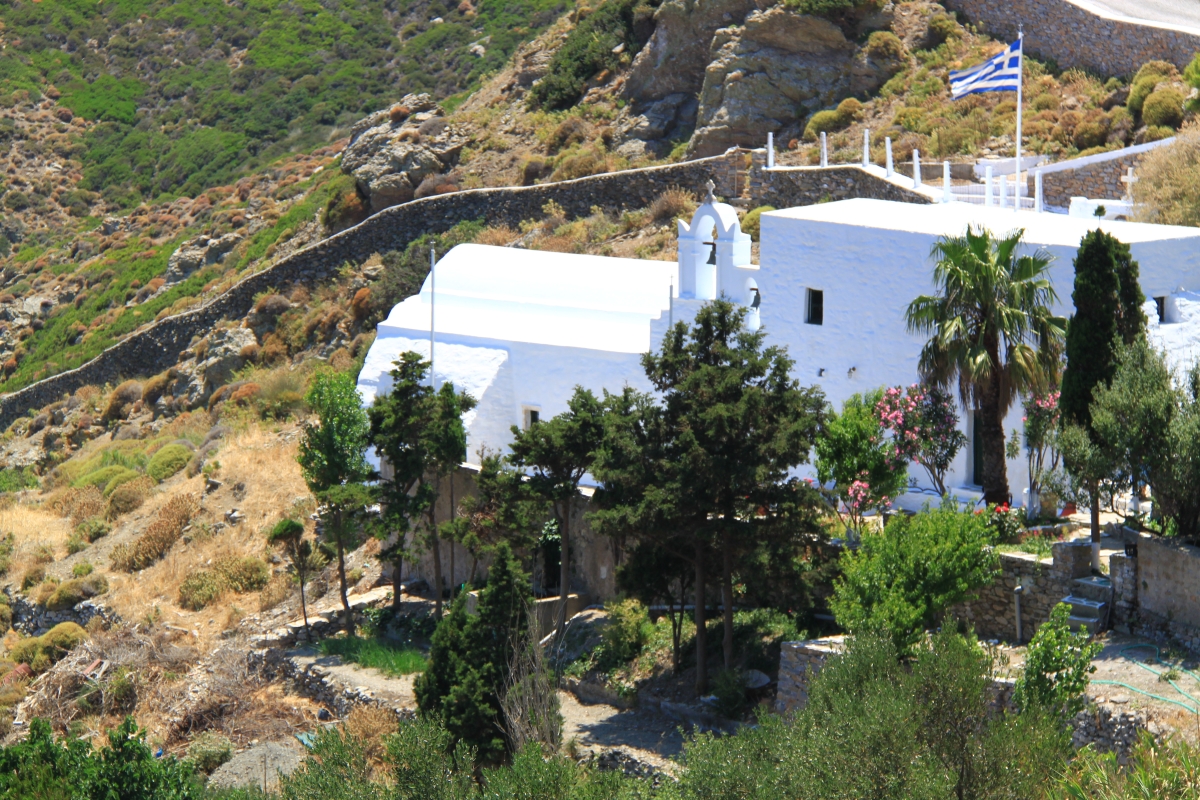
Instead I devised what turned out to be a brilliant circular walk.  Following an old kalderimi from Chora around on the North side of the ridge crossing it in a col and then dropping back down onto the North side to an old monastery, Agios Georgios Varsamitis.  Great path.  And I saw and managed to get a long-shot of what I think is a kind of falcon.  Looked a bit big for a kestrel and with narrower wings  Not flying haphazardly like the insectivorous Eleanora’s Falcon. One shot showed it’s colouring.

No matter how close I tried to get it just soared a bit further away

But at least this stayed still

The wind was again phenomenal and as I crossed the col the venturi effect was astounding.  I could hardly stay on my feet.  I had to cower behind a rock to check the map.  But we’ll come back to the venturi effect later in the day.

The walk down from the ridge to the monastery was short but went from howling wind to peace and calm.  As I entered the enclosure I stopped in the shade of an ooleander bush to check the photos I had taken and a guy appeared and asked if I had just arrived and was I on my own and did I wanted to look inside.  I don’t really do interventions like this but not wanting to cause offence I said ‘Yes’ to all three questions.

He could not have been more helpful and friendly.  I was in shorts and sleeveless top so asked if that was OK.  The iconic Hozoviotissa Monastery which I finally visited a few days ago has a strict dress code which I was now failing to meet.  I did I have a sleeved top in my rucksack which I offered to put on but he said not to bother.  This monastery didn’t adhere to the strict dress code.   He gave me a brief outline of the history of the monastery, only re-opened this year after many years closed up.  One of the two ladies who now looks after it is going through the process of becoming a nun and will be ‘admitted’, or whatever the correct term is, in September.   The church was more ornate than some of the mountain churches but somehow very peaceful.  There were frescoes and paintings from the 18th Century and a stone plaque in the floor where the last nun to have lived in the place was buried in 1757.

He finished his concise and very informative introduction and then said I could light a candle or pray or just take photos.  I said I would take photos and then pray.  Sunday morning about the time that services were beginning back home seemed a good time to stop and pray.

As I was leaving he pointed out an opening in the wall with a pool of water inside.  Turns out that the church was built on the site of a pre-Christian Greek temple where people would come to drink and have their future foretold.  Apparently one of only 3 such places in Greece.  My guide said that they didn’t use the water now because that was not part of their faith ….. only God knows the future.  Amen to that!

Then, as I was thanking him on the way out, he opened another door and invited me inside because it was their custom to offer visitors a drink.  The room was very simple: light, cool, fresh painted, comfortable and airy.  The drink was the same as it had been in the Hozoviotissa Monastery, raki.  But this was raki, which is a very rough, distilled spirit, mixed with honey and cinnamon in a tiny glass.  Served with a large glass of ice-cold water.  Not at all intoxicating and very pleasant.  I was the only person there and he sat and chatted in very good English for 20 minutes with background about the monastery and himself.  Fascinating!  And he recommended a walk to do when I get to Eghiali.

There was no hint of asking for a donation or requiring any payment.  Deep-rooted in Greek culture is the concept of ‘filoxenia’ , – hospitality, the welcoming of strangers.  I remember on Hydra some years ago that it was the custom to offer visitors to the mountain churches fruit but as that was impractical now that most of them were unattended there were small bowls of boiled sweets instead.  Generosity of spirit seems very much part of Greek life.

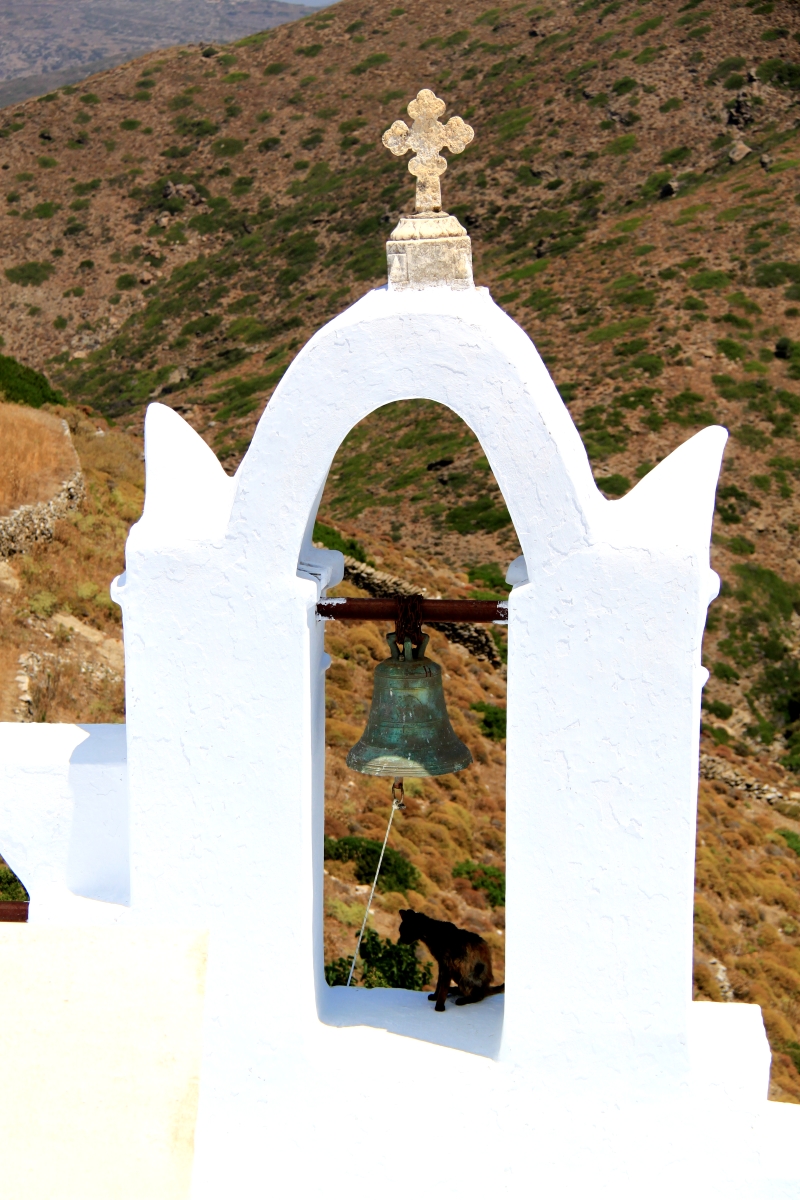
Bell and cat

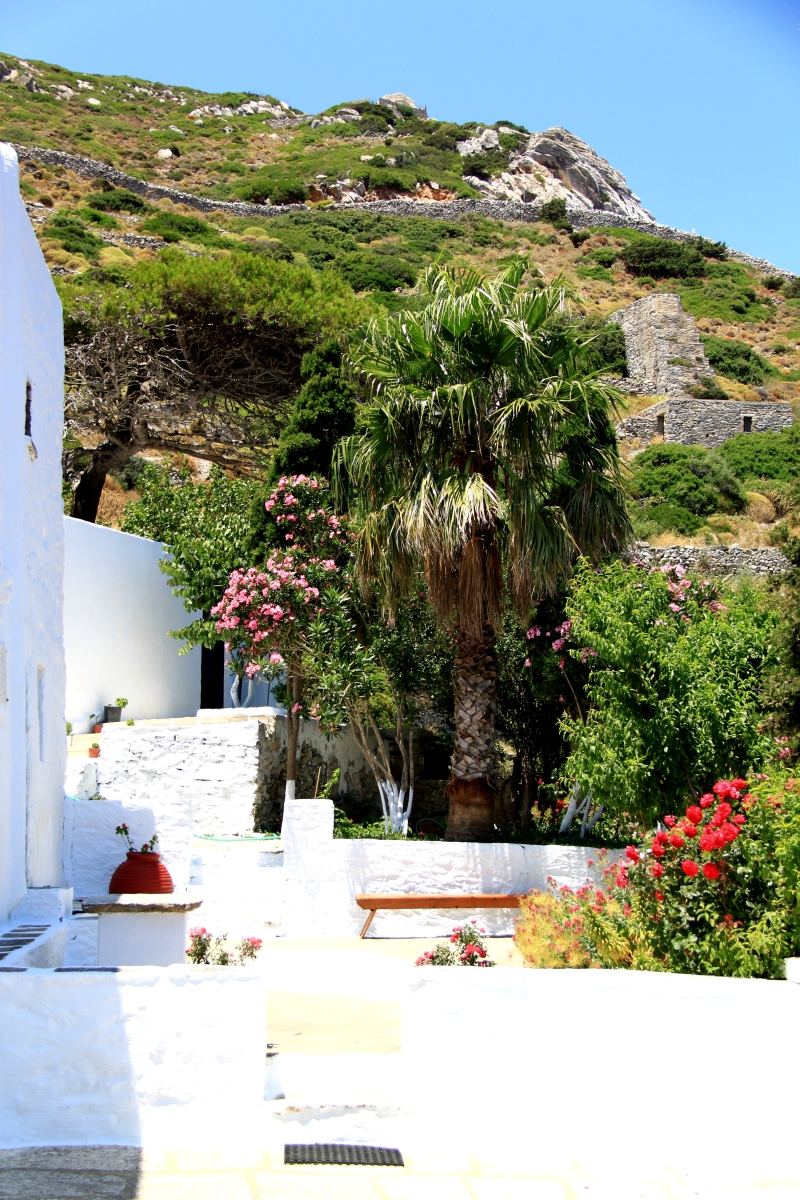
Small courtyard at the front of the monastery

Looking back

But I eventually bade him farewell.  A curiously very English phrase which summed up the formality of the moment.

I continued on my way back down to sea level on the very good kalderimi, enjoying just being there.

I stopped off on the way at Minoa, basically an archaeological dig where work seems to have stopped some while ago.  I guess funding has fallen on hard times.   The excavations completed so far are reminiscent of the Paliocastro on Nisyros but very much less extensive.

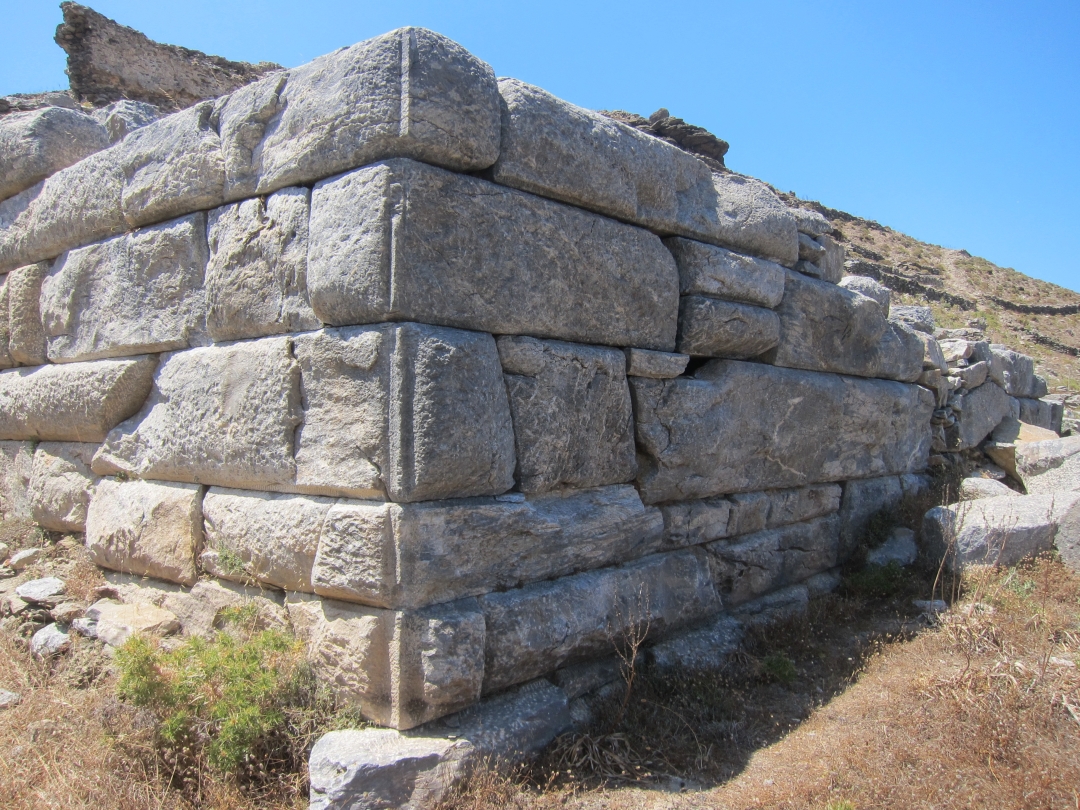
Very much like the Paleocastro on Nisyros but a lot smaller

Lurking around the restored 'country house'

However restoration work had been completed on an old ‘country house’ at the beginning of the track up to the excavations.  This showed a very different basic architecture to the old houses on Nisyros with a flat roof supported by wooden beams radiating from a very large central pillar which took up a good bit of the floorspace.  I had seen a number of derelict houses with a similar construction but with the roofs collapsed as timbers rotted.  The stone barrel arch construction of Nisyros is much more durable.

From Katapola I walked back up the kalderimi to Chora

Approaching Chora

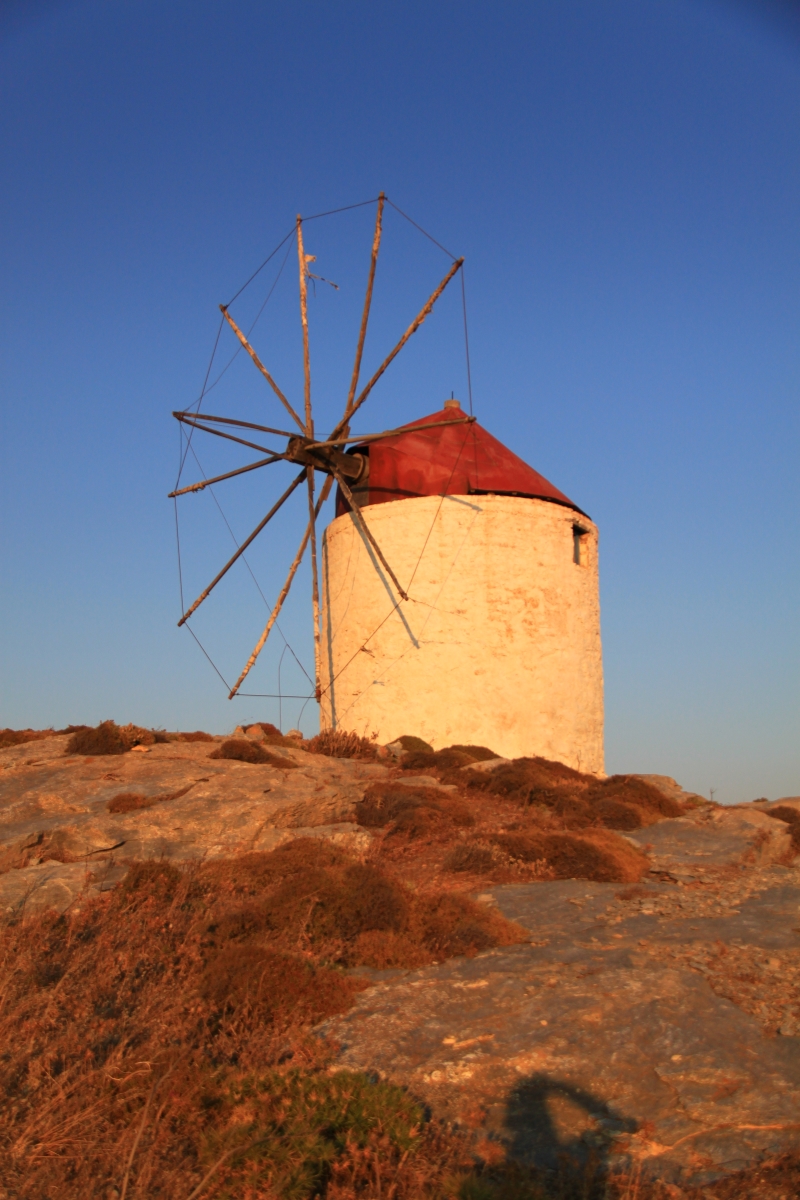
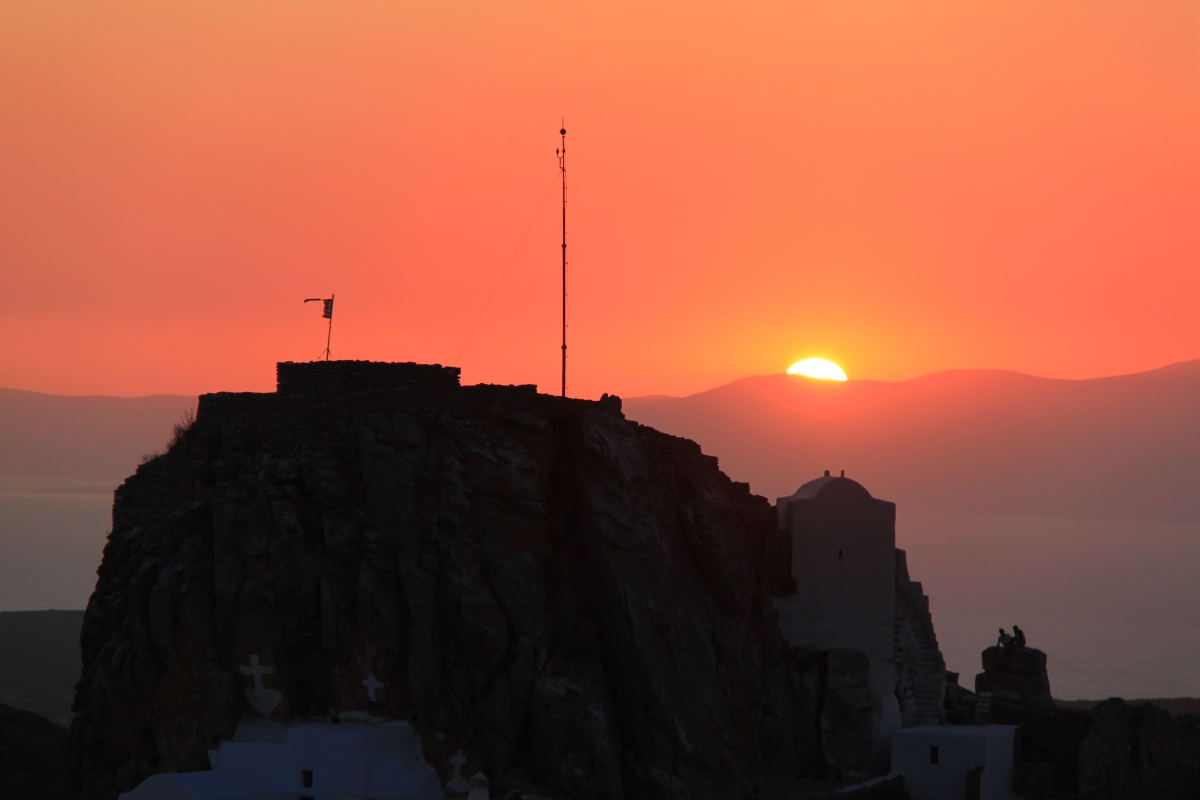
…. and did the usual end-of-walk things before the next part of the plan for the day, walking up to the windmills to photograph the sunset from there.  The thinking was that not only would they add to the picture but I could get the castle rock silhouetted.

The Greeks certainly knew a thing or two about siting windmills!  The wind was still strong and as I got close to the ridge top I could hardly  stand let alone walk.  I was clutching my Canon EOS and very anxious not to stumble and damage it.  That happened once on Tilos and I had to buy a new lens, a costly trip.  We learned about the venturi effect in aerodynamics as part of the paragliding exams.  It’s basically the concentrating of the wind as it is forced to go over the ridge and is strongest just at the front edge of the hill.  It’s like being punched with a fist rather than pushed with the flat of the hand.
Ferocious as the wind was I wasn’t the only one up there. Obviously a few others had had the same idea for watching the sunset and were scattered around sitting on rocks.

Bathed in mellow evening light

Going down ...

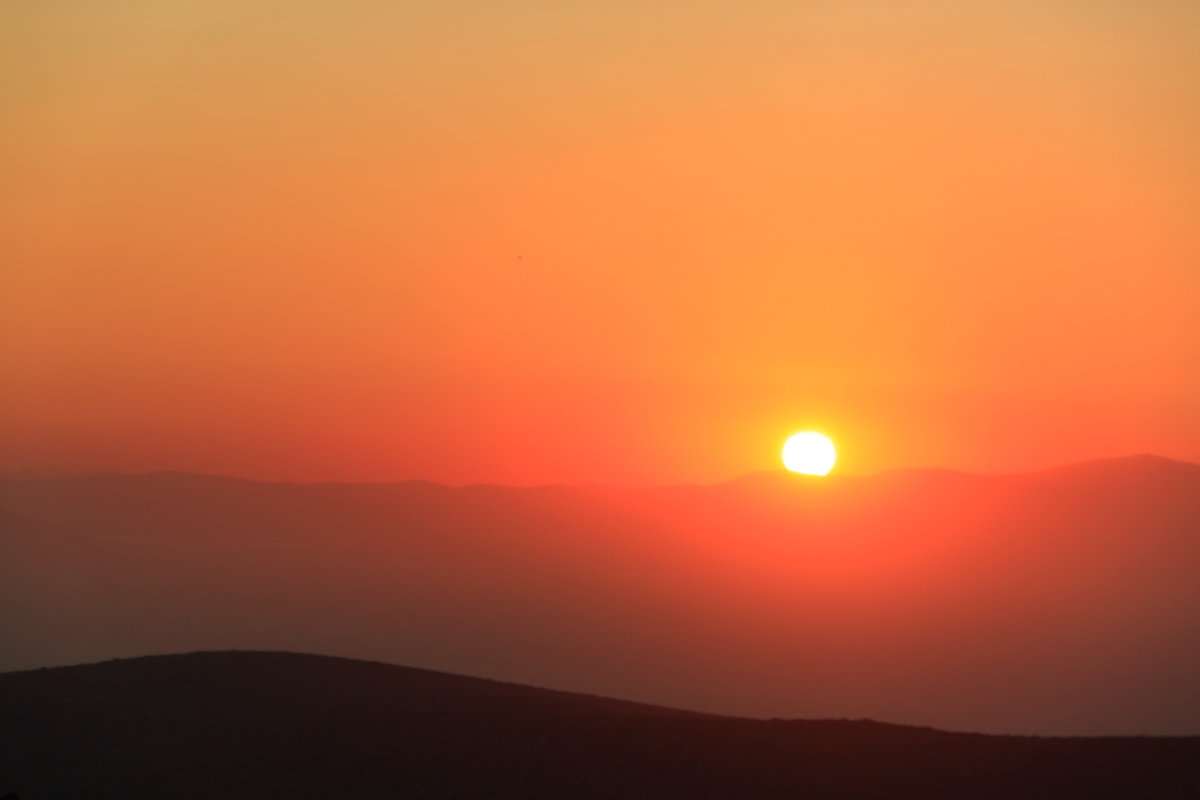
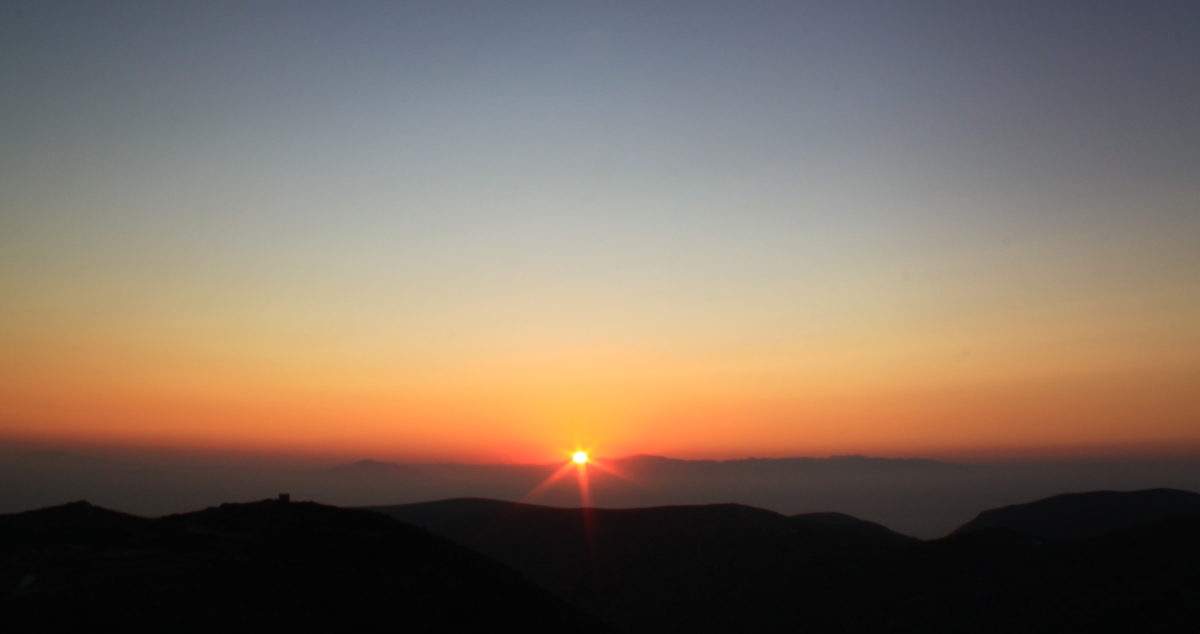
Castle Rock silhouetted as the sun sinks behind Naxos

88Very good end to another good day.

Posted in Greece 2011 | 2 Comments

Amorgos: back to The Old Way

Saturday morning and, despite early morning lethargy and the blues, I was still buzzing after yesterday.  Spent a bit of time writing it up for the blog and then a snap decision mid-morning to walk to Eghiali at the other end of the island again, the ‘Palio Strata’ which I walked on Monday.  The reasons?  I enjoyed  it very much, felt it stretched me a bit,  And the second part of the walk had been clagged in on Monday so I wanted to see it in the sunshine.

The paths I have seen on Amorgos very good.  I would hesitate to commit myself to walk from one end of the island to the other on most islands because of the problems of route-finding.  But here the Palia Strata is well marked.  I don’t know but I guess it is the local council which has put down markers, erected signposts and built cairns to make uncertain parts of the path clear.  This is always helpful when the path goes over rocky ground because the line of the path is then not always obvious.

Built cairn to mark path over rocky ground

It is a policy designed to encourages walkers to come to the island and is obviously having some success as I have seen more walkers in a  week on Amorgos than I saw in a month on Nisyros.  Frankly other island councils would do well to adopt a similarly constructive and proactive policy.  The only island I know where something similar is being done is Kalymnos which has made a lot of effort to encourage rock climbing with parking places and markers and a lot of information about routes on each climbing crag.

Today the whole route was bathed in sunshine, no hint of the clag which had blotted out the landscape last time I walked the route. Very dramatic.

Last time I was here the backdrop for this church in the col was a bank of cloud

Old houses in the tiny settlement behind the church: note the chimneys

Judging by this line of wells a lot of water must collect here.

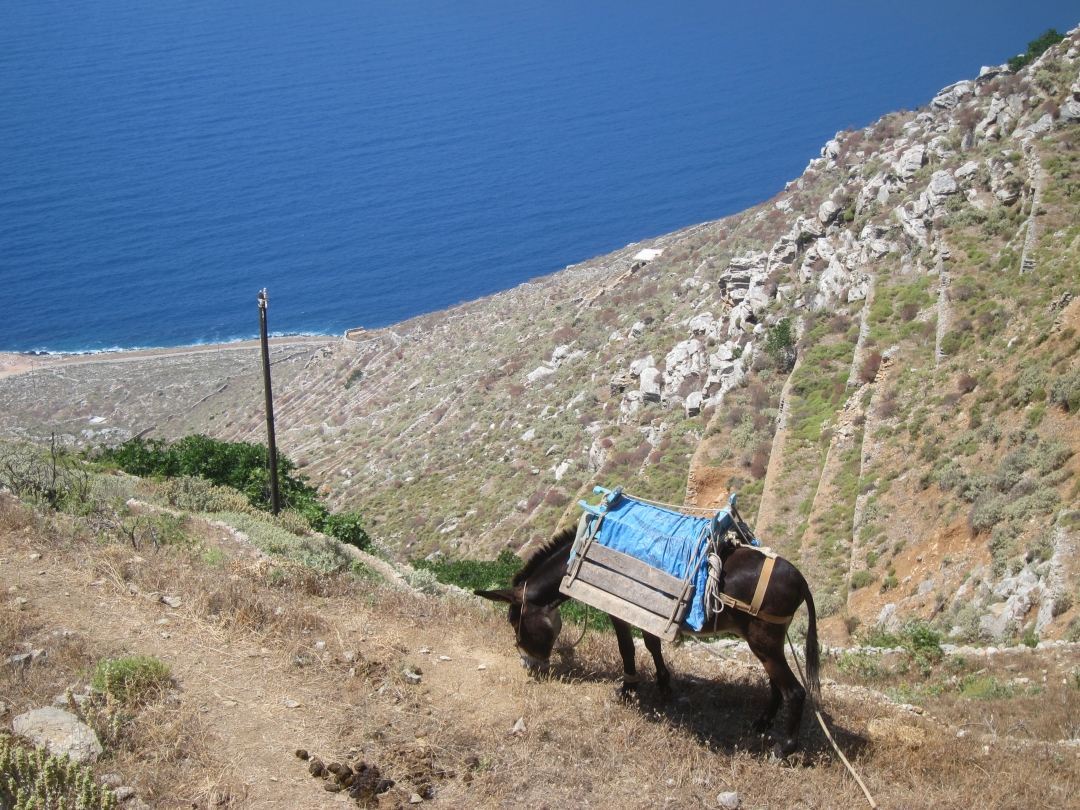
Dropping down into Eghiali there was again a reminder that these routes are old kalderimia, donkey paths.  I reckon that some of them are kept open and so clear because they are still used regularly by donkeys used for transporting heavy stuff where vehicles are not practical.  And in the case of at least one hotel and restaurant for transporting tourists and their luggage.  The only other places I know where donkeys are still used as part of normal life are Symi and Hydra

Working donkey, this one saddled for carrying slabs of stone being split nearby

Altogether the walking took 3½ hours with about half an hour stopping for bananas, nut bar, water and photos.  When I got to Eghiali there was a satisfyingly cooling swim. And a lie in the sun to dry off before catching the bus back to Chora.

There are some walks in the book a this end of the island so I am moving from Chora on Tuesday and into a hotel here in Eghiali.  My ambition before I go home is to put together a walk from the villages in the mountains via the Palia Strata and then down to Katapola.  Need to work out timings and buses ….. may be a bit ambitious

Posted in Greece 2011 | Leave a comment

Amorgos: the ups and downs continued – on a high at the top of Chora

Having got back to Chora after a thoroughly enjoyable walk I cleaned up a bit, washed my sweaty clothes and hung them out to dry in the ferocious wind and strong sunshine.  They had nearly dried before I finished pegging them out.  Then I went to the internet taverna in the bus stop square for a frappé as my afternoon Caffeine fix and my WiFix.

Back in the room I did more stuff on the computer, had a shower and then it was time for a beer in the main square.  I think it’s the main square because it is bigger than the others and has the Police Station on the one side and the Town Hall on the other.  I have taken to going to one particular taverna in the square because the seats are comfortable, the guy is friendly and the beer is not extortionately priced.   I had tried the place I go for breakfast for a beer one evening.  They don’t do Amstell, the tipple of choice, but a Greek beer called ‘Fix’.  Problem was that it was expensive and not that brilliant.  Shame, it would have sounded good to say I was going for my daily Fix.

I have taken to reading Bill Bryson on my Kindle for half an hour or so sitting comfortably in the square.  Friday night I finished it after about 10 minutes – and bought another book ….  instantly …. without moving from my seat.  How cool is that! Amazing!!!!  In the back of the back of beyond and I can buy a book of my choice and be reading it within seconds.  This time it was ‘The Hemlock Cup’ by Bethany Hughes, about the Life and Times of Socrates.  Hint:  the book’s not bad but she’s better on TV.

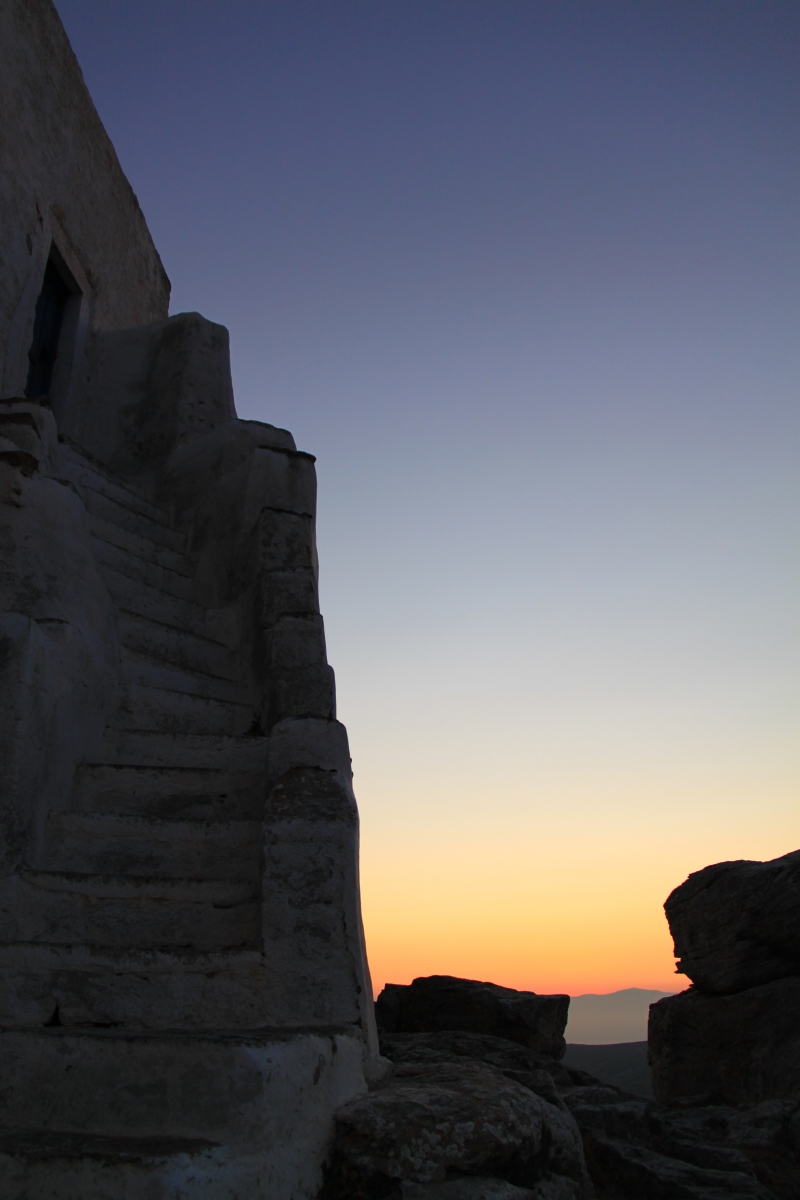
Anyway, feeling a bit smug about my technological triumph, I went to pay for my drink. In hard cash.  I didn’t have change so went in to pay with a note, but that was a pretext really to ask if there was a key to the castle. The castle rock just behind the square has a castle on top.  Obviously!  But the only way into it is through the locked door of a church at the top of an incredibly steep and narrow outside stone steps.  I had walked around the rock three times trying to see if there was another way in but short of rock climbing, difficult with an SLR camera and in sandals, the answer was a definite ‘No!’.  Chris and Angela had said that in the past they had had a key from one of the tavernas in the square, hence the reason I thought I would give it a go.

The taverna guy understood my dreadful Greek, I mixed up the word for ‘key’ with the word for ‘closed’, and was only too happy to let me have it.  Amazing that I was actually in the right place and had been going there regularly and so had inadvertently established my credentials.   I said I would come back for it shortly and returned to the room to change into my evening clothes and get my cameras.  ‘Evening clothes’ sounds good, but it’s really just trousers and a proper shirt, Enfys and I having got into the habit of dressing tidy for evening meal when we were over here.  My plan was to be up in the castle for sunset and would then go straight to a restaurant to eat.

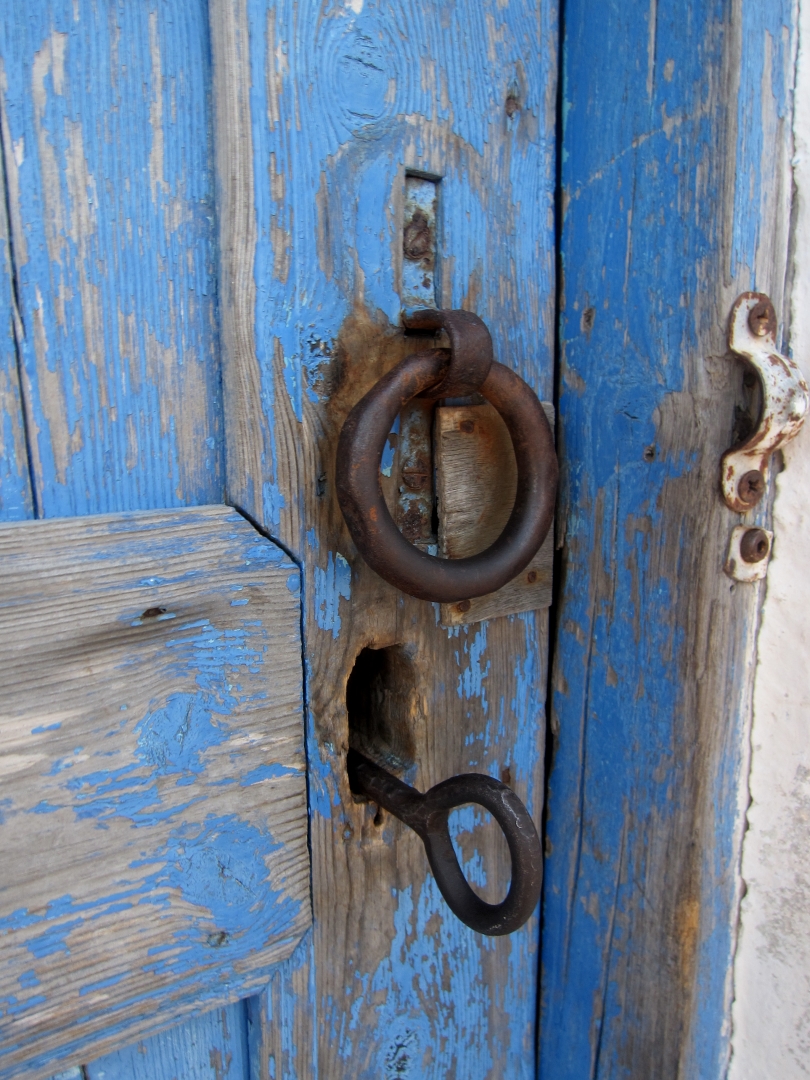
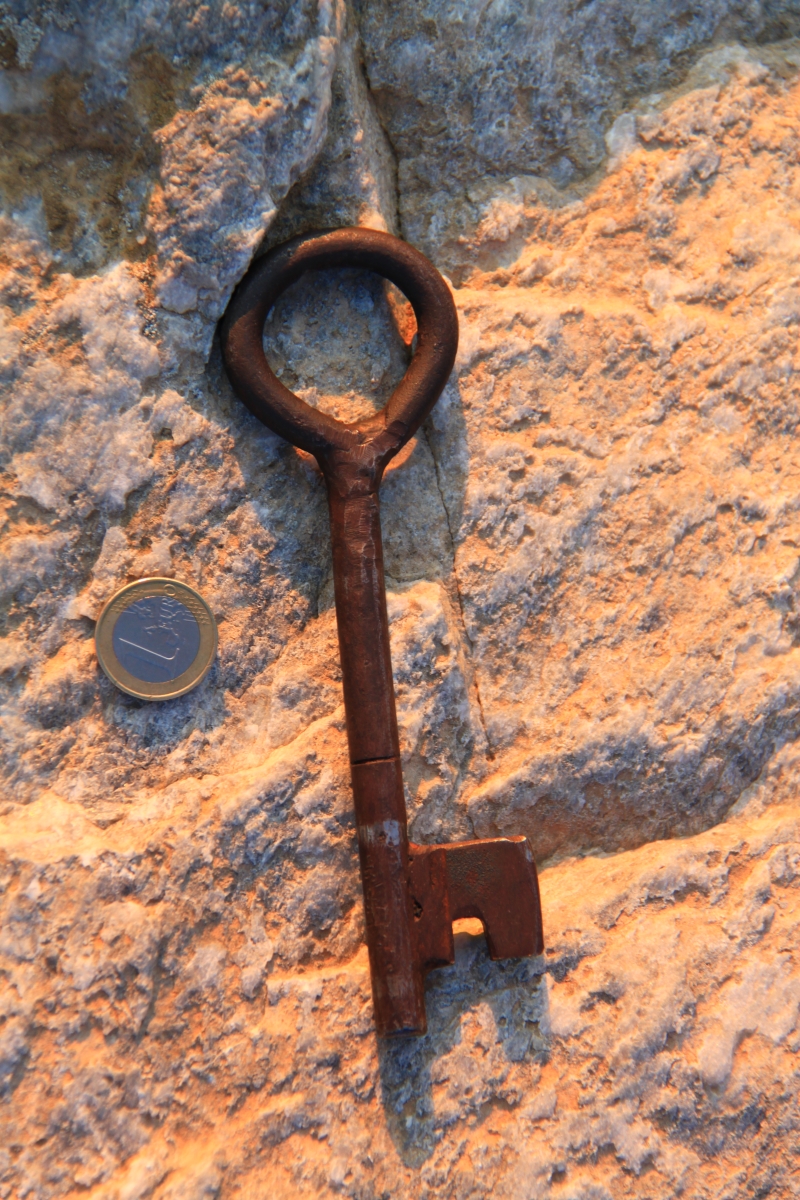
Back to the taverna and collected the key.  It’s massive, just how the key to the door of a castle should be.  I zipped it safely into the pocket of my Rohan trousers, always supplied with secure zippy pockets for just such occasions, and climbed up to the door of the church at the entrance to the castle.

The Key to the door: the ring-pull is about 4 inches diameter; note the key fits in upside down to normal

Just in case you didn't get the size of the key - that's a €1 coin next to it

It was quite hairy just climbing the steps because they are so steep and narrow and the wind was immense.  I unlocked the door easily enough, someone must regularly oil the mechanism, but I struggled to control opening it in the wind, and once inside struggled to keep it closed.  I was in a kind of stone-built airlock with another door straight ahead up steps into the castle itself and a locked door on the left into the church.  Problem was that closing the outer door made it pitchy black inside so I couldn’t see the other door.  To cut a long story short, I had to heap rocks against the outside door to keep it closed and to tie back the inner door with a short length of rope to stop the two of them smashing off their hinges in the wind.

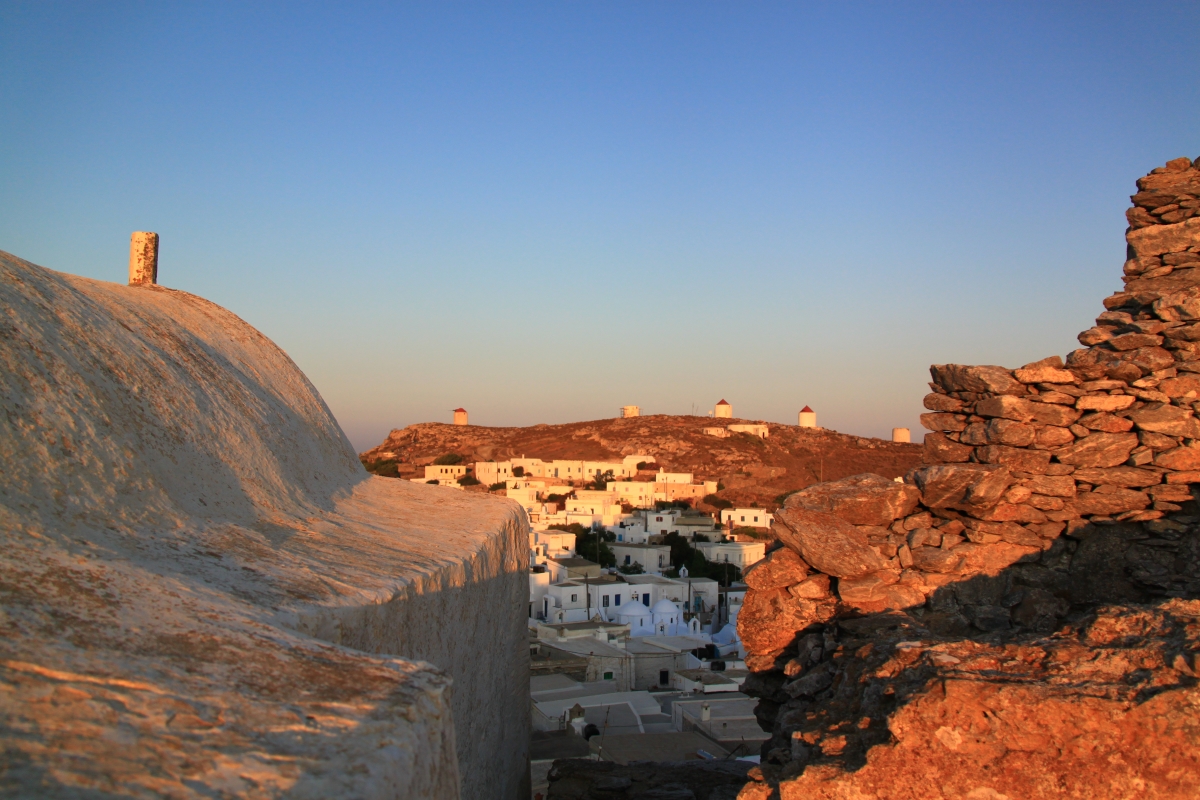
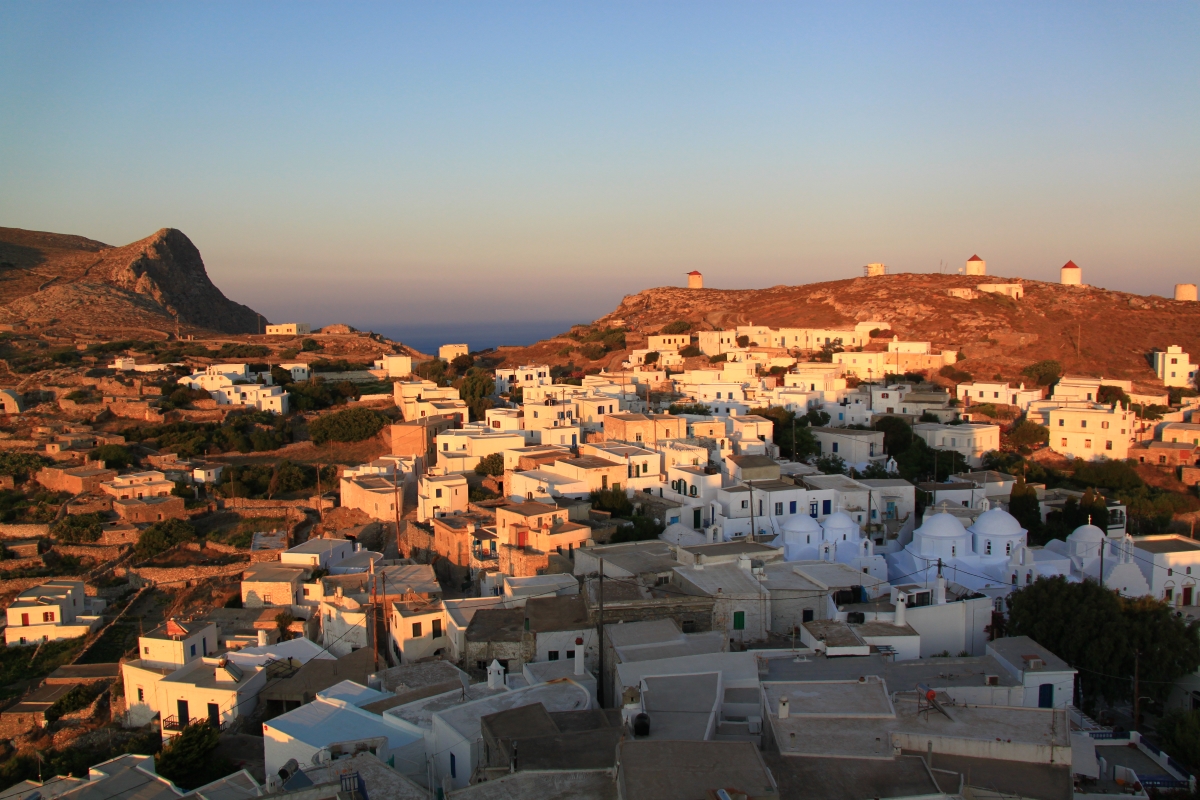
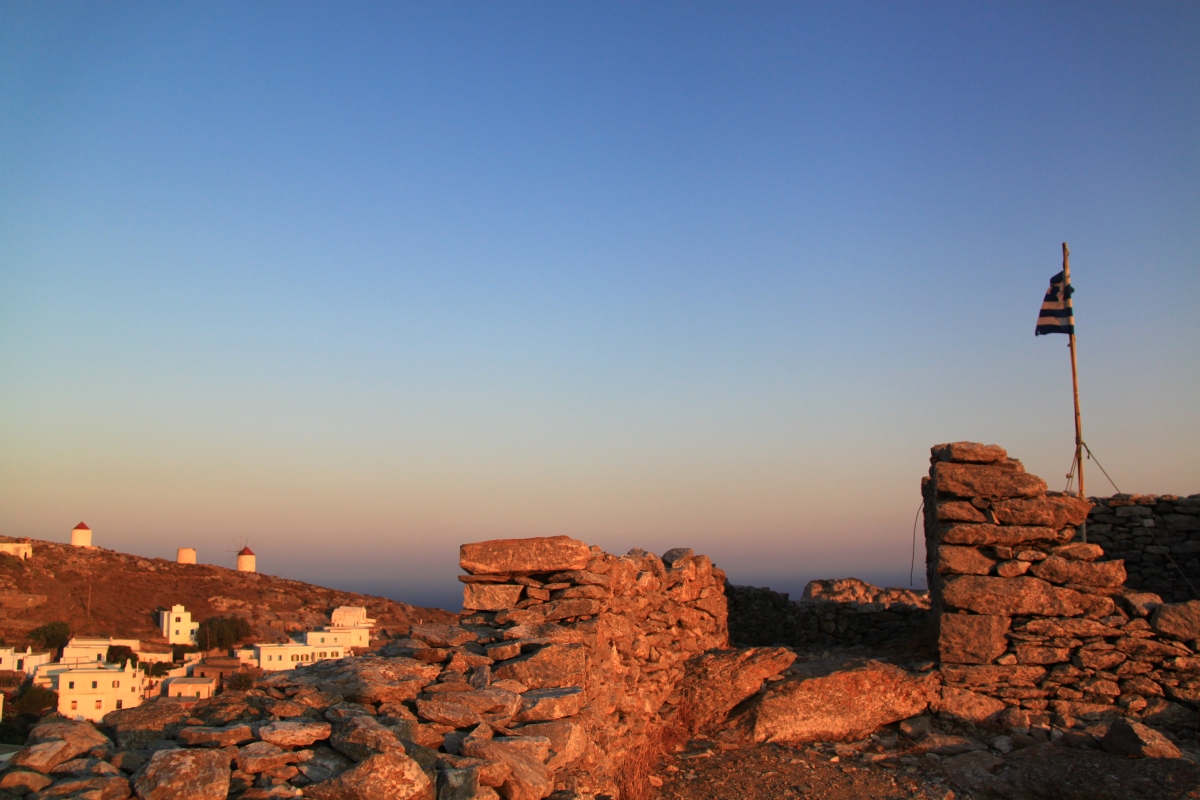
It was worth it. Climbing out of the airlock into the castle required care in the strong wind.  The first views were of the ridge of windmills on to the Southeast which the setting sun was lighting up golden.

Church on the left, castle on the right, Chora and windmills on ridge beyond

Church on the left, castle on the right, Windmills on ridge beyond

Chora and the ridge behind: for context, the path down to The Monastery starts in the col mid-left

Golden glow at the top of the castle

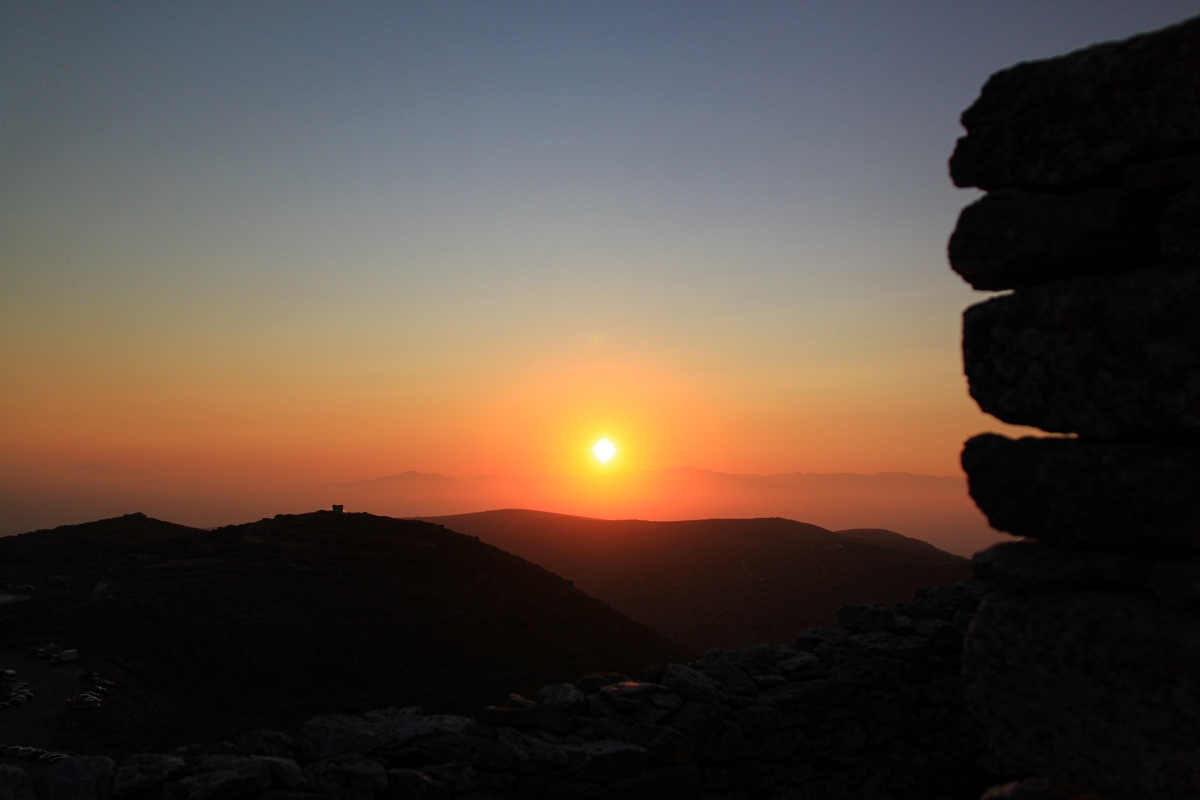
Struggling in the wind to the top of the castle the rocky ground offered views towards the sun sinking low over Naxos in the Northwest with the colour in the sky extending to views across to Ios in the West.  I had to brace myself against the stone walls in order to augment the image stabilizer on the camera lens and keep steady enough to take photos.

Sun sinking lower

..... and lower

.... until it disappears behind Naxos

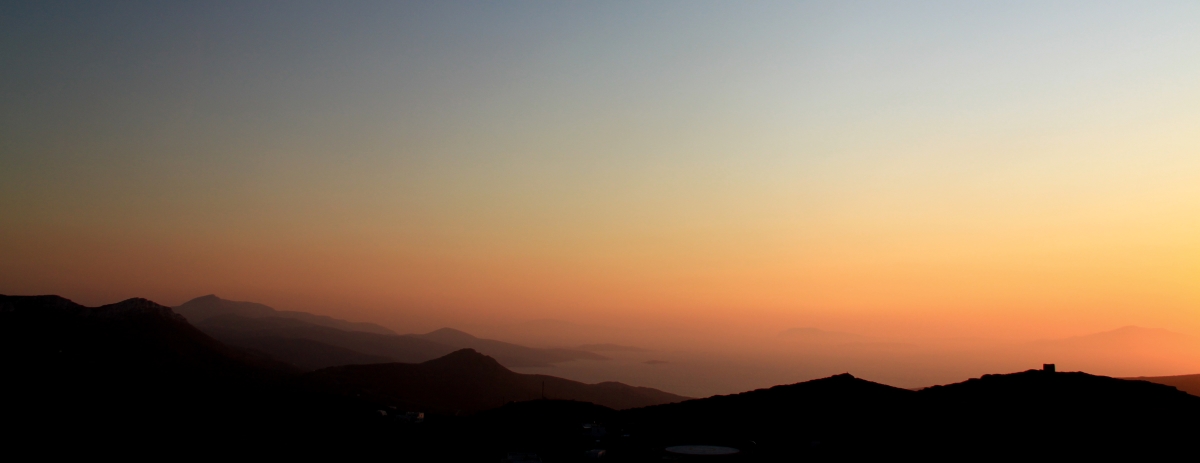
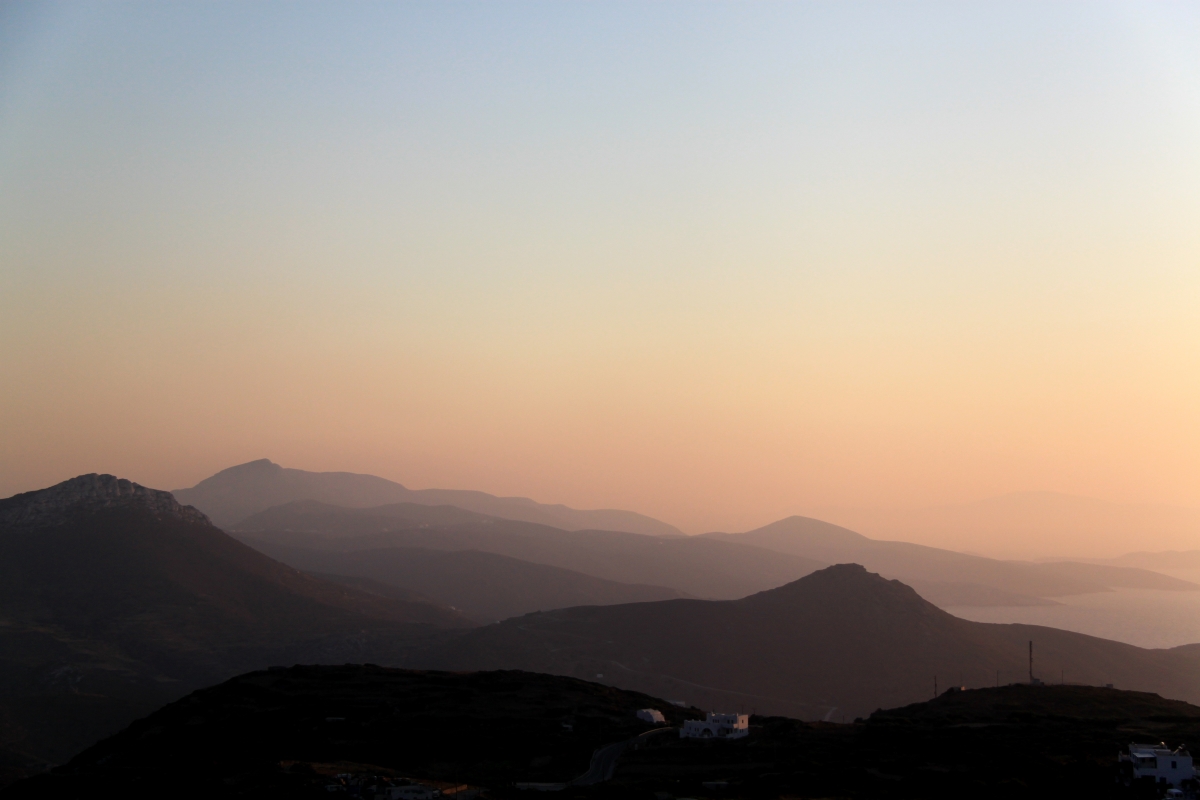
Meanwhile the colour extends right round to Ios in the Wast

Cool shades

It was a magical place, I didn’t want to leave.  Like being on a mountain top, high above everything around.  But this was in the village, the old core of the place.

I carefully fastened to big old catch on the inner door then carefully locked the outer door with the massive key and even more carefully climbed down the steps.  Even more carefully because I was on an adrenaline high and I know from rock climbing, canoeing, paragliding and the like that that is when there is a tendency to feel invulnerable and for accidents to happen.  I was certainly on a high.

I paused only to take a last shot from the bottom of the steps of the dying colour in the sky.

Last look: note the steps to the entrance door on the left

Not to be forgotten.  That’s why I’m boring you with loads of pics.  And why it took two attempts to write the blog.

What a difference between the beginning and end of the day.  Shows how God answers prayer.

Posted in Greece 2011 | Leave a comment

Amorgos: the ups and downs

This is a Blog in Two Parts

I have to admit to having been a bit down in the mouth recently, especially first thing in the mornings.  I suppose it has been compounded by the fact that I have been pushing myself physically and my body is beginning to rebel.  In fact I think I’m gradually falling apart.

Before I came I had developed some kind of flakey-skin problem on the big toe of one foot.  It’s no worse but with constant exposure to the sun now all my toes require daily dose of Australian heel-balm (truly marvellous stuff, based on urine) in order to prevent a trail of dried skin following me wherever I go.  I also have Mediterranean-heel which is why I started buying the Australian stuff in the first place.  I thought I was over that and didn’t bother applying it until I suddenly realised that the pain in my heels was not bruising but the skin having cracked with fissures to the raw flesh and dirt getting in.

Despite applying high factor sun screen to my lips I now have cracks in my lower lip and a recurrence of cold sores which I thought I had left behind last year.  In five months last year I didn’t have them once, first time since coming to Greece I was free of them.  Pundits say that they occur when one is ‘run-down’.

I daily have to apply after-sun to my nose and forehead to glue them back together.  I put Factor 30 sunscreen on my nose everyday but to little avail and my forehead just seems to flake without burning.

And I have to regularly extract thorns from my toes, one of the downsides of wearing sandals and walking fast.

And then there are the cuts whenever I scag my skin on anything remotely sharp, an inheritance from cortisone treatments for past sporting injuries.   There are more sharp plants around here than anywhere else on the planet earth.  That’s obviously an exaggeration but there really are a lot, a very lot of very sharp plants.  Yesterday I cut my toe nails before I went out and within half an hour one Sharp Plant slashed the end of my middle toe (nothing to do with 1066 And All That) right across the quick.  I’m sorry but it really hurt and there was blood!  Ten minutes later another sharp plant penetrated vertically straight down under the left Big Toe Nail detaching itself from the plant and leaving a 3-inch spike protruding out ahead of me.

It gets you down!

I woke up on Friday morning and felt a bit more down than usual, to the point where I prayed about it.  To be honest I haven’t got over losing Enfys and some days are just harder than others. And Friday morning was one of those times

A good breakfast helped, particularly the good, strong coffee.  Surprising how much mood swings can be resolved by proper application of drugs.  Well, caffeine anyway.

I had a plan for a walk but no enthusiasm for it.  The walking guide I bought has detailed description of 7 ‘Footpaths of Historical and Cultural Interest’.  But one of the maps accompanying the book showed Path Number 8.  It led off the path I had walked on Thursday and though it wasn’t signed with a finger posts like the other two I had walked I thought I had identified where it began and so decided to give it a go, to walk the footpath which doesn’t exist.

It certainly did exist and it was very clear.  It was obviously a kalderimi, a donkey path, that was regularly used as attested to be the significant quantities of droppings now and again. It first dropped down to the valley floor and then back up to the opposite ridge.  As it was a kalderimi it kept to an easy gradient and within half an hour I was on top of the ridge on the other side of the valley.  It was a pleasure walking.  It always lifts my spirits being in the mountains, I’m much more at home there than in a social context.  Someone said that people become mountaineers because they are no good at parties.  I suppose it’s to do with being self-contained, comfortable with your own company.  I have come to the conclusion that I just don’t do social interaction very well.   But up here I’m in my element.

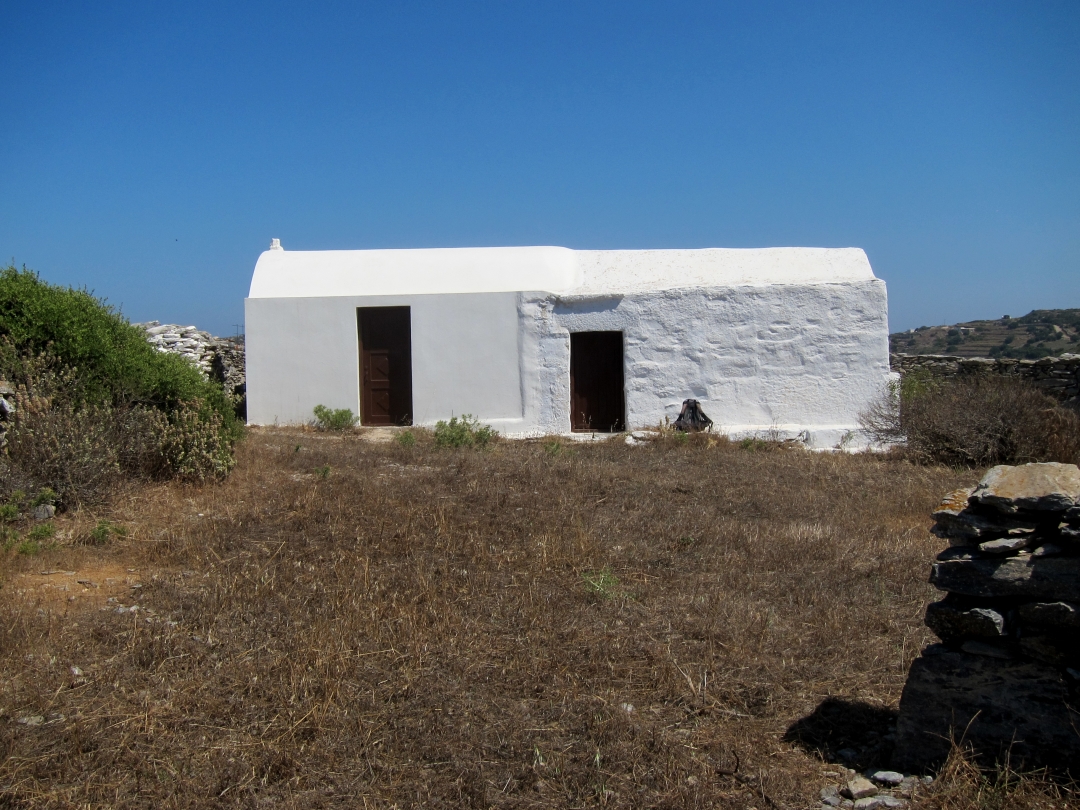
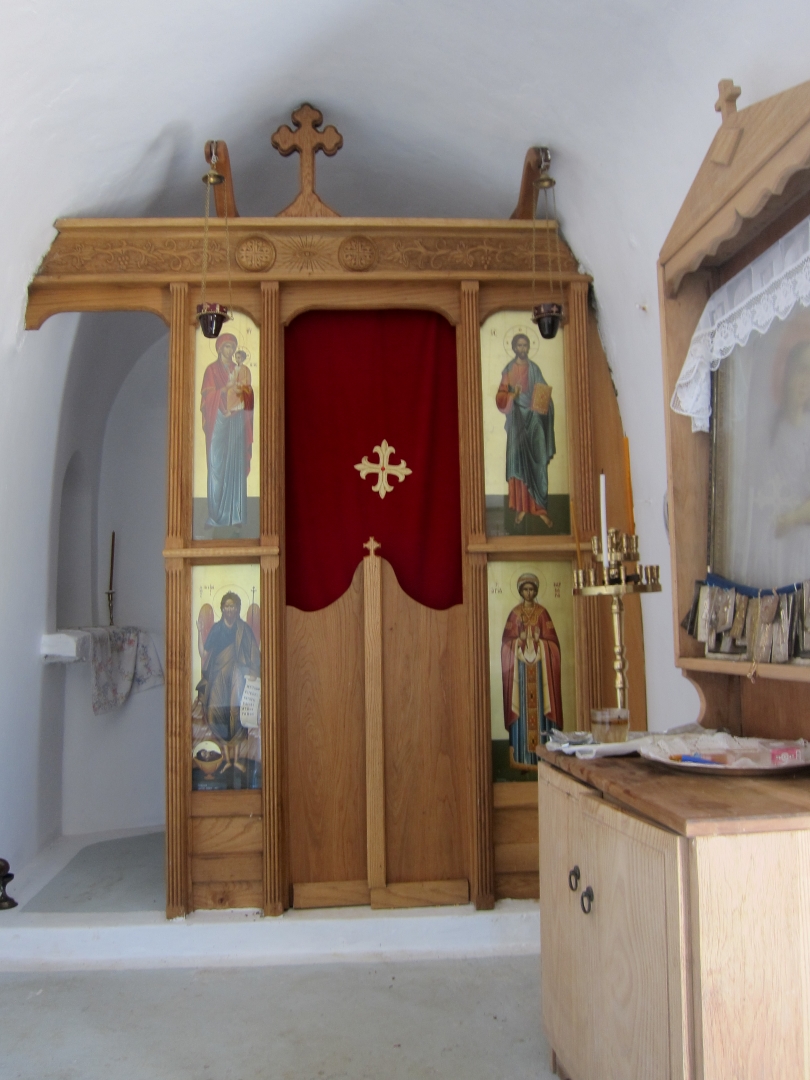
The map showed the path reaching a ridge-top track by a small church so I stopped there for a drink and look around.  It was nothing ornate, no frescoes, just very simple with a couple of framed paintings.

Very simple mountain church

Simple and unadorned inside

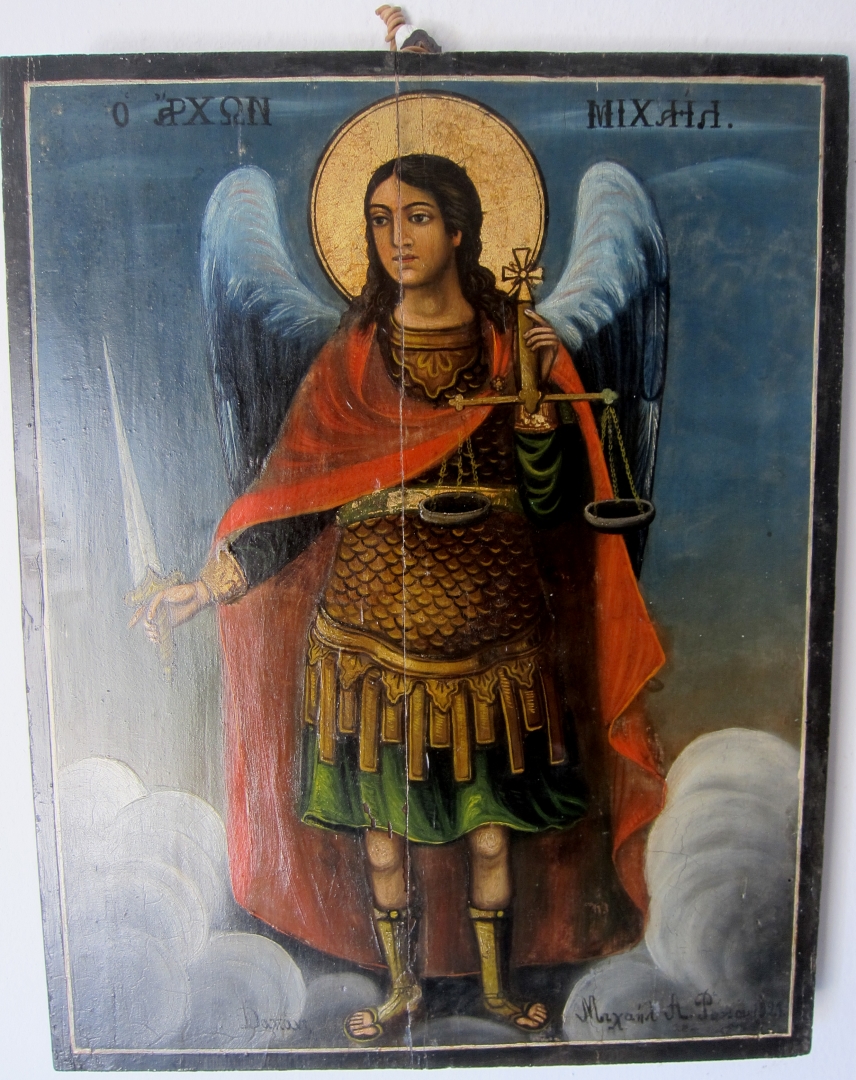
Colourful painting of the Archangel Michael

A closer look at one of the other maps I had showed a castle close to the church but no footpath to it. While I was looking at the map I had a visit from another strange creature.  No idea what it was.

Creature on mt rucksack

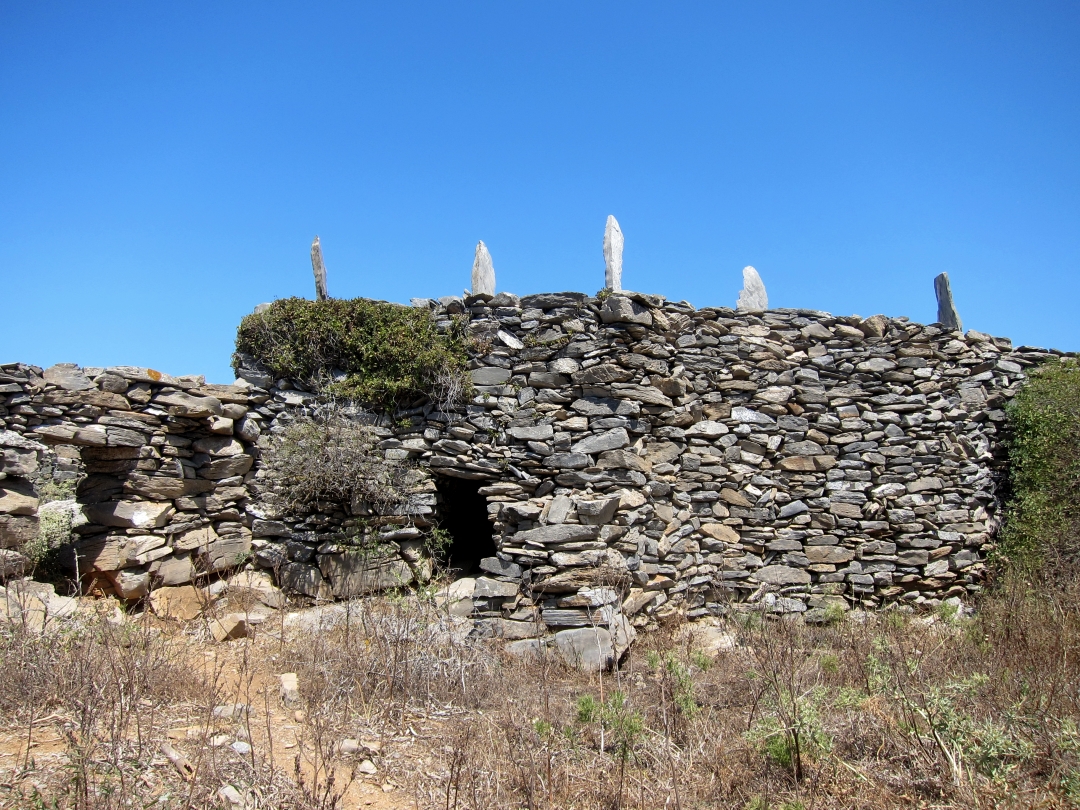
I struggle through waist high prickly stuff to get to it and then climbed the 8 foot stone wall to look inside.  What struck me was the donkey droppings.  Where there are droppings there must be donkeys and they certainly didn’t come this way.  I found the entrance around the other side and then had another attack of Repetitive Photo Syndrome.  Fascinating place.  Not like any of the other castles I’ve seen, more like a stone built fortified hill top.  I don’t know if the walls are the original height or if the vertical stones set at intervals in the top of it were part of the original, but I was impressed.

Inside the castle

Amazing stones in the walls

..... lots of them

Large threshing circle

When I eventually left the place the gloom had lifted.

From there it was a matter of following the ridge-top track until it petered out and became a footpath which continued along the ridge before dropping down to the beach where I had been yesterday.

Not only was it very enjoyable with a lot more interesting stuff to see , including old abandoned settlements very different from those on Nisyros, but a good part of it was marked by the little plaques with the number 8.  It might not be described in the book but it’s shown on the map and marked on the ground.  It certainly exists.

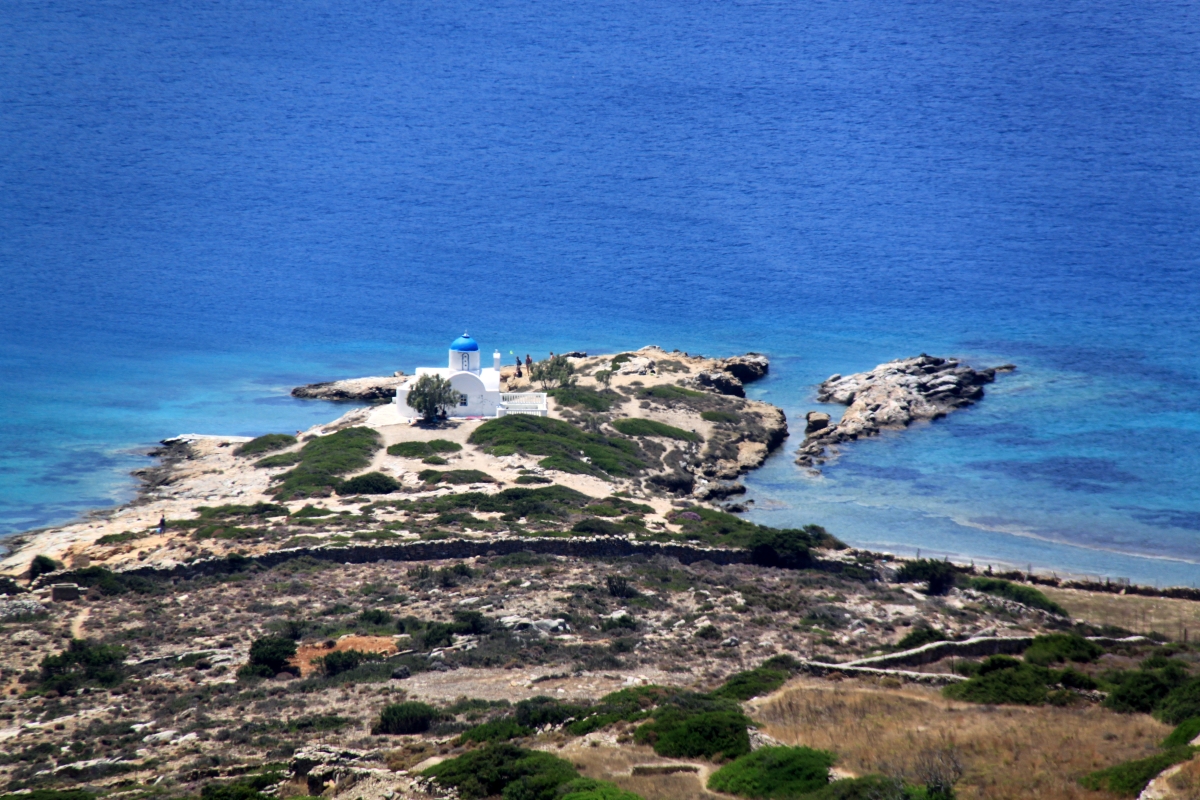
View down to the headland church to which I was heading

Once at the beach I had another good swim, more or less on my own, the few others who were there were taking advantage of the permitted dress code.  Then I walked back up to the Chora via Path Number 2 which I followed on Thursday.

Very satisfying, uplifting day.  But it was by no means over.

To be continued ……

Posted in Greece 2011 | 1 Comment

Amorgos: coastal clichés

Thursday and I turned my back on the mountains and went the other way.  I decided to head for the Katapola, the main harbour, by following Footpath No. 2 in ‘Footpaths of cultural and historical interest’.   And a very good path it is too!  Very clear and straightforward. Well, zigzagging-forward for part of the way.

Interestingly it seems to follow a line of active springs with collection points and even a couple of  small ponds with fish!! It was strange seeing surface water after the complete lack of it on Nisyros.

One of a number of springs at the side of the path

The path is cited in the book and on the wooden signposts as taking 55 minutes.  I stopped to take photos and even then I reached the end of the path at the coast road in 56 minutes so not bad estimating.

Once on the coast road I headed towards the small village on the opposite side of the bay from the main port harbour and then walked around the coast road/track to a ‘beach’.  Not a beach in any conventional sense but there was shingle wide enough for a footpath but not to sit on and at the end of it was another small bay with flat slabs of rock enough for the few people there to spread out and maintain a respectable distance from each other. On a small headland at the end was a small blue-domed church.  Very pleasant place to be for a swim. None of that nasty sand getting places that you don’t want sand.

At the foot of the steps down to beach there was a very large sign urging people not to leave rubbish on the beach or to throw it into the sea.  It also stated that nudity was not allowed except in Plakes Bay.  A look at the map showed that the rocky slabs I had walked to were the bay in question but there was scant evidence of anyone trying to take advantage of the official permission.  One couple sitting huddled had evidently come for the purpose of exposing more flesh than usual to the sun but were clearly embarrassed by the fact that the few other people who were there had swimwear.  They left while I was enjoying a swim.

After the swim I ambled around the headland and then back to the village taking what I suppose could be described as cliché photos. There is just something about the whiteness of the buildings and blueness of the sea, the sky, the doors and windows, and the church domes, together with the splash of colour of the boats which makes some places very visually appealing.

The small, peaceful harbour on the opposite side of the bay to the main town

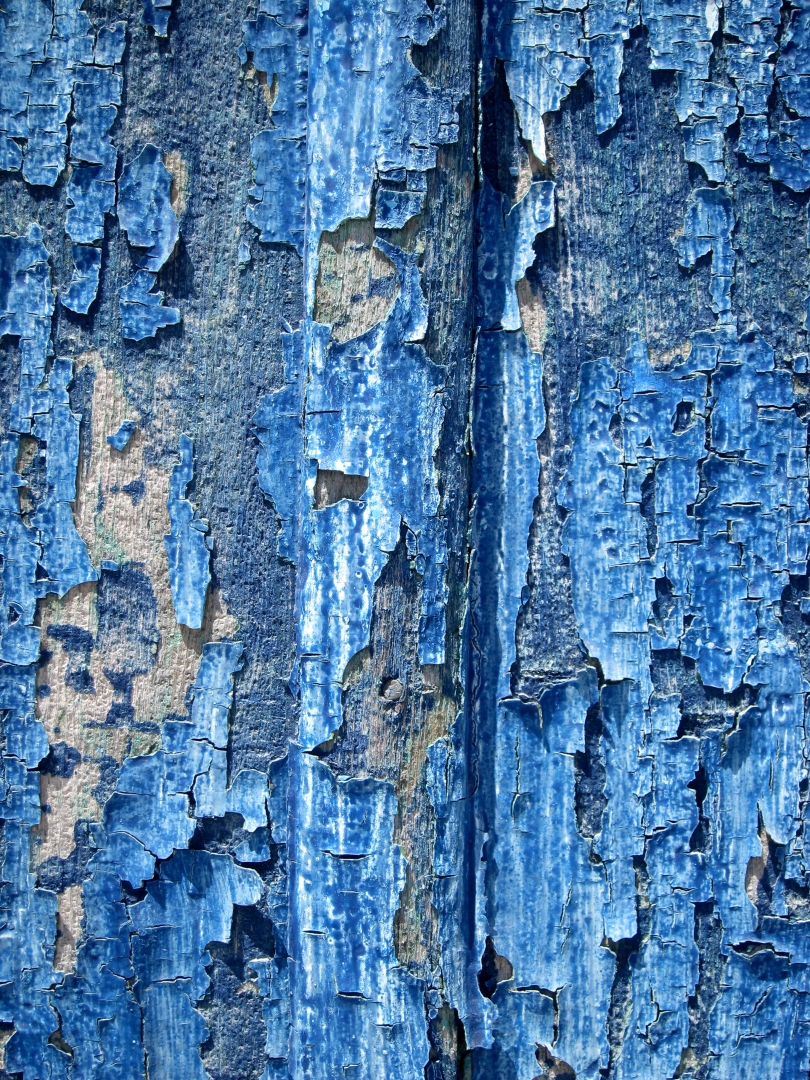
The flaking paint shot

The cat on the doorstep and flowers shot

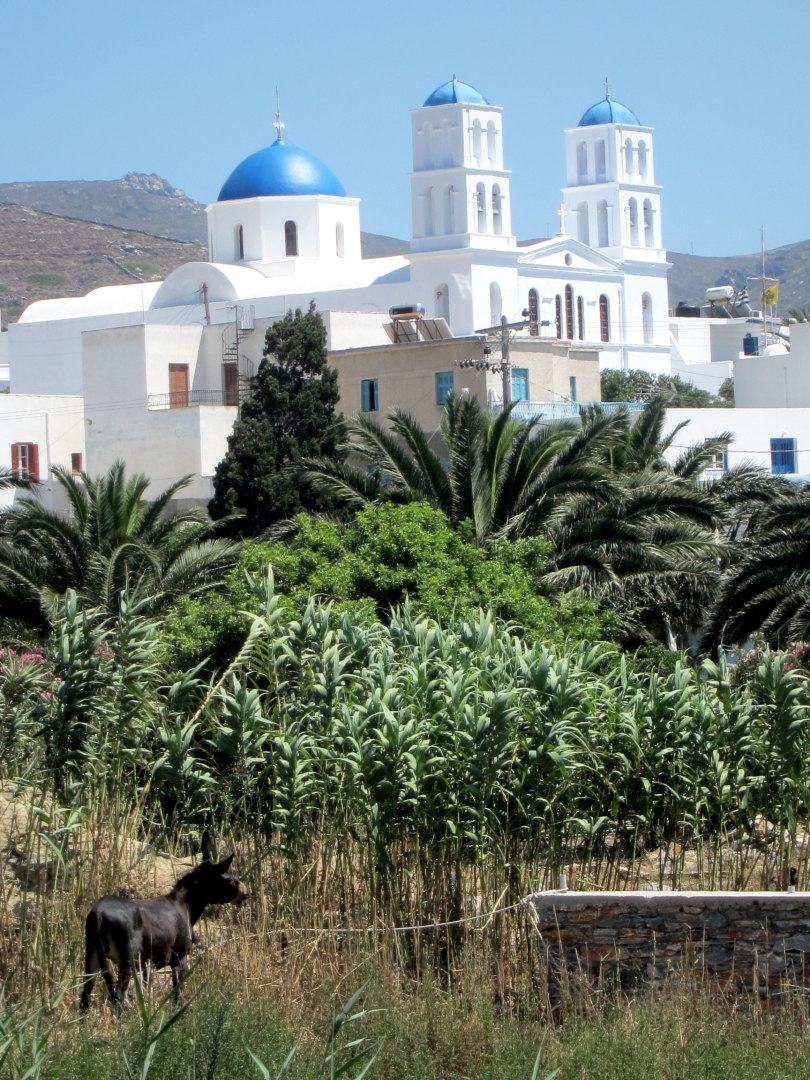
The donkey and the church

The church on the headland - this one called Profitis Ilias believe it or not

Boats across the bay

I decided to walk back up the path to Chora rather than take the bus as I had thought to do originally. The book estimates 65 minutes to walk back, presumably because of the 300 metre climb, but I did it in 50.  I must be getting a bit fitter.

The top of the path coming into Chora

Posted in Greece 2011 | Leave a comment

Amorgos: in search of peace and quiet

Change of breakfasting habits on Wednesday.  I had found another taverna with WiFi and a roof balcony.  It also served breakfasts but only from 09.00.  So I decided to do things in the room first and then go to have breakfast and post the blog at the same time.

The room is cheap but has its drawbacks, not least of which are it’s small size and lack of facilities.  But in one respect it far surpasses most if not all hotels I have stayed in …. the wash basin holds water.  I carry a ‘universal wash basin plug’ but it rarely works because a common problem is that the seating for the plug is not sealed in place and so the water drains away down the side of it.  But this plug works perfectly.  Which greatly facilitates washing clothes, one of the things I did  before going for breakfast.

The breakfast was good: fresh, crusty wholemeal bread (wholemeal seems more generally available in restaurants on Amorgos than anywhere else I’ve been), very tasty home-made marmalade, and a cafetierre of good strength coffee.  It’s more or less exactly what I have at home and is somehow comforting. Which is a strange thing really.  The breakfasts I normally have over here are good and I enjoy them but I would never think of having them at home.  I think I’ll stick with this place for breakfast while I’m in Chora.

The Plan for Today was to again walk to the Hozoviatisa monastery, the fourth time in as many days, but this time with clothes that met the dress code so I could go inside.  Basically that meant shorts with zip-on legs so I could put them on when I arrived.  It’s much too hot to walk in trousers.  It was fascinating inside, amazingly narrow everywhere, the one wall of many of the rooms and corridors being the cliff face.  Photography was allowed but not in the church or the museum.  Shame about that because a lot of the greatest interest was in those two places. The museum had a collection of hand-copied books on display some of which dated back to the first half of the 10th Century.  It must once have been a place of remarkable peace and quiet.  Probably still is without us trippers clogging it up.

The main staircase: wall on the left, cliff-face on the right

This way to the museum

On the balcony outside the church

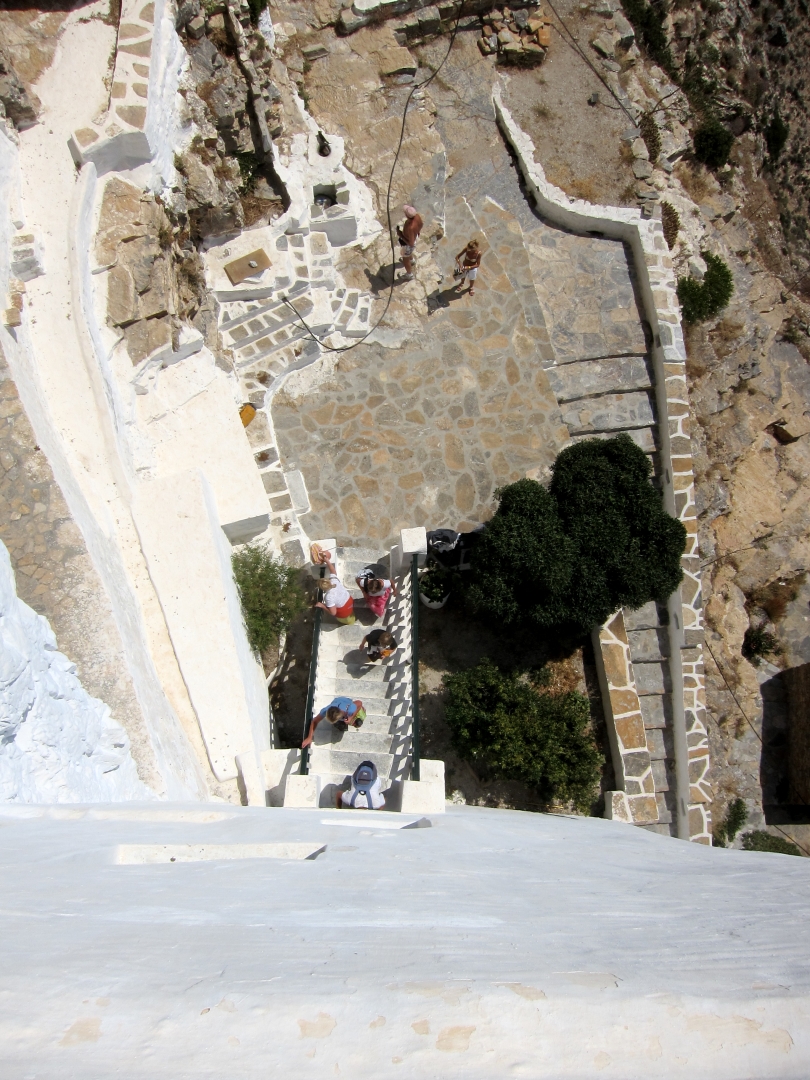
Looking down to the entrance steps from the balcony

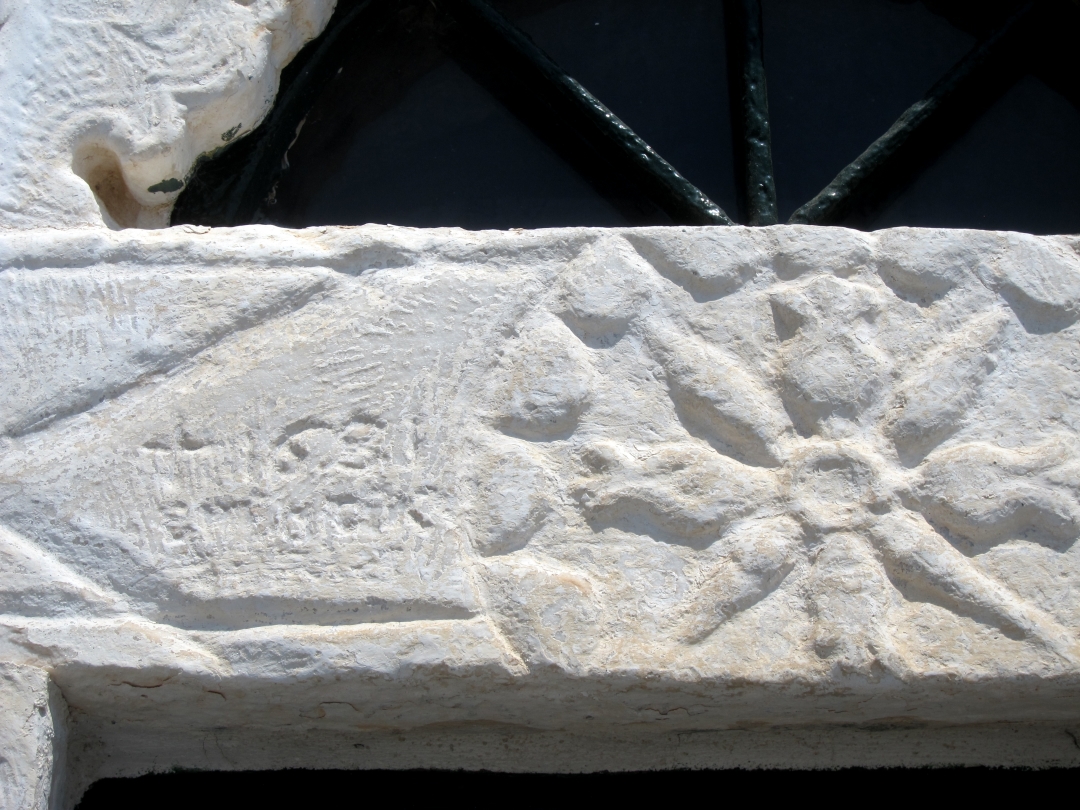
Carving in stone lintel of church window dates it to 1681

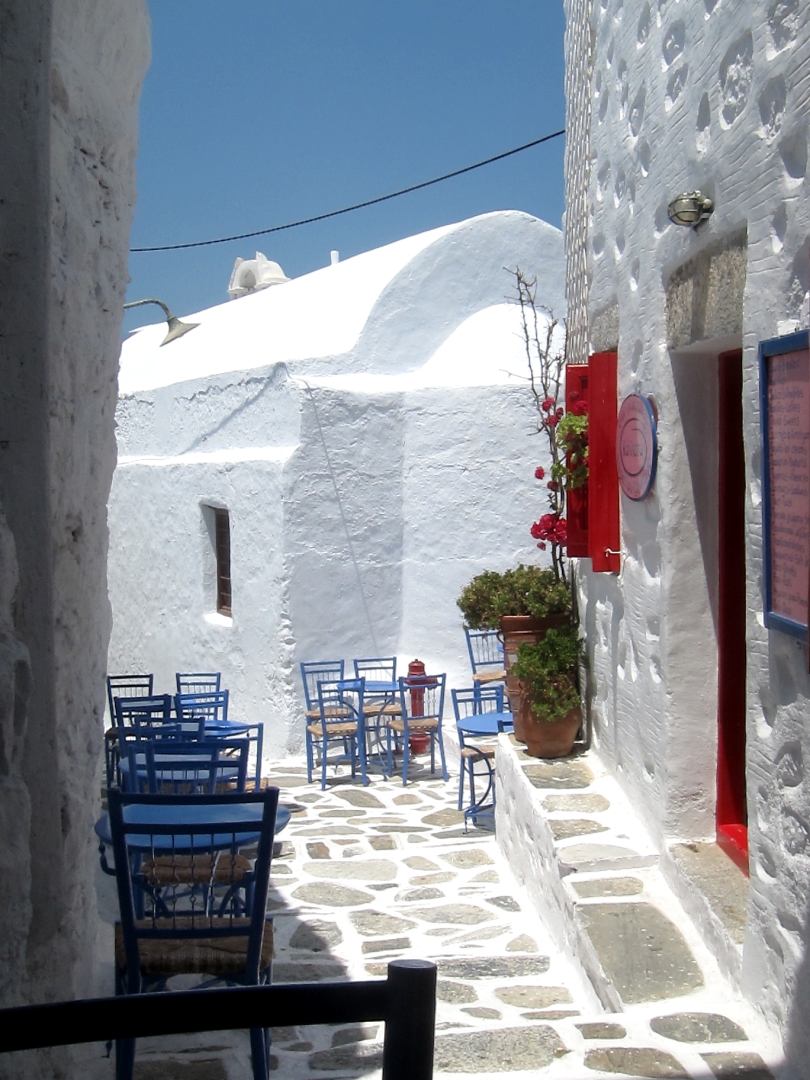
From there I wandered back to Chora and ambled around for a while.  I thought as I was in the village at meal time I would have a change from banana and nut bar so I had a Greek salad.  The alleyways of the Chora are very narrow and many of the restaurants simply have a line of tables on one side, sometimes widening out at corners.

One of the many 'alley-side' tavernas

I ambled around with the camera for a while but got restless.  I’ve always been a driven personality, can’t being doing with sitting still or just ticking over.  I decided I needed to get out of Chora and go for a walk. One reason for this was that a coach load of Americans had arrived presumably on a whistle-stop tour of quaint things to see in Greece.  They were ambling around, huffing and puffing struggling with the steps, some of them filling the width of the alleys on their own.  Big people Americans.  At least these guys had passports. Estimates vary but somewhere between 75 and 93% o Americans have never had a passport.
(see http://www.gyford.com/phil/writing/2003/01/31/how_many_america.php)

I took a couple of photos and then decided I had had enough.  I had to escape.

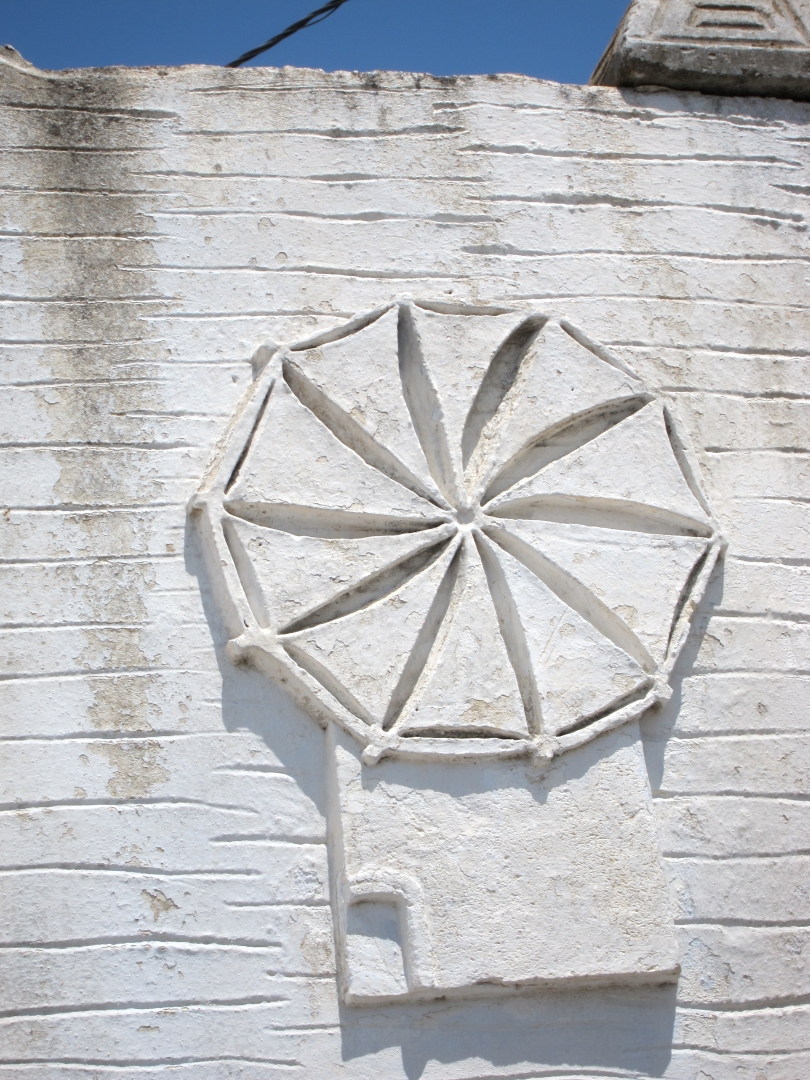
Many buildings have stone carvings set into the wall: this one depicting a windmill of which there are many in Chora

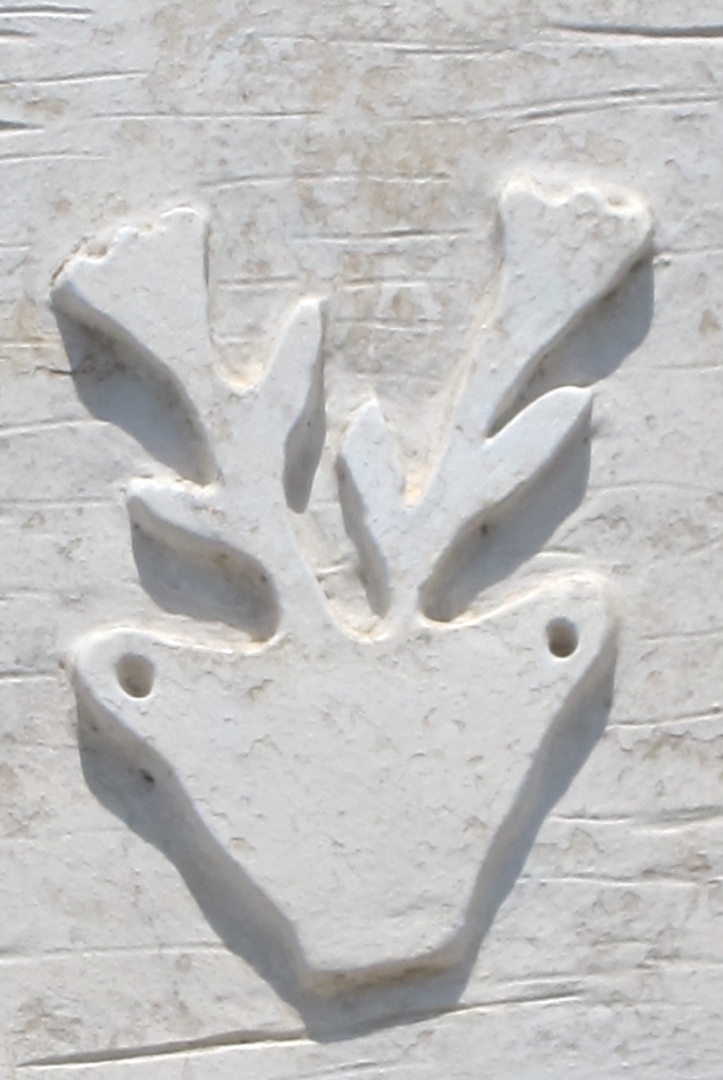
This one either depicts a plant pot with flowers or the fact that there were once reindeer on Amorgos

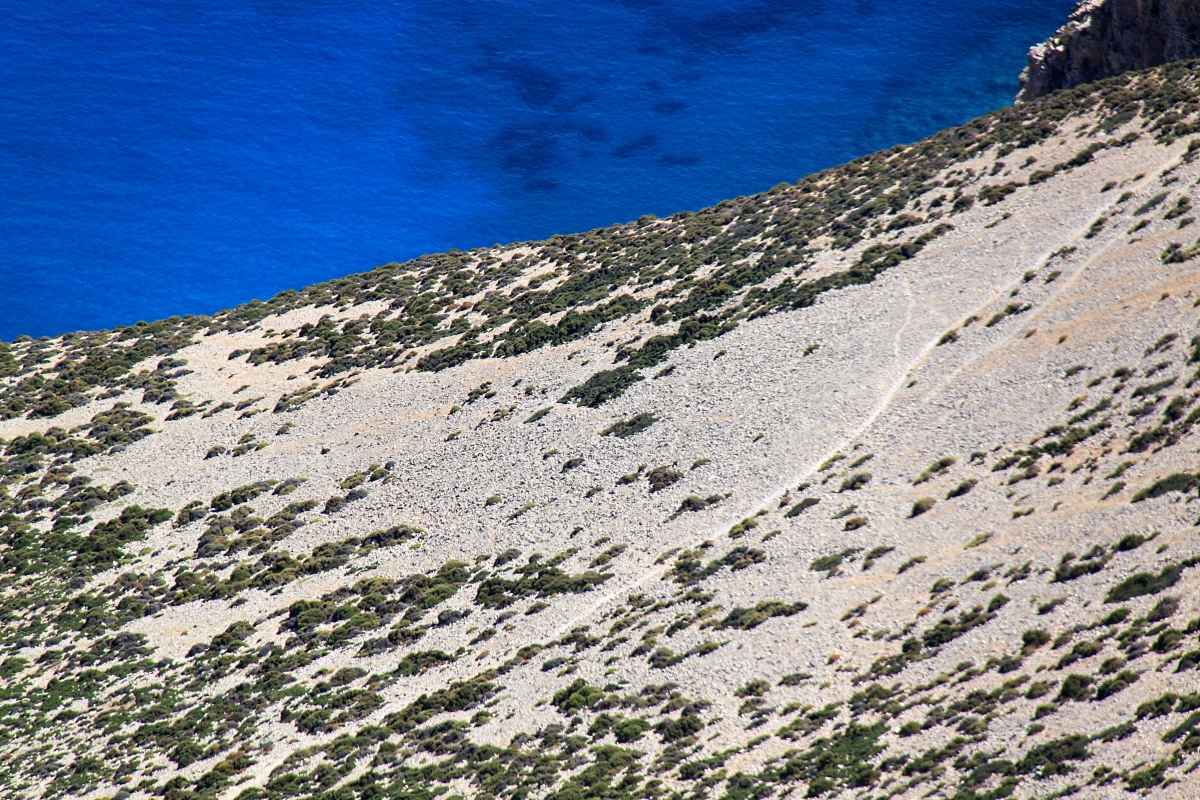
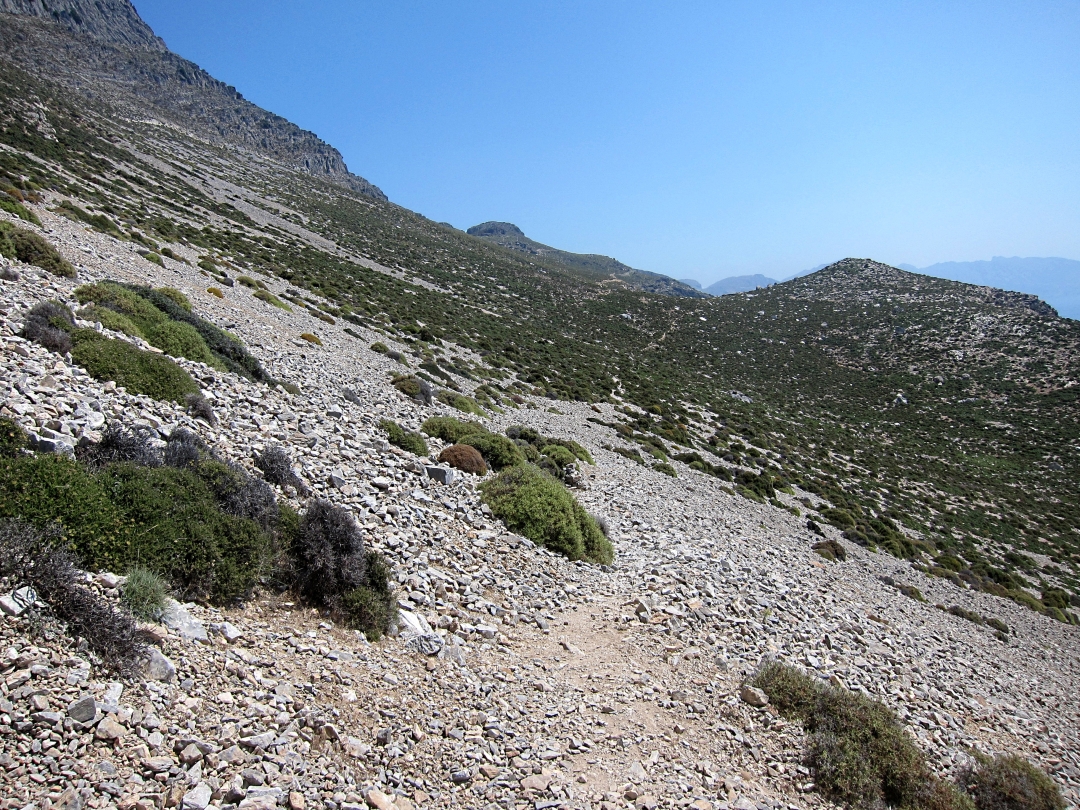
I headed back up the mountain.  There I could be sure of walking at my own pace and I had been regretting not have photographed the scree slope at the bottom of the cliffed edge while I was up there yesterday.  It took me just under an hour to get to the top.  Once again I was struck by how great a place it is with wide-open views.  Mountain tops seem somehow unrestricted, mind expanding, a God-made, God-sized environment compared with the made-made confines of towns.  I stayed up there for an hour or so before coming back down to reality.

The path across the scree slope seen from the top of Profits Ilias 400 metres above it.

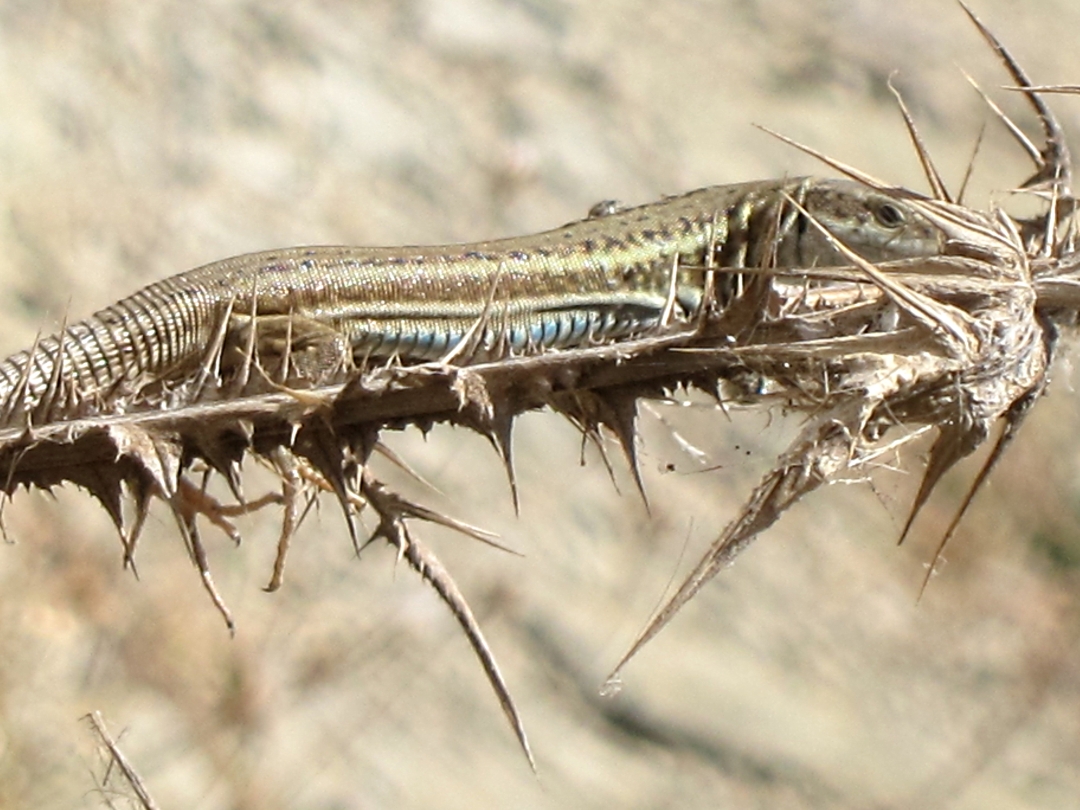
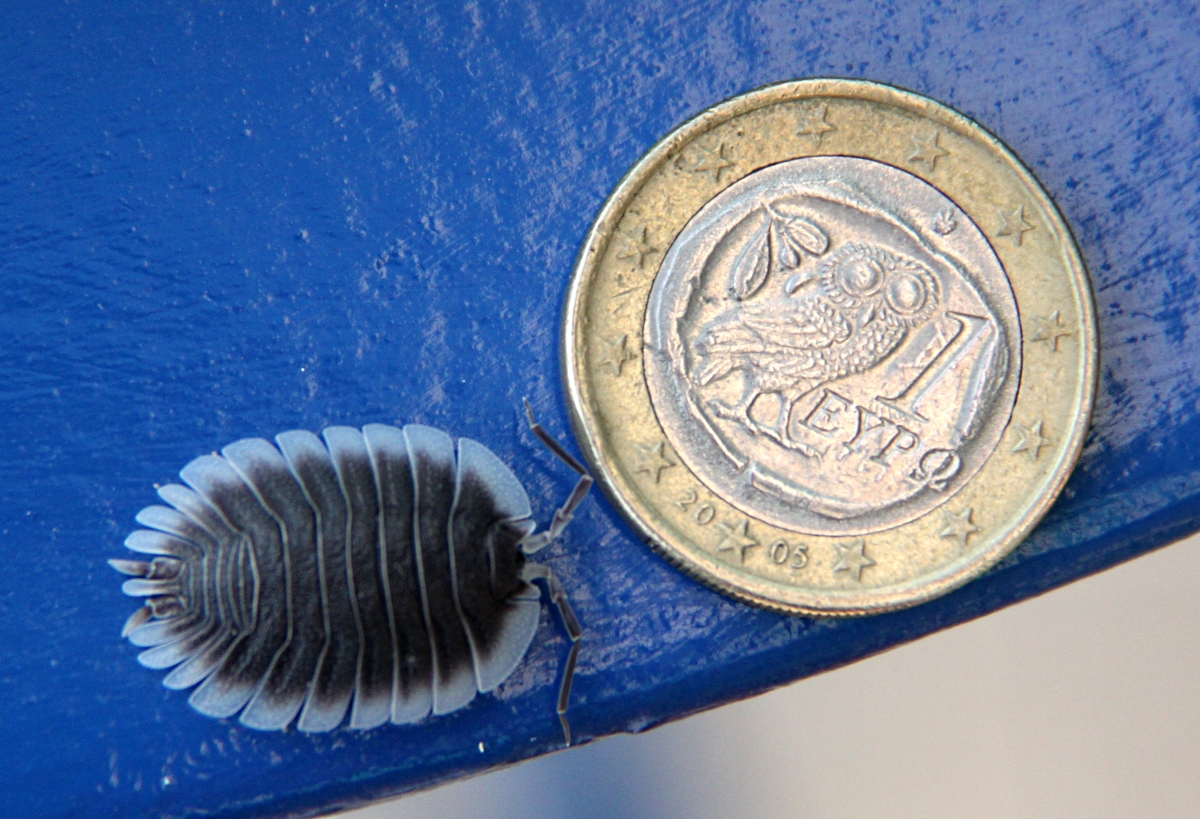
Before going up the mountain I had washed a pair of shorts and by now they were crispy dry in the hot sun.  I took them off the line on the balcony and found that they had an unusual visitor.  Never seen one of these before.  Glad I found it before I put them on!

Visitor to my shorts

Posted in Greece 2011 | Leave a comment

Amorgos: High places

Inertia led me to have breakfast in the same place again on Tuesday.  Main advantage is that it’s so close and opens at 07.30 whereas other breakfast places I have enquired at don’t open until 09.00.

The walk I planned for the day was to repeat the first part of ‘The Old Way’, and, with a diversion on a path to another old church, continue to the point where it crosses the main ridge in a col and from there double back around the other side of the ridge, climb Oros Profitis Ilias and then follow the path  back to Chora.  It’s looks much simpler on a map.  As it turned out, it was simpler on a map.

So once again I passed the Hozobiotisa  monastery and once again failed to find any of the clothes on the fence in my colour.

The clothes on the fence by the monastery entrance

Even though it was the third time of walking it, it was a very enjoyable path with towering cliffs above and crossing screes which drop down to the sea.  It didn’t take long to reach the reach the junction with the path I was going to follow, clearly marked by a fingerpost. However the path itself was not so clear, disappearing at times and then confirmed by the odd cairn.  But eventually the church came into view, gleaming white under a large rock.

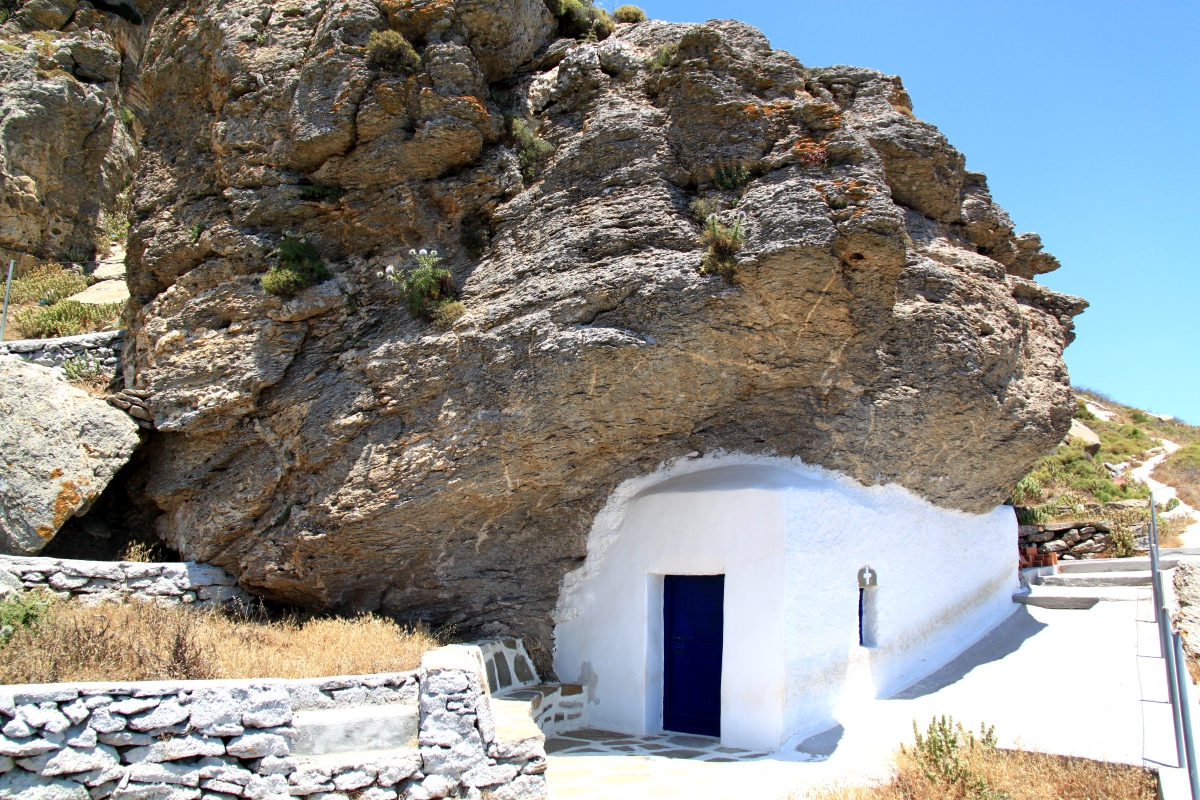
The church-under-the-rock comes into view

A very snug fit

Simple and very low interior

The path seemed to become more obscure as I got closer and, as is always the case, proved very difficult to find again once lost.  Getting closer to the church, despite the odd cairn, it became clear that I had a choice between pushing through waist-high thorns or climbing around the crags which surrounded the church itself.  I’m a coward, I climbed the crags.  Thorns don’t appeal at the best of times but in shorts and sandals, no thanks!  The church was very interesting, built under a massive overhanging rock which forms its ceiling, and not more than 5 feet at the highest point.

Relieved to be out of the thorns I followed the rough track round to the col, and then easily found the very good path I needed to get to the which climbable side of the mountain.

I don’t know what it is about mountains but there seem to be at least two major attitudes to them.  Either people recognise that they are there but have not the slightest interest in climbing them.  Or they have an obsessive urge to get to the top.  I’m very definitely in the latter category.  I remember once when I was in the Lake district , having walked the previous day from Langdale to Keswick via 5 significant peaks, being asked by a couple at breakfast in the B&B “Can you walk to the top of the mountains?” .  The possibility never mind the urge to do so had never crossed their minds.

Personally I’m never more alive than when on the top of a mountain. I can spend ages just enjoying being there.  Revelling in the thought  that “round here, I couldn’t be any higher”.  I know a lot of people find this a bit mad so I’m always encouraged when I come across a passage in the bible where some prophet or other goes up into the mountains to sort his head out.  One such was the prophet Elijah and it is after him that it seems half the mountains in Greece are named.  Every island seems to have one.  And often there is a church on the top dedicated to him, Profitis Ilias in Greek.

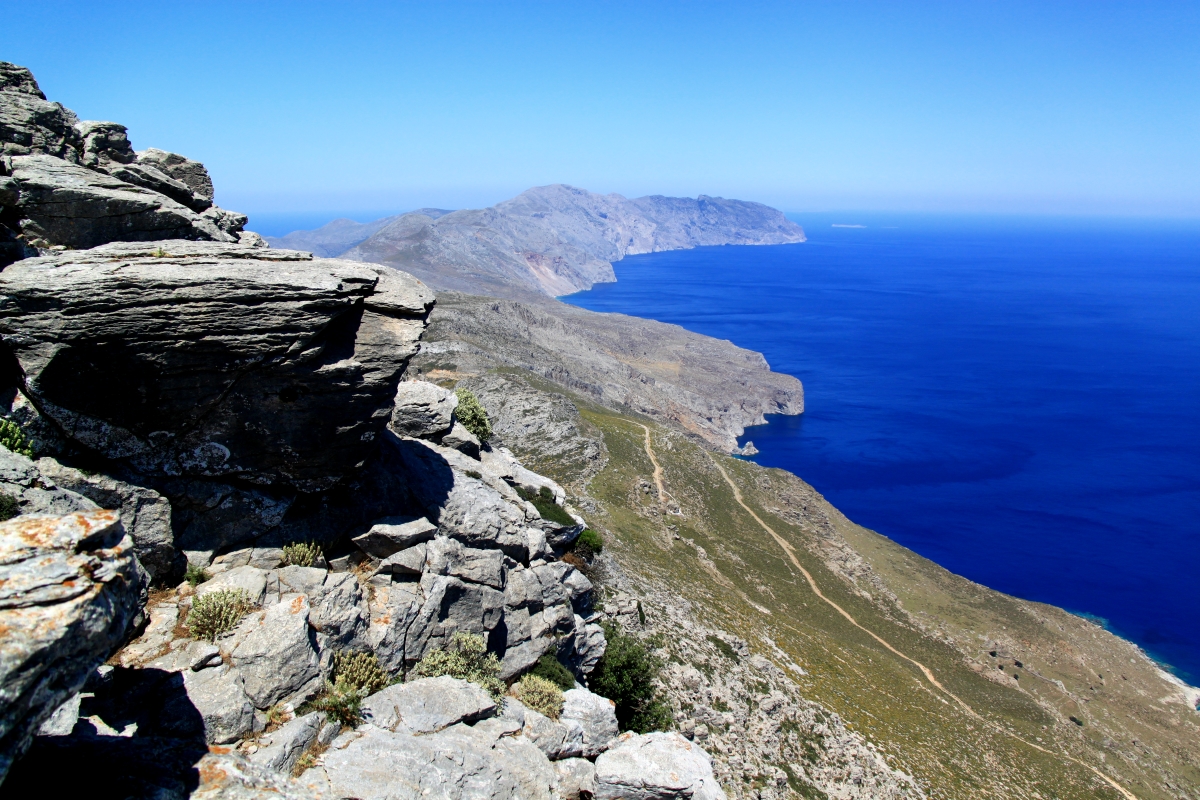
And so it came to pass.  I climbed Oros Profitis Ilias on Amorrgos.  700 metres high It was stunning.  The church on the top is within a couple of feet of the edge of the cliffs which drop down vertically to the footpath I had followed this morning and on the previous 2 days, clearly visible far below.   I stayed up there for the best part of 2 hours before reluctantly setting out back down.

The church of Profitis Ilias perched on the edge of vertical drop of several hundred mtres

Simple interior: the larger of the two frescoes is often seen as framed pictures in other churches of the same name. - Elijah being fed by the ravenz

Looking down to the paths and tracks of The Old Way' about 400 metres below

It’s always a bit sad leaving the top of a mountain.  There is the remaining thrill of having got there, and having been there, but now it’s over.  The pinnacle has been reached and what lies ahead is downhill.  Difficult t describe really.  Anyway, the sadness at leaving the top today was partly tempered by the nature of the way down, hopping across massive slabs of sloping flat rocks. I love rocks.  I love rock-hopping.  Until the rocks ran out and I was in thorny scrub, realising that in concentrating on the rock hopping I had missed the path.

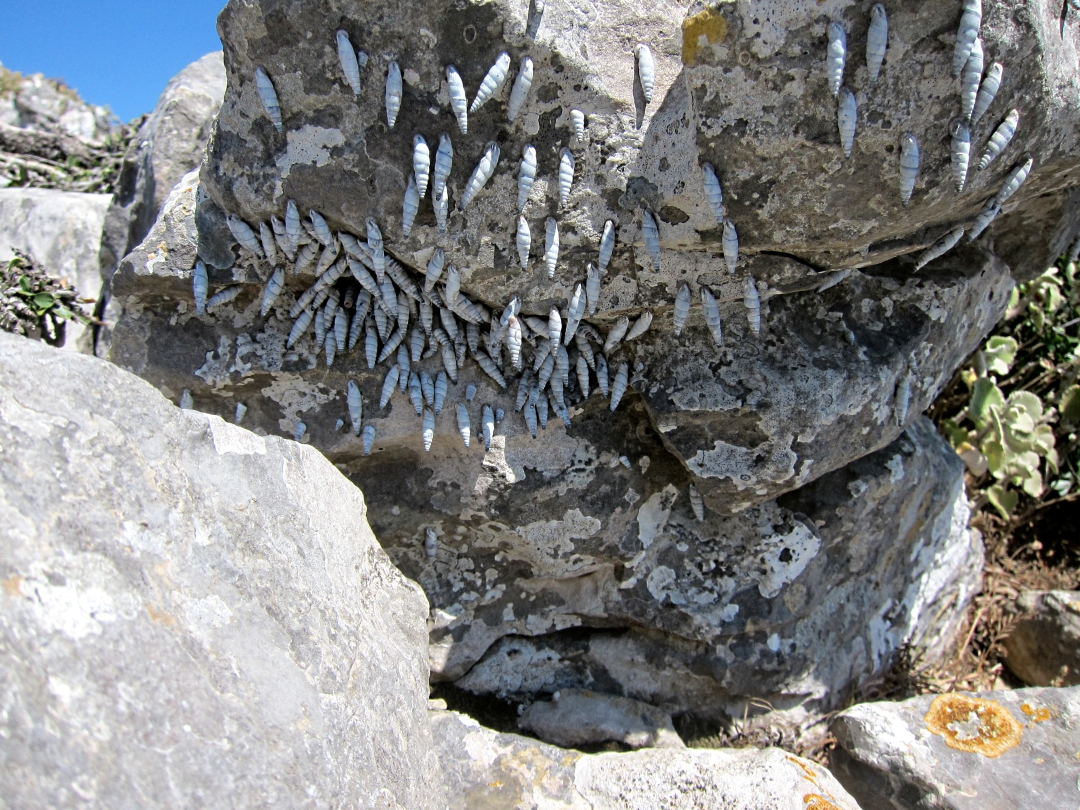
Shell creatures, about 1 cm long, clinging to the rocks in their millions on the upper slopes of the mountain: never seen these before anywhere except perhaps on the beach in Pembrokeshire

It took me a little while to find it again but when I did it took me back to Chora quite enjoyably.  Very enjoyable walk, despite a few local difficulties with the paths.  Bit of an allegory of life really. Try and stay on the right path but if you lose it, find it again!!

Posted in Greece 2011 | 1 Comment

Amorgos: The Old Way

It seems that the world wakes up earlier on Mondays than Sundays with the result that there were more places open for breakfast when I staggered out in search of caffeine at 08.00.  For the first time in a very long time I had eggs and bacon.  It was either that or feta and olives which I love but not for breakfast and particularly when washed down with Greek coffee which was their accompaniment.

Well set-up for the day I set out at about 10.30 to walk to the small town of Eghiali at other end of the island.  The first part of the walk is was the section of path I had walked yesterday and as anticipated the sun was in a better position to photograph the monastery.  In you want to try to master it it’s name is Panagia Hozoviotisa.  I took a few more photos but recognise that it has been photographed countless times from every angle at all times of day and all times of year and it would be impossible to take a shot which was really creative or different.

I didn’t go into the monastery even though it was open because I didn’t meet the strict dress code: no shorts, no trousers for women.  There was an array of old clothes hanging on a fence outside the steps to the front door for ill-clad visitors to choose from to make themselves decent.  There was nothing in my colour so I planned to go back in my own clothes and look around inside another time.

The scale of the monastery is shown by the two people selecting clothes from the fence, centre bottom of the photo

click on any photo to enlarge it,  back-arrow to return to the blog

The path continues across scree slopes coming from the cliffs and sloping down to the sea far below.  Along this section of cost the cliffs are about 600 metres high and pretty impressive but the scree is stable and shallow angled.  Nothing like the scree slopes we used to ‘surf’ down in the Lake District and North Wales.  Great section of path.

The path crosses the scree

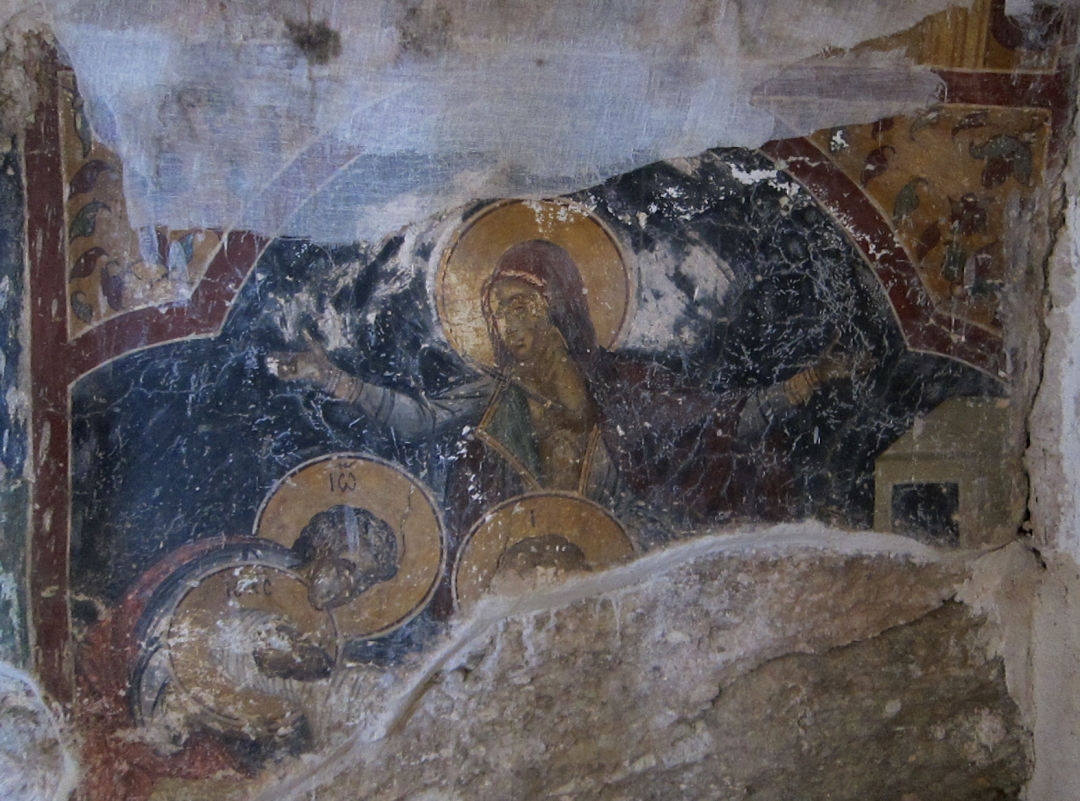
I passed the point where I had turned back yesterday and then diverted off the main path to a  small chapel recommended as worth a visit.  One thing about this and apparently some of the other paths on Amorgos, they are well signed.  In the UK there are finger-post on main roads indicating where a path begins and then you’re on your own.  This path not only has numbers at regular intervals to confirm that your still going the right way but at junctions has finger posts to indicate which destination each path leads to.  I turned off Path Number 1 onto a narrow, winding path to the chapel of Ioannis Chrysostomos set in walled enclosures with ancient olive trees and huddled into the craggy rocks.  The sad thing is that there is no door and animals obviously wander in and out, the evidence for which was all over the floor.  Which is a shame because the frescoes inside are obviously very old but are deteriorating.  A remarkable thing however is that this must have been one of the first places in Europe, if not the world, to have indoor plumbing.  The well is actually inside the chapel with a feta-can tied to a rope for hauling water up.  I guess the feta-can is a bit newer in origin.

The chapel in the enclosures of an old monastery complex

Remaining fragment of ancient fresco

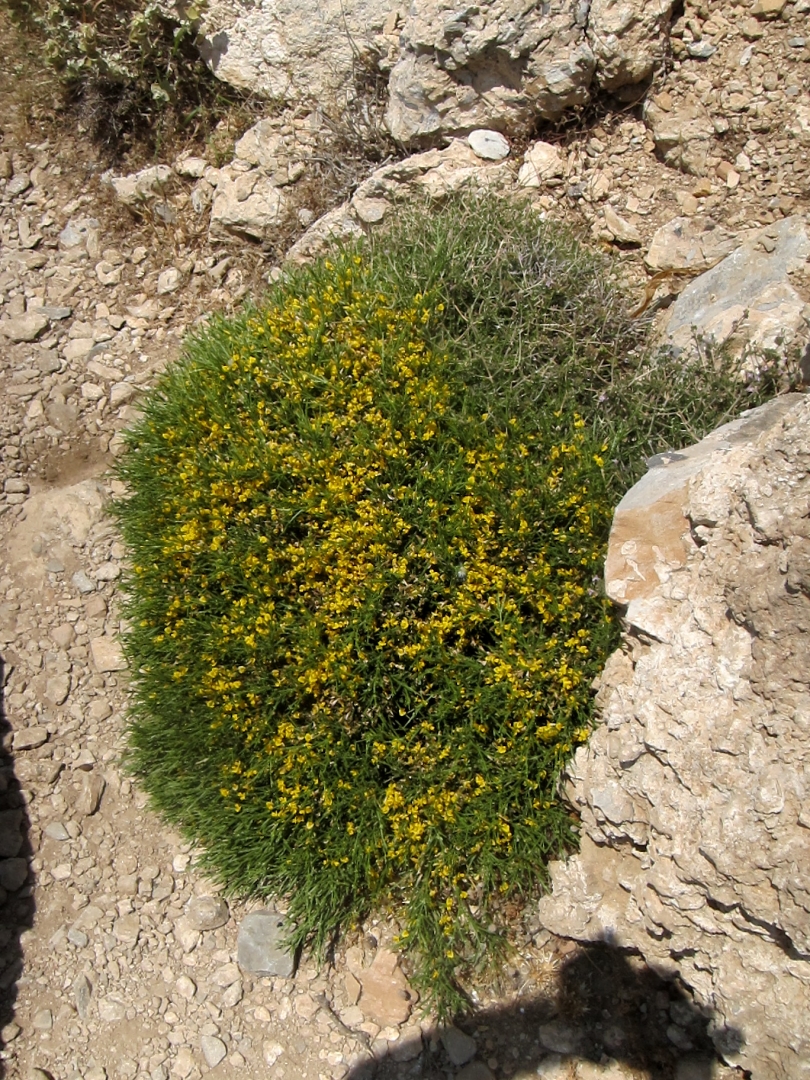
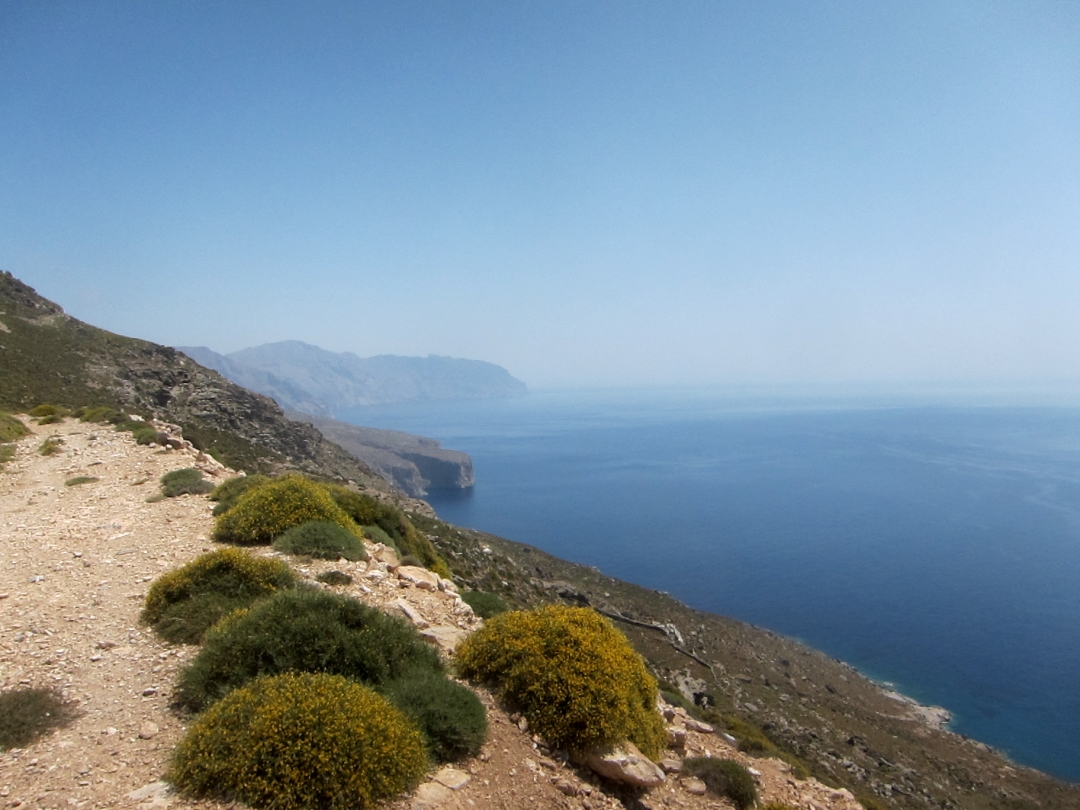
Continuing on Path Number 1 I started to get the occasional whiff of some sweet scent and then came across the odd clump of bright yellow whin (that’s what I know it as, a kind of wild broom).  I took a photo and then shortly afterwards came across a few more clumps and soon there were whole hillsides covered in it.  The scent was intoxicating.  The most aromatic bit of walk I’ve ever done.  The hillsides of Symi are covered in oregano, thyme and sage and walking through them is a great experience, very memorable.  But that scent is more subtle than this.  The whin is almost overpowering in places.

First, one clump of whin

.... then a few more

... and soon whole hillsides

Still further on and it becomes clear that cloud is forming over the ridge and soon I’m walking in what I can only describe as warm clag.  Every-so-often it would clear and reveal dramatic cliffs and gullies.

Clag beginning to descend

Photographer in well, with grey background

Whin and clag

Path Number 1, or to give it its proper name, the ‘Palia Strata’ meaning ‘Old Way’, continued in dramatic fashion through the mountains, the clag lifted and then Eghiali appeared far below and the path dropped gradually down to the coast.  It took about 4½ hours in all and I enjoyed it so much I’ll probably do it again.

Dropping down to the coast

I reached Eghiali in plenty of time to have a frappe and a swim before the bus back at 18.00.  The only problem with the swim was that Eghiali has a sandy beach.  I haven’t been on a sandy beach for such a long time that I had forgotten that the sand gets everywhere including places you would rather not have sand.  But a minor problem.

A great day symbolised by a great sunset.

Sunset from my balcony

Posted in Greece 2011 | 1 Comment

Amorgos: a new place, apprehension and anticipation

It’s strange arriving somewhere and knowing virtually nothing about it.  I had only a vague outline of what Amorgos is like or what I would do while I’m here.  I suppose because I’m on my own I find myself musing about things a lot more.  Like why I draw comfort from the familiar and yet crave change.  The comfort thing is probably to do with security and at times is very reassuring but one of the things I was struck by when I first started learning Greek was a quote attributed to Alexander the Great “Life is only made worthwhile by challenge’.   Doing the same things in the same places all the time is comfortable but leaves me feeling dissatisfied, a sense of failure to achieve anything.  I wonder if it’s too late to embark on World Conquest?

So it was with a strange mixture of apprehension and anticipation that I got up on Sunday morning.  The room doesn’t have facilities for making even the most elementary of meals so straight away there was the challenge of finding breakfast.  The room is the most conveniently situated place I have ever stayed in.  Within 50 metres there is a supermarket, an ATM, a bus stop and 3 tavernas/cafés including one with internet access.   When I went out at 08.00 to track down breakfast none of the 3 eating places was open.  Nor were any of the very many others in the village.  There are an incredible number of eating places and tavernas in Chora and not one of them was open.  After the great breakfasts and the great location to eat them on Nisyros anything was likely to be a letdown but not to have anywhere open left me a bit glum.  Don’t people know  need cafeinating first thing in the morning?  Not a good start.

On my way back to the room, not so much depressed as disoriented I passed the café closest to where I had started out just opening up.  Not a great breakfast but filled me up and a strong espresso did the trick.

The plan was to plan.  I had maps but I thought that a good walks guide book might point me in the right direction.  Having sussed out that there was a bookshop down by the harbour but none up in the Chora, and having sussed out bus times, I went down on the 10.35.  Posted blog in internet café while I waited for the bookshop to open and then bought a book of ‘Footpaths of cultural and historical interest’ which included copies of hand-drawn maps.

I hung around the harbour waiting for the bus back at 13.00 and enquired out of interest about ferries back to Kos.  It seemed that the one I had travelled on to get here reached Piraeus and turned straight round to come back arriving in Amorgos at 12.30.  A very civilised time to travel and would get me to the airport in time for my flight 2 weeks hence.  But the timetable changes today.  In 2 week’s time the same ferry is at 05.30.

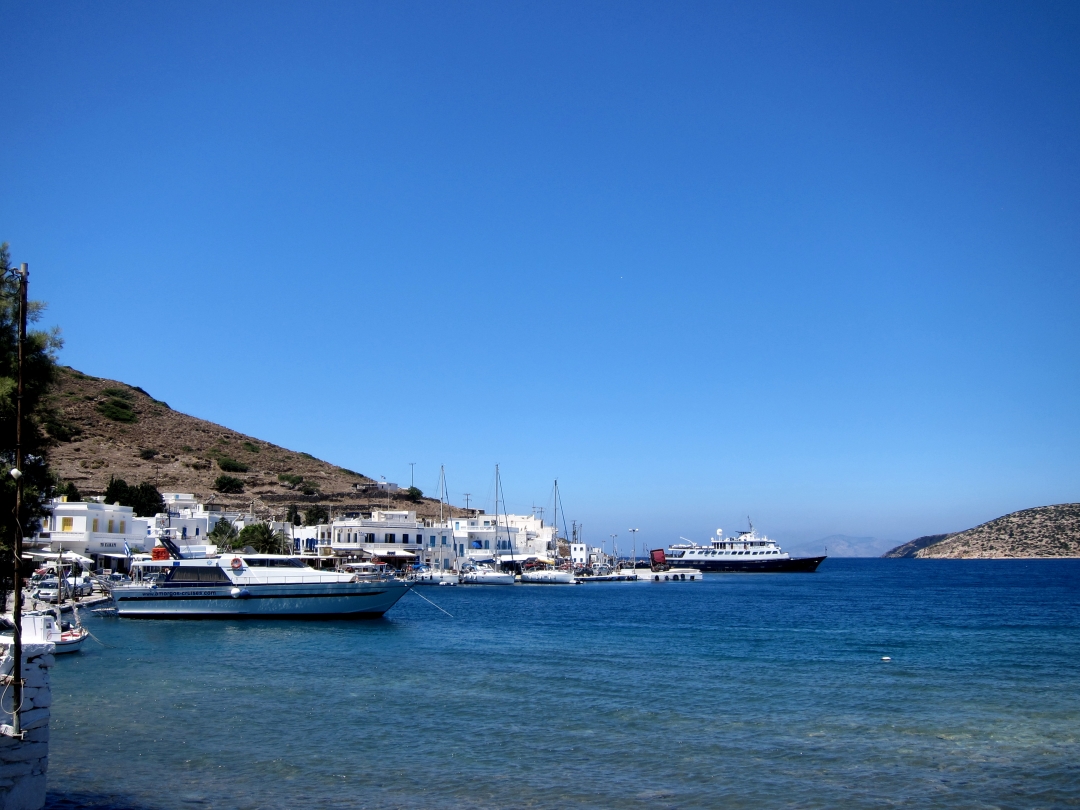
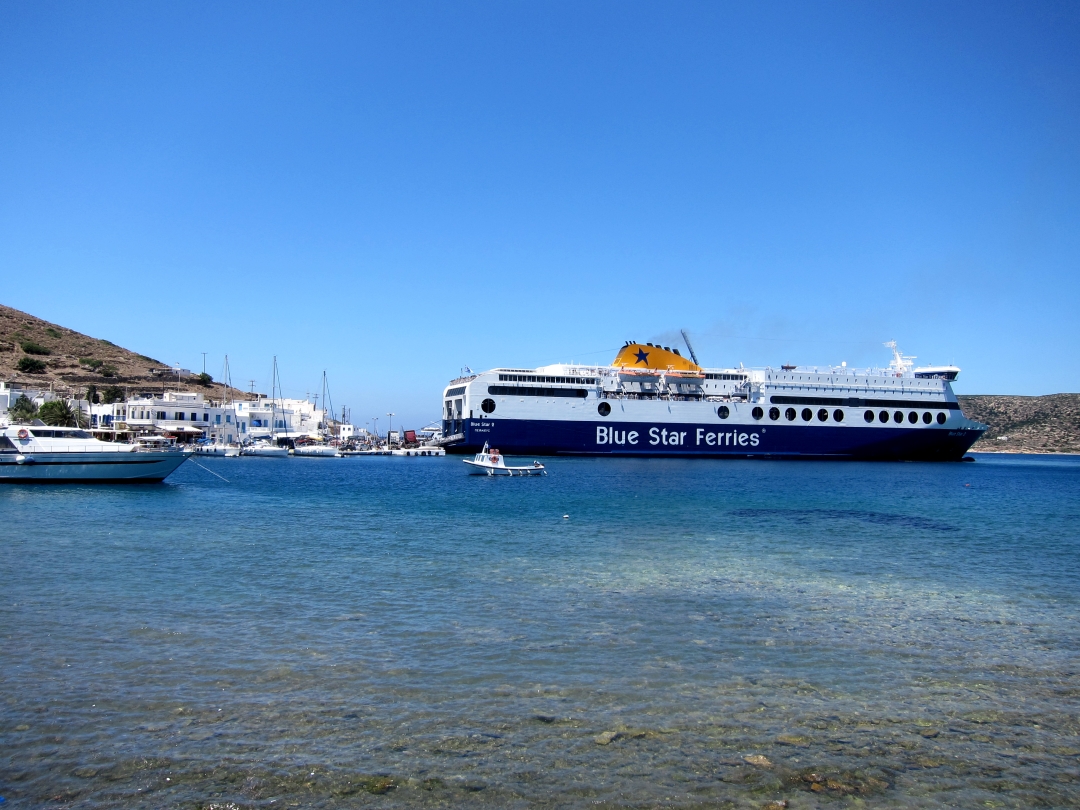
Still, I watched the harbour a little longer and watched the Big Ferry coming in.  The scale of it is even more obvious from outside.  On the inside it just seems very spacious.  Outside it dominates the harbour and the town.  It’s so big and dominant and very different that it’s almost like a visit from a flying saucer personned by aliens.  Not that I’ve ever experienced the latter.

Katapola, the main port on Amorgos, is principally a fishing harbour

..... visited by the occasional yachty thing

.... and twice a week by the giant Blue Star Ferry

.... the size of which dwarfs the buildings of the town only a few feet away

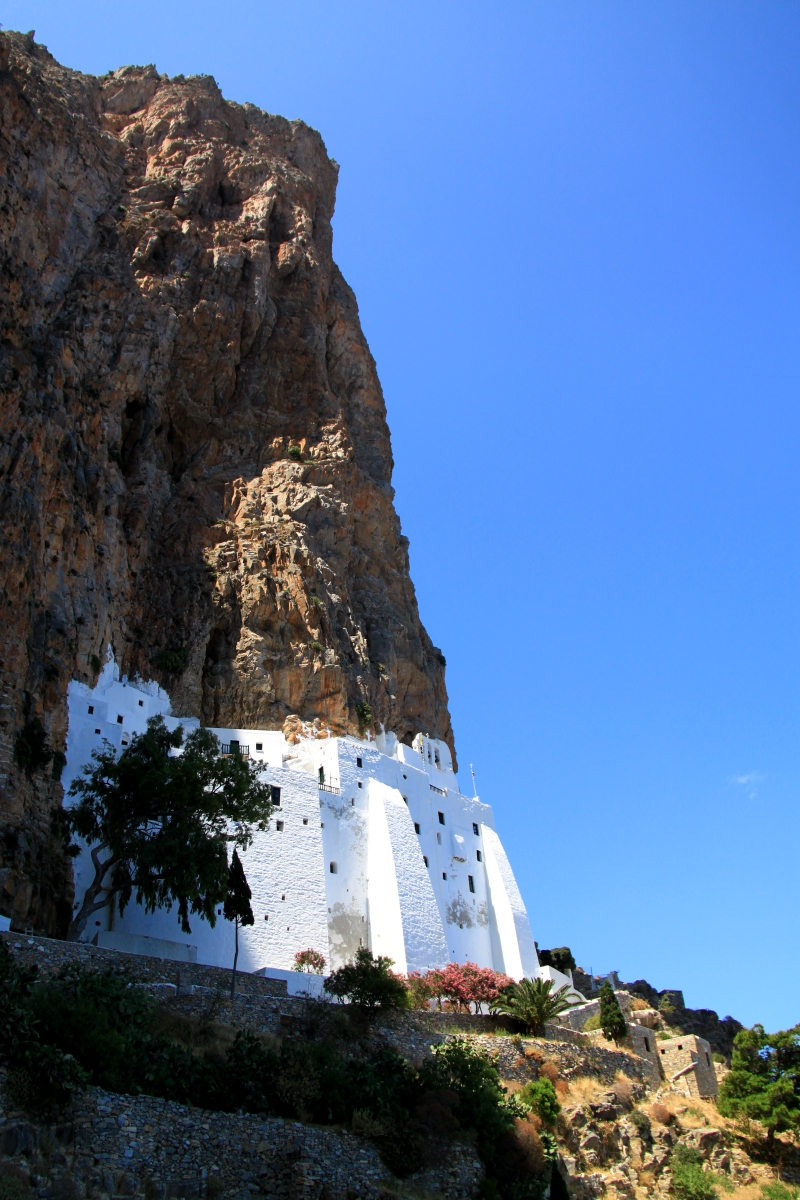
Back at the room with the help of the book and the maps I decided on a short walk. There is a monastery built into the cliffs on Amorgos which is as iconic as the Tower of London or Sydney Harbour Bridge.  It’s iconic but the name is nearly unpronounceable.  Turns out that it’s less than an hour’s walk from Chora and the start of a longer route to the other end of the island so I could continue the walk further as appropriate.
It’s easy to see why the monastery is so striking.  I took several photos but the sun was in the wrong position.  Though on reflection had it been in a different position at the time I was taking the photos there would doubtless have been problems of cosmic proportions.  Perhaps it would be more accurate to say that I was there at the wrong time.

The Iconic Monastery

Craning the neck to look straight up the front of the monastery

Looking back at the front entrance

So I resolved to go back tomorrow morning as part of following the route to the other end of the island and take some more photos, hopefully with the sun in the right place.  Now there’s a plan.

Posted in Greece 2011 | 1 Comment