Nisyros: inside the volcano

Good day on Friday. Having spent a day wandering the rim of the caldera with spectacular lava extrusions I decided it was time to go down into the caldera and look at some of the craters.  But via a new-to-me path.  I emphasise ‘new-to-me’ because it has obviously been there for centuries if not millennia. Enfys and I had failed to find it starting from the caldera on our last visit together in 2009 so I adopted the usual tactic of trying it from the other end.  That proved to be no problem if a little slow going.

It was slow going due to the Greek attitude towards walking and therefore paths.  They are only maintained if they have a practical/economic purpose here and now!  So paths to monasteries/churches where there are annual ceremonies are kept open as are paths with an agricultural purpose.  Mention the possibility of footpaths for the pleasure of walking and locals scratch their head in bewilderment.  One guy on Corfu during my 2012 Greek Odyssey Part 1 expressed the view that footpaths are for animals.

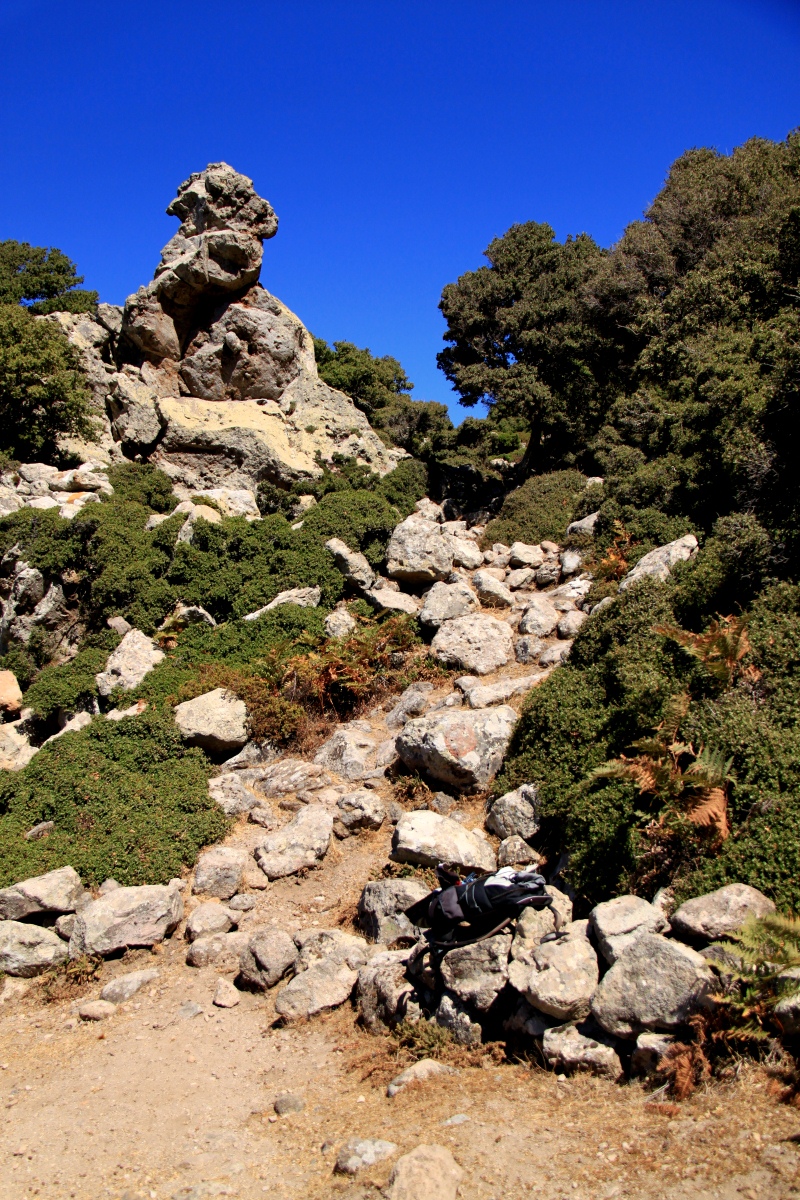
Back to reality.  Friday’s New Path was in places overgrown or collapsed but it had clearly at one time been a significant transit route for people living in the many ancient houses it passed on the way down to the caldera. It was a dedicated path not just a meandering down through the terraces.  The route had been set aside and walled or built up as appropriate along its whole length. The loss of agricultural land was obviously considered worth the ease of communication.

It is amazing that the world over people live so close to potential catastrophe.  I know that there were people living inside the caldera into the 1950’s and yet the record of volcanic activity puts the last major eruption at 1888 when there must have been significant numbers living here.
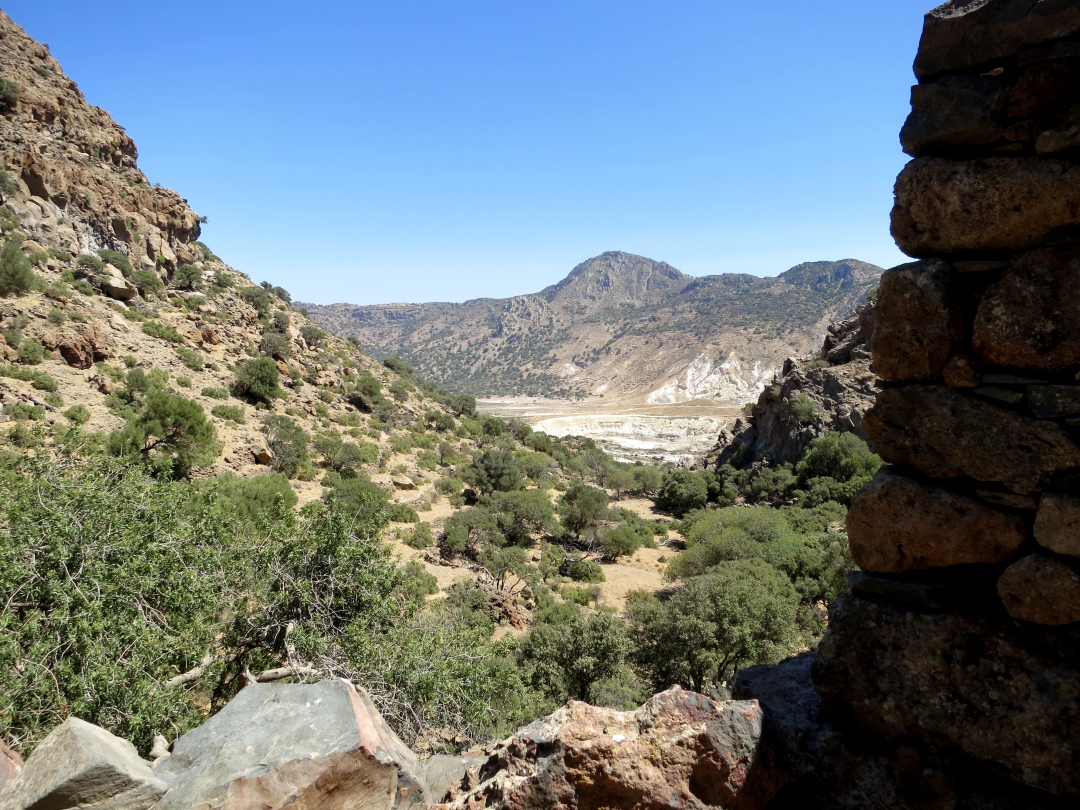
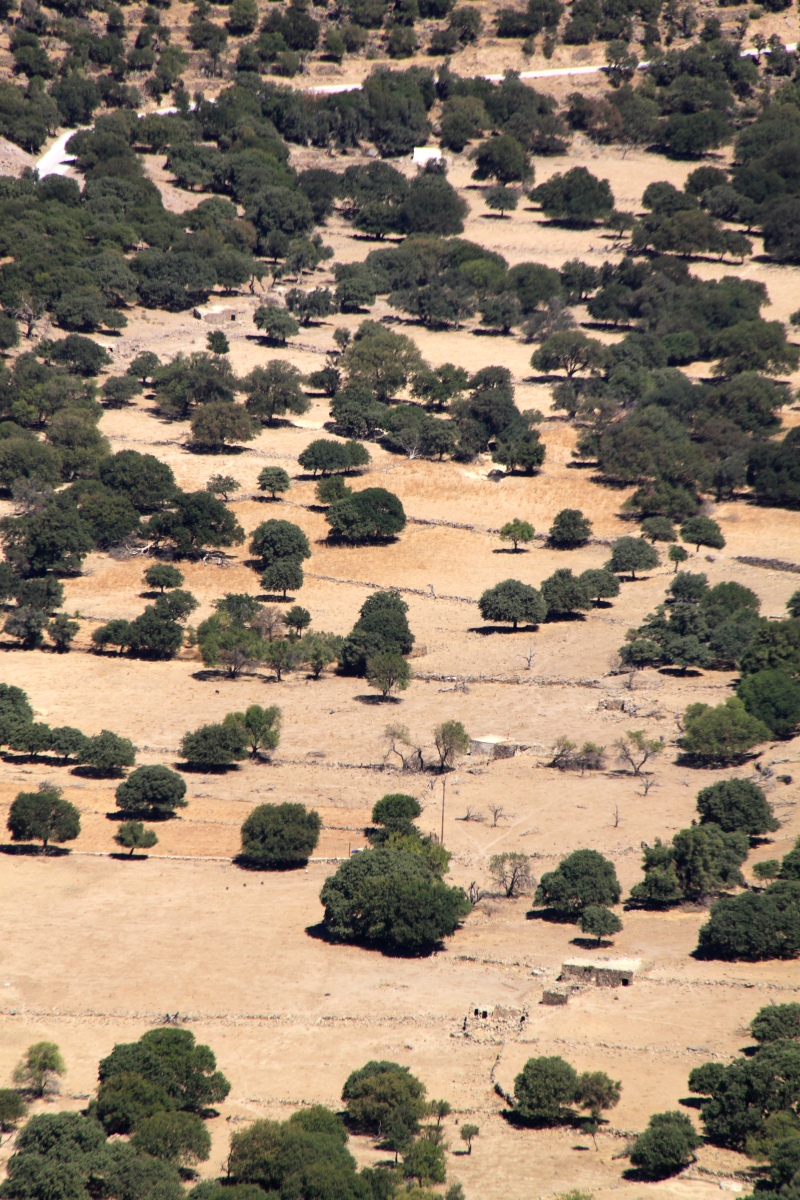
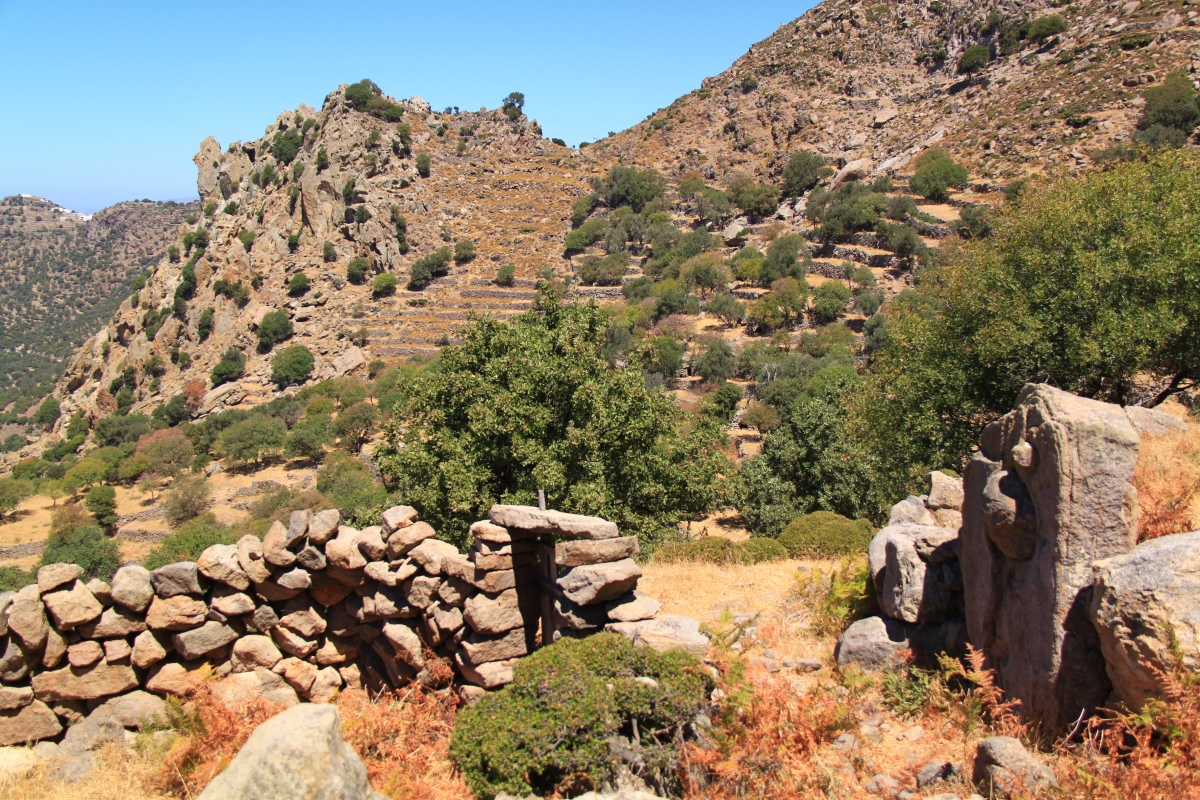
Looking from one of the many old houses inside the caldera to the not-too-distant crater

The path going up to the crater rim is in places built up on a causeway through the terraces, in others contained within walls

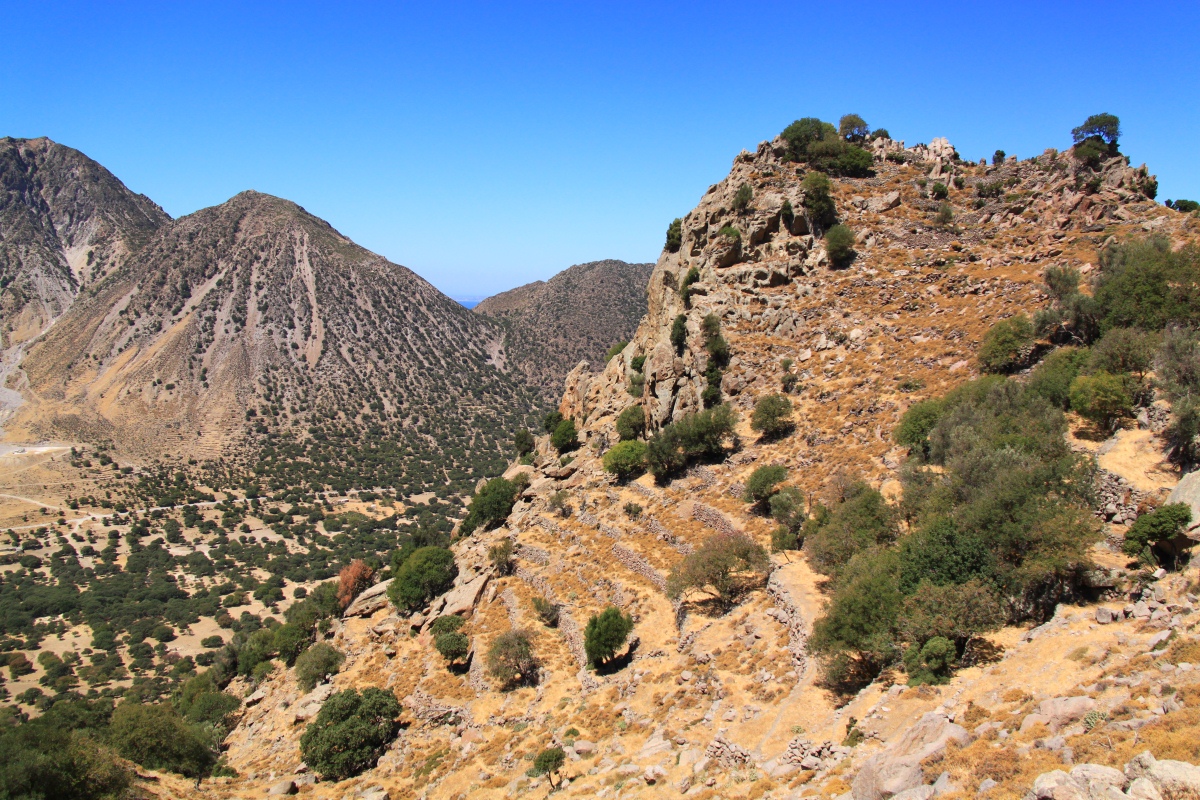
On the caldera floor with the lava pinnacles of Parletia in the distance

I managed the way down without incident save a few expletives when overhanging trees scratched my head or snagged the rucksack.  In truth I grumbled to myself but quite enjoyed the path.  The only real concern was the pigs wandering loose towards the end.  I am very wary of sows with piglets after hearing a horror storey from a friend who found her mother killed by pigs in their sty while feeding them.  The two sows looked at me threateningly but took no action, content that I posed no threat and preferring to stay in the shade under a tree.
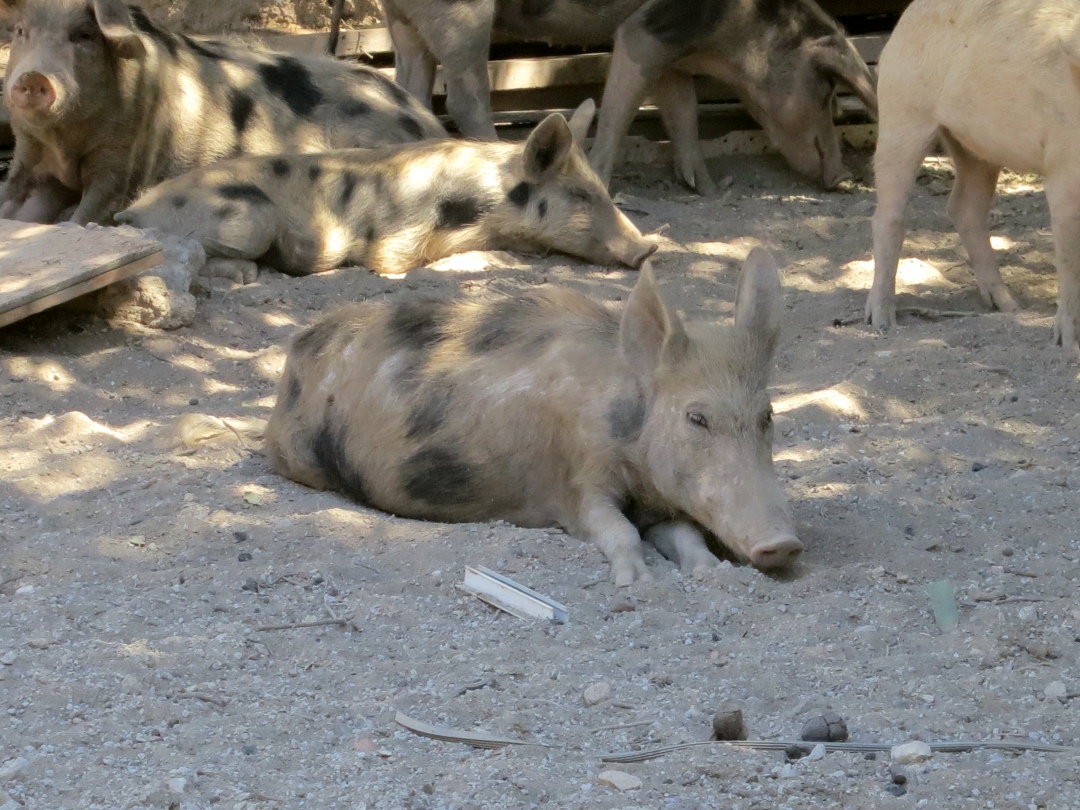
The pigs

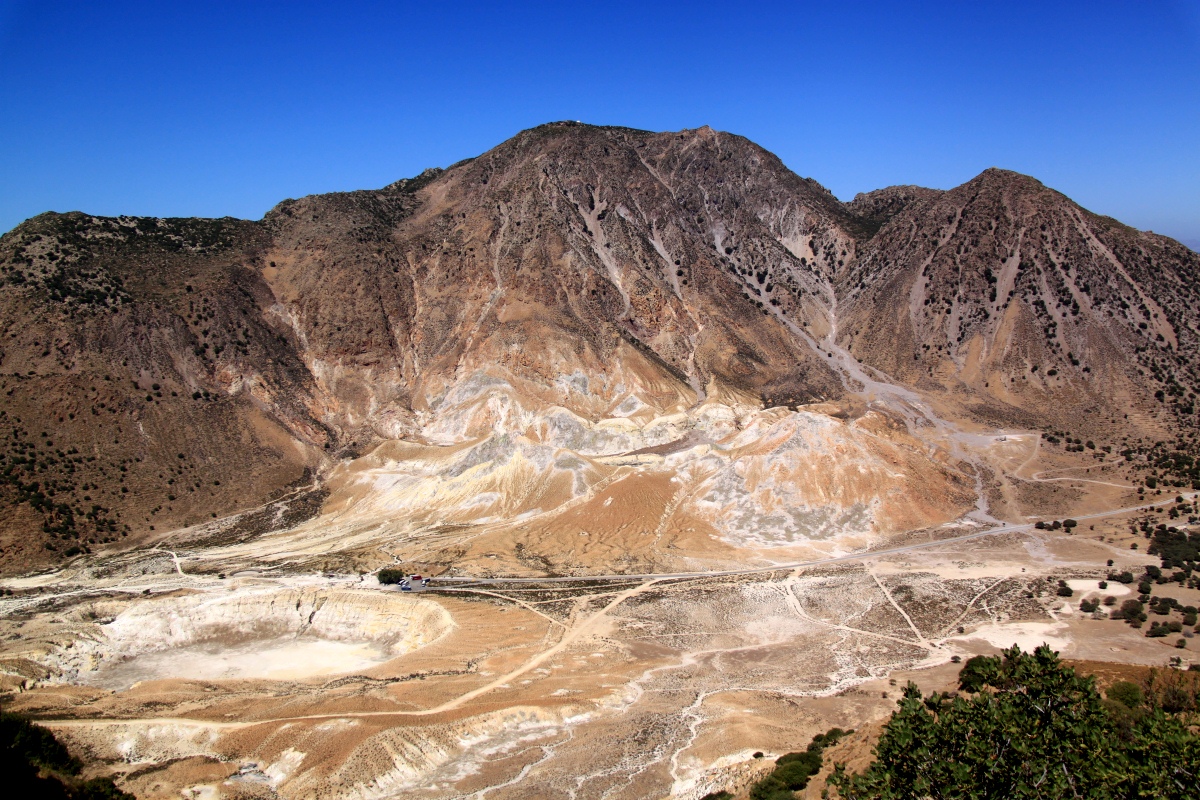
Once on the caldera floor I went first to one of the minor craters I hadn’t visited before, the flanks of which I had photographed many times but not been up to look at the inside. It wasn’t as spectacular as the other two I had visited but take it out of its context and put it in the middle of, for example, the Peak District National Park in the UK and it would have real ‘Wow!’ factor.

Looking towards the Achilleas crater

Inside Achilleas crater

On the slopes of Achilleas

Then on the way up to the second of the ‘minor’ craters, no-one would be allowed within 5 miles of it in the UK, I started chatting to another guy walking on his own who turned out to have been to the same university as me.  We agreed to meet up back at the caldera-floor taverna and walk back to Mandraki together.  We are also staying in the same hotel though that is less of a coincidence as the Porfirys is the Number 1 hotel of choice on Nisyros.

I mooched around the other crater for a while with the camera and found that it seemed to have changed significantly since last year.  The fissures were larger and more extensive.  However, the fumaroles in the cliffed sides continued to pour out sulphur gases and were encrusted in crystallised sulphur.  It was a shame to drag myself away but the stench of the sulphur began to get to me, particularly when  I climbed up the sides of the crater to get close-up shots of the fumaroles.   I wished I had had a macro lens for that but I couldn’t justify the cost against the number of times I would deploy it.  And I would have been even closer to the gases.

Sulphur gas pours from the rocks on the inside of the crater
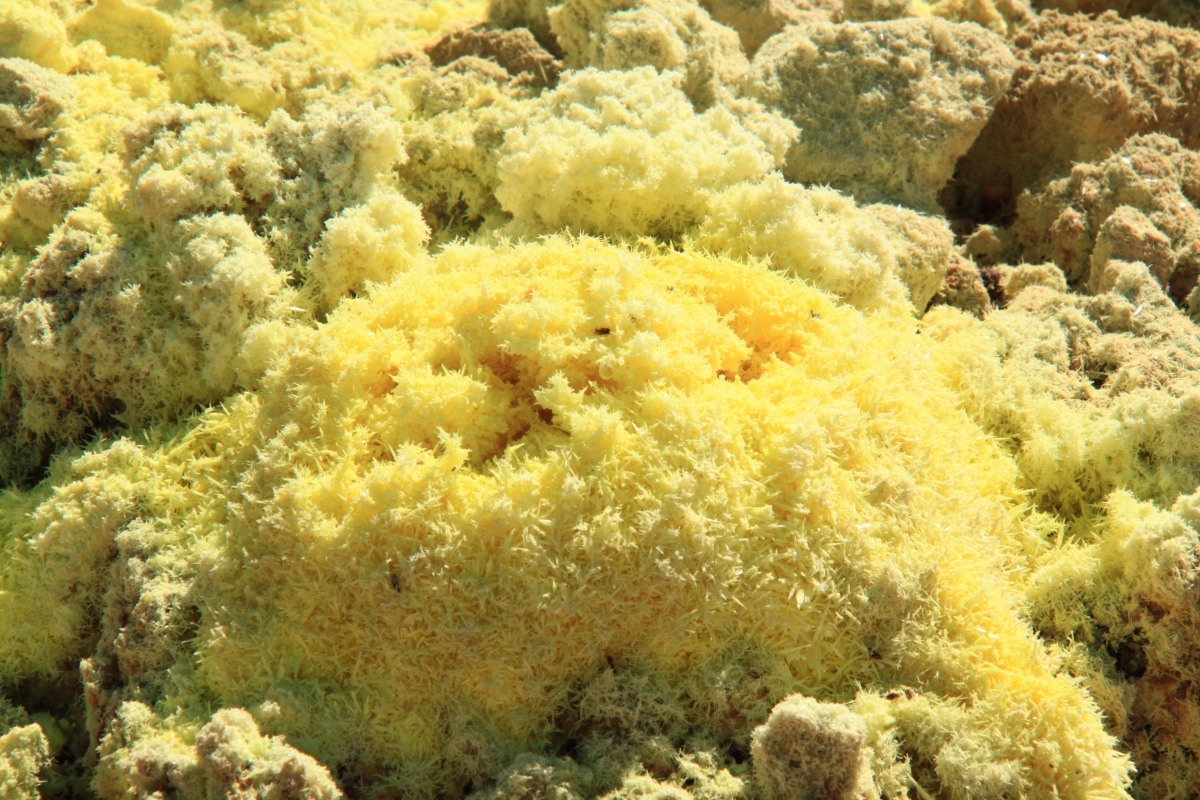
Close up of deposits of sulphut crystals

….. and another

The canyon at the western end of the crater
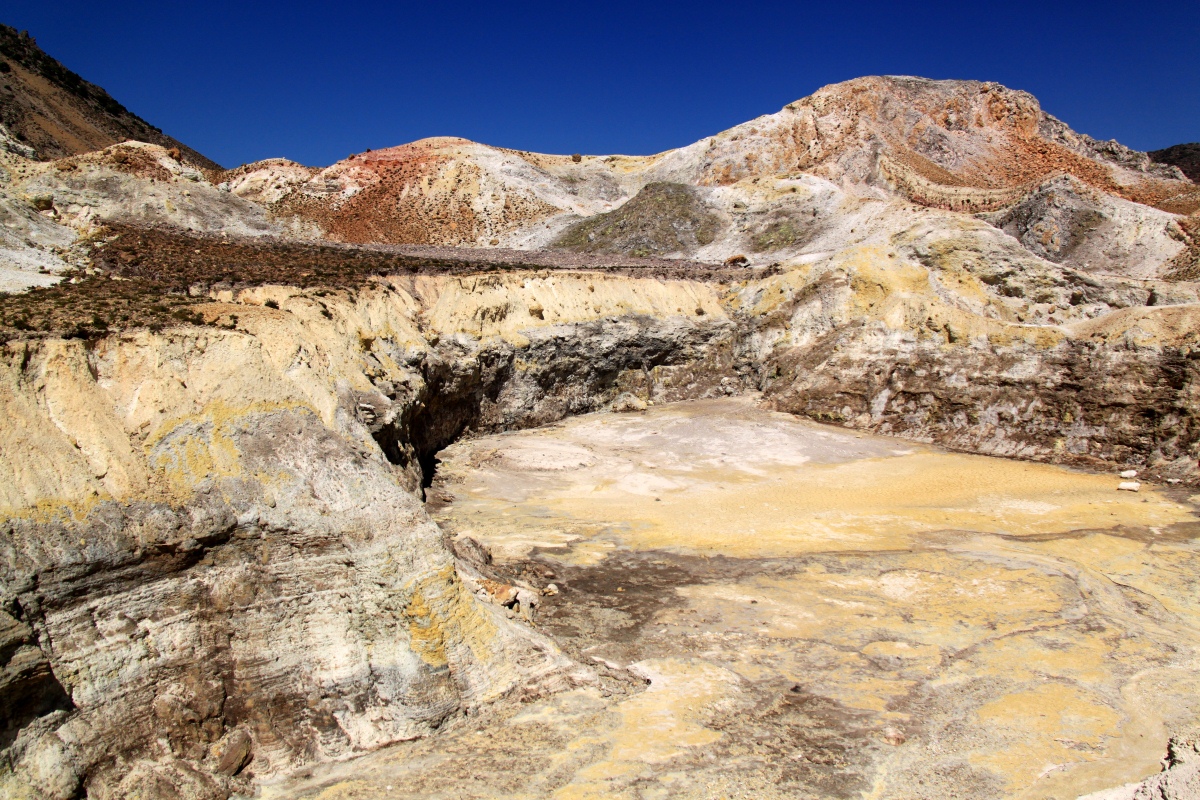
Looking the other way
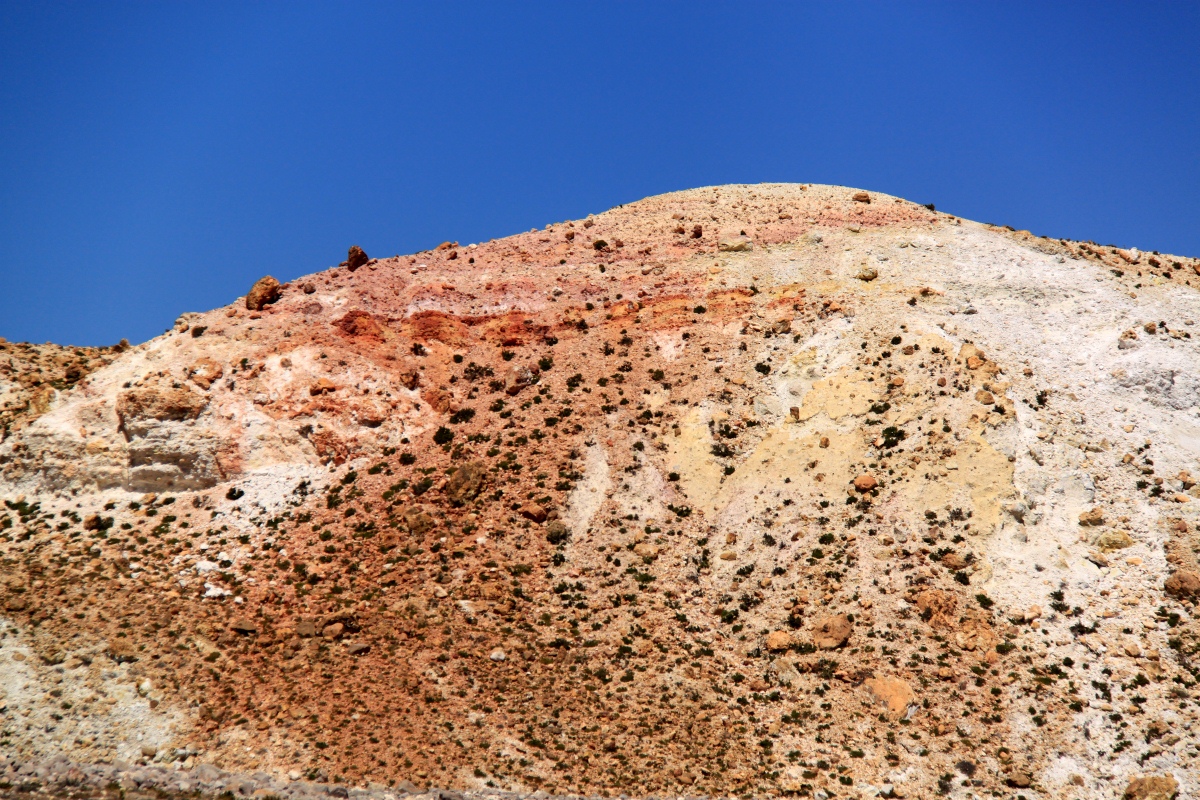
Colour everywhere

Bands of deposits in the sides of the canyon

Eventually made my way back to the taverna and a bottle of cold water from the chiller ….. important to conserve the water I was carrying for the walk along the caldera and then up the mountain pass to get back to Mandraki. There was no wind so it would be hot.
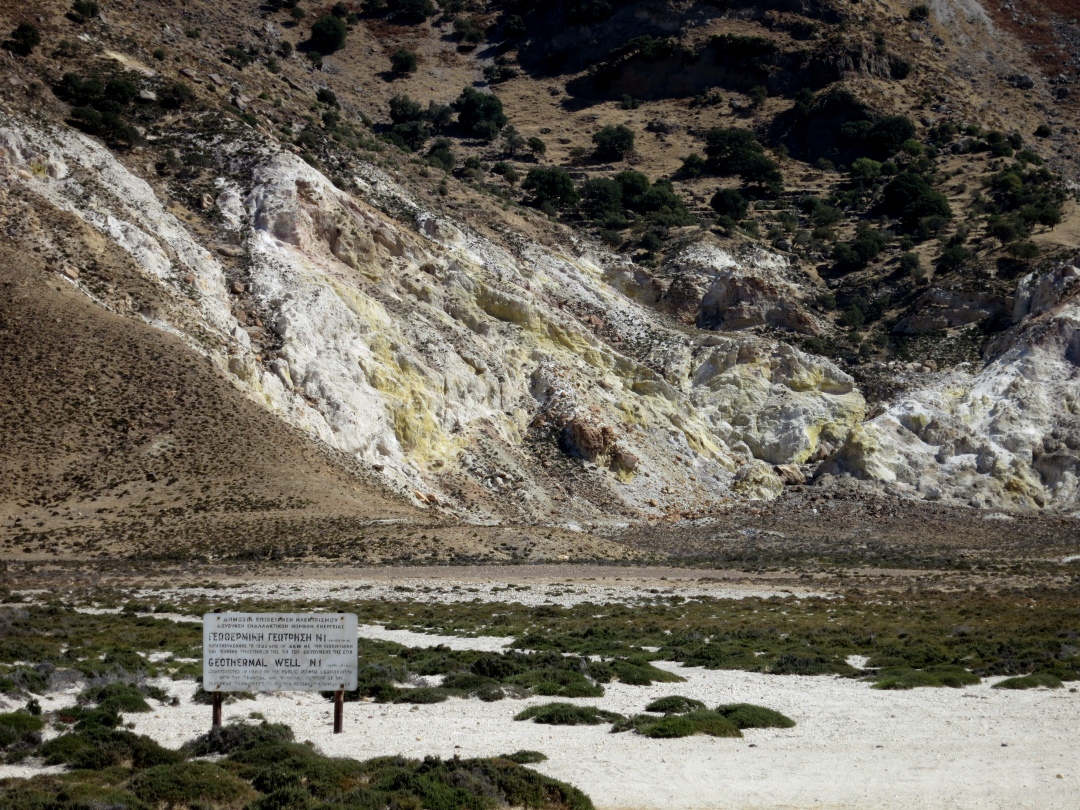
On the way across the caldera floor, a reminder that people once tried to make money out of the volcano by sinking geothermal wells. The attempt failed.

There is a lot more to see in the caldera but the advantage of staying on the island for a few weeks is that not everything has to be crammed in to one visit.
Posted in Greece, Monmouthshire | Tagged , , , | 3 Comments

Nisyros: on the rocks and on the edge … again.

It’s difficult to think that it was less than a week ago, Thursday of last week, that I was rushing around at home trying to get things sorted before I came away.  This Thursday I was wandering footpaths, in some places barely clinging to the mountainside as soil slips took them out, looking at dramatic volcanic rock scenery.

The walk took me from Nikia on the edge at one end of the main caldera, Lakki, around the inside of the caldera to Emborios on the edge at the other end of the 4 km long caldera and then further round before crossing into the ‘Kato Lakki’ caldera and eventually back to Mandraki.

It was mesmerising with giant pinnacles of lava and views down into the craters.  It was all spectacular but perhaps nowhere more so than the ancient castle of Parletia built into some of the highest pinnacles towering above the caldera floor.

The walk took considerably longer than planned simply because I stopped so often to take photos.  So this blog is really just a series of photos trying to give a flavour of the place.  It only covers the first part of the walk, the second part, including the gigantic lava bubble near Emborios, will have to wait for another day.  It reached the point where I put the cameras in the rucksack and left them there in order to make progress.

CLICK ON IMAGE TO ENLARGE, BACK-ARROW TO RETURN TO TEXT

The main crater ‘Stephanos’ and the others clustered behind it with Oros Diavatis behind

Zooming in on the ‘Polyvotis’ crater

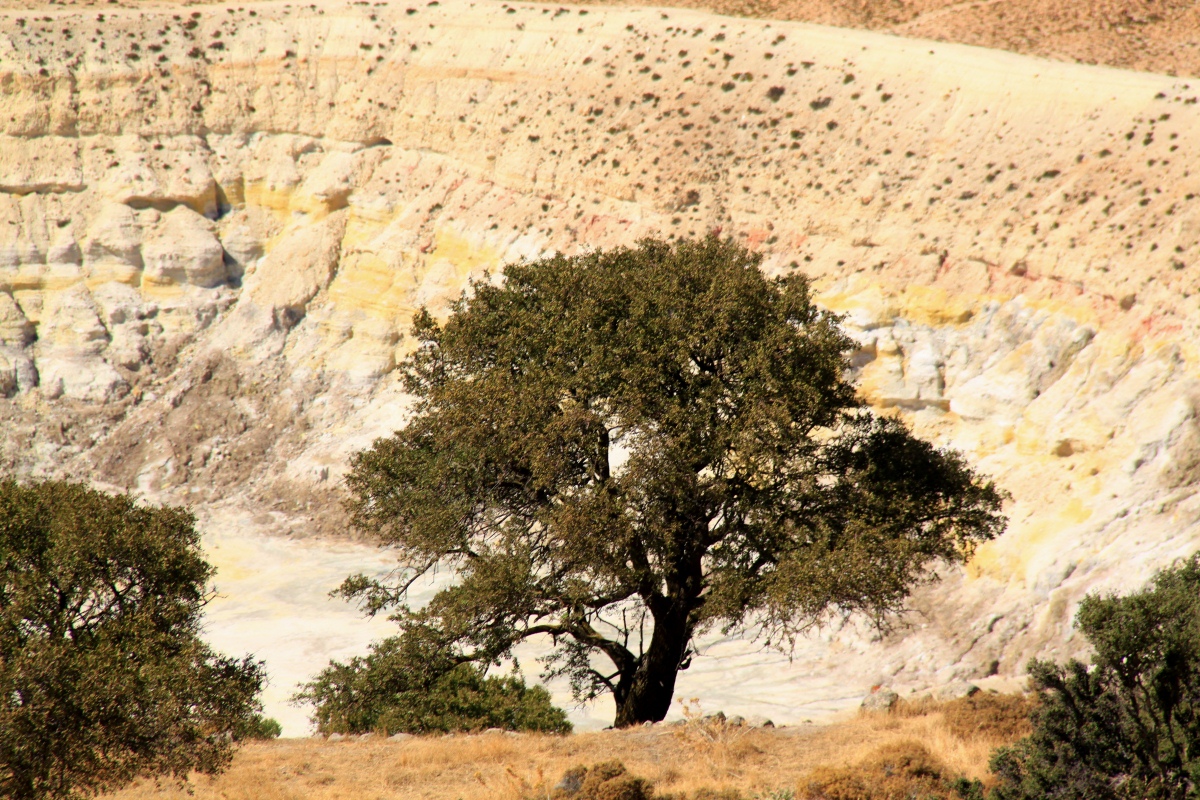
The floor of the caldera in summer colours

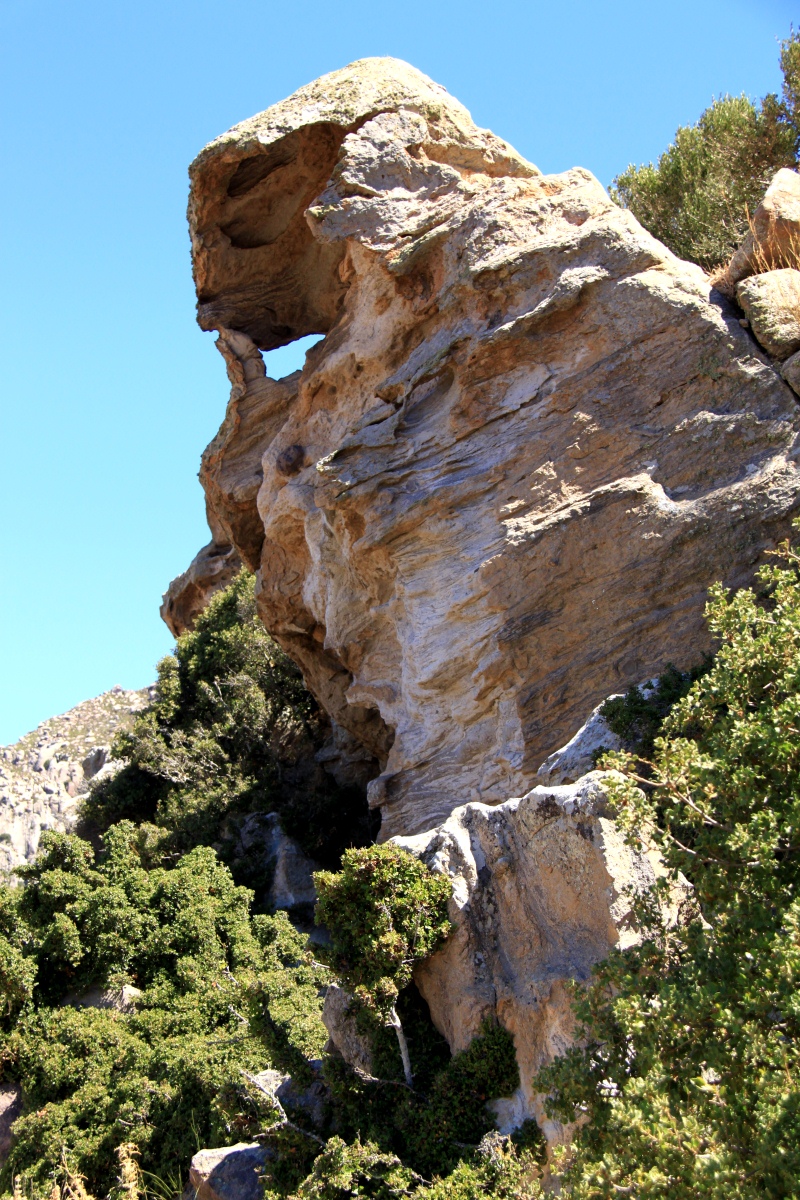
Lava rock overhanging the path

The western end of the caldera

Looking back to Nikia with rock pinnacle silhouetted against the morning sun

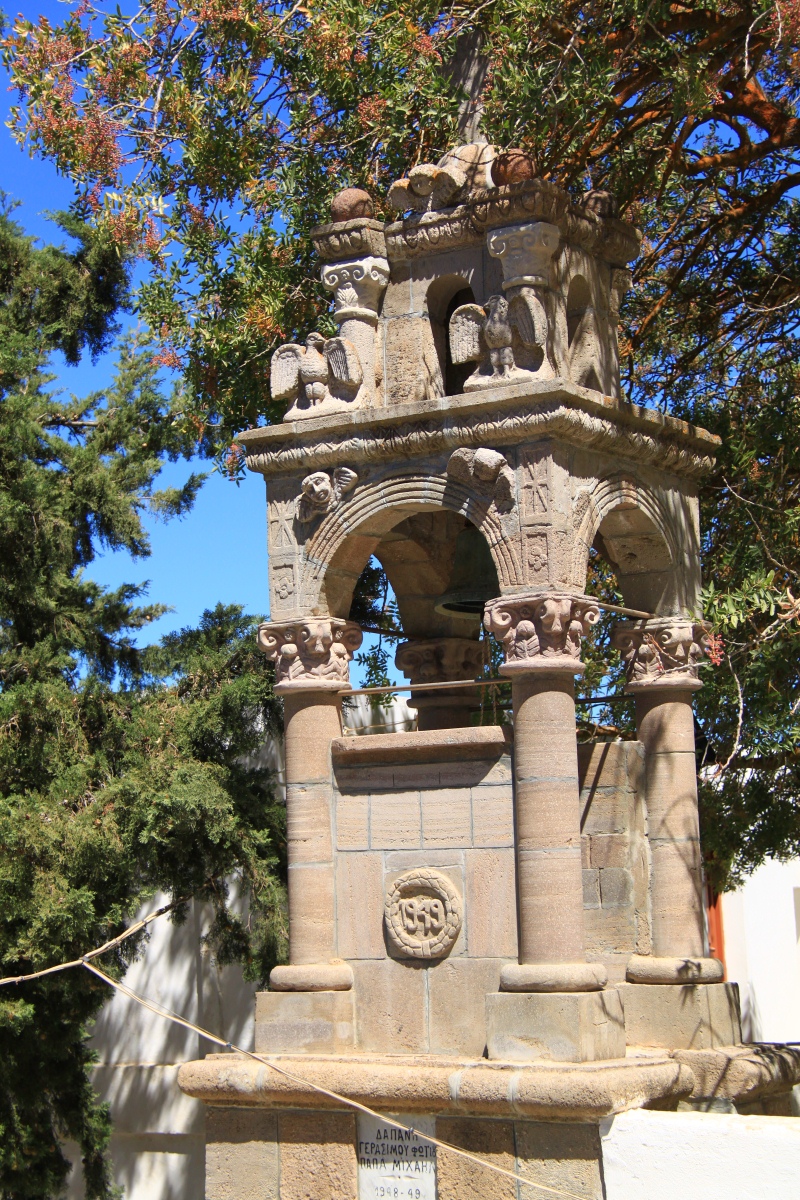
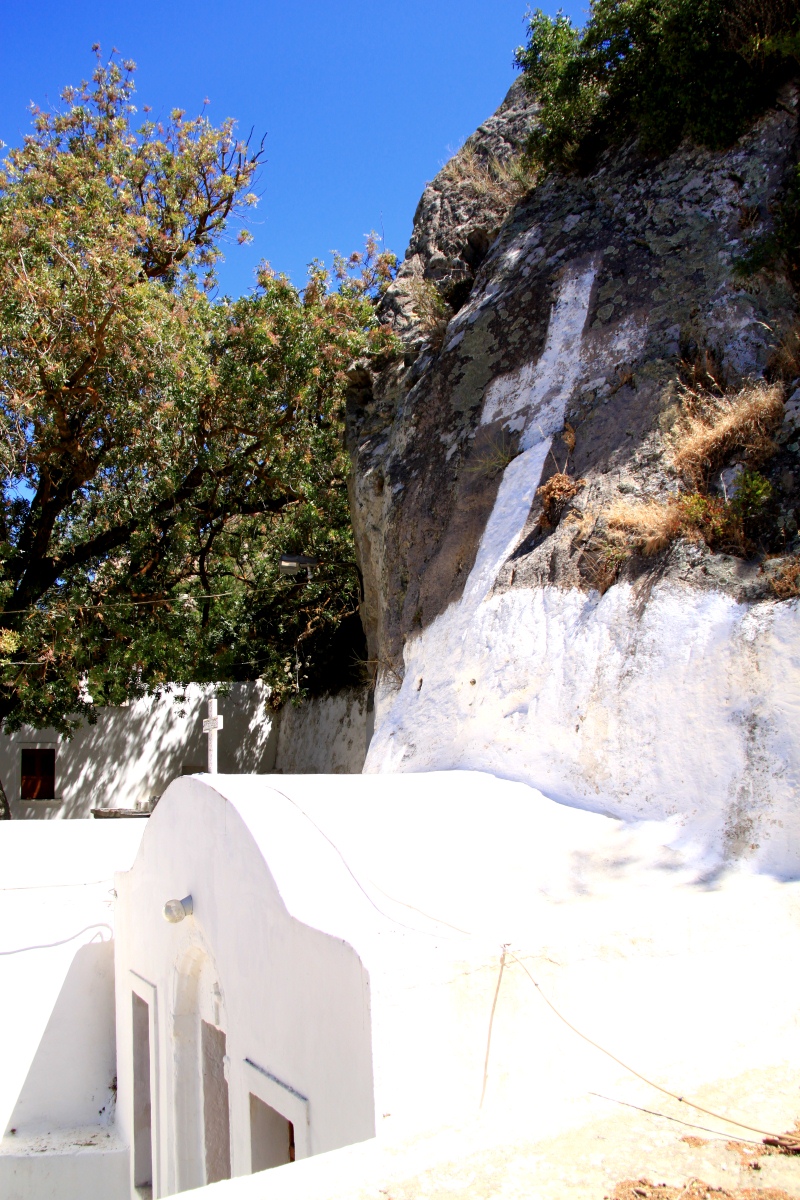
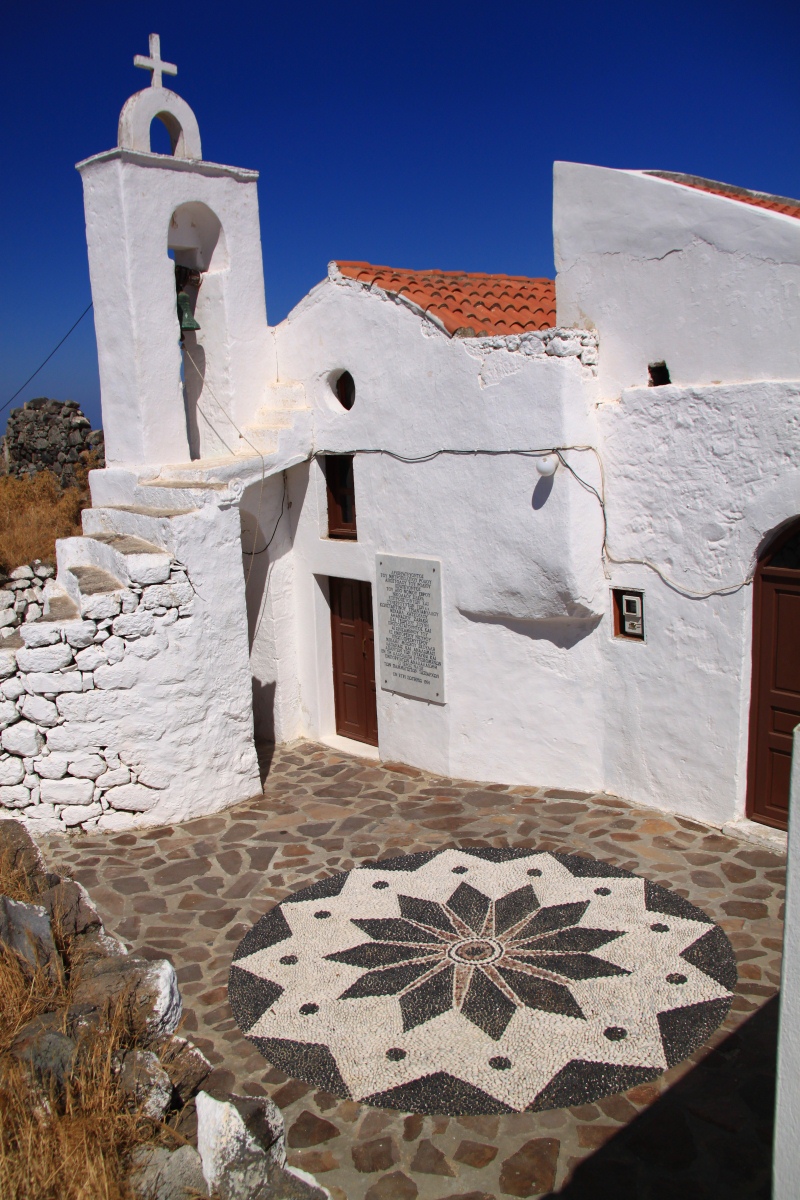
Diversion to the monastery of Ioannis Theologos. The bell tower is carved lava.

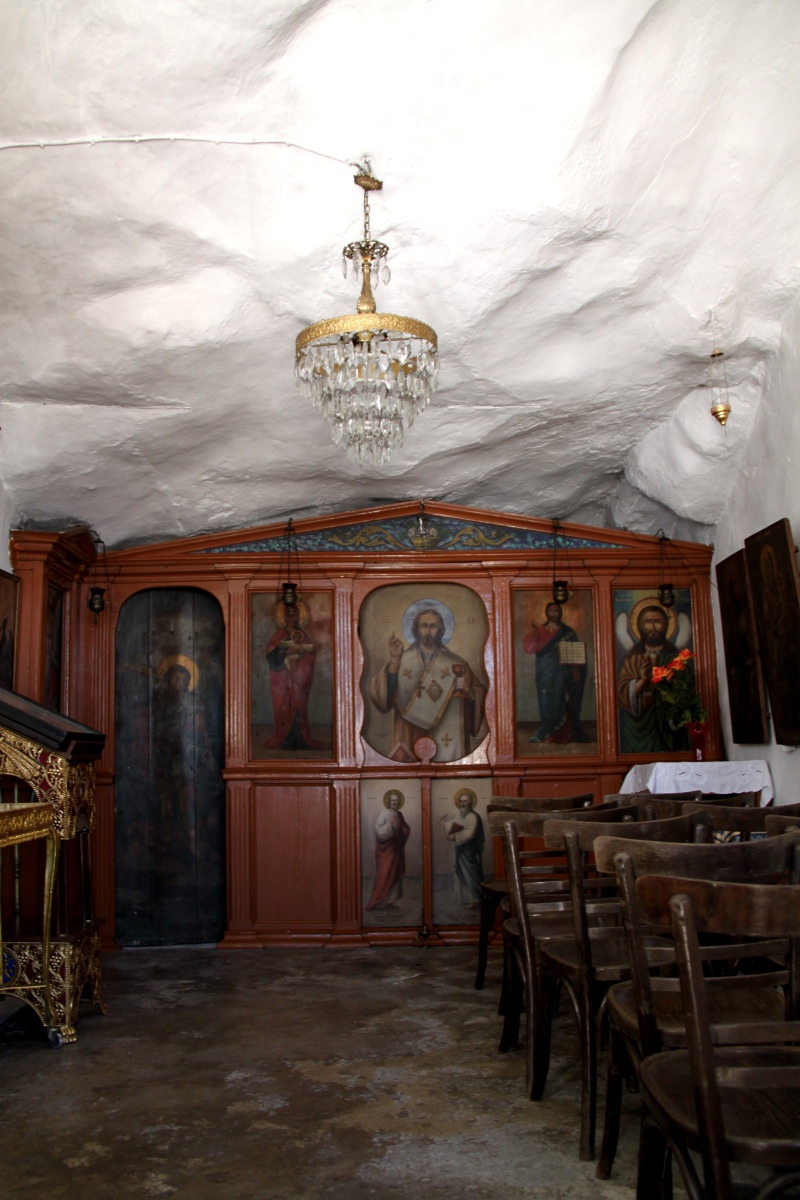
The church is built into the rock

….. so the ceiling is solid rock

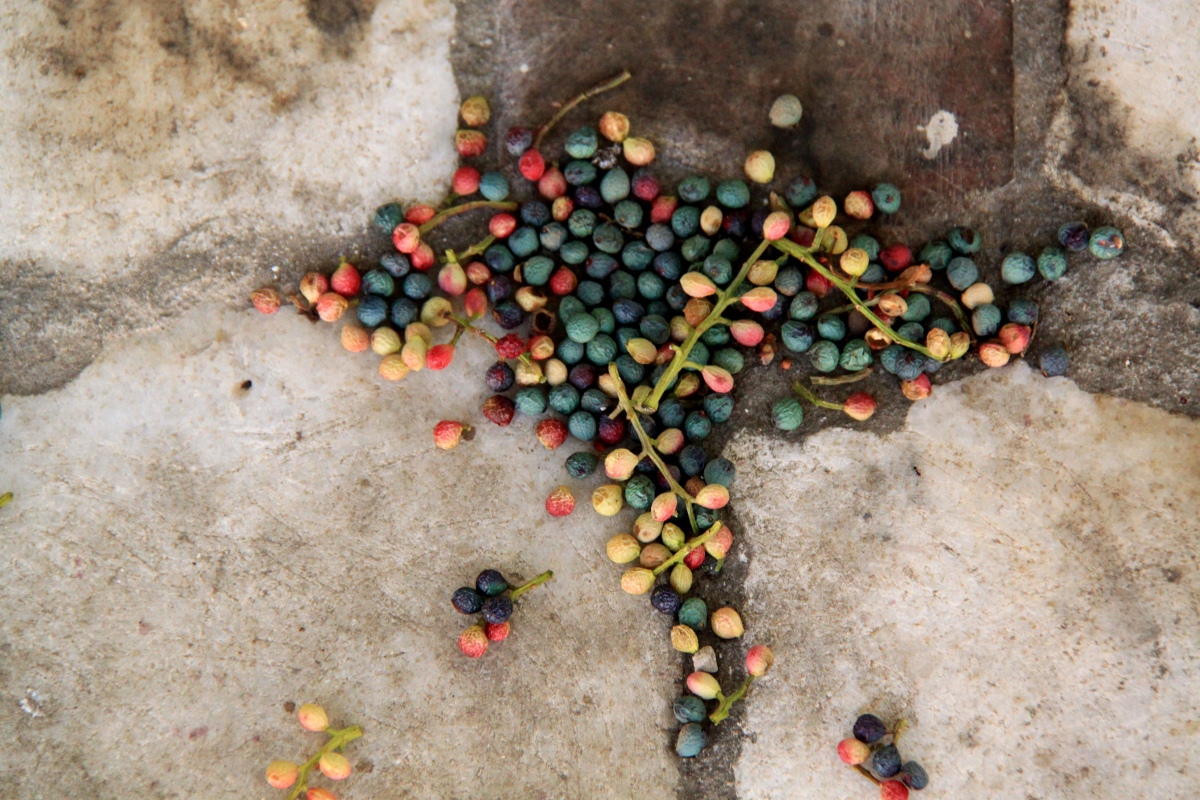
Just a bit of arty colour in the courtyard outside

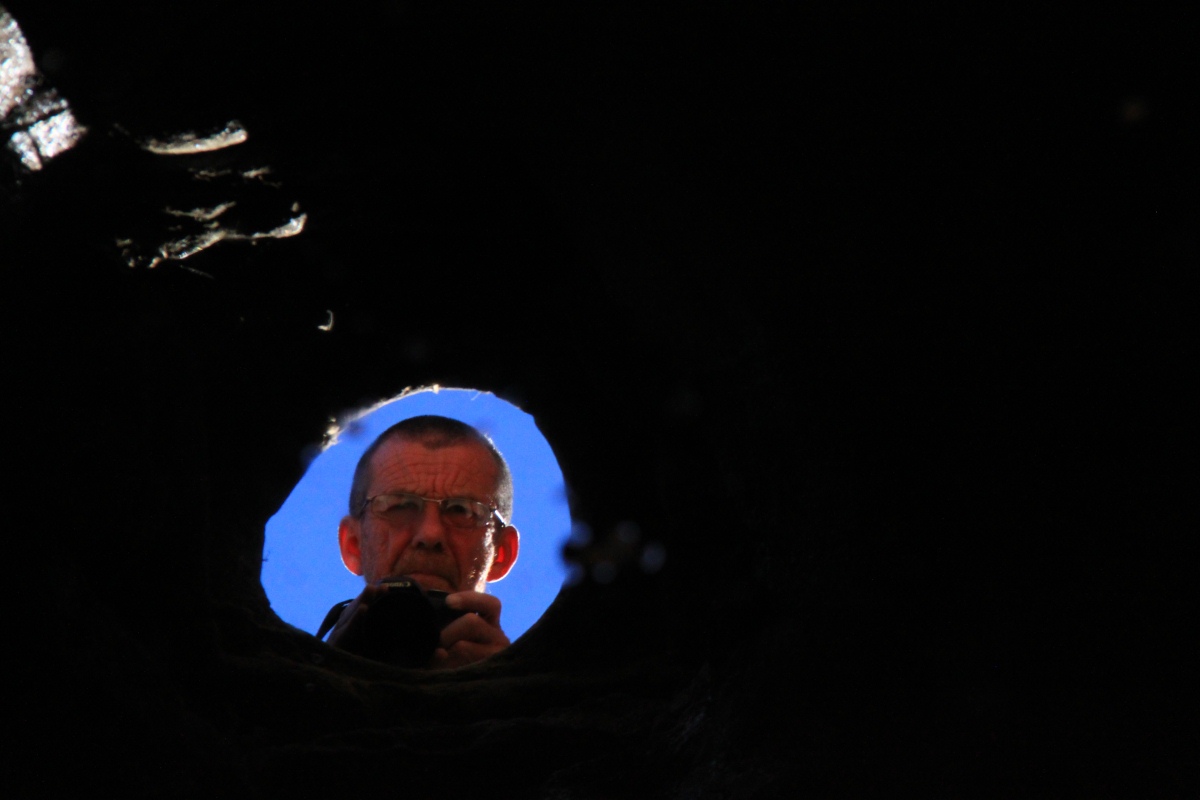
Photographer in the well

Another lava pinnacle towering over the path

Approaching the Parletia pinnacles with marker stone at the side of the path

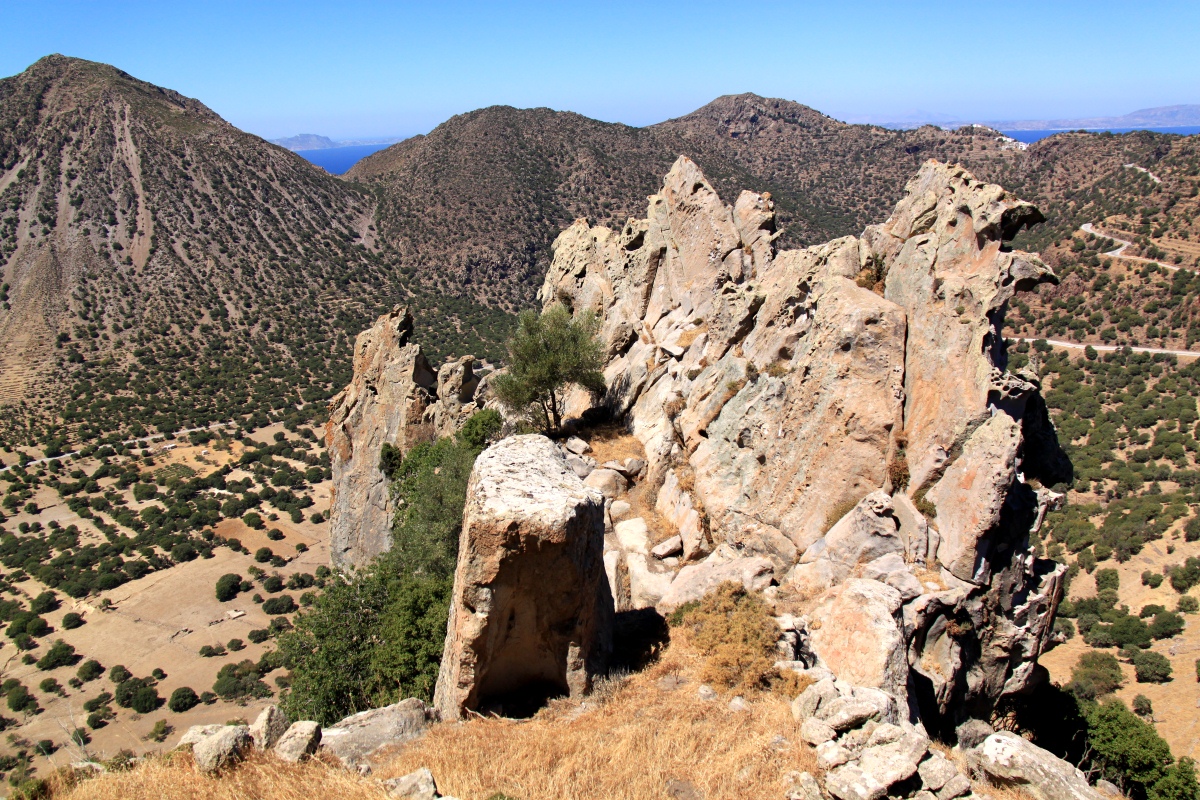
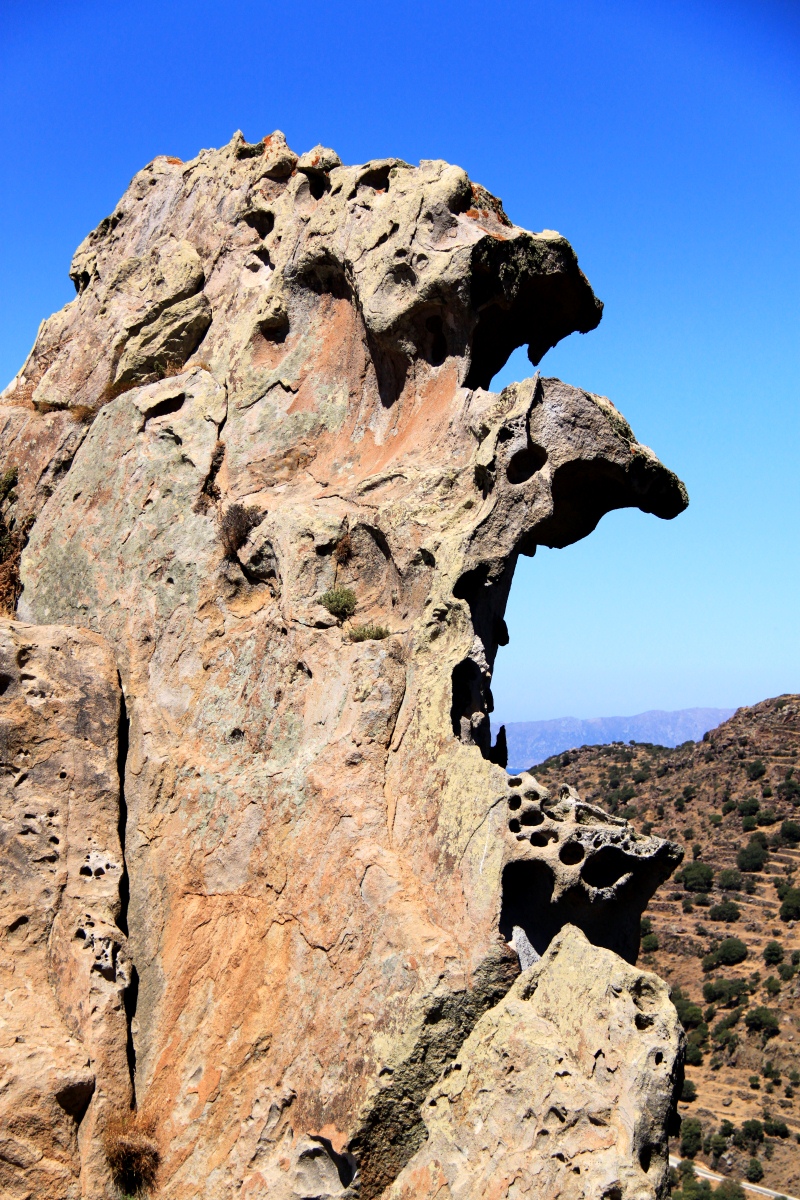
The Parletia lava pinnacles

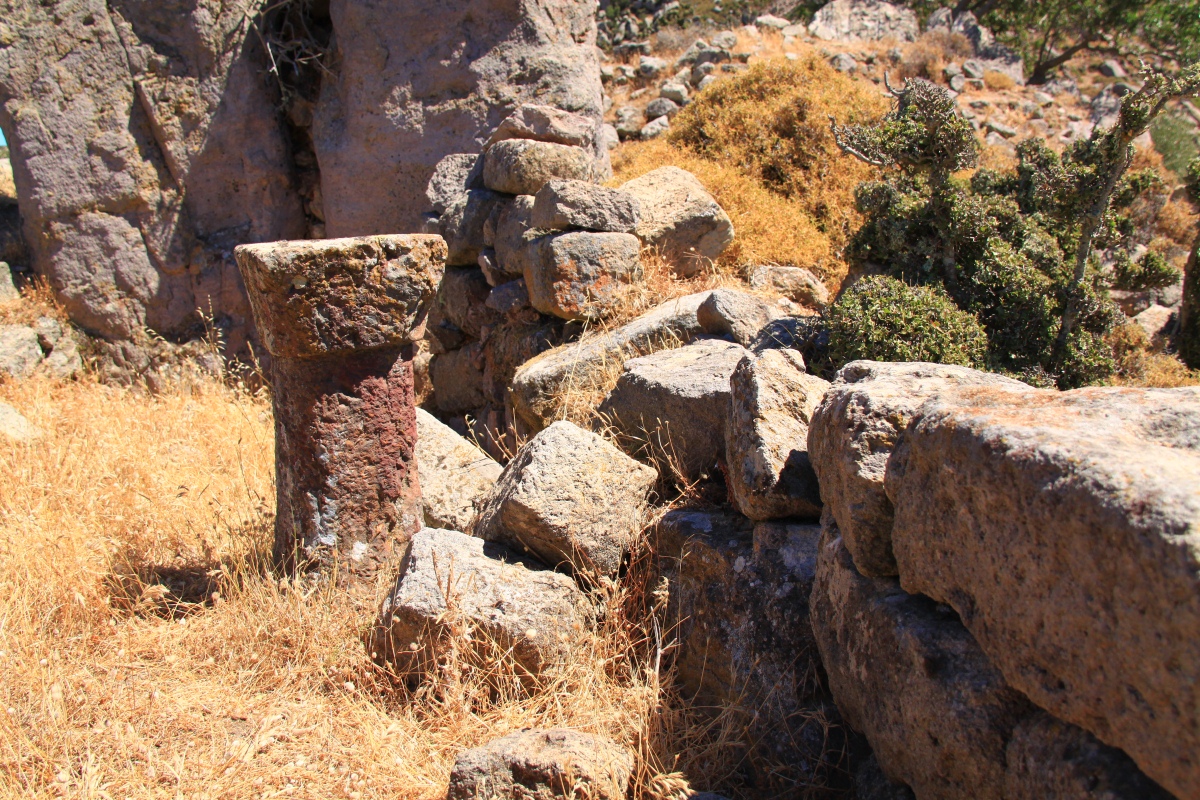
Some of the remains of the Parletia castle

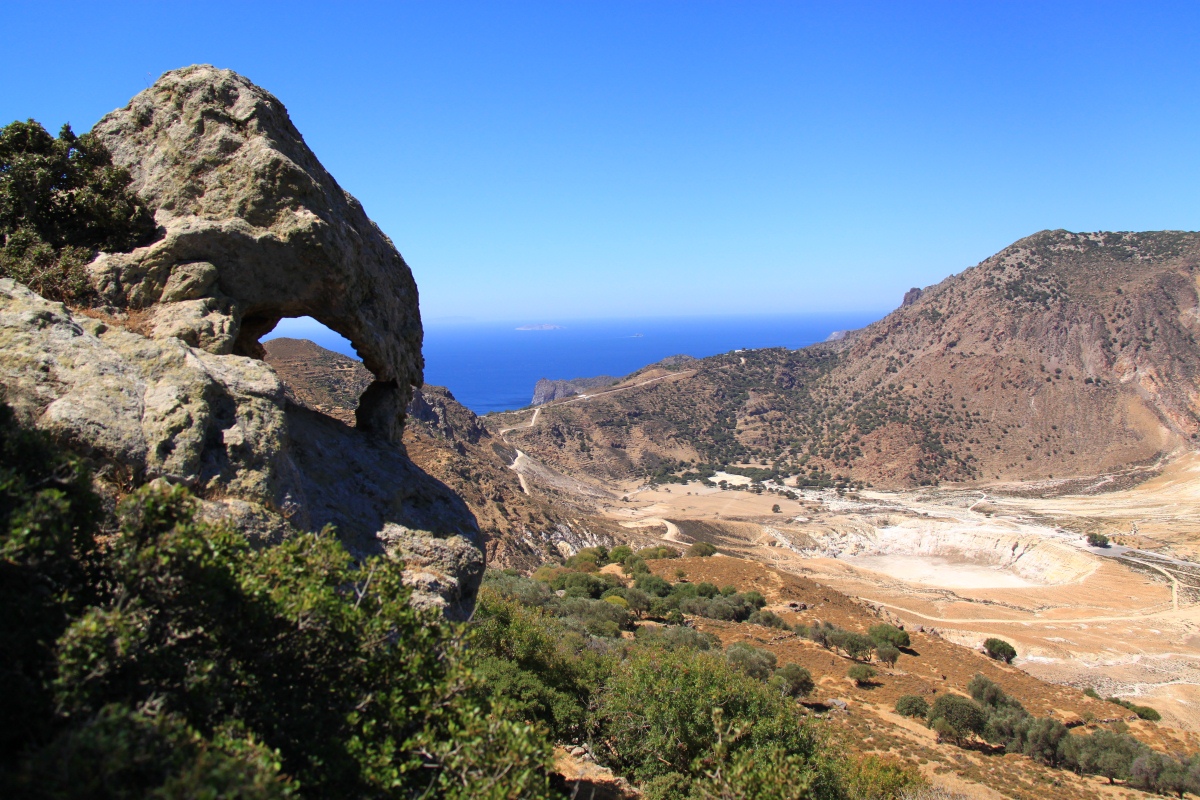
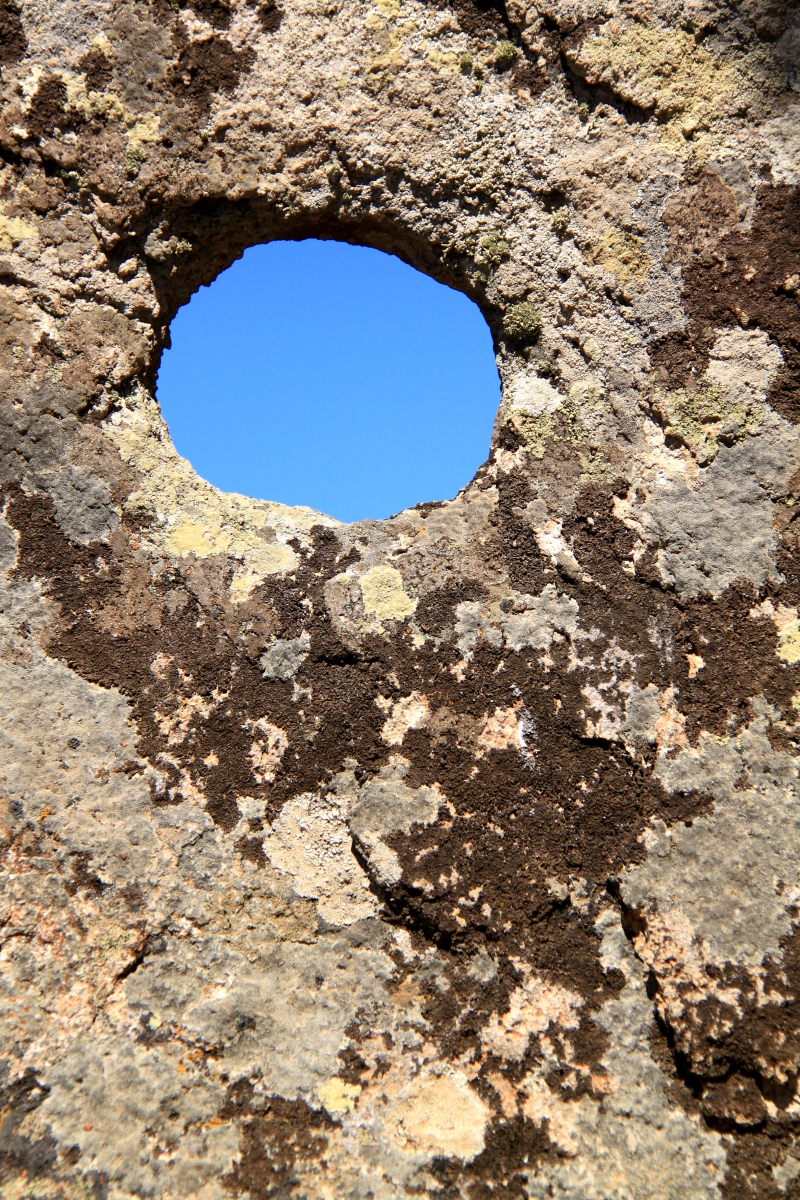
Hole in rock

Lava pinnacles at Parlatia

Zooming in

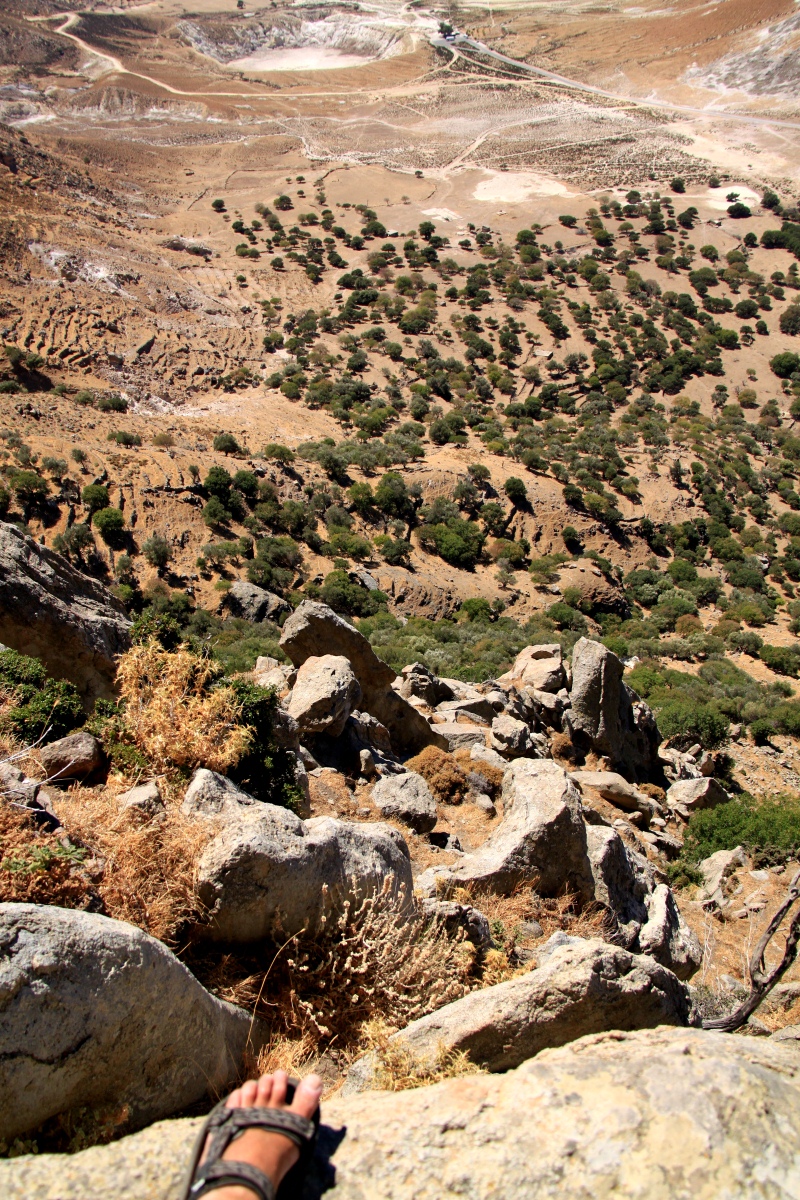
Photographer on the edge ….. and part way down

… and on the other edge. Stephanos crater in the distance

Posted in Greece | Tagged , , , , , , , | Leave a comment

Nisyros: Nyfios, all a matter of timescale.

When someone says to me: ”I’ll do it soon” and I know that ‘soon’ is unlikely to be in the timescale I have in mind, I sometimes add the secondary question  “Is that on a geological timescale, a historical timescale or within my lifetime”.  The sarcasm occasionally speeds things up.  Fractionally.

My walk on Wednesday exemplifies these timescales magnificently because they are all exemplified.  I decided to go up to Nyfios a tiny deserted settlement dating back to Minoan times in a high-level hanging ‘valley’.  It’s not really a valley, rather it’s one of a number of smaller caldera, but it has the air of a hidden valley, surrounded by high mountains .

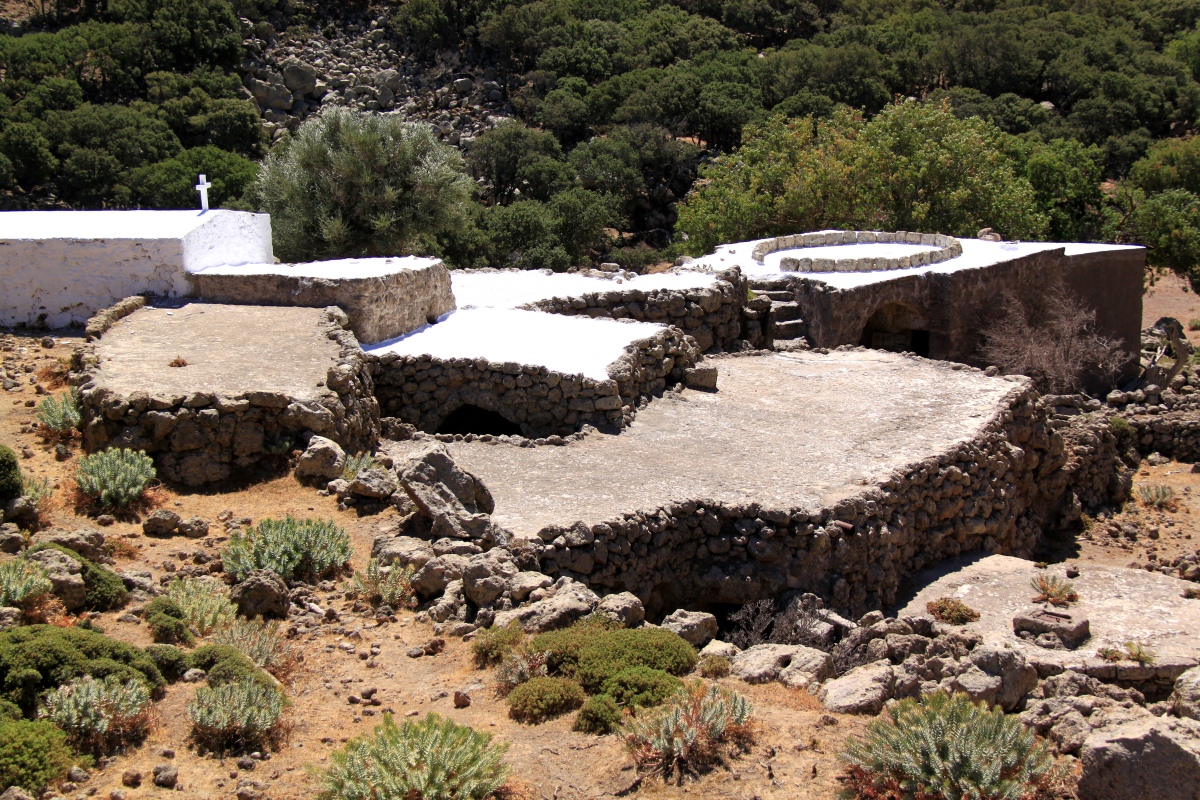
Once in the Nyfios valley the whole impression is of great antiquity.  The tiny settlement is built into the rock and is basically underground with a small church at the core of it.  The present buildings are fairly ‘modern’ on a historical timescale, probably going back only a few centuries (my guess) but there is evidence elsewhere in the valley of Neolithic settlement, with underground cisterns and a rock carved ‘grotto’ now a church. At the entrance to the settlement are Minioan ‘horns of consecration’, indicating that settlement predated what is there now.

Walk to the end of the valley and the view is straight down into the main caldera, probably the best view point of the many craters at the western end of the caldera floor. But here is the contrast.  The settlement is indeed ancient, evincing one of the oldest civilisations in Europe but the mountains and rocks which surround it are the newest in Europe.  Geologists estimate that Nisyros was created by volcanic action 150,000 years ago with many of the rocks dating back only to further volcanic activity in what is classed as ‘pre-history’.  The last few eruptions were ‘hydrothermal’ – mainly ash and gases rather than lava but they left huge deposits of pumice and similar material.  The last major eruption on Nisyros was in 1888 and the last significant ‘activity’ was the Seismic Crisis of 2003.

Geologically very young, historically very old but there are signs that the settlement has still not been entirely abandoned.  The roofs of the main settlement are very obviously being maintained and whitewashed and my guess is that this is to collect and channel water to fill the large sterna with winter rains.  Certainly the sterna I looked into was still half full whereas many of the smaller ones in the mountains are dry.

I always find the place absolutely fascinating and I’ll certainly be going back to do more exploring.

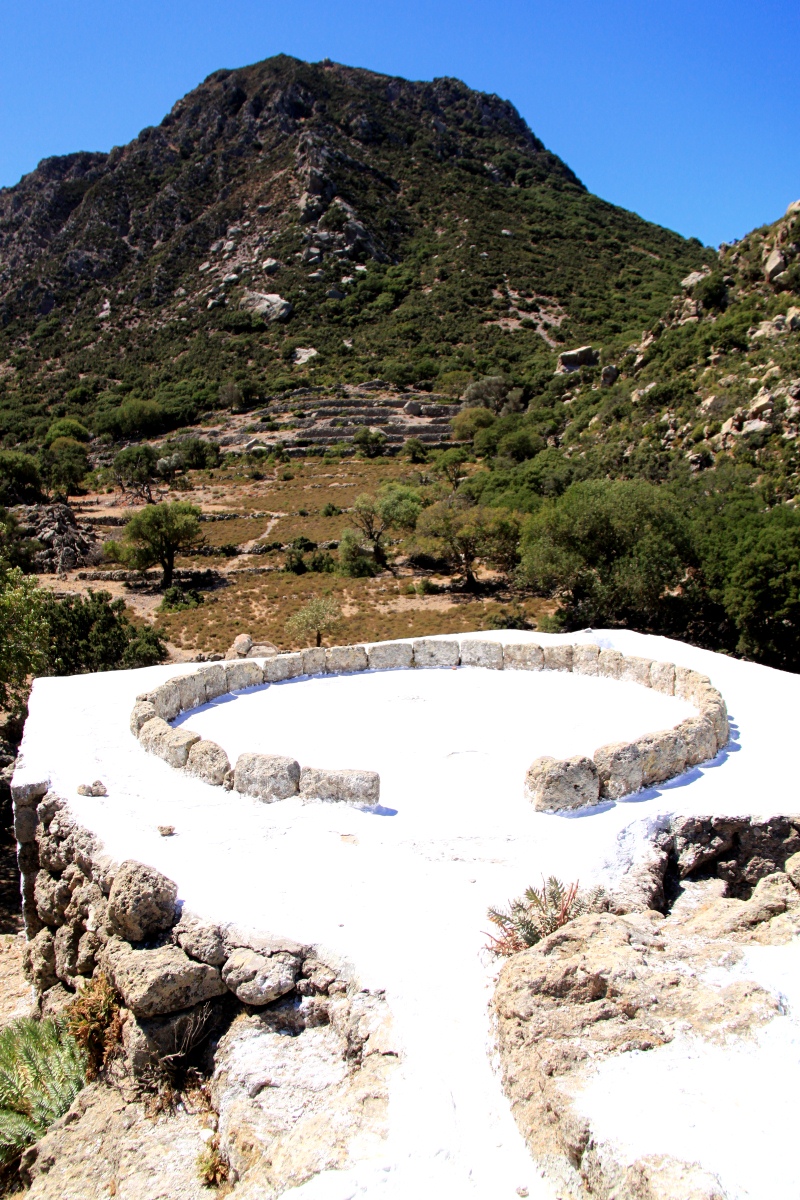
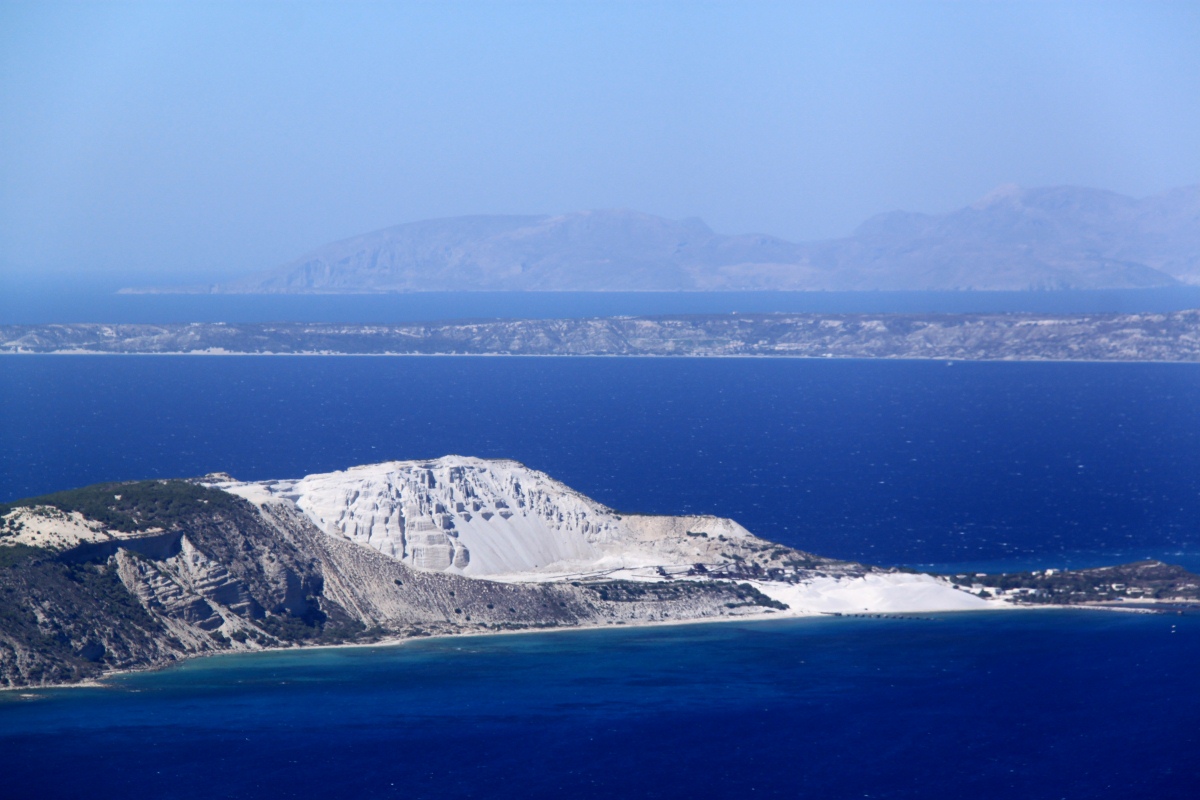
The return route is via a col alongside Oros Diavatis (‘oros’ means mountain).  The impression of antiquity pervades that too with an ancient threshing circle at the highest point.  It also affords views over the pumice-island of Yiali and Kos to Kalymnos beyond.  Very dramatic.  But I can’t help but be ambivalent about the pumice quarrying on Yiali.  Operated by Lafarge it has a global market and certainly brings wealth to Nisyros, and to Greece, beyond tourism.  The company’s claims of it being an ‘environmentally friendly’ operation somehow don’t seem to square with the visual impact.  I spent part of my life finding ways to prevent such visual impact in the quarrying industry in South Wales but I guess things are different here.  I don’t begrudge Nisyros the income from the royalties.

Half an hour into the walk at the Evangelistra monastery and just a reminder for those who don’t know anything other than Grey Britain that at this time of year the skies here are blue …. or bluer

On the flank of one of the larger secondary calderas, terraced fields stretch up to the top of the mountain

The main settlement at Nyfios built into the rocks

Looking across the roof-top threshing circle to Oros Diavatis

Another sign that human activity continues: the inside of the underground church

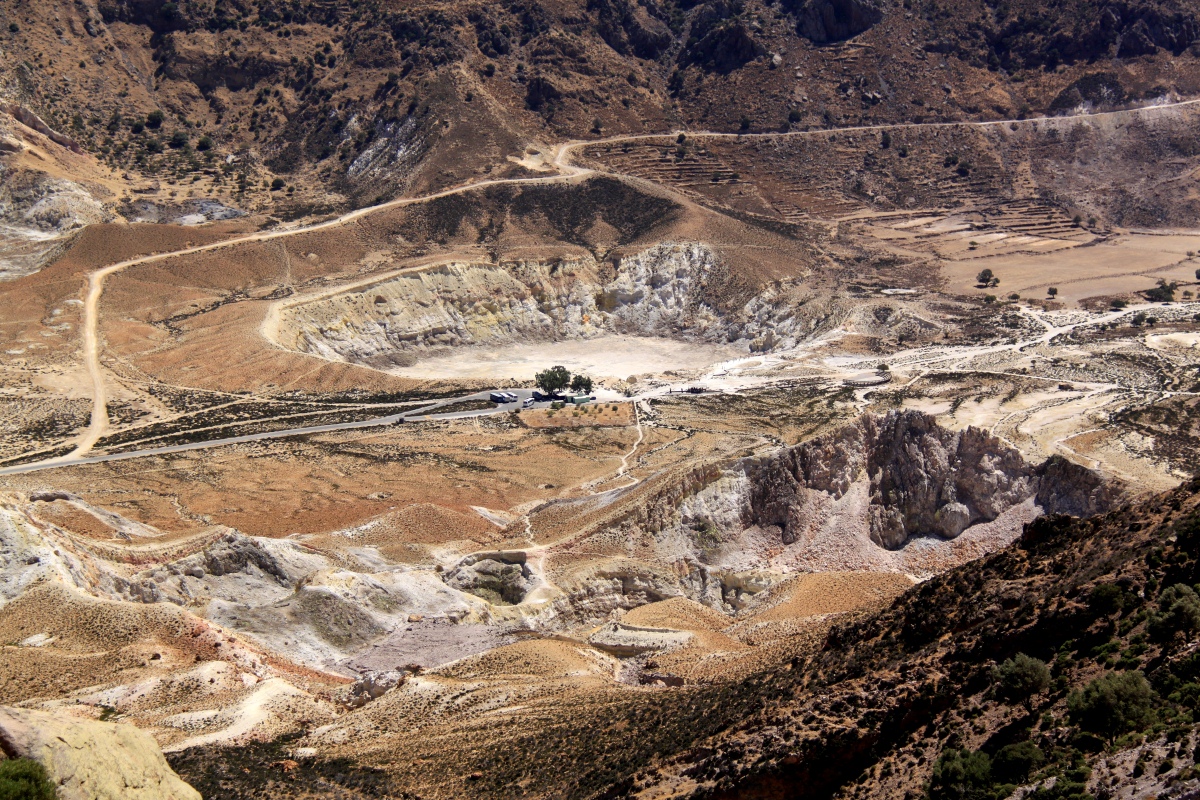
Looking down into the cluster of still-active craters in the caldera

Looking across Yiali to Kos and Kalymnos beyond

Pinnacle of rock marking the start of the ‘back-path’ to Nyfios

At the top of the pinnacle: is that cross natural or carved? I climbed the pinnacle a few years ago and it’s no place to be wielding a hammer and chisel

The Lafarge pumice operation on Yiali:

http://www.lava.gr/en/whoweare/facilities/mine-pumice-Giali/

http://www.lafarge.com/wps/portal/2_4_4_1-EnDet?WCM_GLOBAL_CONTEXT=/wps/wcm/connect/Lafarge.com/AllCS/Env/QR/CS02022011/CSEN

Posted in Greece | Tagged , , , , | Leave a comment

Nisyros: setbacks, things beyond our control, exhilaration!

Great first two days walking.  Third was well ….

I’ll deal with the setbacks first.  On Sunday, my first day on Nisyros and the start of Greek Odyssey Part 2, the screen on my brand new Canon S100  started to malfunction.  Vertical lines about 1mm apart and an opaque strip across the top rendered monitoring shots very difficult, especially in bright sunlight and dim interiors of ancient dwellings.  A plea to DigitalRev.com, from which I bought my last 2 cameras and which I have recommended to others, failed to find a solution before I return home in mid-October.  A setback I’ll have to deal with.  Almost as bad as having my Canon S95 stolen in Patras in June, mid-way through Greek Odyssey Part 1.

Monday I managed to leave my swimming trunks at Avlaki, the other side of the island from Mandraki where I’m staying.  So the priority for Tuesday was to recover said trunks.  Bus back to Nikia, 415 metres steep descent to Avlaki … and no trunks.  Probable explanation was the extremely strong wind which picked up overnight and continued through the day, more of which later.  The trunks are almost certainly now on Tilos, several miles to the south across open sea.

While at Avlaki I had decided to swim out to where the hot springs were said to emerge.  In a very rough sea it was impossible to find the spring and impossible to spot all the submerged volcanic rocks littering the far end of the small lagoon. I briefly and without damage brushed one with my back but failed to spot another and cut a load-bearing part of the sole of my foot quite badly.  As a mountain-man (one of my delusions) I always carry a pretty comprehensive first aid kit so could effect a repair.

It had taken 42 minutes to get from Nikia down to Avlaki, there being no photographic interludes, but amazingly it took only 43 minutes to get back up in the heat of the day.  I’m afraid I’m one of those sad people who sets myself targets for everything and monitor corresponding performance.  I wanted to walk back via the caldera if my foot behaved itself but knew the cop-out was the bus from Nikia at 15.30.  I was at Nikia by 14.15, had a very good frappé in the taverna in the bottom square … and then, caffeined-up, set out for the caldera floor by 14.30.  Only a wimp would have sat there for another hour waiting for the bus!!!!

It was exhilarating!  Double digression then a backtrack.  Digression 1: We used to have a black cat which ran around like a made thing if the wind was strong outside.  We used to say that it had the wind up its tail.  I was like that on the walk back from Nikia.  I had the wind up my tail.  I was buzzing!  Digression 2: I know how strong the wind can be on Nisyros because in May 2009 when we reached the top of Oros Divatis, the highest peak on the caldera rim, Enfys, (my late wife, for those who don’t know) was picked up by a dust-devil and thrown across the top.  Fortunately she suffered no more than mild shock.  Backtrack: The wind had been throwing spray over the harbour wall and all along the seafront before I left Mandraki.  At Nikia several hours later, 415 metres higher and accelerated by the Venturi Effect, it was thrashing trees around and making walking difficult where it was funnelled .  There were dust devils floating around the slopes and on the caldera floor but none did more than blind me with dust and caution me to stop and anchor myself more firmly to the ground.

I repeat, I was buzzing!!  My foot required re-application of first aid on the caldera floor but gave me no problem whatever.  I got back to Mandraki by 17.15 which meant that I walked right across the island via the caldera in 3½  hours.

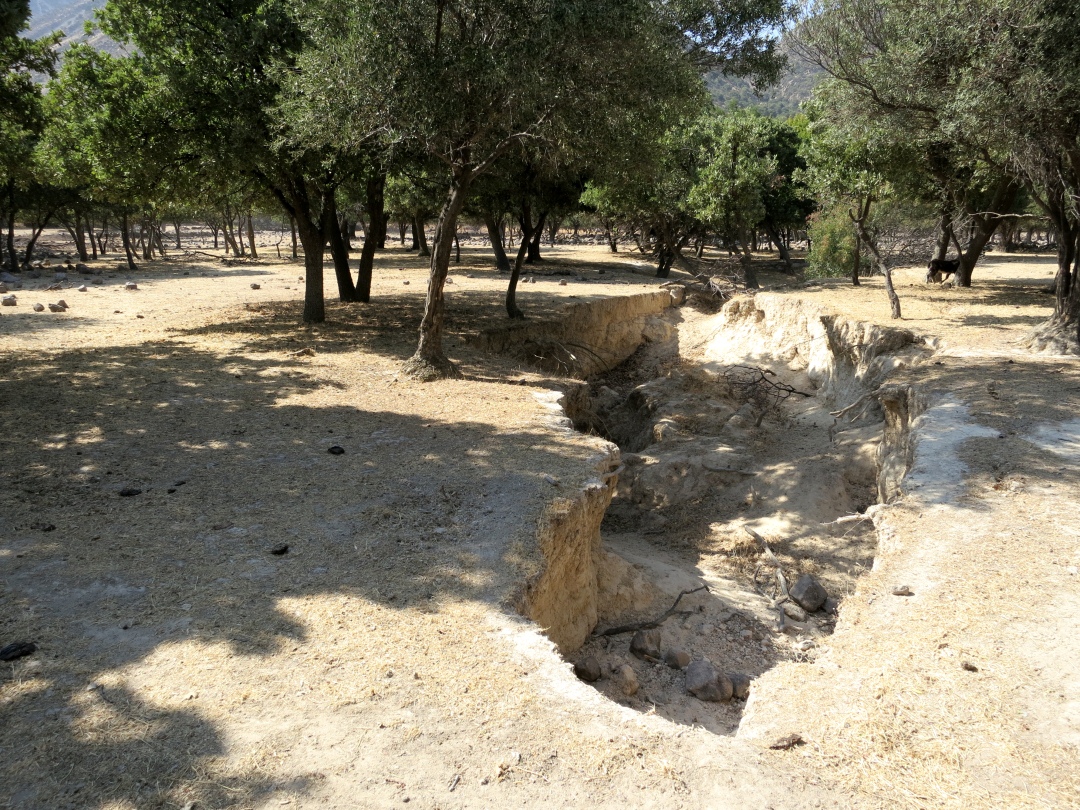
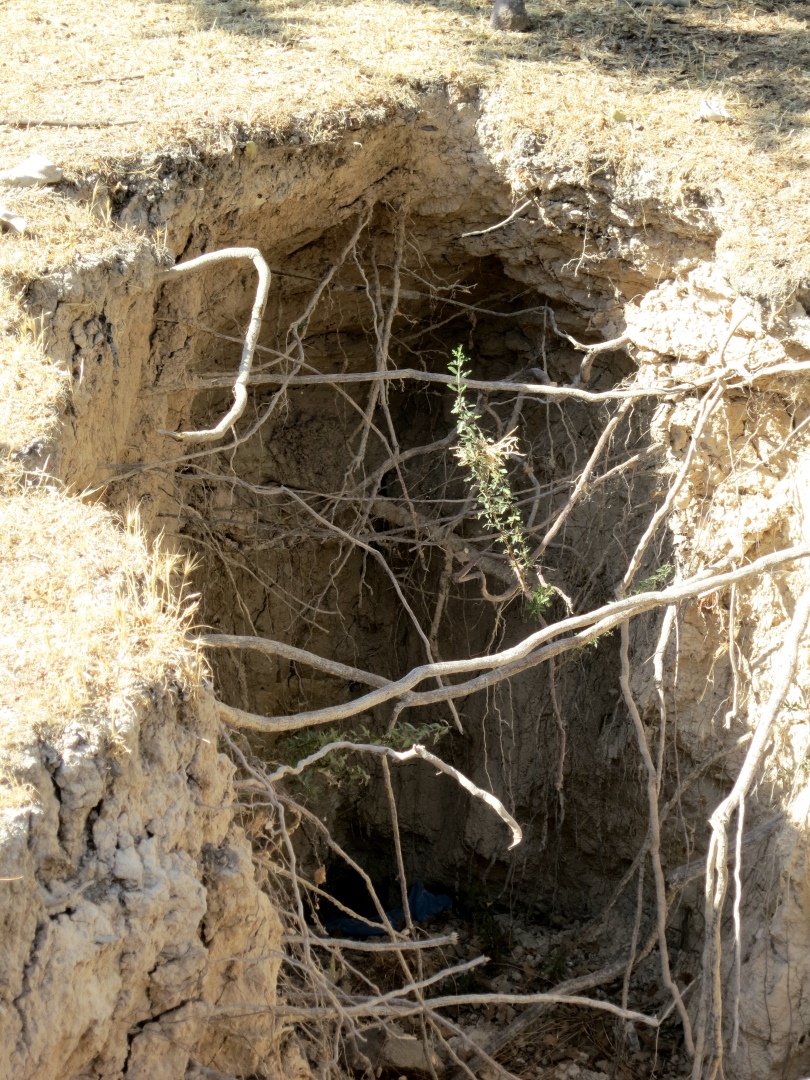
And to cap it all I had made a point of searching out what I had stumbled across last year but not realised the significance of …  a seismic fissure in the floor of the caldera, created in 2003 and getting more pronounced.  More about which at other time.

BUZZING!! A great day.  But no swimming trunks and not many photos sadly.

Rough sea beating on the breakwater in Mandraki

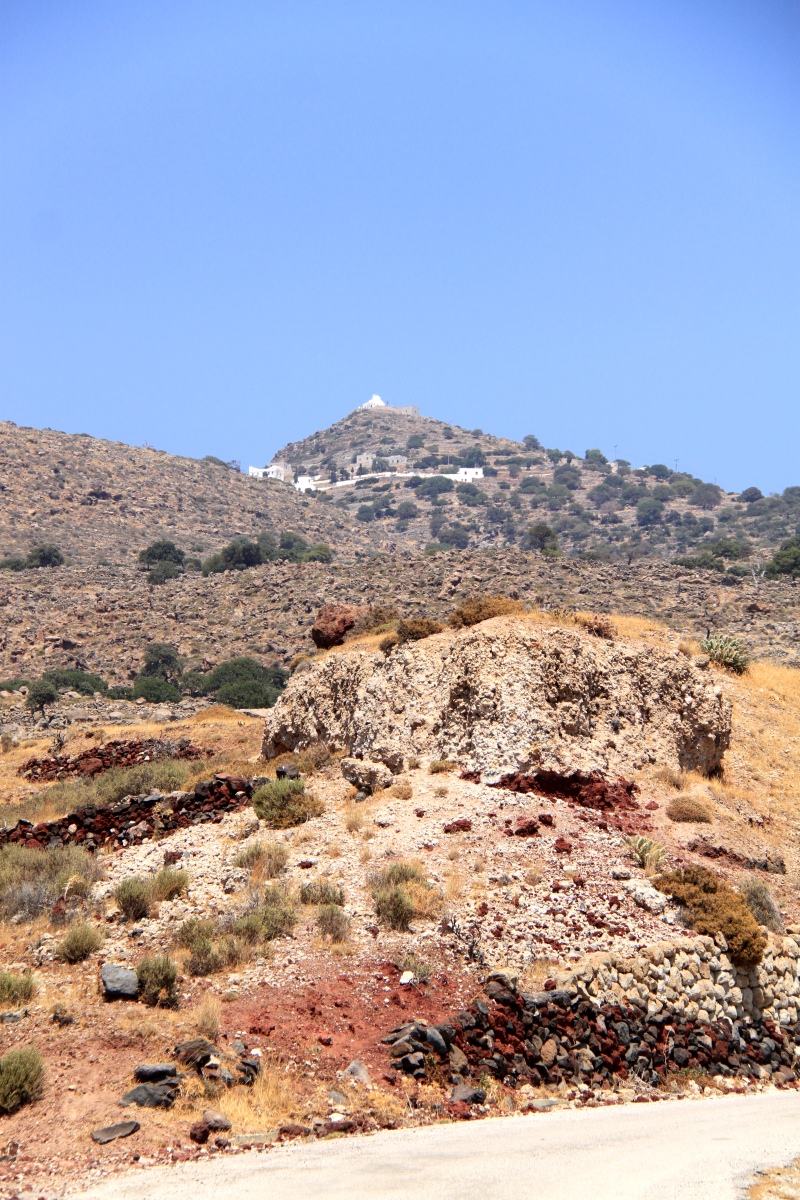
From just above Avlaki, looking up to Nikia on the caldera rim: note the retaining wall of multicoloured volcanic rocks.

The newly built Agios Nektarios above Nikia.

Part of the long seismic fissure in the caldera floor

The ground has collapsed into the fissure leaving tree roots behind

A note for geeks: The Canon S100 has the added feature over the S90 and S95 of not only recording the image but, via GPS, recording exactly where on Planet Earth the photo was taken.  For me that is a major step forward.  I can record where the seismic fissure begins and ends and I plan to go back and do just that.  All I need now is a camera with the facility to annotate photos in the field.  And a fully operational camera.

Posted in Greece | Tagged , , , , , , | Leave a comment

Nisyros: sitting on a volcano

I’m now ensconced on Nisyros.  Raring to go and with pent up energy I decided to go straight for the more strenuous stuff  rather than easing myself back into the walking gradually.  I covered about 18 kms on Sunday afternoon after I got here and about 20 on Monday.  It was maybe a bit ambitious because on the final leg of the walk back to Mandraki from the far side of the island yesterday I was tiring, feeling the effects of the exercise and the heat.  But no problems.

The essential thing to understand about Nisyros is not that it has a volcano, but that the whole island is a volcano.  Every scrap of the land here is volcanic in origin, whether it be cooled lava or deposits of ash and with hot springs around the edges.

I find myself drawn to that fact and therefore the first two days’ walking took me to views of the caldera at the centre of the island.  I’m quite sure I’ll go back over the same ground again but here are just a few images to whet the appetite.

The essence of Nisyros, the 4km-long caldera seen from the rim at the western end

Looking down into the crater from high above

The lone hot spring on the southern coast at Avlaki attracted development but now long abandoned

Vividly coloured ash deposits at Avlaki

…. and great lumps of grey-black lava at Avlaki


Posted in Greece | Tagged , , , | Leave a comment

Manchester, Kos, Nisyros …. it’s all Greek to me

I travelled Up North en route to Greece on Friday.  If that sounds counter-intuitive, travelling north to go south, it was simply that I was flying from Manchester with the great bonus of seeing friends and family up there before I left.

One of my customary rambles here.  Contrary to expectations the usual congestion tail-back on the M5 coming up to the M6 junction didn’t materialise.  But from Keele services north the congestion was very bad.  Fortunately I was leaving the motorway at the exit for Sandbach to visit my uncle and from there cut across to the A34 using the new ‘Alderly Edge Bypass’.  Further digression: Alderly Edge has long needed a bypass because of the inordinate number of Football WAGS clogging the place up with massive 4x4s and 6-figure cars particularly at drop-off/pick up time for sprogs.  Now the route east to and then north on the A34 via Holmes Chapel and Chelford is a pleasure, though the pleasure may derive from the smug satisfaction at the thought of the cars parked on the M6 between Junctions 17 and 20.

The second part of the Greek Odyssey 2012 began on Friday evening in the fairly new Greek restaurant in Didsbury.  Unlike some restaurants and tavernas in Greece it seemed that all the people who worked there were Greek, no Albanians or Bulgarians.  The food was very good and as authentically Greek as Didsbury would allow.  You may have encountered Didsbury in the 5 great classic TV series of ‘Cold Feet’.  Anyway, if you are up that way, I can recommend it – Dimitri’s – opposite the Didsbury Hotel, (which, very sad to say, doesn’t seem to be at the top of its game anymore).  It cost a good bit more than a restaurant in Greece but then, this is the UK …. and Didsbury!  Maybe the Albanians and Bulgarians help keep the cost down in Greece.  And put the unemployment rate up.  Very complicated.

Bit of last minute shopping on Saturday morning and then to Manchester Airport for the 15.00 Thomas Cook flight to Kos.  Except it had been rescheduled for 15.40.  They had my e-mail address and are one of very few with my mobile number but I had received no message advising me of the change of time.  Unless it was subsumed somewhere in one of the many e-mails they sent trying to sell me add-ons like Choose Your Seat, Get Extra Leg Room, or Book an In-Flight Meal Designed Just for You by our Chef.  It really is getting beyond a joke, especially when they flag up on every page when you book on-line: “see … the price is still the same”.   They even add on a charge for booking by credit or debit card except for the little–used ‘Electron Card’.  Some boxes you tick, some you un-tick (‘check’ or ‘uncheck’ if you are from the USA).  Soon they’ll be threatening to charge for using the loo just so they can slip in some other, less outrageous add-on.  One add on I wouldn’t mind is a charge for taking the hold luggage to the plane.  I would welcome the opportunity to carry my own so that bags don’t get chewed by the machinery and skis don’t go missing.

Black cloud and lashing down with rain at Manchester airport

I feel guilty griping when I’m going away for 6 weeks in the Greek sunshine but there is a point to be made.  We shouldn’t just lie down and let big corporations walk over us just so they can boost profit. I try to behave reasonably and ethically towards others and I expect others to do the same.  All my life I’ve been the trouble-maker who speaks up and I’m not going to stop now.

But that’s enough grumbling.  When the aircraft door opened at Kos hot air wafted in carrying the smells I associate with landing at a Greek island airport in summer.  A short taxi-ride to Kardamena from where the ferry for Nisyros leaves and then the few metres from the hotel to the seafront for an ouzo.  Extremely pleasant end to the day.

One thing struck me as the evening wore on, which was reinforced when I boarded the small ferry the next morning, the number of visitors was dramatically reduced from previous years.  ‘Pub Street’  parallel with the seafront in Kardamena is usually still thronged with people when I go to bed about 02.00 local time.  This Saturday night it was very quiet with little activity …. and presumably less cleaning up to do.  The town is normally placid first thing in the morning as youngsters sleep-off the night’s excesses but the ferry is normally packed with Kos-based hung-over holiday makers going to Nisyros for the Volcano-Experience.  Not this Sunday morning.  All four ferries had significantly less than full loads.

Seafront at Kardamena, deserted at 09.00

Near-empty ferry

Nisyros in the distance

The pumice quarry of Yiali, the island close to Nisyros

Arrival on Nisyros was strange.  It was as if I hadn’t been away, as if I had just blinked.  A few businesses had changed.  The supermarket closest to the hotel is now a butcher’s.  There are more half-completed redevelopments of old houses.  The municipal bus service is nolonger free.  Two things which hadn’t changed were the friendliness and genuiness of the welcome and the cloudless blue sky of a Greek island summer.

I was full of energy after weeks of relative physical activity so I caught the bus to the crater rim and went for a moderately long and taxing walk down to the caldera and then over a col in the mountains reeking of ancient civilisations and back to the town.  You can have no idea how exhilarating it was after weeks of ‘Summer’ in Grey Britain.

But more about that another time.  This is just to say I’m back in Greece.  Less than 24 hours from the Grey Wet of Manchester to the floor of one of the most active volcanoes in Europe and under blue skies.  With a month to explore it before moving on.

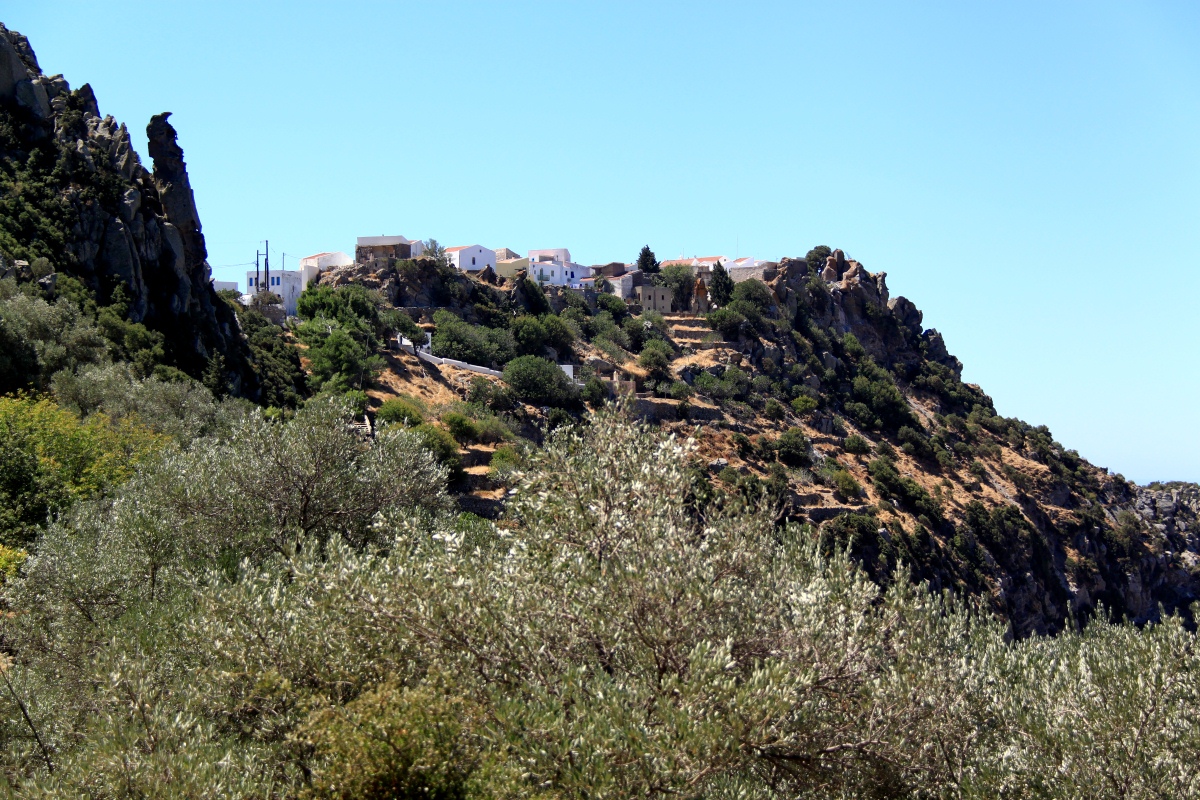
Church on the rim of the crater.

Posted in Greece, Grey Britain, Grumpy Old Men | Tagged , , , , , | Leave a comment

Greece: on the brink again

There is a yet another political hiatus over the Greek economy which is yet again said to be on the brink.  Scaremongers are warning that ATMs in Greece will run out of cash and travellers will be stranded … cashless.   Angela Merkel and Francois Hollande are playing hardball pounding the table Khrushchev style (without the shoe) and wielding the handbag Thatcher style.  Antonis Samaras holds what he thinks is a trump card that yet another election if Greece isn’t given more time to comply with the austerity programme holds the threat that the Euro-exit axis will gain power and trigger a domino effect resulting in the Euro’s demise.

Me?  I’m on the brink of going back to Greece to convert my hard-earned Sterling into Euros in support of the Greek economy … and to have a great time.

Two days of hard work have just about got the garden in shape to leave.  Potatoes harvested and damaged specimens made into mash and in the freezer, courgettes harvested and made into ratatouille for the freezer.  All hedges trimmed.  Lawn mowed. Pelargoniums beheaded.

I decided that I didn’t fancy tackling the M5/M6 crawl after that so decided to meet up with friends in Cardiff on Thursday evening and leave early Friday morning to travel Up North for a night out in the Greek Restaurant in Didsbury.  Flight to Kos on Saturday, ferry to Nisyros on Sunday.  Bags now packed.

This time I’m going back to islands which I know and am planning on lots of walking, going off the trodden paths and searching out new places and landscapes.

As a comparison, the map shows the route I followed on the 2012 Greek Odyssey Part 1 (in red)  and the what I intend to cover in Part 2 (in yellow).  A lot more walking.  A lot more detail.

Greece 2012 Part 1 in red, Part 2 in yellow

Posted in Greece | Tagged , , , | 1 Comment

Greece: getting ready

In less than a week I’ll be back in Greece.  I can’t wait to leave the grey skies behind.

Still desperately trying to sort the garden out before I go I finally managed to rescue the potatoes from the sodden ground.  This year the harvest totalled a more modest 50 lbs compared with 110 lbs last year which far exceeded my needs and meant that friends and family were often the perplexed recipients of the blue potatoes which I grow.  This year the crop is just about right.  The ‘crop’ of leeks was depressingly poor, by far the worst I have ever had, a result of the excessively wet and cold weather just after planting.

The emptied beds in the vegetable garden are now draped in weed suppressant fabric and hopefully will be rested and ready for the Autumn planting of garlic and onions when I get back.  The winter brassicas, red cabbage, sprouts and purple sprouting broccoli, are looking vigorous but have suddenly been attacked by caterpillars and dense clouds of whitefly.  Except for slug pellets, without which there would be nothing left, I don’t use chemical controls on the veg so I have tried picking off the caterpillars and I just hope that the plants are strong enough to withstand the assault by the whitefly.

But it’s not all been domestic.   A couple of times I have escaped to the top of the mountain.  16 August is now always one of the difficult dates for me so I took myself off to the top of Garn Wen and then on up the ridge before dropping down an ancient ‘sunken way’ to the Goose and Cuckoo for a pub lunch.

Entirely within the Brecon Beacons National Park it’s a great walk with impressive views all round.  Starting on the Monmouthshire and Brecon Canal the route climbs up to the Folly Tower and then follows the ridge northward.  Once on the top of the ridge the showers could be seen sweeping across the landscape.  Despite periodically darkening skies the only time it rained where I was was when I was tucking into my ploughman’s’ lunch in the Goose.  I had watched one shower approaching across the valley from the West and had quickened my pace so that it passed behind me, thereby avoiding the need to break out the wet weather gear.

Knowing that heavy showers were forecast I had prepared accordingly so in my day-sack I had a lightweight waterproof cag, a thin fleece mid-layer and a pair of overtrousers.  A lot of stuff rammed into the small rucksack for a few hours walking and I couldn’t help but think wistfully about how little I would need to carry next week in Greece.  A spare T-shirt to put on should I sit in a taverna en-route so as to not subject other customers to the one I wear for walking.  And a hat to wear in the middle of the day. The rest is camera equipment, water, snack and first aid kit.  I sighed, nostalged, and then got on with dragging by booted feet over the wet ground and looking forward to walking everywhere in sandals once again.

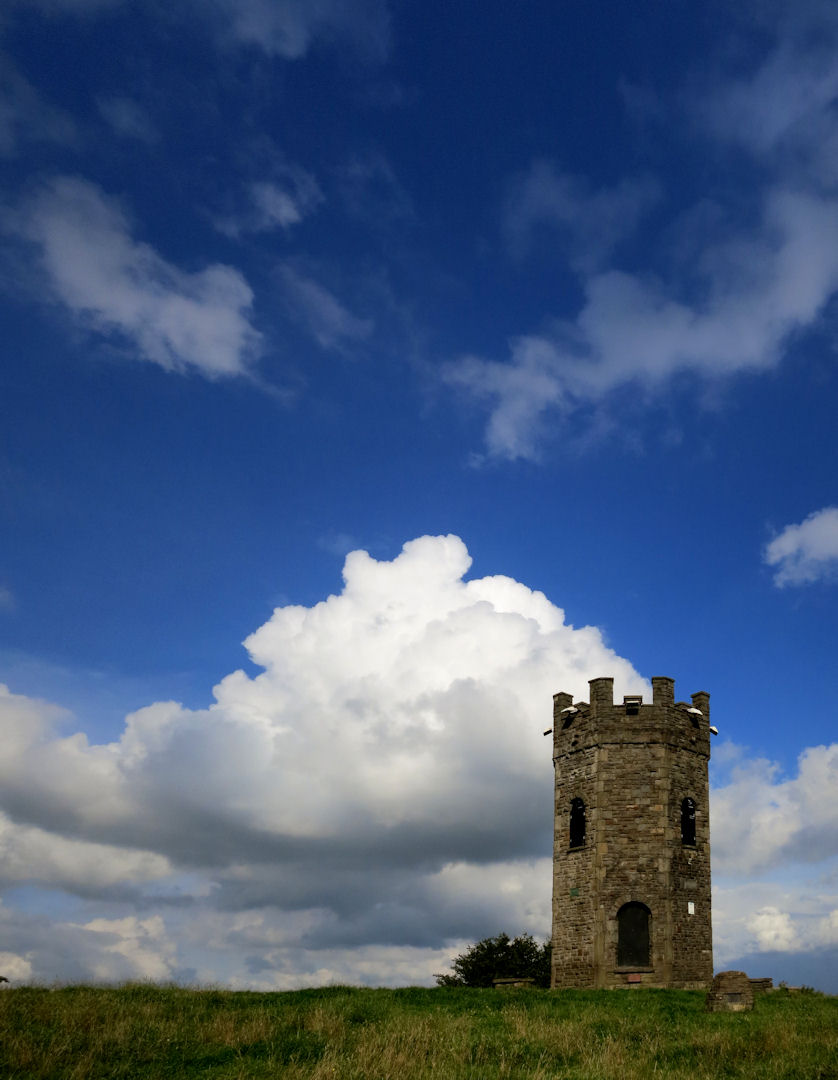
Half an hour from the house, the Folly Tower

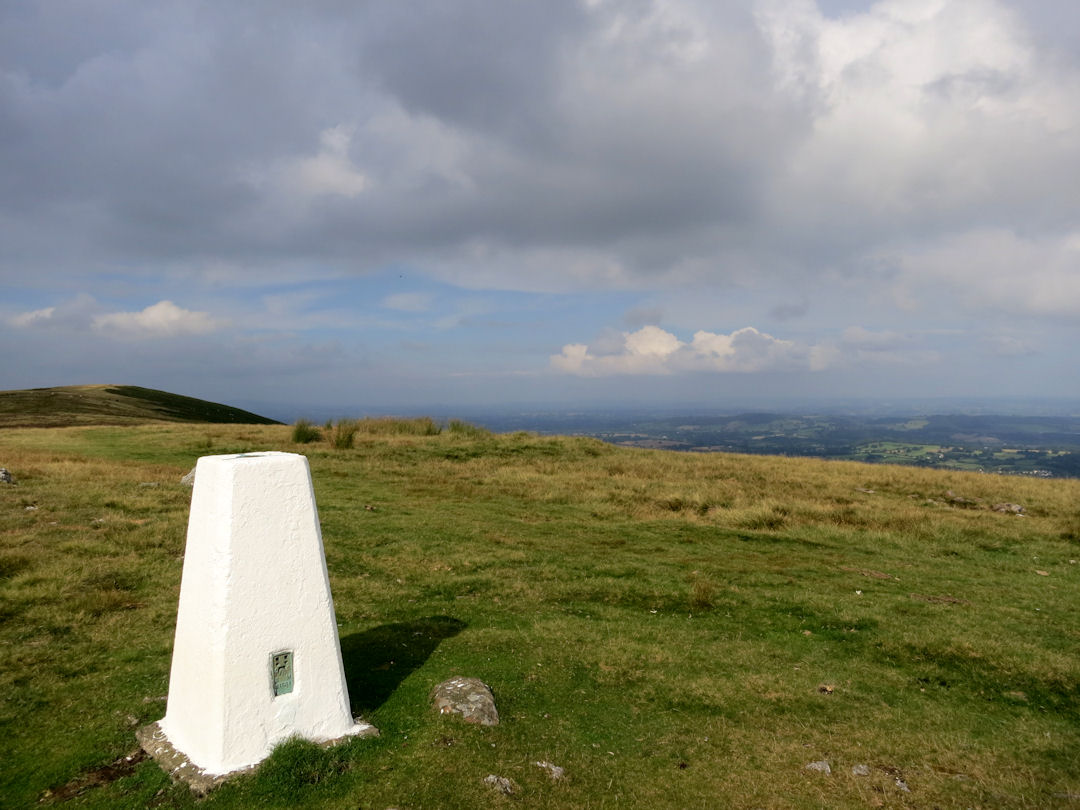
An hour from the house, the top of 425 metre (1,400 ft) Garn Wen with its newly painted ‘white stone’ and the ridge beyond

Heather is now in flower on the ridge

Rain shower sweeps across the valley ahead of me

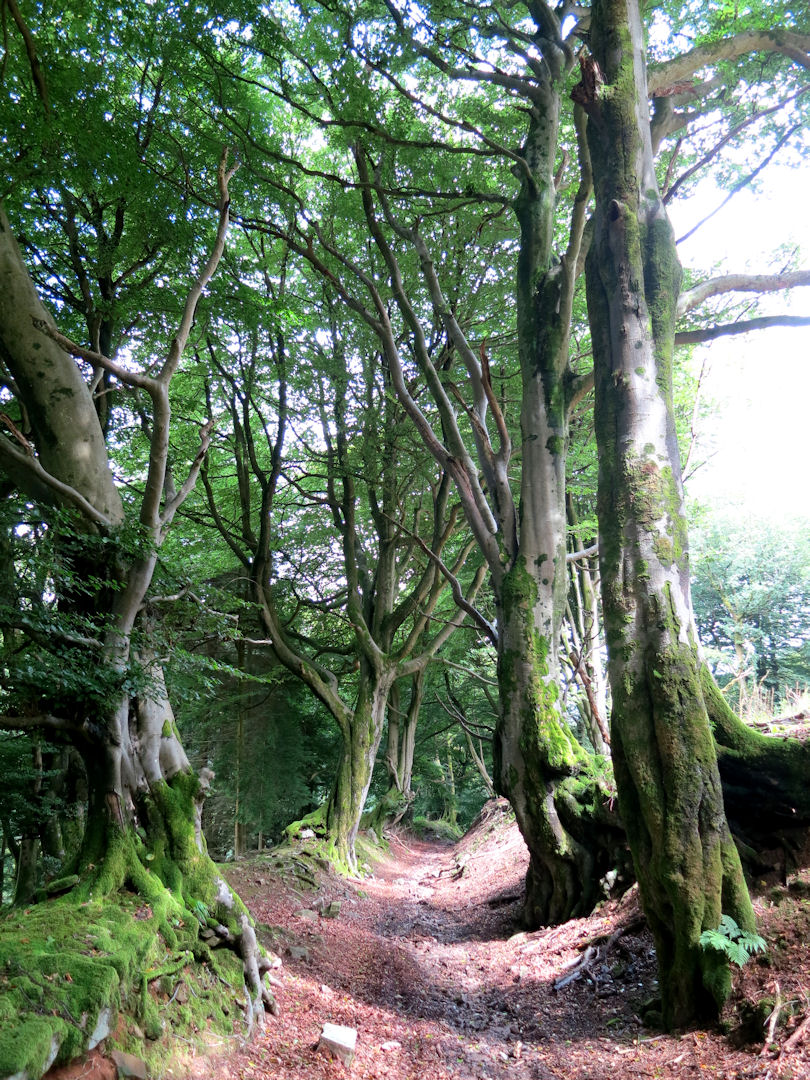
Historic beech trees lining the ancient sunken way down to Llanover

x

Posted in extreme gardening, Greece, Grey Britain, Monmouthshire, Pontypool | Tagged , , , , , | Leave a comment

Looking back, looking forward: time warping

After two weeks of proper summer the weather has reverted back to grey and wet …. at times very wet.

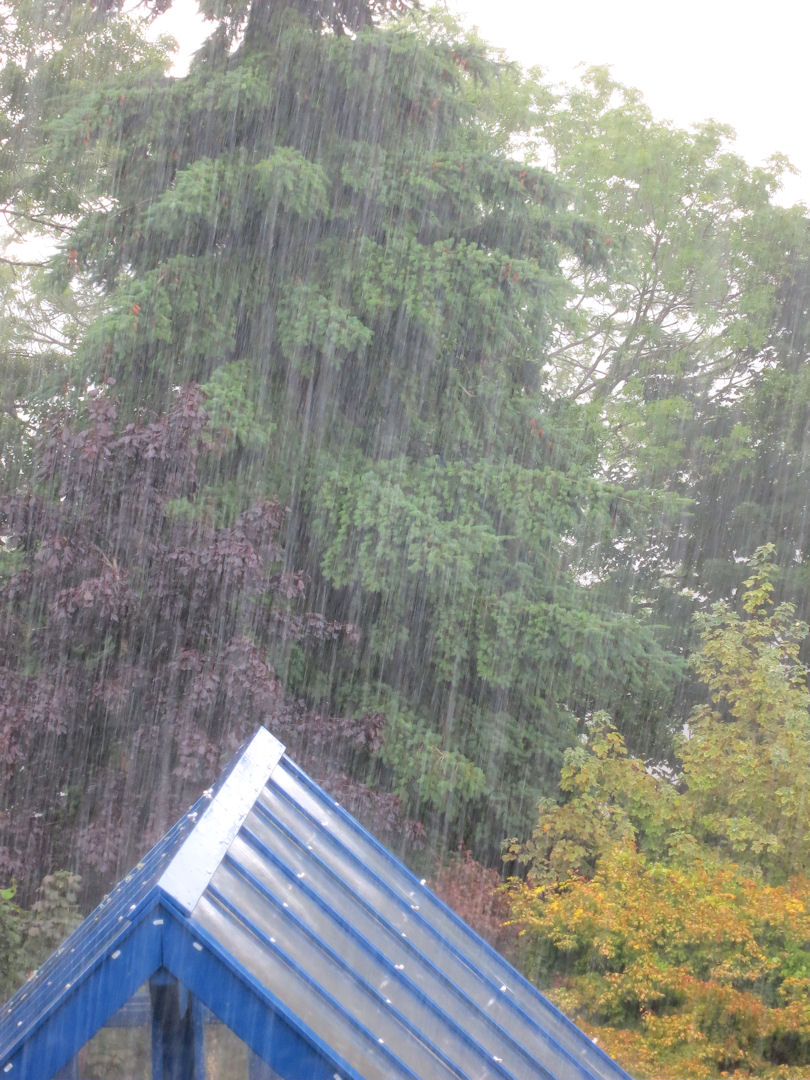
Seen from the window, rain coming down like stair-rods

The wildlife is coming indoors to get away from the wet

My efforts to get the garden back under control are now slotted-in between showers, waiting for the ground and foliage to dry out as well as the rain to stop.  But I have a made a little progress.  As well as clearing some of the overgrown vegetation I managed to harvest most of the soft fruit while it was still sunny and have stashed about 40 lbs of raspberries, gooseberries, blackberries and rhubarb in the freezer ready for winter.  Since the weather turned I have been able to pick enough fruit and veg for meals but the ground is too wet to harvest the potatoes.

As a consequence I have been spending more time indoors and, unwilling to let that time be dominated by household chores, I have been writing up my diary of the 2 months I spent travelling around Greece.  Which has meant reminiscing, sorting through photos to include, looking back fondly on blue skies.

I rambled on in the last blog about how selective memory of past summers persuades us that they were once sunnier and warmer than they are now.  It’s perfectly understandable that we should remember the sunshine and the good times and blank the grey.

What I hadn’t anticipated was just how selective is the memory of even the recent past.  With the return to grey and wet I have found myself looking back wistfully to days of walking in the Taygetos Mountains under flawless blue skies and cooling off with a swim in the Aegean at the end of the day.  When I started to write up the diary of the trip, requiring a more systematic approach, I was reminded that during the first couple of weeks in Meteora, the Pindus Mountains, Ioannina and Parga there were showers most days, some of them pretty beefy.  Admittedly between the showers it was warm and sunny and it was that which was at the front of the mind.

In the cloud in the Pindus Mountains

Black clouds looming in Meteora

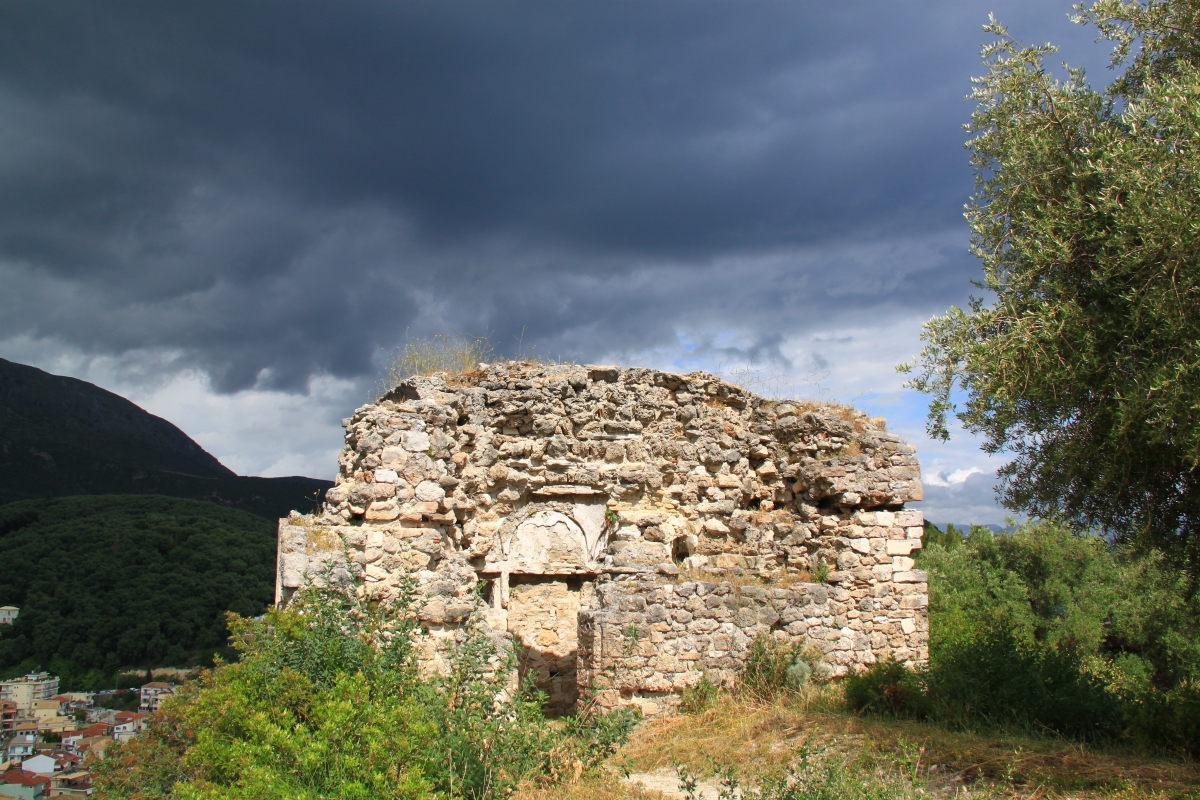
Storm clouds approaching Parga

Bath-house at Ali Pasha’s summer place with storm brewing

So here’s a thought.  Our memories provide us with a very selective recollection of the past.  When we adopt a more systematic approach and look at recorded evidence, whether written or photographic, we get a more complete picture, get closer to reality.  But even that is highly subjective.  Photographs tend to be taken when the sun is shining, focusing on things which have caught our interest. Words, particularly if written to be read by others, inevitably put a gloss on things.  We don’t like the greyness to seep into our brain and when it does we don’t like to admit it.  By remembering the sunshine the memory protects us from the greyness of the past seeping into the present. It’s one of the mechanisms which the subconscious employs to cope with a grey present.  Looking back on sunny days helps to keep us positive.

So does looking ahead to a sunnier future.

It’s now only a couple of weeks before I fly back to Greece and I’m already planning, with quickening interest, what I’ll do.  The second part of my 2012 Greek Odyssey will be very different from the first part.  Then I went to new places all the time, moving on every few days. This time I’m going back to Nisyros and Symi, two islands in the Dodecanese which I know well.  I’ll be on Nisyros for a month and then finish the trip on Symi meeting up with friends and my daughter and her husband.

How does this fit with the aim of going to new places and doing new stuff?  Simple, it’s a matter of balance.  Revisiting places which I have previously found fascinating and rich in experiences feeds the memory.  I have probably taken more photographs of Nisyros than anywhere else I have been.  Amazingly, each time I have been there as well as favourite walks I have found new places and completely new landscapes.  And there is always the buzz that this time the volcano might blow once again and I’ll be there with my camera. Now that would be something new!

NOTE: The volcano which is Nisyros last erupted in 1888 and is classed as ‘active’  http://en.wikipedia.org/wiki/Nisyros

Posted in Greece, Grey Britain | Tagged , , , , , , , , | Leave a comment

Just add sunshine: gardens, cacti, thistles, Brecon Beacons, trig points.

Summers in Grey Britain aren’t as hot and sunny as they used to be.  Or are they?

Is it that the pattern of summer has changed or it just that our memory of the past is coloured by a good couple of weeks when we were on holiday as kids.  Certainly the summer of 1976 was memorable for week after week of high temperatures and cloudless blue skies.  And while I was in University the run up to the exams always seemed to be sweltering hot so we revised outdoors.  But then when the family were younger we had many holidays camping in Cornwall or Pembrokeshire when it was so wet and grey that we came home earlier, unable to stick it for a full two weeks.  I remember one summer camping between Tenby and Saundersfoot when we spent a couple of hours every other day in the launderette with wet clothes in the tumble dryer before finally giving in and throwing in the towel (literally and metaphorically).  The end of our camping holidays was when the tent was destroyed by a gale in the middle of the night and we had to decamp to the car.

When it is sunny in GB it can be very pleasant.  The problem is that it’s so unreliable and short-lived.  Anyone who has been fortunate enough to be on holiday for the last 2 weeks will have had very good weather and will doubtless have long and fond memories of Summer 2012.   But those on any holiday in any other two-week period before that would have nothing but wet and grey to look back on.

One twist in the memory thing is that more and more people fly to the sunshine for their holidays and so can’t help but make the comparison with that when they get back to Grey Britain.  Certainly that is my experience having spent much of the last 3 summers in Greece.  I remember the bits of the summer I have been in the UK as, well, ….. grey.

There does seem to be some hard data to draw on to make comparisons.  Such as that June 2012 was the wettest on record.  I wasn’t here in June but the grey and the wet continued well into July after I got home and so reinforced the perception that that is how it has been.

But enough rambling about meteorology and memory.  What an amazing transformation over the last two weeks.  The very Grey Britain I came back to from Greece has been transformed.  Two weekends ago the sun came out and for a fortnight temperature were up in the mid 20’s and the sun shone from a near-cloudless sky every day.  A touch of the Mediterranean.  Very welcome and enjoyable.

The result has been the addition of colour everywhere.  In the garden plants which had been basically green, admittedly an attractive fresh looking green, suddenly burst into flower.

Bright scarlet flowers of Crocosima ‘Lucifer’ against clear blue sky.

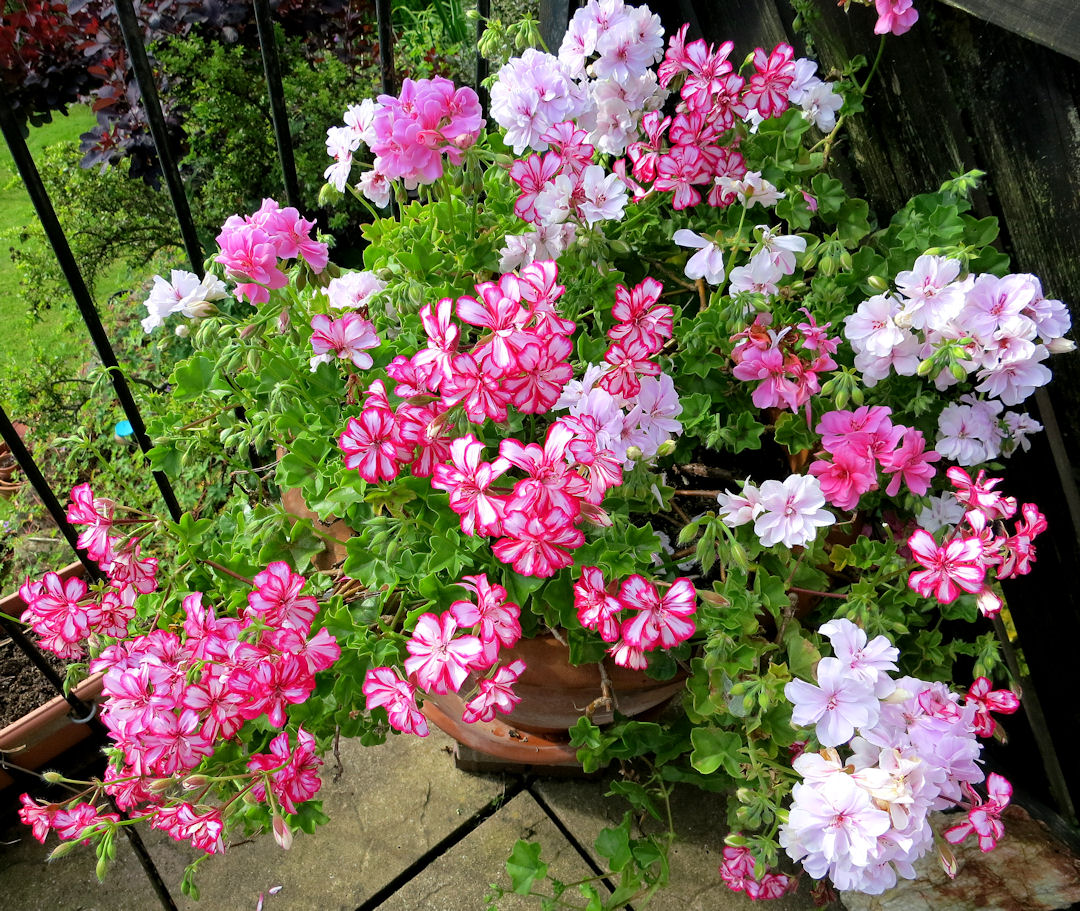
Planted about 10 years ago and neglected for the last 3 this pot of ivy-leafed pelargoniums suddenly bust into flower in a couple of days of sunshine

In the Blue House (our large greenhouse which is …. blue) many of the cacti burst into flower as well.  Thankfully that didn’t apply to the agaves which at 5-6 feet high can be expected to put up flower spikes up to 20 feet, a problem with a roof 15 feet at its highest.

At the side of the path in the Blue House

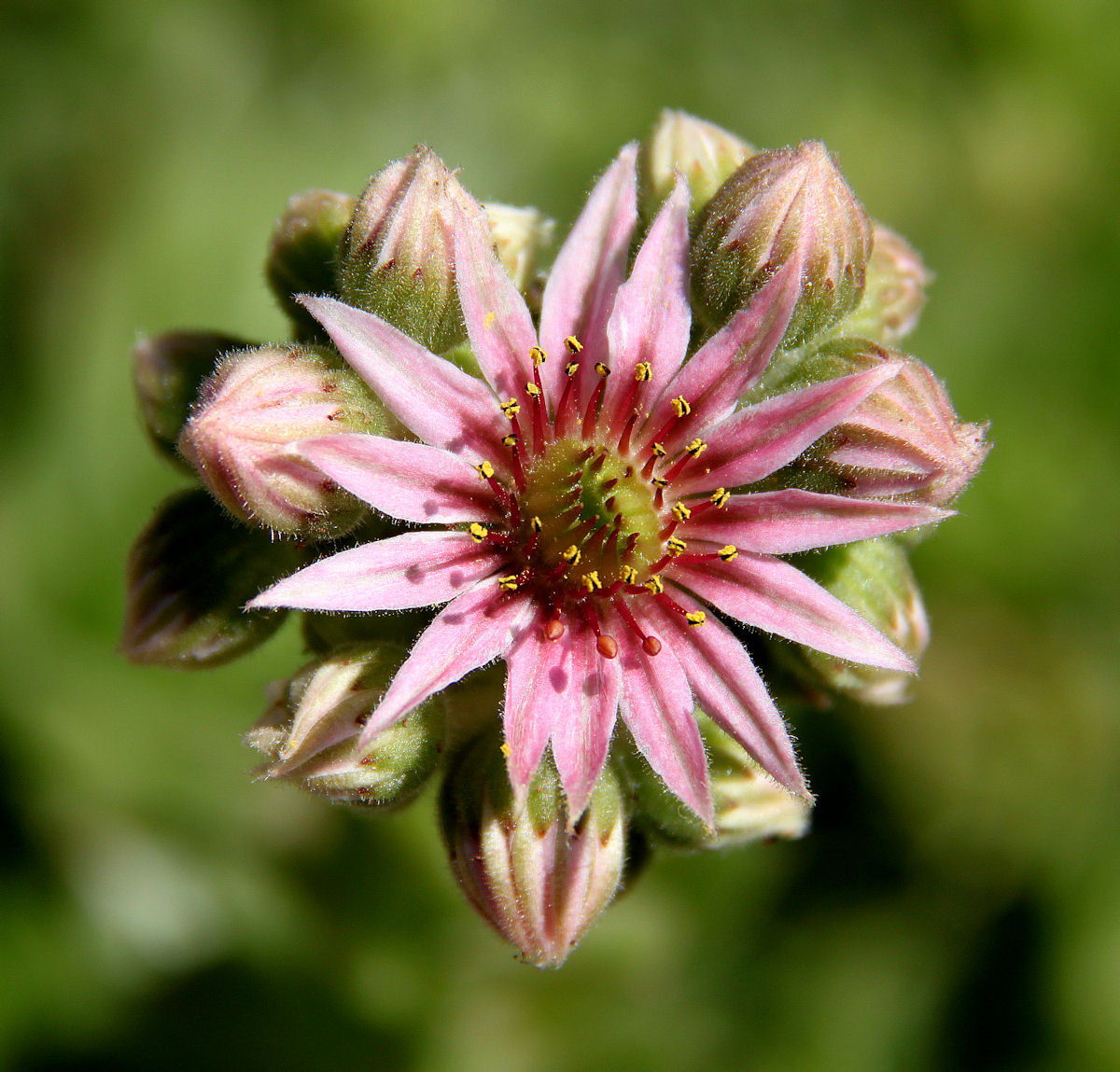
Multiple flower head on one succulent

… and on another succulent

Multiple flowers on one cactus

I took full advantage of the weather to try to get the garden under control, aided by a new petrol strimmer which I bought to tackle the jungle at the bottom of the garden under what is grandly, if somewhat satirically, referred to as the ‘acer glade’, manured by chickens for 30 years and planted up with trees to prepare for when I’m too old and decrepit to look after it.  Cutting it now means that the seed will have scattered ready to carpet it again next spring with aquilegia and foxgloves.

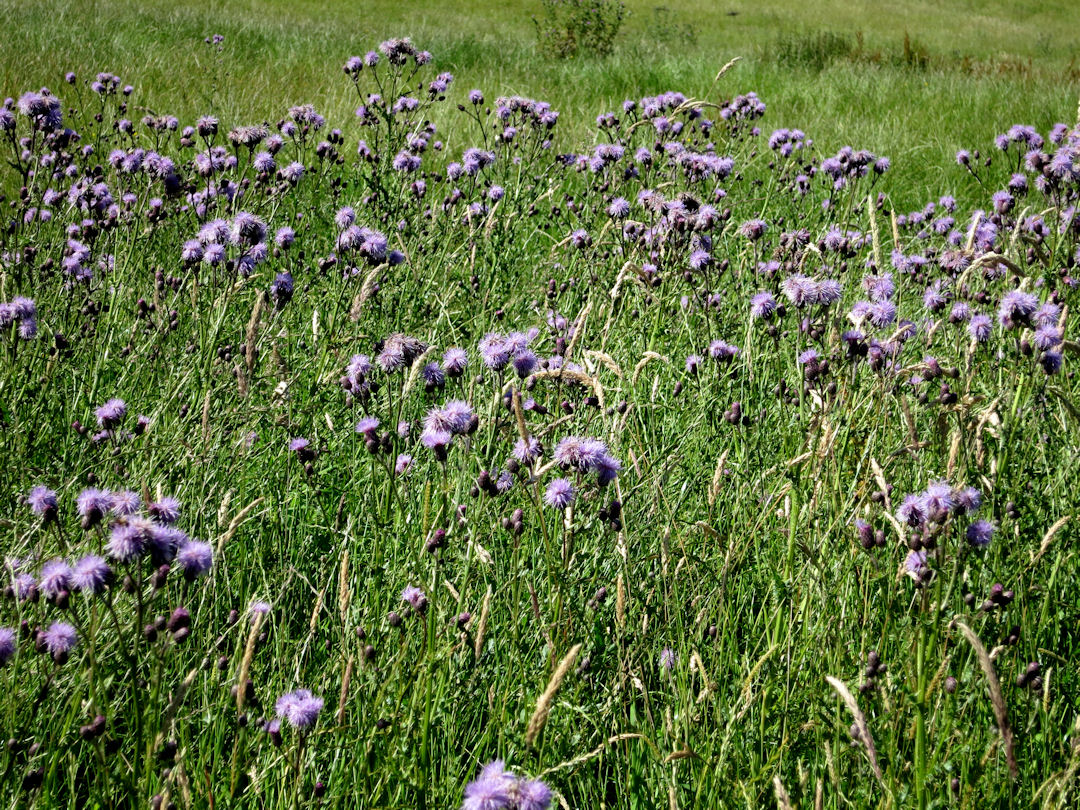
Then with a good bit of the work completed and feeling the need to get back into the mountains, I took an afternoon out and walked the ridge from Pontypool to Abergavenny.  It’s the southernmost part of the Brecon Beacons National Park and begins a hundred or so metres from the house.  One of the first things which struck me was the vast increase in the number of thistles in the fields and across the paths, in places so dense that they made walking uncomfortable.  Last year’s thistles were allowed to seed and, after heavy rainfall for months, just add sunshine and they have sprouted profusely.

Massed thistles

With cloudless blue sky there is often a temperature inversion trapping pollutants and reducing visibility but on Tuesday the visibility was as good as it gets. Once on the ridge-top there were clear views South across the Bristol Channel to Somerset and Devon, North East to the Mendips, North to the southern edge of Snowdonia and West to the higher peaks of the Brecon Beacons. A great walk at any time but particularly on an iconic summer’s Day.  Amazingly, until I reached the Foxhunter car park where I met up with friends, I saw no-one for 3 hours.  Probably everyone was in the shops or sitting in cars in traffic.  I did however see skylarks, a group of kestrels which seemed to have deserted the mountain in recent years, and a buzzard hovering like the kestrels in the stiff breeze.

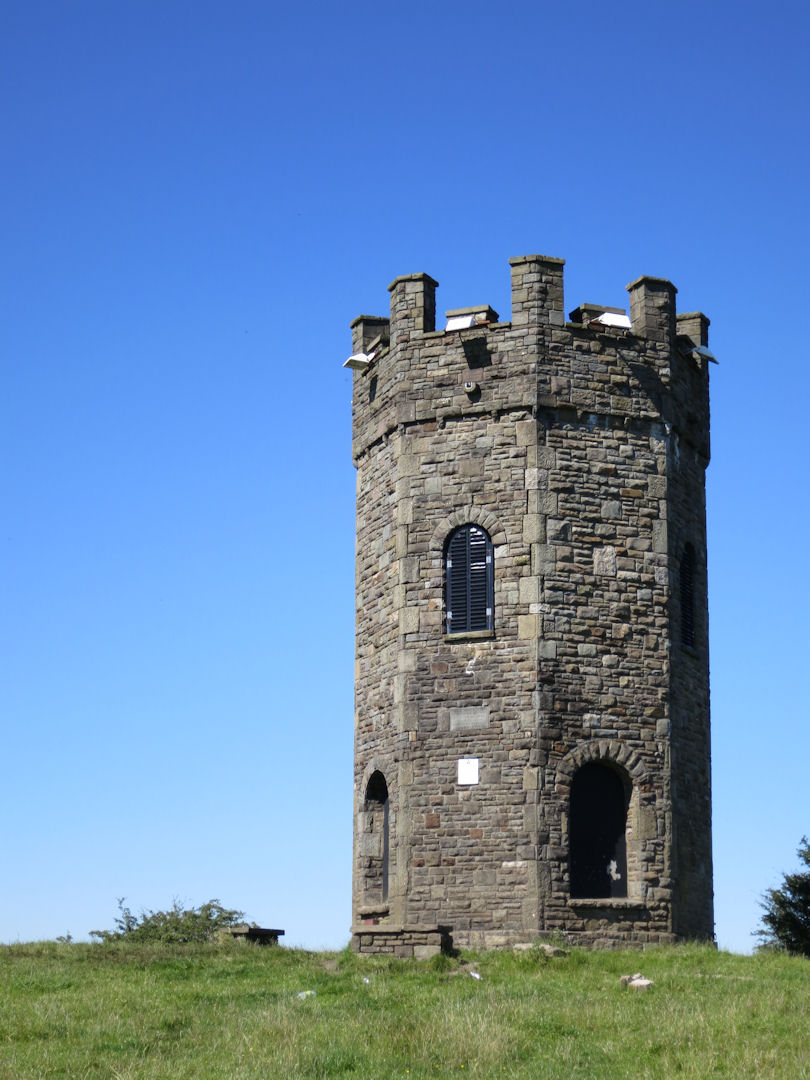
First objective, the Folly Tower

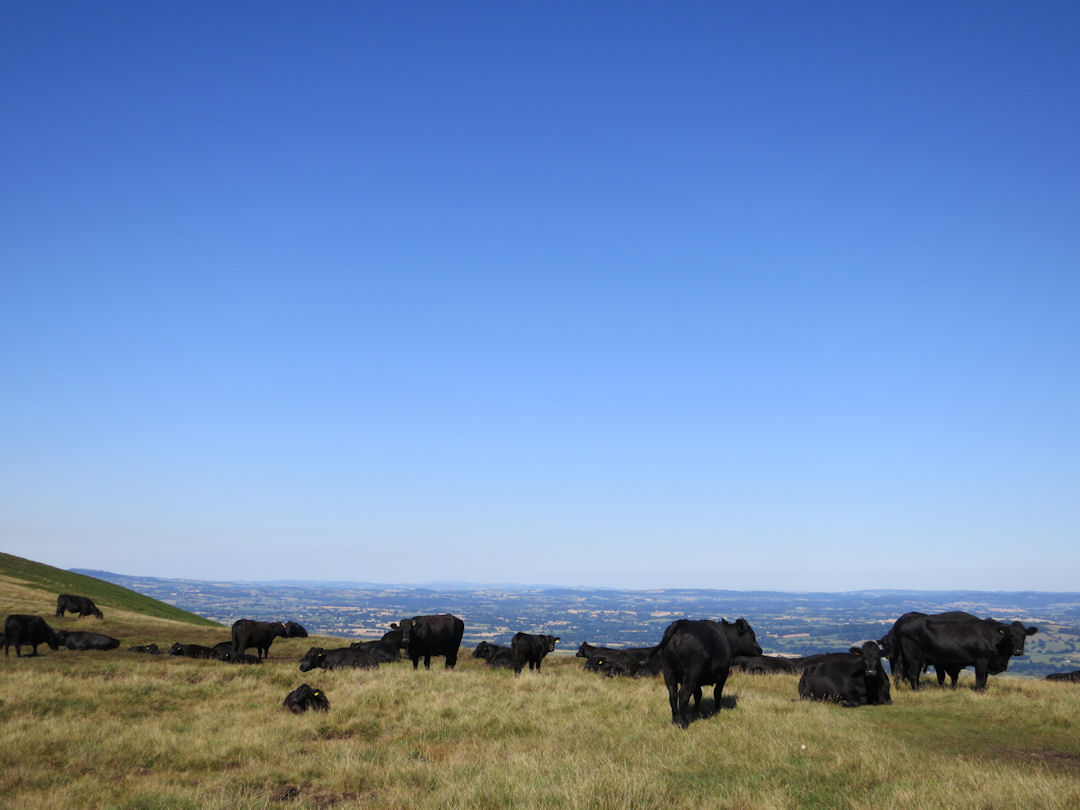
Only in High Summer are cattle on the top of the ridge

View towards The Skirrid with the Malverns in the far distance

Standing on the edge of the Blorenge bowl looking over Abergavenny

The good summer weather ended on Saturday with a sharp drop in temperatures and heavy showers.  But there was one thing I have been intending doing for some time and I finally decided that now was the time before the weather deteriorated to the comprehensive grey and wet forecast from Tuesday onwards.

One of the features of mountain peaks in the UK is the ‘trig point’, a fixed triangulation reference for surveying.  Traditionally they have been painted white but when the Ordnance Survey switched to doing its mapping entirely from satellite imagery their maintenance was dropped and they have been neglected, becoming just shabby grey concrete pillars.

The closest one to the house is at the top of Mynydd Garn Wen and I been up there on average once a week for the more than 30 years since we have lived here. That’s a lot of times. Just add sunshine and its shabbiness is even more pronounced.  Known locally as ‘the white stone’ I decided it should be white once again.  I have taken some strange things up mountains but never a 5-litre pot of paint and decorating equipment.  I gave it a first coat of paint on Saturday and a second on Sunday.  I think it looks better, gleaming in the bright sunshine.

Before: the Garn Wen trig point on Tuesday

After: the trig point on Sunday afternoon

On the way back down the mountain the sky turned black as another shower came through.  Just add sunshine to rain and you get a rainbow.

Just add sunshine to rain

Try this at home: photographer’s feet and CDs

Just add sunshine and you get a rainbow on the ceiling

x

Posted in Grey Britain, Pontypool, Reflections | Tagged , , , , , , , , , , , , | 3 Comments