
With temperatures rising and more stable summer weather settling in, by the middle of May the wide variety of flora and fauna, though still there, was becoming less evident on the Hot Rock which is Symi.
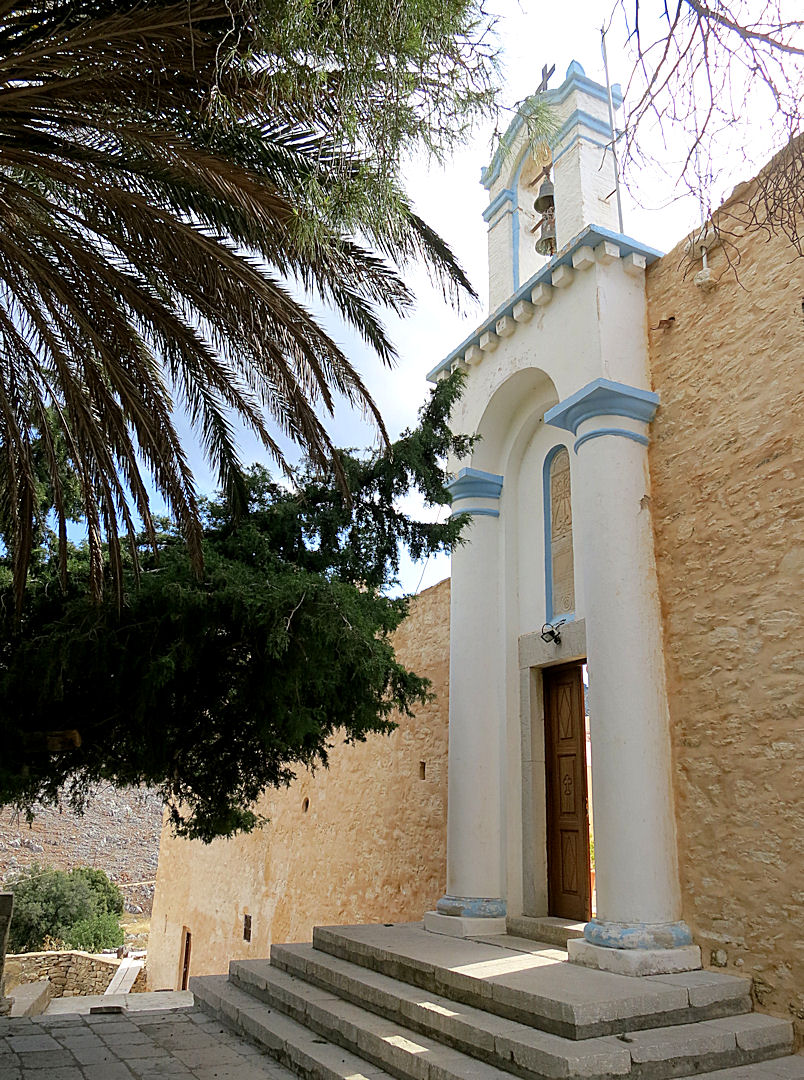
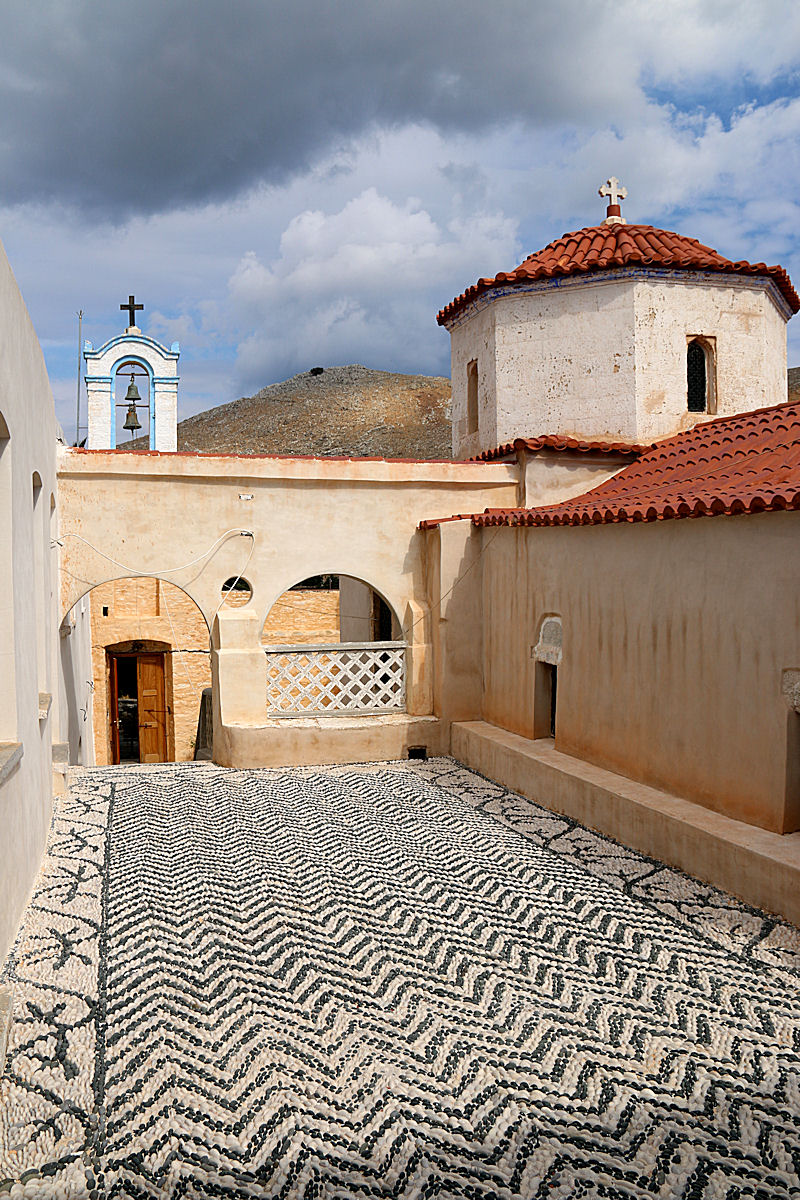
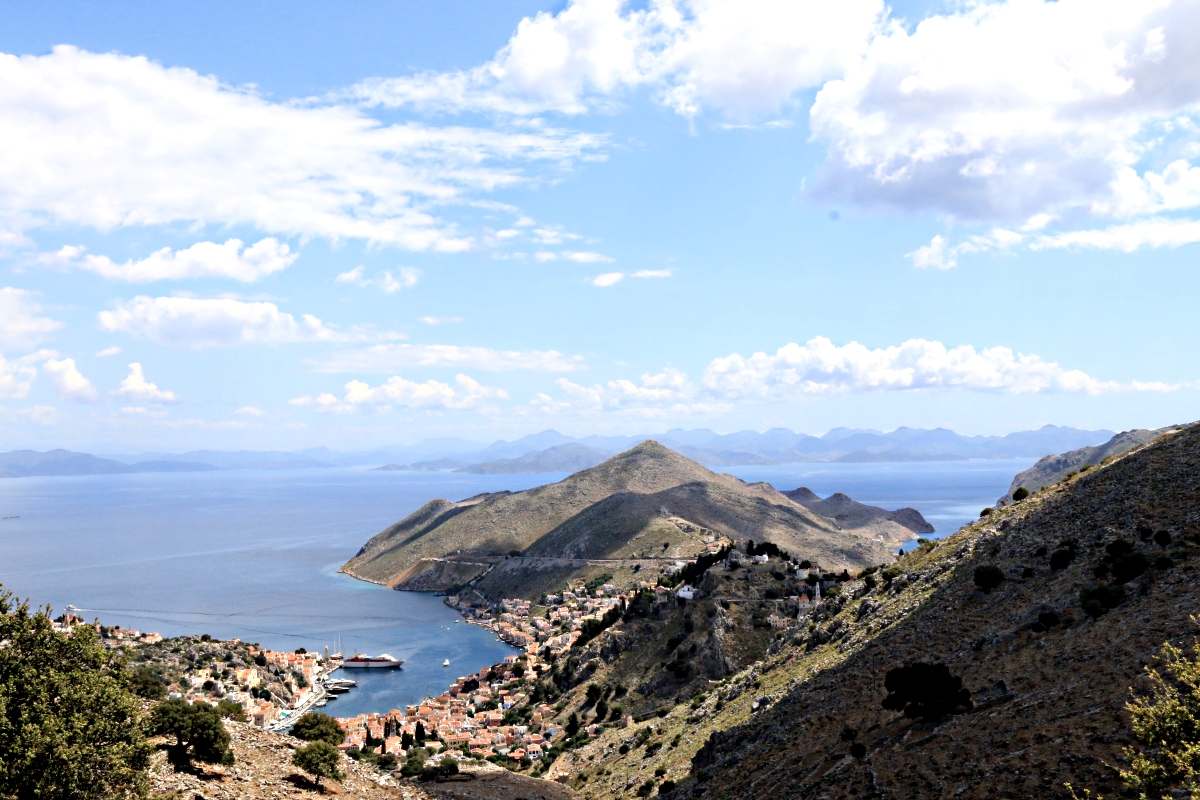
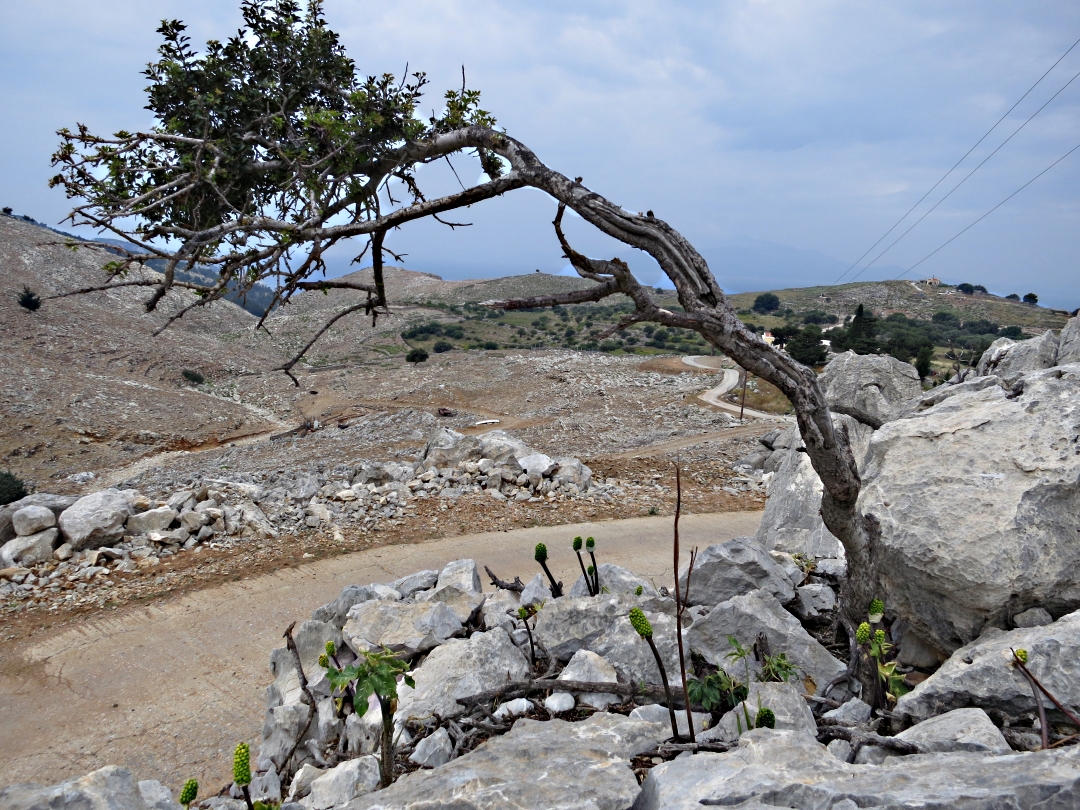
Before my friend returned home we trekked up to the mountain-top monastery of Agios Stavros Polemou perched on the edge of cliffs, a 10 mile round trip climbing to one of the highest points on the island.
As I said in the second of my blog posts from Symi this year, I’m focusing photography on ‘Spring’ and will write more about the wider landscape and the walks themselves as we move into the drought of summer.
People see colours differently. Some see blue as the brightest, others yellow. For me red is by far the strongest colour and my eye automatically migrates to the splash made by poppies, still in evidence especially in shady places where cooler conditions have delayed flowering. As we leave behind the last houses in Horio, the kalderimi climbing steeply up to The Viewpoint is thickly flanked by oregano. A few weeks ago it was green and fresh and I picked a large bagful to dry in the sun to add to Greek salad, fasolakia and other dishes. Now the oregano is covered in gleaming white flowers attracting many butterflies. What caught the eye particularly on this day was the bright red flash of a Red Admiral, one of the less common varieties on Symi..
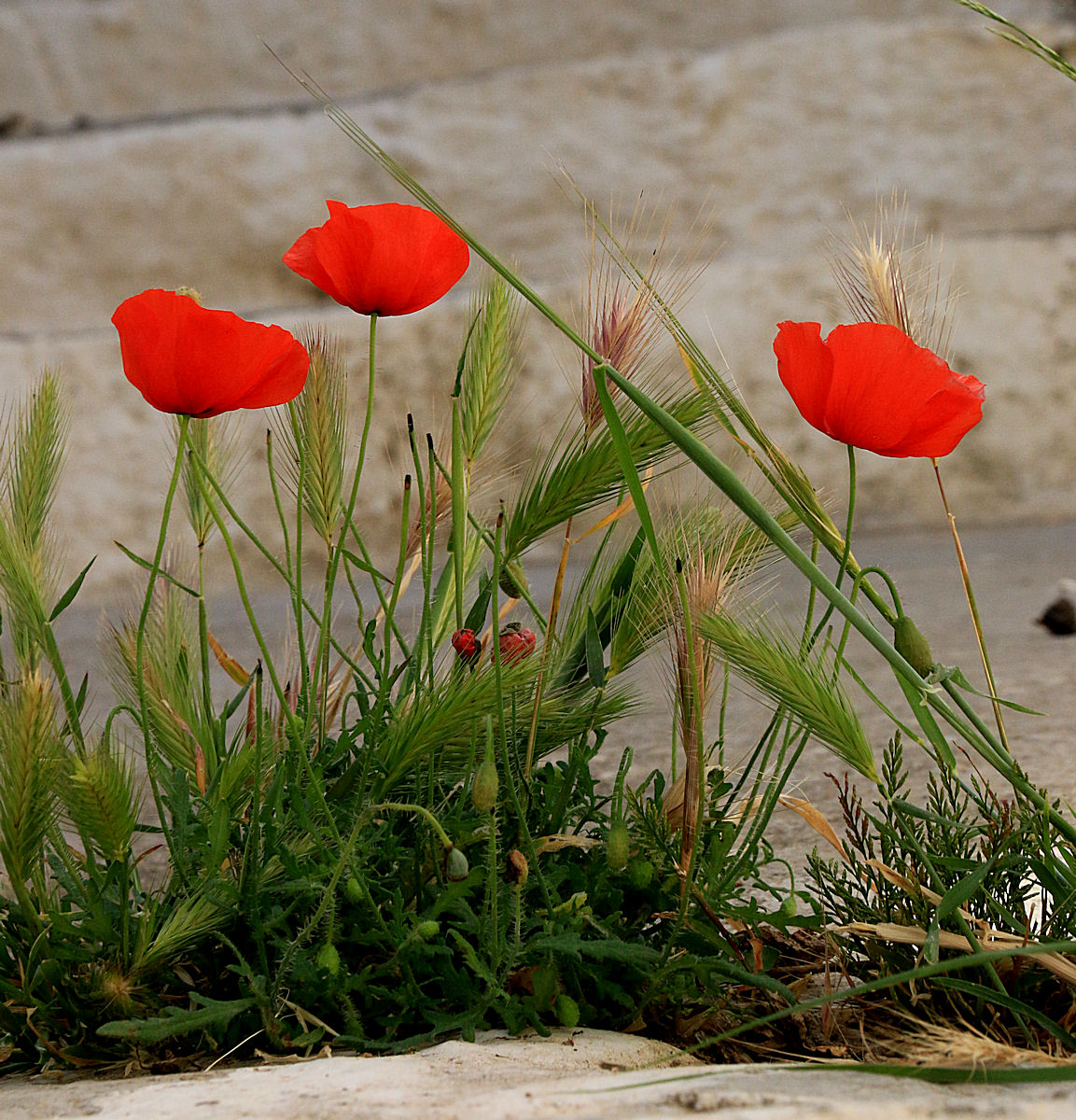
Poppies, vivid even in shady spots

Red Admiral on oregano

…. flexing its wings
Sometime later, having left the kalderimi behind and walking very carefully on a section of path over very serrated, sharp limestone surrounded by low-growing vegetation, my eye was caught not by a flash of colour but by slight movement off to the right. A mantis was twitching its left front leg and thereby attracted the attention of the paparazzi. Having been spotted it froze and became almost invisible against the background of green twigs. It wasn’t preying, or even praying as some web sites seem to think, but my attempts at identification have it as possibly a European Mantis, Latin name Mantis religiosa which just adds to the taxonomic confusion. Or maybe there are two types, one which eats its mate after sex and the other which is devoutly religious.
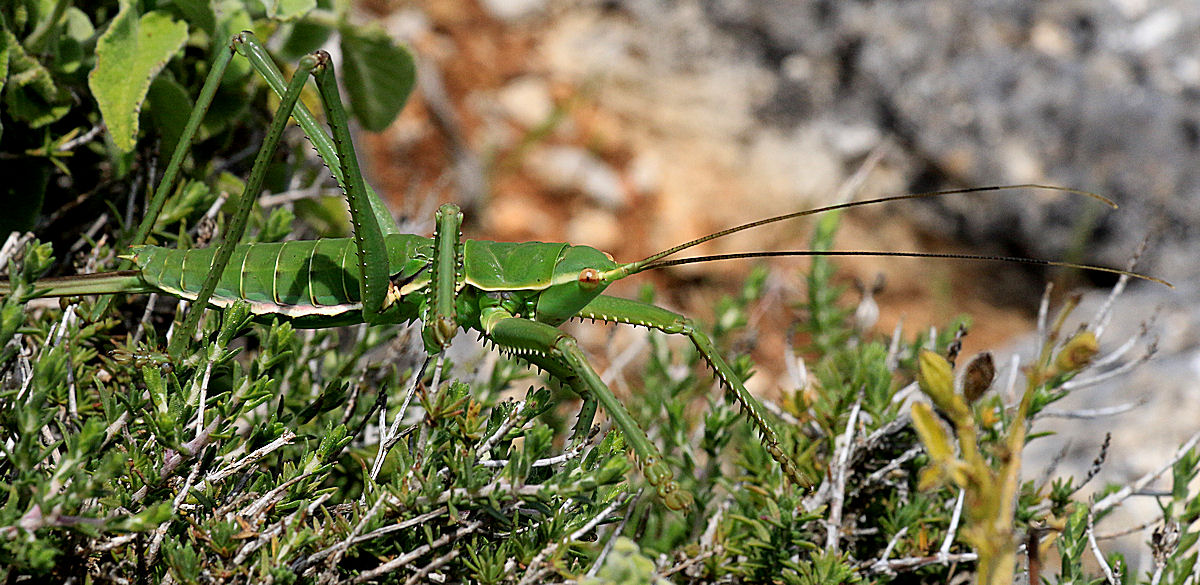
European Mantis, about 6 inches long including its antennae
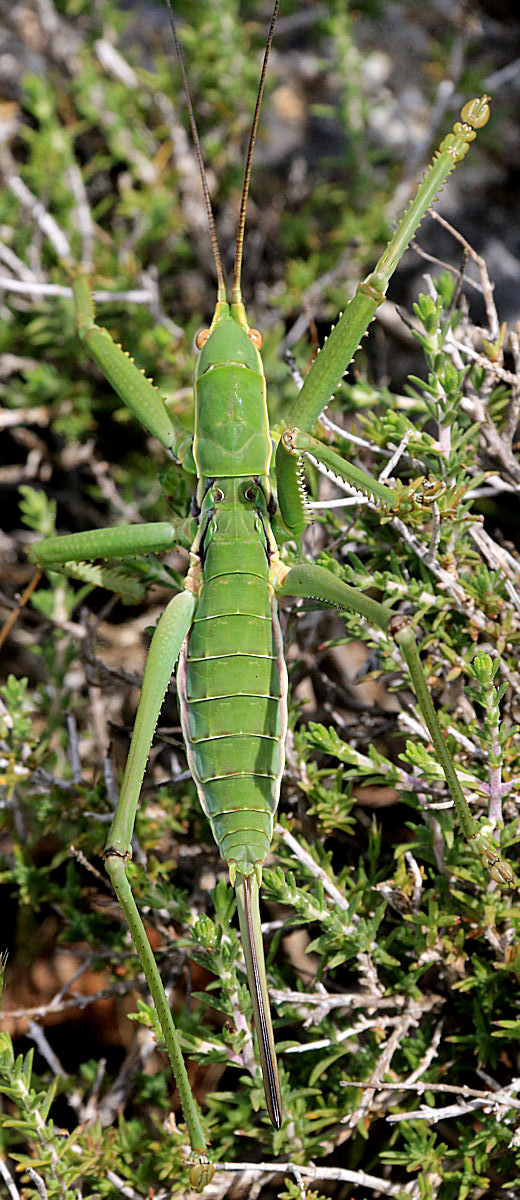
…. viwed from above
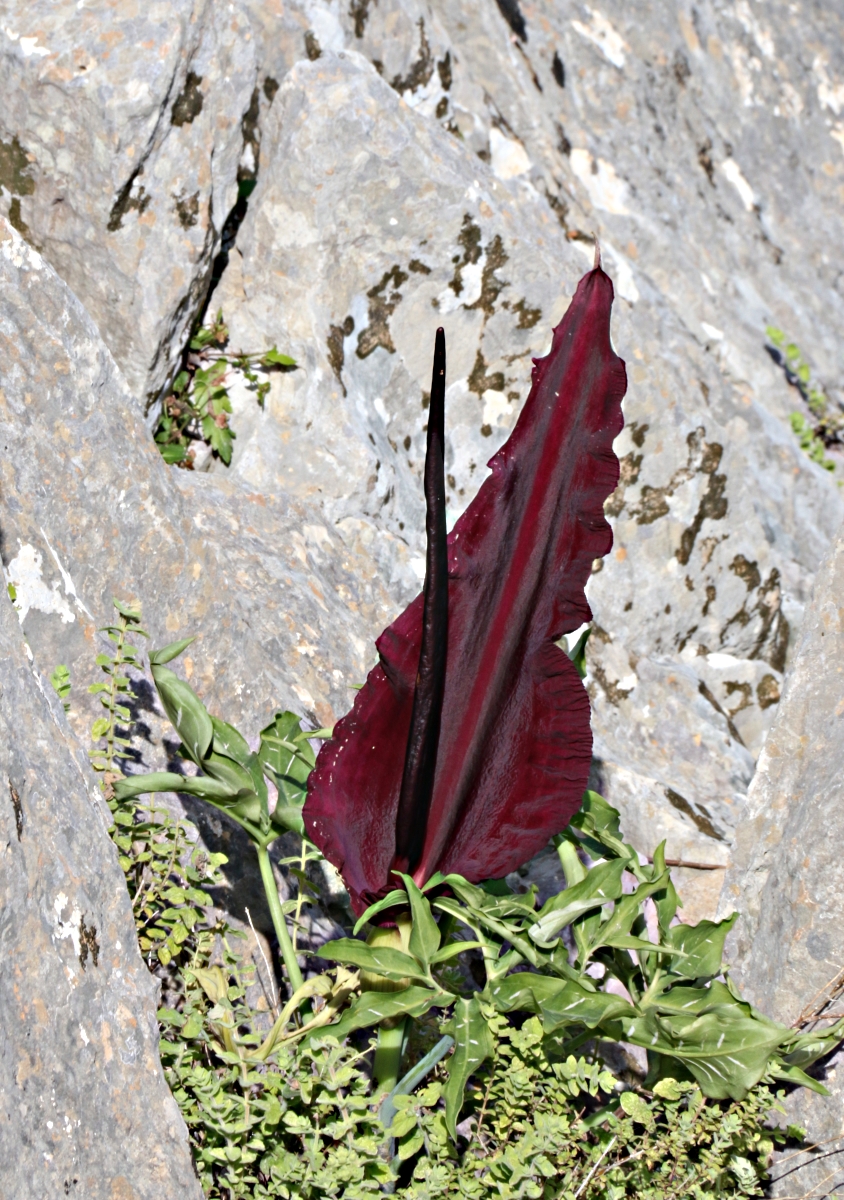
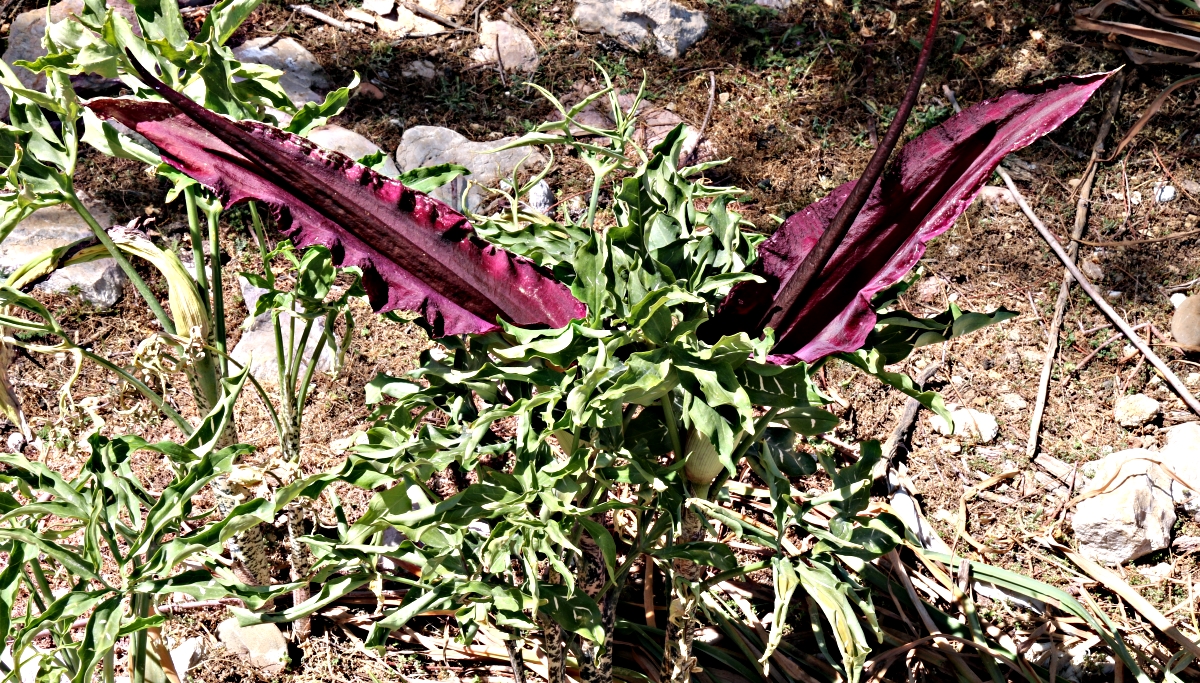
No problem in spotting some things. You would have to be both ocularly and olfactorily challenged to miss the Dragon Arums which are still in flower though not as widespread or profuse as a few weeks ago.
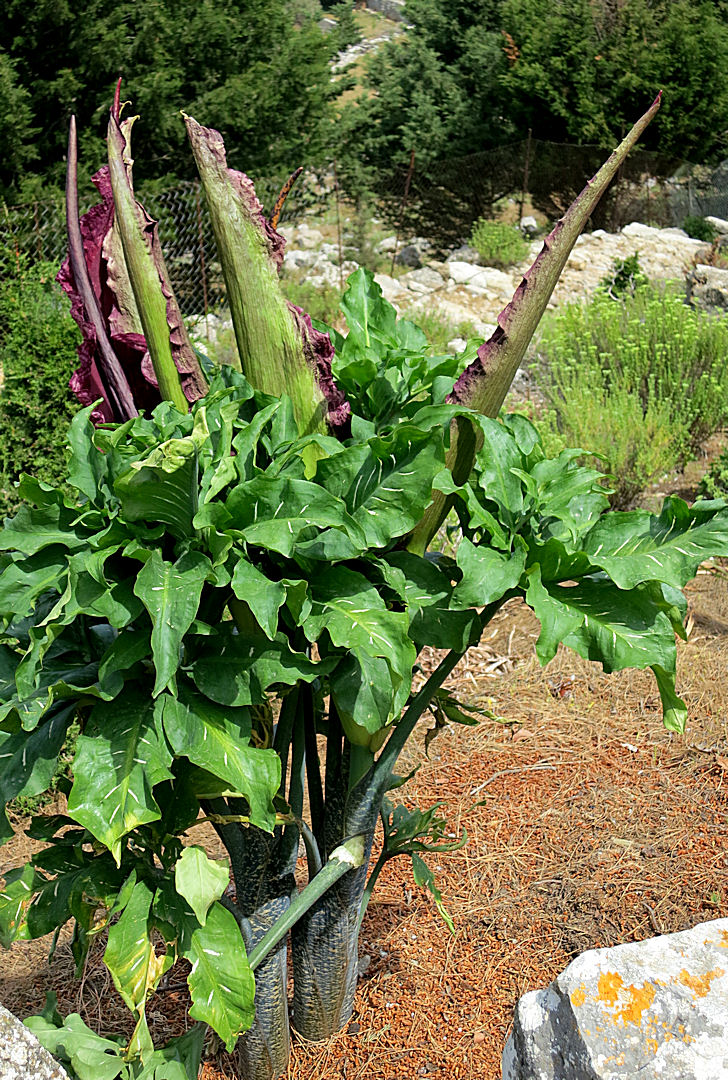
These Dragon Arums were nearly a 3 feet tall with stems 2 inches in diameter
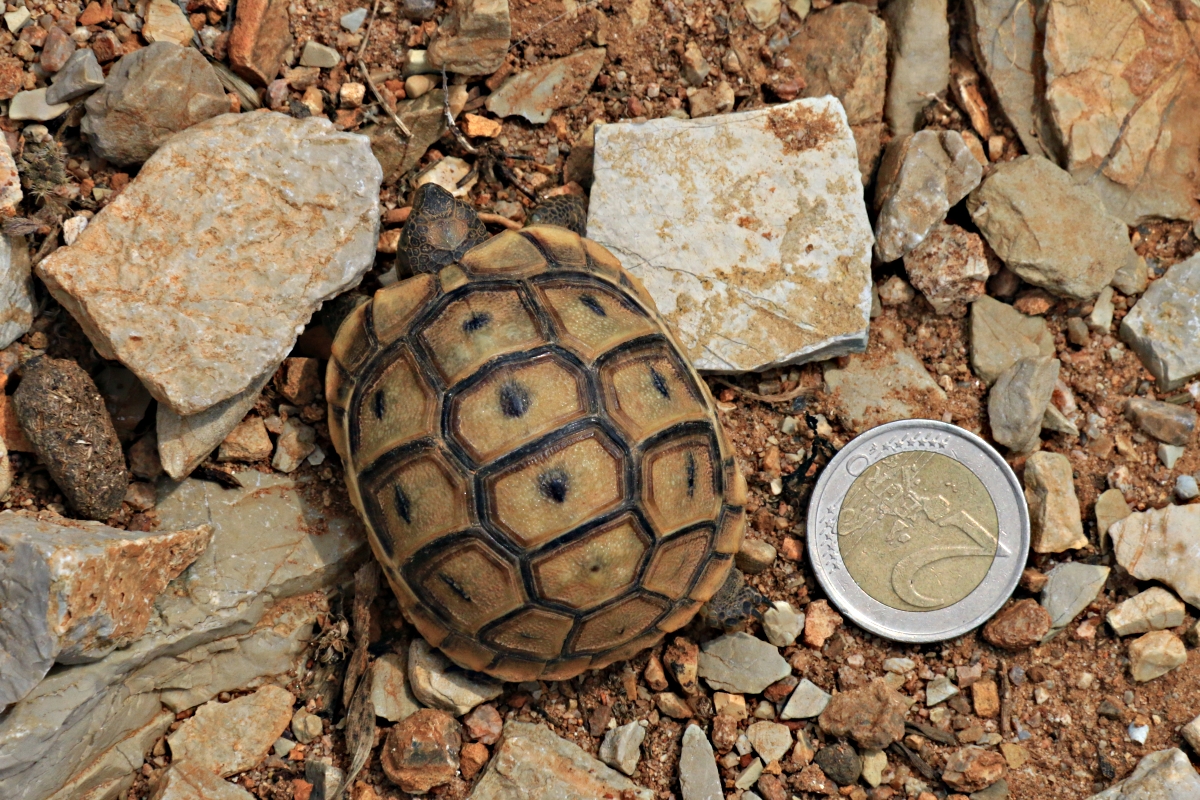
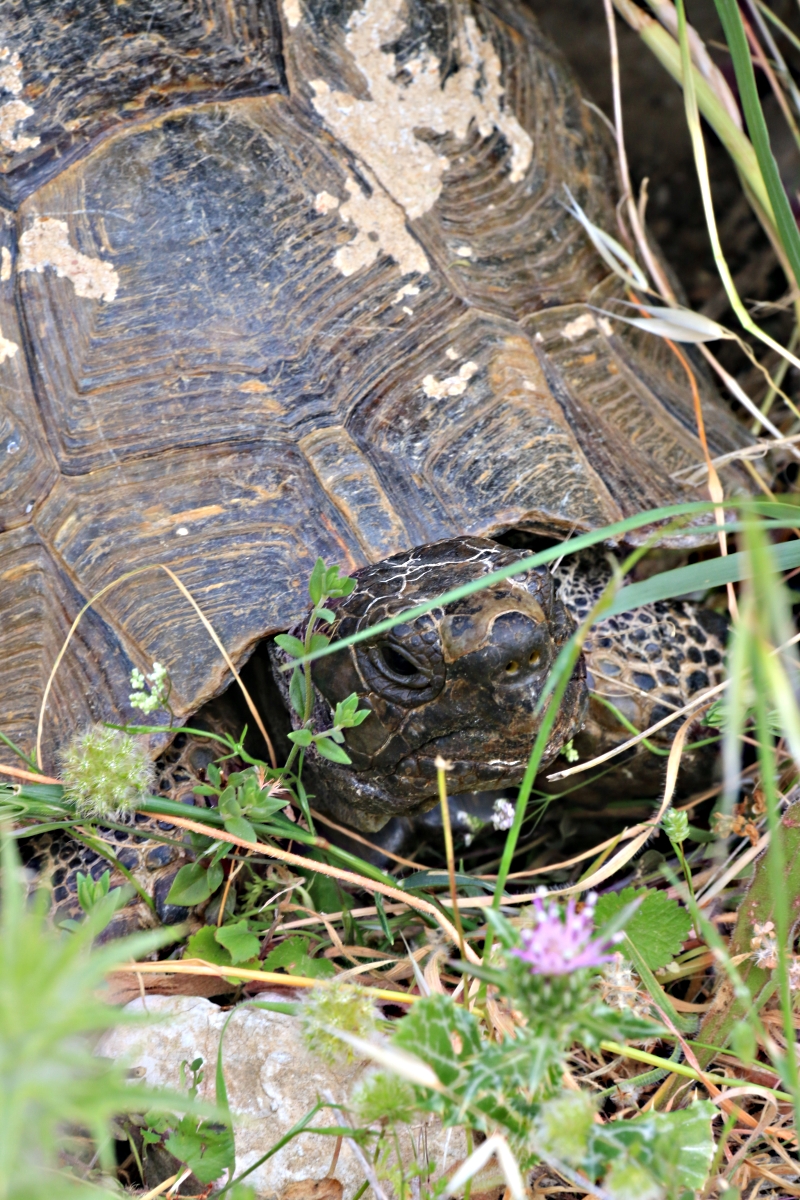
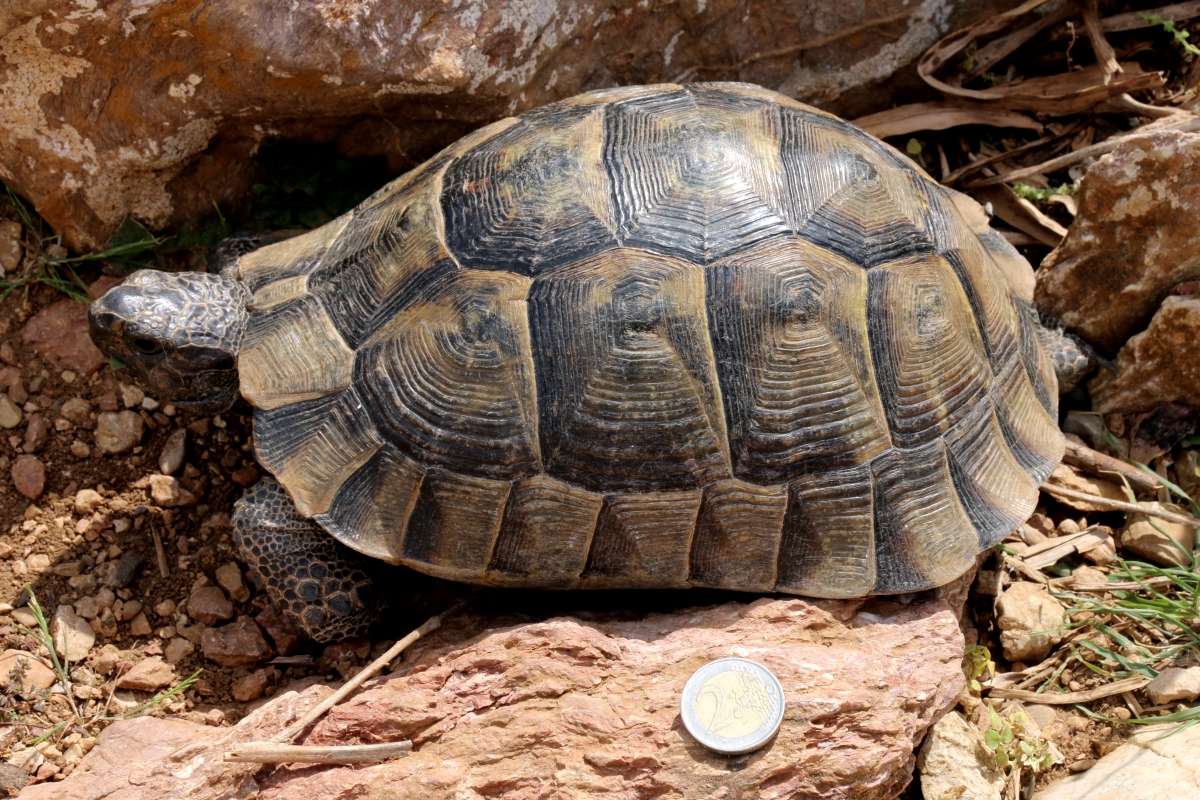
But what was most memorable about this walk was the number of tortoises which we saw, six in seven hours of walking. They were not among the biggest I have seen this year, indeed four of them were small, barely double the length of a €1 coin, the largest about 8 inches long. Well camouflaged and, though capable of a good turn of speed when necessary, usually lumbering slowly, they are difficult to spot unless in the middle of the path. However, two pairs of eyes and paying attention to foot placement clearly had its reward.

One of the larger tortoises seen on the walk
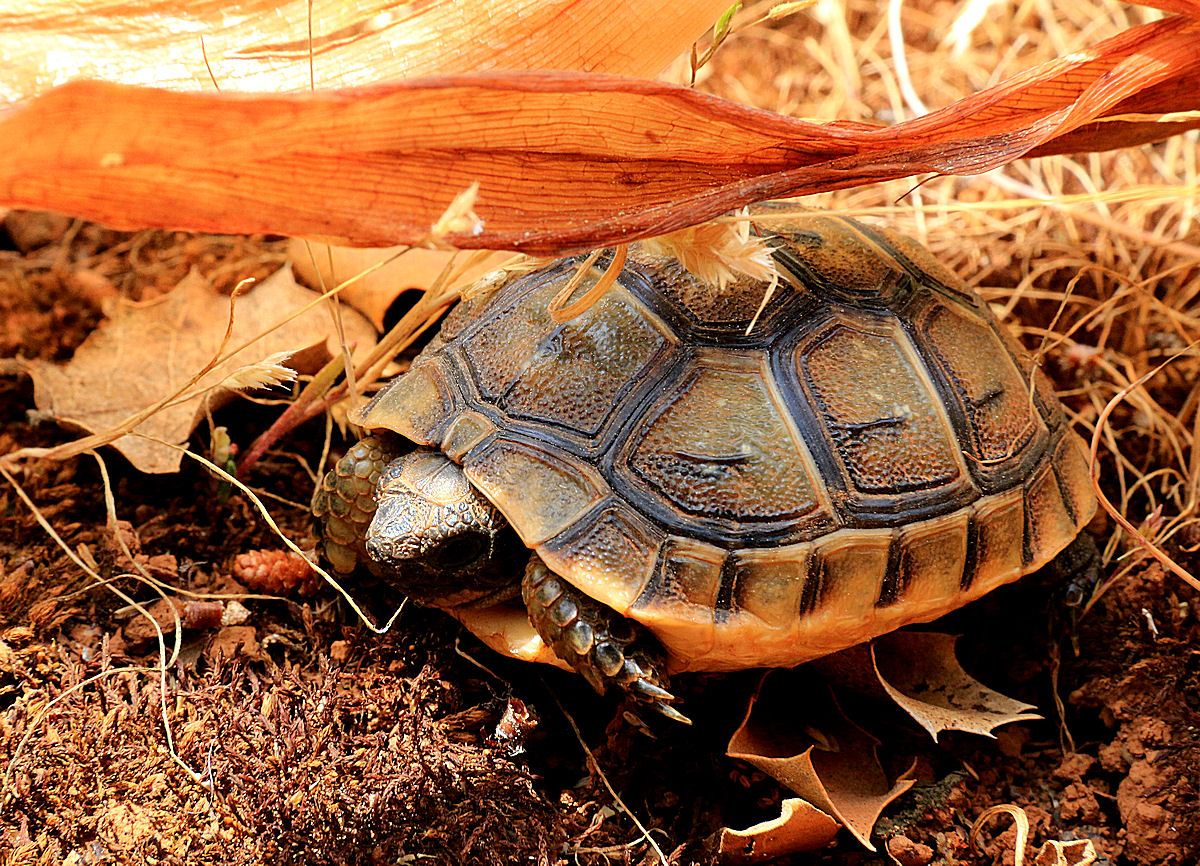
Small and well camouflaged under dried foliage
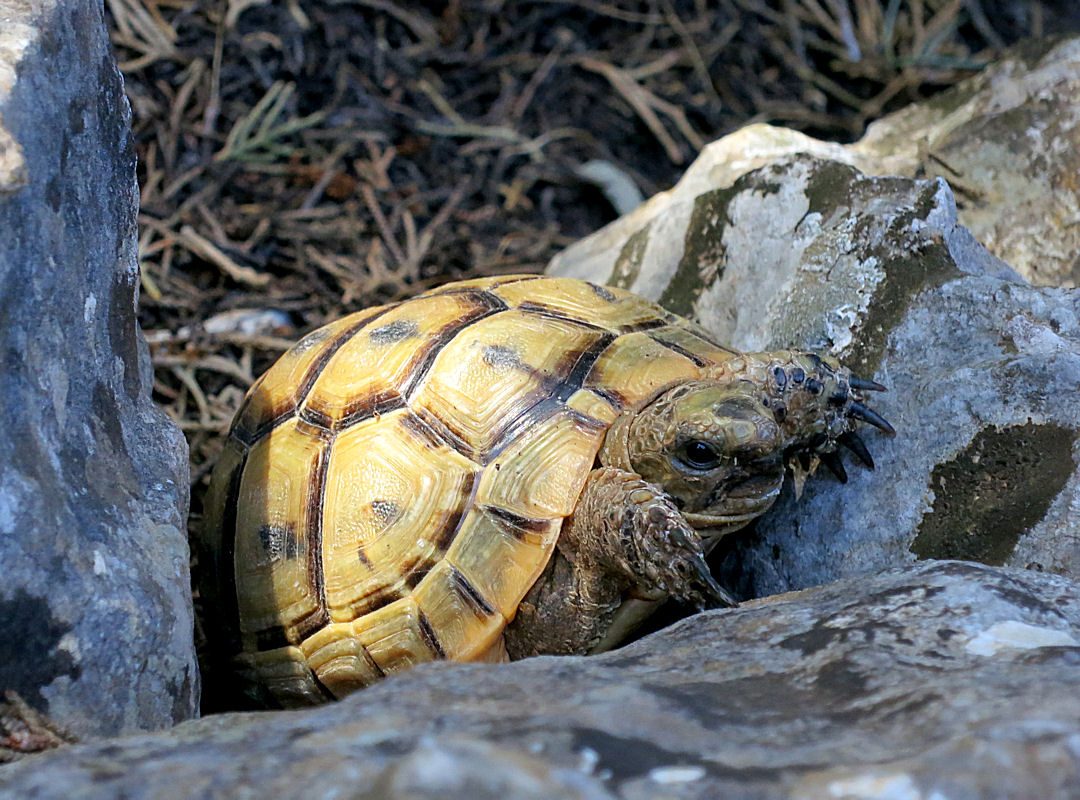
This little guy was climbing a rock

Indication of the size of the smaller tortoises
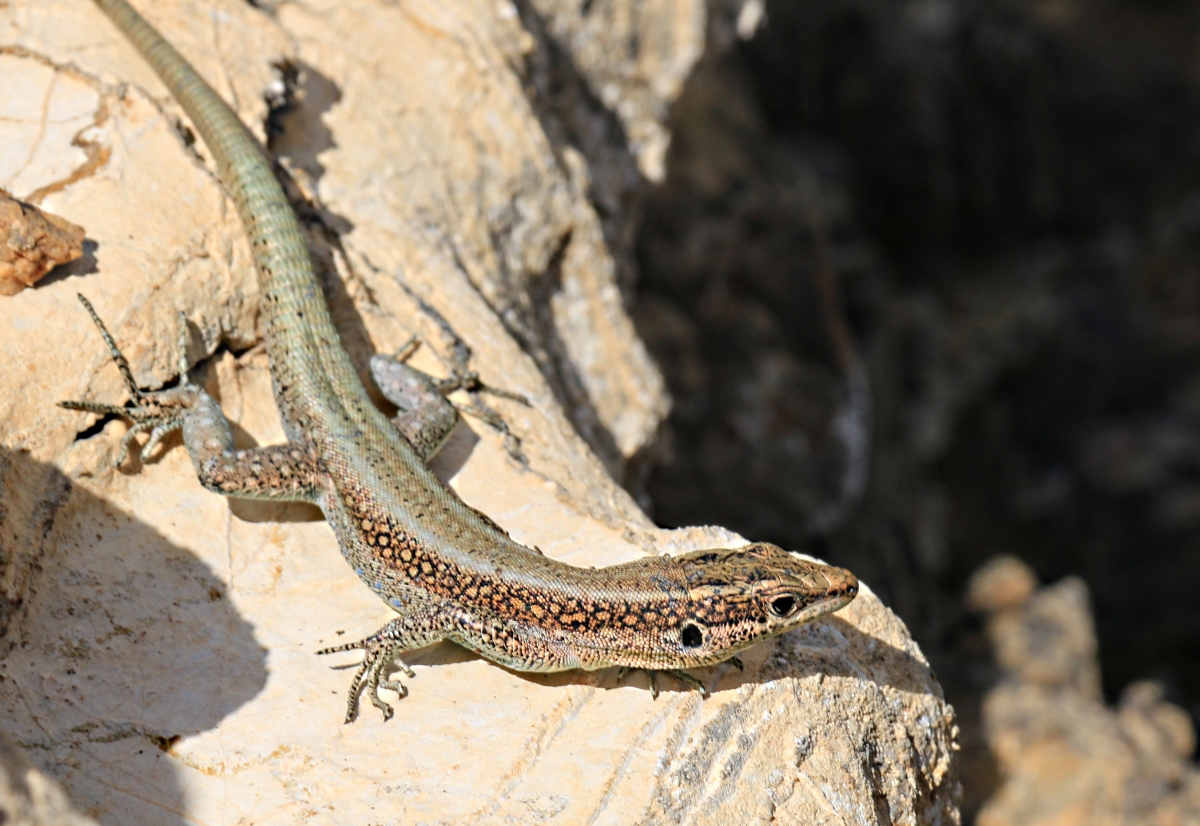
Though they freeze to avoid detection, Oertzeni lizards seem to have a burst of activity before doing so, often running across the path and at times perversely stopping before diving into gaps in the rock. Maybe the concern about what else may be lurking in the fissure outweighs fear of the giant creature whose only interest seems to be peering through a box and making a ‘clicking’ sound.
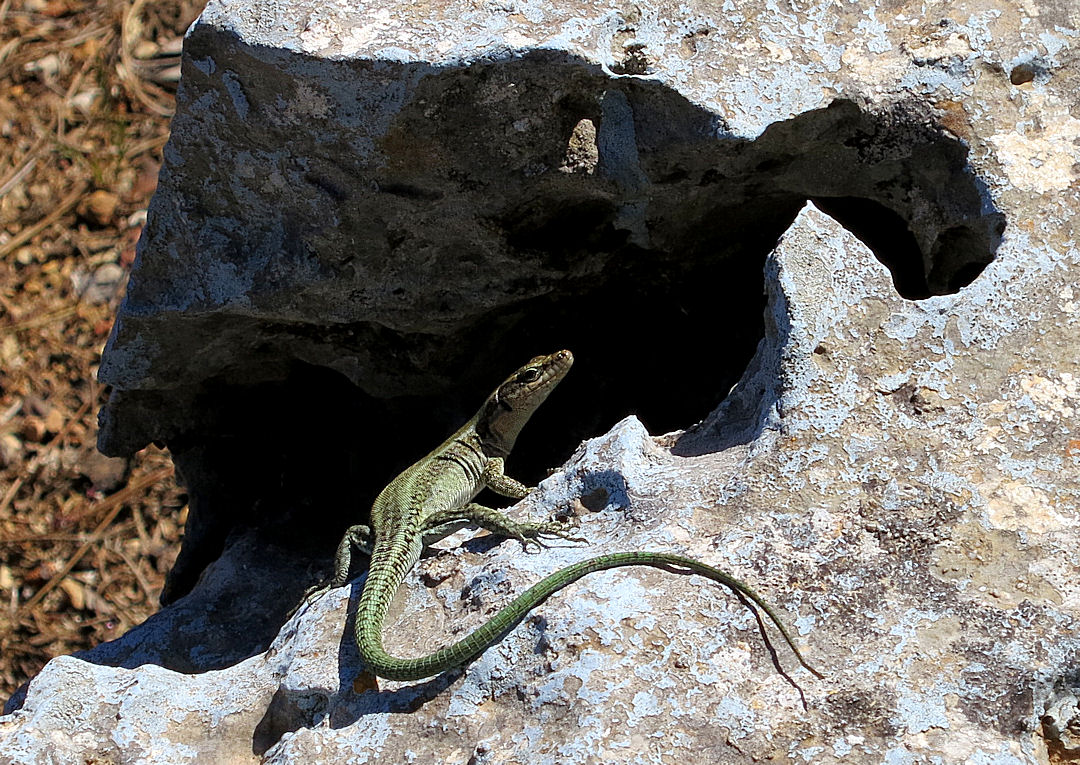
Very pregnant and hesitating before going to ground
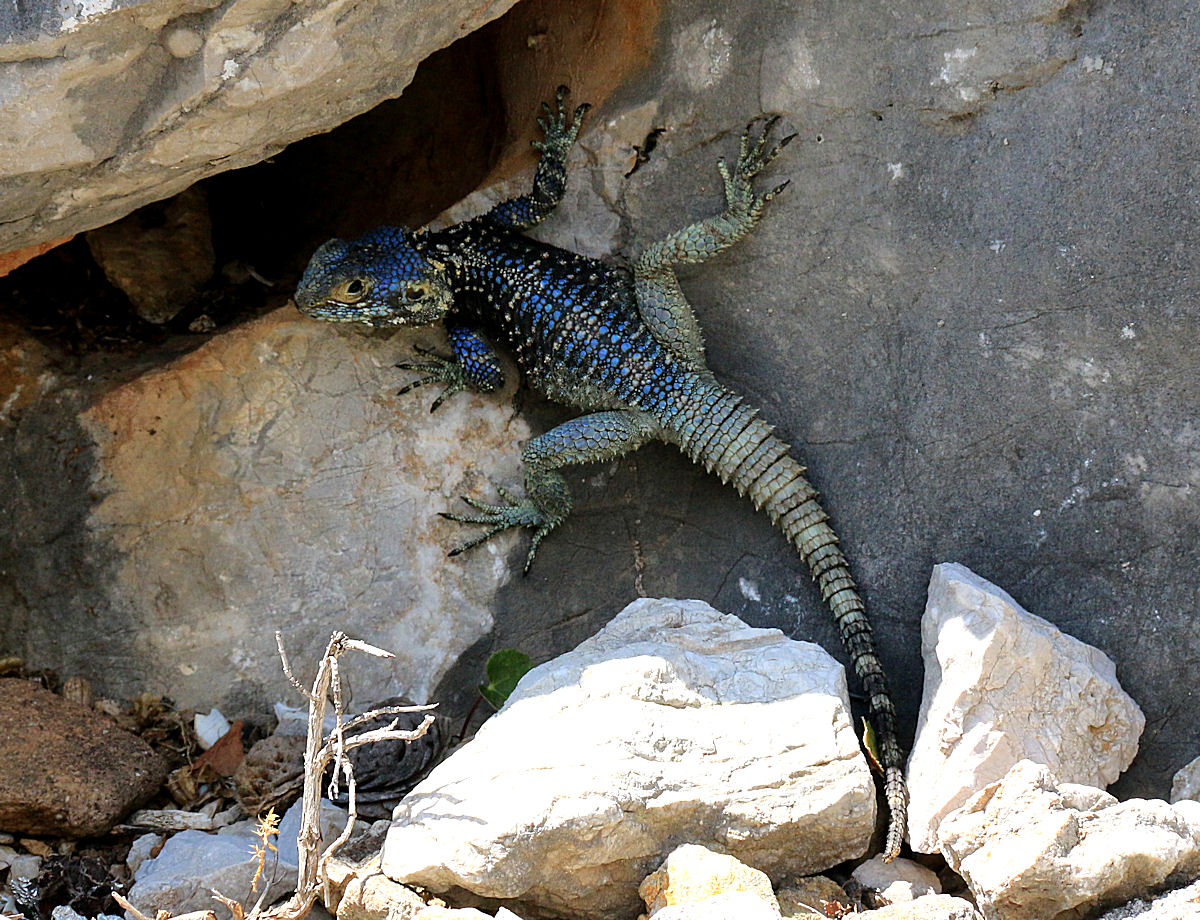
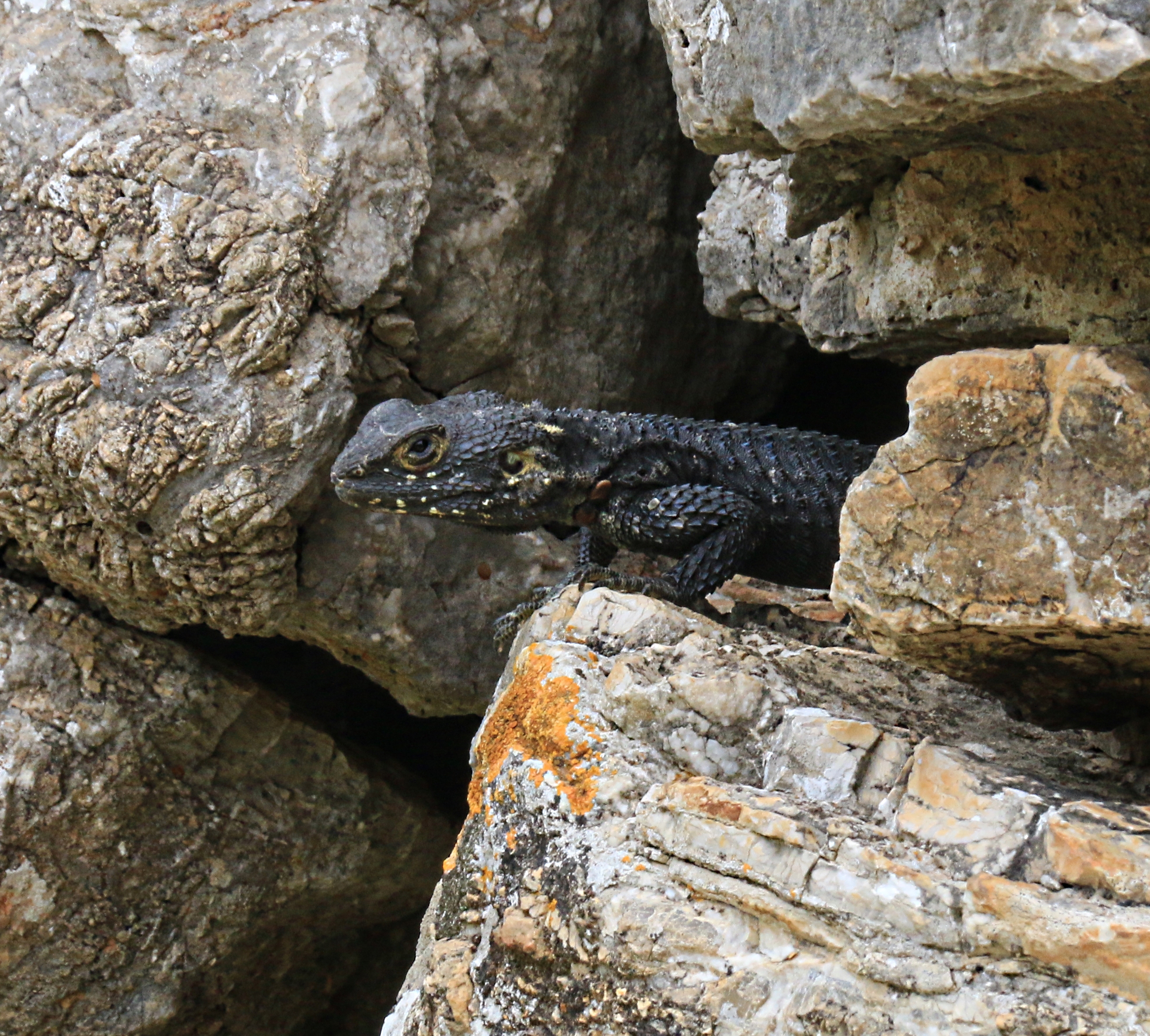
Not so easy to spot are the Painted Dragon Lizards, especially when attention wanders after 5 hours walking and thoughts are turning to a cold beer at the end. If they freeze before you catch sight of them they are invisible. At least I assume that to be the case as …… I don’t see them. But one I did see on the return leg of the walk went straight into a narrow but shallow fissure in the limestone. It was still in view when I peered inside so I photographed it. Uniquely, having caught my eye before it made a dash for safety, I then caught its eye.

Painted Dragon lizard gone to ground in a limestone crevice
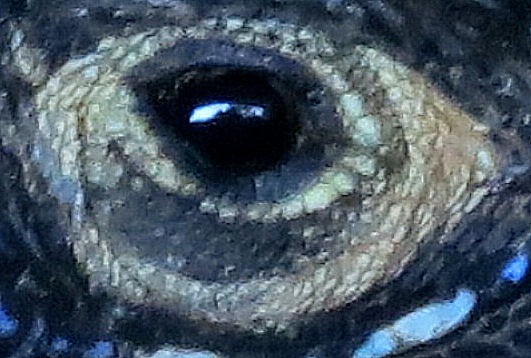
Zooming in – photographer in lizard’s eye (as with all photos, click to get a larger view)
There seems to be something new every day.




























































 Barry's Ramblings